The final instalment in the Chivalry series from a master of historical fiction.
The Chivalry series follows young William Gold, who runs away from London to follow the Black Prince, from the killing fields of France, through life as a routier and criminal, and to redemption with the Knights of Saint John, further disillusion and an eventual career as a professional soldier and knight. Rich in the details of life in the High Middle Ages, the series also deals with modern issues about the role of violence in society, rules of conflict and war, and the price that people pay for using violence.
'One of the finest historical fiction writers in the world' BEN KANE
'The master of historical fiction' SUNDAY TIMES
'A storyteller at the height of his powers' HISTORICAL NOVEL SOCIETY
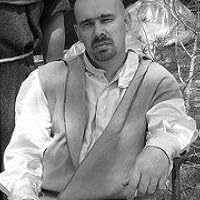
Christian Cameron was born in Pittsburgh, Pennsylvania in 1962. He grew up in Rockport, Massachusetts, Iowa City, Iowa,Christian Cameron and Rochester, New York, where he attended McQuaid Jesuit High School and later graduated from the University of Rochester with a degree in history.
After the longest undergraduate degree on record (1980-87), he joined the United States Navy, where he served as an intelligence officer and as a backseater in S-3 Vikings in the First Gulf War, in Somalia, and elsewhere. After a dozen years of service, he became a full time writer in 2000. He lives in Toronto (that’s Ontario, in Canada) with his wife Sarah and their daughter Beatrice, currently age four. And a half.
I'm sorry to say that by the end of this book, I was truly disappointed. It's described as the "next" book in the Chivalry series, but I'd heard it was the last, and the author's note confirms that while he intends to return to the story, perhaps to tell an egregiously offscreen "but I'll save that story for later" event, this book was the last in the main line.
First review huzzah! Pulled an all Knighter to finish this on release. We meet our old friends and familiar faces. You will laugh, cry, and be on the edge of your seet. My only complaint is not enough direct combat. Would recommend and look forward to the next.
The Captain of Venice continues Sir William Gold's adventures in Italy (and a bit of Greece) as he serves under John Hawkwood during the Great Raid on Tuscany and, later, the defense of Venice in the Chioggian War with Genoa. It covers the back half of the 1370s, and like usual is full of descriptive battles and complex continental politics.
This novel is great, like all of Cameron's work, but it also treads mostly familiar ground. Gold commands, leads his company through a few light conflicts, and then builds up towards a more spectacular high-stakes conflict at the end of the novel. The Chivalry novels, much like the Long War stories, follow something of a formula. They're all great, but they're hardly ever unpredictable.
Gold is a fun protagonist, and his companions are more or less interesting. Some of them are more developed than others - some seem to only be named for Gold to feel their death more closely - but the main core of captains around him are fun, if a bit one-note (yes, Nerio likes women, and yes Fiore is good at fighting).
I admit I was a tiny bit lost during the more minute descriptions of geography and troop movements in the last bit of the book. I'd recommend having a map of the lagoon of Venice and the Lido handy if you care about visualizing everything going on and aren't familiar with the lay of the land.
I give these novels 5 stars almost by default these days, both because they are well-written and also because it's such an interesting period in history. The 13th-15th centuries are incredibly complex politically and modern military strategies and equipment are just starting to evolve and it's a treat to see developments play out on the pages in real time.
I have read pretty much everything Christian Cameron has ever written: the entire Long War series, Tyrant, Tom Swan, and, of course, the whole Chivalry series. I usually love his books for exactly how he brings history to life—with gritty, real characters, razor-sharp dialogue, and an atmosphere you can practically smell. But with The Captain of Venice, the spark is completely gone for me.I am several hours into the audiobook now, William has finally made it back to Venice and meets Zena, and yet it still feels like I’m listening to someone read a dry travel log or a ledger out loud. It is just a flat, endless listing of places, logistics, and names. Where we used to get real interaction and genuine emotion, there is just narrative emptiness here. Even the reunion with Zena is treated like an administrative box to check. The characters don't feel like human beings anymore; they feel like lifeless chess pieces being dragged from point A to point B.And the worst part? Even Peter Noble, who I think is an absolutely brilliant narrator, can’t save this. He tries his absolute best as always, but when the writing itself has zero life in it, even a top-tier narrator can't conjure it out of thin air.I ran into this exact same issue with The Treason of Sparta (the finale of the Long War series). It honestly feels like Cameron just burns out toward the end of his long-running series. The passion is missing, and it feels like he’s just fulfilling a contract to get the historical timeline over with. As a hardcore fan, I’ll probably finish it eventually just out of principle, but this is easily the weakest and most tedious book in the series so far. If you are looking for the vivid, lively William Gold from the early books, you are going to be disappointed.
Not gonna lie. I had doubts. The last book was quite a disappointment. But Christian Cameron is in top form here. There are almost no fashionable nods to the largely non-existent "modern audiences". Instead we have war in all it's bloody and bitter glory. And it's marvelous.
One note though. Mister Cameron needs better proofreaders. I noticed a couple of mixed names and one character died twice.
And an even rarer thing: a few misses from Peter Noble. After being mentioned in at least 12 Cameron's books Beo-Ti-A suddenly became Beosha. Also some name changes. And a couple of voice acting mishaps. Fiori changes his accent 3 times, I think, during the book. And even sir William spoke with someone else's voice once.
The Captain of Venice is an Extraordinary piece of literature
Christopher Cameron has never disappointed me, and I believe I have read everything he has written, but this was a wondrous piece of work.
There is no other writer of historical fiction, alive or dead, to my knowledge, who can take the reader into his ancient world, with such mastery of every aspect of the lives once lived, and is able to lecture on every aspect of the time, the place and the people and every facet and foible of existence, without the reader feeling jaded in any way.
There are not enough superlatives available to grace this book with adequate praise.
Very good as always. However, it did feel a little rushed in the middle, especially during the presumptive set up for a book about the mantuan affair. The excellent last third of the book mostly made up for it though.
This entire review has been hidden because of spoilers.
If you've gotten this far in the series, you know what to expect. It's more of the same historical detail and gritty action which this series does so well. I loved every moment and could not put it down.
Wonderful time travel to late 14th century Italy and the wars between the city states as well as by the Pope and French anti-Pope. Sir William Gold is an engaging guide to the age of chivalry and brutal nature of mercenary war.
As ever with William Gold, the tale is grand, the characters are friends, and the book is finished in the blink of an eye, but feeling full from a food story...