Based on the award-winning article in Harvard Business Review, from global leadership expert John Kotter.
It’s a familiar scene in organizations a new competitive threat or a big opportunity emerges. You quickly create a strategic initiative in response and appoint your best people to make change happen. And it does—but not fast enough. Or effectively enough. Real value gets lost and, ultimately, things drift back to the default status.
Why is this scenario so frequently repeated in industries and organizations across the world? In the groundbreaking new book Accelerate (XLR8), leadership and change management expert, and best-selling author, John Kotter provides a fascinating answer—and a powerful new framework for competing and winning in a world of constant turbulence and disruption.
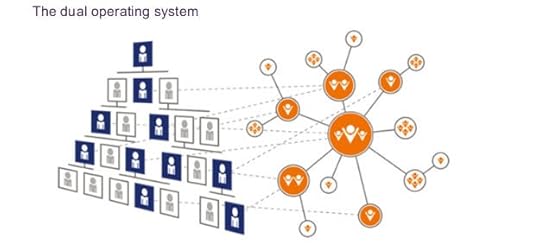
Kotter explains how traditional organizational hierarchies evolved to meet the daily demands of running an enterprise. For most companies, the hierarchy is the singular operating system at the heart of the firm. But the reality is, this system simply is not built for an environment where change has become the norm. Kotter advocates a new system—a second, more agile, network-like structure that operates in concert with the hierarchy to create what he calls a “dual operating system”—one that allows companies to capitalize on rapid-fire strategic challenges and still make their numbers.
Accelerate (XLR8) vividly illustrates the five core principles underlying the new network system, the eight Accelerators that drive it, and how leaders must create urgency in others through role modeling. And perhaps most crucial, the book reveals how the best companies focus and align their people’s energy and urgency around what Kotter calls the big opportunity.
If you’re a pioneer, a leader who knows that bold change is necessary to survive and thrive in an ever-changing world, this book will help you accelerate into a better, more profitable future.
John P. Kotter, world-renowned expert on leadership, is the author of many books, including Leading Change, Our Iceberg is Melting, The Heart of Change, and his latest book, That's Not How We Do It Here!. He is the Konosuke Matsushita Professor of Leadership, Emeritus at the Harvard Business School, and a graduate of MIT and Harvard. He is co-founder of Kotter International, a change management and strategy execution firm that helps organizations engage employees in a movement to drive change and reach sustainable results. He and his wife Nancy live in Boston, Massachusetts.
Beginning with a slight rehashing of the 8 stage change process for which he is known, the author then describes a two operating system approach, with the left-hand system is the current hierarchy while the right side is described as a network structure. It’s not lost on me that the metaphor used to describe the network is the solar system, which is predictable; there’s not much dynamic here, and little guidance on how the right-hand (network) system forms or works. Also, at least in the audiobook, there are no details regarding the organizations purportedly using this approach. I’m confident there are other titles that provide more insight and guidance into structures and approaches to building agile organizations than this book. Move along, there’s nothing to see here.
Even the basic analogy comparing organizations to operating system is flawed! Try running two Operating Systems on on system in an integrated manner! Applications are able to run on an operating systems, but two operating systems running at the same time integrated in one system is simply not possible.
But ok, this metaphor might be flawed, but the contents might still be valid. But I thin they are not. They are just management bla bla. Look at the "Big ideas" he is describing. These should be a supplement to a vision. Laughable.
Nevertheless, a knowledgeable man with great work an change management. But I think his intent of creating consulting business for his Kotter International Consultancy gets the better of him here. One star.
I feel cruel giving this book a 3-star rating (almost gave it a 2) because it is clearly an attempt to sum up a distinguished publishing history that describes strategy in a new way and talks about real ways that change can be accomplished in organizations that are past the start-up phase and/or are mid-sized or large with a lot of efficient processes. But: The book lacks concrete stories and is barely actionable. (There are stories but they are a bit blurred so as to not describe specific companies, I would guess. It doesn't feel real to me.) My experience reading this book suggests to me that the key teaching are probably better given in his earlier books. Maybe I can find some of his articles that go into the detail. One thing I can tell you for sure is that this book is not for startups with fewer than 750 employees: Everywhere the perspective is driven by large organizations that are ill-equipped to deal with sudden external threats to the business.
But here's the idea:
A new external market-based challenge emerges that must be dealt with fast and nimbly. (I know from personal experience what it is like to deal with one of these, but my company is still in many ways a start up and was able to respond to such a challenge without what's described in this book.) Meanwhile, your company has hierarchical management that actually works pretty well: The functional areas are efficient, and people know what their jobs are: In this mode, the company is past its start-up phase when people chip in as generalists to get stuff done. Staff don't do that anymore. It's very good at keeping a large ship moving forward.
Trotter says that with an emergent challenge you have to spawn a "dual operating system" where, "on the left" (as Kotter puts it), is your traditional organization with its hierarchical management. This organization is absolutely necessary. However, they can't respond immediately to emergent challenges. On this side the business is driven by annual budget decisions and quarterly cadences.
"On the right" you identify people who will volunteer to move forward on a "Big Opportunity." This internal effort is "a second system that is organized as a network" (11). "It powerfully complements rather than overburdens a more mature organization's hierarchy" (11). Here's an image from the book.
(By the way, it is not clear in the book if this dual operating system is permanent or only exists to solve the "Big Opportunity.")
Does this organization get a budget? No. (170). Do they have their own managerial lines? No. (160-162).
Basically the whole thing is run by a "change vision" and is delivered through volunteerism. The examples given of change visions in the book are remarkably generic and boring. Kotter says that in their habitats they not boring, but I don't think they would motivate me (maybe I'm too boring and "left side").
What worries me about this book is that the "right side" sounds like a shadow organization. Who gets to be in there? Kotter suggests that people volunteer. But that seems weird to me, and could potentially create two cultures and opportunities for corporate jealousy, envy, and arguments over resources and time commitments. Kotter says volunteerism is OK because the right side people are still in the left side organization. But if so, can you really maintain the distinction? How can it be true that these people can get their network job done without a budget? That sounds incredibly dubious. The dual organization would seem to lead to competing loyalties.
In an appendix Kotter attempts to dismantle "left side" ways of using best practices to accelerate. Those practices include (1) adding the new initiative to regular planning (he says it doesn't work because it isn't nimble enough and that silos are there for a reason); (2) creating new units and reporting relationships (he says this will just return to the mean); and (3) acquisition (expensive and you might pick the wrong horse). These are theoretical arguments: I guess if you want the empiricism that supports this you have to go to other books.
A final thought: If I look at this from a "boots on the ground" perspective, I can see that in some sense we perform this dualism in our company. There are a lot of functions that do things in a way that is hierarchical, following the way the rest of the industry does things. That's cool; and for good reasons. But there is an emergent commitment to Scrum and agile methodologies that is growing its own patterns; in "Scrum at Scale," these patterns do have a hierarchy for moving work forward. (These people, though, don't really live on both the "left" and "right" sides, as described by Kotter -- they are completely committed to what Kotter describes as the "right" side.) But the aim of "Scrum at Scale" is clearly to move the entire organization to this perspective (am I wrong about this, agile nerds?) -- and Scrum will tell you that there's a way to be agile in finance, HR, and all of the other areas that are probably what Kotter means by the "left side" organization.(And as a side note, Kotter is explicitly cited in some agile training where Kotter's "Guiding Coalition" is exactly mapped to a product development pattern.) So . . . do I really need this "dual" system? Is it really so hard to envision an entire organization that is nimble and dedicated to responding to market forces? When Trotter kicks off the book, the motivation for his argument is the speed of change in business. But as external changes speed up even more, affecting everything, doesn't that suggest that the entire left side has to change as well (and maybe be reconfigured as "right" side? Maybe the book would be more powerful if the arguments were presented explicitly as the pattern for bringing agile patterns into the company -- but that is not necessary motivated by the emergent "Big Opportunity."
Good concept of creating an agile, informal network to cut across an organization's traditional org chart in order to capitalize on "The Big Opportunity" by effecting strategic initiatives more quickly. I like the idea and think it could work...but I feel like it would be very difficult for me as an individual to get buy-in from the organization.
Accelerate: Building Strategic Agility for a Faster-Moving World is the latest business book by John P Kotter. Like his previous books, it's short (200 pages), sweet and written to change the world. Due for release in April 2014.
I never did read Kotter's famous Our Iceberg Is Melting when it was popular. However, when I finished Accelerate I was curious and checked the GoodReads reviews to see if it's the same style. It is, and it is a distinct style.
Accelerate describes a model of running a traditional hierarchical corporate structure along side a more nimble, network-like structure similar to start-ups. He correctly states that companies using a traditional corporate structure are too slow to respond to market influences, much to their detriment, and sometimes downfall. Kotter calls this mix a "dual operating system". Yes, it makes me think of running Windows on a Mac, too. He explains how volunteers need to be recruited to run the additional structure, which runs concurrent with the traditional one.
The book runs through how the dual systems can work with case studies that either have so many details removed to preserve anonymity or are fictitious. OK, I don't meant to be nasty with this. It was just a surprise. Openness and disclosure is now the norm; this approach was just very old-school and comes across as theory only. It's not all ... theory. I love the table showing the difference between managers and leaders. Who is Accelerate for? If you're in a senior executive in a large, traditional company, or an MBA candidate wanting a career in an above mentioned company, then this is for you. You'll find lots of idealistic strategies to implement or reference. All from one evening's reading and a known author you can name drop, and spout ideas to your colleagues.
However, if you're looking for tactics and proven models, read something else. Like Guy Kawasaki or Scott Berkun's books. Berkun's reasoning that you need real management experience to write on the topic came to mind often while reading this. Especially chapter eight, the Q and A. Some of the answers are borderline delusional. Instructions like that employee management programs won't be required because employees will want to do the tasks perfectly, and that budget isn't needed because the employees will happily work up to 150% capacity, are very naive. They're strangely reminiscent of Australia's Natural Law Party of the 1990s.
Therefore my word of warning is to not depend on John P Kotter's reputation when deciding on this book, but look to see if your aims and goals are the same. If so, then I thoroughly recommend Accelerate for you.
Depositar en un libro de menos 200 páginas, la esperanza de encontrar la solución maestra a retos organizacionales, y especialmente los relacionados a ser más competitivos, no solo es ingenuo sino demasiado optimista.
Sin embargo, el libro, aún con sus límites y palabreria corporativa, logra transmitir los puntos claves para poder cuestionar un modelo de organización actual y comenzar a enfocar próximas acciones que lleven a crear el modelo dual que el libro propone.
Es una lectura recomendada para equipos que constantemente trabajan con grandes retos y pocos recursos, pero que esperan grandes resultados. Este libro no resolverá sus problemas mágicamente pero los pondrá en la pista sobre como alinear su organización y conseguir resultados.
Accelerate is a business book that urges organizations to create a dual operating system to allow for a more agile network.
There are some good principles here but the execution is greatly flawed. There is little to no information on how to actually launch and organize these dual operating systems. Everything presented is extremely generic with no actual case studies of organizations that have successfully applied the dual operating system. The one chapter I gained the most on, really had nothing to with the topic of dual operating systems, and that was the chapter that dealt with the difference between managers and leaders.
It was a good book to gain an overall understanding about change management. However the argumentation of the book was quite limited and superficial. So in contrast to other Kotter books, this time it was below my expectations...
I know various types of org structures... hierarchical, matrix, cross functional teams, squads. But I am not able to visualize how the dual structure really works. Rating of 2, because I could finish the book. Also very important concept of sense of urgency is dealt with. But you wouldn't miss much.
Location 100: Virtually all organizations begin with a network-like structure, sort of like a solar system with a sun, planets, moons, and even satellites. Founders are at the center. Other people are at various nodes working on different initiatives. All action is guided by a purpose that everyone believes in and works on living out. People move with agility. As the organization grows bigger, i.e. has more employees, departments are created, and hierarchical levels arise. Processes are created, for example planning, budgeting, job defining, staffing, measuring, problem solving. The company becomes a management-driven hierarchy.
Chapter 6: The way organizations traditionally develop - as described above - is problematic. Why? A management-driven hierarchy, built for reliability and efficiency now, leans against significant change - and leans hugely against change as significant as the implementation of a dual operating system. It does so, most fundamentally, because its silos, levels, rules, short-term plans, and narrow jobs systematically create complacency. And group complacency is an almost unbelievably powerful force. Complacent people see no reason why they should do anything much different. They don't think in terms of looking for ways to develop competitive advantage. Mostly they want to keep doing what they are doing.
Silos limit access to information about the big picture, and certainly any big picture opportunities or threats. Narrow job parameters send the message that as long as you are doing your little job today, you are fine. Managerial processes tend to focus people's attention inward - on the budget, the plan, the staff, and the metrics. This inward focus means a lower probability of seeing external strategic opportunities or threats.
Reading about the dual structure, I stumbled upon this question at about location 1650: "Should all strategic initiatives be handled by the right side network?" The answer: "No. Here's a general rule for determining what goes where: All processes and activities that do not require change, or that involve doing what we know how to do, stay on the left side." In other words, when innovation is not a big issue, initiatives can be driven by strategic planning organizations, project management organizations, traditional task forces, change management departments etc. However, initiatives for which innovation and agility are needed must go on the right side, the networking side on which innovators / change agents / people, who want to change things, work.
“The solution is not to trash what we know and start over but instead to reintroduce, in an organic way, a second system—one which would be familiar to most successful entrepreneurs. The new system adds needed agility and speed while the old one, which keeps running, provides reliability and efficiency. The two together—a dual system—are actually very similar to what all mature organizations had at one point in their life cycles, yet did not sustain (and have long since forgotten). There is a practical way to create this dual operating system, and it can be done very inexpensively. Results come quickly. I have seen people do it. It works.”
“The most fundamental problem is that any company that has made it past the start-up stage is optimized much more for efficiency than for strategic agility—the ability to capitalize on opportunities and dodge threats with speed and assurance.”
“Companies used to reconsider their basic strategies only rarely, when they were forced to do so. Today any company that isn’t rethinking its direction at least every few years (as well as constantly adjusting to shifting contexts) and then quickly making necessary operational changes is putting itself at risk.”
“…the tension between what it takes to stay ahead of increasingly fierce competition, on the one hand, and needing to deliver this year’s results, on the other, can be overwhelming.”
“We cannot discount the daily demands of running a company, which traditional hierarchies and managerial processes can still do very well. What they do not do well is identify the most important hazards or opportunities early enough…”
“Complacency and insufficient buy-in, a typical product of past success, complicate matters further. With even a little complacency, people don’t believe anything much new is needed and begin to resist change.”
“With insufficient buy-in, they might believe something new is needed, but not the strategic initiatives being launched from the top. Both attitudes stall acceleration.”
“What we need today is a powerful new element to address the challenges posed by mounting complexity and rapid change. The solution, which I have seen work astonishingly well, is a second system that is organized as a network—more like a start-up’s solar system than a mature organization’s Giza pyramid—that can create agility and speed. It powerfully complements rather than overburdens a more mature organization’s hierarchy, thus freeing the latter to do what it’s optimized to do. It makes an enterprise easier to run while accelerating strategic change. This is not a question of “either/or.” It’s “both/and”: two systems that operate in concert. A dual operating system.”
“A “get-to” mindset, not a “have-to” one. Every great leader throughout history has demonstrated that it is possible to find many change agents, and from every corner of society—but only if people are given a choice and feel they truly have permission to step forward and act. The desire to work with others for an important and exciting shared purpose, and the realistic possibility of doing so, are key. They always have been. And people who feel they have the privilege of being involved in an important activity have also shown, throughout history, that they will volunteer to do so in addition to their normal activities. You don’t have to hire a new crew at great expense. Existing people provide the energy.”
“Action that is head and heart driven, not just head driven. Most people won’t want to help if you appeal only to logic, with numbers and business cases.”
“…you must speak to the genuine and fundamental human desire to contribute to some bigger cause, to take a community or an organization into a better future.“
“…in order to capitalize on unpredictable windows of opportunity which might open and close quickly, and to somehow spot and avoid unpredictable threats, the name of the game is leadership, and not from one larger-than-life executive.”
“Create a sense of urgency around a Big Opportunity. The first Accelerator is all about creating and maintaining a strong sense of urgency, among as many people as possible, around a Big Opportunity an organization is facing. Building a dual system starts here. This is, in many ways, the secret sauce which allows behavior to happen that many who have grown up in mature organizations would think impossible. Urgency, in the sense used here, is not just about this week’s problems but about the strategic threats and possibilities flying at you faster and faster. With Accelerator 1 working well, large groups of people, not just a few executives, rise each day thinking about how they might be able to help you pursue a Big Opportunity.”
“Leadership is about setting a direction. It’s about creating a vision, empowering and inspiring people to want to achieve the vision, and enabling them to do so with energy and speed through an effective strategy. In its most basic sense, leadership is about mobilizing a group of people to jump into a better future.”
“There is no way that a single figure or a small team at the top of the hierarchy can provide all the leadership that is needed. A superman or -woman—even one supervising an exceptional group of managers, who in turn supervise highly talented individual contributors—can no longer do the job.”
“At the end of this journey, a successful organization may have established a strong market position, powerful economies of scale, a robust brand presence, and good relations with customers. But in the drive for growth and success, something important was lost. While the firm is surviving well, and making good money, it does not have the innovative edge, or speed, or agility it once had. Its growth slows—and then slows further. Sometimes more nimble competitors will take away enough customers that pressure on prices begins to shrink margins. But it has enough presence, size, and financial strength to continue operating in this way for some time, and it most certainly does not collapse and disappear. It is even possible, by following a number of “best practices,” for mature, slow-moving, management-driven hierarchies to grow. We have seen most organizations rely on some of these practices in the last few decades. But increasingly they represent at best a delaying tactic.”
“Habits keep us doing what we always do. We resist being pushed in new directions that make no sense to us. We cling tenaciously to what we value and fear might be lost. To behave otherwise is somehow less than human.”
With this book, John P. Kotter equips us with the eight-step method that is structured in a linear process, starting off establishing a sense of urgency for change and concluding by institutionalizing it into the organizational culture. All for the sake of winning the big opportunity and managing change in a meaningful way in a corporate environment.
It will help you reflect what the big opportunity might be at your work that will help achieve organizational goals. Furthermore, it will help you articulate this big opportunity or change, which will help you convey the opportunity to all stakeholders you will need to align energies with to build a ´Guided Coalition´ . You will win individuals from all silos and levels who will want to help win the Big Opportunity, provided you have their buy-in to implement a necessary change.
I like Kotter´s definition of demonstrating leadership, which ´is the central force that is needed to mobilize people to create something that did not previously exist´ (Kotter 2017: 62). I also like the fact that he puts emphasis on aligning ´people´s feelings, thoughts and actions´ (Kotter 2014:131), while implementing and managing a change process.
Overall, a very structured, easy-to-read book that is also compact with only 204 pages.
I think Kotter has some good insights into how modern organizations can structure and behave to affect rapid change and innovation without sacrificing some practical level of efficiency in standardized processes. I would like to hear more on how to get started and overcome common hurdles to forming this structure. The book, for me, is too much theory and not enough application.
Business has changed and businesses needs to respond rapidly. A ‘dual operating system’ is required, this involves useful interactions between the networks and hierarchy in the business – similar to what occurs when successful start ups are working.
This close working allows people to link with others and perform different tasks in the most efficient manner. Note in the centre of the networks and hierarchy is clear leadership, that is highlighting and displaying the vision.
The dual operating system is is split into two:
• The left side is the formal management driven side with constant innovation. In essence routine business. Reliably and efficiency meeting today’s numbers and through incremental and predictable change. Frequently using established management tools to meet today’s numbers and perform incremental or predictable change. • The right side being the strategy acceleration network that is agile and uses speed to advantage. Explores different novel ways of working that have a greater degree of uncertainty. The right attempt to leap the business into the future. The right side of the organisation is open minded to new ways of thinking.
Any strategic activity, activity, or change-related activity that we know can be effectively completed in a timely way and at acceptable expense inside a management hierarchy framework usually stays on the left. The right side of the dual system focuses more on the unknowns and working outside of the box. So, if the left side can do a job, but more speed, less expense, or more creativity would be very helpful, then a right-side organization might assist help with its volunteers.
If you look at your company when you find energized people producing effective change, you almost always find people who want to do just that, this allows you to develop a combined sense of urgency. It is best if you can create a big opportunity to make staff work harder towards a common shared goal.
Staff can be deployed to different sides of the operating system and float between these depending on the particular demand the company. Great team work is fundamental. You can't remove silos but you can minimise these.
Leadership development Accelerators ■ Urgency on Big Opportunity ■ Guiding coalition of volunteers ■ Change vision and strategic initiatives ■ More and more volunteers Barriers knocked down ■ Wins celebrated ■ Relentless action ■ Changes institutionalized VLOG Summary: https://youtu.be/Ew4jkB-bUw0
This entire review has been hidden because of spoilers.
As I started my new job few months ago, it has been my aspiration to bring a difference to the new team. Thats when I picked up this book to read as one of the motivation in the new job is to help accelerate the transformation journey we are in.
Opening chapter of the book detailed about the limits of hierarchy and the need to infuse the culture of network based organizations. The recommended outcome is 'dual operating model' that retains the hierarchy for structure while allows teams to work independent of the limiting hierarchies. I emphasized this to my new team and it brought a lot of new energy for them.
With this underpinning, Kotter talks about the eight accelerators (hence the name Accelerate) for leaders to use in achieving transformational objectives. Identifying, calling out the big opportunity is the starting point. He details on how to get a guiding coalition in place, establishing a volunteer army, instituting change.
In today's world, many leaders carry manager titles. This adds more confusion to identify real leaders from the crowd of managers. Kotter has compared Management and Leadership while discussing evolution of leadership. There are some helpful hints in this topic.
I recommend this book as a great read for leaders who are involved in transformative engagements as transformation work requires different approach than sustainment of operations.
This book which came from Kotter (HBS professor of leadership) in 2012 still holds relevance today - how change is stirred by a organic sense of urgency - that speaks both to the head and to the heart. With that, you should get volunteers instead of voluntold that are willing to drive this change. He championed for dual network with this change committee helping to drive these initiatives. This has since taken off with agile tribes and squads, but with longer longeveity as they group around products instead of projects. Nevertheless, this book reminds me of how we need to believe that people truly want to deliver - as long as they are enabled, and not stifled by bureaucracy. And that one way to overcome bureaucracy is by highlighting the need for change. Interestingly, the cost of change is not just the cost of the project, but the wide-ranging impact it has on systems and subsequent years to come if it is not done well. I do wish however that this book named the examples of companies given, otherwise it does sound a little generic (e.g. when mentioning about process improvement leading to sales). PS. this is a book shared by a mentor.
Sorry...I don't get it. Kotter argues that today's successful organizations are made up of a dual system organization - one the hierarchy that we are all used to and another that operates in solar system-like networks. Oh, and they operate seamlessly without titling one as a Tiger Team or Strategic Team to get an initiative off the ground.
Outside of an organization having highly liked, highly motivated, networked individuals pursuing projects that they are passionate about, I simply cannot visualize how this organization works. And frankly, Kotter fails to give any real examples that are more than a page or two long. Even then, the examples are so inundated with jargon that I can't follow how this concept should be applied.
Identify your Big Opportunity, then: 1. Create a sense of urgency 2. Build a Guiding Coalition of executives (?) that can get rid of obstacles 3. Form strategic vision and initiatives 4. Solicit volunteers (who are excited about the Big Opportunity and not the potential for promotion) 5. Remove brriers 6. Generate short-term wins 7. Sustain acceleration 8. Insitute change
I thought this would be an eye opening book filled to the brim with insights and practical tools for implementing the “dual system” that is the book’s core idea. Unfortunately, I was disappointed only a couple of chapters in, and it didn’t manage to recover.
Throughout, it never managed to go from abstract concepts to practical implementation. Sadly, there are no new ideas introduced beyond chapter four, and the remaining chapters just serve to repeat points already made.
It’s quite clear that a Big Opportunity is crucial to accelerating change, but I’m missing any constructive advise for how to spot and craft such a statement. I also think the book is naive in its assumption that people will want to work 150% of their current capacity as long as the Big Opportunity statement is compelling enough.
I struggle to find something that I feel I truly gained from this book, so with this in mind 2 stars might even be a generous rating.
Accelerate: Building Strategic Agility for a Faster-Moving World by John Kotter is a book that's been sitting on my shelf for quite some time. It was on one of the various DoD related book lists, and I figured I'd give it a shot. The core of this book is simple: there is a need for firms to be able to challenge the status quo, make quick adjustments, and approach operational strategy to meet the needs of the modern world. This book is part basic how-to guide, part list of examples. its more of a long essay than a book, and is relatively quick to get through. That said, there's not a lot here that's all that profound, new, or interesting to me. I'm sure this book is something that someone needs to hear, or needed to hear a few years back, but I wasn't one of those people. You could probably fit the core of this book into a 5 to 10 page executive summary and little would be lost.
Lacking meaningful detail. If the approach works it's by chance not because the book taught you how to do it. Derides traditional management and leadership while all the methods it does offer lean heavily on leadership skills to get people enthusiastic.
At one point the author notes that the traditional manager types who work by logic and data will be on board when they see results. This book fails to deliver those results itself to convince me of its methods. Trimmed down case studies that lack details, it looks like survivorship bias more than cause and effect.
Using the logic of magical thinking, if it didn't work you did it wrong if it did work your magic was done right. That's all this book is, magical thinking and any failure to use it is because you did it wrong. Some of the examples even show that outcome and blames random things like not maintaining momentum or being blocked by traditional management.
This was an assigned reading for PILS (Pennsylvania Inspired Leadership Seminar).
This book is about creating a dual system within your organization to "accelerate" your company. Basically, the "left-side" which is traditional top-down hierarchy; and "Right-side" which is a cluster/network model that is based almost entirely of volunteers.
As far as the carry-over to education, I assume this was meant to be a discussion on getting rid of red-tape, but the 8 accelerators that would get your company moving, using this dual system, are concrete as stand-alones, but the anecdotes that explained them were vague and filled with jargon.
On a irritation side note, I counted, and I am sure I missed some, but the book used some form of the word "strategy" 213 times! Insert meme "You keep using that word, I don't think you know what it means."
A good book on helping businesses accelerate their work - without the starry-eyed ideas of "disruption." This book is enthusiastic about change and rapid paces, almost too much, but is also realistic in acknowledging that rushing ahead, incubating ideas, and changing things doesn't always work. You need bureaucracy and stability - and in fact these can be good things.
Instead it's about how to accelerate your work more realistically, with specific tips and guides. How do you build structures for innovation inside a company - in a way that leverages what works traditionally and to create new ideas. There's helpful guides and summaries to give you an idea of what to do.
I've been able to apply the principles in this book successfully. Which is a great testimony to the book.
Kotter’s groundbreaking g 1995 Leading Change and numerous follow ups captured best business practices and strategies and this 2014 work continues the trend. Rather than drifting to an aimless norm or default, businesses need to be more aware of both their competitive threats and upcoming opportunities—in particular with the latter—The Big Opportunity. XLR8 unpacks the network and heartbeat of an organization by articulating 5 core principles underlying this network, along with 8 Accelerators driving it. These ideals focus the energy of the workforce toward realization of that Big Opportunity, and in so doing, sow the seeds for healthy and accepted change to keep the organization innovating and relevant for emerging markets and more profits.
I really liked the concept. Most organizations, by default, have a hierarchical management system to drive execution and stable growth. Most small businesses have a networking system where hierarchy is minimized and the potential of networking is needed and capitalized on to create huge growth. This book lays out the reasons and means of building in a parallel Hierarchical and Networking system so that an organization can capitalize on all the loose ideas and work when a big opportunity presents itself, while also supporting the need of hierarchy in a large organization to get the day-to-day done.
I see this being useful in any organization. There are other methods I have seen to hedge and minimize loss of innovation, but this is a formalized model to follow.
The book has great insights on how to promote a company's change and the importance of creating a dual system (hierarchical and network). If you live in an ecosystem that has department silos, high command-control culture, and inadequate communication, maybe the content could be useful and generate some insights. In my opinion, the book is a rebirth of Kotter previous book Leading Change except for the fact that the author adds some keywords as agility, network and dual system. One tip: don't skip the appendix because there are a lot of useful insights.
The book captures one of the fundamental problems of today's companies: They have displaced large parts of their informal and value-stream network through their ever-expanding hierarchies. However, organisational hierarchy brings stability and economies of scale is an end in itself.
The organisational structure thus displaces the value-creation organisation. The idea now is to bring the original informal network more to the front stage again through a second "operating system".
The concept of the dual network really sticks and made it even into the Scaled Agile Freamework (SAFe).
It's a good book, but it doesn't represent something new. We could take some advices in order to improve specifics elements in business but not as a strategic model to be followed. At the beginning It gives some advises about strategic approaches and the general model He uses to analyze growth in Big enterprises by incorporating practices used in start-ups, but the last chapters are somehow repetitive and redundant.
In this ever connected world it is not enough to do things as you have always done. Businesses need to strategize and transform in an ever increasing cycle instead of once a year.
Why I started this book: It was short, on the Special Operations reading list and I found it in audio.
Why I finished it: It was short and audio. I will need to use the thought process of "this is a challenge" instead of "this is a wall."
The company typical organization is a strong hierarchy with few communication between them at lower levels. This book reveals how a dual structure can deal with changes, creating an innovation network inside the hierarchy structure, formed with multi disciplinary teams, support by main board.
The author explains in incredible detail the mistakes that companies repeat every time they take on a critical change initiative.