

What do you think?

The Quality of Mercy: Reflections on Shakespeare
"Exquisite... enthralling... This short, modest and brilliant book does more than many more grandiose tomes to renew the reader’s fascination with the plays, and the theatre-goer’s wonder at the extraordinary and diverse sensations locked up inside the First Folio. It should be required reading at all universities and drama clubs." —Robert McCrum, Guardian
"Contains within its scintillating reflections the essence of all that Peter Brook has learned over a lifetime. Whoever imagined that a book about Shakespeare could also be such fun?" —John Heilpern, Wall Street Journal
"This volume positively seethes and sparkles with ideas... provides not only acute insights into the texts, but intriguing details of performance history, and a few morsels of grand theatrical gossip." —Stuart Kelly, Scotsman
"If you want a gift for an actor, look no further than this educative, engrossing, entertaining book." - The Stage
In The Quality of Mercy , one of the world’s most revered theatre directors reflects on a fascinating variety of Shakespearean topics. In this sequence of essays—all but one published here for the first time—Peter Brook debates such questions as who was the man who wrote Shakespeare’s plays, why Shakespeare is never out of date, and how actors should approach Shakespeare’s verse. He also revisits some of the plays which he has directed with notable brilliance, such as King Lear , Titus Andronicus and, of course, A Midsummer Night’s Dream . Taken as a whole, this short but immensely wise book offers an illuminating and provocative insight into a great director’s relationship with our greatest playwright.
"An invaluable gift from the greatest Shakespeare director of our time... Brook’s genius, modesty, and brilliance shine through on every page." —James Shapiro, author of 1599: A Year in the Life of William Shakespeare and Contested Who Wrote Shakespeare?
PETER BROOK is one of the world’s best-known theatre directors. Outstanding in a career full of remarkable achievements are his productions of Titus Andronicus (1955) with Laurence Olivier, King Lear (1962) with Paul Scofield, and The Marat/Sade (1964) and A Midsummer Night’s Dream (1970), both for the Royal Shakespeare Company. Since moving to Paris and establishing the Centre International de Créations Théâtrales at the Bouffes du Nord, he has produced a series of events which push at the boundaries of theatre, such as The Conference of Birds (1976), The Ik (1975), The Mahabharata (1985) and The Tragedy of Hamlet (2000). His films include Lord of the Flies (1963), King Lear (1970) and The Mahabharata (1989). His books, especially The Empty Space (1968), have been hugely influential.
"Contains within its scintillating reflections the essence of all that Peter Brook has learned over a lifetime. Whoever imagined that a book about Shakespeare could also be such fun?" —John Heilpern, Wall Street Journal
"This volume positively seethes and sparkles with ideas... provides not only acute insights into the texts, but intriguing details of performance history, and a few morsels of grand theatrical gossip." —Stuart Kelly, Scotsman
"If you want a gift for an actor, look no further than this educative, engrossing, entertaining book." - The Stage
In The Quality of Mercy , one of the world’s most revered theatre directors reflects on a fascinating variety of Shakespearean topics. In this sequence of essays—all but one published here for the first time—Peter Brook debates such questions as who was the man who wrote Shakespeare’s plays, why Shakespeare is never out of date, and how actors should approach Shakespeare’s verse. He also revisits some of the plays which he has directed with notable brilliance, such as King Lear , Titus Andronicus and, of course, A Midsummer Night’s Dream . Taken as a whole, this short but immensely wise book offers an illuminating and provocative insight into a great director’s relationship with our greatest playwright.
"An invaluable gift from the greatest Shakespeare director of our time... Brook’s genius, modesty, and brilliance shine through on every page." —James Shapiro, author of 1599: A Year in the Life of William Shakespeare and Contested Who Wrote Shakespeare?
PETER BROOK is one of the world’s best-known theatre directors. Outstanding in a career full of remarkable achievements are his productions of Titus Andronicus (1955) with Laurence Olivier, King Lear (1962) with Paul Scofield, and The Marat/Sade (1964) and A Midsummer Night’s Dream (1970), both for the Royal Shakespeare Company. Since moving to Paris and establishing the Centre International de Créations Théâtrales at the Bouffes du Nord, he has produced a series of events which push at the boundaries of theatre, such as The Conference of Birds (1976), The Ik (1975), The Mahabharata (1985) and The Tragedy of Hamlet (2000). His films include Lord of the Flies (1963), King Lear (1970) and The Mahabharata (1989). His books, especially The Empty Space (1968), have been hugely influential.
128 pages, Paperback
First published April 23, 2013
About the author
Peter Brook
101 books135 followersPeter Brook is a world-renowned theater director, staging innovative productions of the works of famous playwrights. A native of London, he has been based in France since the 1970s.
Peter Brook's parents were immigrant scientists from Russia. A precocious child with a distaste for formal education but a love of learning, Brook performed his own four-hour version of Shakespeare's Hamlet at the age of seven. After spending two years in Switzerland recovering from a glandular infection, Brook became one of the youngest undergraduates at Oxford University. At the same time he directed his first play in London, a production of Marlowe's Dr. Faustus. Brook made his directing debut at the Stratford Theatre at the age of 21, with a production of Love's Labours Lost.
Over the next several years, Brook directed both theater and opera, as well as designing the sets and costumes for his productions. He eventually grew disillusioned with opera, calling it "deadly theater." He directed prominent actors, including Laurence Olivier in Titus Andronicus and Paul Schofeld in a filmed King Lear. He also directed a film adaptation of Lord of the Flies. In 1962, he was named a director of the Royal Shakespeare Company.
Despite his popular successes, Brook sought out alternative ways to create vibrant, meaningful theater. He directed a season of experimental theater with the Royal Shakespeare Company, inspired by Antonin Artaud's "Theatre of Cruelty." He sought to turn away from stars and to create an ensemble of actors who improvised during a long rehearsal period in a search of the meaning of "holy theater."
Out of this search came Brook's finest work. In 1964 he directed Genet's The Screens and Peter Weiss' Marat/Sade, for which he received seven major awards and introduced Glenda Jackson to the theater. Influenced by Brecht and Artaud, Marat/Sade shocked the audience with its insane asylum environment. In 1966 he developed US, a play about the Vietnam experience and the horrors of war. Jerzy Grotowski, one of the most important theater directors of this century and a man who profoundly influenced Brook, came to work with the company during this production. Brook also did an adaptation of Seneca's Oedipus by poet Ted Hughes, a who continued to collaborate with him for many years. The culmination of this phase of Brook's work was his production of A Midsummer Night's Dream (1970). Using trapezes, juggling, and circus effects, Brook and his actors created a sense of magic, joy, and celebration in this interpretation of Shakespeare's play.
After this, Brook moved to Paris and founded the International Center of Theatre Research. He wanted to find a new form of theater that could speak to people worldwide--theater which was truly universal. He also wanted to work in an environment of unlimited rehearsal time in order to allow for a deep search-of-self for all involved. The first production that came out of this phase was Orghast (1971), which employed a new language developed by Ted Hughes. This production, performed at the ruins of Persepolis in Persia, used actors from many different countries.
Peter Brook's parents were immigrant scientists from Russia. A precocious child with a distaste for formal education but a love of learning, Brook performed his own four-hour version of Shakespeare's Hamlet at the age of seven. After spending two years in Switzerland recovering from a glandular infection, Brook became one of the youngest undergraduates at Oxford University. At the same time he directed his first play in London, a production of Marlowe's Dr. Faustus. Brook made his directing debut at the Stratford Theatre at the age of 21, with a production of Love's Labours Lost.
Over the next several years, Brook directed both theater and opera, as well as designing the sets and costumes for his productions. He eventually grew disillusioned with opera, calling it "deadly theater." He directed prominent actors, including Laurence Olivier in Titus Andronicus and Paul Schofeld in a filmed King Lear. He also directed a film adaptation of Lord of the Flies. In 1962, he was named a director of the Royal Shakespeare Company.
Despite his popular successes, Brook sought out alternative ways to create vibrant, meaningful theater. He directed a season of experimental theater with the Royal Shakespeare Company, inspired by Antonin Artaud's "Theatre of Cruelty." He sought to turn away from stars and to create an ensemble of actors who improvised during a long rehearsal period in a search of the meaning of "holy theater."
Out of this search came Brook's finest work. In 1964 he directed Genet's The Screens and Peter Weiss' Marat/Sade, for which he received seven major awards and introduced Glenda Jackson to the theater. Influenced by Brecht and Artaud, Marat/Sade shocked the audience with its insane asylum environment. In 1966 he developed US, a play about the Vietnam experience and the horrors of war. Jerzy Grotowski, one of the most important theater directors of this century and a man who profoundly influenced Brook, came to work with the company during this production. Brook also did an adaptation of Seneca's Oedipus by poet Ted Hughes, a who continued to collaborate with him for many years. The culmination of this phase of Brook's work was his production of A Midsummer Night's Dream (1970). Using trapezes, juggling, and circus effects, Brook and his actors created a sense of magic, joy, and celebration in this interpretation of Shakespeare's play.
After this, Brook moved to Paris and founded the International Center of Theatre Research. He wanted to find a new form of theater that could speak to people worldwide--theater which was truly universal. He also wanted to work in an environment of unlimited rehearsal time in order to allow for a deep search-of-self for all involved. The first production that came out of this phase was Orghast (1971), which employed a new language developed by Ted Hughes. This production, performed at the ruins of Persepolis in Persia, used actors from many different countries.
Ratings & Reviews
Friends & Following
Create a free account to discover what your friends think of this book!
Community Reviews
Displaying 1 - 30 of 38 reviews

December 31, 2021
The life of a play begins and ends in the moment of performance. This is where author, actors and directors express all they have to say. If the event has a future, this can only lie in the memories of those who were present and who retained a trace in their hearts. This is the only place for our Dream. No form nor interpretation is for ever. A form has to become fixed for a short time, then it has to go. As the world changes, there will and must be new and totally unpredictable Dreams.
The Quality of Mercy: Reflections on Shakespeare ~~ Peter Brook

A Midsummer Night’s Dream
The Quality of Mercy: Reflections on Shakespeare may be a very slim volume but its 128 pages really pack a punch. With 70+ years as one of the world’s foremost directors ~~ and much of that spent directing Shakespeare ~~ Brook’s reflections on Shakespeare should be required reading for all aspiring directors, actors and all serious theatregoers.

Vivien Leigh in Titus Andronicus
Here, Brook reflects on a fascinating variety of Shakespearean topics ~~ who was the man who wrote Shakespeare's plays ~~ why Shakespeare is never out of date ~~ how to approach Shakespeare's verse ~~ why actors should forget Shakespeare when performing his plays
The most fascinating sections are Brook revisiting some of the plays which he has directed with notable brilliance, such as King Lear, Titus Andronicus, Hamlet and, his best known Shakespearean production, A Midsummer Night's Dream.

Timon of Athens
My favorite chapter was A Cook and a Concept. Here we learn Brook's conviction that productions should be developed organically rather than merely as a result of a director's whim. I agree with Brook as he points out this all too frequently has the effect of plotting out the original work that he or she is supposed to be bringing to the stage.
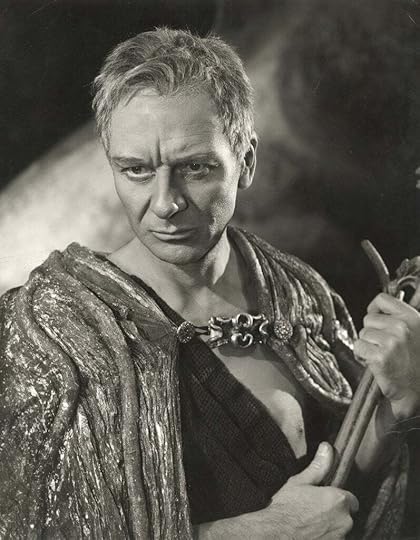
John Gielgud in The Tempest
The writing is clear and direct, the ideas challenging, the insight brilliant. Best of all, the reader gains great insight into two brilliant minds.
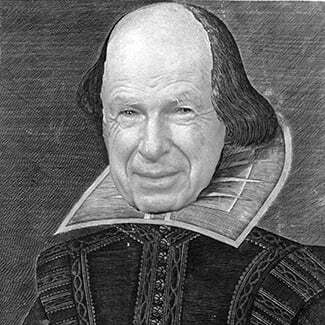
Peter Brook as Shakespeare
The Quality of Mercy: Reflections on Shakespeare ~~ Peter Brook
A Midsummer Night’s Dream
The Quality of Mercy: Reflections on Shakespeare may be a very slim volume but its 128 pages really pack a punch. With 70+ years as one of the world’s foremost directors ~~ and much of that spent directing Shakespeare ~~ Brook’s reflections on Shakespeare should be required reading for all aspiring directors, actors and all serious theatregoers.
Vivien Leigh in Titus Andronicus
Here, Brook reflects on a fascinating variety of Shakespearean topics ~~ who was the man who wrote Shakespeare's plays ~~ why Shakespeare is never out of date ~~ how to approach Shakespeare's verse ~~ why actors should forget Shakespeare when performing his plays
The most fascinating sections are Brook revisiting some of the plays which he has directed with notable brilliance, such as King Lear, Titus Andronicus, Hamlet and, his best known Shakespearean production, A Midsummer Night's Dream.
Timon of Athens
My favorite chapter was A Cook and a Concept. Here we learn Brook's conviction that productions should be developed organically rather than merely as a result of a director's whim. I agree with Brook as he points out this all too frequently has the effect of plotting out the original work that he or she is supposed to be bringing to the stage.
John Gielgud in The Tempest
The writing is clear and direct, the ideas challenging, the insight brilliant. Best of all, the reader gains great insight into two brilliant minds.
Peter Brook as Shakespeare

January 23, 2021
Milosrđe je misterija.
Skoro napunivši svoj 90. rođendan, a proživevši makar onoliko života koliko je godina napunio, Bruk piše divnu knjigu, koja zrači bistrinom i elegancijom. Taj duh odlično dočaravaju početne rečenice: „Ovo nije delo za univerzitet. Pokušavam da ne držim predavanja o Šekspiru. Ovo je niz iskustava, impresija i privremenih zaključaka.” (9)
Ali ovo nipošto nisu neke usputne beleškice, zgužvane u džepovima, već kratke forme iz kojih isijava raskošno životno iskustvo. Prisećajući se svojih inscenacija Šekspira, Bruk je u dosluhu sa suštinom svakog komada, čak i onda kada je ne izriče. I gotovo da zaista ima nečeg svečanog kada osetite neglumljenu svežinu u čitanju Šekspira – kada nakon toliko ličnog i kolektivnog iskustva, dođete do nečeg opet mladog, do nekog blistavog obrta. I svakako neću više isto čitati Šekspira – ako imam u vidu sjajno opisau dijalektiku haosa i reda kod Šekspira, gde haos nikad nije katastrofa, a red je uvek predmet izdaje (84). Ovo čitanje ima neko metafizičko svojstvo – ta složenost naizgled jednostavnog dvojstva izuzetno je privlačna; međutim, ne i onoliko koliko bi bila ukoliko bi se previdela vasionska Prosperova rečenica, u kojoj se traži „molitva toliko prodorna da juriša do samog milosrđa”. O kakvoj molitvi je ovde reč i kakva je anatomija otpora Propserovoj svemoći? I do kakvog se uopšte milosrđa može dobaciti rečima? Milosrđa reda? Ili haosa?
Dati neposredan život večnim pitanjima (43), naći klizeću vagu, vodilju za meru mere za meru – to je ono zbog čega je Šekspir ono što jeste. Tako na samom kraju, Šekspira Bruk povezuje sa Oblikom, u kome sve, što duže traje, samo više počinje.
Da se ne stekne pogrešan utisak, ovo nije nikakva mistična opservacija, već kristali misli i iskustva. Ponekad se nađe i prava pozorišna slika, kao kada je Tito gledao Tita Andronika baš u Beogradu, obučen u belu košulju sa crnom kravatom. (49) Tito Titu.
I oko nečega je Bruk sasvim jasan – treba bežati od definicija i kule argumenata jer se oni opiru prirodi Šekspirovog dela, umrtvljujući ga. Takođe, najbolji savet jeste – ne početi nikad od zaključka, jer zaključci su – „recept, mapa puteva” (79) što nigde ne vode.
A sve reči, reči, reči...
Skoro napunivši svoj 90. rođendan, a proživevši makar onoliko života koliko je godina napunio, Bruk piše divnu knjigu, koja zrači bistrinom i elegancijom. Taj duh odlično dočaravaju početne rečenice: „Ovo nije delo za univerzitet. Pokušavam da ne držim predavanja o Šekspiru. Ovo je niz iskustava, impresija i privremenih zaključaka.” (9)
Ali ovo nipošto nisu neke usputne beleškice, zgužvane u džepovima, već kratke forme iz kojih isijava raskošno životno iskustvo. Prisećajući se svojih inscenacija Šekspira, Bruk je u dosluhu sa suštinom svakog komada, čak i onda kada je ne izriče. I gotovo da zaista ima nečeg svečanog kada osetite neglumljenu svežinu u čitanju Šekspira – kada nakon toliko ličnog i kolektivnog iskustva, dođete do nečeg opet mladog, do nekog blistavog obrta. I svakako neću više isto čitati Šekspira – ako imam u vidu sjajno opisau dijalektiku haosa i reda kod Šekspira, gde haos nikad nije katastrofa, a red je uvek predmet izdaje (84). Ovo čitanje ima neko metafizičko svojstvo – ta složenost naizgled jednostavnog dvojstva izuzetno je privlačna; međutim, ne i onoliko koliko bi bila ukoliko bi se previdela vasionska Prosperova rečenica, u kojoj se traži „molitva toliko prodorna da juriša do samog milosrđa”. O kakvoj molitvi je ovde reč i kakva je anatomija otpora Propserovoj svemoći? I do kakvog se uopšte milosrđa može dobaciti rečima? Milosrđa reda? Ili haosa?
Dati neposredan život večnim pitanjima (43), naći klizeću vagu, vodilju za meru mere za meru – to je ono zbog čega je Šekspir ono što jeste. Tako na samom kraju, Šekspira Bruk povezuje sa Oblikom, u kome sve, što duže traje, samo više počinje.
Da se ne stekne pogrešan utisak, ovo nije nikakva mistična opservacija, već kristali misli i iskustva. Ponekad se nađe i prava pozorišna slika, kao kada je Tito gledao Tita Andronika baš u Beogradu, obučen u belu košulju sa crnom kravatom. (49) Tito Titu.
I oko nečega je Bruk sasvim jasan – treba bežati od definicija i kule argumenata jer se oni opiru prirodi Šekspirovog dela, umrtvljujući ga. Takođe, najbolji savet jeste – ne početi nikad od zaključka, jer zaključci su – „recept, mapa puteva” (79) što nigde ne vode.
A sve reči, reči, reči...

April 25, 2019
Jedinstven uvid u svu genijalnost Šekspirovog opusa od strane jednog od najvećih reditelja Šekspirovih drama. Bruk u ovim esejima na njemu svojstven, šarmantan i duhovit, istovremeno dubok i analitičan način govori, između ostalog, o tome zašto Šekspir nikad ne zastarijeva. Pametno, prefinjeno i pitko.

October 15, 2013
Wonderful and truly thought-provoking stuff... Too short, but then maybe succinct is in itself a virtue.
Recommended for anyone interested in considering the meanings in Shakespeare's incredible plays.
Recommended for anyone interested in considering the meanings in Shakespeare's incredible plays.

November 3, 2019
It’s good to get a director’s perspective. And yes, Shakespeare wrote Shakespeare.

June 2, 2021
Peter Brook directed my favourite filmic version of 'King Lear', so I thought I absolutely had to read his reflections on directing Shakespeare for stage and cinema, as well as a short reflection on the authorship debate. On the whole, I found this collection really fascinating; it's illuminating to hear reflections on Shakespeare not from an academic locked away in a library but a director who has lived and breathed the plays themselves, and understands how to nourish the language of Shakespeare to realise something truly magnificent. I don't think this collection contains any groundbreaking revelations, but it is more than worth reading and a fascinating insight into the mind of Peter Brook.

August 6, 2019
Shakespeare class prep, book 2.
As a student and teacher of literature rather than an actor, there are things I miss when reading Shakespeare. Practical considerations like time for costume changes and giving an actor a rest if he's been center-stage for the last 7 scenes, or the energy and flow of a line, the music of words spoken aloud rather than silently read, or the simple evidence that Shakespeare wrote Shakespeare because his fellow actors would have known if he were faking it.
So it's nice to get Shakespeare from an actor and a director's point of view--to see the plays through the eyes of the theatre rather than solely through the eyes of academics. It's not the most brilliantly insightful piece on Shakespeare I've ever read, but I'm glad to have read it.
As a student and teacher of literature rather than an actor, there are things I miss when reading Shakespeare. Practical considerations like time for costume changes and giving an actor a rest if he's been center-stage for the last 7 scenes, or the energy and flow of a line, the music of words spoken aloud rather than silently read, or the simple evidence that Shakespeare wrote Shakespeare because his fellow actors would have known if he were faking it.
So it's nice to get Shakespeare from an actor and a director's point of view--to see the plays through the eyes of the theatre rather than solely through the eyes of academics. It's not the most brilliantly insightful piece on Shakespeare I've ever read, but I'm glad to have read it.

February 26, 2020
I wish I were more familiar with Shakespeare's work to read this book. Yet with this small collection of essays and notes, Peter Brook not only talked about Shakespeare's work, more interesting for me are his reflections on theatre -- such as the energy and delivery of a line, the music (from feeling) with tempo how words are spoken -- as well as the reflections on concepts, form and artistic processes.

May 21, 2021
Μικρός θησαυρός!

March 9, 2023
Amazing insights and stories, but perhaps misleading when it comes to how the actor should approach verse speaking. This is not an actors book.

March 24, 2019
What can one really say that is new about Shakespeare? Even with his impressive and world-renowned career with the Royal Shakespeare Company and his Centre International, it really just comes down to opinion and taste. Far-flung ideas about the plays being written by someone other than Shakespeare, or how florid staging style of the Victorian era doesn’t really suit the mid-twentieth century the way for staging Titus Andronicus or Timon of Athens. Having said what he can in these compact chapters, and relating a couple experiences with the big names (still) of Shakespearean acting: Olivier, Scofield, Gielgud, he expounds a little bit on why he did what he did with a few selected plays. But even then, when speaking about his game-changing A Midsummer Night’s Dream, he can only say so much. Basically it boils down to ‘you had to be there’ which seems like a slap in the face. Even when he reports how Japanese film crew made a faithful copy of his production which had already been destroyed by the time Brook got to see how effectively it captured this show, the fact remains that to see Oberon on a tightrope or Helena on stilts, the only truly authentic way to see it was from a seat in the auditorium. Even if the tools exist to recreate the event in VR, as they soon will, it would have been like Brook suddenly decided to build an elaborate set with trees and bunny rabbits on stage, ruining the lightning-fast changes in tone and texture that come with a single word, like quality or mercy. It is interesting how both Titus and The Tempest have bits of dialogue where characters give conflicting reports about the environment where their scene is set, and paying attention to these words is part of the pleasure of the reality-reshaping that happens in a Shakespearean play.

Read
May 30, 2014A theater director's reflections on various Shakespeare's plays and productions. My favorite essay was the first, "Alas, Poor Yorick," on the disputed authorship of Shakespeare's plays. He reminds the arguing scholars that the plays were created, perfected, and performed within a theater community that surely would have spoken if Shakespeare were a fraud. They didn't. I like his ideas about Shakespeare as a person: "Everything we know suggests that Shakespeare was a very modest man. He does not use his characters to speak his thoughts, his ideas. He never imposes his world onto the world he lets appear. [...] Shakespeare did not need ostentation. He did not try to assert himself and that is why there are none of the colourful anecdotes that biographers hunger for. Ben Jonson, with all his gift of caricature, could only find one adjective to conjure up this unassuming man--'gentle'" (16). Many other thoughtful insights from the plays & I also enjoyed the gossipy bits about Laurence Olivier & Vivien Leigh in Titus Andronicus.
February 17, 2018
I am not a great theatre goer. I do, however, quite like the idea of the theatre, I have just found the experience disappointing. That’s not totally true, over the years there have been productions that I enjoyed, but there have always been more that I got little out of. I certainly haven’t seen any of Peter Brook’s productions. I’m not sure when I became aware of him, but I like the idea of Brook. His early 1960s staging of King Lear, for instance, not only led people to think of the play in completely new ways, but also think of new ways of staging Shakespeare. And I like the way Brook didn’t start as a revolutionary, but evolved into one over a decade or more of working as a director: he was a pragmatic revolutionary. And when I see Brook talking on TV he always seems likable: calm, thoughtful, clear headed, modest. This short book is a series of thoughts about Shakespeare – it can’t even be called an essay. I wasn’t expecting a consistent argument about Shakespeare, rather I was expecting thoughts about the staging of Shakespeare, but I found this book surprisingly unfocused. There are general ideas about Shakespeare, such as the first section where Brook considers the possibility of someone else having written the plays, but all his ideas seem a little obvious (Brook is adamant that Shakespeare wrote Shakespeare, but surely only a dunderhead would think otherwise) or are little more than vague reiterations of Shakespeare’s greatness. Then there are times when Brook falls into anecdote, such as Olivier and Vivien Leigh performing Titus Andronicus and the first signs of Leigh’s mental illness...these can be interesting but a little inconsequential. But there were also the sections where he writes about staging Shakespeare - this is what I thought the book was going to be about and is its main interest, but I missed the insights. I finished the book a couple of weeks ago and now can’t remember anything in particular about it. It felt as though Brook knocked it off without that much thought, which is a shame considering his reputation as one of the world’s finest – certainly one of the most thought provoking – directors of Shakespeare.
September 8, 2022
Decades before the current theatrical self study of faults of inclusiveness, diversity, opportunity and giving voices, Peter Brook just always inherently worked in the right way not as a duty but as a true brilliant artist alive to all the participants in theater and in the beautiful hard working development of plays. And no cliches or abstractions, just human connection with fellow players and craftsmen and playwrights. With these Shakespeare thoughts the world gets a gift of his cellular inner understanding and creativity putting on these stories. In one sentence he has more to convey about King Lear than volumes from others. "For Lear, it is the crowding of extreme pressures into the last period of his life that make every second of his final experiences another lifetime." And his thoughts on Prospero also open up a feeling for the Tempest that is extraordinary. The world is diminished with his passing.

May 27, 2025
This book was lent to me by a very dear theatre teacher. I cannot thank him remotely enough for this suggestion. I loved it just as much as he proposed he would, perhaps even more.
I sit here, a single tear rolling down my face, carrying mascara into my coffee and I could not care less for my appearances. After finishing this book, I had to pause and take a breath. Perhaps this is more than most would perceive this book to deserve, but I care not for the opinions of others at this current moment.
This book gave a beautiful reflection into the world of Shakespeare’s writings, and increased my adoration and appreciation of Shakespeare (which— if you know me —is rather hard to do), and I must immediately thank my theatre teacher. The reflections conveyed in this book were well-illustrated, easy to understand- and yet put rather beautifully.
I do not usually read non-fiction, but it is safe to say that I will be purchasing my own copy of this.
I sit here, a single tear rolling down my face, carrying mascara into my coffee and I could not care less for my appearances. After finishing this book, I had to pause and take a breath. Perhaps this is more than most would perceive this book to deserve, but I care not for the opinions of others at this current moment.
This book gave a beautiful reflection into the world of Shakespeare’s writings, and increased my adoration and appreciation of Shakespeare (which— if you know me —is rather hard to do), and I must immediately thank my theatre teacher. The reflections conveyed in this book were well-illustrated, easy to understand- and yet put rather beautifully.
I do not usually read non-fiction, but it is safe to say that I will be purchasing my own copy of this.

August 1, 2020
Brief, but every word brilliant. His chapter on speaking verse is one I’ll return to often, and his anecdotes about directing some of the greatest actors of the 20th century are a particular treat. (All hail Paul Scofield!) And his final argument about mercy and freedom moved me to my core.
Recommend for any lover of Shakespeare, especially any who are too apt to forget that the plays live in space and time, not just on a page.
Recommend for any lover of Shakespeare, especially any who are too apt to forget that the plays live in space and time, not just on a page.

February 25, 2022
Wonderful hybrid memoir and director’s notes on some of the author’s most memorial Shakespeare productions. It provides many insights on the creative decisions made and how circumstances necessitated this direction or that. It also namedrops unapologetically as this too provides the nuance by which an interpretation took place. Finally, the book at times takes a scholarly tone in the research done in preparation for each’s play’s production. Enjoyable read for any Shakespearean.

October 26, 2022
A very simple book about what Peter Brook likes about the Shakespeare plays that deal with mercy and revenge. Pretty rudimentary, but he makes a good point stating Timon of Athens is a poor man's King Lear. Good observation there. What I know is Shakespeare's views on mercy are inconsistent, but he shows more mercy in his later plays (where he himself is older.) He's pretty ruthless in his earlier plays.
June 5, 2018
One of the things I love about Peter Brook is his accessibility: all this amazing creativity, talent, so many interesting thoughts and fun ideas, and he's easy to read - not at all abstruse or complex. He writes so people can comprehend and enjoy.

July 28, 2022
2.5 stars! Liked some of the reflections and ideas (especially liked how he set out his argument that it was indeed Shakespeare who wrote Shakespeare), but to me it was just a little bit too much about himself. Maybe that was the intention of the essays, but it just annoyed me while reading.

November 12, 2019
Notas de Brook sobre Shakespeare, pequeñas reflexiones, apenas más allá de un apunte, que sin embargo las leemos como lecciones de un maestro. Lo son.

February 5, 2021
Its anecdotes are cute and insightful, and it goes very deep into what makes Shakespeare so great in the last few chapters. An excellent bite-size Shakespeare dose.

August 8, 2021
More great insight into Shakespeare, from one of the great theater directors of our time. Short essays, a couple of which could have been longer without complaint.
August 12, 2021
Essential reading for lovers of Shakespeare and haters of heavy concept in theatre
May 24, 2022
Wonderful and fruitful observations about theatre and Shakespeare - and life!

July 30, 2022
An exception book, not just about Shakespeare but life and art. A master's class in how to approach directing Shakespeare and directing in general.

June 27, 2024
This are wonderful little essays about how to find new things in Shakespeare. What’s nice about the book is that the essays are not too tough for students to understand.
March 7, 2026
Some wonderfully dismissive counter arguements to the doubters about Shakespeare's authorship and some great commentary on his own significant productions of the Bard.

April 20, 2026
Delicioso ler as impressões de Peter. Das leituras que aguçam a sensibilidade.
Displaying 1 - 30 of 38 reviews