Through the lives of three siblings living in Hiroshima, Japan, Terry Watada explores the sweep of history during the years 1930 to 1945. The youngest, Chisato Akamatsu, travels to Canada looking for a new life but is confronted by the brutalities of immigration, a troubled marriage and the humiliation of the Japanese internment by the Canadian government. Hideki, the only brother, joins the military to fight for the Emperor and find “glory” in China, but finds only the fallacy of patriotism, the brutality of war, and the futility of existence. Chiemi, the oldest, was in the city when to the atom bomb hit. The three encapsulate the hopes, fears, dreams, the inhumanity of the period and resiliency of humans caught in historic events. In his fourth novel, Canadian poet, dramatist, and novelist Terry Watada delves into the Pacific War, looking at WWII from a Japanese perspective, unique in Canadian literature.
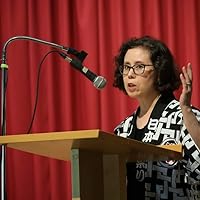
Terry Watada is a Toronto poet, novelist, playwright and essayist, and historian, musician and composer, with numerous publications to his credit. Five of his plays have received mainstage production. He contributes a monthly column to The Bulletin, a national Japanese Canadian community paper. For his writing, music and community volunteerism, he was recently awarded the Queen Elizabeth II Diamond Jubilee Medal. His published works include The Sword, the Medal and the Rosary (manga, 2013); Kuroshio: The Blood of Foxes (novel, 2007), Obon: the Festival of the Dead (poetry, 2006); Ten Thousand Views of Rain (poetry, 2001); A Thousand Homes (poetry, 1995); and The TBC: the Toronto Buddhist Church, 1995 – 2010 (2010).
It's great subject matter for a novel...but something doesn't quite connect, and I'm not sure how to articulate my frustration. Perhaps the older sister's story isn't quite as compelling as the younger siblings? Perhaps I would have preferred more concrete separation of the stories? It's a solid read, but I wish it had had a more profound impact on me.
For me, a Caucasian born and raised in Canada, this book was very interesting for its description of Japanese daily life and culture. It's a book of fiction based on true life events of people who lived in Hiroshima before, during and after WWII. The lives of three siblings are followed as each pursues a different life path. The oldest stays in Hiroshima with her parents and experiences the American atomic bomb attack of August 6, 1945. The second sibling, a boy, volunteers in the army and is sent to China during the Second Sino-Japanese war. The third child, a girl, asks her father to find her a husband in Canada because she is looking for adventure abroad. The experiences of the three are widely different and each is tragic.
The book could benefit from the work of a good editor to clean up grammatical errors. It could also benefit from the addition of a table of contents. I didn't find the glossary at the back until I was almost finished the book and this would have helped me to understand the occasional Japanese word. Not all the Japanese words used in the book are listed in the glossary, though. For such a well thought out book and an interesting comment on life at that time, it's a shame these mechanical steps were not taken care of.
Facinating subject matter but this book needed to be organised differently and it also needed a firm editorial hand applied to it.
The scope of the endeavour felt far too large. We are ‘treated’ to what amounts to a series of random events with the reader never getting a sense of the bigger historical picture - the all encompassing sense of historical weight.
It just felt like it lacked depth. Pivotal moments/events - from the rape of Nanking, to the actual dropping of the atomic bomb and many more - are touched upon briefly and then we move on.
There is also a distance between the reader and the text. This is a story that needed to have been told in the first person… not in the third person.
Having consistent typos and formatting issues in your book is an automatic one star from me. That's a bare minimum expectation for a published novel. As for the content of the book, there were major plot points that were completely glossed over, both emotionally and narratively, which made a lot of the characters decisions feel jarring. The dialogue and internal monologues also felt very wooden, which made this a more frustrating read.