Jump to ratings and reviews
Rate this book

Status Quo Thinking Is Harming Your Health: A Physician's Final Plea

Rate this book
“In her final, groundbreaking work, Dr. Sarah Hallberg challenges the entrenched beliefs of modern medicine, urging readers to question the status quo for the sake of their health. This book is both a passionate plea and a testament to a life dedicated to healing. Published posthumously, this book serves as Hallberg's enduring legacy, calling for a radical shift in our approach to healthcare.” Peter Attia, MD, Founder, Early Medical

"Sarah Hallberg leaves nothing on the table. This book is part heart-wrenching memoir, part indictment of our medical system, and a big part visionary road map for an enlightened healthcare system focused on the root causes of our chronic disease and diabetes epidemic. A must-read for anyone frustrated with our current medical paradigm and searching for a way of healing for us all." Mark Hyman, MD, author of the #1 New York Times bestseller, Young Forever


Sarah Hallberg wanted to make a positive, lasting difference in her patients’ lives. But when she collided with the chronically frustrating aspects of the American healthcare system - entrenched thinking, overreliance on meds, contentment to manage long-term conditions rather than seek root causes - she pursued a new way and found it. At the weight loss clinic she led in Lafayette, Indiana, she discovered that the standard approach – a low-fat diet = weight loss and good health – had zero scientific support. Dr. Hallberg’s clinic adopted a model of a low-carbohydrate, high-fat diet. Her patients lost weight. Those who also suffered from diabetes saw their condition improve or “go away.” Over the next several years, Dr. Hallberg and her team embarked on a journey to study the health effects of the low-carb diet; their pioneering research led to their most crucial Diabetes need not simply be managed but can be reversed by diet. While battling terminal cancer, Dr. Hallberg wrote this crucial, inspiring account of how we can all eat better to live better and longer. As important, this book – her first and last – is a searing indictment of what happens when we leave status quo thinking unchallenged, and how it impacts quality of life for us and those we love.

Paperback

Published March 7, 2024

102 people are currently reading
112 people want to read

About the author

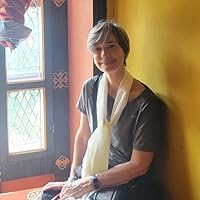
Sarah Hallberg

2 books3 followers

Ratings & Reviews

What do you think?
Rate this book

Friends & Following

Create a free account to discover what your friends think of this book!

Community Reviews

5 stars
102 (85%)
4 stars
15 (12%)
3 stars
2 (1%)
2 stars
1 (<1%)
1 star
0 (0%)
Displaying 1 - 8 of 8 reviews
Profile Image for Brendan Reid.
Author 1 book1 follower
May 5, 2024
I am not a fast reader. It might take me several weeks to get through a typical book, sometimes even months. This one took me all of five days, from the Wednesday last week when it arrived, to the following Sunday evening as I write this now.

For those who have seen or heard “Dr Sarah” speak in any of her presentations or interviews, it is easy to imagine the sound of her voice as you read. These are very clearly her words, her stories. On this basis, the book is very easy to read for its style. There are some happy moments (two of which actually made me laugh out loud), and yes, the story of her world-famous TEDx talk is included.

Yet at the same time, the book also makes for a very uneasy read for its substance. The content is as confronting in places as it is compelling throughout. Sarah describes many of the professional challenges she faced throughout her career, as well as difficult details of the personal challenges she faced towards the end of her life.

The lessons to be learned from Sarah’s memoir are two-fold: ask questions of those health experts who appear so absolutely certain of their position, especially if it supports a status quo that is so clearly failing us; and to cherish the time that we each have, with the ones we love.

Highly recommended.
6 reviews
April 15, 2024
I Can't Find the Words

I read this to learn of Sarah's work, which I did. Though her work was truly amazing, as was she, what touched me most was her compassion for humanity. The book, especially the epilogue by her husband Brad, brought
"Tuesdays with Morrie" to mind.
I strongly recommend this book.
Profile Image for Pedro L. Fragoso.
875 reviews67 followers
July 11, 2025
“You do not get fat because you eat fat. When you eat fat—instead of so many carbohydrates – your body is fueled primarily by the fat. It is not stored in those fat cells. The old idea behind “you are what you eat” was simple (simplistic and wrong); cut the fat out of your diet, you’re going to cut the fat out of you.”

In the end, this is ultimately a book about the scientific process—about the pursuit of proof that establishes scientific truth. And yet, even when that proof is presented, people often refuse to believe it—because it challenges their deeply held assumptions about what is “obviously” true. It all comes down to Bertrand Russell’s observation: “If a man is offered a fact which goes against his instincts, he will scrutinize it closely, and unless the evidence is overwhelming, he will refuse to believe it. If, on the other hand, he is offered something which affords a reason for acting in accordance with his instincts, he will accept it even on the slightest evidence. The origin of myths is explained in this way.” Given that Dr. Hallberg discovered diabetes (and obesity) could be treated with a diet generous in fats, it’s fair to say she had a mountain to climb. And climb it she did. (“The study that emerged is arguably the most important trial in the history of type 2 diabetes. For participants receiving the ketogenic treatment, it demonstrated dramatic decreases in blood sugar levels and diabetic medications, and significant weight loss. People were reversing out of diabetes.” (...) “A ketogenic diet is a very low-carbohydrate diet. In our clinic we talk about “a well-formulated” ketogenic diet. By that, we mean nutritionally well formulated (no, it’s not just meat and cheese) and that it is not one size fits all. Although we usually start our patients on a maximum of 30 grams of carbs a day, it really depends on the individual’s metabolic health. So, some individuals with diabetes or other indicators of poor metabolic health may start with under 20 carbs a day. For others, the upper limit can be 50 grams. As a percentage of calories, 5-10% are carbs, 15-20% is protein, and 70-80% is fat.”
If you’re suffering from chronic disease, to maintain hope you must possess, among other things, a certain amount of confidence in the system charged with caring for you.

Fat Fiction is a nutrition horror story. It tells the tale that I had been trying to tell, and continued trying to tell. It’s the story of how, without evidence, we were sold on a diet—low-fat and high carb—that not only was unhealthy but brought untold misery and death.

Our nation’s tragic opioid crisis is in large part the direct result of patients wanting pain relief via medication, and doctors capitulating to that desire without time to consider the appropriateness or alternatives.

Patients who like their doctors are more likely to die. Let that sink in.

A wise man changes his mind, a fool never will.

I can’t tell you how many lectures, presentations, and discussions about obesity I’ve attended, where nutrition is lucky to get mentioned at all.

Practically no one gets a chance to do this, in the midst of a medical career: pause, read, and study, consider, strategize. Doctors rarely get the chance. (People rarely get the chance.) I wanted to dive into the latest research, to understand the key issues at their root. (...) That’s how I came to understand that a low-fat diet—with its high carbohydrate corollary—makes zero physiological sense for anyone with insulin resistance. (...) I quickly realized that this new low-carb regimen did not have to be a burden. Let me type those words again: this new eating regimen did not have to be a burden.

Carbohydrate restriction helped him reverse the level of insulin resistance that was behind his weight problem.

The most common response to our “You don’t need to exercise just yet” was some version of, “No, wait—are you serious?” Yes, we were. Because studies showed that exercise is not a good weight-loss strategy. (Some people will want to read that sentence again.)

Saturated fat and dietary cholesterol are most commonly found in eggs, dairy, shellfish, and meat—foods that human beings had been eating for millennia. Now, though, according to Keys, they were suspect. (...) We had nowhere near the current incidence of this disease before low-fat/high-carb diets became standard. The prevalence of diabetes in the US increased almost 700% in the past sixty years, since Keys first showed up on the cover of Time—700%! Today’s statistics on diabetes are horrifying. About half the adults in this country have diabetes or prediabetes, and that certain cancers, especially of the liver and pancreas.

(...) while exercise provides lots (and lots) of benefits, weight loss isn’t one of them.

To repeat: dietary fat isn’t nearly the problem that so many doctors, nutritionists, national health organizations, and the government told us it was.

An even more stunning finding to emerge from those original computer tapes: For the older MCS men and women, the more they lowered their cholesterol, the more likely they were to die of a heart attack.

All my reading and clinical work and my own research led me to this painful conclusion: In the world of nutrition science, evidence is often inconvenient for those dedicated to defending the status quo.

If not done promptly, they’d be at risk for hypoglycemia: dangerously low blood sugar. If a patient broke the diet even briefly, blood sugar would go up and we’d have to add back some of those meds. In many patients, their meds needed changing multiple times per week. Steve Phinney liked to describe this as “outpatient intensive care.” We were two doctors and six coaches managing almost 400 patients, seven days per week, but charting a whole new approach to type 2 diabetes. And it was worth it.

One huge relief: no one from big industry or the big health associations was paying attention to us, at least not yet. At some point they would, because what we were doing would ultimately challenge so much of what they did and said; so much of their revenue could go up in smoke if people better understood the science of food, nutrition, dieting, carbohydrates, fat, and the rest. I knew how vicious some low-carb opponents had been with me and many of my colleagues.

There was evidence going back over a century that carbohydrate restriction worked. It was originally meant to help children with epilepsy, as well as to treat diabetes before we had insulin and other medication. But it began to show real promise for helping in other ways—not just for bringing down weight or controlling diabetes but improving other key health indicators, such as lowering risk factors for cardiovascular disease and helping certain nervous system disorders.

I was invited to testify before a Congressional working group about nutrition. Then I got disinvited, for reasons I can only speculate. Then I was re-invited.

“There’s a lot of money at play here,” I wrote to her, “and when the powers that be have been giving bad advice (they absolutely have), then there will be a lot of heads to roll. I just can’t believe the lengths they will go to suppress a) help for the patients they are supposed to be advocating for and b) science.”

I couldn’t resist pushing back on flimsy, dangerous thinking. When one audience member asserted that Asians who moved to Britain started having problems with diabetes and heart disease, cancer, and kidney stones because they were eating more meat and fat than before they had emigrated, I blurted out, “Based on what data?” Fiona Godlee politely silenced me. But my point: people often jump to conclusions when they see such a change, like an increase in health problems among immigrants. There is no evidence that meat is the cause. On the other hand, there’s plenty of evidence to show that sugar and processed foods are major culprits, and perhaps the “overeating,” including greater carb consumption, that is common in Western societies.

The toll on Indigenous Americans from poor nutrition and the consequent illnesses, especially diabetes, is staggering. According to the CDC, American Indians have the highest rate of diabetes of any racial or ethnic group in the country, about twice that of the White population. Unless the trend is halted, one in two American Indian children will eventually become diabetic. Most American Indians on reservations live in food deserts, where the only grocery store or market is at best many miles away and where much of their sustenance comes from the USDA’s Food Distribution Program, which consists largely of high-carbohydrate and processed foods. Enter diabetes, an illness for which Indigenous American languages did not even have a word.

It was not only patients who had been living with diabetes for a short time who were successful. Remember, we had the tough cases. And during those three years, three of our patients who had been living with diabetes the longest—15 to 20 years, and on huge doses of insulin – came completely off their insulin. More than three years in the trial and they stuck with it! They needed proper food. We need proper food. It works. I can only imagine how much money people with diabetes and their insurance companies will save.
The book is also a memoir, offering a candid and deeply human account of the cancer that eventually took the author’s life—a farewell marked by honesty and grace.
Once they had the result of the MRI of the brain and CT scan of the lungs, they could see that things were far worse than a stroke: a large brain tumor that caused the swelling, as well as a smaller brain tumor. Plus, a primary lung tumor and so many more as well.

With the CT scan of the chest and the MRI of the head, they could guess. Usually, you don’t get brain cancer metastasizing to the chest. And if you have metastatic lung cancer, the first place it often spreads is to the brain. Lung to brain, not brain to lung. Since my chest was full of tumors, that was the logical conclusion.
    No, I never smoked.
    The next thing I remember was arguing with my husband.
    “They’re wrong,” I kept telling Brad. “They’re wrong!”

They had concluded that the larger of the brain tumors—posterior, left—was too big to shrink with steroids alone. They weren’t concerned at the moment about the smaller one. If we didn’t get the big one out right away, I’m told the doctor warned, “that’s it.”
    That’s it.
    Would I have ever used that wording with a patient or their loved ones?
    Brain surgery was scheduled for the morning.

What was it like to be my husband that final day in June, the day before my brain surgery, a day that started out so perfect and turned so dreadful?

I had always vowed—granted, it was abstract then—that I would never do that to my family, or to me. It wasn’t the horrible things that were going to happen to me that I dreaded, but the horrible things my kids would have to watch.

I started considering—and in some cases pursuing—highly experimental treatments, the kind of “solution” I would normally have rejected for its lack of scientific support. Desperate times and all that.

I had to alter my usual presentation style—arms and hands animated—or blood would be flying everywhere. I felt handicapped at not being able to flap and gesture.

“Let’s do that,” I told him. “Now.” I had rejected the idea in the hospital, but every patient reserves the right to completely change her mind.

I held onto something, anything. You have to. Without hope, there’s nothing.

Profile Image for Literary Reviewer.
1,297 reviews105 followers
March 22, 2024
In Status Quo Thinking is Harming Your Health: A Physician’s Final Plea, Dr. Sarah Hallberg, a medical doctor, researcher, and TED Talk presenter known for her impactful obesity studies at Indiana University Health, combines her extensive academic background in exercise science and kinesiology with her medical expertise. This unique blend of knowledge forms the foundation of her thesis, which emphasizes the critical role of exercise and low-carbohydrate diets in preventing and managing diabetes and other serious health conditions.

Dr. Hallberg’s book presents a thorough exploration of the American obesity crisis, shedding light on its alarming statistics and the often resulting type 2 diabetes and other related comorbidities. Her work stands out for its detailed examination of how these health issues disproportionately affect different racial, heritage, and socioeconomic groups, particularly underscoring the challenges faced by those in lower socioeconomic brackets who often lack access to adequate healthcare and health education.

The narrative is enriched by Dr. Hallberg’s personal journey, from her academic endeavors to her roles as a physician, researcher, mother, and wife. Her holistic approach to healthcare, which she believes should encompass medical facts, effective execution, and empathetic understanding, is evident throughout the book. This approach is not just theoretical but is also infused with practical guidance for leading a healthier lifestyle and preventing obesity-related diseases.

Dr. Hallberg’s deep compassion and commitment to improving public health are palpable, lending a sense of urgency to her call for individuals to take proactive steps toward their own health and well-being. Her story is not just one of professional achievement but also of personal growth, leaving readers inspired by her dedication to making a lasting impact on healthcare.

Status Quo Thinking is Harming Your Health is a compelling and insightful read that offers a blend of personal narrative, rigorous research, and practical advice. It serves as a testament to Dr. Hallberg’s impactful legacy in the field of healthcare.
Profile Image for Grace.
359 reviews12 followers
May 12, 2024
This books clearly reveals how nutritional advice, passed off by leading experts, has led to an epidemic of diabetes in our country. Dr. Sarah Hallberg, director of an obesity clinic near Chicago, began to see astounding results as she went against the status quo and prescribed diets that went against common ideas of healthy food. The worst advice being, to pursue a low-fat, high carb diet. When she discovered the truth, she passed this on to her patients. Not only did they lose weight but they reversed their diabetes. What was so interesting to her, was the reaction of her patients. When they began to see the results when they followed her nutritional plan, they were downright angry at what they had been led to believe about proper nutrition for decades. It had all been a bunch of lies.

Hallberg shows how recommendations for nutrition have not even been based on facts. The recommendation on saturated fats was NOT based on any evidence when it came out in 1977. And when the new guidelines came out in 2020 they were contradictory. Those guidelines say that they do not recommend a low-fat diet. Yay! Yet in the list of recommended food they include no-fat or low-fat milk, low-fat yogurt, low fat cheese and meats. What?

The National Health Institute invested hundreds of millions of dollars to fund a study that would show how a low-fat diet decreases the risk of heart disease and some cancers. The study found absolutely zero correlation. Just out of curiosity I just looked up on the Mayo clinic website to see what they said and was shocked when I read this, "Margarine often tops butter when it comes to heart health." That is nonsense.

Part of the concern is that hospitals and drug companies make a lot of money off these diseases. The American Diabetes Association gets its money from the pharmaceutical companies so you can not trust what they advocate. Who needs to get onboard are the insurance companies. They could save billions of dollars!
2 reviews
September 28, 2025
brilliant and heartbreaking

I was lured to this book 5 years too late. I discovered Dr. Hallberg‘s brilliant Ted talk soon after I had been diagnosed with type two diabetes . Discovered it at the perfect time, just as I was struggling to flip Atkins into a diabetes protocol. Following this protocol saved my life. I did discover doctors teaching the low-carb lifestyle. It is surprising and more than a little ironic that years after I have read Dr. Jason Fung, Dr. Eric Westman, Nina Teicholz, Dr Bernstein, and many others that this book suddenly popped up on my list, when Dr Sarah’s TED talk was one of my first revelations. I highly recommend this book
Profile Image for Dyane Harwood.
Author 1 book21 followers
May 26, 2024
I just finished the remarkable book "Status Quo Thinking Is Harming Your Health" by the late Dr. Sarah Hallberg. Her book moved me to tears, and most books I read do not do that. (I'm a voracious reader!)

Anyone with an interest in the ketogenic/LCHF movement would benefit from reading it.

Dr Hallberg's groundbreaking study with Virta Health, her perseverance in helping people from all walks of life (especially those often ignored) and her love for her children, husband, and two Labradoodles will stay with me forever.
Profile Image for Lily.
18 reviews2 followers
December 28, 2024
Inspiring but heartbreaking

This young doctor fought the establishment and reversed patients diabetes and prediabetes with food. Read the book to find out how she did it by advocating for low carb diets.
Displaying 1 - 8 of 8 reviews

Can't find what you're looking for?

Get help and learn more about the design.