

What do you think?

Studies in Violence, Mimesis, and Culture (SVMC)
Achever Clausewitz
René Girard aborde ici l'oeuvre de Cari von Clausewitz (1780-1831), stratège prussien auteur du De la guerre. Ce traité inachevé a été étudié par de nombreux militaires, hommes politiques ou philosophes. On en a retenu un axiome essentiel : « La guerre est la continuation de la politique par d'autres moyens. » Clausewitz aurait pensé que les gouvernements pouvaient faire taire les armes. Mais le succès de cette formule témoigne d'un refus de voir la nouveauté du traité. Observateur des campagnes napoléoniennes, Clausewitz a compris la nature de la guerre moderne : les termes de « duel », d'« action réciproque » ou de « montée aux extrêmes » désignent un mécanisme implacable, qui s'est depuis imposé comme l'unique loi de l'histoire. Loin de contenir la violence, la politique court derrière la guerre : les moyens guerriers sont devenus des fins. René Girard fait de Clausewitz le témoin fasciné d'une accélération de l'histoire. Hanté par le conflit franco-allemand, ce stratège éclaire, mieux qu'aucun autre, le mouvement qui va détruire l'Europe. "Achever Clausewitz ", c'est lever un tabou : celui qui nous empêchait de voir que l'apocalypse a commencé. Car la violence des hommes, échappant à tout contrôle, menace aujourd'hui la planète entière.
363 pages, Paperback
First published January 1, 2007
About the author
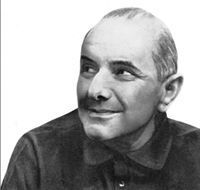
René Girard
124 books934 followersRené Girard was a French-born American historian, literary critic, and philosopher of social science whose work belongs to the tradition of anthropological philosophy.
He was born in the southern French city of Avignon on Christmas day in 1923. Between 1943 and 1947, he studied in Paris at the École des Chartres, an institution for the training of archivists and historians, where he specialized in medieval history. In 1947 he went to Indiana University on a year’s fellowship and eventually made almost his entire career in the United States. He completed a PhD in history at Indiana University in 1950 but also began to teach literature, the field in which he would first make his reputation. He taught at Duke University and at Bryn Mawr before becoming a professor at Johns Hopkins in Baltimore. In 1971 he went to the State University of New York at Buffalo for five years, returned to Johns Hopkins, and then finished his academic career at Stanford University where he taught between 1981 and his retirement in 1995.
Girard is the author of nearly thirty books, with his writings spanning many academic domains. Although the reception of his work is different in each of these areas, there is a growing body of secondary literature on his work and his influence on disciplines such as literary criticism, critical theory, anthropology, theology, psychology, mythology, sociology, economics, cultural studies, and philosophy.Girard’s fundamental ideas, which he has developed throughout his career and provide the foundation for his thinking, are that desire is mimetic (all of our desires are borrowed from other people), that all conflict originates in mimetic desire (mimetic rivalry), that the scapegoat mechanism is the origin of sacrifice and the foundation of human culture, and religion was necessary in human evolution to control the violence that can come from mimetic rivalry, and that the Bible reveals these ideas and denounces the scapegoat mechanism.
In 1990, friends and colleagues of Girard’s established the Colloquium on Violence and Religion to further research and discussion about the themes of Girard’s work. The Colloquium meets annually either in Europe or the United States.
René Girard died on November 4, 2015, at the age of 91 in Stanford.
He was born in the southern French city of Avignon on Christmas day in 1923. Between 1943 and 1947, he studied in Paris at the École des Chartres, an institution for the training of archivists and historians, where he specialized in medieval history. In 1947 he went to Indiana University on a year’s fellowship and eventually made almost his entire career in the United States. He completed a PhD in history at Indiana University in 1950 but also began to teach literature, the field in which he would first make his reputation. He taught at Duke University and at Bryn Mawr before becoming a professor at Johns Hopkins in Baltimore. In 1971 he went to the State University of New York at Buffalo for five years, returned to Johns Hopkins, and then finished his academic career at Stanford University where he taught between 1981 and his retirement in 1995.
Girard is the author of nearly thirty books, with his writings spanning many academic domains. Although the reception of his work is different in each of these areas, there is a growing body of secondary literature on his work and his influence on disciplines such as literary criticism, critical theory, anthropology, theology, psychology, mythology, sociology, economics, cultural studies, and philosophy.Girard’s fundamental ideas, which he has developed throughout his career and provide the foundation for his thinking, are that desire is mimetic (all of our desires are borrowed from other people), that all conflict originates in mimetic desire (mimetic rivalry), that the scapegoat mechanism is the origin of sacrifice and the foundation of human culture, and religion was necessary in human evolution to control the violence that can come from mimetic rivalry, and that the Bible reveals these ideas and denounces the scapegoat mechanism.
In 1990, friends and colleagues of Girard’s established the Colloquium on Violence and Religion to further research and discussion about the themes of Girard’s work. The Colloquium meets annually either in Europe or the United States.
René Girard died on November 4, 2015, at the age of 91 in Stanford.
Ratings & Reviews
Friends & Following
Create a free account to discover what your friends think of this book!
Community Reviews
Displaying 1 - 23 of 23 reviews

November 30, 2015
To understand, simply understand.
I know that terrorism is everywhere. Spain, the U.K., Lebanon, India… What occurred in Paris do not have any specificity. That will become banal. Everywhere.
15 days without anything to read. Not exactly. Only one book. To complete Clausewitz. Girard go beyond the classical analysis like that the Aron’s one. He proposes another interpretation of it. For Girard, the analysis of Clausewitz predicts the end of the lace war, the rise to the extremes, the total war. In short, the policy runs after the war and is not the prolongation of it. And especially, there is a duel. This obvious concept is often omitted. The hostile intentions are always exceeded by the hostile feelings.
It is forgotten that the attacker was always attacked. He thus finds his problematics of the mimetic desire.
What strikes me especially, it is the deep pessimism of the book, his latest, a crepuscular essay. It is felt that all this reflection was induced by the 11 september trauma. For him, we observe a return to an antiquated operating process of scapegoat. He even predicts that there will be inevitably many innocent victims.
It is necessary to be accustomed to the idea that we risk our life while going to listen to rock'n'roll or to drink a beer.
I know that terrorism is everywhere. Spain, the U.K., Lebanon, India… What occurred in Paris do not have any specificity. That will become banal. Everywhere.
15 days without anything to read. Not exactly. Only one book. To complete Clausewitz. Girard go beyond the classical analysis like that the Aron’s one. He proposes another interpretation of it. For Girard, the analysis of Clausewitz predicts the end of the lace war, the rise to the extremes, the total war. In short, the policy runs after the war and is not the prolongation of it. And especially, there is a duel. This obvious concept is often omitted. The hostile intentions are always exceeded by the hostile feelings.
It is forgotten that the attacker was always attacked. He thus finds his problematics of the mimetic desire.
What strikes me especially, it is the deep pessimism of the book, his latest, a crepuscular essay. It is felt that all this reflection was induced by the 11 september trauma. For him, we observe a return to an antiquated operating process of scapegoat. He even predicts that there will be inevitably many innocent victims.
It is necessary to be accustomed to the idea that we risk our life while going to listen to rock'n'roll or to drink a beer.
July 11, 2011
Reviewed 3/21/2011
Consequences of Crucifixion: Some Meta-Girardian Considerations
I am neither a Christian nor a Girardian; however, I very much appreciate the insights of both. I have long been impressed with Girard's Christian anthropological understanding of human history but had wondered how (and indeed if) he could apply that understanding to our thoroughly secularized postmodern world. This book does just that. However, as a non-Christian, this book leads me to considerations that our author could never support. But first a word about Girard and his brilliant book.
Girard began his career with a theory of Mimetic Desire. Not only do we all desire, but we desire what others desire. This leads to conflict. The ancient world resolved this conflict through the mechanism of the scapegoat. One individual is publicly sacrificed so the community might live in (an always temporary) peace. But the Crucifixion ends all that. Today we all know that the scapegoats are innocent. ...So, why aren't we living in Paradise?
That is the tale that this book tells. In these conversations Girard maintains that Clausewitz glimpsed the 'demoniacal' evil of secular progress not as peace, but as war, not without end, but rather as war to the bitter end. - As in the end of us all. I have just recently purchased this and am quite impressed. I know that I was not alone in wondering if Girard could bring his understanding of ancient religious (or mythical) sacrifice, mimesis, violence, and Christianity into the modern world. This book does just that. In a nutshell, it was the Apocalypse itself that Clausewitz glimpsed in his study of modern war. Of course, later commentators paper this over. (Girard is thinking mostly of Raymond Aron and Liddell Hart here.) But it is just this 'Apocalyptic turn' of the Enlightenment project that Girard intends to 'shout to the mountaintops'.
This book is brilliant; but it is by no means a 'pleasant' read. The Introduction ends thusly:
"I am convinced that history has meaning, and that its meaning is terrifying.
'But where danger threatens
That which saves from it also grows.' (p. xvii)"
Of course, this concluding hopeful gesture is unavailable to non-believers... (The quoted text is from Hölderlin's luminous 'Patmos'.) This book is intentionally quite exciting: French Revolution, Clausewitz, Hölderlin, Hegel, Napoleon, France and Germany, the Pope, and looming always, the Apocalypse. And then, salvation, - in spite of everything Girard does not give up hope.
I do fail, however, to understand the necessity of presenting this book as a conversation... Wouldn't a book length essay have been more effective?
But that is a quibble. This book is superb! Five stars for a brilliant account of the necessary violence of our Secular Enlightenment.
Now, most Christians I know are optimistic about the future. 'Optimist' would not be the term I would first pick to describe our author. There are underlying notes of tragedy in this text that are genuinely terrifying and perhaps even irredeemable. It is these that I wish to pursue in the remainder of this review.
"More than ever, I am convinced that history has meaning, and that its meaning is terrifying."
Why is it terrifying? Has Christ not Risen? In his Introduction Girard tersely, brilliantly and compellingly describes our present situation and what led to it:
"Christianity demystifies religion. Demystification, which is good in the absolute, has proven bad in the relative, for we were not prepared to shoulder its consequences. We are not Christian enough. The paradox can be put in a different way: Christianity is the only religion that has foreseen its own failure. This prescience is known as the apocalypse. (p. x)"
"The fetters put in place by the founding murder but unshackled by the Passion, are now liberating planet-wide violence, and we cannot refasten the bindings because we now know that scapegoats are innocent. The Passion unveiled the sacrificial origin of humanity once and for all. It dismantled the sacred and revealed its violence.
However, Christ also confirmed the divine that is within all religions. This incredible paradox, which no one can accept, is that the Passion has freed violence at the same time as holiness. (p. xi)"
"Our civilization is the most creative and powerful ever known, but also the most fragile and threatened because it no longer has the safety rails of archaic religion. Without sacrifice in the broad sense, it could destroy itself if it does not take care, which clearly it is not doing.
[...]
Once again, this does not mean Christian revelation is bad. It is wholly good, but we are unable to come to terms with it.
A scapegoat remains effective as long as we believe in its guilt. Having a scapegoat means not knowing that we have one. Learning that we have a scapegoat is to lose it forever and to expose ourselves to mimetic conflicts with no possible resolution. This is the implacable law of the escalation to extremes. The protective system of scapegoats is finally destroyed by the Crucifixion narratives as they reveal Jesus' innocence, and, little by little, that of all analogous victims.
[...]
To make the Revelation wholly good, and not threatening at all, humans have only to adopt the behavior recommended by Christ: abstain completely from retaliation, and renounce the escalation to extremes. (p. xiv)"
"Christ came to take the victim's place. He placed himself at the heart of the system to reveal its hidden workings. The 'second Adam,' to use Saint Paul's expression, revealed to us how the 'first' came to be. The Passion teaches us that humanity results from sacrifice, is born with religion. Only religion has been able to contain the conflicts that would have otherwise destroyed the first groups of humans. However, the Revelation has not destroyed Religion. Mimetic theory does not seek to demonstrate that myth is null, but to shed light on the fundamental discontinuity and continuity between the Passion and archaic religion. Christ's divinity which precedes the Crucifixion introduces a radical rupture with the archaic, but Christ's resurrection is in complete continuity with all forms of religion that preceded it. The way out of archaic religion comes at this price. (p. xv)"
"We can all participate in the divinity of Christ so long as we renounce our own violence. However, we now know, in part thanks to Clausewitz, that humans will not renounce it. The paradox is thus that we are starting to grasp the Gospel message at the very moment when the escalation to extremes is becoming the unique law of history. (p. xvi)"
This horrible escalation of violence in modern times is described and dissected in these conversations on Clausewitz, Modernity and War. Read them if you dare!
But now I would like to turn to some 'Meta-Girardian' considerations if I may. The Crucifixion ends (not immediately, it is the beginning of the end of) the effectiveness of the scapegoat mechanism. It was this effectiveness that allowed Civilization to both arise, increase and endure. Without this mechanism Civilization must eventually destroy itself.
To continue to speak in Girardian terms, the destruction of the scapegoating mechanism has plunged the world into an endless cycle of ever-increasing violence. In antiquity, some poor wretch would be seized and destroyed, and peace (yes, always a temporary peace) would be restored. After the Crucification, I mean after its Truth spreads in an ever-widening gyre, these always temporary respites become ever more brief, and eventually even impossible. Therefore, after His Sacrifice, the civilized world must eventually end in permanent war resulting in its own destruction. To put it as bluntly and tersely as possible, the Christian Savior, insofar as humanity doesn't change itself and learn to forgive, has through His Sacrifice destroyed us all.
For most of us it was Borges who first drew our attention to John Donne's "Biathanatos". Borges argues the possibility that Christ's Crucifixion was also His Suicide.
"Christ died a voluntary death, Donne suggests, and this means that the elements and the terrestrial orb and the generations of mankind and Egypt and Rome and Babylon and Judah were extracted from nothingness in order to destroy him. Perhaps iron was created for the nails, and thorns for the mock crown, and blood and water for the wound. That baroque idea glimmers behind Biathanatos. The idea of a god who creates the universe in order to create his own gallows." (Borges, Biathanatos, collected in "Selected Non-Fictions", p. 335)
Now, if the above speculations of Girard are correct, the Crucifixion might also have been a mass murder! His 'suicide' (eventually, accidentally, but certainly) causes the destruction of civilized humanity.
Merleau-Ponty once said that in order for a policy to be considered good it must also be effective. I agree with the philosophers on this. Is Christianity effective? Does it bring peace or war?
At bottom, this is the issue (as I see it) between the two greatest experts on the ancient Sacred in the modern world: Girard and Nietzsche. What can actually be done? For Girard, there is clearly no going back: after His Sacrifice scapegoating becomes, and must become, ever more ineffective. For Girard, nothing, absolutely nothing, changes this.
Nietzsche is well aware that the secularized modern world, the heir of Christianity, is declining towards ever more lawlessness. To him, Christians (and their secular avatars) are all anarchists, nihilists and disturbers of the peace. Before Christianity, under the archaic religions, there was always episodic peace. Always. After Christianity peace, of any length, becomes ever more impossible. Today we are preparing to fully reap this whirlwind.
Now, one should not leave the impression that Nietzsche considers the life Jesus led to be merely insane. Not only does he think this exemplary life possible, the great atheist Nietzsche concedes with a wave of his hand that the Christian lifestyle is in fact still possible; indeed that it is always possible! But he knows that it can only be possible for a tiny few. And therefore he sets out to destroy it.
Der Anarchist und der Christ sind Einer Herkunft... Nietzsche, Antichrist, 57
Nihilist und Christ: das reimt sich, das reimt sich nicht bloss... Nietzsche, Antichrist, 58
When those remarks were first published people could be forgiven for believing that they were additional proof (if proof were needed) that Nietzsche was insane. Christians anarchists? Christians nihilists! How they all must have laughed... But now, thanks to the brilliant work of Girard, we all understand what Nietzsche was driving at. For Nietzsche, Christianity is the height of lawlessness because it makes (eventually must make) all law impossible. And Girard agrees with this! Mere legality is becoming impossible.
One can perhaps say that Nietzsche and Girard are both students of what Girard calls the 'order of the Sacred' (i.e., sacrificial scapegoating). Nietzsche accepts it, Girard does not. I should also point out that Girard has always considered Nietzsche a great thinker and the origin of his own thought. In this book, Girard says that Nietzsche's genius "was incomparable. (p. 94)" In "I See Satan Fall Like Lightning" Girard says of Nietzsche that "he discovers the truth that I only repeat after him, the truth that dominates this book: in the Dionysian passion and the Passion there is the same collective violence. But the interpretation is different..." A bit later Girard will say, "...myths are based on a unanimous persecution. Judaism and Christianity destroy this unanimity in order to defend the victims unjustly condemned and to condemn the executioners unjustly legitimated.
As incredible as it may seem, no one made this simple but fundamental discovery before Nietzsche - no one, not even a Christian!" ("I See Satan Fall Like Lightning", p. 172)
So you see, Girard's thought and Nietzsche's are inextricably bound. Perhaps one can say that, in a sense, both their projects are impossible. Nietzsche believes we can forget the Crucifixion, that is, forget that the scapegoats are innocent. Girard believes we can all live as Jesus did, forgiving our enemies and not retaliating.
Typically, generous and optimistic people, whether religious or secular, claim that we have or soon will reach a turning point and that History will once again ascend towards Peace and Universality. I certainly hope they are right. But I know that as we swirl round the vortex of History cum Apocalypse, this terrible fate that we all today endure, there is certainly no shortage of turning points; but still, the End seemingly comes relentlessly on...
For the philosophers, however, perhaps even this is no reason for despair. Hegel said that everything happens twice in history. Now, of course, he doesn't thereby mean exactly 'everything'; he means everything essential recurs because the lesson of (the Reason within!) the first occurrence went unlearned. For this particular Philosophy then, history is ultimately a story of triumph; the essential lessons, eventually, will always be learned. Perhaps a new universal religion based on love and holiness will one day rise, and successfully eschewing sacrifice, scapegoating and violence, heal our History and make humanity one. However, as the Hegelians surely know, this bon mot of Hegels regarding recurrence also means that every essential lesson is lost at least once.
Perhaps even the most stoical of philosophers can find some compassion for those unfortunate enough to live precisely then...
From all of the above it is possible to draw the conclusion that in the long run it is both practically futile and personally vain to insist upon bringing the Truth into a world incapable of accepting it. But be that as it may, I do know that this bottomless despair regarding human possibility is something that both Christianity and philosophy will always oppose.
If Girard is right that we cannot go back to the ancient sacred, and if Nietzsche is right that Christianity cannot ever be lived by the majority of mankind then - what? Civilization is doomed and barbarism is our only future.
I am old enough to remember when people, following Bataille, began saying that outside Communism there was only Nietzsche. Perhaps today the Girardians have begun whispering to each other that outside Christianity there is only Nietzsche. That is to say, outside of Christianity there is only Nietzsche and his road to a Revival of the Ancient Sacred.
These Meta-Girardian considerations can only lead us to one choice. And that is to choose between three possibilities: either we all live as Jesus did, or we return to the ancient sacrificial sacred, or we destroy ourselves. Whose side are you on?
Consequences of Crucifixion: Some Meta-Girardian Considerations
I am neither a Christian nor a Girardian; however, I very much appreciate the insights of both. I have long been impressed with Girard's Christian anthropological understanding of human history but had wondered how (and indeed if) he could apply that understanding to our thoroughly secularized postmodern world. This book does just that. However, as a non-Christian, this book leads me to considerations that our author could never support. But first a word about Girard and his brilliant book.
Girard began his career with a theory of Mimetic Desire. Not only do we all desire, but we desire what others desire. This leads to conflict. The ancient world resolved this conflict through the mechanism of the scapegoat. One individual is publicly sacrificed so the community might live in (an always temporary) peace. But the Crucifixion ends all that. Today we all know that the scapegoats are innocent. ...So, why aren't we living in Paradise?
That is the tale that this book tells. In these conversations Girard maintains that Clausewitz glimpsed the 'demoniacal' evil of secular progress not as peace, but as war, not without end, but rather as war to the bitter end. - As in the end of us all. I have just recently purchased this and am quite impressed. I know that I was not alone in wondering if Girard could bring his understanding of ancient religious (or mythical) sacrifice, mimesis, violence, and Christianity into the modern world. This book does just that. In a nutshell, it was the Apocalypse itself that Clausewitz glimpsed in his study of modern war. Of course, later commentators paper this over. (Girard is thinking mostly of Raymond Aron and Liddell Hart here.) But it is just this 'Apocalyptic turn' of the Enlightenment project that Girard intends to 'shout to the mountaintops'.
This book is brilliant; but it is by no means a 'pleasant' read. The Introduction ends thusly:
"I am convinced that history has meaning, and that its meaning is terrifying.
'But where danger threatens
That which saves from it also grows.' (p. xvii)"
Of course, this concluding hopeful gesture is unavailable to non-believers... (The quoted text is from Hölderlin's luminous 'Patmos'.) This book is intentionally quite exciting: French Revolution, Clausewitz, Hölderlin, Hegel, Napoleon, France and Germany, the Pope, and looming always, the Apocalypse. And then, salvation, - in spite of everything Girard does not give up hope.
I do fail, however, to understand the necessity of presenting this book as a conversation... Wouldn't a book length essay have been more effective?
But that is a quibble. This book is superb! Five stars for a brilliant account of the necessary violence of our Secular Enlightenment.
Now, most Christians I know are optimistic about the future. 'Optimist' would not be the term I would first pick to describe our author. There are underlying notes of tragedy in this text that are genuinely terrifying and perhaps even irredeemable. It is these that I wish to pursue in the remainder of this review.
"More than ever, I am convinced that history has meaning, and that its meaning is terrifying."
Why is it terrifying? Has Christ not Risen? In his Introduction Girard tersely, brilliantly and compellingly describes our present situation and what led to it:
"Christianity demystifies religion. Demystification, which is good in the absolute, has proven bad in the relative, for we were not prepared to shoulder its consequences. We are not Christian enough. The paradox can be put in a different way: Christianity is the only religion that has foreseen its own failure. This prescience is known as the apocalypse. (p. x)"
"The fetters put in place by the founding murder but unshackled by the Passion, are now liberating planet-wide violence, and we cannot refasten the bindings because we now know that scapegoats are innocent. The Passion unveiled the sacrificial origin of humanity once and for all. It dismantled the sacred and revealed its violence.
However, Christ also confirmed the divine that is within all religions. This incredible paradox, which no one can accept, is that the Passion has freed violence at the same time as holiness. (p. xi)"
"Our civilization is the most creative and powerful ever known, but also the most fragile and threatened because it no longer has the safety rails of archaic religion. Without sacrifice in the broad sense, it could destroy itself if it does not take care, which clearly it is not doing.
[...]
Once again, this does not mean Christian revelation is bad. It is wholly good, but we are unable to come to terms with it.
A scapegoat remains effective as long as we believe in its guilt. Having a scapegoat means not knowing that we have one. Learning that we have a scapegoat is to lose it forever and to expose ourselves to mimetic conflicts with no possible resolution. This is the implacable law of the escalation to extremes. The protective system of scapegoats is finally destroyed by the Crucifixion narratives as they reveal Jesus' innocence, and, little by little, that of all analogous victims.
[...]
To make the Revelation wholly good, and not threatening at all, humans have only to adopt the behavior recommended by Christ: abstain completely from retaliation, and renounce the escalation to extremes. (p. xiv)"
"Christ came to take the victim's place. He placed himself at the heart of the system to reveal its hidden workings. The 'second Adam,' to use Saint Paul's expression, revealed to us how the 'first' came to be. The Passion teaches us that humanity results from sacrifice, is born with religion. Only religion has been able to contain the conflicts that would have otherwise destroyed the first groups of humans. However, the Revelation has not destroyed Religion. Mimetic theory does not seek to demonstrate that myth is null, but to shed light on the fundamental discontinuity and continuity between the Passion and archaic religion. Christ's divinity which precedes the Crucifixion introduces a radical rupture with the archaic, but Christ's resurrection is in complete continuity with all forms of religion that preceded it. The way out of archaic religion comes at this price. (p. xv)"
"We can all participate in the divinity of Christ so long as we renounce our own violence. However, we now know, in part thanks to Clausewitz, that humans will not renounce it. The paradox is thus that we are starting to grasp the Gospel message at the very moment when the escalation to extremes is becoming the unique law of history. (p. xvi)"
This horrible escalation of violence in modern times is described and dissected in these conversations on Clausewitz, Modernity and War. Read them if you dare!
But now I would like to turn to some 'Meta-Girardian' considerations if I may. The Crucifixion ends (not immediately, it is the beginning of the end of) the effectiveness of the scapegoat mechanism. It was this effectiveness that allowed Civilization to both arise, increase and endure. Without this mechanism Civilization must eventually destroy itself.
To continue to speak in Girardian terms, the destruction of the scapegoating mechanism has plunged the world into an endless cycle of ever-increasing violence. In antiquity, some poor wretch would be seized and destroyed, and peace (yes, always a temporary peace) would be restored. After the Crucification, I mean after its Truth spreads in an ever-widening gyre, these always temporary respites become ever more brief, and eventually even impossible. Therefore, after His Sacrifice, the civilized world must eventually end in permanent war resulting in its own destruction. To put it as bluntly and tersely as possible, the Christian Savior, insofar as humanity doesn't change itself and learn to forgive, has through His Sacrifice destroyed us all.
For most of us it was Borges who first drew our attention to John Donne's "Biathanatos". Borges argues the possibility that Christ's Crucifixion was also His Suicide.
"Christ died a voluntary death, Donne suggests, and this means that the elements and the terrestrial orb and the generations of mankind and Egypt and Rome and Babylon and Judah were extracted from nothingness in order to destroy him. Perhaps iron was created for the nails, and thorns for the mock crown, and blood and water for the wound. That baroque idea glimmers behind Biathanatos. The idea of a god who creates the universe in order to create his own gallows." (Borges, Biathanatos, collected in "Selected Non-Fictions", p. 335)
Now, if the above speculations of Girard are correct, the Crucifixion might also have been a mass murder! His 'suicide' (eventually, accidentally, but certainly) causes the destruction of civilized humanity.
Merleau-Ponty once said that in order for a policy to be considered good it must also be effective. I agree with the philosophers on this. Is Christianity effective? Does it bring peace or war?
At bottom, this is the issue (as I see it) between the two greatest experts on the ancient Sacred in the modern world: Girard and Nietzsche. What can actually be done? For Girard, there is clearly no going back: after His Sacrifice scapegoating becomes, and must become, ever more ineffective. For Girard, nothing, absolutely nothing, changes this.
Nietzsche is well aware that the secularized modern world, the heir of Christianity, is declining towards ever more lawlessness. To him, Christians (and their secular avatars) are all anarchists, nihilists and disturbers of the peace. Before Christianity, under the archaic religions, there was always episodic peace. Always. After Christianity peace, of any length, becomes ever more impossible. Today we are preparing to fully reap this whirlwind.
Now, one should not leave the impression that Nietzsche considers the life Jesus led to be merely insane. Not only does he think this exemplary life possible, the great atheist Nietzsche concedes with a wave of his hand that the Christian lifestyle is in fact still possible; indeed that it is always possible! But he knows that it can only be possible for a tiny few. And therefore he sets out to destroy it.
Der Anarchist und der Christ sind Einer Herkunft... Nietzsche, Antichrist, 57
Nihilist und Christ: das reimt sich, das reimt sich nicht bloss... Nietzsche, Antichrist, 58
When those remarks were first published people could be forgiven for believing that they were additional proof (if proof were needed) that Nietzsche was insane. Christians anarchists? Christians nihilists! How they all must have laughed... But now, thanks to the brilliant work of Girard, we all understand what Nietzsche was driving at. For Nietzsche, Christianity is the height of lawlessness because it makes (eventually must make) all law impossible. And Girard agrees with this! Mere legality is becoming impossible.
One can perhaps say that Nietzsche and Girard are both students of what Girard calls the 'order of the Sacred' (i.e., sacrificial scapegoating). Nietzsche accepts it, Girard does not. I should also point out that Girard has always considered Nietzsche a great thinker and the origin of his own thought. In this book, Girard says that Nietzsche's genius "was incomparable. (p. 94)" In "I See Satan Fall Like Lightning" Girard says of Nietzsche that "he discovers the truth that I only repeat after him, the truth that dominates this book: in the Dionysian passion and the Passion there is the same collective violence. But the interpretation is different..." A bit later Girard will say, "...myths are based on a unanimous persecution. Judaism and Christianity destroy this unanimity in order to defend the victims unjustly condemned and to condemn the executioners unjustly legitimated.
As incredible as it may seem, no one made this simple but fundamental discovery before Nietzsche - no one, not even a Christian!" ("I See Satan Fall Like Lightning", p. 172)
So you see, Girard's thought and Nietzsche's are inextricably bound. Perhaps one can say that, in a sense, both their projects are impossible. Nietzsche believes we can forget the Crucifixion, that is, forget that the scapegoats are innocent. Girard believes we can all live as Jesus did, forgiving our enemies and not retaliating.
Typically, generous and optimistic people, whether religious or secular, claim that we have or soon will reach a turning point and that History will once again ascend towards Peace and Universality. I certainly hope they are right. But I know that as we swirl round the vortex of History cum Apocalypse, this terrible fate that we all today endure, there is certainly no shortage of turning points; but still, the End seemingly comes relentlessly on...
For the philosophers, however, perhaps even this is no reason for despair. Hegel said that everything happens twice in history. Now, of course, he doesn't thereby mean exactly 'everything'; he means everything essential recurs because the lesson of (the Reason within!) the first occurrence went unlearned. For this particular Philosophy then, history is ultimately a story of triumph; the essential lessons, eventually, will always be learned. Perhaps a new universal religion based on love and holiness will one day rise, and successfully eschewing sacrifice, scapegoating and violence, heal our History and make humanity one. However, as the Hegelians surely know, this bon mot of Hegels regarding recurrence also means that every essential lesson is lost at least once.
Perhaps even the most stoical of philosophers can find some compassion for those unfortunate enough to live precisely then...
From all of the above it is possible to draw the conclusion that in the long run it is both practically futile and personally vain to insist upon bringing the Truth into a world incapable of accepting it. But be that as it may, I do know that this bottomless despair regarding human possibility is something that both Christianity and philosophy will always oppose.
If Girard is right that we cannot go back to the ancient sacred, and if Nietzsche is right that Christianity cannot ever be lived by the majority of mankind then - what? Civilization is doomed and barbarism is our only future.
I am old enough to remember when people, following Bataille, began saying that outside Communism there was only Nietzsche. Perhaps today the Girardians have begun whispering to each other that outside Christianity there is only Nietzsche. That is to say, outside of Christianity there is only Nietzsche and his road to a Revival of the Ancient Sacred.
These Meta-Girardian considerations can only lead us to one choice. And that is to choose between three possibilities: either we all live as Jesus did, or we return to the ancient sacrificial sacred, or we destroy ourselves. Whose side are you on?

February 2, 2018
Un testo che si dilunga parecchio per dire una cosa molto semplice, ma interessante: nel momento in cui l'Occidente ha perso la sua visione escatologica, la violenza mimetica non può arrestarsi e quindi si tende all'estremo. La Guerra Fredda ne è un esempio, in cui i due schieramenti hanno iniziato a copiarsi il desiderio di annientamento dell'altro.
Ma Girard afferma che tutto ciò viene da lontano, esattamente dalla rivalità Francia-Germania e dalle guerra napoleoniche. Clausewitz non è nient'altro che il teorico della violenza mimetica: più si crede che il nemico sia forte, più si cerca di potenziare il proprio armamento. Paradossalmente, è con la Rivoluzione francese che nasce la coscrizione obbligatoria, mentre sotto il dispotismo arruolarsi era volontario. La coscrizione nasce da questo sentimento di difesa dall'altro, visto sempre come nemico.
Di fatto, è l'assediato che vuole la guerra, poiché colui che attacca vorrebbe conquistare senza dover danneggiare ciò che viene conquistato. E' il gesto di resistenza a scatenare la violenza e la distruzione.
L'assenza di ogni escatologia, la perdita del Regno di Dio impedisce all'uomo di credere in un aldilà che rende vana qualsiasi conquista terrena: da ciò l'estremizzazione della violenza, che si concentra sugli elementi materiali perché non riesce a guardare oltre.
Ma Girard afferma che tutto ciò viene da lontano, esattamente dalla rivalità Francia-Germania e dalle guerra napoleoniche. Clausewitz non è nient'altro che il teorico della violenza mimetica: più si crede che il nemico sia forte, più si cerca di potenziare il proprio armamento. Paradossalmente, è con la Rivoluzione francese che nasce la coscrizione obbligatoria, mentre sotto il dispotismo arruolarsi era volontario. La coscrizione nasce da questo sentimento di difesa dall'altro, visto sempre come nemico.
Di fatto, è l'assediato che vuole la guerra, poiché colui che attacca vorrebbe conquistare senza dover danneggiare ciò che viene conquistato. E' il gesto di resistenza a scatenare la violenza e la distruzione.
L'assenza di ogni escatologia, la perdita del Regno di Dio impedisce all'uomo di credere in un aldilà che rende vana qualsiasi conquista terrena: da ciò l'estremizzazione della violenza, che si concentra sugli elementi materiali perché non riesce a guardare oltre.

June 7, 2023
Personally, all of this talk about Clausewitz was a distraction. The last chapter and the Epilogue were much more interesting. I wish Girard had focused on those instead
September 3, 2021
Rene Girard är framtidens kyrkofader. Jag lär mig verkligen mycket! Det är hela tiden nya insikter som förmedlas, bortglömda områden i det mänskliga livet som vävs in i bibelns berättelser, obegripliga passager görs begripliga och de begripliga ställs i nytt ljus. Apokalyptisk rationalism
November 8, 2023
Girard's thesis is simple: Christ's Passion, by unmasking the sacrificial basis of all human culture, has unleashed forces of apocalyptic violence since we can no longer hold our societies together using the safety valve of scapegoating violence. Drawing on the work of the 19th century Prussian military theorist Carl von Clausewitz, Girard situates the decline of warfare as an institution governed by rituals and norms within the context of the crumbling of all institutions before the advancing apocalypse. Napoleon marked a milestone in the emergence of this era with his use of mass mobilization, and the subsequent rivalry between France and Germany was the crucial catalyst to the world wars that shaped the world we live in and effectively brought the institution to an end. Girard sees terrorism as the mirror image of Western asymmetric tactics such as drone strikes and special ops. Over time the brakes deteriorate; there is less friction to runaway mimetic escalation and "real" war ever more closely approximates its "concept": the duel to the death. As the so-called "civilized" world once again gears up for yet another round of conflict in response to terrorism, we can be sure of one thing to emerge: an enormous civilian death toll as the line differentiating combatants from noncombatants is further eroded. This is a sobering book, full not only of relevance to our times but also of much spiritual wisdom and insight into the nature of humanity. Girard is the most radical thinker of the modern era, and he gets right to the heart of the dilemma facing modern man: turn away from violence and follow Christ, or destroy ourselves. Time is running out.

November 7, 2023
Leitura difícil, por vezes desinteressante e demasiado fixada em meandros históricos do fim da aristocracia, com os quais só autores europeus poderiam se importar tanto. Texto, porém, fundamental para pensar um mimetismo positivo, produtor de um laço social e de uma ética que ultrapassem o mito vaidoso da autonomia individual. Como resume Benoît Chantre no posfácio:
"É pois a imitação o que é preciso retrabalhar do interior, e a admiração aquilo cujo sentido importa aprofundar. Querer não isso [o ser] que o outro possui, mas que o outro possua isso que ele possui, faz-nos sair da reciprocidade. (...) Precisamos encontrar não numa imitação fechada, mas numa admiração aberta, em que a imitação ultrapasse a si mesma, o fundamento de toda moral. Não se vence os ídolos invertendo-os: esta ainda é uma atitude de dependência e de ressentimento. (...) Não se sai do sacrifício, diz-nos René Girard, porque ele constitui o humano. Mas ele nos incumbe de saber inverter-lhe o sentido."
Uma mensagem interessantíssima para a filosofia moral e também para a psicologia: que ao invés de (desejar) me apropriar do ser do outro, eu possa admirá-lo – isto é, desejar que o outro seja, ao invés de desejar sê-lo. Creio que isso só possa passar por uma compreensão de nossa fundamental interdependência. É uma bela mensagem, mas difícil de colocar em movimento. Isso porque tal movimento não pode ser ordenado por ninguém: depende de uma experiência de destituição subjetiva, de catástrofe pessoal ou coletiva, que revele na vulnerabilidade humana também a força de sua interdependência.
"É pois a imitação o que é preciso retrabalhar do interior, e a admiração aquilo cujo sentido importa aprofundar. Querer não isso [o ser] que o outro possui, mas que o outro possua isso que ele possui, faz-nos sair da reciprocidade. (...) Precisamos encontrar não numa imitação fechada, mas numa admiração aberta, em que a imitação ultrapasse a si mesma, o fundamento de toda moral. Não se vence os ídolos invertendo-os: esta ainda é uma atitude de dependência e de ressentimento. (...) Não se sai do sacrifício, diz-nos René Girard, porque ele constitui o humano. Mas ele nos incumbe de saber inverter-lhe o sentido."
Uma mensagem interessantíssima para a filosofia moral e também para a psicologia: que ao invés de (desejar) me apropriar do ser do outro, eu possa admirá-lo – isto é, desejar que o outro seja, ao invés de desejar sê-lo. Creio que isso só possa passar por uma compreensão de nossa fundamental interdependência. É uma bela mensagem, mas difícil de colocar em movimento. Isso porque tal movimento não pode ser ordenado por ninguém: depende de uma experiência de destituição subjetiva, de catástrofe pessoal ou coletiva, que revele na vulnerabilidade humana também a força de sua interdependência.

February 8, 2023
Hmm… either this Girard is a genius — or a lazy snob. I'm even hesitating between 3-4 stars.
I read the book in German. And I'm ambivalent. Girard seems to have deep insights into the origins of human behavior, especially violence, and his thoughts are fascinating. At the same time, the book suffers from a mixture of superficial academic jargon and a certain laziness, which is already expressed in the fact that Girard once again presents his thoughts in the form of an interview. When I then read the same statements for the umpteenth time, staements that always break off at the moment when I catch myself not fully understanding them or when I‘d like to ask a question of understanding, then I finally ask myself whether his considerations are really that conclusive and compelling, as Girard claims. This work would have benefitted from two or three additional rounds of critical editing.
I read the book in German. And I'm ambivalent. Girard seems to have deep insights into the origins of human behavior, especially violence, and his thoughts are fascinating. At the same time, the book suffers from a mixture of superficial academic jargon and a certain laziness, which is already expressed in the fact that Girard once again presents his thoughts in the form of an interview. When I then read the same statements for the umpteenth time, staements that always break off at the moment when I catch myself not fully understanding them or when I‘d like to ask a question of understanding, then I finally ask myself whether his considerations are really that conclusive and compelling, as Girard claims. This work would have benefitted from two or three additional rounds of critical editing.
August 26, 2019
Girard's insight came about through anthropology and came to completion while reading the Bible, which he says changed the course of history.
This book spells out the application of his theory to the world we live in now.
He concludes that history has meaning, but it takes great courage to face the meaning.
Fascinating take on reality. Challenging to contemplate.
Highly recommended.
This book spells out the application of his theory to the world we live in now.
He concludes that history has meaning, but it takes great courage to face the meaning.
Fascinating take on reality. Challenging to contemplate.
Highly recommended.

January 23, 2020
For anyone who still thinks that (a) Girard is a one-man institution that has original ideas and (b) thinks that Girard is not a philosopher who endorses a system, read "Battling to the End". The book makes explicit that Girard is a French philospher heavily influenced by Kojeve and that Girard endorses an apocalyptic historicism in the name of the Judeo-Christian truth. I will need at least twenty pages to fully describe the philosphical flaws of this book.
This entire review has been hidden because of spoilers.
Read
August 25, 2026O ile traktat Clausewitza w obszernych fragmentach czytałam na studiach ( kto nie zna najsłynniejszej definicji wojny), a Hegla, Kanta i Biblię znam, bo chodziłam do szkoły, tak Holderlina nie znałam i musiałam choćby pobierznie nadrobić w trakcie lektury. Girard często się do niego odnosi, a nieznajomość utrudniała mi interpretację myśli. Lektura pesymistyczna, jak wskazuje tytuł, niemniej ciekawa i poszerzająca perspektywę myślenia o konfliktach i akceleracji przemocy.

November 10, 2023
Probably the most difficult of Girard’s books. It’s taken me a year to finish it. And only through the encouragement of the faithful members of the Girard Reading Group operating out of ACU Melbourne. Girard is much clearer dealing with reinterpretation of past events than speculating about the future. If indeed the human race has one.
May 30, 2026
There are some very intriguing points in the text, but much of it reads as a culmination of Girard's other thoughts, viewed through Clausewitz, to unify the text. Novel takeaways are fewer here than in other works of Girard.

November 7, 2024
Почему Христианство актуально в наше время и поиски альтернативы заводят лишь в тупики
January 20, 2025
Kinda redundant to his previous works. Some interesting thoughts on Clausewitz. Could have been shorter.

Read
August 11, 2022This is another excellent exploration of the philosophy of Rene Girard, here interviewed with probing questions by the literary critic Benoit Chantre. Girard has a unique ability to draw together disparate philosophers, religious thinkers, poets, etc. and reinterpret them. In Battling to the End they are especially interested in the thought of military theorist Clausewitz, interpreted through Girard's own mimetic theory, and how these frameworks can be used to explain escalating tension in a globalized world where Politics struggles to hold conflict in check. If I had to describe Girard's ideas to someone who has never read him I would call what he does Peace Studies. He is essentially concerned with the questions - what is human nature?; and - why are humans violent? But there should also be a warning to readers, this is a philosophical study of the apocalypse, not only in the theological sense, but in the reality of the globalized world that we live in, and as such it is a terrifying work.

December 9, 2014
Girard is on point about Clausewitz having a mimetic approach to violence, and I agree with his connection of Christian revelation to reconciliation in human relations. I think he sells the diplomatic efforts of the twentieth century short - Mutually Assured Destruction was no one's idea of a peaceful foreign policy but deterrence did prevent major interstate conflict. I don't believe the world is teetering on the edge of an apocalyptic crisis as Girard argues... There is work to be done, however, and Girard provides a useful hermeneutic for human interaction that can hopefully lead to peace and understanding between belligerent parties.
June 4, 2016
Rene's words: "... my conviction that Judeo-Christianity and the prophetic tradition are the only things that can explain the world in which we live. There is a mimetic wisdom, which I do not claim to embody, and it is in Christianity that we have to look for it. It doesn't matter whether we know it or not. The Crucifixion is what highlights the victimary mechanism and explains history."
Makes me proud to be a Girardian.
Makes me proud to be a Girardian.
January 1, 2010
My San Francisco Chronicle review is online here:
http://www.sfgate.com/cgi-bin/article...
http://www.sfgate.com/cgi-bin/article...

December 22, 2014
René Girard

April 8, 2017
La portata metaforica di molto del pensiero di Clausewitz svelata in questo dialogo ad altissimi livelli.
May 24, 2020
Girard ukradł mój pomysł, ale skąd mógł o tym wiedzieć.

Displaying 1 - 23 of 23 reviews