Jump to ratings and reviews
Rate this book

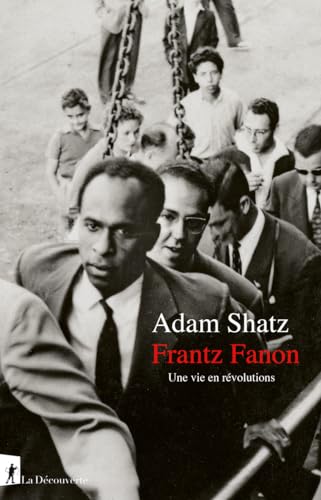
Frantz Fanon - Une vie en révolutions

Rate this book
Since his death in 1961 at the age of thirty-six, Frantz Fanon has loomed ever larger. He was the intellectual activist of the postcolonial era, and his writings about race, revolution, and the psychology of power have inspired radical movements across the world. But who was Frantz Fanon? In this searching biography, Adam Shatz tells the story of Fanon’s stunning journey—from a civil servant’s modest home in Martinique to fighting in the French Army during World War II, practicing psychiatry in rural France and Algeria, and joining the Algerian independence struggle, where he became a spokesman, diplomat, and clandestine strategist before his death at a military hospital in Maryland. Shatz situates Fanon’s writings in the context of his close and contested relations with the French intellectuals of his era, as well as his encounters with psychiatric patients, guerrilla fighters, and the early leaders of independent African states. Today, Fanon’s Black Skin, White Masks and The Wretched of the Earth have become canonical texts of the Black and global radical imagination, comparable to James Baldwin’s essays in their influence. And yet they are little understood. In The Rebel’s Clinic, Shatz offers a dramatic reconstruction of Fanon’s extraordinary life—and a guide to the books that underlie Black Lives Matter and other groups attempting to challenge white supremacy and racial capitalism.

512 pages, Paperback

First published January 23, 2024

200 people are currently reading
3741 people want to read

About the author

Adam Shatz

9 books37 followers
Adam Shatz is the US editor of The London Review of Books and a contributor to The New York Times Magazine, The New York Review of Books, The New Yorker, and other publications. He is also the host of the podcast “Myself with Others,” produced by the pianist Richard Sears. Adam has been a visiting professor at Bard College and New York University and a fellow at the Dorothy and Lewis B. Cullman Center for Writers and Scholars. Raised in Massachusetts, he studied history at Columbia University and has lived in New York City since 1990.

Ratings & Reviews

What do you think?
Rate this book

Friends & Following

Create a free account to discover what your friends think of this book!

Community Reviews

5 stars
207 (43%)
4 stars
184 (38%)
3 stars
70 (14%)
2 stars
14 (2%)
1 star
3 (<1%)
Displaying 1 - 30 of 82 reviews
Profile Image for Roman Clodia.
2,884 reviews4,630 followers
September 26, 2024
Fanon historicized the pathologies of colonial psychology by situating their formation in the structures of racial and economic domination, rather than in parent-child relations.

Shatz has taken on no easy job here in giving us a book that moves way beyond a biography of Frantz Fanon: this is simultaneously an intellectual biography on the development of Fanon's thought and writings, as well as a deep dive into the politics of anti-colonialist struggles - with a focus on Algeria and then Africa - as well as an exploration of Fanon's theories of violence. On the whole, I'd say this succeeds rather well, though perhaps the widening out towards the end and the summary afterlives of Fanon's work tend to the sweeping and rather superficial, especially the attempts to imagine what Fanon would think about our current politics: the re-emergence of the extreme right, the distinctions between the way refugees from, say, Ukraine are treated by European countries versus the way refugees from Africa, Asia and the Middle East are treated (and I write this on the day the UK's Tory government is crowing about pushing through the vile law that allows for the forced deportation of refugees and asylum seekers to Rwanda), his imagined response to BLM.

It's incredible to remember that Fanon was still only thirty-six at his far too early death from leukemia. Originally from Martinique, a French Caribbean colony, he fought during WW2 with De Gaulle's Free French yet was still insulted as a negre. His great contribution to cultural and political thought has been his understanding of the psychological trauma of colonialism (Black Skin, White Masks) and the controversial connections between violence, agency and psychological healing. As a psychiatrist he worked with everyone from torturers and executioners to their maimed victims, and his psychological theories draw on the concept of the phenomenal body, the physical lived experience under racial or subaltern structures.

His great The Wretched of the Earth has proven hugely influential to so many people and liberation movements from Steve Biko and the ANC to Angela Davis, Edward Said and a host of artists, literary writers and cultural thinkers: Ngũgĩ wa Thiong'o has said that African literature after independence 'was really a series of imaginative footnotes to Frantz Fanon' (p.378) while writers like Chinua Achebe, Nadine Gordimer and Abdulrazak Gurnah have paid homage to his insights into the psychology of armed struggle and anti-imperialism.

That Shatz manages to be so attentive to such a complex man is admirable as is his nuanced approach to making sense of work that has too often been simplified and dumbed down for negative headlines. This is never easy reading but it is a genuine attempt to get to grips with a man, a psychiatric doctor and an impassioned activist whose experiences, work, thinking and writing were complicated, sophisticated, optimistic and still developing when he died so prematurely.
Profile Image for Stitching Ghost.
1,465 reviews383 followers
March 8, 2024
While this one was a little dry at times it was also very accessible. You know nothing about Fanon? It's ok, you really don't need any primer on him to fully understand and appreciate this book. Already somewhat familiar with the man? There's enough interesting tidbits to make it a worthwhile read. Even the parts that were more about philosophy were written so as to be easy to understand and with as little jargon as possible.
Profile Image for David.
731 reviews368 followers
December 30, 2023
It pleases my parsimonious heart to get free advance copies of books, like this one, from Netgalley for review. My heart especially sings when I find a no-cost book about something which (or, in this case, someone who) I’ve noticed, know very little about, and wish to inform myself. Such was the case with this book.

I like reading 400+ fairly detailed pages about someone or something that I know nothing about (plus the inevitable detours to the internet to research references which I don’t understand) but I believe that this is not some people’s idea of a pleasurable reading experience. This book gets deep into the weeds on the details of Fanon’s life, from angry youth to still-angry premature death. Like revolution, don’t wade in unless you are prepared to be totally committed.

Fanon died when I was in diapers, and now I have gray hair and take blood-pressure medication. This Christmas season Fanon's book The Wretched of the Earth has pride of place in the front row of the loss-leader display of books at the independent bookstore in downtown Austin, Texas, that I sometimes visit. The book's price is marked down just enough to entice you inside the store to engage in other wanton acts of commerce. (This is Texas, however, so the display, in addition to other books of left-wing outlook, also has books about the Alamo and high school football, as well as a book with Matthew McConaughey on the cover.) How Fanon acquired such a long and durable posthumous reknown, which shows no signs of flagging at this writing, is an interesting question. Look for an answer in this book's long epilogue (“Specters of Fanon”), which has a good survey of Fanon's travels through modern political and cultural life of the last sixty years, during which he often inspired deep political and social thinkers and, more surprisingly, supplied the text for a 2007 jazz oratorio and was quoted with approval on Instagram by Jamie Lynn Spears in 2020 as part of her feud with her famous sister.

Especially in the light of late 2023’s sad and bloody developments in Israel and Gaza, Fanon has experienced another uptick of relevance as supporters of revolutionary violence seek to find justification for the slaughter of unarmed civilians. (One widely-quoted social media post put it this way: “What did y'all think decolonization meant? Vibes? Papers? Essays? Losers.”)

Did Fanon, a psychiatrist by training, really endorse murder as a therapeutic act for the oppressed? This question is also dealt with pretty thoroughly in this book and the answer is: It's complicated.

A more nuanced analysis of this question appears in Chapter 16 of this book, starting around Kindle location 5580. Here's a short excerpt of the author's opinion:
... if [Fanon] advocates the logic and necessity of counterviolence by the colonized, he is also explicit in his criticisms of a politics based on revenge: the revolutionary movement's obligation is to direct the violent impulses of the colonized toward pragmatic objectives, not to foment bloodletting or to treat all members of the settler community as legitimate targets.
It is possible to find genuine quotes from Fanon which, when removed from their surrounding context, sound like someone saying: Go ahead, kill your oppressor, you’ll feel better, and you are perfectly justified. I hope you don't think that I'm trivializing the matter when I say that the misuse of Fanon in this manner reminds me of the recent misuse of the songs of Bruce Springsteen. The song “Born in the USA” is about the economic hardships of returning Vietnam veterans, but the people who are braying the title, over and over again, at the campaign rallies of Republican political candidates either don't know or don't care. The words “Born in the USA” are all they have to say about the matter. Similarly, you can quote Fanon accurately that, for example, “violence is a cleansing force”, but saying so doesn't mean you are acting in the spirit that he did, or understand his thought.

I'm happy that this well-researched book presented me with the opportunity to know more about this interesting and often misunderstood thinker.

To download short (eight page .pdf) and readable 2018 academic paper which contends that Fanon has been “misread for decades” as an apostle and justifier of revolutionary violence, click here.

The chapter entitled “On Violence” in the book The Wretched of the Earth is the bit of Fanon's writing most frequently cited by those wishing to justify murder in the cause of revolution. Read the entire chapter free online here.

I received a free electronic advance review copy of this book from the publisher via Netgalley.
Profile Image for Florian Lorenzen.
151 reviews143 followers
Read
November 20, 2025
Frantz Fanon war ein Mann, der viele Leben gelebt hat. Fanon war Psychiater und Schriftsteller. Er kämpfte für die französische Armee im 2. Weltkr1eg, beteiligte sich aber auch am Kampf um die Unabhängigkeit Algeriens, war zeitweilig Botschafter der provisorischen Regierung. Seine zweifelsohne wichtigste Rolle ist jedoch die des antikolonialen Denkers, denn seine beiden Werke „Schwarze Haut, weiße Masken“ und vor allem „Die Verdammten dieser Erde“ gehören bis heute zu den einflussreichsten Werken der postkolonialen Theorie. Viel Stoff also für die neue Fanon-Biografie von Adam Shatz, die unter dem Titel „Arzt, Rebell, Vordenker. Die vielen Leben des Frantz Fanon“ nun bei Ullstein erschienen ist. Auf den rund 570 Seiten zeichnet Shatz das Leben von Fanon nach und dies gelingt ihm weitgehend gut, auch wenn der Mittelteil vielleicht etwas zu lang ausfällt. Einer überdurchschnittlichen Bewertung meinerseits hätte dennoch nichts im Wege gestanden.

Wäre da nicht der Epilog des Buches. In diesem geht Shatz u.a. der Frage nach, wie Fanon die Ereignisse vom 7. Oktober 2023 bewertet hätte; eine Frage, die man auch getrost hätte auslassen können, denn Shatz betont selbst, dass Fanon sich nie zum Nahostkonflikt geäußert hat. Zwar erscheint seine Prognose, dass Fanon diesem G3waltakt durchaus offen gegenübergestanden hätte, als realistisch, denn in seinem Hauptwerk „Die Verdammten dieser Erde“ hatte er G3walt zum notwendigen und legitimen Instrument im antikolonialen Befreiungskampf erklärt. Was hier jedoch ausbleibt ist eine kritische Auseinandersetzung mit Fanons G3waltverständnis und wie dieses Terr0rgruppen wie die H4mas beeinflusst hat. Negativ aufgestoßen hat mich zusätzlich der beinahe süffisante Tonfall der Passagen zum 7. Oktober, welcher der Ernsthaftigkeit des Themas nicht gerecht wird.

Ohne den Epilog das deutlich bessere Buch!

Review auf Instagram: https://www.instagram.com/p/DRRrnqPAhSf
Profile Image for Arash Azizi.
Author 14 books97 followers
January 26, 2024
A truly masterful biography and one of the best books I've read in a while
Profile Image for PiaReads.
338 reviews8 followers
August 11, 2025
Am 20. Juli jährte sich der 100. Geburtstag von Frantz Fanon – einem der bedeutendsten Vordenker kolonialer Befreiungsbewegungen. Seine Gedanken sind bis heute hochaktuell, und dieses Buch versucht, seinem Leben und Werk gerecht zu werden – mit grossem Anspruch und ebenso grosser inhaltlicher Breite.

Es ist keine einfache Biografie, sondern ein vielschichtiges Werk, das Fanons Leben als Martinikaner unter französischer Kolonialherrschaft, seine Rolle als Psychiater und Revolutionär, sowie seine intellektuellen Beiträge zur Négritude, zum Existenzialismus und zur Dekolonisierung Algeriens beleuchtet. Auch seine Hauptwerke Schwarze Haut, weiße Masken und Die Verdammten dieser Erde werden ausführlich analysiert und interpretiert.

Doch genau diese Vielschichtigkeit führt dazu, dass das Buch stellenweise überfrachtet wirkt. Es liest sich teilweise schleppend, mit inhaltlichen Wiederholungen, die teils wortwörtlich mantrahaft wiederkehren. Der Versuch, alles zu erfassen, geht auf Kosten der Lesbarkeit und Struktur.

Ein kritischer Punkt, den das Buch selbst anspricht, ist Fanons mangelnde Anerkennung weiblicher Stimmen: Die Gedanken von Suzanne Césaire und Simone de Beauvoir werden kaum einbezogen, obwohl sie zentrale Figuren in den intellektuellen Bewegungen seiner Zeit waren. Doch auch über Josie Fanon, seine Ehefrau, erfahren wir kaum mehr als ihre Herkunft und dass sie ihm einen Sohn gebar – ihr eigenes Leben bleibt weitgehend im Dunkeln. Das wirkt hypokritisch, gerade in einem Buch, das sich so intensiv mit Repräsentation und Befreiung beschäftigt.

Trotz dieser Schwächen ist das Buch ein wertvoller Beitrag zur Auseinandersetzung mit Fanons Denken. Es verlangt viel von seiner Leserschaft – Geduld, Aufmerksamkeit und die Bereitschaft, sich auf viele Ebenen gleichzeitig einzulassen. Wer sich für postkoloniale Theorie, politische Philosophie und die Geschichte der Dekolonisierung interessiert, wird hier fündig – aber nicht ohne Anstrengung.

Vielen Dank An Netgalley und den Ullstein Verlag für die Bereitstellung des e-Rezensionsexemplars.
Profile Image for Dom Jones.
95 reviews
September 3, 2025
One of the best political biographies I have read. A well integrated exploration of the man, and the theorist.

Excellently integrated into surrounding (non-western) scholarship and having studied Algeria, it was nice to see Shatz mention and expand on figures I’d heard so much about.

Do not fully agree with the conclusion that Fanon would have embraced BLM. Though Shatz does acknowledge the movement’s anti-racialist shortcomings, I don’t think the co-option and comodification of Black movements by corporate actors could ever really align with Fanon’s vision of self realisation.

This being said, loved the epilogue in the way that it centralised Fanon’s contemporary influence and importance.

Thanks T.J.H for a great Christmas present!!
Profile Image for Toto.
19 reviews
June 2, 2024
This book humanises the myth of the man that is Fanon in all of his nuanced complexities. Flowing through Fanon’s work and life to existential philosophy to political context effortlessly - this book read like a page turner.
Profile Image for Claudyne Vielot.
157 reviews7 followers
December 29, 2023
Thanks for NetGalley and Farrar, Straus and Giroux for permission to read this work prior to its publication date. I read Franz Fanon's, "Black Skin, White Masks" and was blown away buy how this activist identified the perils of colonialism, colorism and oppression in a way that I could personally identify with. Adam Shatz compiles interviews as well as documented experiences to weave an image of a somewhat unlikely revolutionary who begins his adulthood with a strong French identity, then winds up fighting for the liberation of Algeria. This is an interesting read with great excerpts from other scholars.
Profile Image for Randy Wilson.
492 reviews9 followers
July 28, 2024
I read this book because of the author. Adam Shatz has a very engaging prose style that makes everything he writes come alive. Frantz Fanton is a name that gets bandied about in political and intellectual circles but I didn’t know much about him.

He is hard to categorize. A West Indian black man who wasn’t a Muslim but supported the Algerian cause which made it impossible for him to return to France. He was trained as a psychiatrist in France and worked in North African clinics developing a contextual approach to mental illness. He saw war and politics as creating mental illness. He didn’t see mental illness simple as a medical issue that had to be diagnosed.

He was most famous for his writings such as
‘Black Skin, White Masks’ and ‘The Wretched of the Earth,’ which provide different takes on how to think about and empower the colonized. While this biography does a good job giving the larger arc of his many facets, I don’t feel like I can comment on those books not having read them.

What is most interesting about Fanton is his afterlife. He died at thirty six as a well known figure among certain circles but he became an international, intellectual superstar. For many people who die young, it is the glamour of an early death that contributes to their fame. That wasn’t the story with Fanton. His fame comes from what he wrote about the critical issue of our time - how do we navigate a world which dethrones the West as a default leader and allow the rest of the world to prosper? After this book, I need to read his actual work to understand how he made this an eternally urgent and possibly answerable question.
Profile Image for Jonna Higgins-Freese.
811 reviews79 followers
March 3, 2024
This was absolutely stunning. I had known OF Fanon from the reading I did in preparation for traveling to Martinique, but this was my first deep dive into his life and thinking, and I so appreciated the way the author demonstrated so clearly how Fanon's psychiatric training and practice informed and was informed by his radical praxis.

"Fanon was a psychiatrist, and his thinking about society took shape within spaces of confinement: hospitals, asylums, clinics, and the prison house of race, which -- as a Black man -- he experienced throughout his life" (7)

"What [Fanon] saw in [his patients'] faces, and in their physical and psychological distress, were people who had been deprived of freedom and forcibly alienated from themselves, from their ability to come to grips with reality and act upon it independently. Some of them were mentally ill . . . others were immigrant workers or colonized Algerians who suffered from hunger, poor housing, racism, and violence; still others suffered from performing the dirty work of colonial repression . . . What they shared was an invisible, lacerating anguish inscribed in the psyche, immobilizing both body and soul. This anguish, for Fanon, was a kind of dissident knowledge: a counternarrative to the triumphal story that the West told about itself (7).

"The wretched of the earth" are the "colonized victims of the west" and Fanon fiercely believed they could be "free of foreign rule but also of forced assimilation to the values and languages of their oppressors. But first they had to be willing to fight for their freedom. He meant this literally. Fanon believed in the redemptive potential of violence. Armed struggle was not simply a response to the violence of colonialism; it was , in his view, a kind of medicine, rekindling a sense of power and self-mastery . . overcoming the passivity and self-hatred induced by colonial confinement, cast off the masks of obedience an [be] reborn, psychologically, as free men and women." But Fanon also confronted the "limits to his visionary desires" (8)

Fanon's project was "the careful dismantling of psychological obstacles to an unfettered experience of selfhood that opens onto a broader project for the mental well-being of oppressed communities." Regarding his patients, he was "determined to mitigate his patients' suffering and to welcome them into the human community from which they have been exiled." (11).

Quotes but does not cite Gramsci re: the experience of formal colonialism ended but "inequality, violence, and injustice, exacerbated by the greatest epidemic in a century" "The old is dying, but the new is not yet born; in the interregnum, a whole variety of morbid symptoms emerges" (13).

When Fanon was growing up in Martinique, the family were "socialists who fiercely identified with the Republic that had ended slavery and allowed their family to prosper. They were, if anything, more French than the French, residents of the vieilles colonies who were horrified at the thought of being mistaken for the negres in the African colonies that France had acquired in the nineteenth century" (20).

"Most of the soldiers in de Gaulle's army came from the colonies: the Republic was saved by the subalterns of France's vast overseas empire." DeGaulle understood this but "during the liberation of Paris, de Gaulle capitulated to American demands to exclude Black colonial soldiers from the triumphal march into the capital, replacing them with Spanish Republican exiles in a process of blanchiment." (36).

Believed "mental illness has much to tell us about the societies in which it arises, and that without an understanding of a patient's lived experience, a complete diagnosis is impossible" (54)

theme that "some forms of psychological suffering have their roots not in an individual's psychic constitution but in oppressive social relations" (78).

58, 59, 65, 70, 78, 79* (Harlem clinic named for the "French Cuban socialist Paul Lafargue, Karl Marx's son-in-law and the author of the 1880 manifesto _The Right to be Lazy_.), 80, 91 (quoting Du Bois in The World and Africa_: "There was no Nazi atrocity - concentration camps, wholesale maiming and murder, defilement of women or ghastly blasphemy of childhood - which the Christian civilization of Europe had not long been practicing against colored folks in all parts of the world in the name of and for the defense of a Superior Race born to rule the world" (91).

95, 106, 107, 109, 131, 135, 137, 138*, 144, 163, 181, 183, 188, 190, 196, 198, 224*, 230, 233, 253, 259, 262, 266, 286, 301, 320*, 322, 326, 334, 336, 356, 374, 376, 378*, 382, 386, 388
Profile Image for Sylvie JS.
94 reviews
November 18, 2024
Very informative book. I heard about Frantz Fanon's "Les damnés de la terre" book decades ago while I was reading all I could find by Sartre and Beauvoir, but I never really tried to know more and had honestly not paid much attention to what they mentioned about him.
This biography is detailed, thoughtful, and well-researched. Fanon was from a middle-class Guadeloupean family. He enrolled in the French army to fight in WWII. He realized then, when he arrived in France, how prejudiced/racist the French were, which was a surprise for him who had always seen himself as "French," not realizing that somehow he was kind of a 2nd class citizen, not treated/regarded as fully French by France because of course of his color. He studied in Lyon after the war, where he got "La croix de Guerre" because of his bravery and became a psychiatrist. After a few years in Lyon, he decided to be the head of a psychiatric clinic in Algeria. He ended up becoming an Algerian citizen, fighting for independence with the FLN and becoming the FLN 'porte-parole' (especially in African countries) even though he was not speaking Arab and not a Muslim. All this while working as a psychiatrist, heading a clinic with very specific approaches to treatment (taking into account what the locals were experiencing in their lives as colonized people and using a much more "human" approach to treatment than what was usual at the time). He died in his 30s, with 2 books written, "Les damnés de la terre" being his legacy and used by multiple causes not always concurrent to his thinking,
This book gave me a lot of insights into the Algeria War of Independence. This war was present in my life as a child because my dad fought in Algeria in the French army (mandatory for French young men at the time. He was already a father of a handicapped daughter (my sister, I was born after the war), and nerveless had to go at 19 years old. He was there from 1958 to 1962) and it marked him for life. He would often talk about it, no specifics, really, but he talked about it all his life until dementia ate up also this part of his memory, maybe 2 years before he passed). There was no help for people coming back from war at that time, plus, as the author notes, this war was not called a "war" by the French government). But back to the book.
The author's light on Frantz Fanon's life is precise, and all references to events and personalities of the time are often if not always, put in perspective to the period or the geographic location, which is super educative. It is very intriguing to see a Guadeloupean black person deciding to become Algerian and fighting for the emergence of a new man and not wanting to be reduced to his "blackness." I found some of the author's last pages very insightful, and a condensed glimpse of Fanon's thinking:
"He (Fanon) had no patience for color blindness. But he believed that racial consciousness would have to evolve into national consciousness, and finally into more international and inclusive forms of attachment, the matrix of a new humanity".

Here are a few quotes I want to keep in my mind:
"In 1827, Hussein Dey, the Ottoman ruler of Algiers, told the French consul he expected to be repaid for loans made to the French government during the Napoleonic wars...Consul refused...On June 14, 1830 King Charles I dispatched 37,000 troops..."

"Cards were local Muslim administrators who were chosen by, and answered to, the French authorities, serving as the eyes and ears of the colonial regime in the countryside."

"Colonial soldiers were not the only ones whose sleep was disturbed by their actions during the war: the same was true of the men and women he (Fanon) celebrated as freedom fighters."

"To insist on the political and cultural specificity of a person's suffering, they understand, is not an obstacle to the universal but rather its secret, indispensable ally" (Italian psychiatrist, named Beneduce, treating migrants in Italy recently)

"But France had a tradition of sending assimilated citizens from the old colonies in the West Indies to serve as administrators in the new colonies of North and Sub-Saharan Africa where they were meant to provide an example of the glories of French civilization."
This entire review has been hidden because of spoilers.
Profile Image for ayman.
36 reviews13 followers
October 19, 2025
wow man. long live fanon.

such an epic book which not only covers fanon but extends to his relationships with other revolutionary icons and writers and the state of africa as a whole as it struggled against colonialist/imperialist rule.

algeria owes a lot to this man for extrapolating their fight for freedom towards discussions for a unified continent. Fanon did serious leg work across various countries to pitch the notion that a free algeria will in turn pave the way for a free africa.

really appreciated how the book delved into fanon’s interests outside his work, it helped to paint a more wholistic picture. stuff like the films he loved, music he listened to and clubs he danced at are all details which webbed together my perception of him and made him feel so much more relatable.

still absolutely shatters my heart that sickness took him before he could see his dreams actualise. the fact he felt so connected to the struggle that he deemed himself algerian and wished to be buried in the country warms my heart. one of the greatest dreamers to ever live, his dreams still echo into today and he’s stamped forever.

also loved hearing how fanon revolutionised psychiatric practices in the part of algeria he worked in (blida). he humanised his patients and contextualised his approach with the backdrop of colonial violence as opposed to solely relying on Freudian psychoanalysis. his work with muslim nurses to open a cafe in the hospital where patients could partake in their familiar rituals (card playing, chilling over coffee, storytelling, praying) was so beautiful to hear about and its no surprise that the emergence of this space “awakened” them.

i think im gonna end this off by mentioning fanon’s take on imagination under a colonial rule:

”Close attention should be paid to the emergence of the imagination and the inventiveness of songs and folk tales in a colonised country. The storyteller responds to the expectations of the people by trial and error, and searches for new models, national models… with the support of his audience.”

oh and fuck camus
Profile Image for Lonnie Smith.
144 reviews3 followers
March 13, 2025
I went into this with a largely mythical understanding of Fanon. I’ve not read the man himself beyond the quotes that occasionally crop up on social media (and I guess now in the quotes and excerpts in this book).

This does a solid job of humanizing the man, and contextualizing his work. Shatz not only describes events, individuals, and works that impact throughout his life, but often returns to them as the timeline progresses (thinking of, like, the French kid on the bus).

There are times when I struggled to keep momentum going with this. Some parts are dry. But also there were sections that gave me trouble due to my ignorance of various histories, geographies, and movements.

The books is approachable and readable for one as ignorant of much of Fanon, his context, and his works as I. At the same time there is so much information, and it can make your head spin at times.

I could see myself returning to this in the future, after reading more Fanon and more broadly in anti-colonial/revolutionary literature and getting even more from this.
Profile Image for Daniel.
170 reviews
February 7, 2024
El 8 de mayo de 1945, Día de la victoria de los Aliados frente a la Alemania nazi, Francia era una fiesta. En una de las celebraciones que se extendieron por todo el país, un soldado negro que había nacido en la ex colonia gala de la Martinica y había viajado a Europa para combatir por su país como cualquier otro francés, no halló ninguna mujer blanca que quisiera bailar con él. Aquel fue el primer momento en el que Franz Fanon, según explicó mucho después, sintió la opresión racial y decidió enfrentarse a ella. Con el tiempo iba a convertirse en un psiquiatra prestigioso, en uno de los intelectuales más influyentes del siglo XX y en un profeta que clamaba por zafarse del yugo del imperio de forma violenta.

Sigue leyendo aquí:

https://www.elmundo.es/cultura/2024/0...
Profile Image for Care.
1,644 reviews99 followers
November 2, 2024
2.5 stars

I found this one quite arduous to get through though the subject matter was interesting. Maybe I just didn't gel with the author's style. Learned a lot but did feel like homework in certain sections.

Content Warnings:
Graphic: Genocide, Racism, Murder, Colonisation, and War
Moderate: Violence, Police brutality, and Classism
321 reviews13 followers
November 12, 2024
Amazing. Absolutely helped me read/reflect on Fanon's writing that I had read decades ago with the added bonus of clinical insights. Chapter 10 "Disalienating Psychology" should be part of any therapist training program along with selections of Fanon's writing... much more useful questions than the woo-woo weak "spirituality" version of wrestling with questions of possible connection between individual and social healing.

========
9 Much of the power of his writing resides in the tension, which he never quite resolved, between his work as a doctor and his obligations as a militant, between his commitment to healing and his belief in violence.
217B Suddenly Fanon said, in a muffled voice, “In front of the sick, we are filled with humility.”
218T They and their patients “shared the ingredients of the same humanity”; the only difference was that the caregivers “were still standing.” The aim of treatment, she learned, wasn’t making patients happy, but rather “transforming [their] hysterical misery into common unhappiness” – one of several of Freud’s sayings that Fanon would often repeat – so that they could get back on their feet.
310 […] in May 1961, Les Temps modernes published Fanon’s essay “De la violence” (On Violence), which would become the first chapter of The Wretched of the Earth. According to Beauvoir, “Sartre had realized in Cuba the truth of what Fanon said: in violence, the oppressed achieve their humanity. He agreed with his book: an extreme manifesto of the Third World, uncompromising, incendiary, but also complex and subtle.”
[…] Sartre, who wrote every day, never picked up his pen, so riveted was he by Fanon’s company; Lanzman had never seen him “as charmed, as captivated by a man.”
351 Marie-Jeanne Manuellan […] That Fanon’s work was being dissected with exegetical devotion in university seminars both amused and exasperated her. “These were pamphlets!” she protested: texts written in the service of a political movement, not works of philosophical reflection.
354 Alice Cherki wrote in response to Memmi, “The project of being exclusively identified with one’s origin was at odds with Fanon’s conception of what it meant to be a free subject.”
[…] He had not forgotten his people or his past, but he had come to see both as part of a larger story that connected him to other people and other pasts. Algerians may not have been racially Black, but they were victims of the same system that had brought his ancestors on slave ships to the West Indies. He had left Martinique, but it never left him. Only a West Indian could have written The Wretched of the Earth.

4 Timing of African independence, challenges
6 humility w/ patients (only)
8 history blocks desire; armed struggle as medicine
9 healing in tension w/ violence (of oppressor and oppressed)
10 Holocaust survivor on Fanon & violence
11 psychiatry as disalienation but (absent revolution) “inadequate” & “a lie”
32, 36 WWII Fanon disillusioned w/ France
37, 65, 127-8, 167, 179 (diaspora values), 180, 185-6, 232, 314. Jews/Fanon/Sartre
40-1, 43, 243 Negritude
59 Fanon vs Lacan (I side w/ Fanon)
75-77; 129, 216, 219, 320-1, 382 Fanon vs Freud/Adler
78 sociology (racism)
79-80 Harlem free clinic (mental health) turning Freud upside down?
91 Nazism as moral descendent of colonialism
102, 317 Fanon anti-reparations (until late in life)
105 Marx & Freud structure care
107, 110 POUM anti-Stalinism; comradeship w/ Stalinists
109,191B social therapy
119 French settlers as “true natives” of Algeria (see Zionism)
137-9 Alg, national/racial identity inspires Fanon
142-4, 178 Fanon – initial contact w/ FLN (& factional in-fighting); Catholic Church (liberation theology)/ St. Augustine
152, 259-60, 315, 332-6, 359, 361 decline of FLN secular internationalist messaging/politics
155-6, 170 violence
158 ethics of treatment
159 environmental factors re mental health
161 French CP betrays Algeria
183-4 belonging
186 objectivity in journalism vs colonized
190-1, 354 Memmi/Jew/leftist
199 secular left vs Islamic nationalism in FLN
201 rev discipline vs healing trauma (for everything there is a season…)
202 Zionism & antisemitism; Arab anti-Black racism
203-12, 222 clinical practice as revolutionary; limits of healing effects of anti-colonial violence/ “victory” (see “Tell no lies; claim no easy victories”) including ideas re homosexuality
213 Fanon seen as FLN’s theoretician by French left but as mere propagandist by Algerians
216 Fanon’s rx to psychoanalysis
217 respect for patients; touch (physical)
223-8, 230-1, 233, 348 veil/nationalism/Islam/feminism (ignoring Islamic dimension of anti-colonial fight)
237 Fanon & Yugoslav economic model
243 Touré (Frances punishing Guinea over independence vote)
322-4, 326, 329, 330-1 gifts & perils of anti-colonial violence
359 Zionist use of Fanon’s theory of violence in nation-building
371 Fanonian climate justice movement?
377-8 (post) colonial trauma
382 Anti-Oedipus – family drama vs. political roots of trauma
Profile Image for Katy James.
12 reviews
March 21, 2025
I have long been a proponent of everyone reading Fanon, but I will revise that to everyone should read Fanon and this book. A brilliant portrait of the political and intellectual spheres that contributed to Fanon’s writing, his life, and his enduring legacy. I also found it corrected many common misconceptions about his work, which remains more relevant than ever.
Profile Image for Brian Shevory.
338 reviews12 followers
August 3, 2024
In college, Frantz Fanon was like a mythological character. So much of the literature and criticism I was reading mentioned him, but I had trouble finding his books. I was in college in the late 90s and there weren’t many book stores around me at the time. I don’t think it was until after college that I was able to get a copy of The Wretched of the Earth. I also felt like the perspectives I read about Fanon were vastly different, and the details of his life were not all completely clear. I was never really sure if he was someone who advocated violence or if he was someone who was full of hatred, but he seemed to be a powerful figure in the decolonization movement of the 1950s and 1960s. Adam Shatz’s biography of Fanon is important in helping to reframe and contextualize Fanon’s significance, not only to these monumental movements that helped to reshape the world in the mid-20th century, but also to reconsider how Fanon continues to be an important figure in more recent movements that question how large and powerful countries continue to take advantage of developing countries and groups like Black Lives Matter, that examine how state power is used to continue to maintain power for the privileged and oppress those disenfranchised. Shatz’s biography examines more of Fanon’s revolutionary life rather than going through his entire experiences. I appreciated that this book spent more time looking at Fanon’s experiences in Algeria and other African countries that sought out independence from colonialism. It was interesting to see how Fanon used his psychiatric training to explore the emotional trauma that colonial subjects experienced. I was really surprised to see how Fanon’s work in clinics with Algerians helped to dismiss some of the inequalities and stereotypes that they experienced in receiving health care. Furthermore, it was amazing to see how experimental and revolutionary some of his treatment views were regarding mental health therapy. Shatz’s book not only examines Fanon’s life, but also explores how Fanon’s ideas and philosophies were shaped and influenced other theorists and movements of the time. With his opening of the clinic, Fanon challenged typical views of health care proposed by theorists like Foucault. Other writers like Sartre and Camus, who were involved with the Algerian freedom movement in some ways, play an important role in both influencing and being influenced by Fanon’s writing and action. I loved learning more about the Algerian independence movement and how this battle to move away from French colonialism was influential to other African countries as well as other colonial holdings like Vietnam. I sometimes fail to realize how much change was happening in the 1950s and 1960s, and reframing these movements as challenges to colonial hegemony helps to better understand the history and significance of the violence and battles that erupted. It was also interesting to see how Fanon’s writing and action influenced other movements and civil rights advocates in America. Shatz mentions how Malcolm X was influenced more by the Algerian independence movement, but also by Fanon’s writing and action. Fanon also seemed to influence the Black Panthers, noting how their focus not only on civil rights, but also on adequate health care for the oppressed was likely based on Fanon’s clinics. I really enjoyed this biography, especially since it was more of a contextualization and helped me understand how Fanon’s actions and revolutionary work in the clinic led to change in Algeria and other parts of Africa. It was interesting to learn more about Fanon’s life and work, and especially to see how he worked in countries like Tunisia and the Democratic Republic of Congo. One of the most fascinating elements of Fanon’s thinking was about the challenges that newly independent countries face. Fanon predicted that independence would bring joy and hope but was also subject to internal fighting and further battles, and this was something that was seen in many African countries that gained their independence. This book helped to recontextualize Fanon and challenge some of the misconceptions and misunderstandings of his life, seeing how his ideas and philosophies about those who experience state oppression are applicable to our lives today, especially
Profile Image for Morgan.
211 reviews129 followers
January 4, 2024
The Rebel's Clinic is a must read for people who have read Fanon's work. Shatz does a fantastic job of taking you into a nuanced look into Frantz Fanon's life as a Black man, psychiatrist, and political philosopher.
Profile Image for Joseph Stieb.
Author 1 book239 followers
August 3, 2024
Mixed feelings about this one. I'll admit I read Wretched of the Earth and absolutely detested it. I found it to be turgid, romantic about violence, and really scattered. This book helps me understand Fanon more completely and in historical context. However, I found Shatz to be too admiring of Fanon, and he inserts too many of his own political views into the book. And I just can't get on board with Fanon as this great thinker, even though he does have some important insights. However, when I read the worldviews of someone I really disagree with and get a sense of their personal experience, I often have to ask "If I had experienced what this person experienced, would I think the way he does?" The answer in Fanon's case is "probably yes."

Fanon was born in Martinique, a French colony, and became a psychiatrist in France. He also fought for France in WWII. Shatz makes the case that you can think of Fanon as a disillusioned French republican who felt betrayed by the nation he fought for. He experienced plenty of racism in France itself, and then he saw the effects of racism on people of color as a psychiatrist in both France and Algeria. He joined some of the more radical fringes of the psychiatry profession before moving to Algeria and joining the FLN, although he functioned more as a doctor and propagandist for them rather than a fighter or commander. he worked in the FLN and in Algerian society, living a sort of double life, but ended up having his life threatened because of some internal FLN political disputes. He moved to Mali, Tunisia, and elsewhere before developing leukemia and passing away at the age of 36. He then became a kind of legendary figure on the transnational left, critical race theorists, critical psychiatry, and other fields.

There are a couple of key principles in Fanon's thought, although 2 caveats are in order. First, he published a lot of de facto pamphlets for the FLN and other causes that weren't necessarily philosophical treatises. Second, because he died so young, we don't know how his views would have evolved.

I think the key to Fanon's thought is Third Worldism and anti-colonialism. As a psychiatrist, he contended that colonialism and racism created terrible psychological scars and that race has to be taken into account in psych practice. As a political theorist and revolutionary, he believed that none of the major ideologies of Western politics adequately took into account the experiences and views of the vast majority of the world's peoples, the "Wretched of the Earth." Liberalism was implicated in the French "mission civilatrice," whereas French communists saw the colonized people of color simply as more proletarian people rather than people experiencing a different form of oppression and having different identities. The French Communist Party, for instance, failed to oppose French imperial wars adequately because it didn't want to alienate the French working class, including the pieds noirs in Algeria.

So the colonized people of the world needed to assert their own agency and independence, not simply in political terms but personal and psychological ones as well. But how he though this would be done is where I depart ways with Fanon. He argued that opposition to colonialism must be tailored to different systems, but he ultimately defended terrorism and other forms of indiscriminate violence not just in strategic terms but as a means of personal cleansing or liberation. He has some hang-ups about FLN violence (which killed thousands of fellow Algerians, not just French people), but he ultimately defended it. I do think FLN violence against French soldiers and police as a means of ending colonialism was justified, but I think the violence as personal liberation idea is deeply troubling.

While I was reading this I couldn't help but compare Fanon to MLK, who was just a little younger than Fanon. MLK argued that violence not only destroys the target but the person who conducts the violent act, even when that violent act is intended to redress oppression (direct self-defense is another matter). King and other figures like Baldwin (or even Frederick Dougalss way back when) saw how violence and racism eroded the souls and personalities of white people, who were in a sense trapped by their hatred and the need to maintain oppressive systems. King and his movement turned the hatred and violence of Jim Crow against white people, demonstrating their ugly hatred to the country and showing how Jim Crow and racism in general violated core American principles. Killing a French soldier may be a strategic means to achieve independence, but it is a necessary evil; killing civilians deliberately, as the FLN did, is never justified and cannot be self-emancipatory. Great figures like King understood that violence corrodes the human personality; I'm not sure Fanon would agree unconditionally. It's also worth nothing that while Fanon worried about colonial rule being replaced with a new elite of post-colonial dictators but was also part of the FLN, an authoritarian movement that became just as oppressive and brutal as their French predecessors. Overall, Fanon's descendents seem much more outraged by the violence of colonial or Western rather than post-colonial states or movements.

There was a lot more to chew on in this book, including the fact that Fanon was a major critic of negritude and the idea of racial essentialism. Racial identity, for him, was a way of asserting pride and dignity against colonial racism's constant efforts to lower the black beneath the white. But it wasn't an end in itself. As Shatz put it, it was a raft for the desperate, not the destination, which was a more international and egalitarian consciousness (he leaned toward socialism but had sort of inchoate views there). I can't help but see Fanon as someone who was consumed by his hatred. I also get that a lot of people have found Fanon inspiring and used him to create new insights, but also to justify atrocities, as we saw in the use of Fanon to rationalize 10/7.

Anyways, he's clearly a thinker and Shatz does a solid job recounting his life and placing it in context, although he's not nearly critical enough of Fanon's embrace of violence and his troubling attitudes and behavior towards women. I would read this if you are interested in him but also read some of the critical reviews which point out Shatz's imperfect portrayal of this person.
Profile Image for David Ryan.
74 reviews8 followers
April 8, 2024
" ... we are nothing on earth if we are not, first and foremost, slaves of a cause, the cause of the people, the cause of justice, the cause of freedom."

- when we peel back the opulence of European and Western history, we find the dead bodies from many African, Asian, Arab, and Indian cultures.

- the oppressed revolt simply because they cannot breathe.

This book by Adam Shatz is a penetrating look into colonial domination and oppression through the eyes of the Algerian war of liberation from France. We get a revealing assessment of the short life of Frantz Fanon, a Black man, a respected psychologist, and a French citizen from the West Indies who fought for the liberation of France in WWII but was then rejected in society as not being White and therefore not "French." He moved to Algeria to run a psychiatric hospital. He saw firsthand the trauma inflicted on Algerian natives by the 100-year French occupation as well as the mental health issue of the gendarmes and military forced to suppress the natives so the 1,000,000 French settlers could live a wonderful life. He experienced firsthand how French Colonialism was a social construct of pathological relations masquerading as normality.

Fanon's experience treating patients in France and Algeria inspired him to develop his most important contribution to psychology. Pathologies can be introduced from the environment and social settings, such as racism, colonialism, slavery, migration, overcrowding, pollution, and oppression. Algerian psychoanalyst Karima Lazali discusses the post-civil war Algeria where many in the population are trapped in a psychological complex of "dispossession" (not knowing where they belong or what to believe) and envy in relationship to each other and political power. Dispossession-trapped individuals and populations become afraid of democratic freedoms as it introduces uncertainty and anxiety. This makes people vulnerable to populist messages focused on returning to a refuge of origin stories and narcism. I think an example of people wanting a simple message of relieving freedom-induced anxiety is to make real in their minds the manipulative origin stories within Radical Islam and the MAGA and Christian Nationalism appeals in the US.

Algeria - A French possession for over 100 years with 1,000,000+ settlers and native Muslim and Jewish populations suppressed by the French gendarmes and military. In 1945, in Setif, a riot broke out, and 100 settlers were killed. The French killed 15,000 in return. In Phillipeville, 123 settlers were killed, and 10,000 natives were killed in return. The Algerian resistance encouraged by Fanon became radical and employed violence against the French settlers, the gendarmes, and Algerians who did not support freedom from France. The Algerian peasants and miners were easily agitated by the resistance to slaughter civilian French settlers. After seven years of war, France withdrew from Algeria and repatriated their over 1,000,000 settlers.

Fanon and his writings are revered by many from the colonized world for standing up to colonization.

It cannot and must not be minimized that the structure of colonization, first through scripture and then through erudite methods of interpreting biology, made the colonized objects subject to "legal" and "moral" exploitation. Blessed by religious leaders and then codified into law, suppression was legalized until civil wars and anti-colonialization movements forced governments to change.

Racism is the easiest, crudest, and most visible element of the colonial structure. Fanon and Sartre radically promoted open revolt by the oppressed to achieve liberation. The colonized slaughtered colonial civilians, and in turn, the colonial powers would slaughter 100+ times the number of the colonized in retribution. Fanon's project for a post-colonial world seeking shared humanity and moving past racism ultimately failed for several reasons, and I think probably foremost being the lack of understanding by revolutionaries regarding the recrudescence of suppressed radical religious motives, hate and retribution preventing liberal democratic thought post decolonization.

As Algeria tragically discovered along with many other countries seeking decolonization, "liberation is indeed a condition of freedom, but freedom is by no means a necessary result of liberation" (Hannah Arendt)
Profile Image for Catherine Woodman.
5,901 reviews118 followers
July 6, 2024
I had never heard of Frantz Fanon, who died of leukemia at the young age of 36, prior to reading this book. He was born on Martinique in 1925 and while he hated that his island was being governed by white men in Paris, he bought into the French ideology of liberty and equality. Educated and speaking better French than the French themselves, he fought for France against the Nazis and stayed in Paris after the war to make a life, marrying a white French woman. But while studying medicine in Lyon, he grasped that despite France's lip service to colorblind equality, he would inescapably be seen there not as an individual but as a Black man. And he opposed the idea of identifying by race.
So he to moved to Algeria to run a clinic in 1953, and found himself joining forces with its National Liberation Front, or FLN, which was fighting to win Algeria's independence from France in a brutal struggle. He wasn't Algerian and couldn't speak Arabic, so he was never a leader or fighter. A brilliant sympathizer, he became a ruthlessly passionate advocate for the cause outside Algeria. This experience would lead Fanon to write his most famous work, "The Wretched Of The Earth," a poetically messianic volume whose publication has been called a historical event.
His legacy is remembered to be that of a bloody revolutionary, but he also tried to explain why that is inevitably seen as the only solution to racist oppression. Ever since it first appeared in 1961, Fanon's book has inspired everyone from Latin American guerrillas and African revolutionaries to Palestinian militants and the Black Panthers. It's best known for its opening chapter, which champions the power of violence to liberate the oppressed both politically and psychologically--it is unpalatable, to be sure, but also may be impossible. Cultures do not shift seismically, but his work related to understanding the downtrodden has also been buried with him.
I did not realize that the war for independence in Algeria was revving up at the same time that it was in Vietnam, and would love to read something equally cynical to this about the unraveling of colonial France.
Profile Image for J Earl.
2,331 reviews110 followers
January 3, 2024
The Rebel's Clinic, by Adam Shatz, is a detailed and nuanced look at both Frantz Fanon's life and ideas. The key element of this volume is the nuance, in order to understand what can, at first glance, appear to be contradictions or conflicts within his thought.

Like any thinker who is also heavily involved in real world struggles, there will be change and development in thought. That said, what can appear to be a contradiction can often be better understood as more consistent at the core but presented or manifested in different ways based on place, location, and purpose. Shatz brings these things into this critical biography, not to make everything Fanon said or wrote into an overly coherent whole but to let a reader understand the concepts at the foundation of the various expressions.

While I have read his major works and a few of his shorter pieces, including a couple of his psychiatric essays, I never had a firm grasp of any big picture in his thought. There is some advantage to that, though it isn't fair to him. Namely that it allowed me to apply my understanding of his ideas more easily to my own activism and thinking about the world. Gaining more insight from this book didn't disrupt my takeaways but it did highlight where I likely aligned more or less with his intentions.

Whether you're a reader of Fanon or new to him, I would highly recommend this book. If new to him, I don't think it makes a big difference whether you read this before, during, or after reading his major works. Ideas are presented here but that is no substitute for how Fanon expresses them (and Shatz doesn't intend them to be).

As a quick note to those I am in groups with, I had hoped to be able to present Judith Butler's new book to you in the near future but apparently my studying and teaching her works doesn't qualify me for a review copy, so I apologize for getting your hopes up and I will find something from another publisher to start some debates with. Happy reading and keep the ideas flowing.

Reviewed from a copy made available by the publisher via NetGalley.
Profile Image for Vansa.
346 reviews17 followers
January 12, 2025
I haven’t read any Franz Fanon. I’ve read some books on the Algerian Occupation-Assia Djebar’s
‘Children of the new world’ and ‘The Stone Face’ by William Gardner Smith. I didn’t know Fanon was so closely involved with Algeria, I only, quite vaguely, knew of his philosophy and thought he was one of the high priests of ‘Negritude’( that was also wrong). Even if you’re not interested in any of these things, this book should be something you read, because everything Fanon said was both apposite for its time, and also prescient about the ways newly independent countries would develop. The book is immensely readable, even though all it explores are dizzyingly complex: Shatz explores Fanon’s life, the contexts he lived in, colonialism in Martinique and the different ways he and other intellectuals responded to it ( he also writes about Aime Cesaire, a fellow Martinician ) , through Fanon’s studies and medical practice in France, and then when he’s posted in Algeria. Shatz also describes the Algerian Civil War and all its contradictions and brutality, to properly contextualise Fanon’s attitudes and influences. Given how much he lived through, it would be easy to forget Fanon’s ground-breaking practice as a psychiatrist but SHatz never loses sight of his vocation, one that he took seriously and that informed the way he saw the world and the motivations of people. Fanon also participated in the Pan-African conferences being held
by countries to decide the sort of place they wanted to be, and the policies they wanted to follow. Shatz gives you a nuanced look at the people involved and the realpolitik in action here, that made some people take decisions that in hindsight are easy to critique. This book isn’t a hagiography at all, and Fanon himself probably would not have appreciated that-he was fully aware of the contradictions of the people and movements he supported- aspects he pointed out in the seminal ‘Wretched of the earth’. This is a rewarding book and deserves more than one reading
Profile Image for Karen.
82 reviews9 followers
March 17, 2024
Great read - combining biography, intellectual history and shining light on the 'recent colonial' past that Americans, like me!, will typically be completely unaware of. Also, Shatz's analysis of Fanon's thought will explicate some of the tropes you see in fiction about the 'rebel'/ the 'other'/the anti-hero
Quoting from Shatz: "...the collective unconscious of the colonized, is the subject of “On Violence,” the opening (and best-known) chapter of The Wretched of the Earth: The first thing the native learns is to stay in his place and not overstep its limits. This is why the dreams of the native are muscular dreams, dreams of action, aggressive dreams. I dream that I am jumping, that I am swimming, that I am running, that I am climbing. I dream that I’m bursting out laughing, that I’m crossing a river in a single stride, that I’m being pursued by packs of cars that will never catch me. During colonization, the colonized never ceases to liberate himself between the hours of nine in the evening and six in the morning. "

And ominous indeed "Fanon’s attraction to violence reflected his background as a former soldier, and as a West Indian who had long believed that Martinique had failed to achieve genuine freedom because abolition had been granted by the French, rather than wrested from them as it had been in Haiti. Moreover, the struggle that he had joined in Algeria was among the most violent wars of national liberation of the twentieth century, matched only by Vietnam’s. But Fanon’s interest in violence also reflected his psychiatric training, especially his reading of Adler’s work on aggression. In his work with his patients in Algeria, he discovered a society where the aggressive instincts of the settler were given free rein, while those of the native were thwarted altogether. The settler was an “exhibitionist” who constantly reminded the native of his power in displays or threats of violence; the native was a jealous, immobilized subaltern whose inability to express rage left him in a permanent state of muscular tension. It was not only the political economy of colonialism that was unjust, but also the libidinal economy."
Profile Image for Randall Harrison.
208 reviews
December 11, 2024
Wow! What a nice surprise finding this book at my suburban library. Hadn't seen or heard of it, despite how much time I spend reading book reviews.

"The Rebel's Clinic" is is a well-paced biography of an important political theorist and freedom-fighter (anti-colonialist) in the 1950s few Americans know today. Some tag Fanon the "Che" of Africa. More accurately, Shatz alludes to Che as the "Fanon" of the western hemisphere.

Fanon's legacy continues to grow given his prescient ideas about the nature and social manifestations of racial division. As a psychiatrist, he seemed to have figured out human behavior quite well. What he wrote nearly 70 years ago, is just as germane in the 21st century.

I read and studied Fanon in grad school, forty years ago. Hence my shock at finding a biography of this influential man in my graduate field, on the shelf in a suburban library! Shout out to the Sokol Brookfield Library.

Wish I were smart enough to understand all the philosophy discussed in the early chapters. Stay the course! It gets better and moves quickly thereafter.

We didn't know of, or even conceive of, BLM, anti-racism, et al., when we read it. However, Fanon's s**t is just as apropos for a discussion of today's racial dichotomies and divisions. Identifying the similarities of the world Fanon lived in politically and the one we live in today is where Shatz's analysis proved most interesting to me.

If you get stuck, at the very least just skip to the Epilogue. In forty pages, Shatz does a fantastic job deconstructing Fanon's ideas and relating them to modern politics and racial relations. Shatz proved to me, one already with an opinion of Fanon, the continuing relevance of the ideas and philosophy Fanon espoused.

My copy of Wretched of the Earth was translated by Constance Farrington, dated 1963 and 1968. If you make it to the end of the book, you'll understand the reference.
Profile Image for Differengenera.
422 reviews66 followers
April 17, 2025
I have re-read sections of this because I had a view to 'pitching' something on it somewhere but i) I think anything I have to say on it is working in the sub-sub text of the work and ii) sending 'pitches' is anathema to me so I'll just put it here.

I think Shatz has a quiet, sneaking regard for the idea of an intellectual that Fanon rejected, ones who never sunder their precious 'independence' to a programme, organisation, government or collective project. In postwar France this meant keeping quiet about French atrocities in Algeria, as Wright, Baldwin and Camus did. There are just moments in the text where words around these figures suggest that their living in bad faith points to some greater degree of intellectual sophistication; compare Fanon's unequivocal endorsements of violence in the anti-colonial cause, obfuscating FLN attacks on civilians or telling one of his colleagues 'I don't socialise with French people' [o7]. Activists such as the Black Panthers who cite Fanon are gently reprimanded for perhaps not quite knowing exactly what they're saying, the last we see of Camus he's reflecting on the fact of his complete intellectual and political bankruptcy while 'visiting his aging mother' (I'm left asking: am I supposed to feel sorry for this guy?) I suppose there's a reason pernicious fraud Zadie Smith blurbed this.

I don't know anything about decolonisation in a Francophone context but I found the similarities with places I'm a bit more up on (Ireland, Palestine) all too familiar. The true believers in pan-African or pan-Arabism, their ideals putting them a little bit ahead of the real situation, sent abroad to be effortlessly outflanked by a petit-bourgeois leadership already coming to terms with the occupiers (if they're not already paid up agents of the intelligence services).
Profile Image for Karen Ashmore.
601 reviews14 followers
February 21, 2025
If you like Frantz Fanon’s writings, this is a great biography. I recommend that you read his masterpiece Wretched of the Earth first and understand how that book laid the groundwork for peasant-led, violent revolution (because that’s the only language colonizers understand) and the resulting corrupt and despotic decolonization (because that’s all they knew living as peasants under colonizer’s rules.) Fanon’s concepts were studied by the leaders of many revolutionary movements from Castro to Che to Lumumba to Nkrumah to Black Panther Party to Malcolm X to Viet Cong to Ukranians to Hamas. After an understanding of some of his tenets, then move on to his biography.

Fanon was a thought leader on Black Existentialism and hung out with like-minded French existentialists such as Sartre and Beauvoir, as well as Algerian and other North African philosophers. I sometimes felt I was sitting at the table listening to incredible dialogue about the future of revolution.

I do have one complaint. This book told both the good and the bad and it irritated me how sexist he was. He consistently lauded the male revolutionary writers but virtually ignored the women thought leaders such as Simone Beauvoir, Hannah Arendt, and Josie Fanon (his wife who was more radical than her husband and edited all of his work). Hmmph!

He died of leukemia under suspicious circumstances in the US (which he hated) under the care of the CIA (which he despised). That certainly raised my eyebrows.
Displaying 1 - 30 of 82 reviews

Can't find what you're looking for?

Get help and learn more about the design.