Jump to ratings and reviews
Rate this book

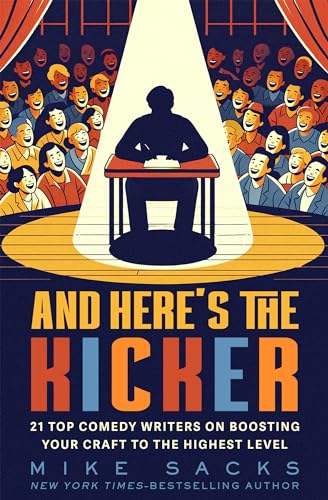
And Here's the Kicker: 21 Top Comedy Writers on Boosting Your Craft to the Highest Level

Rate this book
Interviews with David Sedaris, Dave Barry, Jack Handey, Bob Odenkirk, and other humor-writing “Sure to captivate anyone who loves a good comedy.” —Publishers Weekly (starred review)

If you aspire to write sitcoms, standup, screenplays, or satirical essays—or are just a connoisseur of comedy—you should learn from the professionals. With interviews from twenty-one top humor writers whose credits include everything from Marx Brothers movies to Borat and The Office, readers will score not only professional advice but personal details about their processes, influences, and experiences in the industry—and, of course, more than a few amusing stories. Discover what Paul Feig thinks would have happened to Freaks and Geeks if the show had had another season; what the writers’ room at SNL is really like; how the Onion editorial staff dealt with the aftermath of 9/11; and much, much more.

These humor writers are among the best in the business, ranging from veterans to newcomers, and have collectively been involved with many of the pop culture touchstones of the last half-century.

Interviewees Stephen Merchant (The Office) · Harold Ramis (Animal House, Groundhog Day) · Dan Mazer (Da Ali G Show, Borat) · Paul Feig (Freaks and Geeks) · Bob Odenkirk (The Ben Stiller Show) · Todd Hanson (The Onion) · Mitch Hurwitz (Arrested Development) · David Sedaris (Me Talk Pretty One Day) · Al Jaffee (Mad) · Allison Silverman (The Colbert Report) · Robert Smigel (Late Night with Conan O’Brien) · Dave Barry (Dave Barry Is Not Making This Up) · Larry Wilmore (In Living Color, The Bernie Mac Show) · Jack Handey (Saturday Night Live) · Larry Gelbart (M*A*S*H, Tootsie) · Buck Henry · Merrill Markoe · Irving Brecher · Marshall Brickman · George Meyer · Dick Cavett

“Remarkably frank interviews . . . reads like a secret history of popular culture.” —Time

“Loaded with information for people interested in comedy, not just those who want to work in the business.” —PopMatters

442 pages, Kindle Edition

First published June 10, 2009

241 people are currently reading
3867 people want to read

About the author

Mike Sacks

15 books43 followers

Ratings & Reviews

What do you think?
Rate this book

Friends & Following

Create a free account to discover what your friends think of this book!

Community Reviews

5 stars
744 (35%)
4 stars
855 (40%)
3 stars
427 (20%)
2 stars
65 (3%)
1 star
27 (1%)
Displaying 1 - 30 of 177 reviews
Profile Image for Xeon.
39 reviews350 followers
January 12, 2023
SCENE: THE CYBERWEBS

Xeon, chaotic and ecstatic, enters the chat.

Xeon: "harhar. Heya kiddos! Look no further for behind the scenes coverage and conversations from people who worked on some of the greatest works of comedy from modern times:
Saturday night live,
The Tonight Show,
The Office,
The Borat movie,
The Onion news source,
Arrested Development,
Monty Python,
The Simpsons,
Mad magazine,
A Series of Unfortunate Events children's books,
and even someone who knows about the inventor and history of canned laughter"

Xeon, pauses in confusion. A grave look sets upon their face.

Xeon: "But beware of dangers on yer journey, for here's the kicker. Fickle few, if anyone, knows what humor and comedy actually be! The heroes and heroines themselves simply follow their noses and try not to think about it too much"

"I really have no idea as to why something is funny. I know it has something to do with the correct matching of performer and material, or some set of commonly held assumptions about the world, or an attitude. I get dizzy trying to deconstruct it." - Marshall Brickman, co-writer with Woody Allen

"Why do we actually laugh? I don't know that you can explain why we, as a species, laugh. Maybe it's just that there's a disconnect in our brains when we realize that obviously we're going to die but we can laugh anyway. There has to be a release. For me, it's either you laugh or you become religious." - Dave Barry, columnist and books author

"I've been asked so many times what's funny, and why is this funny whereas that is not funny? I've developed a few theories, but I'm not sure they're really my theories or just something I've learned to say in response to the questions about it. I'm still of the belief that A) you can't really know, and B) there is no absolute. My idea of funny is different from another's." - Dave Barry, columnist and books author

"I'm not a cognitive scientist. But what I understand about humor is that it's a form of a startle reaction." - Todd Hanson, with The Onion.

"But why humor? How did that come out? Comedy writers and comedians tend to be obsessive-compulsives, which you may have noticed. I also am prone to that. So maybe that's where it comes from — just bad brain wiring that allows one to make weird chemical connections one normally wouldn't make. Hence, jokes." - Jack Handey, worked on Saturday Night Live

"It's just as inexplicable to me now as it was when I was a kid. And I don't want to analyze it too much, or think about it too much, for fear of it disappearing for good. It's such a blessing when it does happen" - Dick Cavett, worked on The Tonight Show, and talk show host
Profile Image for Rebecca.
479 reviews111 followers
February 27, 2011
Surprisingly interesting book. I would not have read it had it not been suggested for our book club. The whole idea of reading interviews about comedy writers did not seem appealing in the least. My initial thoughts, "Why would I want to have David Sedaris tell me about how he writes when I could be experiencing his actual work?"

I reluctantly cracked the pages and found myself oddly interested in the interviews of the various comedy writers. As I read, I found a few themes emerging, pulling each interview together into a cohesive mosaic of thinking.

Theme 1: Good comedy is honest. It comes from a space of personal, social or cultural truth.
Theme 2: Many a good comedy writer possesses an interesting mix of narcissism, self loathing, and OCD.
Theme 3: Many a good comedy writer appears to live in an outsider/insider space. They occupy a place that connects them to others just enough to remind them that they don't totally belong. A space of utter frustration. It reminds me of standing at a bakery window. You can smell the pastries, see the pastries and even watch others eat the pastries. But, you are not allowed to walk in and take a bite.
Theme 4: Comedy is deeply rooted in human sadness. As fellow book clubber Dean stated, "It is a way to help us process our pain." After reading the interviews I have sat back and paid attention to how much comedy acts as a space where one can acknowledge the odd contradictions of the human condition.
Theme 5: Everything and anything can be funny. It is not the subject of comedy that is in bad taste, it is the target of the humor that makes it such.

After reading each interview I asked myself, "Would I want to sit down and share a meal with this person?" I found that for the most part the answer was, "No." While I love the work of many of these comedic artists and see some of them as downright genius, I wouldn't want many as friends. I sensed an underlying anger and impatience in many of the interviews. This was a bit off putting. From Onion writer Todd Hanson's chronic depression to David Letterman writer Merrill Markoe's exhaustive list of what is NOT funny, each writer seemed to be coming from a place of extreme judgment (whether that be directed at oneself, others, or society).

What I loved most about this book was how it brought me back, time and time again, to the realization that I find my group of friends to be down right hilarious. I have spent a lot of time sharing stories and creative ventures with my friends for no other purpose than to laugh together. And laugh we do. I kept thinking how much of my life has been driven by comedy.

In an ugly turn of events, reading this book made me terribly self aware of my own narcissistic tendencies. I kept wondering, "Am I funny? Would these comedians laugh with me? Do my friends find me funny?" In the end, I believe most of us share something in common with these writers. Who doesn't like to be in on a good laugh?
Profile Image for Emily.
45 reviews1 follower
February 29, 2012
I feel as if this book was written especially for me, as someone who dreams about comedy writing the way some people dream about being a professional athlete. It also nails the exact breed of comedy, specific writers and works--and sometime the very jokes--that I love most.

It contains:
* Interviews with Bob Odenkirk, Mitch Hurwitz, Paul Feig, Harold Ramis, Roz Chast, Lemony Snicket, Dave Barry, Dan Clowes, Stephen Merchant, Al Jaffee, etc.;
* Insights into the Marx Brothers, Sleeper/Annie Hall, Arrested Development, The Simpsons, The Onion, Mr. Show, Freaks & Geeks, Daily Show/Colbert Report;
* Props to Monty Python, SCTV, National Lampoon's H.S. Yearbook, Dr. Strangelove, Network, Van Dyke & Moore, Nichols & May, Scharpling & Wurster;
* Cites David Sedaris's speed-fueled performance art, David Letterman's "Just Bulbs," Chris Elliott's Get a Life, William Shatner's "get a life";
* Name checks Lynda Barry, Lazlo Toth, Edward Gorey, Charles Schulz, Dave Chappelle, Terry Gross, Madeleine L'Engel, Roald Dahl, Stanley Milgram, Talking Heads;
* and many idiosyncratic fascinations: Alan Arkin, Brooklyn jews & banjos, "Comix: not just 4 kids!", nibbled to death by cute animals, phosphorescent plankton, round hot dogs

My only beef, in retrospect: too much SNL talk. I would have preferred more Python, Kids in the Hall, and SCTV. That said, it's probably a realistic portrait of how central SNL is to the comedy writing world. Extra props to the book for reminding me how funny and new Letterman and Markoe's work is--it's hard to remember how much they changed comedy, especially since it's not something people tend to watch in reruns (and because their sensibility came to permeate all of comedy--like it's hard to see the cinematography in Citizen Kane. Speaking of which, why wasn't the Kids in the Hall Citizen Kane sketch discussed? Good fodder for a sequel!).

In short, everyone should read this book. Especially me.
Profile Image for Sarah.
Author 4 books670 followers
September 7, 2017
This is an extremely useful book of interviews with humor writers, though some interviews are much better than others. One of my favorites is with The Onion head writer Todd Hanson – here's a snippet:

"I'm not a cognitive scientist. But what I understand about humor is that it's a form of a startle reaction. I certainly know that in my life humor has been all about sorrow and horror. Mark Twain said, 'The secret source of humor itself is not joy but sorrow.' He also said, 'There is no humor in heaven.' That's one of my favorite things that anybody has said.

"You don't have to be an expert to figure out that humor is connected to the fear response. Even the smile response of baring of the teeth is a fear response in primates. It's a way of processing all of the terrible realities that, if you couldn't laugh at, you'd want to roll over and die. Look man, I'm a college dropout. What the fuck do I know? I'm just saying that you don't have to be a genius to know that humor is connected to pain."

Also this amazing quote from MASH creator Larry Gelbart: "Your style is formed by what you can't do."

Profile Image for Joy H..
1,342 reviews71 followers
May 31, 2011
Read July 2010
I'd forgotten I had read this book until I came across the following words I had copied from p.282:
===================================
[From an interview with Dick Cavett]:
"Many simply don't have an ear for jokes just like they don't have an ear for music. They're comedically tone-deaf."
===================================
This was interesting to me since I had already taken notes on something similar which Julia Louis-Dreyfus had said while being interviewed at the Actor's Studio (TV). She said: "An ear for humor is like having an ear for music." (paraphrased).

This is an interesting concept. I know some people who seem to be "comedically tone-deaf". While they may be fine, interesting people, they tend not to be much fun.

I wonder if there's a gene for humor. Is a sense of humor inherited or is it something we acquire from growing up around people who have senses of humor? That's something to think about.

Hmmm, perhaps some day I'll read this book again. I love this sort of stuff!
Profile Image for Aaron.
124 reviews37 followers
September 13, 2010
A book like this is pretty much going to only be as strong as its interview subjects. While there wasn't any particular subject that I could claim shouldn't be interviewed, it would have been nice if the book had a more variety in interviewees. Basically, it's all 90s and early 2000s altcomedy folks, which is a niche I like, but I think presenting that as the peak of comedy writing is a bit annoying. One of the nice things, though, is that Sacks mentions that he asked many people who turned him down because they didn't want to take their time up with an unpaid interview; consequently, you get a bit of understanding at the type of person that would say yes to such a request -- it's probably not a coincidence that almost all the subjects are the lesser known half of a comedy partnership (Paul Feig, Bob Odenkirk, Allison Silverman, Merrill Markoe, Dan Mazer, Steven Merchant, Marshall Brickman, George Meyer).

It's also, somewhat surprisingly, nice that Sacks talks mainly to people whose best work is clearly behind them. Nobody feels the need to present themselves as particularly "on" (aside from Adam Mccay's jokey preface). Instead what comes across reading these pieces altogether is the sense of pride that comes from life-long dedication to one's job, somewhat independent of that job being comedy.
Profile Image for Lee Klein .
910 reviews1,052 followers
July 2, 2013
Worth a look for Harold Ramis, Dan Mazer (Borat), Todd Hanson (The Onion), George Meyer (Simpsons), and Marshall Brickman (Annie Hall). Skimmed a few about the good old days writing for Carson etc. Seems to includes more career recap than instruction/insight but an enjoyable (if not particularly entertaining) pre-sleep read when too tired for some dense/fancy translation.
Profile Image for Nicholas Karpuk.
Author 4 books76 followers
April 26, 2012
I got through about a third of these interviews over the course of years. As someone who thinks a lot about comedy, I felt like something could be learned here. The thing is, around the time this book came out a lot of comedic podcasts started creeping into my iPod. The main thing I learned?

Comedians are boring people.

Some of my favorite comedians give the most uninspired interviews, and they all seem more than eager to be asked "serious" questions about their craft, even though I didn't really glean much about the actual logic of comedy, because people in comedy don't seem all that eager to give away anything in an industry so thoroughly competitive. The ones who were the most open were also older with plenty of achievements behind them. Harold Ramis' statement about standing next to the smartest person in the room was about the height of wisdom and it just sort of made sense.

Brainstorming jokes all the damn time seems to just kill the humor centers of your brain from every day use. Sometimes in interviews I can almost feel them holding back because they'd rather use a quip later in a setting where they'd get paid.

We all have a funny friend, and the reason they can be funny is because they don't have to do it for a living. A professional cook does not want to cook for you every time you hang out. The trouble is that humor is such an innate part of human life.

So I guess the big underline is to not ask a comedian about their craft unless you really feel like killing the energy in a room.
Profile Image for Katie Johnston.
26 reviews4 followers
January 31, 2016
Despite the fact that this book is a series of interviews, and I can barely get through the word "interview" without yawning, this has become my favorite non-fiction book. Anyone with an interest in comedy writing can get something from this.

I was initially put off by the fact that I only recognized a few of the names on the front of the book. But I discovered that I was familiar with almost every single interviewee - just maybe not by name. I mean, if you told me about an amazing interview with Mitch Horowitz, I would rack my brain trying to remember where I know that name from, but if you told me about an amazing interview with the Arrested Development guy, I'd be on board. And it is an amazing interview.

I initially skimmed or skipped interviews with names I didn't recognize whose shows/movies I hadn't seen, but I ended up going back and reading them all. Yes, a couple of them are a bit boring, but Mike Sacks is a great interviewer, and there's at least a couple of amazing gems of wit and wisdom in every piece. Sacks selected from a really vast range of writers and sub-genres of comedy. Completely unmissable are Paul Feig (Freaks and Geeks), Todd Hanson (The Onion), Allison Silverman (The Daily Show, The Colbert Report and Late Night with Conan O'Brien) and Al Jaffee (Mad magazine). If nothing else, take a look at this book for fantastic insights on working with legends, like Bill Murray (from Harold Ramis), Woody Allen (from Marshall Brickman) and even Sacha Baron Cohen (from Dan Mazer).
Profile Image for Alex.
Author 8 books23 followers
February 27, 2011
This book is ridiculously full of useful nuggets of info.

Marshall Brickman on Annie Hall:
After watching [the rough cut], we thought, "Where's the relationship?" When people come to me with ideas, sometimes they say, "I want to do a story about a war," or "I want to do a story about a hospital." And I'll always say, "Tell me the story in terms of a relationship." So with Annie Hall, we knew what was missing. It didn't focus on a relationship.

And Harold Ramis:

I always tell students to identify the most talented person in the room, and go stand next to him. That's what I did with Bill [Murray]. And George Meyer:You can't keep bitch-slapping your creativity, or it'll run away and find a new pimp.Buy it. Read it.
Profile Image for Allan Gómez.
1 review
August 22, 2021
Joya 💎

No puedo dejar de pensar en varias de las frases que se dijeron dentro de las entrevistas.

Mis favoritas fueron las de Stephen Merchant, Paul Feig, Allison Silverman, Larry Wilmore y George Meyer.

“Only do comedy if you love to do it”
- Larry Wilmore


Pd. Ahora mi OCD hace más sentido.

Profile Image for Jana.
224 reviews10 followers
February 3, 2024
Some fun interviews, but very of-the-era (straight white male). I enjoyed this book, but liked Poking a Dead Frog more.
Profile Image for Kaitlyn.
30 reviews10 followers
October 27, 2011
Loved this book! I'm not an aspiring humorist, but this collection of interviews was fascinating nonetheless. In most of these interviews, I found myself connecting the humor I enjoyed in tv shows/magazines/books/movies to actual people. Thinking about it now, I find it strange that I wasn't curious about the background and influences of these writers before. That said, there were a few interviews that I didn't fully get into, though i think that says more about what sort of things I find funny and interesting rather than the quality or influence of the writer. I'll just say that reading about fold-ins and Mad Magazine gets old pretty quickly for me.

Having such a wide variety of writers who come from other eras of comedy and write for different mediums added a lot to the book. From all the interviews, you get a good impression of what sort of person succeeds in that business, and how the actual day-to-day mechanics of writing comedy works. My respect for those writers who put out a daily or even weekly tv show has exponentially grown now that I have some idea of the stress and constant amount of work that goes into a single program.

Favorite interviews: Stephen Merchant, Paul Feig, Bob Odenkirk, Allison Silverman, Jack Handey (who I learned was actually a real person!), Daniel Handler, David Sedaris, and Mitch Hurwitz.
Profile Image for Gphatty.
245 reviews
November 8, 2009
Funny enough, and rather interesting. But in the foreword, the author warns of the consequences of dissecting comedy, and, perversely enough, that's what I experienced: learning about the work behind many of my favorite comedies definitely detracts a little. Plenty of good anecdotes, and I would still recommend it to fans of comedies/comedic writing, but beware of its potential to make things less funny for you in the future.
Best example: Sedaris's thoughts on his own writing both ring true and informative, but they also unfortunately make everything I've read by him seem suspect in hindsight. Don't think I'll read more by him in the future.
Profile Image for Scott.
14 reviews
August 11, 2012
You know what? Not everybody is funny. Talking about humor isn’t usually very funny. The introduction of this book features a quote from E.B. White that says “analyzing humor is like dissecting a frog. Few people are interested and the frog dies of it.” While this book features much sage advice for people in the comedy writing business, it is also a collection of stories from some of the greats in the business. If you enjoy things like Marc Maron’s WTF podcasts, where he sits down with comedians and chats for an hour or so twice a week, then pick this book up. Very light reading and you will laugh.
Profile Image for Jill.
86 reviews
December 24, 2015
The length of time it took me to finish this book is not indicative of how much I enjoyed it. The interviews with the various comedians/comics/humorists were absolutely fascinating. I particularly enjoyed the range of people who were interviewed - the last chapter is an interview with an expert on the laugh track! If you're into comedy and want to hear some insights on the career and the artform, you could do a lot worse than reading this book. I'm looking forward to starting Mike Sack's next book of interviews!
Profile Image for Ahmed Helmy Al Zohairy.
3 reviews
June 12, 2017
One of my favorite books on "comedy writing", it gives helpful insights from humor writers that we only think of them as great talents who get everything right from the first time, but it was also helpful to learn directly from their experiences and work flow, also to know that self doubt will be your friend forever, even if you're a humor writer with an academy award, but as most of them said, be real and honest, write about your own experiences and write for yourself everyday, will make your self doubt a good friend
Profile Image for Joel.
461 reviews4 followers
March 28, 2010
This series of interviews should be a must read for anyone who wants to write, comedy or otherwise. The interviewees run the gamut from television legends, to comic book artists, to essayists, with insights and anecdotes from all.

Highly recommended.
Profile Image for Nathan Rabin.
Author 18 books186 followers
July 4, 2009
One of the best books about the creative process I've ever read. Highly recommended to anyone interested in working in comedy or understanding the comic mind.
383 reviews11 followers
July 4, 2020
This is a great book of interviews about comedy from people who have been highly successful in cartooning, short story writing, TV and film. They explain the interaction between writers and performers and point out differences in types of comedy. The astounding part of Sacks' interviews is how well he knows the material of the writers with whom he's conversing, so his questions are often penetrating.

At the outset Sacks quotes E.B. White: "Humor can be dissected, as a frog can, but the thing dies in the process ... It has a certain fragility, an evasiveness, which one had best respect."

The 21 humor writers include many well-known names but more than a few people who are known mostly among comedians, including Irving Brecher, Todd Hanson and Merrill Markoe.

He excuses missing "your favorite writer" because they had better things to do or they were busy earning a living or spending time with the family. But you can always hope: there's a second collection aptly titled "Poking a Dead Frog"with even more comedy writers.

Comedians come from all types of backgrounds but several recommend English and journalism as good preparation, including Frank Jacobs (of Mad Magazine) and Dave Berry, the columnist. With that preparation, a prospective comedian learns and appreciation for the language, a sense of the absurdity connected to real life coming from writing news stories -- and a respect for the pressure of deadlines.

I read this book in Kindle format but wouldn't recommend it over a paper copy of the book or even an HTML version of the book:
* the Kindle edition is too hard to highlight to capture quotations and save them elsewhere
* it is hard to hop from page to page
* you might think that "search" capabilities would be good on an electronic version of a book but they aren't on the Kindle
Profile Image for Rich B.
669 reviews21 followers
March 19, 2021
Not my usual choice of reading, but a big comedy fan, and had heard of enough of the people featured in this book - like Harold Ramis, Stephen Merchant and Bob Odenkirk - to take a punt on it.

And even those writers I hadn’t heard of, it turned out while I might not know their names, the work they produced was actually very well-known. Everything from writing for the Marx brothers to all the famous US late night show hosts, (Carson, Letterman, Conan etc) and of course shows like Saturday Night Live.

On the whole, it’s a funny book to read as you’d expect from a book about comedy writers. There are some great insights, stories and lines about what comedy writing is actually like.

The challenge with a book of 21 different interviews though, is that obviously, some of those interviews work better than others. There’s also a heavy bias towards US comedy (there’s 2 Brits out of the 21 and that was about it.)

And it’s not the most diversely representative of books. Comedy writing’s clearly dominated by older white men, with from memory two women and one black comedy writer thrown in.

Most of the references to shows and sketches are also very US late night show centric. If you don’t follow those shows, or if you live in a country that does’t show them, then some of them go right over your head.

Enjoyed the majority of this as a different reading experience, apart from those parts where anyone from outside the US wouldn’t get the references.
Profile Image for Jessica.
325 reviews2 followers
August 5, 2018
A friend sent me this book and I really enjoyed it! It spans a pretty broad range of writers, in age, format & style. Several of the writers reference each other, and I was really impressed with what a sense of appreciation the contributions and influence each person has had. Sometimes I had to go back and reread certain chapters after getting to a later chapter where that writer had something to say about one of the other ones (e.g. when Dave Barry was talking about The Onion's 9/11 edition then I had to go back and look at the Todd Hanson chapter, which in turn referenced the Dave Barry interview!).

If I had one complaint about the book, it's that there weren't enough female writers represented. When I was originally talking to someone about that, it brought up the question, did the writer try to find women but wasn't able to, or...? It lead to an interesting discussion about whether female comediennes are increasing or becoming more respected or... not? There are still people out there who "just don't think women are funny," but I've never heard anyone say, "Y'know, I just don't think men are funny." I do think this is improving, but I guess we'll see.
Profile Image for Nicki Escudero.
196 reviews9 followers
November 7, 2022
You’ll never want to stop reading “And Here’s the Kicker,” a compilation of fascinating interviews with some of the most talented minds in comedy writing. You’ll learn how some of the industry’s top comedy writers got their start, what motivates them and what their advice to those who want to follow in their footsteps is.

Like his other great book of comedy writer interviews and advice, “Poking a Dead Frog,” author Mike Sacks’ extensive research on his subjects pays off. He asks really deep questions that uncover the details of what makes each person interviewed tick. The conversations are so enjoyable to read, as if you’re in the room with two great friends. If you’re a fan of anyone in the book, you can bet Sacks asked the questions you would have wanted to ask yourself.

I’d recommend this book to anyone who’s a fan of comedy, but it’s particularly valuable to aspiring writers. It’s really interesting to learn about the history of comedy through these pages. I was constantly inspired to look up videos of and work by those featured. There’s a lot to learn and a lot of valuable insights to take away from every question and answer.
Profile Image for Marie.
219 reviews12 followers
August 27, 2019
I'm always on the lookout for interviews with writers. These are the people largely responsible for our favorite shows and movies, and yet their voices are lost in the cacophony of interviews with actors and directors. This collection of interviews with comedy writers might be somewhat dated in its business advice, but there are lots of other nuggets here that make the book still worth reading. A solid read for any comedy fan.

Some highlights:
Paul Feig talks about his work on Freaks and Geeks, and how his dedication to telling the stories of losers who don't triumph led to both the success and downfall of the show.

Irving Becher, who wrote for the Marx Brothers, talks about the culture's transition from vaudeville to movies, how comedy is different today, and verifies Milton Berle's prodigious reputation.

Jack Handey, writer of SNL's Deep Thoughts, confirms that he exists.
Profile Image for Shan.
766 reviews48 followers
March 31, 2021
A mixed bag, being a collection of interviews, so whether I was enjoying it depended on who the author was talking to. Some really interesting insight into the early days of movies and radio and tv and Mad magazine. Who knew that the Marx Brothers used to take the movie on the road and perform it live to hone it before committing it to film?

I didn't come to this expecting to learn anything, not being a humor writer, but I highlighted a lot of little tidbits like this one from Yoni Brenner:

We all write terrible things from time to time. All of us. If everything you have written has received hosannas and PEN/Faulkner awards then you are either deluded or the King of Belgium. Or both ... Don't dwell on misfires, just keep writing.


I read this in chunks in between reading other things. It's a good one to just pick up when you have a few minutes.
Profile Image for César Vásquez.
82 reviews2 followers
April 28, 2023
Me tomó más tiempo del que hubiera esperado (o querido) pero creo que fue por un montón de cosas, entre ellos descansos que me tenía que tomar del libro.
A mi parecer, si eres alguien que disfruta mucho de la comedia y te da curiosidad ver o saber de donde nacen las ideas de series, libros, etc. Creo que es un buen libro, rescaté muchos consejos y curiosidades de él. Pero si eres una persona que busca información más rápida o más “científica” de por qué un chiste es bueno o no, no te recomiendo este libro porque solo te va enfadar, ya que la mayoría de preguntas e historias responden a datos y vivencias de los entrevistados, pero entre todas éstas pláticas, cada persona suelta un consejo que puede ser de mucha ayuda para quien desea crear comedia en cualquiera de sus presentaciones.

Disfrute mucho el libro aunque pareciera que no al tardar tanto en leerlo.
Profile Image for Jeremy.
1,367 reviews57 followers
September 6, 2025
While I prefer the follow-up collection, "Poking a Dead Frog" this is also a great collection of interviews with the best comedy writers from every decade going back to the Marx brothers. It also covers a wide variety of humor writing: TV showrunners, screenwriters, The Onion writers, SNL nd Simpsons writers, joke writers for talk shows, etc. Much to my surprise, the name brand writers aren't always the most interesting. Sometimes I would reach an interview with some old comedy writer I had never heard of, groan at the prospect of reading it, and then it would turn out to be one of the better chapters.

Highlights for me were Dick Cavett, Todd Hanson, Marshall Brickman, and Mitch Hurwitz. The George Meyer one was good too, but I have read so much about him lately it didn't have the same impact for me.
Profile Image for Jackie Pick.
Author 3 books8 followers
January 9, 2018
Surprisingly engaging, unsurprisingly informative.

A book of interviews interspersed with lists should not be this rewarding and fun to read. Mike Sacks captured the wit and advice from some of the greatest, funniest minds of the last 75 years with the wisdom to let the interviewees tell their own tales and share their (usually) hard-earned knowledge. It’s striking to see some of the similarities among seemingly disparate writers (who knew so many of the greats struggle with OCD?). Sacks’ questions are thoughtful and show great affection for the material and the interviewees. And Here’s the Kicker is chock full of insider stories and thoughtful advice, the gist of which often is: keep reading, keep learning, keep writing, keep living life. Also, a little luck never hurts.
Profile Image for Marti.
96 reviews2 followers
May 13, 2018
Although I gave this five enthusiastic stars, please note that the appeal is probably pretty narrow. If the idea of reading the details about what makes Buck Henry or Jack Handy or Paul Feig tick, then you will enjoy this fascinating behind-the-scenes look at some of our best comedy writers of the late 20th and early 21st centuries. History has always been a favorite subject, and this - to me- is part of our history. I thoroughly enjoyed it.
Author 6 books4 followers
June 29, 2018
Pleasant collection of interviews with top American humour writers (mostly TV.) Though it's multi-generational, its heart is in the slacker generation of the late 90's-early millennium. While the exchanges capture a healthy enough sample of the subjects' respective souls, the ironic illustrations, portraying each as an overworked depressive, accomplish it in toto.
Displaying 1 - 30 of 177 reviews

Can't find what you're looking for?

Get help and learn more about the design.