GREAT NOVEL *
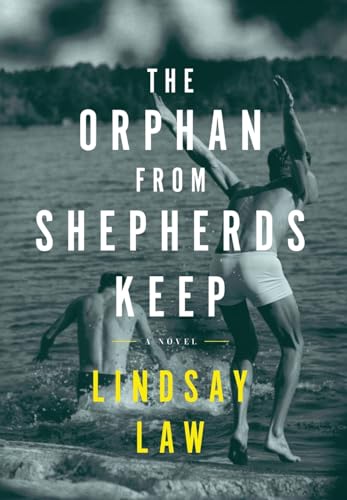
I really enjoyed this book. More on that in a moment. But I have to start with the one very distracting thing that begins the story almost to the point I considered not reading it. So glad, I didn't do that. This error, in my view anyway, is at the foundation for how the entire novel proceeds. For me, good fiction is measured by its believability. Can I rationalize that in this story the events described could really have happened? Sorry to say, I couldn't buy into the plausibility of how this novel begins.
A fifteen-year-old boy straps a newborn infant to his chest, wraps the baby and himself in blankets and a warm coat, then travels several hours, more than one hundred miles, in a snowstorm over rugged terrain in the north of Vermont near the Canadian border to deposit the bundled child atop a snowdrift at the doorstep of a monastery. OK, that's a bit of a stretch, but what comes next just didn't pass the "no way would this happen" test.
The authorities get involved with this incident along with Vermont Family Services. After considerable debate among the eight monks living there as to whether it's a "good look" for eight grown men to raise a young boy to adulthood, the abbot approves a plan to keep this boy and raise him as their own. After making numerous "observation visit" the authorities accept the arrangement. It's 1984 and there's no way government would permit eight priests to become a "parenthood collective" and raise this child. He's an infant, male, and white... in Vermont; highly adoptable by a traditional family! I was so agog at the assumption Law makes here I decided to spend some time on the internet searching for a real-life precedent. The closest I came were statements on Catholic Church law forbidding priests or nuns from adopting children. The Church declared it was not the "calling" of its clergy to raise children as their own.
The orphan boy is named Elijah by his fathers. The further the narrative proceeded from these early days, a prequel of sorts to the story that follows, the more I began to accept the narrative for what it was pushing its origin from my mind. Along with Elijah, who shortens his name to just "Eli" when he's older, there are two other central characters. The teenager who rescues him, Ben, and the son of the couple who own the land on which the monastery sits on. Ferris is a juvenile delinquent about two years older than Eli's age. While the story remains primarily Eli's, all three characters will stay intertwined with one another throughout the narrative. In different ways, they all gradually embrace their homosexual orientations which, obviously, are a significant part of the story.
This saga spans approximately thirty-five years in the lives of these boys to men. Law deserves props for his intricate weaving of multiple storylines over such a long time and bringing them all to a "tidy" conclusion at the end of the book. For Ben and Ferris, their journeys are metaphorical really. They spend their entire lives in northern Vermont where they grew-up. Eli's journey, however, is both metaphorical and real. He is an uncommonly "beautiful" (as opposed to "handsome") male possessing a uniquely amazing mezzo-soprano voice. He will become famous for it and, fleeing a haunting past, he will live in Spain, Austria, Latvia, and Finland, before going back to Vermont, then to Canada, before returning again to Europe.
Law also mirrors real-life in that this novel doesn't really have one central plot. It meanders through multiple sagas with these characters, each with their own unique conflicts Law skillfully reconciles before smoothly transitioning, showing the prior's cause and effect with the next chapter in these characters lives. This narrative beautifully captures the phases we all pass through in our own lives. Over the course of these experiences, Law weaves in some of American society's current woes: a mass shooting and gun culture, drug addiction, 911, and the book ends during the height of the Covid pandemic. He also comments on our dysfunctional political climate. Although he's discreet in his condemnation, I also applaud him for his negative view of Trump and the destruction he caused our nation (and will now cause again).
Yeah... the origin of this story didn't work for me, but beyond that Law writes an engaging modern-day narrative with engaging fully developed characters possessing both the good and bad that exists in all of us.