

What do you think?

Witkacy - Dzieła zebrane #3
Ненасытнасць
«Ненасытнасць» Станіслава Ігнацы Віткевіча лічыцца найлепшым раманам аўтара. Антыўтапічная фантазія, напісаная ў 20-я гады XX стагоддзя, апісвае працэс сталення галоўнага героя на фоне рэвалюцыйнага кітайскага ўварвання ў Еўропу і распаўсюджання новай веры. Сімвалам гэтай веры з’яўляецца таблетка, прыняцце якой дазваляе змяніць светапогляд, а таксама падавіць індывідуальнасць і знішчыць асобу як такую. Кніга насычана эротыкай, філасофіяй, палітыкай і мастацтвам — праз пагружэнне ў іх персанажы імкнуцца спатоліць сваю прагу жыцця і заглушыць метафізічны жах існавання.
548 pages, Hardcover
First published January 1, 1930
About the author
Stanisław Ignacy Witkiewicz
113 books247 followersStanisław Ignacy Witkiewicz (24 February 1885 – 18 September 1939), commonly known as Witkacy, was a Polish writer, painter, philosopher, playwright, novelist, and photographer active in the interwar period.
Born in Warsaw, Stanisław Ignacy Witkiewicz was a son of the painter, architect and an art critic Stanisław Witkiewicz. His mother was Maria Pietrzkiewicz Witkiewiczowa. Both of his parents were born in the Samogitian region of Lithuania. His godmother was the internationally famous actress Helena Modrzejewska.
Stanisław Ignacy Witkiewicz – a writer, playwright, poet, painter, photographer, philosopher and an art theoretician. Witkacy was a visionary ahead of his times, and yet a concretely pungent prankster, whose cutting-egde judgement and catastrophic prophesies allow new generations to rediscover his work time and again. One of the few Polish artists whose significance for world art history endures the test of time.
He died by commiting suicide upon learning of the Red Army’s attack on Poland, on the 18th of September, 1939 in the village of Jeziory, Polesie region (present-day Ukraine).
Born in Warsaw, Stanisław Ignacy Witkiewicz was a son of the painter, architect and an art critic Stanisław Witkiewicz. His mother was Maria Pietrzkiewicz Witkiewiczowa. Both of his parents were born in the Samogitian region of Lithuania. His godmother was the internationally famous actress Helena Modrzejewska.
Stanisław Ignacy Witkiewicz – a writer, playwright, poet, painter, photographer, philosopher and an art theoretician. Witkacy was a visionary ahead of his times, and yet a concretely pungent prankster, whose cutting-egde judgement and catastrophic prophesies allow new generations to rediscover his work time and again. One of the few Polish artists whose significance for world art history endures the test of time.
He died by commiting suicide upon learning of the Red Army’s attack on Poland, on the 18th of September, 1939 in the village of Jeziory, Polesie region (present-day Ukraine).
Ratings & Reviews
Friends & Following
Create a free account to discover what your friends think of this book!
Community Reviews
Displaying 1 - 30 of 77 reviews

January 31, 2018
Stanislaw Ignacy Witkiewicz had an absolutely original mentality and as a result there is an absolutely original absurdist dystopia Insatiability.
And this is exactly the way Stanislaw Ignacy Witkiewicz writes – he turns his narration into a firework of schizoid images with which he literally extracts his readers’ entrails…
In the first part of the novel, The Awakening the hero physiologically, sensually, mentally and metaphysically wakes up to the surrounding reality…
The second part Insanity is the story of the total madness: mental, sexual, metaphysical and historical…
In Insatiability Stanislaw Ignacy Witkiewicz managed to catch all the craze of the time and all its trends: freudianism, Stalinism, militarism, avant-gardism, free love, jazz, cocaine…
If one can’t achieve happiness one turns to its ideological or chemical substitutes and destroys oneself completely.
He played fiendishly, brutally, savagely, inhumanly, sadistically, extracting his listeners’ entrails and wallowing in them the way Gilles de Rais was said to have done with his victims, gorging on the metaphysical pain of these human wrecks, rescuing them from the quotidian and catapulting them into a boundless eschatological awe and wonder. This was art, not the sort of piano-thumping performed by blasé virtuosi or intellectual designers of new sensual thrills for hysterical females.
And this is exactly the way Stanislaw Ignacy Witkiewicz writes – he turns his narration into a firework of schizoid images with which he literally extracts his readers’ entrails…
In the first part of the novel, The Awakening the hero physiologically, sensually, mentally and metaphysically wakes up to the surrounding reality…
The fact remained: everything is. This was not the banal truism it seemed. A subconscious, purely sensual ontology, animistic in the main, is nothing compared to that first glimmering of a conceptual ontology, to that first general existential perception. Until now, the mere fact of his own being had not impressed him. Now, for the first time, he could grasp its sheer impenetrability. His distant childhood loomed up in his innocent imagination like some golden and enchanted world — a world of blissful, irretrievable days, shimmering in a dust of unearthly longing…
The second part Insanity is the story of the total madness: mental, sexual, metaphysical and historical…
Terrible rumors were making the rounds. Rank gossip, hatched from the darkest, mustiest skulls and the most putrescent guts (in place of withered-up “hearts”), had materialized, ripened, and oozed into hard reality: in the flurry of aperitifs and hors d’oeuvres; in this atmosphere of desperate and suicidal gluttony, dipsomania, and debauchery; in step with the mesmerizing sounds produced by a fatally cloacal (and no longer simply honky-tonk) music capable of grinding everything and everyone into mindless crap. “Grand Ole Cunt” and “Peewee Prick” were wailing away on their hypersaxophones, tremolos, plectrums, gargantuafarts, and cymbaltingles, accompanied by a triple organo-piano…
In Insatiability Stanislaw Ignacy Witkiewicz managed to catch all the craze of the time and all its trends: freudianism, Stalinism, militarism, avant-gardism, free love, jazz, cocaine…
If one can’t achieve happiness one turns to its ideological or chemical substitutes and destroys oneself completely.

Read
December 17, 2018
Insatiability, 530-page literary gush from the pen of Polish author Stanisław Ignacy Witkiewicz aka Witkacy, protein creator par excellence - novelist, playwright, photographer, painter (the paintings included here are Witkacy's).
Insatiability, written in the late 1920s, where the fire of romanticism meets the dolor of decadence, reminding me, in turn, of Berlin Alexanderplatz by Alfred Döblin (published in the same year), Robert Musil's The Man Without Qualities (written mostly during the same period) and, for its sheer exuberance and personal pyrotechnics, Henry Miller's Tropic of Cancer.
insatiability, wherein we follow the rollicking adventures of Polish aristocrat Genezip Kapen aka Zip in a future Poland around the year 2000. Oh, have times changed! The first Polish novel published in 1776, The Adventures of Mr. Nicholas Wisdom by Ignacy Krasicki, describes a young aristocrat's sojourns in Warsaw and Paris leading him to become a good man and upstanding citizen, a rationalist in the Age of Enlightenment. Quite a different story for young Zip.
I was first introduced to Insatiability via Czesław Miłosz's The Captive Mind wherein the Nobel prizewinning author points out how Stanisław Ignacy Witkiewicz's novel foretells Poland overrun by a foreign power. For Witkacy, a Chinese cult with their Murti Bing pills turning the Poles passive, so the entire population accepts alien rulers without resistance. Of course, in reality, the foreigners were first Nazis and then Soviet Stalinists feeding the Poles Marxist dialectics as a sort of conceptual Murit Bing pill.
With this in mind, while reading Insatiability I was forever on the lookout for Murti Bing pills but, as it so happened, the first mention of this notorious drug doesn't show up until page 413. This to say the bulk of the novel covers the years preceding anybody in Poland imbibing the foreign substance causing their passivity.
Translator Louis Iribarne deserves a special call-out for rendering the author's Polish into lively, luscious, hip English, as in "people had become so stupefied through automation that in time they ceased to know why they did anything and began to blend into a homogenous and stuporous state of poopefaction." And, "Under such circumstances even the grubbiest, raunchiest blabbermounths and gossipmongering gasbags learned to keep silent - and that included the press" And, "Every passing moment seemed rich with a supreme understanding of that everywhere sought, but eternally elusive, life: each succeeding moment seemed to deny the element of finality by exposing new levels of the interior and new domains in the existential realm - in other words, everything was screwed up."
As we follow young Genezip Kapen on his adventures through youthful awakening and spiraling down to insanity (indeed, the novel is divided into two parts: Awakening and Insanity), a number of key themes and highlights are encountered along the way:
High Esteem for Art: "Literature was to be the ideal substitute for life's nagging multiplicity: through literature you could devour everything without suffering food poisoning or becoming a cad." Keen observations regarding literature, music and the arts are made by Zip and others throughout the novel, most notably Putricides Tenzer, a composer of atonal and unstructured music a la Arnold Schoenberg and the novelist Sturfan Abnol as when he pronounces: "What I do serves the mysterious aims of my own inner development. I'm poisoned by unspoken things that I can know only by writing novels. Chemically dissolved in my brain, life's mysteries produce ptomaines of sloth, confusion, inertia. I must go beyond mere appearances."
Soaring Metaphysics: Husserl, Kant, Einstein, Nietzsche, Bergson - they're all here and discussions about their ideas occasionally go on for pages, sometimes serious, sometimes not so serious, for, as Czesław Miłosz observed, we are never quite sure when Witkacy has his tongue deep in his cheek. Zip never read Schopenhauer and didn't have a high regard for pessimism but "at times he found himself contemplating suicide, but he went on living out of sheer curiosity about what was going to happen next and about what God, so mysterious in His ability to devise temporal torments (Hell, for example, was just eternal boredom), had cooked up for him."
Mechanization and Regimentation: Much more than physical or social mechanization such as one finds in Charlie Chaplin's Modern Times, Zip's concern (likewise author Witkacy's concern) is a psychic mechanization where everyone thinks in the same suffocating categories and willingly lives as identical ants moving around on identical anthills. One telling quote: "People were grinning at each other idiotically, incredulous that they could feel anything. Like a rock rising up in the receding waters of an ebb tide, one truth, one value, was emerging: society as a fact in itself."
Scathing Cultural Commentary: Witkacy doesn't hold back poking his long satiric needle into the belly of politics and the prevailing culture as when he cites the League in Defense of a More Humane War placing a worldwide ban on chemical gas and airplanes. Love that "more humane war" - if Europe is plunged into another war, by all means, let it be the most humane type of war. We wouldn't want all that messy inhumane stuff!
Scintillating Self-Reference: There it is right at the bottom of page 327, the author makes a direct reference to his very own art: "Before the curtain, an utter monstrosity crying out to Witkiewicz's Pure Form for revenge" - as a reader you know Witkacy has the good sense to take the dissolution of his country's culture seriously but not to take himself too seriously.
In a Gadda Da Vida, Honey: Zip and those around him partake of cocaine, peyote and other recently imported drugs into Poland. Zip under the influence: "Time was moving at a frantic clip. Hundreds of years became squeezed into seconds - what De Quincey experienced under the influence of opium - as if time had been compressed into pills of condensed duration."
Murti Bing Pills: I encourage you to read this overlooked European classic for yourself. One last quote about Poland's impending nightmare (feel free to substitute Nazism or Communism for Witkacy's Chinese Murti Bing Pills): "Normally a person would take the pills, then proceed to the indoctrination stage. Zip decided to do the opposite: to become initiated first, then take the pills. But such decisions do not always work out in practice."

"Even Russian literature was nearing the end; the possibilities were indeed shrinking. People tread an even smaller patch, like those clinging to a sinking iceberg. Fiction, following the example of the Pure Arts, was headed for the abyss. And are we not right to be scornful? While a good narcotic is still okay, a fake narcotic that fails to work the way it should but still produces all the bad side effects is worthy of contempt, and its manufacturers are a bunch of swindlers. But, alas, fiction written for the sake of fiction, without a purely artistic justification (as in poetry, for example, where a violation of the sense is justified), fiction without substance, has proved to be an invention on the part of verbally gifted morons and graphomaniacs." - Stanisław Ignacy Witkiewicz, Insatiability

Stanisław Ignacy Witkiewicz, 1885-1939

Read
June 30, 2011This is a book that deserves to be better known. It's the kind of thing that all readers of 1984 and Brave New World would appreciate. I managed to read this only because I found a neglected copy in the university library when I was a student when I ought to have been looking for other things but in my defence it was recommended by the Rough guide to Poland and since at the time I was due to go to Torun for a Summer school it seemed a good idea to read a book which would be utterly unhelpful with regard to my then immediate future.
The book has a great fin-de-siecle atmosphere, fantastical and comical by turns, set in an alternative semi-fantastical world. Western Europe is obviously hopelessly decadent, Russia a mass of petty states slowly being conquered by an advancing Asiatic Empire. Poland the single bulwark of order and of European values, as a strange esoteric drug culture featuring drugs which offer hallucinogenic experiences that can be tailored to the individual taking them sweeps in from the East. But never fear - a Marshal Pilsudski figure is intent on saving Poland, in part by ever increasing the proportion of officers in the Polish Army until there are at least ten officers for every soldier. Thinking of this book it feels far more prescient now than it was at the time when it was written. One could draw a direct line from Witkiewicz's playfulness to the current Law and Justice administration, I'm not sure if that is mildly scary or just is to make an obvious point about the deeper currents in our cultures. Perhaps it has been a strand in Polish thinking to see themselves as the bulwark of Europe since, well forever, as on the otherside of the forest Russia begins (except when Lithuania intervenes). I imagine the spiritual drug culture in this book owes as much to Theosophy as to anything else yet it also plugs into the long standing fascination in Europe for the spiritual life of Asia, it remains ever green even if the Chinese take over promises to be moderately more subtle nowadays than by the sword. I'd read this again if I could find a copy.
The book has a great fin-de-siecle atmosphere, fantastical and comical by turns, set in an alternative semi-fantastical world. Western Europe is obviously hopelessly decadent, Russia a mass of petty states slowly being conquered by an advancing Asiatic Empire. Poland the single bulwark of order and of European values, as a strange esoteric drug culture featuring drugs which offer hallucinogenic experiences that can be tailored to the individual taking them sweeps in from the East. But never fear - a Marshal Pilsudski figure is intent on saving Poland, in part by ever increasing the proportion of officers in the Polish Army until there are at least ten officers for every soldier. Thinking of this book it feels far more prescient now than it was at the time when it was written. One could draw a direct line from Witkiewicz's playfulness to the current Law and Justice administration, I'm not sure if that is mildly scary or just is to make an obvious point about the deeper currents in our cultures. Perhaps it has been a strand in Polish thinking to see themselves as the bulwark of Europe since, well forever, as on the otherside of the forest Russia begins (except when Lithuania intervenes). I imagine the spiritual drug culture in this book owes as much to Theosophy as to anything else yet it also plugs into the long standing fascination in Europe for the spiritual life of Asia, it remains ever green even if the Chinese take over promises to be moderately more subtle nowadays than by the sword. I'd read this again if I could find a copy.

January 4, 2018
A challenging, vengeful, manic, weird, gloriously random, obscure panegyric. A dystopian, war-like, anti-war novel. The Polish Gravity's Rainbow, rendered less comprehensible via translation. There is still a lot to gain, absorb and relish about this book, even if every other sentence goes in one ear and out the other. The punning goes on and on an on, and examine the evidence of hundreds of notes before deciding whether your efforts to understand this book in its entirety are worthwhile. Self-references abound, along with comments on war, personal hygiene, lots of phallocentric jokes, goofy asides, well-formed rational arguments alongside pure, indulgent sexual fantasy.
Like Wyndham Lewis' The Apes of God, this is a book adored by other writers (among them Gombrowicz) but difficult for readers of our age to appreciate. A profusion of characters carry on conversations containing so many scattered references of the early Twentieth Century European variety, that you will undoubtedly feel mind-boggled at some point, unless you are an expert in that slice of political history.
The anti-imperialism undercurrent is a little distracting, but so is everything else. This is a big book of distractions. A high-brow, low-brow grimacing anomaly.
I much prefer Alfred Doblin's Berlin Alexanderplatz and the aforementioned work of Wyndham Lewis. But Genezip feels akin to Pynchon's protagonists in that we rarely get the chance to form a picture of his adventures because so many contradictions and accusations and thoughts and digressions interpolate the flow of narrative, but his charm and obvious intelligence inspire confidence, and keep us turning pages (hopefully). Brilliantly witty in parts, abstruse and variable in its literary delivery of straight-faced fecal humor, Insatiability is a way-ahead-of-its-time tome.
It will superimpose a unique frame of mind upon your own. Some call it an experimental masterpiece. I call it a guaranteed amusing, re-readable puzzle, that is both tiresome and impenetrable, while never ceasing to enjoy it out of the crevices of my squinting-with-consternation eyes.
Like Wyndham Lewis' The Apes of God, this is a book adored by other writers (among them Gombrowicz) but difficult for readers of our age to appreciate. A profusion of characters carry on conversations containing so many scattered references of the early Twentieth Century European variety, that you will undoubtedly feel mind-boggled at some point, unless you are an expert in that slice of political history.
The anti-imperialism undercurrent is a little distracting, but so is everything else. This is a big book of distractions. A high-brow, low-brow grimacing anomaly.
I much prefer Alfred Doblin's Berlin Alexanderplatz and the aforementioned work of Wyndham Lewis. But Genezip feels akin to Pynchon's protagonists in that we rarely get the chance to form a picture of his adventures because so many contradictions and accusations and thoughts and digressions interpolate the flow of narrative, but his charm and obvious intelligence inspire confidence, and keep us turning pages (hopefully). Brilliantly witty in parts, abstruse and variable in its literary delivery of straight-faced fecal humor, Insatiability is a way-ahead-of-its-time tome.
It will superimpose a unique frame of mind upon your own. Some call it an experimental masterpiece. I call it a guaranteed amusing, re-readable puzzle, that is both tiresome and impenetrable, while never ceasing to enjoy it out of the crevices of my squinting-with-consternation eyes.

February 2, 2019
Στο εσώφυλλο ο συγγραφέας αυστηρός, σύννους, με υψωμένο το φρύδι προειδοποιεί τον ανυποψίαστο και ανυπόμονο αναγνώστη: "Πλησίασε με δική σου ευθύνη!"
Η "Αδηφαγία" είναι ένα ακόρεστο βιβλίο, καταπίνει τους αναγνώστες, τους αλέθει και τους εξεμεί. Ερμητικό, μονογενές, απροσπέλαστο σε σημεία, μοιάζει με σκαλωσιά περίτεχνη και ταυτόχρονα πρωτότυπη που σε καλεί να αναρριχηθείς σκαλί-σκαλί, απνευστί, καθότι δεν υπάρχουν περιθώρια παύσης – η διαδρομή δαιδαλώδης, δολιχοδρομεί, παρελκύει.
Ακόμα συχνότερα όμως γίνεται πνιγηρή, "πυροβολεί" ακατάπαυστα τον αναγνώστη με δυσνόητους φιλοσοφικούς διαλόγους που διατρέχουν το corpus του ογκώδους εγχειρήματος, εσχατολογικές αναλύσεις, ψυχολογικής και σεξουαλικής υφής σχόλια, περιδινούμενες εικόνες, αντικατοπτρισμούς λεκτικούς, ηχητικούς, εικαστικούς.
Ίσως η λέξη "εικαστικός" προσιδιάζει καλύτερα στο πυκνό αυτό κείμενο, το οποίο εμφορείται -συχνά σε βαθμό ενοχλητικό- από καλλιτεχνικές εμμονές και τις θεωρίες του συγγραφέα του. Η "Αδηφαγία" προκρίνει τον παράφορο εστετισμό, διανοουμενίστικη οίηση, εικονοποιεία και ταυτόχρονα εικονο-ποίηση για όλους όσοι αποδέχονται την πρό(σ)κληση.
Δεν περιμένει βεβαίως κάποιος να παρασυρθεί από την πλοκή, η οποία παραμένει προφανώς σε πρωτόλειο στάδιο, με τον νεαρό ήρωα να…θαλασσοδέρνει ανερμάτιστα από την εφηβεία στην ενηλικίωση, ενώ ταυτόχρονα γύρω του ο κόσμος καταρρέει μεγαλοπρεπώς.
Ως κλασικού τύπου δυστοπία, η μικρή, πτωχή πλην τίμια Πολωνία (χώρα καταγωγής του συγγραφέα και του ήρωα) αναμένει την εισβολή των κινεζικών στιφών, τα οποία έχουν ήδη καταλάβει τη Σοβιετική Ρωσία και ετοιμάζονται να παρασύρουν τα πάντα στο διάβα τους. Αντίπαλο δέος, μια… Μπολσεβίκικη-Φασιστική Δύση (;) που έχει επιλέξει τον Τειλορισμό των ΗΠΑ ως modus vivendi, νωχελική μέσα στη συβαριτική της αφθονία. Είναι ξεκάθαρο πως ο Βιτκίεβιτς δεν επιχειρεί να προσφέρει ένα ρεαλιστικό ιστορικό υπόστρωμα στο έργο του (θα ήταν ανακόλουθος), μη παραχωρώντας στον αναγνώστη ούτε αυτή την ευκολία ταύτισης.
Το κείμενο βρίθει ιδεών, σκέψεων και περιγραφών, οι οποίες θα μπορούσαν να γεμίσουν τόμους, αλλά δυστυχώς για τον ανύποπτο αναγνώστη κατακλύζουν σχεδόν την καθεμιά σελίδα αυτού του ογκώδους βιβλίου. Αυτό είναι ίσως και το βασικό μειονέκτημα της Αδηφαγίας: συχνά το έλασσον διαχέεται στο μείζον (ποτέ το αντίθετο!) και οι εξαιρετικού βάθους και πυκνότητας σκέψεις εναλλάσσονται με καταιγιστικούς ρυθμούς, απνευστί, αφήνοντας τον αναγνώστη ενεό μεν, αδύναμο δε στο να συντονιστεί, να βρει τον δικό του ρυθμό απέναντι στη "φρενήρη υπερταχεία" των εμβριθών συλλογισμών του συγγραφέα.
Εκεί εδράζεται συνήθως και η όποια δυσφορία εκλύεται από το έργο αυτό, καθώς πρόκειται πρωτίστως περί διανοητικής κατασκευής, έργο εναργούς διανοούμενου και δευτερευόντως λογοτέχνη, που δεν έχει δώσει προτεραιότητα στη δομή, παρασυρόμενος από την ιδιοφυή ανάπτυξη της σκέψης του. Είναι λοιπόν απολύτως κατανοητό το γεγονός πως η καταπόνηση του αναγνώστη μπορεί να οδηγήσει στη νοηματική ασυνέχεια εκ πρώτης και στην… αναγνωστική ασυνέχεια εν τέλει.
Δεν θα ήμουν ειλικρινής -απέναντι στον εαυτό μου, κυρίως- αν ισχυριζόμουν πως κατανόησα άπαντα τα γραφόμενα, καθώς συχνά παράδερνα μεταξύ των παραγράφων, με σελίδες να έχουν απλά διαφύγει της προσοχής μου, χωρίς όμως να έχω πάντα την υπομονή να επιστρέψω, παρά μόνο εφόσον ήταν απαραίτητο από πλευράς κατανόησης.
Η "Αδηφαγία" οδηγείται στην αναπόφευκτη ολοκλήρωσή της, με τον ήρωά της να βάλλεται πανταχόθεν, αναζητώντας τι ακριβώς; Μια πλήρωση που ποτέ δεν επέρχεται, την ευτυχία που διαφεύγει αέναα, την αγάπη που τον προδίδει, τη λογική που οι πάντες γύρω του, αλλά και ο κόσμος τού αρνείται. Και ο κατάκοπος αναγνώστης κλείνει το βιβλίο με μια αίσθηση δύσπνοιας και ταυτόχρονα ικανοποίησης.
Ναι, απόλαυσα την "Αδηφαγία" (στα περισσότερα σημεία, έστω). Όχι, δεν θα την ξαναδιάβαζα. Ίσως, θα την πρότεινα σε συγκεκριμένο, εκπαιδευμένο, κοινό που έχει ξεφύγει από την αναγνωστική πεπατημένη και αναζητεί το εναλλακτικό. Οι λοιποί μπορούν απλά να προσπεράσουν δίχως ενοχές.
https://fotiskblog.home.blog/2019/02/...
Η "Αδηφαγία" είναι ένα ακόρεστο βιβλίο, καταπίνει τους αναγνώστες, τους αλέθει και τους εξεμεί. Ερμητικό, μονογενές, απροσπέλαστο σε σημεία, μοιάζει με σκαλωσιά περίτεχνη και ταυτόχρονα πρωτότυπη που σε καλεί να αναρριχηθείς σκαλί-σκαλί, απνευστί, καθότι δεν υπάρχουν περιθώρια παύσης – η διαδρομή δαιδαλώδης, δολιχοδρομεί, παρελκύει.
Ακόμα συχνότερα όμως γίνεται πνιγηρή, "πυροβολεί" ακατάπαυστα τον αναγνώστη με δυσνόητους φιλοσοφικούς διαλόγους που διατρέχουν το corpus του ογκώδους εγχειρήματος, εσχατολογικές αναλύσεις, ψυχολογικής και σεξουαλικής υφής σχόλια, περιδινούμενες εικόνες, αντικατοπτρισμούς λεκτικούς, ηχητικούς, εικαστικούς.
Ίσως η λέξη "εικαστικός" προσιδιάζει καλύτερα στο πυκνό αυτό κείμενο, το οποίο εμφορείται -συχνά σε βαθμό ενοχλητικό- από καλλιτεχνικές εμμονές και τις θεωρίες του συγγραφέα του. Η "Αδηφαγία" προκρίνει τον παράφορο εστετισμό, διανοουμενίστικη οίηση, εικονοποιεία και ταυτόχρονα εικονο-ποίηση για όλους όσοι αποδέχονται την πρό(σ)κληση.
Δεν περιμένει βεβαίως κάποιος να παρασυρθεί από την πλοκή, η οποία παραμένει προφανώς σε πρωτόλειο στάδιο, με τον νεαρό ήρωα να…θαλασσοδέρνει ανερμάτιστα από την εφηβεία στην ενηλικίωση, ενώ ταυτόχρονα γύρω του ο κόσμος καταρρέει μεγαλοπρεπώς.
Ως κλασικού τύπου δυστοπία, η μικρή, πτωχή πλην τίμια Πολωνία (χώρα καταγωγής του συγγραφέα και του ήρωα) αναμένει την εισβολή των κινεζικών στιφών, τα οποία έχουν ήδη καταλάβει τη Σοβιετική Ρωσία και ετοιμάζονται να παρασύρουν τα πάντα στο διάβα τους. Αντίπαλο δέος, μια… Μπολσεβίκικη-Φασιστική Δύση (;) που έχει επιλέξει τον Τειλορισμό των ΗΠΑ ως modus vivendi, νωχελική μέσα στη συβαριτική της αφθονία. Είναι ξεκάθαρο πως ο Βιτκίεβιτς δεν επιχειρεί να προσφέρει ένα ρεαλιστικό ιστορικό υπόστρωμα στο έργο του (θα ήταν ανακόλουθος), μη παραχωρώντας στον αναγνώστη ούτε αυτή την ευκολία ταύτισης.
Το κείμενο βρίθει ιδεών, σκέψεων και περιγραφών, οι οποίες θα μπορούσαν να γεμίσουν τόμους, αλλά δυστυχώς για τον ανύποπτο αναγνώστη κατακλύζουν σχεδόν την καθεμιά σελίδα αυτού του ογκώδους βιβλίου. Αυτό είναι ίσως και το βασικό μειονέκτημα της Αδηφαγίας: συχνά το έλασσον διαχέεται στο μείζον (ποτέ το αντίθετο!) και οι εξαιρετικού βάθους και πυκνότητας σκέψεις εναλλάσσονται με καταιγιστικούς ρυθμούς, απνευστί, αφήνοντας τον αναγνώστη ενεό μεν, αδύναμο δε στο να συντονιστεί, να βρει τον δικό του ρυθμό απέναντι στη "φρενήρη υπερταχεία" των εμβριθών συλλογισμών του συγγραφέα.
Εκεί εδράζεται συνήθως και η όποια δυσφορία εκλύεται από το έργο αυτό, καθώς πρόκειται πρωτίστως περί διανοητικής κατασκευής, έργο εναργούς διανοούμενου και δευτερευόντως λογοτέχνη, που δεν έχει δώσει προτεραιότητα στη δομή, παρασυρόμενος από την ιδιοφυή ανάπτυξη της σκέψης του. Είναι λοιπόν απολύτως κατανοητό το γεγονός πως η καταπόνηση του αναγνώστη μπορεί να οδηγήσει στη νοηματική ασυνέχεια εκ πρώτης και στην… αναγνωστική ασυνέχεια εν τέλει.
Δεν θα ήμουν ειλικρινής -απέναντι στον εαυτό μου, κυρίως- αν ισχυριζόμουν πως κατανόησα άπαντα τα γραφόμενα, καθώς συχνά παράδερνα μεταξύ των παραγράφων, με σελίδες να έχουν απλά διαφύγει της προσοχής μου, χωρίς όμως να έχω πάντα την υπομονή να επιστρέψω, παρά μόνο εφόσον ήταν απαραίτητο από πλευράς κατανόησης.
Η "Αδηφαγία" οδηγείται στην αναπόφευκτη ολοκλήρωσή της, με τον ήρωά της να βάλλεται πανταχόθεν, αναζητώντας τι ακριβώς; Μια πλήρωση που ποτέ δεν επέρχεται, την ευτυχία που διαφεύγει αέναα, την αγάπη που τον προδίδει, τη λογική που οι πάντες γύρω του, αλλά και ο κόσμος τού αρνείται. Και ο κατάκοπος αναγνώστης κλείνει το βιβλίο με μια αίσθηση δύσπνοιας και ταυτόχρονα ικανοποίησης.
Ναι, απόλαυσα την "Αδηφαγία" (στα περισσότερα σημεία, έστω). Όχι, δεν θα την ξαναδιάβαζα. Ίσως, θα την πρότεινα σε συγκεκριμένο, εκπαιδευμένο, κοινό που έχει ξεφύγει από την αναγνωστική πεπατημένη και αναζητεί το εναλλακτικό. Οι λοιποί μπορούν απλά να προσπεράσουν δίχως ενοχές.
https://fotiskblog.home.blog/2019/02/...

see-you-later
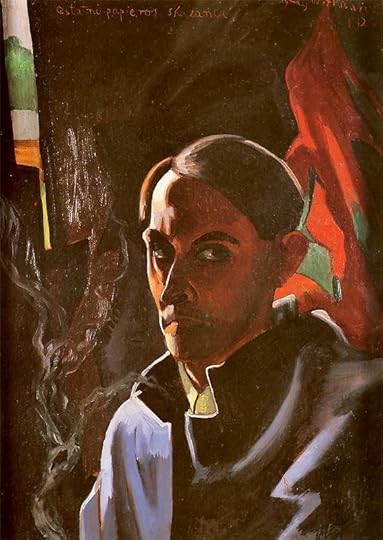
August 19, 2014It is inevitable for a work of literature to be infused with its author’s personality in multiple ways, not the least of which are their intellectual and artistic dispositions. Quite early on while reading Insatiability, I caught my thoughts going back to Mervyn Peake. Peake’s vivid and visual writing had greatly charmed me in Titus Groan. A look at Witkeiwicz’s wikipedia page informed me that he too, like Peake, had been a painter. His writing undoubtedly has a visual characteristic as well. Peake had used his visual writing to draw striking scene descriptions and conveying the atmosphere of a setting. Witkeiwicz uses his visual style to not only portray the scene, but, to some extent, while describing the thoughts of the characters as well. Like the very first brush stroke on a blank canvas full of possibilities, you will see a tiny thought bubble germinate in a character’s mind. It will then slowly and deliberately begin to flourish, and some recognizable forms and structures will begin to appear. And soon Rome would have been built where there had only been a barren canvas several sentences ago. I don’t have a copy at hand at the moment to quote any excerpts, but here is one of Witkeiwicz’s self-portraits:
Paintings by Authors:
When great authors pick up the brush.
A brief survey of famous writers who also made art.

December 28, 2019
I first learned about this book from Chapter One of The Captive Mind" by Czesław Miłosz. He has an excellent summary of this long, often dense book....
A curious book appeared in Warsaw in 1932. It was a novel, in two volumes, entitled "Insatiability". Its author was Stanislaw Ignacy Witkiewicz, a painter, writer, and philosopher, who had constructed a philosophical system akin to the monadology of Leibnitz. As in his earlier novel, Farewell to Autumn, his language was difficult, full of neologisms. Brutal descriptions of erotic scenes alternated with whole pages of discussions on Husserl, Carnap, and other contemporary philosophers. Besides, one could not always tell whether the author was serious or joking; and the subject matter seemed to be pure fantasy.
The action of the book took place in Europe, more precisely in Poland, at some time in the near future or even in the present, that is, in the thirties, forties, or fifties. The social group it portrayed was that of musicians, painters, philosophers, aristocrats, and higher-ranking military officers. The whole book was nothing but a study of decay: mad, dissonant music; erotic perversion; widespread use of narcotics; dispossessed thinking; false conversions to Catholicism; and complex psychopathic personalities. This decadence reigned at a time when Western civilization was said to be threatened by an army from the East, a Sino-Mongolian army that dominated all the territory stretching from the Pacific to the Baltic.
Witkiewicz's heroes are unhappy in that they have no faith and no sense of meaning in their work. This atmosphere of decay and senselessness extends throughout the entire country. And at that moment, a great number of hawkers appear in the cities peddling Murti-Bing pills.
Murti-Bing was a Mongolian philosopher who had succeeded in producing an organic means of transporting a "philosophy of life." This Murti-Bing "philosophy of life," which constituted the strength of the Sino-Mongolian army, was contained in pills in an extremely condensed form. A man who used these pills changed completely. He became serene and happy. The problems he had struggled with until then suddenly appeared to be superficial and unimportant. He smiled indulgently at those who continued to worry about them.
Most affected were all questions pertaining to unsolvable ontological difficulties. A man who swallowed Murti-Bing pills became impervious to any metaphysical concerns. The excesses into which art falls when people vainly seek in form the where¬ withal to appease their spiritual hunger were but outmoded stupidities for him. He no longer considered the approach of the Sino-Mongolian army as a tragedy for his own civilization. He lived in the midst of his compatriots like a healthy individual surrounded by madmen. More and more people took the Murti-Bing cure, and their resultant calm contrasted sharply with the nervousness of their environment.
The epilogue, in a few words: the outbreak of the war led to a meeting of the armies of the West with those of the East. In the decisive moment, just before the great battle, the leader of the Western army surrendered to the enemy; and in exchange, though with the greatest honors, he was beheaded. The Eastern army occupied the country and the new life, that of Murti-Bingism, began.
The heroes of the novel, once tormented by philosophical "insatiety," now entered the service of the new society. Instead of writing the dissonant music of former days, they composed marches and odes. Instead of painting abstractions as before, they turned out socially useful pictures. But since they could not rid themselves completely of their former personalities, they became schizophrenics.
-------------
The main character is Genezip (Zip) Kapen. The two major sections of the book are titled “The Awakening” and “Insanity”
In Zip’s existential quest he rejects religion and finds no salvation in literature/art (aestheticism) or philosophy. Zip despairs at the mechanization of society: “people had become so stupefied through automation that in time they ceased to know why they did and began to blend into a homogenous and stuporous state of poopefaction."
Zip is despondent until he encounters in part 2, 'Insanity," (on p. 413), a Hindu peddler, a member of the cult of Djevani, who offers him Murti-Bing Pills (DAVAMESK B 2). Zip evades the indoctrination of the Sino-Mongolian conquerors (which anticipates the invasion of Poland by the Soviet Union), but imbibes in the pills anyway, even though the drug helped facilitate the conquest of Poland by the Chinese invaders.
After his first dose, Zip feels “instantly relaxed like a raving madman sedated with morphine.”
The drug is reminiscent of Huxley’s Soma in “Brave New World,” an opiate-psychedelic designed to numb normal feelings and replace them with a vague sense of euphoria. No one was in a rush any more. (Huxley denied that this book, which he claimed to not know about, had any influence on his book)
At the same time, the pills give Zip a feeling of “extreme consciousness” and have a profound affect on his dreams. Zip welcomes his disengagement from reality in the face of totalitarian conquest.
==========
This astute thinker anticipated that American society was more likely to become Huxleyan than Orwellian. Might there be bit of Murti-Bing in the dopamine hits heavy users get from social media?
https://www.goodreads.com/quotes/7942...
Meanwhile a famous Boomer author is advocating a return to psychedelics. As the wise preacher of Ecclesiastes, Koheleth, says, “there is nothing new under the sun.”
https://www.goodreads.com/review/show...
A curious book appeared in Warsaw in 1932. It was a novel, in two volumes, entitled "Insatiability". Its author was Stanislaw Ignacy Witkiewicz, a painter, writer, and philosopher, who had constructed a philosophical system akin to the monadology of Leibnitz. As in his earlier novel, Farewell to Autumn, his language was difficult, full of neologisms. Brutal descriptions of erotic scenes alternated with whole pages of discussions on Husserl, Carnap, and other contemporary philosophers. Besides, one could not always tell whether the author was serious or joking; and the subject matter seemed to be pure fantasy.
The action of the book took place in Europe, more precisely in Poland, at some time in the near future or even in the present, that is, in the thirties, forties, or fifties. The social group it portrayed was that of musicians, painters, philosophers, aristocrats, and higher-ranking military officers. The whole book was nothing but a study of decay: mad, dissonant music; erotic perversion; widespread use of narcotics; dispossessed thinking; false conversions to Catholicism; and complex psychopathic personalities. This decadence reigned at a time when Western civilization was said to be threatened by an army from the East, a Sino-Mongolian army that dominated all the territory stretching from the Pacific to the Baltic.
Witkiewicz's heroes are unhappy in that they have no faith and no sense of meaning in their work. This atmosphere of decay and senselessness extends throughout the entire country. And at that moment, a great number of hawkers appear in the cities peddling Murti-Bing pills.
Murti-Bing was a Mongolian philosopher who had succeeded in producing an organic means of transporting a "philosophy of life." This Murti-Bing "philosophy of life," which constituted the strength of the Sino-Mongolian army, was contained in pills in an extremely condensed form. A man who used these pills changed completely. He became serene and happy. The problems he had struggled with until then suddenly appeared to be superficial and unimportant. He smiled indulgently at those who continued to worry about them.
Most affected were all questions pertaining to unsolvable ontological difficulties. A man who swallowed Murti-Bing pills became impervious to any metaphysical concerns. The excesses into which art falls when people vainly seek in form the where¬ withal to appease their spiritual hunger were but outmoded stupidities for him. He no longer considered the approach of the Sino-Mongolian army as a tragedy for his own civilization. He lived in the midst of his compatriots like a healthy individual surrounded by madmen. More and more people took the Murti-Bing cure, and their resultant calm contrasted sharply with the nervousness of their environment.
The epilogue, in a few words: the outbreak of the war led to a meeting of the armies of the West with those of the East. In the decisive moment, just before the great battle, the leader of the Western army surrendered to the enemy; and in exchange, though with the greatest honors, he was beheaded. The Eastern army occupied the country and the new life, that of Murti-Bingism, began.
The heroes of the novel, once tormented by philosophical "insatiety," now entered the service of the new society. Instead of writing the dissonant music of former days, they composed marches and odes. Instead of painting abstractions as before, they turned out socially useful pictures. But since they could not rid themselves completely of their former personalities, they became schizophrenics.
-------------
The main character is Genezip (Zip) Kapen. The two major sections of the book are titled “The Awakening” and “Insanity”
In Zip’s existential quest he rejects religion and finds no salvation in literature/art (aestheticism) or philosophy. Zip despairs at the mechanization of society: “people had become so stupefied through automation that in time they ceased to know why they did and began to blend into a homogenous and stuporous state of poopefaction."
Zip is despondent until he encounters in part 2, 'Insanity," (on p. 413), a Hindu peddler, a member of the cult of Djevani, who offers him Murti-Bing Pills (DAVAMESK B 2). Zip evades the indoctrination of the Sino-Mongolian conquerors (which anticipates the invasion of Poland by the Soviet Union), but imbibes in the pills anyway, even though the drug helped facilitate the conquest of Poland by the Chinese invaders.
After his first dose, Zip feels “instantly relaxed like a raving madman sedated with morphine.”
The drug is reminiscent of Huxley’s Soma in “Brave New World,” an opiate-psychedelic designed to numb normal feelings and replace them with a vague sense of euphoria. No one was in a rush any more. (Huxley denied that this book, which he claimed to not know about, had any influence on his book)
At the same time, the pills give Zip a feeling of “extreme consciousness” and have a profound affect on his dreams. Zip welcomes his disengagement from reality in the face of totalitarian conquest.
==========
This astute thinker anticipated that American society was more likely to become Huxleyan than Orwellian. Might there be bit of Murti-Bing in the dopamine hits heavy users get from social media?
https://www.goodreads.com/quotes/7942...
Meanwhile a famous Boomer author is advocating a return to psychedelics. As the wise preacher of Ecclesiastes, Koheleth, says, “there is nothing new under the sun.”
https://www.goodreads.com/review/show...

Did Not Finish
January 6, 2020Ich bin nicht ganz sicher, was ich davon halten soll. Ich kam in den Text nicht hinein, es hakte und eckte und es war nach etwa 150 Seiten so was von langweilig und mühsam, dass ich aufgab. Dabei war mir das Buch nicht egal, im Gegenteil, in den Lesepausen beschäftigte, ja belästigte mich der Stoff gerade zu, der mir so krankhaft überreizt und ins Extrem, ins Abstruse getrieben scheint, dass es zu diesem Effekt eines "rasenden Stillstands" kommt.
Eindeutig spürbar war für mich die Lage in Polen in den 20er Jahren und die Intentionen des Autors: Ein verzweifelter Rundumschlag gegen die Realität, gegen die politische Ausweglosigkeit zwischen Faschismus und Bolschewismus, gegen Dekadenz, Ignoranz und Borniertheit, gegen die Konvention der Kunst, aber auch gegen sich selbst, die männliche Sexualität, die Verfasstheit der eigenen Psyche - alles getrieben durch ein unersättliches, unstillbares Verlangen nach der totalen Befreiung. Ob dieses literarische Unternehmen tatsächlich gelungen ist, oder ob es sich eher in ausufernder Attitüde und Manie verliert, möchte und kann ich nicht beurteilen, ohne das Buch fertig gelesen zu haben.
Denn vielleicht liegt mein Versagen an der Übersetzung, die in jedem Fall miserabel ist. Ob der oft völlig verquere und unrunde Satzbau, der keinerlei Lesefluß aufkommen läßt, im Original seine Entsprechung hat, kann ich nicht wissen. Manchmal hatte ich den Verdacht, dass polnische Wendungen einfach wortwörtlich übersetzt wurden - this is not the yellow of the egg ;(
Die Lehre der Logik als "Logistik" und Bertrand Russel als "Logistiker" zu bezeichnen, ist in jedem Fall unsäglich, egal wie das im Polnischen heissen mag. Wahrscheinlich hätte ich eine gute Übersetzung, wenn auch nicht mit Begeisterung, so doch mit Interesse fertig gelesen.
Eindeutig spürbar war für mich die Lage in Polen in den 20er Jahren und die Intentionen des Autors: Ein verzweifelter Rundumschlag gegen die Realität, gegen die politische Ausweglosigkeit zwischen Faschismus und Bolschewismus, gegen Dekadenz, Ignoranz und Borniertheit, gegen die Konvention der Kunst, aber auch gegen sich selbst, die männliche Sexualität, die Verfasstheit der eigenen Psyche - alles getrieben durch ein unersättliches, unstillbares Verlangen nach der totalen Befreiung. Ob dieses literarische Unternehmen tatsächlich gelungen ist, oder ob es sich eher in ausufernder Attitüde und Manie verliert, möchte und kann ich nicht beurteilen, ohne das Buch fertig gelesen zu haben.
Denn vielleicht liegt mein Versagen an der Übersetzung, die in jedem Fall miserabel ist. Ob der oft völlig verquere und unrunde Satzbau, der keinerlei Lesefluß aufkommen läßt, im Original seine Entsprechung hat, kann ich nicht wissen. Manchmal hatte ich den Verdacht, dass polnische Wendungen einfach wortwörtlich übersetzt wurden - this is not the yellow of the egg ;(
Die Lehre der Logik als "Logistik" und Bertrand Russel als "Logistiker" zu bezeichnen, ist in jedem Fall unsäglich, egal wie das im Polnischen heissen mag. Wahrscheinlich hätte ich eine gute Übersetzung, wenn auch nicht mit Begeisterung, so doch mit Interesse fertig gelesen.

December 21, 2007
It is a difficult book to explain. It fits within the strange and perverse literary universe, between Lautréamont's Songs of Maldoror and Alfred Jarry's Days & Nights. Complicated, perverse and at times unwieldy, I was mesmerized and overwhelmed, simultaneously. I vacillated between being unable to put the book down, to being incapable of reading another sentence; but I finished it.
Written in a language that is fantastic and punful, even in translation, with grotesque and unreal characters; it has a basic story plot: a coming of age story for the main character, Genezip Kapen, and his initiation into the sexuality. His initial sexual, romantic relationship (and involvement with a group of artistic sadists) eventually corrupts him and he loses his mind. Genezip, or Zip, runs off to join the military and then has a few more mind-loosening romances, which he ends up committing and participating in some unsavory acts. Zip occupies an unsettling world, where Europe is under threat of Communist China's takeover, and Poland is embroiled in war with China.
Overall, Insatiability is a difficult novel to write about, because it spans so many ideas that it would take another book to explain it all. It doesn't deal with the development of characters, rather, the characters- like Zip, are an unfolding of a reaction. What happens when a young, freedom seeker comes into contact with decadent, artistic ideas, unfettered sexuality, and war? It is as though Witkiewicz decided to conduct an experiment in a future world where values and intimacy and been replaced by lust and neurosis, and the novel became the document. Witkiewicz wrote Insatiability during the two world wars; the erosion of idealism and the political anxiety for the future are present. Witkiewicz throws his combating constructs of art, politics, and individuality into the word mix which make up this novel. A painter, playwright, philosopher, he used his novels as a hulking receptacle where these raucous conceits run amok.
Written in a language that is fantastic and punful, even in translation, with grotesque and unreal characters; it has a basic story plot: a coming of age story for the main character, Genezip Kapen, and his initiation into the sexuality. His initial sexual, romantic relationship (and involvement with a group of artistic sadists) eventually corrupts him and he loses his mind. Genezip, or Zip, runs off to join the military and then has a few more mind-loosening romances, which he ends up committing and participating in some unsavory acts. Zip occupies an unsettling world, where Europe is under threat of Communist China's takeover, and Poland is embroiled in war with China.
Overall, Insatiability is a difficult novel to write about, because it spans so many ideas that it would take another book to explain it all. It doesn't deal with the development of characters, rather, the characters- like Zip, are an unfolding of a reaction. What happens when a young, freedom seeker comes into contact with decadent, artistic ideas, unfettered sexuality, and war? It is as though Witkiewicz decided to conduct an experiment in a future world where values and intimacy and been replaced by lust and neurosis, and the novel became the document. Witkiewicz wrote Insatiability during the two world wars; the erosion of idealism and the political anxiety for the future are present. Witkiewicz throws his combating constructs of art, politics, and individuality into the word mix which make up this novel. A painter, playwright, philosopher, he used his novels as a hulking receptacle where these raucous conceits run amok.

November 29, 2015
fossilizedAFreview
2001-06-10 *****
THE FEASTINGs OF THE INSATIABLEs
INSATIABILITY, a futuristic, expressionistic, demonomaniacal novel of extremes, records beneath an overwhelming avalanche of thrilling philosophical debate, the tortured comings-of-age of NOT just a young man beautifully blooming into bonafide manhood,( via initiatory sexual debauch, heady doses of ritual drug-use, and an above average nihilism )but charts in the midst of its explorations the becomings of an exemplary monstrous candidate capable of being a leader of men, yet equably capable of being an insane nobody, all the while constantly risking absurdity, and far be it from me to assault the possibilities of giving away the end of such a great work to those it will hold captive for its own. More than any novel (which its author,"WITKACY", has dubbed a "body-bag" he correspondingly fits the reader into with subtle skill) INSATIABILITY affected me to an alarming degree and, in a very definite sense has shaped the monstrous person I have become over the course of the past 10 years. Had I been granted foreknowledge the effect such a rare work of art would have had on me I cannot say with imputiny I'd have so willingly and Insatiably devoured it,(tearing myself out of the confines of the body-bag) as I have done so repeatedly since that first miraculous time I gave up my Literary virginity to its frightening wiles. And I am sure I will return to that accursed book forever with the dedication of a crushed and powerlessly fascinated lover for the rest of my life, even under the futile threat of adultery, so well has it taught me the INSATIABILITY of the human condition.
Let this confessionary review stand as a warning to young influential readers and as a testament to the undeniability of this novels strange powers which I've no doubt will work its fascinations on seekers of great and experimental literary works for centuries to come. How such an immense secret of a work as profound as Witkiewicz's INSATIABILITY has held its breath for so long can only give multiple births to conspiracy theories. When this novel breaks its silence it will be as if a ravenous serial-killer were loosed in your hometown.
I cannot recommend a greater novel in all literary history, of which I am an dedicated adventurous servitor; yet I do so warily, all too well aware of the repurcussions that may be heaped upon me for abandoning moral principles in spreading out the darkness so many have actually thought was the light.
Anita Fix
2001-06-10 *****
THE FEASTINGs OF THE INSATIABLEs
INSATIABILITY, a futuristic, expressionistic, demonomaniacal novel of extremes, records beneath an overwhelming avalanche of thrilling philosophical debate, the tortured comings-of-age of NOT just a young man beautifully blooming into bonafide manhood,( via initiatory sexual debauch, heady doses of ritual drug-use, and an above average nihilism )but charts in the midst of its explorations the becomings of an exemplary monstrous candidate capable of being a leader of men, yet equably capable of being an insane nobody, all the while constantly risking absurdity, and far be it from me to assault the possibilities of giving away the end of such a great work to those it will hold captive for its own. More than any novel (which its author,"WITKACY", has dubbed a "body-bag" he correspondingly fits the reader into with subtle skill) INSATIABILITY affected me to an alarming degree and, in a very definite sense has shaped the monstrous person I have become over the course of the past 10 years. Had I been granted foreknowledge the effect such a rare work of art would have had on me I cannot say with imputiny I'd have so willingly and Insatiably devoured it,(tearing myself out of the confines of the body-bag) as I have done so repeatedly since that first miraculous time I gave up my Literary virginity to its frightening wiles. And I am sure I will return to that accursed book forever with the dedication of a crushed and powerlessly fascinated lover for the rest of my life, even under the futile threat of adultery, so well has it taught me the INSATIABILITY of the human condition.
Let this confessionary review stand as a warning to young influential readers and as a testament to the undeniability of this novels strange powers which I've no doubt will work its fascinations on seekers of great and experimental literary works for centuries to come. How such an immense secret of a work as profound as Witkiewicz's INSATIABILITY has held its breath for so long can only give multiple births to conspiracy theories. When this novel breaks its silence it will be as if a ravenous serial-killer were loosed in your hometown.
I cannot recommend a greater novel in all literary history, of which I am an dedicated adventurous servitor; yet I do so warily, all too well aware of the repurcussions that may be heaped upon me for abandoning moral principles in spreading out the darkness so many have actually thought was the light.
Anita Fix
December 23, 2014
There is something indelicately, yet refreshingly, agonizing to re-reading something that you have personally regarded as a pinnacle of literature since your early 20s, only to find that this "masterpiece" that you have, over the decades, recommended blindly to countless associates, peers, and potential sexual partners, is just downright fucking terrible.
That it is Witkiewicz that we're talking about, though, somehow makes it all better. It makes perfect sense to find that the crowning prose achievement of the consummate clown, social abberation, drug addict, anthropologist-fucking, and malevolent absurdist Witkiewicz is, indeed, a colossal mountain of steaming, Tatran donkey shit.
Before I go on, I must observe that I have an immense amount of respect and admiration for Witkiewicz as one of those sublime fellow idiots who makes pretensions to the Arts (always capitalized). His portraiture work, his photography and his paintings, not to speak of his dramatic output, are outstanding achievements of one of his purest, dearly held notions--that the individual not drown in the collective "anthillism" that he saw dogging the aesthetic world, and the rest of society, for that matter. He is unique, alone, and alien. Like many of his ilk (I can easily compare him to say, Flann O'Brien or Thomas Pynchon off the top of my head), he was an insufferable loner and impossible to classify. He was the avant-garde of the avant-garde, the tip o' the wink at brothel's door, the brown turtle's nose, and so on. His long-held aesthetic principle of Pure Form chose form over content as the artist's guiding principle, as exemplified in his focus on dramatic works and the symbolism of conveyance and performance rather than any obvious, salient meaning to the text itself, and in his portraiture, in which intense close-ups and framings of his subjects focus more on capturing poise and innate intensity rather than a theme or subject (W. was known to collect pictures of philosophers so he could study their physique as well as their thought).
Abandoning his own aesthetic principles a good way into his artistic career, he turned to a mockery of commercial portraiture and wrote much of his prose stuff during this period. In many ways, "Insatiability" represents a complete turning-over of the idea of Pure Form on its head, where content is everything, to the exclusion of any sort of formal aesthetic. This only partly explains why the novel is not very good. The prose is dense and thick, with little narrative progression and that which there is, is largely uninteresting. The plot advances in fits and starts: a future, dystopian Europe prepares for the onslaught of a Chinese army, a new Mongol invasion, conquering Eurasia. Poland is the bulwark against the forces and the few main characters get involved in the coming conflict. The Chinese bring in their stead, a drug called Murti Bing, basically ingestible enlightenment which placates one and nullifies resistance to their conquest.
This all sounds well and good, except most of the "novel" has little to do with that all-too-brief but sufficient description. Instead, what we have is a giant mess of philosophical and pseudo-political polemics and dialogues that veers back and forth between a kind of sexually-flavored would-be utopianism, sprinkled with sado-masochistic tendencies, and experiments with homosexuality and strange ontological confusions which bring in everything from Husserl to...well, I don't know what. If there was some way to streamline or compartmentalize these wayward strands of thought, it might make for a more interesting read, but Witkiewicz really went balls-to-the-wall to try and revamp the novel. What he ended up with was a gross exaggeration of the 19th century spiritual epic, a kind of hideously swollen Dostoevskyian miasma, impenetrable and with little of note. The erotic sections, and one must mention them since the first quarter of the book is concerned with the main character's deflowering at the hands of a much older noblewoman, are scanty and stiff and could have been the novel's redeeming and humorous core. Instead, even these bits which Witkiewicz certainly could've handled more deftly are a bore.
I realize I'm in a minority here, even within my own mind, which causes confusions galore. Like I said, I have always adored Witkiewicz's art and I remember liking this novel a lot better twenty years ago, but, as he would have it, I can't hide my displeasure. I'm shocked but perhaps unjustly so to read reviews of this novel that laud it to the heavens, often blindly. Warning signs always go off when I see reviews that quote other reviews or (shudder!) the dreaded "back-cover-blurb-summary", that is, the plot exposition garnered directly off the back cover, for I have to wonder, did these people actually read the book? And if so, can't they tell me more directly what there really is to enjoy here? I certainly couldn't find it. But maybe that's what Witkiewicz wanted. It would be just like him.
I'll give it another go in 2035?
That it is Witkiewicz that we're talking about, though, somehow makes it all better. It makes perfect sense to find that the crowning prose achievement of the consummate clown, social abberation, drug addict, anthropologist-fucking, and malevolent absurdist Witkiewicz is, indeed, a colossal mountain of steaming, Tatran donkey shit.
Before I go on, I must observe that I have an immense amount of respect and admiration for Witkiewicz as one of those sublime fellow idiots who makes pretensions to the Arts (always capitalized). His portraiture work, his photography and his paintings, not to speak of his dramatic output, are outstanding achievements of one of his purest, dearly held notions--that the individual not drown in the collective "anthillism" that he saw dogging the aesthetic world, and the rest of society, for that matter. He is unique, alone, and alien. Like many of his ilk (I can easily compare him to say, Flann O'Brien or Thomas Pynchon off the top of my head), he was an insufferable loner and impossible to classify. He was the avant-garde of the avant-garde, the tip o' the wink at brothel's door, the brown turtle's nose, and so on. His long-held aesthetic principle of Pure Form chose form over content as the artist's guiding principle, as exemplified in his focus on dramatic works and the symbolism of conveyance and performance rather than any obvious, salient meaning to the text itself, and in his portraiture, in which intense close-ups and framings of his subjects focus more on capturing poise and innate intensity rather than a theme or subject (W. was known to collect pictures of philosophers so he could study their physique as well as their thought).
Abandoning his own aesthetic principles a good way into his artistic career, he turned to a mockery of commercial portraiture and wrote much of his prose stuff during this period. In many ways, "Insatiability" represents a complete turning-over of the idea of Pure Form on its head, where content is everything, to the exclusion of any sort of formal aesthetic. This only partly explains why the novel is not very good. The prose is dense and thick, with little narrative progression and that which there is, is largely uninteresting. The plot advances in fits and starts: a future, dystopian Europe prepares for the onslaught of a Chinese army, a new Mongol invasion, conquering Eurasia. Poland is the bulwark against the forces and the few main characters get involved in the coming conflict. The Chinese bring in their stead, a drug called Murti Bing, basically ingestible enlightenment which placates one and nullifies resistance to their conquest.
This all sounds well and good, except most of the "novel" has little to do with that all-too-brief but sufficient description. Instead, what we have is a giant mess of philosophical and pseudo-political polemics and dialogues that veers back and forth between a kind of sexually-flavored would-be utopianism, sprinkled with sado-masochistic tendencies, and experiments with homosexuality and strange ontological confusions which bring in everything from Husserl to...well, I don't know what. If there was some way to streamline or compartmentalize these wayward strands of thought, it might make for a more interesting read, but Witkiewicz really went balls-to-the-wall to try and revamp the novel. What he ended up with was a gross exaggeration of the 19th century spiritual epic, a kind of hideously swollen Dostoevskyian miasma, impenetrable and with little of note. The erotic sections, and one must mention them since the first quarter of the book is concerned with the main character's deflowering at the hands of a much older noblewoman, are scanty and stiff and could have been the novel's redeeming and humorous core. Instead, even these bits which Witkiewicz certainly could've handled more deftly are a bore.
I realize I'm in a minority here, even within my own mind, which causes confusions galore. Like I said, I have always adored Witkiewicz's art and I remember liking this novel a lot better twenty years ago, but, as he would have it, I can't hide my displeasure. I'm shocked but perhaps unjustly so to read reviews of this novel that laud it to the heavens, often blindly. Warning signs always go off when I see reviews that quote other reviews or (shudder!) the dreaded "back-cover-blurb-summary", that is, the plot exposition garnered directly off the back cover, for I have to wonder, did these people actually read the book? And if so, can't they tell me more directly what there really is to enjoy here? I certainly couldn't find it. But maybe that's what Witkiewicz wanted. It would be just like him.
I'll give it another go in 2035?

January 19, 2022
Логореична књига, роман вишкова, расплинуто штиво, ерудитна ништарија, брбљиви застој, садо-мазо динамика на релацији аутор-реципијент, или краће - pain in the arse.
Сит, преједен, исповраћан. Усран па просран.
И не, нису проблем дугачке вешто извајане реченице, већ коматозно беспуће њихове суме.
Сит, преједен, исповраћан. Усран па просран.
И не, нису проблем дугачке вешто извајане реченице, већ коматозно беспуће њихове суме.
November 29, 2014
This has to be one of the most remarkable books I have ever read. It was written by, predominantly artist and playwright, Polish Witkiewicsz in 1929(who sadly committed suicide as Russia invaded Poland in 1939. I must, at the outset warn you of the reasons why you might not like this book first, because if you can overcome the hurdles, what awaits is quite astounding.
Ok the problems with this book are: It has the smallest and most densely packed font I have ever seen in a novel and then it has many parts in the story under ‘Information’ of even smaller text. This means there are about 670 words per page – I think the industry standard is nearer 250 words or so? – this means the 410 pages is really nearer 1100 pages – quite an undertaking! Your eyes are physically challenged. The next is that the story is completely unapologetic about drug use, the C word, some brutal sex and violence against women – though not graphic or gratuitous in a modern ‘x–rated sense’ for its time and now it is very unambiguous and quite adult. A final challenge is the frequent use of difficult, long and obscure words mixed with a very condensed, erudite, innovative, complex and challenging writing style – it does get easier but, mainly in the first half, you may have to refer to a dictionary or philosopher’s manual.
Ok ready. This is the remarkable and stunning mix of Emile Zola’s earthy realism (e.g. Nana), the density of any classic Russian revolutionary novel (War and Peace), the erudition and character development of any classic English period novel (Middlemarch), the off-the-wall philosophy of Nietzsche (Thus Spake Zarathustra), the future-thinking of Philip Dick (Man in the High Castle), the drug trip of Ageyev (Novel with Cocaine), the existentialism of Sartre, the innovation and its own unique style as of Joyce (Ulysses), some erotic notes of Anais Nin, and finally (and actually the most important) the clever story telling of G G Marquez (General in his Labyrinth). Impossible you think! Wrong - read this book. {It even has my most obscure requirement – a direct reference/allusion to a work by Emile Zola}.
Let me explain only some of the basic story to illustrate:
Genezip is a 19 year old adolescent virgin embarking on life in aristocratic Poland; at a time when the West is Bolshevik, Russian is soon to fall to the invading Chinese horde and a new religion inspired by a mind expanding drug is growing in the country. Classic religion is ignored while people take hard drugs; the elite and intellectual class appear sexually degenerate. After an introduction to masturbation by his cousin, gay sex by avante garde Composer (and cripple) Hardonne (pun intended?) – he meets aged Princess Irina Vsevolodovra (about 50 or so) and frustratingly becomes her new and final lover. Catholic Prince Basil, writer Sturfan Abnol and Professor Bends provide all sorts of intellectual discourse and ideas, whilst Genezip deals with family issues like his father’s death, his mother’s lover, his younger sister entering the theatre. At the same time, elusive Sloboluchowicz is in command of the Polish forces, he has a classic courtesan Persy. Why does the ‘Syndicate’, a clandestine anti-government group, dislike the General?. What is the destiny of Genezip and Poland? How do the “Insatiability’s” of drugs, religion, history, sex, perversion, war, revolution, incest, adultery, insanity, power and murder lead to the riveting and thought provoking ending.
I’ve always said “There are too many books in the world to re-read any”, despite having read so many of the World’s undoubted ‘Best'; I’m wrong – one day I will re-read this truly amazing and brilliant book.
There are limitless ideas of prose, thought and turns of phrase; this has to be the book for which I found the most stunning quotes, here’s some:
“That’s not religion anymore. Some of them know this, yet knowingly poison themselves with their own flaccidity of spirit, their unwillingness to seek out the truth, and their fear of the absurd which sooner or later every definitive truth reveals if it’s not hermetically sealed by means of all sorts of exceptions and qualifications”
“It was as if a peal of thunder from man’s subterranean guts hand banged against the sky – not an earthly sky, but a cosmic sky of nothingness – that was truly infinite and vacuous and whence, originating from metaphysical storm clouds, it plummeted down to the very bottom of that creeping, flaming, flattened-out, barren mystery. The beams of the world trembled; in the distance radiated the solace of death, transformed into the peaceful sleep of a mysterious deity broken on the wheel of superdivine tortures; the immediate apperception of eternity.”
“The sexual relations of such a couple must have been an insufferable agony, similar to that acute malaise of the skin that often accompanies influenza, to that boredom prevailing in the parlour filled with sleazy guests – but raised to an incalculable power, to a prisoner’s abject despair, to the powerful longing of a dog on a leash watching other dogs frolic in freedom”
“The apparent aimlessness of his postgraduate vision of the future, a vestige of his undergraduate days, contracted now into the electable sameness of everything. Gone now were all those non-existent days full of events and expectations, those evenings spent in anticipation of a predestined Fate, of a life with no exit and an enigmatic premature death – a living death, even.
“the world is not an absurdity. But it’s not an absurdity, despite all your doubts – which tells me more about your ignorance than your religion does – and the reason why it isn’t is because logic is possible. There’s your proof. The sense of an ideal world whose miserable function is nothing but a limited (and not absolute) rationality is far more important than whether some little boob can endure live or not”
“To live as though existence were rational, being all the while conscious of its irrationality - that’s a little more respectable, something between suicide and bestiality”`
“He could feel her swimming about inside him, acquiring an invincible power and a kind of satanic, supermundane charm that pierced his adolescent soul with lacerating pain of life somehow incomplete. With all this witchcraft, how utterly unimportant were all those wrinkles….Dreams, statues, the paradise of Mohammed… what were all these in comparison to that pageantry of flesh.
“In every realm the positive value of individual extravagances has become depleted: only in madness can man’s most intrinsic life be fulfilled: only in perversity whose boundaries are primordial chaos can truly creative art be realised. Philosophy has abdicated”
“the newspapers, that truly abominable ‘press’ of minds that was daily grinding millions of people into a brainless marmalade suitable for the prevailing political fiction”
“An odour redolent of sexual affliction merged with the sultry humidity of a drizzly and melancholy spring evening. He was hopelessly overcome with unmitigated despair”
PS
just in case you were wondering here is a selection of words the author uses in the first 50 pages or so:
hamadryad, autoerotic, sublimation, ontology, animistic, illumined, ambivalence, immutability, perturbations, imperceptibility, intralevelers, intraductible, intramissible, dualism, perfidiousness, asymptotically, expiation, pornographic, trichinae, pseudoclassical, self-humiliation, objectivism, debauchery, over-intellectualized, omniscience, lugubrious, multifarious, pseudopalatine, erotomania, apotransformine, quasi-mechanized, prostration, addict-adepts, transcendental, hypocritical, nonqualitative, galimatias, phantasmagoria, magnanimity, disingenuous, hyperrealist, plenitude, nondimensional, solidification, insouciance, intoxication, ineffable, monotonous, infinitude, portentous, incarnation, improvisation, unparalleled, machinations, profundity, asceticism, antithesis, debauchery, transfinite, distillation, dissonance, thematics, abstruseness, autochthonous, syndicalism, preordained, gargantuan, refulgence, masturbation, ubiquitous, improvisational, hyperultrasophisticated, osmotic, somnolent, megalomaniac.
Ok the problems with this book are: It has the smallest and most densely packed font I have ever seen in a novel and then it has many parts in the story under ‘Information’ of even smaller text. This means there are about 670 words per page – I think the industry standard is nearer 250 words or so? – this means the 410 pages is really nearer 1100 pages – quite an undertaking! Your eyes are physically challenged. The next is that the story is completely unapologetic about drug use, the C word, some brutal sex and violence against women – though not graphic or gratuitous in a modern ‘x–rated sense’ for its time and now it is very unambiguous and quite adult. A final challenge is the frequent use of difficult, long and obscure words mixed with a very condensed, erudite, innovative, complex and challenging writing style – it does get easier but, mainly in the first half, you may have to refer to a dictionary or philosopher’s manual.
Ok ready. This is the remarkable and stunning mix of Emile Zola’s earthy realism (e.g. Nana), the density of any classic Russian revolutionary novel (War and Peace), the erudition and character development of any classic English period novel (Middlemarch), the off-the-wall philosophy of Nietzsche (Thus Spake Zarathustra), the future-thinking of Philip Dick (Man in the High Castle), the drug trip of Ageyev (Novel with Cocaine), the existentialism of Sartre, the innovation and its own unique style as of Joyce (Ulysses), some erotic notes of Anais Nin, and finally (and actually the most important) the clever story telling of G G Marquez (General in his Labyrinth). Impossible you think! Wrong - read this book. {It even has my most obscure requirement – a direct reference/allusion to a work by Emile Zola}.
Let me explain only some of the basic story to illustrate:
Genezip is a 19 year old adolescent virgin embarking on life in aristocratic Poland; at a time when the West is Bolshevik, Russian is soon to fall to the invading Chinese horde and a new religion inspired by a mind expanding drug is growing in the country. Classic religion is ignored while people take hard drugs; the elite and intellectual class appear sexually degenerate. After an introduction to masturbation by his cousin, gay sex by avante garde Composer (and cripple) Hardonne (pun intended?) – he meets aged Princess Irina Vsevolodovra (about 50 or so) and frustratingly becomes her new and final lover. Catholic Prince Basil, writer Sturfan Abnol and Professor Bends provide all sorts of intellectual discourse and ideas, whilst Genezip deals with family issues like his father’s death, his mother’s lover, his younger sister entering the theatre. At the same time, elusive Sloboluchowicz is in command of the Polish forces, he has a classic courtesan Persy. Why does the ‘Syndicate’, a clandestine anti-government group, dislike the General?. What is the destiny of Genezip and Poland? How do the “Insatiability’s” of drugs, religion, history, sex, perversion, war, revolution, incest, adultery, insanity, power and murder lead to the riveting and thought provoking ending.
I’ve always said “There are too many books in the world to re-read any”, despite having read so many of the World’s undoubted ‘Best'; I’m wrong – one day I will re-read this truly amazing and brilliant book.
There are limitless ideas of prose, thought and turns of phrase; this has to be the book for which I found the most stunning quotes, here’s some:
“That’s not religion anymore. Some of them know this, yet knowingly poison themselves with their own flaccidity of spirit, their unwillingness to seek out the truth, and their fear of the absurd which sooner or later every definitive truth reveals if it’s not hermetically sealed by means of all sorts of exceptions and qualifications”
“It was as if a peal of thunder from man’s subterranean guts hand banged against the sky – not an earthly sky, but a cosmic sky of nothingness – that was truly infinite and vacuous and whence, originating from metaphysical storm clouds, it plummeted down to the very bottom of that creeping, flaming, flattened-out, barren mystery. The beams of the world trembled; in the distance radiated the solace of death, transformed into the peaceful sleep of a mysterious deity broken on the wheel of superdivine tortures; the immediate apperception of eternity.”
“The sexual relations of such a couple must have been an insufferable agony, similar to that acute malaise of the skin that often accompanies influenza, to that boredom prevailing in the parlour filled with sleazy guests – but raised to an incalculable power, to a prisoner’s abject despair, to the powerful longing of a dog on a leash watching other dogs frolic in freedom”
“The apparent aimlessness of his postgraduate vision of the future, a vestige of his undergraduate days, contracted now into the electable sameness of everything. Gone now were all those non-existent days full of events and expectations, those evenings spent in anticipation of a predestined Fate, of a life with no exit and an enigmatic premature death – a living death, even.
“the world is not an absurdity. But it’s not an absurdity, despite all your doubts – which tells me more about your ignorance than your religion does – and the reason why it isn’t is because logic is possible. There’s your proof. The sense of an ideal world whose miserable function is nothing but a limited (and not absolute) rationality is far more important than whether some little boob can endure live or not”
“To live as though existence were rational, being all the while conscious of its irrationality - that’s a little more respectable, something between suicide and bestiality”`
“He could feel her swimming about inside him, acquiring an invincible power and a kind of satanic, supermundane charm that pierced his adolescent soul with lacerating pain of life somehow incomplete. With all this witchcraft, how utterly unimportant were all those wrinkles….Dreams, statues, the paradise of Mohammed… what were all these in comparison to that pageantry of flesh.
“In every realm the positive value of individual extravagances has become depleted: only in madness can man’s most intrinsic life be fulfilled: only in perversity whose boundaries are primordial chaos can truly creative art be realised. Philosophy has abdicated”
“the newspapers, that truly abominable ‘press’ of minds that was daily grinding millions of people into a brainless marmalade suitable for the prevailing political fiction”
“An odour redolent of sexual affliction merged with the sultry humidity of a drizzly and melancholy spring evening. He was hopelessly overcome with unmitigated despair”
PS
just in case you were wondering here is a selection of words the author uses in the first 50 pages or so:
hamadryad, autoerotic, sublimation, ontology, animistic, illumined, ambivalence, immutability, perturbations, imperceptibility, intralevelers, intraductible, intramissible, dualism, perfidiousness, asymptotically, expiation, pornographic, trichinae, pseudoclassical, self-humiliation, objectivism, debauchery, over-intellectualized, omniscience, lugubrious, multifarious, pseudopalatine, erotomania, apotransformine, quasi-mechanized, prostration, addict-adepts, transcendental, hypocritical, nonqualitative, galimatias, phantasmagoria, magnanimity, disingenuous, hyperrealist, plenitude, nondimensional, solidification, insouciance, intoxication, ineffable, monotonous, infinitude, portentous, incarnation, improvisation, unparalleled, machinations, profundity, asceticism, antithesis, debauchery, transfinite, distillation, dissonance, thematics, abstruseness, autochthonous, syndicalism, preordained, gargantuan, refulgence, masturbation, ubiquitous, improvisational, hyperultrasophisticated, osmotic, somnolent, megalomaniac.

Read
March 22, 2023Hey here's one for my fellow Millennials...
"I'm Dr. Stanislaw, the avant-garde lit clown, I do cocaaaaaine..."
Seriously, Witkiewicz can't shut the fuck up about the nose candy.
I once saw a performance of his The Water Hen in college, and just kinda wondered... why am I looking at what I'm looking at? I wasn't laughing. People who seemed/looked smarter than me were laughing. Was their laughter contrived? I didn't know, but after reading Insatiability I suspect it might have been.
There are beautiful sentences. Hell, there are beautiful chapters. But nothing cohered, nothing stuck around in my cortex, and I suspect it likely wouldn't, unless you'd been alive in interwar Poland. You might say the same about Ulysses or Gravity's Rainbow, but those are both stone-cold masterpieces, and to enjoy them you don't need to get the dense web of allusions, even if it helps. At this point, one brief romantic attachment with a water hen (long story) later and after one case of insatiability which left me indeed unsatiated, I can conclude Witkiewicz isn't for me.
"I'm Dr. Stanislaw, the avant-garde lit clown, I do cocaaaaaine..."
Seriously, Witkiewicz can't shut the fuck up about the nose candy.
I once saw a performance of his The Water Hen in college, and just kinda wondered... why am I looking at what I'm looking at? I wasn't laughing. People who seemed/looked smarter than me were laughing. Was their laughter contrived? I didn't know, but after reading Insatiability I suspect it might have been.
There are beautiful sentences. Hell, there are beautiful chapters. But nothing cohered, nothing stuck around in my cortex, and I suspect it likely wouldn't, unless you'd been alive in interwar Poland. You might say the same about Ulysses or Gravity's Rainbow, but those are both stone-cold masterpieces, and to enjoy them you don't need to get the dense web of allusions, even if it helps. At this point, one brief romantic attachment with a water hen (long story) later and after one case of insatiability which left me indeed unsatiated, I can conclude Witkiewicz isn't for me.

November 23, 2015
Senza starci troppo a pensare, ecco uno sconnesso collage composto da alcuni passi del libro in questione annotati durante la lettura e le mie note ricopiate da tre foglietti vergati sotto l'ombrellone. Senza alcun tentativo di conferire coerenza all'insieme.
Cominciamo con un dato di fatto: non c'è dubbio che sia un brutto libro.
Verboso fino all'eccesso, un'uso degli aggettivi inutile e superfluo, indifendibile, ai limiti del e oltre il ridicolo, con ricorrenti voluttuoso, diabolico, infernale, perverso, sudicio, schifoso, coprofagico, terribile, tremendo, ributtante.
Una cosa insopportabile.
Metafore raccapriccianti, similitudini il cui termine di paragone viene spesso individuato nel corpo (preferibilmente nella “carogna”), o in una sua parte (o frattaglia), di un uomo o di un animale (in stato di decomposizione, of course).
Romanzo a tesi, roman philosophique, parodia di romanzo? Di certo è sconcertante. E intellettualistico. Il suo essere un romanzo è del tutto pretestuoso: è uno zibaldone di pensieri sparsi, spesso inconcludenti, con divagazioni a tema filosofico (i riferimenti più evidenti sono Freud, Bergson (massacrato e ridicolizzato), Nietzsche, Einstein, Spengler), sociologico e politico, pagine ineguali e provvisorie che sembrano appunti. L'impronta che mi è parsa più evidente è quella decadente. Il suo essere distopico è risolto nella sfera politico-militare, dove vediamo un occidente (USA inclusi) interamente bolscevizzato-fordizzato-fascista (ebbene sì, proprio così) ad eccezione dell'oasi polacca che fungerà da antemurale al dilagare del comunismo cinese. Le ragioni di questa scelta vanno ricercate nell'esigenza di creare un'atmosfera da “fine di un'epoca”, di crollo imminente di civiltà (il libro è stato scritto nel 1927).
Il secondo dato di fatto: questo brutto romanzo è interessante. A tratti molto interessante.
Il sentimento di fine di un'epoca di cui ho appena detto - e la consapevolezza che quell'epoca era un frivolo attimo di stasi tra i due cataclismi – è forte.
L'autore sente il collasso ultimo della società dell'individuo, coglie l'automatizzazione e la massificazione che seguiranno. Ci rende una parodia grottesca della sua epoca, manifesta il proprio disgusto per la società che gli è contemporanea attraverso personaggi caricaturali ma molto vivi.
E' il tramonto dell'occidente. Capitano pagine irresistibili in cui tra vodkine e antipastini, in un'atmosfera di crapule disperate, da suicidio, dove la “gran fregna” e “il piccolo cazzerellino” ululano, dove le settiche batterie sociali fanno imputridire la vita sotto un'apparenza di vigore giovanile, di gioia di vivere e di banale buonumore alla Chesterton, una principessa dica all'artista di turno:“Lei ha bisogno di farsi un clistere psichico di olio di girasole spirituale: come quei morti di fame nei dintorni del Polo. Lei è pieno di coproliti esistenziali.
E c'era pure qualcuno che si stava insessuando con le psycoculottes sbottonate.
Vi è una vera e propria ossessione per il sesso, nella chiave di lettura sesso-potere. La questione è affrontata in maniera abissale, davvero sviscerata e sbudellata. Femmes fatales in grado di ridurre l'uomo ad un semplice fallo eretto decerebrato. E' affrontato spietatamente anche il decadimento fisico, la vecchiaia, ed in questo senso il lavoro di autori contemporanei (mi riferisco esplicitamente a Houellebecq) sul tema esce assai ridimensionato fino a risultare del tutto superfluo se non ridicolo.
Non c'era niente al di là di una grande sporcizia; eppure si stava bene.
Alè.
Genezyp, il protagonista, è considerato dall'autore un cretino, finchè non diventa un “bestione automatizzato”. In verità ogni personaggio è trattao con disguto e disprezzo da Witkiewictz.
Le esperienze compiute da Zypcio (nomignolo di Genezyp) non fanno altro che demolire idee e convinzioni, punti fermi, credenze del suo passato. Ogni nuova esperienza va a scapito – in modo definitivo – del suo passato, lo cancella, annientando il vecchio Genezyp e sostituendolo con uno nuovo. Buona parte della narrazione è occupata da questo nuovo essere che nasce e cresce all'interno del protagonista fino a sostituirlo.
Ferito a una gamba durante un'azione militare, Zypcio prende coscienza della realtà. Si domanda chi mai l'avrebbe giudicato, chi lo avrebbe remunerato? Nessuno. Tutt'al più qualcuno, scavalcando frettolosamente il suo corpo, ci avrebbe sputato sopra.
L'amore di Genezyp si fonda sull'annientamento dell'altro, sulla possibilità di divorare l'oggetto medesimo dell'amore. Ciò spiega la sua aspirazione a isolarsi dal mondo, che trova il supremo appagamento (la sazietà) nel divorare la preda e annientarla.
Ma tutto arriva sempre ad essere noia e banalità, le alte aspirazioni sono frustrate dall'esistenza quotidiana. L'insaziabilità del titolo trova il suo milieu ideale nel sesso e nella droga e l'unico sbocco possibile è la follia, la schizofrenia.
Le stelline? eh... le stelline, diciamo che è un bruttissimo libro da 5 stelle.
Cominciamo con un dato di fatto: non c'è dubbio che sia un brutto libro.
Verboso fino all'eccesso, un'uso degli aggettivi inutile e superfluo, indifendibile, ai limiti del e oltre il ridicolo, con ricorrenti voluttuoso, diabolico, infernale, perverso, sudicio, schifoso, coprofagico, terribile, tremendo, ributtante.
Una cosa insopportabile.
Metafore raccapriccianti, similitudini il cui termine di paragone viene spesso individuato nel corpo (preferibilmente nella “carogna”), o in una sua parte (o frattaglia), di un uomo o di un animale (in stato di decomposizione, of course).
Romanzo a tesi, roman philosophique, parodia di romanzo? Di certo è sconcertante. E intellettualistico. Il suo essere un romanzo è del tutto pretestuoso: è uno zibaldone di pensieri sparsi, spesso inconcludenti, con divagazioni a tema filosofico (i riferimenti più evidenti sono Freud, Bergson (massacrato e ridicolizzato), Nietzsche, Einstein, Spengler), sociologico e politico, pagine ineguali e provvisorie che sembrano appunti. L'impronta che mi è parsa più evidente è quella decadente. Il suo essere distopico è risolto nella sfera politico-militare, dove vediamo un occidente (USA inclusi) interamente bolscevizzato-fordizzato-fascista (ebbene sì, proprio così) ad eccezione dell'oasi polacca che fungerà da antemurale al dilagare del comunismo cinese. Le ragioni di questa scelta vanno ricercate nell'esigenza di creare un'atmosfera da “fine di un'epoca”, di crollo imminente di civiltà (il libro è stato scritto nel 1927).
Il secondo dato di fatto: questo brutto romanzo è interessante. A tratti molto interessante.
Il sentimento di fine di un'epoca di cui ho appena detto - e la consapevolezza che quell'epoca era un frivolo attimo di stasi tra i due cataclismi – è forte.
L'autore sente il collasso ultimo della società dell'individuo, coglie l'automatizzazione e la massificazione che seguiranno. Ci rende una parodia grottesca della sua epoca, manifesta il proprio disgusto per la società che gli è contemporanea attraverso personaggi caricaturali ma molto vivi.
E' il tramonto dell'occidente. Capitano pagine irresistibili in cui tra vodkine e antipastini, in un'atmosfera di crapule disperate, da suicidio, dove la “gran fregna” e “il piccolo cazzerellino” ululano, dove le settiche batterie sociali fanno imputridire la vita sotto un'apparenza di vigore giovanile, di gioia di vivere e di banale buonumore alla Chesterton, una principessa dica all'artista di turno:“Lei ha bisogno di farsi un clistere psichico di olio di girasole spirituale: come quei morti di fame nei dintorni del Polo. Lei è pieno di coproliti esistenziali.
E c'era pure qualcuno che si stava insessuando con le psycoculottes sbottonate.
Vi è una vera e propria ossessione per il sesso, nella chiave di lettura sesso-potere. La questione è affrontata in maniera abissale, davvero sviscerata e sbudellata. Femmes fatales in grado di ridurre l'uomo ad un semplice fallo eretto decerebrato. E' affrontato spietatamente anche il decadimento fisico, la vecchiaia, ed in questo senso il lavoro di autori contemporanei (mi riferisco esplicitamente a Houellebecq) sul tema esce assai ridimensionato fino a risultare del tutto superfluo se non ridicolo.
Non c'era niente al di là di una grande sporcizia; eppure si stava bene.
Alè.
Genezyp, il protagonista, è considerato dall'autore un cretino, finchè non diventa un “bestione automatizzato”. In verità ogni personaggio è trattao con disguto e disprezzo da Witkiewictz.
Le esperienze compiute da Zypcio (nomignolo di Genezyp) non fanno altro che demolire idee e convinzioni, punti fermi, credenze del suo passato. Ogni nuova esperienza va a scapito – in modo definitivo – del suo passato, lo cancella, annientando il vecchio Genezyp e sostituendolo con uno nuovo. Buona parte della narrazione è occupata da questo nuovo essere che nasce e cresce all'interno del protagonista fino a sostituirlo.
Ferito a una gamba durante un'azione militare, Zypcio prende coscienza della realtà. Si domanda chi mai l'avrebbe giudicato, chi lo avrebbe remunerato? Nessuno. Tutt'al più qualcuno, scavalcando frettolosamente il suo corpo, ci avrebbe sputato sopra.
L'amore di Genezyp si fonda sull'annientamento dell'altro, sulla possibilità di divorare l'oggetto medesimo dell'amore. Ciò spiega la sua aspirazione a isolarsi dal mondo, che trova il supremo appagamento (la sazietà) nel divorare la preda e annientarla.
Ma tutto arriva sempre ad essere noia e banalità, le alte aspirazioni sono frustrate dall'esistenza quotidiana. L'insaziabilità del titolo trova il suo milieu ideale nel sesso e nella droga e l'unico sbocco possibile è la follia, la schizofrenia.
Le stelline? eh... le stelline, diciamo che è un bruttissimo libro da 5 stelle.

April 17, 2013
Un capolavoro semisconosciuto
Un grande libro! L'educazione alla vita del giovane Genezyp Kapen in un mondo sull'orlo della catastrofe, tra comunisti cinesi che stanno conquistandolo e la resistenza di una Polonia dominata dal dittatore Kocmoluchowicz. Tutto il genio tormentato di Witkiewicz emerge in una scrittura potente ed in una straordinaria capacità immaginativa. Poco dopo non resterà che il suicidio di fronte alla Polonia invasa da due fronti.
Un grande libro! L'educazione alla vita del giovane Genezyp Kapen in un mondo sull'orlo della catastrofe, tra comunisti cinesi che stanno conquistandolo e la resistenza di una Polonia dominata dal dittatore Kocmoluchowicz. Tutto il genio tormentato di Witkiewicz emerge in una scrittura potente ed in una straordinaria capacità immaginativa. Poco dopo non resterà che il suicidio di fronte alla Polonia invasa da due fronti.

October 31, 2011
I love Witkiewicz as an artist. His drawings are expressive and have a touch of insanity about them. I had also read about this book and gone to so much trouble trying to get hold of it so, you can imagine, I was really looking forward to reading this one...
Oh dear! Perhaps it's my age.
I found this book difficult to get into but was prepared to give it a go... I struggled. It starts as a pseudo-intellectual self-analysis of adolescent sexual desires and religious belief, of relationships with parents and friends. A tantalising reference to war and communist invasion is thrown in but most of that first chapter, and indeed the one that follows (which is set in an aristocratic party) the words just begin to merge and I found contemplating my navel much more stimulating. Pompous words and ideas just roll off in some sort of autonomous writing experiment... I reall did lose the will to live!
Life is too short!
Oh dear! Perhaps it's my age.
I found this book difficult to get into but was prepared to give it a go... I struggled. It starts as a pseudo-intellectual self-analysis of adolescent sexual desires and religious belief, of relationships with parents and friends. A tantalising reference to war and communist invasion is thrown in but most of that first chapter, and indeed the one that follows (which is set in an aristocratic party) the words just begin to merge and I found contemplating my navel much more stimulating. Pompous words and ideas just roll off in some sort of autonomous writing experiment... I reall did lose the will to live!
Life is too short!

September 8, 2014
This is 5/5. I would not remove any single word from this book. If you found yourself as a person truly disgusted by the present times with its power of mediocrity, if you truly crave for a man and not a society, and finally if you truly lust for some pure art, without any utilitarianism - yeah, just go for it.

February 2, 2018
Πήγα να το φάω εγώ και μ' έφαγε εκείνο! :p
Ορεκτικό: https://pepperlines.blogspot.gr/2018/...
και
κυρίως: https://pepperlines.blogspot.gr/2018/...
Υ.Γ. Read.... τουλάχιστον ένα μέρος του! Η βαθμολογία αντιστοιχεί μόνο για αυτό το μέρος.
Ορεκτικό: https://pepperlines.blogspot.gr/2018/...
και
κυρίως: https://pepperlines.blogspot.gr/2018/...
Υ.Γ. Read.... τουλάχιστον ένα μέρος του! Η βαθμολογία αντιστοιχεί μόνο για αυτό το μέρος.

September 4, 2008
If I could only take one book to an island...

February 6, 2013
A mad, mad book, but worth it.

July 31, 2026
Tytuł akuratny

September 17, 2026
Sort of a 1927 Gravity's Rainbow

June 27, 2009
This futuristic, expressionistic novel follows a young Pole, Genezip Kapen, as Western civilization collapses and a Chinese communist invasion takes place. Published in 1927, it's interesting and far ahead of its time. It got me interested in Witold Gombrowicz.

November 24, 2009
Full of schizophrenic wordplay, dense psychologic study, sex, cults, war and modernism's fascination with the subconscious, alienation and paranoia. A tricky but marvelous read; Witkiewicz crams the book with luscious insights. For fans of Joyce and Gomborowicz.
December 7, 2007
One of the best; claustrophobic, intense, nightmarish work of fragmented modernism, paranoia, amoralism, insanity, etc.

December 3, 2024
Будзе 3 зоркі, але з нацяжкай. Гэта дакладна маё расчараванне года. Чытаць прышлося ў тры прыклады, адкладваючы першы раз на 2 месяцы, а другі на месяц. Вось сапраўды вокладка пад стаць кнізе, я дакладна з такім выразам твару як і чытаў.
August 2, 2014
Only 224 read this masterpiece

January 10, 2016
I too exist" in a state of cAtatonia. Another great polack novel

September 25, 2026
«Scegliendo il mio destino ho scelto la pazzia».
Il romanzo Insaziabilità (1930) di Stanisław Ignacy Witkiewicz, una delle figure più significative dell'avanguardia europea di inizio Novecento, appare al lettore come il “gemello malvagio” dei romanzi di formazione tipici del romanzo moderno.
Il protagonista, il giovane Genezyp Kapen – proprio come i Julien Sorel, Lucien de Rubempré, Frédéric Moreau venuti prima di lui – sente di aver abbandonato i giorni della fanciullezza e dell'innocenza alle proprie spalle. Ciò che sancisce irrevocabilmente il passaggio dalla sfera domestica e scolastica a quella adulta è appunto il debutto nella società; i salotti della Polonia di inizio Novecento sono animati dai personaggi più dissoluti e grotteschi, che trascinano Genezyp in un vortice di discussioni politiche, filosofiche, religiose, metafisiche ed estetiche. Per ogni afflato idealistico c'è chi ribadisce il primato dei sensi, dell'esperienza immediata, sull'intelletto: così Genezyp conoscerà il “demonismo” della concupiscenza carnale e dell'erotismo spinto ai limiti della perversione.
Tuttavia Genezyp, ancora giovane e duttile, sembra assorbire tutti i vizi e le allucinazioni delle persone a cui si lega: queste sono tutte febbrilmente e tragicamente afflitte da una forma di fame metafisica, che sembrano cercar di sopperire nei modi più disparati — dall'arte al masochismo – senza riuscir in alcun modo a saziarsene. Così il protagonista, anziché formare progressivamente la propria identità, viene colonizzato e rapidamente disgregato dalle influenze altrui: Genezyp diviene uno spazio negativo, un vuoto la cui unica pulsione è l'insaziabilità.
Nel secolo del nichilismo e della morte di Dio, l'essere umano cerca un'esperienza capace di dargli la sensazione di entrare in contatto con qualcosa di assoluto e totalizzante, con la struttura profonda dell'esistenza. In questo contesto di crisi, l'Europa è minacciata da una marea montante che sembra essere incapace di arginare: quella del collettivismo socialitario. Arriva dall'Est, infatti, la minaccia (ma anche la seduzione) di un nuovo ordine sociale, di stampo quasi teologico-messianico, in grado di sopperire ai tormenti dell'individuo moderno, così interiormente scisso, corrotto e infelice.
La morte dell'individualismo e la cancellazione dello spirito individuale prospettano un angoscioso scenario: la cancellazione di ogni desiderio determina la cancellazione di ogni tormento, l'uomo è libero da sé stesso quando smette di esistere.
Il romanzo Insaziabilità (1930) di Stanisław Ignacy Witkiewicz, una delle figure più significative dell'avanguardia europea di inizio Novecento, appare al lettore come il “gemello malvagio” dei romanzi di formazione tipici del romanzo moderno.
Il protagonista, il giovane Genezyp Kapen – proprio come i Julien Sorel, Lucien de Rubempré, Frédéric Moreau venuti prima di lui – sente di aver abbandonato i giorni della fanciullezza e dell'innocenza alle proprie spalle. Ciò che sancisce irrevocabilmente il passaggio dalla sfera domestica e scolastica a quella adulta è appunto il debutto nella società; i salotti della Polonia di inizio Novecento sono animati dai personaggi più dissoluti e grotteschi, che trascinano Genezyp in un vortice di discussioni politiche, filosofiche, religiose, metafisiche ed estetiche. Per ogni afflato idealistico c'è chi ribadisce il primato dei sensi, dell'esperienza immediata, sull'intelletto: così Genezyp conoscerà il “demonismo” della concupiscenza carnale e dell'erotismo spinto ai limiti della perversione.
Tuttavia Genezyp, ancora giovane e duttile, sembra assorbire tutti i vizi e le allucinazioni delle persone a cui si lega: queste sono tutte febbrilmente e tragicamente afflitte da una forma di fame metafisica, che sembrano cercar di sopperire nei modi più disparati — dall'arte al masochismo – senza riuscir in alcun modo a saziarsene. Così il protagonista, anziché formare progressivamente la propria identità, viene colonizzato e rapidamente disgregato dalle influenze altrui: Genezyp diviene uno spazio negativo, un vuoto la cui unica pulsione è l'insaziabilità.
Nel secolo del nichilismo e della morte di Dio, l'essere umano cerca un'esperienza capace di dargli la sensazione di entrare in contatto con qualcosa di assoluto e totalizzante, con la struttura profonda dell'esistenza. In questo contesto di crisi, l'Europa è minacciata da una marea montante che sembra essere incapace di arginare: quella del collettivismo socialitario. Arriva dall'Est, infatti, la minaccia (ma anche la seduzione) di un nuovo ordine sociale, di stampo quasi teologico-messianico, in grado di sopperire ai tormenti dell'individuo moderno, così interiormente scisso, corrotto e infelice.
La morte dell'individualismo e la cancellazione dello spirito individuale prospettano un angoscioso scenario: la cancellazione di ogni desiderio determina la cancellazione di ogni tormento, l'uomo è libero da sé stesso quando smette di esistere.
Displaying 1 - 30 of 77 reviews