

What do you think?

Hurdy Gurdy
A powerful and important novel with a crucial and timely feminist message, from the Stella Prize-shortlisted author of Little Gods.
She tells me to sit down, that she has something I need to hear and it's that they don't cut hair or set curls. Well, we do, she says, but not always. We help them with a problem. We make it go away.
In a near-future Australia, the world has changed. A small circus caravan travels the countryside performing for dwindling audiences. Matriarch Queenie works outside the law, helped by high-diver Win, nineteen and yearning for love. By night, they gather under the dark sky, joined by philosophical clown Valentina, and Girl, who they found at the side of the road. By day, they offer other services: hairdressing for women and a close shave for men. But while women come to them for help, men tend to disappear.
And in the distance, a reverend and his nun-like companion preach against alcohol, adultery and abortion. Two groups on an ideological collision course in a landscape altered by time and human error, while overhead a space mission has gone wrong.
Hurdy Gurdy sits alongside classics like The Handmaid's Tale, Station Eleven and The Natural Way of Things, and is a provocation, both compelling and haunting. It's a feminist revenge tale about the choices that women have to make, and it asks the big questions: Can beauty be found in times of great darkness? How do we go on?
She tells me to sit down, that she has something I need to hear and it's that they don't cut hair or set curls. Well, we do, she says, but not always. We help them with a problem. We make it go away.
In a near-future Australia, the world has changed. A small circus caravan travels the countryside performing for dwindling audiences. Matriarch Queenie works outside the law, helped by high-diver Win, nineteen and yearning for love. By night, they gather under the dark sky, joined by philosophical clown Valentina, and Girl, who they found at the side of the road. By day, they offer other services: hairdressing for women and a close shave for men. But while women come to them for help, men tend to disappear.
And in the distance, a reverend and his nun-like companion preach against alcohol, adultery and abortion. Two groups on an ideological collision course in a landscape altered by time and human error, while overhead a space mission has gone wrong.
Hurdy Gurdy sits alongside classics like The Handmaid's Tale, Station Eleven and The Natural Way of Things, and is a provocation, both compelling and haunting. It's a feminist revenge tale about the choices that women have to make, and it asks the big questions: Can beauty be found in times of great darkness? How do we go on?
336 pages, Kindle Edition
First published June 4, 2024
About the author
Jenny Ackland
3 books27 followersJenny Ackland is an author who lives in Melbourne, Australia.
HURDY GURDY is her third novel, and follows LITTLE GODS (published in 2018 and shortlisted for the Stella Prize) and THE SECRET SON (2015).
HURDY GURDY is her third novel, and follows LITTLE GODS (published in 2018 and shortlisted for the Stella Prize) and THE SECRET SON (2015).
Ratings & Reviews
Friends & Following
Create a free account to discover what your friends think of this book!
Community Reviews
Displaying 1 - 25 of 25 reviews

May 26, 2024
This is an unusual and original novel set in a climate ravaged Australia. The story follows two separate groups. First, narrated by Win, is a rundown circus troupe, all women, plus a tiger and a horse. On the side, Queenie, the matriarch performs ‘reclamations’ (abortions) for desperate women. One of the other women in the circus, Valentina is Russian and there’s these strange interludes about the history of clowns and communist humour. The other narrative line is narrated by ‘The Woman’. She accompanies a preacher who treats her like rubbish and who wants to track down whoever is doing abortions. All civil society seems to have collapsed, and the treatment of women seems to have regressed to extreme misogyny.
It’s a strangely compelling read and I’m sure I’ll be thinking about it for a while.
It’s a strangely compelling read and I’m sure I’ll be thinking about it for a while.

June 27, 2024
Hurdy Gurdy us the third novel by Australian author, Jenny Ackland. A dystopian future Australia that doesn’t stretch the imagination all that far: “The infections and inquisitions, rumours of law changes and a strangled welfare system. Billionaires colonising the space stations. Our planet moving into extremity with heat events of fifty-degree days and fireflies arrived now in Tasmania. There are more households with generators than electricity running from wires.”
It's a place where “what was old is new again. There are land wanderers once more, they roam the country and do whatever they can to stay alive, they ask for work and sleep on bed rolls in the grass on roadsides. They strip wood and beg food, it’s tinkers and swaggies and bush cooks and shearers needing to get by. Travelling salespeople and tricksters and quacks selling oils and health juices”, and where nineteen-year-old Win travels around the country for part of the year with three other women and a girl in two vehicles, an old Bedford truck, and Queenie’s Mercedes. They are Gold’s Family Show.
They might just be the smallest show on Earth, but they have enough acts to attract an audience in each of the towns where they stop. There’s tumbling and juggling, also highwire; an eight-foot pedestal act and a comedy boxing act too; their Russian-born clown, Valentina does skits, the playlets, the social commentaries she calls them; bareback pony riding, a rope act, rings, and their finale is often Win’s high dive.
Win and Girl play the hurdies and, with Valentina, perform a clown act; the engineer looks after the vehicles and the gear, and constructs mechanimals they can operate from within; on the quiet, Ringmaster Queenie provides hairdressing (and something else they call reclamations) for women who need it. Lately, Queenie has added a free close shave for certain men. Pet, their Bengal Tiger, is well-fed. It does seem a bit naïve of Queenie to not consider that the disappearances of these men won’t be noted.
Queenie requires Win to learn this, to be ready to take over, and Win has mixed feelings about it, she has a firm theory about being good: “It’s not enough to be a little bit good, or only good to some people. You have to be good to everyone who deserves it all of the time and even to some of the people you think don’t deserve it, even to them as well. You have to be good for being good, because it’s the right thing to do. No one is perfect, no one can be good all the time. But you have to try.”
Queenie’s little group tries to keep to themselves and stay under the radar. They definitely avoid the Saviours, who are against alcohol and for babies. They encounter with Reverend Francis Abernathy Goldfinch Jones and his assistant, known only as Sister. The man preaches for temperance and against abortion, proving he is cut from the same cloth as the Saviours.
Sister, though, is a bit of an enigma: she allows Jones to believe he has corrected her thinking, attends to his every need and acts submissive, but remains inquisitive and keeps a notebook. When a father comes to Jones to report on the death of a daughter, Sister sees below the surface of his claims. But she accompanies Jones when he begins his dogged hunt for Queenie and her small band…
Ackland gives the reader some lovely descriptive rose. She sketches her characters using anecdotes about their lives which, unfortunately, leaves them lacking depth, although she does endow them with some profound philosophies. In her dystopian setting the gender divide is reminiscent of The Handmaid’s Tale while the social divide has a Hunger Games feel. Ackland omits quotation marks for speech, which will irritate some readers and her ending is long on ambiguity and short on resolution. The role of clowns is thoroughly explored in this thought-provoking, challenging read.
This unbiased review is from an uncorrected proof copy provided by NetGalley and Allen & Unwin.
It's a place where “what was old is new again. There are land wanderers once more, they roam the country and do whatever they can to stay alive, they ask for work and sleep on bed rolls in the grass on roadsides. They strip wood and beg food, it’s tinkers and swaggies and bush cooks and shearers needing to get by. Travelling salespeople and tricksters and quacks selling oils and health juices”, and where nineteen-year-old Win travels around the country for part of the year with three other women and a girl in two vehicles, an old Bedford truck, and Queenie’s Mercedes. They are Gold’s Family Show.
They might just be the smallest show on Earth, but they have enough acts to attract an audience in each of the towns where they stop. There’s tumbling and juggling, also highwire; an eight-foot pedestal act and a comedy boxing act too; their Russian-born clown, Valentina does skits, the playlets, the social commentaries she calls them; bareback pony riding, a rope act, rings, and their finale is often Win’s high dive.
Win and Girl play the hurdies and, with Valentina, perform a clown act; the engineer looks after the vehicles and the gear, and constructs mechanimals they can operate from within; on the quiet, Ringmaster Queenie provides hairdressing (and something else they call reclamations) for women who need it. Lately, Queenie has added a free close shave for certain men. Pet, their Bengal Tiger, is well-fed. It does seem a bit naïve of Queenie to not consider that the disappearances of these men won’t be noted.
Queenie requires Win to learn this, to be ready to take over, and Win has mixed feelings about it, she has a firm theory about being good: “It’s not enough to be a little bit good, or only good to some people. You have to be good to everyone who deserves it all of the time and even to some of the people you think don’t deserve it, even to them as well. You have to be good for being good, because it’s the right thing to do. No one is perfect, no one can be good all the time. But you have to try.”
Queenie’s little group tries to keep to themselves and stay under the radar. They definitely avoid the Saviours, who are against alcohol and for babies. They encounter with Reverend Francis Abernathy Goldfinch Jones and his assistant, known only as Sister. The man preaches for temperance and against abortion, proving he is cut from the same cloth as the Saviours.
Sister, though, is a bit of an enigma: she allows Jones to believe he has corrected her thinking, attends to his every need and acts submissive, but remains inquisitive and keeps a notebook. When a father comes to Jones to report on the death of a daughter, Sister sees below the surface of his claims. But she accompanies Jones when he begins his dogged hunt for Queenie and her small band…
Ackland gives the reader some lovely descriptive rose. She sketches her characters using anecdotes about their lives which, unfortunately, leaves them lacking depth, although she does endow them with some profound philosophies. In her dystopian setting the gender divide is reminiscent of The Handmaid’s Tale while the social divide has a Hunger Games feel. Ackland omits quotation marks for speech, which will irritate some readers and her ending is long on ambiguity and short on resolution. The role of clowns is thoroughly explored in this thought-provoking, challenging read.
This unbiased review is from an uncorrected proof copy provided by NetGalley and Allen & Unwin.

August 5, 2024
I'm not quite sure what it was I just read. I know I enjoyed reading it and it was hard to put down, but I don't know if I got the gist of what it was about.
In a future Australia, a future world, where there has been some sort of climate catastrophe, the gap between the rich and poor seems to be very wide. I'm not sure if that is why there were so many references to Stalin and communism.
Women seem to have lost a lot of power in society and over their bodies. They are seen as breeders and not much more.
Then there is Queenie. Sometimes she runs a circus of sorts, and at other times offers hairdressing and other services for women.
A rise in people wanting salvation sees sermons given by the Reverend and he travels the country looking for towns to preach his message.
I have not read much, if any dystopian fiction (except Lord of the Flies or Day of the Triffids in high school) and I'm not sure if it's for me, but I get a feeling that this book will rattle around in my head for a while.
In a future Australia, a future world, where there has been some sort of climate catastrophe, the gap between the rich and poor seems to be very wide. I'm not sure if that is why there were so many references to Stalin and communism.
Women seem to have lost a lot of power in society and over their bodies. They are seen as breeders and not much more.
Then there is Queenie. Sometimes she runs a circus of sorts, and at other times offers hairdressing and other services for women.
A rise in people wanting salvation sees sermons given by the Reverend and he travels the country looking for towns to preach his message.
I have not read much, if any dystopian fiction (except Lord of the Flies or Day of the Triffids in high school) and I'm not sure if it's for me, but I get a feeling that this book will rattle around in my head for a while.

September 15, 2024
Three and a half if I’m honest. It’s vivid, compelling, but also scant and slender. It’s a rare case of less being less, I really would have liked more. More description. More character. More resolution. It feels like a first draft, albeit a very good one.

April 13, 2024
"We have to think of the women first. We have to help them. Men protect each other so we women have to do the same." I liked the concept of Hurdy Gurdy more than the execution. I found it a bit of a dreary and confusing read in the first half of the book. Once you finally understood it is a story about a troupe of traveling circus performers who also performed abortions, including er... late abortions where they dispatch the odd child rapist or wife beater ("Queenie calls it a dispatch, a community service"), it started to flow better and get a bit of tension.
I assume the front of the book is deliberate blurry as it overlaps with Win coming to awareness of what she's assisting the circus matriarch Queenie to do in the "reclamations". The early chapters have a sing-song tone and a lack of certainty that I found hard to engage with. There are snippets that draw upon historical Australian responses to sexual violence: "It sits inside the woman, it has a mechanism built-in that shreds anything that goes in, it might be a finger or something else." These nuggets kept me reading, but in small doses: I took nearly two weeks to finish it.
Thanks to NetGalley & Allen & Unwin for sending me a copy to read.
I assume the front of the book is deliberate blurry as it overlaps with Win coming to awareness of what she's assisting the circus matriarch Queenie to do in the "reclamations". The early chapters have a sing-song tone and a lack of certainty that I found hard to engage with. There are snippets that draw upon historical Australian responses to sexual violence: "It sits inside the woman, it has a mechanism built-in that shreds anything that goes in, it might be a finger or something else." These nuggets kept me reading, but in small doses: I took nearly two weeks to finish it.
Thanks to NetGalley & Allen & Unwin for sending me a copy to read.

July 30, 2024
In my lifetime, it has been possible for women to gain control of their fertility. The contraceptive pill was invented. Women here have access to medical abortions and to surgical abortions – I think readily easily, especially if they live in cities. This has been a transformational change in our society. But we see these rights being wound back in the United States – it’s not a change that we should take for granted.
The book is set in the 2030s – with Australia beset by climate change issues, the structures of society have fragmented and some systems have collapsed. Part of society, the rural parts that are depicted, seem old-fashioned. This novel focuses on 19-year-old Winnstay (nicknamed Win). She was “found on the road” at four years old or so by a group of women who run a travelling circus.
This group, led by Queenie, drive up and down the east coast of Australia in an old truck and a car, toting a pony and a tiger. They stick to the back roads, avoiding the permits that are required to travel as well as the ever-present threat of “men with dogs and drones”. Whenever the circus troupe nears towns, they see encampments of Saviours, who are “against alcohol and for babies”.
The troupe provides performances as entertainment, and illegal abortions. Win is being trained by Queenie to perform abortions, as well as how to handle a cutthroat razor with fatal precision. But Win is ambivalent about this future career. She doesn’t want to be trained up: she wants to fall in love. She wants to experience joy and beauty.
Win is also one of the clowns in the troupe. Through the book, there are continuing references to the nature of clowning, especially as clowning played out in the totalitarian societies of the USSR. This thread layers over the challenges that the women face in a society that is barely holding together. I liked this and the way Ackland created the sense of family that this troupe embodies.
Chapters featuring Win’s first person perspective are twinned with chapters from an unnamed Women who is travelling with a Preacher (another kind of circus). They are preaching against the sins of alcohol, adultery and abortion. Naturally these two groups keep circling each other with growing tension in the book.
Critic Beejay Silcox did not like the novel. Writing of this genre of dystopian novels, she says: “They certainly keep coming. And coming. All-you-can-eat patriarchies. Weaponised patriarchies. Theocratic patriarchies. Technocratic patriarchies. Post-apocalyptic patriarchies. Copy-cat patriarchies. Books like Hurdy Gurdy are scratching a ferocious cultural itch (or perhaps salving a ferocious cultural wound). I want to honour the impulse, yet question the narrative logic: that we must brutalise women on the page to prove how women are brutalised in the world we live in.” ) https://www.theguardian.com/books/art...)
While some horrific things are described in the novel, the feeling I had was that it was never gratuitous. And these aspects are leavened by the character of Win and her yearnings for a more joyful life. I liked the sparse prose and the sense that there is a lot unsaid. I agreed with this reviewer that “The scenes of clowning provide opportunities for the novel’s most profound insights into politics, power and life: “What a clown can do is make a person see things about themselves that they mightn’t otherwise.” (https://www.thesaturdaypaper.com.au/c... “
I also felt that the novel finished quite fast – like she had run out of momentum. That same reviewer, Fiona Murphy notes, of the Preacher and the Woman with him: “While these characters are initially intriguing, the promise of narrative tension slowly deflates as these passages veer on didactic and begin to be deployed in a calculated rhythm.” I felt like the Preacher was a bit of a cliche.
People’s rights can disappear quite fast. That was one of the main messages of ‘Prophet Song’. This novel imagines that erosion, and the ways that individuals fight back. In that way, it is a novel of grim agency.
The book is set in the 2030s – with Australia beset by climate change issues, the structures of society have fragmented and some systems have collapsed. Part of society, the rural parts that are depicted, seem old-fashioned. This novel focuses on 19-year-old Winnstay (nicknamed Win). She was “found on the road” at four years old or so by a group of women who run a travelling circus.
This group, led by Queenie, drive up and down the east coast of Australia in an old truck and a car, toting a pony and a tiger. They stick to the back roads, avoiding the permits that are required to travel as well as the ever-present threat of “men with dogs and drones”. Whenever the circus troupe nears towns, they see encampments of Saviours, who are “against alcohol and for babies”.
The troupe provides performances as entertainment, and illegal abortions. Win is being trained by Queenie to perform abortions, as well as how to handle a cutthroat razor with fatal precision. But Win is ambivalent about this future career. She doesn’t want to be trained up: she wants to fall in love. She wants to experience joy and beauty.
Win is also one of the clowns in the troupe. Through the book, there are continuing references to the nature of clowning, especially as clowning played out in the totalitarian societies of the USSR. This thread layers over the challenges that the women face in a society that is barely holding together. I liked this and the way Ackland created the sense of family that this troupe embodies.
Chapters featuring Win’s first person perspective are twinned with chapters from an unnamed Women who is travelling with a Preacher (another kind of circus). They are preaching against the sins of alcohol, adultery and abortion. Naturally these two groups keep circling each other with growing tension in the book.
Critic Beejay Silcox did not like the novel. Writing of this genre of dystopian novels, she says: “They certainly keep coming. And coming. All-you-can-eat patriarchies. Weaponised patriarchies. Theocratic patriarchies. Technocratic patriarchies. Post-apocalyptic patriarchies. Copy-cat patriarchies. Books like Hurdy Gurdy are scratching a ferocious cultural itch (or perhaps salving a ferocious cultural wound). I want to honour the impulse, yet question the narrative logic: that we must brutalise women on the page to prove how women are brutalised in the world we live in.” ) https://www.theguardian.com/books/art...)
While some horrific things are described in the novel, the feeling I had was that it was never gratuitous. And these aspects are leavened by the character of Win and her yearnings for a more joyful life. I liked the sparse prose and the sense that there is a lot unsaid. I agreed with this reviewer that “The scenes of clowning provide opportunities for the novel’s most profound insights into politics, power and life: “What a clown can do is make a person see things about themselves that they mightn’t otherwise.” (https://www.thesaturdaypaper.com.au/c... “
I also felt that the novel finished quite fast – like she had run out of momentum. That same reviewer, Fiona Murphy notes, of the Preacher and the Woman with him: “While these characters are initially intriguing, the promise of narrative tension slowly deflates as these passages veer on didactic and begin to be deployed in a calculated rhythm.” I felt like the Preacher was a bit of a cliche.
People’s rights can disappear quite fast. That was one of the main messages of ‘Prophet Song’. This novel imagines that erosion, and the ways that individuals fight back. In that way, it is a novel of grim agency.

August 25, 2024
I wanted to like this book, but I found it quite confusing. It focuses largely on a group of women who travel around Australia in the not too distant dystopian future. They survive by resembling a travelling circus and perform traditional acts such as clowning and high dives. But secretly, they perform services for women who find themselves in trouble: reclamations and ‘free shaves’. They find themselves targeted by nasty men as a result of these activities.
I found it hard to distinguish between the different women and their back stories. The clowning aspect didn’t really grab me either.
I found it hard to distinguish between the different women and their back stories. The clowning aspect didn’t really grab me either.

October 23, 2024
Absorbing but grim. Was very good but I didn't enjoy being in that world.

June 10, 2024
Set in a near-future, post-climate catastrophe Australia where violence against women (wives, girlfriends, daughters, strangers) is commonplace, accepted and unchecked, "Hurdy Gurdy" is a vividly drawn road trip through a nightmare post-industrial landscape where the wreckage of society (shopping centres, shuttle programs, $400 exorcisms, automata) sits cheek by jowl with tent revival churches, floating dental practices, and a travelling circus of disparate women (who also dispense abortions and hair cuts to desperate women and "close shaves" to wife beaters, incestuous parents and rapists). In Ackland's hands, a hazy, blasted landscape, sad clowns in the Russian tradition, asteroid dust, lost astronauts, and humanity at its basest, are all entirely plausible things, woven together.
Told from two perspectives - that of 19-year-old Winnstay or "Win" and that of "The Woman", a nameless religious fanatic who is the coercively-controlled help meet of a maniacal, transient male preacher - the reader is inexorably drawn towards the devastating collision of two diametrically opposed causes (women helping women vs men who impregnate and terrorise women by any means possible).
You can't look away from the evocative writing:
About Valentina the sad Russian clown: "She reaches out and puts a hand on each person's shoulder and with that somehow she's gone inside them, she's made them feel something they didn't arrive with. I don't know how she does it, it's a kind of magic. What's the point of making people laugh if all you're doing is sending them back to their lives the same as before? she says. They need to be changed."
About the state of society: "For the rest of us, internet service is glitchy and sometimes they switch it off and this makes people angry because what can they do with their opinions then?"
And: "You see, the whole planet is sick and humanity is the disease."
On what passes as faith in the world of "Hurdy Gurdy": "... in the distance gather flocks of long-legged birds. They stand, seemingly without purpose. They could be feeding, they could be starving, and the question has to be will they lie down and die with grace when the end comes? This is my question for them and for myself."
"Hurdy Gurdy" was a challenging and memorable reading experience, worthy of persevering with to the very last, deeply unsettling scene where there are no fixed answers. If you like reading on the edge of your seat, facing into the unexpected, "Hurdy Gurdy" is for you.
Told from two perspectives - that of 19-year-old Winnstay or "Win" and that of "The Woman", a nameless religious fanatic who is the coercively-controlled help meet of a maniacal, transient male preacher - the reader is inexorably drawn towards the devastating collision of two diametrically opposed causes (women helping women vs men who impregnate and terrorise women by any means possible).
You can't look away from the evocative writing:
About Valentina the sad Russian clown: "She reaches out and puts a hand on each person's shoulder and with that somehow she's gone inside them, she's made them feel something they didn't arrive with. I don't know how she does it, it's a kind of magic. What's the point of making people laugh if all you're doing is sending them back to their lives the same as before? she says. They need to be changed."
About the state of society: "For the rest of us, internet service is glitchy and sometimes they switch it off and this makes people angry because what can they do with their opinions then?"
And: "You see, the whole planet is sick and humanity is the disease."
On what passes as faith in the world of "Hurdy Gurdy": "... in the distance gather flocks of long-legged birds. They stand, seemingly without purpose. They could be feeding, they could be starving, and the question has to be will they lie down and die with grace when the end comes? This is my question for them and for myself."
"Hurdy Gurdy" was a challenging and memorable reading experience, worthy of persevering with to the very last, deeply unsettling scene where there are no fixed answers. If you like reading on the edge of your seat, facing into the unexpected, "Hurdy Gurdy" is for you.

October 14, 2024
🌟 Book Review: Hurdy Gurdy by Jenny Ackland 🌟
In a dystopian near-future Australia, a circus caravan led by the fierce Queenie roams the countryside performing for small crowds and helping women in ways society forbids. 🤹♀️🦁 With Win, the 19-year-old high-diver yearning for love, and The Woman, a figure of resilience, this story explores survival, gender dynamics, and rebellion in a world gone wrong. 🌍
Ackland’s writing is vivid and dreamlike, drawing readers into a surreal, hazy atmosphere where reality feels fragile. 😵💫 It took me about 70-100 pages to fully grasp the intricate layers of the story, but once it clicked, I couldn’t put it down! 📖✨
Told from dual perspectives—Win and The Woman—the narrative dives into the political and religious debates around abortion. Win grapples with the weight of their actions, while Queenie leads with defiance, and The Woman navigates her own personal struggles, offering a powerful contrast of vulnerabilities and resilience. 💪🏽
A standout scene? The Girl and the engineer controlling massive mechanical animals—a lion and an elephant 🦁🐘—bringing them to life. This surreal moment feels like magic in a world of darkness, a true sight to behold. ✨💫
Hurdy Gurdy is a deeply moving exploration of feminist themes, rebellion, and survival that will stay with you long after you turn the final page. 💥
#HurdyGurdy #JennyAckland #BookReview #DystopianReads #FeministFiction #DualNarrative #BookishVibes #BookTok #ReadersOfInstagram #SurrealReads #BookishThoughts #TBR #BookLovers #DystopianFiction #ReadingCommunity

November 9, 2024
Australian author, Jenny Ackland’s Hurdy Gurdy (2024) is a futuristic, Australian based, speculative fiction tale. In a dystopian landscape, a circus travels around the country, performing outdoors and offering other services, including haircuts for women and shaves for men. There is an odd assortment of characters – Girl (found on roadside), Win (wanting to be loved), Valentia (a clown) and Queenie who manages the circus. The circus has a malevolent side with specialist services including the disappearance of men and medical services for women in need. The narrative is very minimalist and somewhat superfluous, with a space craft in trouble circulating the earth and a preacher conveying the ever-present existence of evil. It was difficult to read at times, failing to truly engage and therefore, a disappointing two stars rating. As always, the opinions herein are totally my own, freely given and without any inducement.

August 12, 2024
An odd book propelled along by a mish-mash of ideas and vague references to, the rise of the Christian right along with the scaling back of women’s rights, the impact of climate change, domestic violence, the ultra wealthy and their ability to ‘live above’ the hoi polloi and a women only circus troupe that travels around setting things straight. It somehow went no where, said a lot and was hard to put down.
December 27, 2024
Loved the pace from the ‘hairdressers’ to the preacher with the nun like companion. One for abortion, one against. You can feel the dust, the weather, the fabrics. Each step on the journey brings more imagery and understanding of the landscape/setting/time. Brutal images of a slit throat end for those that committed unsavoury acts. All done in a clean, matter of fact manner. The sense of belonging and the feeling that two characters were destined to meet made the book hard to put down.

February 12, 2025
Closer to 2.5 stars. In fairness, my copy was an uncorrected proof and therefore there may have been significant edits between this and the published version. I think I can see what Ackland was trying to do, but this fell short for me. Not quite enough world building, lots of ideas not fully fleshed out, and didn't feel connected to the characters.
Read
July 10, 2024Quite bleak.
Post apocalyptic (a whimper, not a bang).
The Reader's Digest version would have been a quarter the size and an easier read.
Lots of descriptions of ... I don't remember.
Not an enjoyable read for me.
Post apocalyptic (a whimper, not a bang).
The Reader's Digest version would have been a quarter the size and an easier read.
Lots of descriptions of ... I don't remember.
Not an enjoyable read for me.
August 22, 2024
I'm not a dystopia kinda gal. Not for me
October 31, 2024
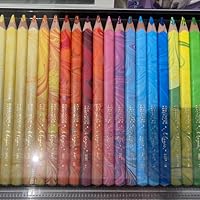
A feminist circus vs a religious circus.
January 17, 2025
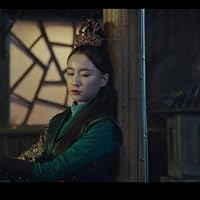
Easy to read, hard to put down. Interesting characters. Tragic.

May 27, 2025
Lovely meandering tale about a simple team of people moving about the Australian countryside.
June 20, 2025
3.5 stars. This book should come with trigger warnings though- very dark and disturbing content that may be harmful for some readers.
May 3, 2026
Very well written and an interesting concept but such a sad and grim story. I loved the bits about clowning but I was a little disappointed by the ending and the way the story just stopped.
This entire review has been hidden because of spoilers.

May 15, 2026
strange, sad and beautiful. Made me love clowns which I thought was impossible

May 17, 2026
Review to come

May 7, 2024
Hurdy Gurdy by Jenny Ackland is a feminist near future dystopian with an all-female travelling circus that does abortions on the side. Yes you read that correctly.
This book was a lot. A lot of themes and a mish-mash of style and tone which for me didn't quite work. Why the circus performance setting? It gave off Station Eleven vibes but did not have the strength of writing and plot to carry it off. It was chaotic and unnerving and odd. There was a feminism vs religion battle happening. I'm sorry to say this one was just not for me.
Thank you to @netgalley and @allenandunwin for my #gifted copy.
This book was a lot. A lot of themes and a mish-mash of style and tone which for me didn't quite work. Why the circus performance setting? It gave off Station Eleven vibes but did not have the strength of writing and plot to carry it off. It was chaotic and unnerving and odd. There was a feminism vs religion battle happening. I'm sorry to say this one was just not for me.
Thank you to @netgalley and @allenandunwin for my #gifted copy.

May 18, 2024
At the beginning of this novel a character asks “why is the world so bad … why isn’t it more fun?” While there’s plenty here that confirms the badness of the world, fun, at least in the form of dark satire, is prevalent. Set in a climate change ravaged Australia at an unspecified future time, Ackland’s tale shows women doling out a raw form of feminist retribution, one that some readers might think is long overdue.
Amidst a bleak landscape where hope has gone the way of the seasons, a small troupe of circus performers tour the countryside bringing cheer to those who crave diversion. Queenie the eldest, is their leader and exerts an unflinching authority over the younger members, particularly Win, who is nineteen and has been anointed by Queenie as her successor. This, as becomes clear, is a role that extends far beyond managing the circus. Under the guise of hairdressing, Queenie dispenses her own brand of vigilante justice to men who exploit women and children (euphemistically called free shaves) and her own brand of help to their victims (euphemistically described as reclamations). “We have to think of the women first,” she says, “Men protect each other so we women have to do the same.”
As the men start mysteriously disappearing, along with the unwanted pregnancies of the women, it becomes clear that Queenie’s form of female protection is uncompromising. Queenie and her travelling circus are offset by a second thread in the story which takes the form of a rabid evangelist and his long-suffering handmaiden who travel the same roads fulminating against alcohol, abortion and adultery. The two are set on a collision course, the prospect of which propels the story forward on a knife-edge as it hurtles toward certain catastrophe.
Ackland is a powerful writer. In bare and austere prose, she imagines a world of relentlessly hard edges, where no-one gets a second chance and justice is as merciless as the sun that scorches the scarred earth.
Amidst a bleak landscape where hope has gone the way of the seasons, a small troupe of circus performers tour the countryside bringing cheer to those who crave diversion. Queenie the eldest, is their leader and exerts an unflinching authority over the younger members, particularly Win, who is nineteen and has been anointed by Queenie as her successor. This, as becomes clear, is a role that extends far beyond managing the circus. Under the guise of hairdressing, Queenie dispenses her own brand of vigilante justice to men who exploit women and children (euphemistically called free shaves) and her own brand of help to their victims (euphemistically described as reclamations). “We have to think of the women first,” she says, “Men protect each other so we women have to do the same.”
As the men start mysteriously disappearing, along with the unwanted pregnancies of the women, it becomes clear that Queenie’s form of female protection is uncompromising. Queenie and her travelling circus are offset by a second thread in the story which takes the form of a rabid evangelist and his long-suffering handmaiden who travel the same roads fulminating against alcohol, abortion and adultery. The two are set on a collision course, the prospect of which propels the story forward on a knife-edge as it hurtles toward certain catastrophe.
Ackland is a powerful writer. In bare and austere prose, she imagines a world of relentlessly hard edges, where no-one gets a second chance and justice is as merciless as the sun that scorches the scarred earth.
Displaying 1 - 25 of 25 reviews