

What do you think?

We Have Ceased to See the Purpose: Essential Speeches of Aleksandr Solzhenitsyn
This collection brings together ten of Nobel Prize–winner Aleksandr Solzhenitsyn’s most memorable and consequential speeches, delivered in the West and in Russia between 1972 and 1997.
Following his exile from the USSR in 1974, Aleksandr Solzhenitsyn lived and traveled in the West for twenty years before the fall of Communism allowed him to return home to Russia. The majority of the speeches collected in this volume straddle this period of exile, contemplating the materialism prevalent worldwide—forcibly imposed in the socialist East, freely chosen in the capitalist West—and searching for humanity’s possible paths forward. In beautiful yet haunting and prophetic prose, Solzhenitsyn explores the mysterious purpose of art, the two-edged nature of limitless freedom, the decline of faith in favor of legalistic secularism, and—perhaps most centrally—the power of literature, art, and culture to elevate the human spirit.
These annotated speeches, including the timeless Nobel Lecture and Harvard Address, have been rendered in English by skilled translators, including Solzhenitsyn’s sons. The volume includes an introduction to the speeches, brief background information about each speech, and a timeline of the key dates in Solzhenitsyn’s life.
Following his exile from the USSR in 1974, Aleksandr Solzhenitsyn lived and traveled in the West for twenty years before the fall of Communism allowed him to return home to Russia. The majority of the speeches collected in this volume straddle this period of exile, contemplating the materialism prevalent worldwide—forcibly imposed in the socialist East, freely chosen in the capitalist West—and searching for humanity’s possible paths forward. In beautiful yet haunting and prophetic prose, Solzhenitsyn explores the mysterious purpose of art, the two-edged nature of limitless freedom, the decline of faith in favor of legalistic secularism, and—perhaps most centrally—the power of literature, art, and culture to elevate the human spirit.
These annotated speeches, including the timeless Nobel Lecture and Harvard Address, have been rendered in English by skilled translators, including Solzhenitsyn’s sons. The volume includes an introduction to the speeches, brief background information about each speech, and a timeline of the key dates in Solzhenitsyn’s life.
228 pages, Hardcover
First published April 1, 2025
About the author
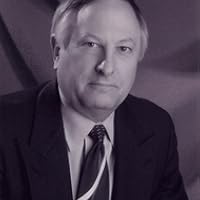
Aleksandr Solzhenitsyn
297 books4,245 followersalso known as
Alexander Solzenitsyn (English, alternate)
Αλεξάντρ Σολζενίτσιν (Greek)
Works, including One Day in the Life of Ivan Denisovich (1962) and The Gulag Archipelago (1973-1975), of Soviet writer and dissident Aleksandr Isayevich Solzhenitsyn, awarded the Nobel Prize for literature in 1970, exposed the brutality of the labor camp system.
This known Russian novelist, dramatist, and historian best helped to make the world aware of the forced Gulag.
Exiled in 1974, he returned to Russia in 1994. Solzhenitsyn fathered of Ignat Solzhenitsyn, a conductor and pianist.
https://en.wikipedia.org/wiki/Aleksan...
Alexander Solzenitsyn (English, alternate)
Αλεξάντρ Σολζενίτσιν (Greek)
Works, including One Day in the Life of Ivan Denisovich (1962) and The Gulag Archipelago (1973-1975), of Soviet writer and dissident Aleksandr Isayevich Solzhenitsyn, awarded the Nobel Prize for literature in 1970, exposed the brutality of the labor camp system.
This known Russian novelist, dramatist, and historian best helped to make the world aware of the forced Gulag.
Exiled in 1974, he returned to Russia in 1994. Solzhenitsyn fathered of Ignat Solzhenitsyn, a conductor and pianist.
https://en.wikipedia.org/wiki/Aleksan...
Ratings & Reviews
Friends & Following
Create a free account to discover what your friends think of this book!
Community Reviews
Displaying 1 - 10 of 10 reviews

March 26, 2026
I love the way he looks at the modern and Western world, especially the loss of courage and godly principles in our age. I’ll be reading a lot more of him since I’m researching to write an essay on his life and worldview.

January 25, 2026
Prescient
April 29, 2025
Scathing speeches on the brutality, oppression he experienced. And the lack of will he sees in response to what Russians lived with, while the West pursues self-interests. What an amazing soul.

May 22, 2026
I have read quotes and quips from these speeches. It was a treat to read them in their entirety. Solzhenitsyn puts the blame on the rise of communism in the West upon the Enlightenment's (really the endarkenment) replacement of God with man as the measure. The loss of transcendence brought about the loss of truth, freedom and courage.

April 15, 2025
Read it and weep.

August 15, 2026
"So perhaps the old trinity of Truth, Goodness, and Beauty is not simply the decorous and antiquated formula it seemed to us at the time of our self-confident materialistic youth. If the tops of these three trees do converge, as thinkers used to claim, and if the all too obvious and the overly straight sprouts of Truth and Goodness have been crushed, cut down, or not permitted to grow, then perhaps the whimsical, unpredictable, and ever surprising shoots of Beauty will force their way through and soar up to that very spot, thereby fulfilling the task of all three."
Solzhenitsyn's unique vantage as an artist kept by law and conscience in the middle space between the world's warring powers and ideologies, gave him a special authority to identify and dissect the inner demons eating away the souls of each (to describe them as broadly as possible - totalitarianism in Russia, materialism in the West). The misplaced 'centers' of daily life in the first and second world, though appearing to exist at opposite sides of a spectrum, both demand realignment or the skewed trajectories would take society ever further from the moral, spiritual, and cultural 'plumb-line' and into disaster.
Like an Old Testament prophet Solzhenitsyn spoke words of deep reproach and condemnation (and, I think, incredible insight) from a place of love and care for both worlds he saw as having cultures and characteristics worth saving. He pulls no punches in these essays (or any of his written works) but his strength of conviction seems to come from a place of trust in individuals and real hope for the great arc of history to right itself.
These 10 essays, distillations of the author's worldview themselves, defy easy summarization and review, save to say that they are a powerful selection that cover topics ranging from history, the vitalizing power of beauty, the hollowing of culture, the meaning of freedom and legalism, and many more - intertwining, overlapping and thematically climaxing in his 1978 Harvard address. This broad palette of topics is given center by Solzhenitsyn's indelible calling to and belief in the power of literature and story as a carrier of a nation's soul to the rest of the world, the most powerful way to cut through the endless 'data' of a connected world and expose one heart to another.
"But woe to that nation whose literature is cut short by the intrusion of force – the sealing up of a nation's heart, the excision of its memory."
Solzhenitsyn's unique vantage as an artist kept by law and conscience in the middle space between the world's warring powers and ideologies, gave him a special authority to identify and dissect the inner demons eating away the souls of each (to describe them as broadly as possible - totalitarianism in Russia, materialism in the West). The misplaced 'centers' of daily life in the first and second world, though appearing to exist at opposite sides of a spectrum, both demand realignment or the skewed trajectories would take society ever further from the moral, spiritual, and cultural 'plumb-line' and into disaster.
Like an Old Testament prophet Solzhenitsyn spoke words of deep reproach and condemnation (and, I think, incredible insight) from a place of love and care for both worlds he saw as having cultures and characteristics worth saving. He pulls no punches in these essays (or any of his written works) but his strength of conviction seems to come from a place of trust in individuals and real hope for the great arc of history to right itself.
These 10 essays, distillations of the author's worldview themselves, defy easy summarization and review, save to say that they are a powerful selection that cover topics ranging from history, the vitalizing power of beauty, the hollowing of culture, the meaning of freedom and legalism, and many more - intertwining, overlapping and thematically climaxing in his 1978 Harvard address. This broad palette of topics is given center by Solzhenitsyn's indelible calling to and belief in the power of literature and story as a carrier of a nation's soul to the rest of the world, the most powerful way to cut through the endless 'data' of a connected world and expose one heart to another.
"But woe to that nation whose literature is cut short by the intrusion of force – the sealing up of a nation's heart, the excision of its memory."
July 11, 2025
Almost everyone has heard of Solzhenitsyn's famous story of his time in the Gulag Archipelago. In fact, the title has become a common word now to describe any penal system which cheapens the message in the original work. Most people are unaware of the speeches Solzhenitsyn gave in the years following his release from prison and banishment from Russia.
While he was suffering in prison, he never lost sight of what was important and never lost hope that his Mother Russia would be liberated and become a nation of free people. He never lost and in fact his privation deepened his religious faith in the face of state atheism. Like Viktor Frankl his privation allowed him to distill the essential concepts that makes us human and allow for culture to flourish.
In this collection of speeches including his famous commencement address at Harvard he shows himself to be a prophet of great prescience and his analysis of the ills of the West have been proven true in the passage of the years.
It is said that no prophet is respected in his own time and while some took Solzhenitsyn's warning to heart most passed them by much to our shame. Today, generations have come of age with no concept of the cultural sinews of the nations of the West, instead they have been inculcated in the tired and defeated dogma of Marx and are too blind to see that the path they are on will lead directly to the Gulag.
Solzhenitsyn's speeches deserve to be read and studied as warnings to humanity to correct its path before all that was glorious and wonderful in Western culture is destroyed because we have ceased to see the purpose of our existence.
While he was suffering in prison, he never lost sight of what was important and never lost hope that his Mother Russia would be liberated and become a nation of free people. He never lost and in fact his privation deepened his religious faith in the face of state atheism. Like Viktor Frankl his privation allowed him to distill the essential concepts that makes us human and allow for culture to flourish.
In this collection of speeches including his famous commencement address at Harvard he shows himself to be a prophet of great prescience and his analysis of the ills of the West have been proven true in the passage of the years.
It is said that no prophet is respected in his own time and while some took Solzhenitsyn's warning to heart most passed them by much to our shame. Today, generations have come of age with no concept of the cultural sinews of the nations of the West, instead they have been inculcated in the tired and defeated dogma of Marx and are too blind to see that the path they are on will lead directly to the Gulag.
Solzhenitsyn's speeches deserve to be read and studied as warnings to humanity to correct its path before all that was glorious and wonderful in Western culture is destroyed because we have ceased to see the purpose of our existence.
May 14, 2025
If you don’t need an electronic version of Solzhenitsyn, see also The Solzhenitsyn Reader; only four out of ten of these speeches are not also there:
• An Orbital Journey (1974)
• If One Doesn’t Wish to Be Blind (1976)
• The Shallowing of Freedom (1976)
• The Depletion of Culture (1997)
I don’t feel qualified to review the content of these speeches (“We don’t judge the great books, the great books judge us.” — Harvard Knowles), and my Russian is not good enough to compare the two translations for accuracy; but the newer ones here are not as well edited as in The Solzhenitsyn Reader. E.g., poor usage of “refuted” about a George Bernard Shaw quotation (23% of the Kindle version) and “Englishlanguage” as a run-on word at 66%.
• An Orbital Journey (1974)
• If One Doesn’t Wish to Be Blind (1976)
• The Shallowing of Freedom (1976)
• The Depletion of Culture (1997)
I don’t feel qualified to review the content of these speeches (“We don’t judge the great books, the great books judge us.” — Harvard Knowles), and my Russian is not good enough to compare the two translations for accuracy; but the newer ones here are not as well edited as in The Solzhenitsyn Reader. E.g., poor usage of “refuted” about a George Bernard Shaw quotation (23% of the Kindle version) and “Englishlanguage” as a run-on word at 66%.

Want to Read
February 1, 2025#GoodreadsGiveaway

April 12, 2026
This collection of Solzhenitsyn's speeches are from the 70's into the 90's and yet are prescient for 2026. Critiques of modern western and Russian culture and political changes concerning: loss of concern for our spiritual well being, loss of concern for our fellow man at home and foreign allies, loss of artists and authors conscious responsibility of conserving their country's culture and history, and too much attention to material affluence, the latest thing in art forms and literature. He makes a strong case for mankind to pursue virtue and preserve that which builds up his and neighbors' spirit -especially authors and artists. He is direct-some may be put off by his seriousness -but I found this a powerful motivation to pursue truth goodness and beauty and conserve my historical story. Some Christians may be disappointed that he doesn't explicitly promote the Gospel of Jesus Christ (even though he was a Christian), rather uses more general terms like "spiritual", "culture" - but keep in mind if you asked Solzhenitsyn about the object of this spiritual pursuit I imagine he would point us to Christ. The man speaks with a certain authority, sort of a voice from the wilderness putting much needed light into our dark world. Highly recommended.
Now I want to read one of his fiction books. Please make a suggestion. (Thanks).
Now I want to read one of his fiction books. Please make a suggestion. (Thanks).
Displaying 1 - 10 of 10 reviews