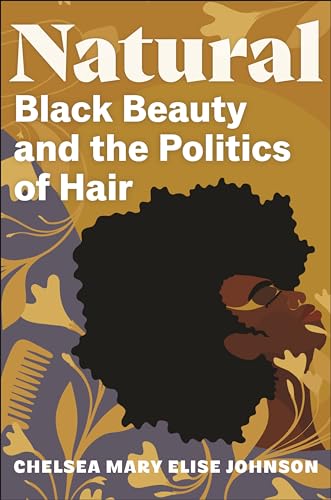
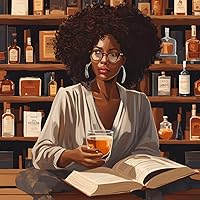
How Black women celebrate their natural hair and uproot racialized beauty standardsHair is not simply a biological feature; it’s a canvas for expression. Hair can be cut, colored, dyed, covered, gelled, waxed, plucked, lasered, dreadlocked, braided, and relaxed. Yet, its significance extends beyond mere aesthetics. Hair can carry profound moral, spiritual, and cultural connotations, serving as a reflection of one’s beliefs, heritage, and even political stance. In Natural, Chelsea Mary Elise Johnson delves into the complex world surrounding Black women’s hair, and offers a firsthand look into the kitchens, beauty shops, conventions, and blogs that make up the twenty-first century natural hair movement, the latest evolution in Black beauty politics.Johnson shares her own hair story and amplifies the voices of women across the globe who, after years of chemically relaxing their hair, return to a “natural” style. Johnson describes how many women initially transition to natural hair out of curiosity or as a wellness practice but come to view their choice as political upon confronting personal insecurities and social stigma, both within and outside of the Black community. She also investigates “natural hair entrepreneurs,” who use their knowledge to create lucrative and socially transformative haircare ventures.Distinct from a politics of respectability or Afrocentricity, Johnson’s argument is that today’s natural hair movement advances a politics of authenticity. She offers “going natural” as a practice of self-love and acceptance; a critique of exclusionary economic arrangements and an exploitative beauty industry; and an act of anti-racist political resistance.Natural powerfully illustrates how the natural hair movement is part of a larger social change among Black women to assert their own purchasing power, standards of beauty, and bodily autonomy.
Being a Black woman is contentious. Black hair is controversial. But why is this? Why do we let Eurocentric beauty standards set the tone? And this is not just in the US. It is this way around the world.
I actually just had a conversation with my coworker about her natural hair. She kept it that way for a week, and then went back to what she was doing before, because it was "too much work." I obviously didn't argue. It's her hair. But I thought it was beautiful.
There is a certain politics that goes along with Black hair. There truly doesn't need to be, but everything is political. If you say it's not, you're wrong, and privileged.
Twenty-six years ago, I did the BC (big chop): I cut my hair very, very short, removing all of my chemically treated hair. There was no natural hair movement then—at least, not that I knew of—and I had no access to internet forums or You-Tube tutorials. What I did have was hair fatigue: I had had relaxed hair for much of my life until then, had recently explored a fun cut (short back, and a bob), and now had what I thought was over-processed hair. I also a friend who had always been natural and who knew what to do with her hair. It felt like it was time.
Years later, for a time, it was inevitable that any Black woman who lived online would get caught up in the natural hair discourse: whether to do the BC or to transition, the pros of the so-called LOC method, what products were best for naturalistas, and so on. We were inundated with pictures of TWA (teeny weeny afros), of twist-outs, of women measuring the progress of natural hair growth. We learnt all of the jargon. We scrolled for methods of styling whatever length we had. And for anyone watching, it was clear that this was a revolution happening all over the world, and online.
As indeed Chelsea Mary Elise Johnson has recorded in this book, her wonderful and truly very accessible analysis of the natural hair movement, covering its history, impact, and implications. Black hair is historically fraught: it’s been made into an expression of Black identity, for better or for worse, by Black people themselves and by those who would control or subdue them. Johnson traces the evolution of Black hair as expression in the US from the time of slavery, through entrepreneurship at the beginning of the twentieth century and Black Power and the Civil Rights movement in the 1960s, to the natural hair movement at the turn of the century and into the 21st. She deals adeptly with aspects from feminism to misogynoir, the economics and geopolitics of Black hair, the natural movement as a wellness project, Black hairstyles as protest, and, in thinking about colourism and texturism, who can be considered natural.
This is a wonderfully compact yet all-encompassing assessment of a very complex subject. Johnson keeps it personal while presenting cogent arguments and analysis. Her interviews of women across the Black diaspora make her analysis inclusive; too often, analyses like these become mired in the US experience—understandably. *Natural* is a book everyone should read, and then keep on their shelf as a cultural reference. It will be relevant for years to come.
Many thanks to NYU Press and to NetGalley for early access.
This was a sheer delight to read and review. I requested this from NetGalley as soon as I saw it was available. Unfortunately, it was approved during my birthday getaway. As a result, my review is being posted much later than I had hoped.
The author shares her own hair journey, which is used both to introduce the reader to the topic of Black natural hair care but also allows the reader a personal stake in the journey. If the reader is interested but unfamiliar, the author's own hair journey allows the reader an inside view, so to speak, into the world of Black hair care period.
I appreciate the author quietly but directly explaining how and why Black hair is so political. How this political pressure has impacted the Black Community as a whole and Black women in particular.
I learned to care for my natural hair in my mid 30's. By that time, I had PCOS & Endometriosis, so severely I had a total hysterectomy plus ovaries and including half of my bladder. Both illnesses as well as fibroids are the long arm of using permanent relaxers as a hair styling tool. I didn't know this when I joined the natural hair movement.
I just joined because I finally was no longer working professionally, and I could. I hadn't relaxed my hair in years, so I avoided the big chop. Mostly, I just needed to use the right products. Suddenly, I had a head full of stunningly gorgeous curls.
My absolute favorite parts of this book are the hair journeys shared by other Black women across the Diaspora. This is beautifully handled, and each woman's individual experience shines through in their own voice.
Offered in this text is also a history lesson, so with that in mind, I'd recommend it for readers of history, Black hair, Black contemporary issues, curly hair history, and more. Enjoy!
This audiobook is narrated by L. Malaika Cooper. I love her narration because it feels relatable, and her voice translates warmth, excitement, and sadness beautifully.
Thank you to Chelsea Mary Elise Johnson, HighBridge Audio, and NetGalley for the opportunity to listen to and review this audiobook. All opinions and viewpoints expressed in this review are my own.
I loved this book, because it educates the readers about the history of Black Women and our natural hair (as far back as Africa) leading up to the current day. Our ancestors were denied the products needed to properly take care of their hair and were often punished by the slave owner's wife by shaving their heads. Fast forward, men and women have been denied jobs and promotions, for expressing themselves with natural hairstyles.
What I loved most was the interviews of several women who talked about being introduced to creamy crack as a child, and having to transition to the natural.
"Natural: Black Beauty and the Politics of Hair" is a well‑researched and wonderfully written text that traces the history, politics, and care of Black hair. Author Chelsea Mary Elise Johnson spent years on this project, speaking with Black women from all walks of life across two continents. She attended hair shows and visited beauty parlors, immersed herself in natural‑hair blogs and online communities, and even reflects on her own natural hair journey.
The book offers a rich historical arc, from Tignon laws to the contemporary natural hair movement, laying out in exquisite detail the joy, pain, and politics Black women navigate because of how their hair is perceived. The economics of Black hair care is especially compelling. Despite the industry generating more than $2 billion annually, Black communities do not control or benefit from this revenue. Johnson documents how foreign suppliers have long worked to keep Black entrepreneurs out of the wholesale hair market, and how major cosmetic companies routinely buy out or outprice small Black‑owned startups. These realities are heartbreaking, but Johnson also highlights the resilience and innovation of Black entrepreneurs fighting to reclaim ownership, and Black women reclaiming the narrative of their hair stories.
Four stars for a meticulously researched book that blends historical insight with contemporary relevance, offering a powerful look at Black beauty, identity, and resistance.
I enjoyed this book. At first, I was a little thrown off by the audiobook version of this book as it does read like a dissertation, but I pretty soon found myself invested in the contents of this book. As a Natural Girl, this book educated me on the history of black hair and even challenged some of the misconceptions I had about my hair and my experiences as a Natural girl. It was also easy for me to identify with the women interviewed in this book. I especially resonated with the views of women who do not have the perceived natural hair and their experiences. I had several "ah ha" moments during the book and even had experiences that I thought were in my head clarified and I was able to work out why I perceived moments in pop culture the way that I did. I highly recommend this book to everyone, especially those with natural hair.
Thank you to Chelsea Mary Elise Johnson, HighBridge Audio, and NetGalley for the opportunity to listen to and review this audiobook.
For a non-fiction read that is far too valid in the present socioeconomic and political climate, this was a pleasant read. While unsavory topics are discussed, it is done in a respectful and sensitive manner that does not attempt to 'tastefully' re-contextualize the events and facts they stem from. This is very dense at times, but it is regularly brought back to relevant, so it doesn't get lost in just fact spewing, keeping it a solid "listen while you work" type of read.
I listened to it on Audio, so I lost some of the joy of seeing which sites and influencers were mentioned, as well as having access to them after reading, but the experience was still enjoyable.
RECOMMENDED: If you've ever been confused why others go around touching hair without permission, wondered at the microaggressions aimed at people who choose to go natural with their hair, or are trying to decide if a natural hair journey is right for you, I'd highly recommend this book.
As someone who studied history and loved learning about the social history behind events this is the perfect mix of history of hair with points of the social aspects of hair.
I found this very educational on many different levels. I learned so much from the author of this book and I know that she didn't have to share this knowledge and history, I will hands down be shouting from the rooftops about how great this work is for resources on history, social history, social constructs in society, and hair. I have never found such a piece as riveting as I did this.
The content of this book is really interesting and important but the author made it almost impossible to enjoy. I just do not care about your methods of research. A book should not read like a research paper even if the content is taken directly from research. I don’t need a breakdown of what will be discussed in the book. We will get to it when we get to it. I also don’t need an introduction breaking down each chapter. It makes the book repetitive and arduous. Nonfiction does not need to be dry.
As someone who is starting my own journey with my natural hair after 5+ years of buzz cuts, when I saw the title I immediately requested it! I’ve learned a lot about the history behind our hair and appreciated the fact that it wasn’t limited to the US. Truly fascinating
Thank you to NetGalley and HighBridge audio for providing an advanced listener copy of this book. All opinions are my own.
Natural by Chelsea Mary Elise Johnson is a powerful and thought-provoking exploration of Black women’s relationship with our natural hair. Johnson expertly blends personal narrative with cultural analysis, offering a deep dive into the significance of hair as both a form of expression and a political statement. Her exploration of the natural hair movement is both enlightening and inspiring, highlighting how this movement represents more than just beauty—it’s about self-love, resistance, and the reclamation of agency. Johnson’s insights into the social, political, and economic aspects of the natural hair journey are eye-opening and impactful. Overall, Natural is an essential read for anyone interested in beauty politics, identity, and the power of personal transformation.
A look into the politics and history of black hair, more specifically black women, and the political and economical influences throughout time.
I appreciated the modern day cultural references that helped put the authors points into context. It helps establish the long running timeline and evolution of natural black hair in media and culture.
Natural by Chelsea Mary Elise Johnson is a fascinating exploration of the cultural and political significance of Black hair. It's more than just a book about hairstyles; it's a deep dive into the history, politics, and social implications of Black hair.
Johnson expertly weaves together personal anecdotes, historical context, and cultural commentary to create a compelling narrative. She delves into the complexities of the natural hair movement, examining the motivations behind it and the challenges faced by Black women who choose to embrace their natural texture.
One of the most striking aspects of the book is its exploration of the intersection of beauty standards, race, and gender. Johnson highlights the ways in which societal expectations have shaped Black women's hair choices and the impact of these choices on their self-esteem and identity.
I particularly appreciated the book's focus on the economic and political dimensions of the natural hair movement. Johnson discusses the rise of natural hair entrepreneurship and the challenges faced by Black-owned businesses in the beauty industry. She also explores the role of social media in shaping beauty trends and empowering Black women to embrace their natural hair.
If you're interested in learning more about the cultural and political significance of Black hair, I highly recommend Natural. It's a thought-provoking and informative read that will leave you with a deeper understanding of the issues surrounding beauty, identity, and social justice.
Thanks, NetGalley! I really appreciate the opportunity to read and review this book.