
What do you think?
Rate this book

464 pages, Kindle Edition
First published August 29, 2023


“They have endured everything,
they will continue to endure everything.
Nothing in the world is beyond them —
they have been granted such strength!
It is shameful to short-change them!
It is sinful to short-weight them!”
“I’ll take their careers as an example!
I believe in their sacred belief,
and their belief gives me courage.
I’ll follow my career in such a way
that I’m not following it!”
“Theodor Adorno, the German-Jewish philosopher, critic, and musical sage, famously pronounced that to write poetry after Auschwitz would be barbaric. Yet Adorno returned many times to the question of art in the wake of atrocity, ultimately revising his opinion to honor art’s powers of witness. In 1962 he wrote, “The concept of a resurrection of culture after Auschwitz is illusory and senseless, and for that reason every work of art that does come into being is forced to pay a bitter price. But because the world has outlived its own demise, it needs art as its unconscious chronicle.”
The role of music in particular as an “unconscious chronicle” — as a witness to history and as a carrier of memory for a post-Holocaust world — is the subject of this book.”
“The most terrible period of human history is at an end, the twelve year reign of bestiality, ignorance and anti-culture under the greatest criminals, during which Germany's 2,000 years of cultural evolution met its doom.”
“On a recent visit I found its heartwood almost entirely obscured by stones, placed in accordance with a Jewish tradition of symbolically marking the graves of the dead to signal they have not been forgotten. This stump is what remains of Goethe’s oak. In the end Metamorphosen’s upwellings of grief, its spiraling sorrows, its network of links to Beethoven’s sublime music of mourning, are all gestures akin to the placing of such stones — for this too is music of farewell, a pebble on the grave of German culture’s utopian dream. Adapting the language of the Goethe poem that still beats somewhere far below the rippling surface of this music: what it is, what it was, what it could have been. In memoriam.”

“Among the evening’s soloists, Dietrich Fischer-Dieskau was the only one with actual military experience, having been drafted into the German army. During the war, he tended horses in Russia, lost a disabled brother to Nazi eugenics policy, and was captured by the Americans in Italy. After all of these experiences, participating in the Requiem became a deeply personal affair. “I was completely undone,” he later recalled. Even Pears could not coax him out of the choir stalls when it was time to leave. “I did not know where to hide my face,” he added. “Dead friends and past suffering arose in my mind.””
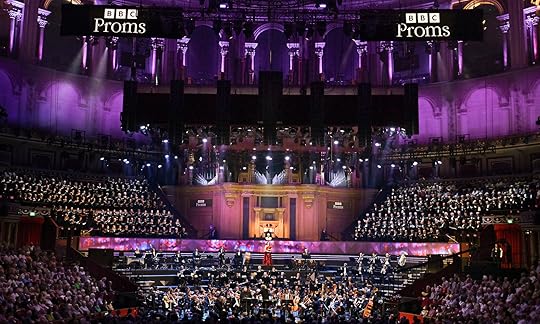
“I hope it'll make people think a bit.” — Benjamin Britten
Alma dealt with the diabolical madness of it all by focusing single-mindedly on the group's artistic standards, demanding excellence despite the broken instruments, the missing sheet music, the rudimentary skills of many of the players, and the unthinkable conditions for their work. On the rare occasions when her own lofty expectations of a performance were met, she would deliver her highest compliment: 'This would have been good enough to be heard by my father.'
Ultimately, the music education Arnold Rosé had provided her, and the sense of artistic integrity she had absorbed through his example, lifted the ensemble to a level of distinction that earned it favorable treatment from camp officials and relative distance from the camp's machinery of murder. In other words, Alma Rosé's musical nobility, the final flickering of the Bildung ideal, quite literally saved the lives of many orchestra members. Alma herself, however, was not among the survivors. After less than a year in Auschwitz, she died in the camp on April 5, 1944.
Rulers of the earth! ... Reward and punish no doctrine, tempt and bribe no one to adopt any religious opinion! Let everyone be permitted to speak as he thinks, to invoke God after his own manner or that of his fathers, and to seek eternal salvation where he thinks he may find it, as long as he does not disturb public felicity and acts honestly toward the civil laws, toward you and his fellow citizens.
Your letter of the 15th is driving me to distraction! This Jewish obstinacy! Enough to make an anti-Semite of a man! This pride of race, this feeling of solidarity! Do you believe that I am ever, in any of my actions, guided by the thought that I am 'German'? Do you believe that Mozart composed as an 'Aryan'? I know only two types of people: those with and those without talent.
My position as president of the Reich Chamber of Music was just a front that earned me only animosity and insults from abroad without my having the satisfaction of enacting decisive measures for the German theatre and musical culture. ... My life's work is destroyed, German opera ruined, German music consumed in the inferno of a machine, where its tortured soul ekes out a miserable existence.
The entire audience... sitting on uncomfortable chairs in an ugly gymnasium, was roused and thrilled by your music [which] brought to us---even to a smug, overfed, protected group of Americans---some sense of the terror other peoples have known, and some realization of the steadiness that comes of a spiritual expression. I, for one, shall never forget the impact of those men's voices singing, out of despair, those exalted words of a people who are certainly most able to bring the spirit to sustain them in the midst of horror.


