We seek for every possibility of life and sentience, because the universe is vast and cold and mostly empty, and variance from that void is to be treasured.
Space: the final destination, the place where no spider, corvid or cephalopod has gone before!
And what a fantastic journey this destination has turned out to be!
Adventures in terraforming, alien biologies, weird intelligence patterns: Adrian Tchaikovsky uplifted his own career with this series, not his first, but deservedly his most popular.
Even if this third volume was the most problematic for me, with its broken timeline and relative lack of action, it is a fitting and challenging finale that pushed the limits of what we consider intelligence and evolution further than the already excellent previous two episodes achieved. My patience with the central mystery of the planet Imir was rewarded with the expected resolutions the author was aiming for.
It’s different, and difference is the only resource the universe is short of. So much of it is just empty sameness. Life is rare, and needs to be studied and admired and encouraged to be itself.
So, let’s backtrack a little and try to put a little order in the events from this third book. The catalyst of the series is given in the first volume as the spread of humanity to the stars, with the help of a fleet of terraforming spaceships, carrying technology and an ‘uplift’ virus that kickstarts and accelerates the evolutionary process of the target biosphere.
The first book presents a spider world and an AI program that copies the personality of Dr. Avrana Kern, the creator of the program. The second one introduces a water world with intelligent octopi, plus a completely alien entity that operates at micro-cellular level, evolved independently of Earth.
This third episode starts with one of the original terraforming ships, the Enkidu , one of the farthest flung Hail Maries launched in the last days of Earth’s first space age. Before Enkidu reaches its destination, it suffers catastrophic destruction of some of its modules, leaving it unable to fulfil its mission.
The planet the crew names Imir is completely barren. The captain decides to land only a small team of scientists, carrying precious soil and seeds and animal DNA, to try to establish a foothold on the planet before waking up the millions of colonists cryo-sleeping in the hold.
They were, after all, from a culture that had struggled out of the gravity well, out of need and want, and into a realm where they could go anywhere, with all the time in the universe had to offer. Curiosity was one of the few drivers still unsatisfied. It bred a certain complacency.
They were always surprised when things went wrong.
>>><<<>>><<<
The structure of the novel is complex and broken. Several storylines and narrators intersect with apparent disregard for the linear flow of time. On the planet Imir, the story is told by a teenage girl named Liff. She appears to remain the same age over a period of more than 200 years of the history of the central human settlement on Imir. She is also a direct witness of events that cover the whole period of terraforming efforts.
Some mastery over lifespan and time that would have let Liff know and remember the things she had been talking to Fabian about.
Who is this girl, and why is she important?
Searching for answers is not only the girl Liff, who is afraid she is going crazy, but also the crew of spiders, cephalopods and humans we met in the first two books. Aboard a shapeshifting spider-constructed ship are the software program known as Dr. Kern, the alien-human symbiote Miranda, the portid crew Portia, Fabian, Bianca, Viola and Paul the octopus. They are searching for other survivors of the original terraforming project, or for any form of intelligent life in the vastness of space.
We are the eye with which the universe beholds itself.
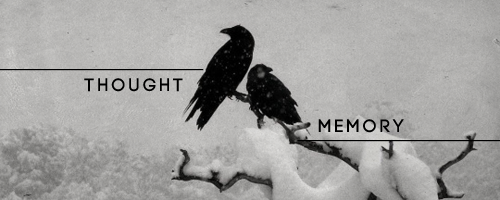
Before reaching Imir, the explorers pick up a couple of new examples of the wonders of evolution from the planet Rourke, another failed attempt to seed a new home for humanity. On Rourke, the only survivors the crew finds are corvids. So we should add these birds to the growing list of Adrian Tchaikovsky’s passion for biology. You can see why he has chosen ravens to uplift on Rourke:
.. notoriously bright birds, fiercely inquisitive, tool-users in a limited sort of way. Wide-ranging scavengers, always up for investigating something new to see if it could be eaten.
Two of these birds join the exploration crew: Gothi and Gethli. They will play a big role in the solving of the Liff mystery, since they are sent to operate independently on the new planet. They have specialized brains, another daring idea to be explored here: their brains have developed for specific tasks, like the mathematical and the graphic processors in a PC. Gothi collects and organizes data, while Gethli interprets and analyses it. It’s like they are two incomplete halves of a normal functioning brain.
Plainly something happened on Rourke, but it wasn’t the uplift procedure that resulted in Portia or Paul. It was just an Earth species interacting with an alien chemistry under harsh conditions, and finding some chance set of mutations that allowed it to survive.
Does she actually think, to the standards of a human? Or does she believe she does through past programming but in fact is nothing more than a very complicated difference engine? In the same way, do we think, co-dependent as we are?
Gethli is the corvid that asks the pertinent questions here. In this example he invites us to consider the very concept of artificial intelligence, a thorny subject in this year 2024 when every company and software developer wants to jump on the AI wagon.
The two corvids from Roarke are also tasked with a little humorous relief in their candid dialogues. The story really needs some lighter moments to compensate for the tragedy of a failing colony on Imir: too few resources, too few colonists to fight against entropy and against an unbalanced biosphere cycle.
We profess an inordinate fondness for beetles.
Because spiders eat the beetles that need eating, and that’s why you should never, ever, under any circumstances, kill a spider.
As a long-time fan of the author, who started my own journey with the Shadows of the Apt books, his fondness for spiders is becoming legendary. I’m glad this passion takes so many shapes in his books, and that it has been expanded to other species with this recent series.
I will try not to spoil the mystery of life on the planet Imir. So I will try to explain instead why I rate this whole Children of Earth series so high: it is a return to the science-fiction of big ideas and of concerns about humanity as a whole, its destiny to reach for the stars. The fact that it is also well written, scientifically daring and emotionally intense is a bonus.
I will close with what I think are the keys we need to unlock the mystery of the broken timelines and the impossible memories:
Sometimes tomorrow’s just a today that got lost.
The most basal part of her was like a great beast on a leash, hauling her forwards in its joyous need to investigate.
Knowledge and understanding is the crown atop the hierarchy of needs, the thing you can’t have enough of.
It is possible the author will return to the setting with a fourth book. The ending of this third one is open: the exploration of the universe will continue for this oddball crew of explorers.
If Adrian Tchaikovsky does it, count me in. Curiosity is also one of my top needs.