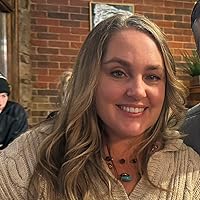
When I was eight, I began collecting words and categorizing them into word lists: night words, flight words, colors, feelings, places, well — any category will do.
My fifth grade teacher noticed my love of writing and appointed me editor-in-chief of our class newspaper. I loved the clack of the typewriter and the sight of my words in print. I read every book of fairy tales and Greek mythology in the school and town libraries, but my favorite book (then and now) is the dictionary.
I was in college working in the library when I realized I wanted to write for children, but I was a grandmother before my first book GRANDMOTHERS’ STORIES was published.
I live in the woods of western Massachusetts where the hawks soar, owls glide, and the leaves rustle and whisper as I fall asleep. I have two children who are creative adults now: Bjorn, who is a painter and Iris, who is a photographer and librarian. Now I am known as Nana to two boys who live in Maine.
I love teaching the children in my kindergarten and first grade class to read and write. During the summer, I work on my own writing and lead writing workshops for young authors throughout New England.
I adore this book. I read to to my children repeatedly when they were in grade school in order to instill in them a love, admiration, respect and awe that is inherent in women. I could try to teach this to them by just telling them, "respect women." However, these tales convey that message through narrative in ways far more powerful than admonitions ever could.
When I took a turn choosing a book for my "polite church ladies" book club, I purchased copies for the members to read and discuss. These tales are drawn from various cultures and set that "once upon a time" place that conveys eternity.
Here are quick summaries of the tales:
"The Midwife and the Djinn" is a Senegalese tale about the valuable role played by midwives
"The Old Woman Who Was Not Afraid" is a Japanese tale that intimates that the preparation of food conveys a lot of import.
"Grandmother's Basket" is a Russian tale featuring a Baba Yaga. It contains contrasting images of mothering and grandmothering.
"The Woman in the Moon" is a Hawaiian tale that depends on the much-understood fatigue felt by women who nurture their families for decades.
"The Beautiful Crone of Cordoba" is a Mexican tale that depicts a woman challenging the status quo in unexpected ways.
"Go Ask the Wise Woman" is an Irish tale about the rigors of housework.
"Old Mother Holle" is a German tale about the virtue of supporting older women and the value of domestic labor.
"The Old Woman Who Was Right" is a Swedish Tale that demonstrates how much skill is required to maintain home and hearth.
Today I read some feminist anthropology (a book by Barbara G. Walker) that held some promise for describing the power that older women wield, but I found myself yearning for narrative over scholarly discourse, so now I'm reading (or rereading) folklore, fairy tales, myths and legends that feature powerful women.
Initially, our child (6) liked listening to the stories (as well as following along with the CD), it was rare that we could share more than one story at a time. Her favorite was the story of the woman in the moon ... because she can "see" it. Now at nearly seven, she listens to the stories every chance she gets. She is also spending more time trying to read the stories.
I like this book because it has lots of wise old women. My favorite story was Old Mother Holle because it teaches you to always teach kindness to your daughters, even if one is your stepdaughter. The characters in this story are Old mother Holle, the step-mother, Birchy the stepdaughter, and Thorny the stepmother's daughter. The stepmother should have taught thorny to be kind. When Birchy came back from old mother Holle's house, she had a golden dress. Then the stepmother got very angry and wanted one for her own daughter. So she pushed her daughter into the well and suspected that she would come home with a golden dress. But Thorny was mean to old mother Holle and got a very dirty dress when she went home! The stepmother learned her lesson and taught her daughter kindness. Review by Elena age 7
Excellent collection of stories of elderly women of all around the world, about their resourcefulness, wisdom and courage. The illustrations are delightful but the text is much more prominent, so the book itself is more adequate for children who are proficient readers. That said, the younger ones can listen to the CD - beautifully read by Olimpia Dukakis -, so by the time they can read well, they'll be familiar with the text.
From feetwater spirits from Ireland to woodwitches from Russia, all children will enjoy the magic of this book, where wise women play a crucial role in all the stories.
I really loved this book, and now that I know it's a collection, I might have to bump Grandfather Mountain up to five stars too. I just love all the stories from different cultures around the world. "The Midwife and the Djinn," from Senegal; "Old Mother Holle," from Germany; "The Old Woman Who Was Not Afraid," from Japan; and "The Old Woman Who Was Right," from Sweden, are my favorites. As before, the frequent illustrations and the panoramic artwork that scrolls across the bottom of each page are done beautifully, and I especially love the latter because they show the story linearly. I would really love to own this book and Grandfather Mountain together.
This collection of entertaining folktales from around the world feature old women who are in turns- resourceful, kind, independent, needed, respected, living interesting and worthwhile lives. A very nice antidote to the disneyish b.s. of "young, inexperienced, and pretty = good, whereas widowed, mother(no longer fecund), wrinkled, old, and worst of all, having any power and wishing to maintain it, = bad" trash we feed our unsuspecting daughters like a time bomb wating to undermine their selfimage and confidence as they age(not to mention encourage disrespect for women in our sons). Rrr....
This is a collection of fairy tales that won't make you cringe at its message or its violent content. It's full of sweet stories from around the globe that place older women as either the hero or the kindly guide, rather than haggard evildoer.
My four-year-old loves the stories so much that she is refusing to read any other books at the moment. When we reach the final grandmother story, I'm forced to start back at the beginning. Thankfully, the stories are well-written and magical enough that it isn't a chore to reread them.
I wish this collection at more stories! It's a lovely collection to read as bedtime stories for young children but just barely whets the appetite of the woman reader. The illustrations make this book worthy of the amazing 5 star rating.