

What do you think?
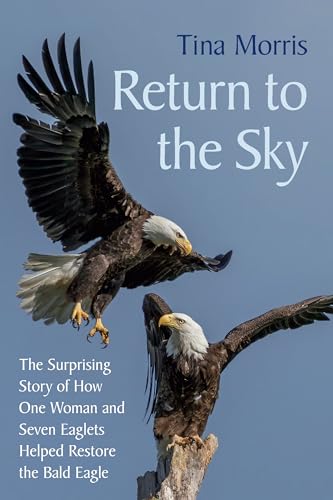
Return to the Sky: The Surprising Story of How One Woman and Seven Eaglets Helped Restore the Bald Eagle
208 pages, Hardcover
Published October 3, 2024
Ratings & Reviews
Friends & Following
Create a free account to discover what your friends think of this book!
Community Reviews
Displaying 1 - 17 of 17 reviews
November 18, 2025
Return to the Sky was such a refreshing delight of a bird book and memoir. This review includes my usual diversions from the topic as is customary on any book involving animal research and conservation. Tina Morris' and these eagles' work and life are already interesting in their own light. The way this book is written makes it stand out as more than that. Even starting with the title byline, it is clear that this is not a book about one human saving birds. It is about the birds and this human saving themselves. Morris ponders regularly what the birds must go through, acknowledging the struggle and strength in each personality. Being a woman navigating the highly white male dominated science and conservation fields is of course a large part of Morris' history. Yet, still, even when media wanted to center her in the story in the past, she demanded that the birds be centered. Quite often, nature writing is rife with anthropocentrism and saviorism. It pains me to say as a birder that birding and bird conservation books can sometimes be even moreso than average. I often find myself baffled by how little some authors are able to understand or give credit to the birds they study and/or write about. Tina Morris has a way with story telling that is full of respect and compassion while also being concretely grounded in data and rationale. This mix is hard to come by, though it has gotten better with time- led by many women scientists and naturalists over decades and more. Morris quotes Jane Goodall at one point as a driving force involving the importance of respecting compassion as part of the sciences. This shows through Morris' actions and thoughts on the page.
Another unfortunately common thing in bird conservation and science is for people to sacrifice their ethics bit by bit when encountering the indoctrination coming from fields and industries that involve captive animal research or exploitation for entertainment (such as zoos.) I can speak to these (attempts) at such in my own past education, even in human animal based research fields- questioning is shut down immediately and ethical concerns are addressed institutionally by a few (mostly) animal researchers in a room (IACUCs) who often do worse ethical things in their own labs. Zoos exist as entertainment businesses before anything else despite rebranding as conservation sites (most animals in zoos are not endangered, most animals will not breed while stressed by imprisonment and being gawked at all day, etc.) It can be a big no no to say anything negative about zoos or captive bred animal labs without being immediately met with defensiveness, clever marketing, industry propaganda, and accusations of emotionality and compassion (as negatives,) and so on.
Morris never falls into this trap. She is open minded and excited by each endeavor into working with other animals that she attempts in early life, not entering expecting to find suffering, but refusing to look away when she does. She does not sacrifice ethics when she is confronted with harm to other animals. We learn about her initial education experiences involving a (captive) animal laboratory and then a zoo and I found myself waiting for the disappointment to hit- when the author gives in and wills themself out of the accurate assessment of harm that they have witnessed in order to fall in line with the propaganda of these industries. Morris' strength of character and ability to take objective stock of what she is seeing allow her to avoid this multiple times. She speaks honestly about suffering that she has witnessed and how each attempt at finding ways to work with other animals would fail when realizing the callousness it would require of her. She even gives zoos another shot later, but finds the next place to be even worse than the last. She does not give up. Even when academic research and veterinary programs required (the now often phased out) harm toward other animals in order to progress, she would move on but continue to find ways to work in conservation and research with other animals. I cannot stress this issue enough: we lose countless brilliant compassionate minds to this. Morris is an exception. There are many others who walk away from their education due to refusal to enact or condone suffering of other animals and never look back.
Morris' tenacity and brilliance ends up landing her in the wilderness alone raising eaglets of an endangered species with the help of others along the way. She has to overcome pretty insidious fears of heights among other things throughout her journey. She discusses her many trials, tribulations, wonders, and successes all while keeping the eagles at the center of the story. Morris also discusses the grey areas of such work- necessary evils one might say. "Hacking" involves taking eaglets from their parents and transporting them to another location to try to bring the species back from near extinction, with no consent of the parents or chicks. At this time, it was not known if it would even work. The conservation process also involves regularly interrupting their lives for various research metrics and robbing them of a life raised by other eagles. It ended up being wildly successful for this species. Bald eagles were previously heavily hunted and along with DDT poisoning barely stood a chance. Regulations could only do so much to stop their decline. The feeding of the eagles was also interesting- Morris had to fish carp from a local area. Being an introduced species, humans had caused the carp to cause imbalance in the area and thus the eagles became part of the balance. Yet, Morris being Morris, she did not love killing fish constantly. It is frustrating to say that this is one of the rare times I have seen these struggles discussed in this sort of book. The reality that we must be clear about what we are doing causes defensiveness, perhaps due to black and white thinking, some people seeing other animals a homogenized subjects of a whole rather than individuals, or due to cognitive dissonance. We should be thinking about what these birds and other animals are experiencing every single step of the way.
The best researchers are those who can balance honesty and compassion with scientific rigor. Endangered species have a tiny bit more protection in research processes, but most other bird research isn't even covered by the animal welfare act as they are captive bred birds. Wild birds were only given meager protections in the past couple of years- long after Morris was working with eagles. She also discusses the need for detachment and objectivity. One comes to feel like a parent to the birds while raising them, but it is important that they stay as wild as possible and do not grow up seeing humans as a source of safety and food. I am glad that Morris was the person who was involved with the intimate nature of the work.
Morris wraps up the book with important lessons about the dire situation we are in across the planet. She calls for attention to conservation of not only charismatic species like the bald eagle, but of all other species that may not capture the publics hearts and attention the same way. She also calls for a lead ammo ban. Lead poisoning is causing literal extinctions and interrupting hard conservation work like this every day while hunting and gun lobbies fight against said bans. This is why hunting being rebranded as "conservation" is so offensive when then hunting was part of what drove the extinction and the attachment to lead ammo continues to do so. Regulation is where the conservation is and unfortunately lead ammo and sinkers in fishing abound. (For the record, Morris is not anti-hunting. She is merely urging- as many other actual conservationists have- that lead ammo be banned before hunting wipes even more birds off the planet.)
When I looked at the goodreads page for this book, I was dismayed that it did not have more attention. It is a beautiful, motivating story. It is very well written and captivating. It is written by someone who seems to be a stellar human being in standout ways. It tells the story of a species that was almost gone forever, who I now see regularly soaring along the water through my binoculars. I hope more people will pick this book up whether you are interested in conservation, research, women in the sciences, birding, natural history, or just love a good memoir.
This was also posted to my storygraph and blog .
Another unfortunately common thing in bird conservation and science is for people to sacrifice their ethics bit by bit when encountering the indoctrination coming from fields and industries that involve captive animal research or exploitation for entertainment (such as zoos.) I can speak to these (attempts) at such in my own past education, even in human animal based research fields- questioning is shut down immediately and ethical concerns are addressed institutionally by a few (mostly) animal researchers in a room (IACUCs) who often do worse ethical things in their own labs. Zoos exist as entertainment businesses before anything else despite rebranding as conservation sites (most animals in zoos are not endangered, most animals will not breed while stressed by imprisonment and being gawked at all day, etc.) It can be a big no no to say anything negative about zoos or captive bred animal labs without being immediately met with defensiveness, clever marketing, industry propaganda, and accusations of emotionality and compassion (as negatives,) and so on.
Morris never falls into this trap. She is open minded and excited by each endeavor into working with other animals that she attempts in early life, not entering expecting to find suffering, but refusing to look away when she does. She does not sacrifice ethics when she is confronted with harm to other animals. We learn about her initial education experiences involving a (captive) animal laboratory and then a zoo and I found myself waiting for the disappointment to hit- when the author gives in and wills themself out of the accurate assessment of harm that they have witnessed in order to fall in line with the propaganda of these industries. Morris' strength of character and ability to take objective stock of what she is seeing allow her to avoid this multiple times. She speaks honestly about suffering that she has witnessed and how each attempt at finding ways to work with other animals would fail when realizing the callousness it would require of her. She even gives zoos another shot later, but finds the next place to be even worse than the last. She does not give up. Even when academic research and veterinary programs required (the now often phased out) harm toward other animals in order to progress, she would move on but continue to find ways to work in conservation and research with other animals. I cannot stress this issue enough: we lose countless brilliant compassionate minds to this. Morris is an exception. There are many others who walk away from their education due to refusal to enact or condone suffering of other animals and never look back.
Morris' tenacity and brilliance ends up landing her in the wilderness alone raising eaglets of an endangered species with the help of others along the way. She has to overcome pretty insidious fears of heights among other things throughout her journey. She discusses her many trials, tribulations, wonders, and successes all while keeping the eagles at the center of the story. Morris also discusses the grey areas of such work- necessary evils one might say. "Hacking" involves taking eaglets from their parents and transporting them to another location to try to bring the species back from near extinction, with no consent of the parents or chicks. At this time, it was not known if it would even work. The conservation process also involves regularly interrupting their lives for various research metrics and robbing them of a life raised by other eagles. It ended up being wildly successful for this species. Bald eagles were previously heavily hunted and along with DDT poisoning barely stood a chance. Regulations could only do so much to stop their decline. The feeding of the eagles was also interesting- Morris had to fish carp from a local area. Being an introduced species, humans had caused the carp to cause imbalance in the area and thus the eagles became part of the balance. Yet, Morris being Morris, she did not love killing fish constantly. It is frustrating to say that this is one of the rare times I have seen these struggles discussed in this sort of book. The reality that we must be clear about what we are doing causes defensiveness, perhaps due to black and white thinking, some people seeing other animals a homogenized subjects of a whole rather than individuals, or due to cognitive dissonance. We should be thinking about what these birds and other animals are experiencing every single step of the way.
The best researchers are those who can balance honesty and compassion with scientific rigor. Endangered species have a tiny bit more protection in research processes, but most other bird research isn't even covered by the animal welfare act as they are captive bred birds. Wild birds were only given meager protections in the past couple of years- long after Morris was working with eagles. She also discusses the need for detachment and objectivity. One comes to feel like a parent to the birds while raising them, but it is important that they stay as wild as possible and do not grow up seeing humans as a source of safety and food. I am glad that Morris was the person who was involved with the intimate nature of the work.
Morris wraps up the book with important lessons about the dire situation we are in across the planet. She calls for attention to conservation of not only charismatic species like the bald eagle, but of all other species that may not capture the publics hearts and attention the same way. She also calls for a lead ammo ban. Lead poisoning is causing literal extinctions and interrupting hard conservation work like this every day while hunting and gun lobbies fight against said bans. This is why hunting being rebranded as "conservation" is so offensive when then hunting was part of what drove the extinction and the attachment to lead ammo continues to do so. Regulation is where the conservation is and unfortunately lead ammo and sinkers in fishing abound. (For the record, Morris is not anti-hunting. She is merely urging- as many other actual conservationists have- that lead ammo be banned before hunting wipes even more birds off the planet.)
When I looked at the goodreads page for this book, I was dismayed that it did not have more attention. It is a beautiful, motivating story. It is very well written and captivating. It is written by someone who seems to be a stellar human being in standout ways. It tells the story of a species that was almost gone forever, who I now see regularly soaring along the water through my binoculars. I hope more people will pick this book up whether you are interested in conservation, research, women in the sciences, birding, natural history, or just love a good memoir.
This was also posted to my storygraph and blog .

September 18, 2024
rtc 🦅 (holy crap I love eagles)
October 26, 2024
In her 2024 memoir, Tina Morris recounts her time in graduate school in 1976-1977 essentially parenting young bald eagles in an effort to restore the threatened bald eagle population New York state. The bald eagles Morris raised were a mix of injured young eaglets and excess eaglets that were the result of three egg clutches in areas where the bald eagle population was more robust (bald eagle mated pairs usually can only raise two eaglets at once, though sometimes they'll produce a third eaglet for the sake of having at least two eaglets survive to fledging). Over two seasons, Morris helped raise half a dozen bald eagles to adulthood, and from what limited data is available, many of them lived long and reproductively successful lives; bald eagles as a whole have flourished since the 1970s and are no longer a threatened species. Morris earned her Master's degree as a result of her 1976-1977 work (though she largely shied away from publicity associated with her project), but her plans to pursue a PhD and become a professional/academic ornithologist were sidelined due to her marriage and years spent raising her four children. I'm glad that Morris was able to share her story of the important work she did -- and that she and the rest of us are able to benefit from the restored eagle population. (For anyone interested in eagles, there are many high quality livecams in eagle nests across the US for your viewing pleasure.)
My statistics:
Book 254 for 2024
Book 1857 cumulatively
My statistics:
Book 254 for 2024
Book 1857 cumulatively

October 14, 2024
I taught with Tina. She is as modest as she comes across in this book. Her passion for the environment exudes from everything she does. She leads by example. She gave so many lessons to our entire school community.
I saw several eagles and nests this summer while visiting a friend in Newcastle, Maine. As I read this book, I wonder if those eagles would have been there had it not been for Tina’s bravery, commitment, ingenuity, and caring of “her eagles”.
This book reads so well. Each chapter tells an important story about conservation and our connections with each other and with our environment. The Bald Eagle is a symbol of our strong and resilient country. I pray it will be able to stay strong and resilient.
I saw several eagles and nests this summer while visiting a friend in Newcastle, Maine. As I read this book, I wonder if those eagles would have been there had it not been for Tina’s bravery, commitment, ingenuity, and caring of “her eagles”.
This book reads so well. Each chapter tells an important story about conservation and our connections with each other and with our environment. The Bald Eagle is a symbol of our strong and resilient country. I pray it will be able to stay strong and resilient.
July 18, 2025
An excellent read about how much can be achieved when you persevere and don't take no for an answer. I walked away from this book feeling empowered and hopeful for the future of so many struggling bird species and the dedicated wildlife biologists (women in particular) trying so hard to protect them. This is a heart warming success story by all accounts. How the author came to care for Bald Eagles in the first place, against all odds, is inspiring. Before reading, I knew very little about Bald Eagles and took for granted whenever I'd see one. Now, after reading 'Return to the Sky', knowing how close we were to losing this species completely, I have a new appreciation and gratitude for those who worked so hard to save them.
February 19, 2025
The writer shares all her emotions in her assignment caring for nestling Bald Eagles that have been moved from their parents to foster-nests in New York State. Her anxieties are ones we would all have, and her successes as a foster parent quell them as she experiences one after another.
The idea behind this foster parenting began in 1975 as the US bicentennial was approaching and our national symbol, the Bald Eagle, had been nearly wiped out because of the widespread us of DDT. The program the writer participated in became a template for others, while it and the banning of DDT brought Bald Eagles back from the brink.
The idea behind this foster parenting began in 1975 as the US bicentennial was approaching and our national symbol, the Bald Eagle, had been nearly wiped out because of the widespread us of DDT. The program the writer participated in became a template for others, while it and the banning of DDT brought Bald Eagles back from the brink.

December 1, 2025
Oh, to be this talented! Never before have I read a book that made me feel like I was living the moments with her. I felt like I could hear those eagles beaks rubbing together. I felt like I could hear those birds screeching with warning sounds when she approached. I was in awe! If only I had had a biology instructor as skilled as this woman is in the art of pedagogy, I would not have had so much trouble with it! I would recommend this book to anyone and everyone that asked me for a book recommendation.
May 1, 2025
Currently living in Boise Idaho and near the birds of prey facility I decided to pick up this hook. Had no idea what I was about to learn but super fascinating to read the story and learn the connection with our local facility.
It’s always a magical moment to see a bald eagle along the Boise River and reading this book gave me a deeper appreciation of how one person can really make a difference.
It’s always a magical moment to see a bald eagle along the Boise River and reading this book gave me a deeper appreciation of how one person can really make a difference.

June 19, 2026
I absolutely love Bald Eagles, and watch lots of nest cams. I read Return To The Sky today by Tina Morris and it was an absolutely fascinating and inspirational read. The difference Tina has made to the future of Bald Eagles was life changing. The Eagles we see today owe so much to Tina and her team and the education she has given the generations to come 🦅🦅🦅🦅🦅

November 12, 2024
I highly recommend reading Return to the Sky. What a remarkable and inspiring story of Morris' work to restore America's national bird. Bird nerds, conservationists, and anyone who needs a little hope in their lives today will thoroughly enjoy this slim but satisfying memoir.
January 23, 2025
Such a great story and fascinating to learn about a project I didn't even realize had to be created. It was interesting to see how Tina found her way into this role and I would have loved to have her as a science teacher. Thanks for sharing your story you deserve the recognition!

September 19, 2025
This was a pleasant listen. Fulfilled my need for a nonfiction nature story that did not have a deep undercurrent of doom and gloom about our climate catastrophe and gave me a little hope for the future. Truly shows how small efforts can make big impacts in the world.

February 1, 2026
The story of woman's sucessful efforts to return Bald Eagles to New York State and her life afterward. I had been to the Montezuma Refugee where she worked in the mid 70's and wish I read this book earlier for perspective.
April 12, 2026
Amazing story in one way, of how one woman can do so much to bring a national bird back. but not so amazing in others, in that all of conservation is based on one or two remarkable people not taking 'no' for an answer.

December 27, 2024
Important story of how bald eagles were reintroduced to and northeast US and it happened right in our backyard.

June 18, 2025
A fantastic story how bald eagles were brought back from near extinction in the northeast. A coming of age story of a young-woman who though unsure followed her dreams and say yes!
March 21, 2026
Very informative-I have been thru Montezuma many times. Great female break thru !!!
Displaying 1 - 17 of 17 reviews