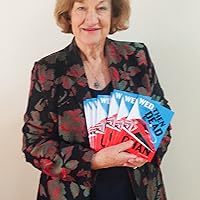
Written with compassion and humour, Cleaved is an illuminating and moving story of coping with difference – and of two sisters, foot soldiers in their parents marital war, who lost and then found each other.
Family memoirs are challenging to write and to read. But Cleaved is more than a memoir.
Even the word ‘cleaved’ has dual meaning: to adhere firmly or split forcefully. Great sub-title, too: A story of Loss, Legs and Finding Family means the ‘legs’ attract attention.
Despite the health issues of lifelong lymphoedema and her embarrassment as a young girl about looking different, with one leg bigger than the other, Cleaved is not a ‘poor me’ misery memoir.
Rather, it is an emotional mystery, trying to track the clues of a broken marriage which drastically affected the two sisters. Love is mixed up with frustration and thoughtless cruelty as each parent favours a child. In later life, the daughters have to reconcile their feelings and the ‘truth’ as each parent shared it. Nothing is as was told to them.
As an experienced former Age journalist and cartoonist, Jane Cafarella evokes via tight words and concentrated visuals. The settings of suburban Melbourne in her ‘growing up’ decades are realistically captured and her subsequent career as a playwright shows in the spare dialogue and subtle characterization. And she must be the only ukulele player around who has written a play-along ukulele musical for audience participation. Beats most boring author bio notes on books.
The portrayal of father and mother change as the narrator matures and tries to cope with mixed emotions, becoming the dutiful ‘fixer’. Young Jane’s research and writing skills are a defence, enabling her to earn an independent living. Love of music and performing is threaded through the generations.
The latter section is the narrator/adult daughter compassionately coming to terms with a mother and father who only told their half of stories. And as the parents both deteriorate physically, the compassion of both daughters grows – as does their aggravation. The last section on the mother could have been tweaked to focus on the sisters’ compassion – but it was in the subtext anyway.
Jane’s candid accounts of real relationships are revealing, but there’s love underneath the frustration of no money, constant moving and disappointments. Eventually Jane creates her own happily functioning musical family.
All writers drawing on autobiographical material worry about reactions from extended family. Taboo subjects in one era , such as sex, abortion or suicide, may be regarded differently in later generations. But each must write their own.
Acknowledging similarities , both weaknesses and strengths, takes courage to write. Patterns of behaviour become apparent through the generations. Is love shown by what is said? Or by action?
It’s important that genuine stories such as this be published to show the extra-ordinary, day-to-day courage of so-called ‘ordinary’ people.