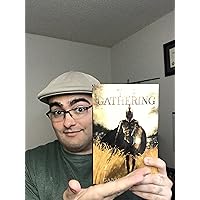
Since the dawn of creation, an immortal wanderer has walked beside mankind, wielding blade and shadow against the eternal war between light and darkness.
Cursed with eternal life and burdened by centuries of blood, Drake has seen empires rise and fall, and humanity’s cruelty prove endless. Now, in the haunted heart of Transylvania, he hides in exile—until war drums stir again, and the past refuses to stay buried.
Whispers of forbidden alchemy, ancient brotherhoods, and a war older than time threaten to engulf the world. To stand aside means damnation. To fight means sacrificing the last fragments of his soul.
In a realm of dark fantasy and historical shadows, where immortal guardians clash with demonic legions, one truth remains: victory demands a price.
🔥 Step into the darkness. Witness the battle. Decide what you would sacrifice.
Will Solomon is a novelist, military veteran, and lifelong traveler whose writing blends haunting beauty with historical grit. His debut novel, The Nameless War, explores the scars of war, the fragility of memory, and the relentless search for hope in the shadows of human conflict.
A former Airman who served in Niger, Germany, and Southeast Asia, Will draws on real-world experience to craft emotionally resonant fiction rooted in espionage, survival, and inner transformation. He has worked as a personal trainer, an English teacher and Canine trainer— all of which feed into the depth of his characters.
When not writing, Will can be found researching obscure military history, hiking through forgotten landscapes, or working on his next novel. He believes in telling stories that linger long after the final page, and he invites readers to step into a world where beauty and brutality exist side by side.
The Nameless War is the first in a series set across decades and continents, where the past is never truly buried—and neither are its ghosts.
Will Solomon’s The Nameless War is a dark fantasy novel that merges myth, war, and moral struggle into an epic story. From the opening pages, it becomes clear that this novel intends to do more than merely entertain. It seeks to probe the cost of power, the burden of eternal life, and the fragile line between protector and destroyer.
At the center of the story is Drake, a being who has existed since creation, tasked with protecting human souls from malevolent forces. But weariness with human cruelty drives him into isolation in Transylvania, only to be drawn back when an impending war threatens everything he has tried to shepherd.
Drake is both fascinating and tragic. He teeters on the boundary between savior and avenger, and his internal conflict anchors the narrative emotionally, even when the plot moves into grand cosmic or supernatural territory.
The secondary cast: Drake’s wife, Anna, and his son, Tristan, offer much of the emotional counterbalance. Their relationships with Drake humanize him, grounding his larger duties in love, family, and loss. These personal moments are among the book’s most affecting, and it seems the fantastical elements are strongest when they illuminate character and cost.
Solomon’s prose is incredibly vivid. Scenes that depict the supernatural tend to linger in the mind, because they are crafted with both imagination and detail. The pacing of the story is impressive, with moments of calm interrupted by sudden jolts of peril, and this keeps tension high and stakes palpable.
However, The Nameless War is not without its imperfections. While much of the lore is intriguing, often its presentation feels uneven. Some explanations arrive too late, or in dense bursts that affect reader immersion. For example, certain supernatural mechanics (Drake’s abilities, the nature of the “principalities of darkness,” the limits of the evil Drake opposes) are introduced but not always clarified in a timely or satisfying way. As a result, it feels as though some parts of the story are waiting to catch up.
Another point where the novel falters is in consistency of tone. At times, Solomon shifts between intimate, character-driven drama and epic battle scenes in ways that feel jarring rather than fluid. Drake remains a potent centerpiece; but a handful of secondary arcs lack the depth they deserve.
Despite these, The Nameless War largely succeeds. The intense world-building and emotionally resonant character work make for a powerful reading experience. The flaws do not break the story. Rather, they remind the reader that ambition often carries risk.
If you appreciate dark fantasy that raises questions about what we owe to others, what it means to live up to one’s own ideals, and what one must sacrifice when war is everywhere—rather than just pit good against evil—you will find The Nameless War to be right up your alley. The story demands patience from its reader; but for many, the rewards will be worth it.
DISCLAIMER: I was gifted/won this book through Goodreads Giveaways. No review was required in exchange for that, but I feel it's only right to offer one. That said, I think I have a bit of a habit of being maybe more harsh in my reviews for giveaway books, like I hope that I can both help readers considering buying the book and give the author some insight into why something might not work, or need future improvements... but that's probably not what they're really here for, right?
I hope my criticisms are helpful and not overly harsh. Also, for what it's worth, two stars is listed as "it was ok" by Goodreads, whereas three is "I liked it", and this one, to me, is "ok."
On to the book: I couldn't click on "I liked it", because I just didn't all told, but I really did WANT to like it. The fundamental ideas behind the story are the kinds of things that I usually enjoy, and I very much appreciate when (I assume) a writer is writing the type of story that they, themselves, would want to read (but maybe haven't found anywhere out there, or maybe they just feel a need to tell this story).
In this case, the idea was fun, the elements allowing the story to be set in different time periods were fun, but the mix of fantasy, scifi, religion (kinda sorta) and historical settings just didn't work together. They CAN, but they did not do so here for me; each tried, but veered away before finding the right voice for that element.
The time periods don't work, from what I can tell. The language used doesn't seem to fit the time periods, and it's very much characters doing things that don't quite fit when they're supposed to be doing them, and using modern American language and slang when doing so (not overwhelmingly, but enough where it bothered me, a lot).
The story itself hits some cheesy moments, repeatedly, and the characters also use really melodramatic, over the top dialog. Could be intentional, but wasn't for me. The characters also seem to go back and forth between who is an antagonist and who is a protagonist (again, might be intentional), and it seems like they bounce back and forth between being heroes and villains. I love this when it is nuanced, showing different sides of the personalities at play, but here it read more like the author was making it up as he went along, with personalities set to whatever hit the story beat he wanted, even if they didn't ring true to the character from their previous appearance. Again, just my read on it.
Finally, the language of the writing feels like it tries too hard. The prose wants to be flowery, but isn't really. Instead, we get big or obscure words that either feel unnecessary, trying too hard with a thesaurus (even if the author knows the words, that's how they come across), or just don't really seem to have the meanings that the author THINKS they have/mean. Also, just some bad grammar.
"Tristan awakened to a pugilistic melee raging just outside his cell on the central platform."
"Then there was the lovely feminine curve of the buttocks, the wide hips, fine breasts, and graceful contour of the lower back…traits of which, according to the Roma, were ideal for child bearing."
"The mace, of draconian design, was composed of a dense onyx from head to handle. Its blunted head sported three curved blades, each one protruding at a 120° angle, of which glowed with an argent-crimson hue, looking as if they emitted their own flame."
"“I missed you,” Verona said, sotto voce."
"Under darkness, Tristan bolted through the vast garden terrace towards the greenhouse. A predawn light emerged from the east, its golden threads slowly encroaching upon the estate. Tristan, approaching the door, peered over his shoulder, giving the dark masses of bushes, junipers, and lattices a cursory scan. Seeing nothing, he reached in his pocket for the key he’d ‘acquired’ from Drake’s study, and unlocked the door. Softly, he closed the door behind him, lighting a single match to illuminate the Stygian darkness. Tristan’s flame was but a single star within an infinite void, providing just enough light to see a few feet ahead of him and nothing more. As he navigated the labyrinthine greenhouse, his match began to wither, forcing him to discard it and ignite another."
I think the author should be proud of what he created, and that he told his story and put it out into the world, but I think that there is a lot of room for improvement, and probably better editors than the friends he seems to have used.
Nameless war is a dark fantasy novel that intertwines history, war, mysticism to create a world striving yet failing to find balance among these elements. Across its 526 relentless pages, the story unfolds like a fiery dream; haunting, relentless. Each scene burns with vivid intensity which pulls you into its chaos, something deeper until the line between reader and realm blurs and when the final page turns, the echoes of its aftermath refuse to let go.
At its heart, Nameless war is not merely a tale of battles fought with blade and blood but of the unseen wars waged within the soul of man, faith against doubt, power against morals. The characters move like flickering flames in a world that refuses to stay still, each burdened by secrets that threaten to consume them.
Most readers will latch into Drake's compelling presence since his mysticism coupled with his seductive aura but the character I find most compelling is: Tristan, Drake's adopted son. His presence in the book is like a catalyst.
Solomon's description of Tristan was something I found interesting, from his growing up as a sole heir to Drake and Anna with the knowledge of an inheritance so powerful a lot of training is needed to be able to wield it physically, mentally and emotionally. From a very young age, he has always had a mind of his own even though he might behave obediently outwardly. Yet Solomon portrays there is always an inner struggle of wanting to do things his own way irrespective of the expectations of his parents.
A teenager going through a phase where his mind battles love, impatience, low self-esteem, thirst for power and trying at a glimpse into adulthood. When he became a rebel with the influence of Drake's archenemy, Melchior, He tries to prove to his father his long waited freedom and power he so foolishly desires which Melchior gladly exploited for his gain which messed him up. The battles against himself where he traded family for power, compassion for stone-heartedness interpreting his father's words to his own tune; "A man can have anything if he's willing to sacrifice everything."
In all these, my point of commentary, is the way Tristan's thirst for breakout and power feels rushed. His inner wars wasn't properly explained as a character who was so blinded with the singular thought of being on par with his father in terms of powers because for him that is the only way he could beat his father at his own game. Despite all these, Nameless war doesn't lose its allure instead its compliments it.
Ultimately, the author writes with a precision of filmmaker and the soul of a poet. Every scene feels vivid and captivating, dialogues bursting like fireworks in the readers minds. Solomon's prose don't just tell a story, it breathes it into existence allowing the readers a partaker in every scene. In the end, Nameless War is more than a story, it's an experience carved from raw edges of imagination. It asks its readers to walk through and listen to the silence between war and what it does to the soul. When the final page falls, what lingers is not just the memory of a world undone but the ache of having lived within it. It is a haunting reminder that even in darkness, there are echoes chasing and sometimes the truest wars are the ones fought within the soul. I recommend to lovers of dark fantasy that plays with the mind and see what havoc it could do.
I won @will_solomonauthor book in a Goodreads giveaway.
This is a Historical Fiction Fantasy. I was a bit unsure how I’d like it with me just stepping into historical fiction as of late but with it being part fantasy I was excited to read it. Luckily it did not disappoint!
Will has an amazing attention to detail to break down how you would feel living in the era of WWI-WWII while adding in this touches of fantasy that make you genuinely believe that maybe it could have happened this way.
Drake the MC walks away from a life he did not want to live until fate pulls him back in. The are in an edge of a war that could truly ruin the world he has come to love and they have taken from him in so may ways. Now he and other characters like his adopted son Tristan have to decide what they are willing to give up to survive and what side they a going to choose to fight for.
Overall I’m super happy I had the opportunity to read it and if you like historical fiction and epic fantasy I’d highly recommend it. My husband who’s not a huge reader is not reading it because of the history aspect and is devouring it. Thank you again Will for doing this giveaway! I can’t wait to see what else you come out with.
I won this book as part of a Goodreads giveaway. I have to say I enjoyed this book. Although I guess I’m comparing it on the heels of some real clunkers, so maybe it’s not really so good. The writing was good, the characters were interesting (except maybe for Tristan, he was kind of a little bitch the entire book), I was just a bit lost on the story, I’m not entirely positive what just happened??? It kept me interested enough to finish the book but maybe not so much that I’ll reach for the next book in the series.
The War Against Wars: A Review of The Nameless War by Solomon Will
In The Nameless War, Will Solomon trades the noise of cannons for the thunder of conscience.
The Nameless War is a 526-page book that lays the mythic foundation of war not just of nations but of souls. It is a book that blurs the line between the physical and the metaphysical, the living and the transcendent. While the number of pages may seem like a lot, I assure readers it is worth every page, and you are locked in as the plot unfolds.
The book explores the lives of many memorable characters in a twist and turn of many events. But I have found most interesting the main character, Drake. His absence or presence in every moment of this book changes the tide of events.
The novel unveils itself as a half war chronicle, half spiritual reckoning anchored by one of Solomon’s most haunting creations: Lord Drake, a man who walks the thin line between prophet and prisoner of his own design.
Drake is not a general, not quite a savior, and certainly not fully human. He is a figure who understands too much about power, too much about the unseen patterns that govern history. What begins as the story of a war without a name slowly turns into the tragedy of a man who can see the truth but cannot change it. Solomon paints him as a father not only to people but to the world itself, an unwilling parent watching his children destroy the very inheritance he gave them.
When Tristan goes rogue, becoming a puppet to Melchior, Drake’s sworn enemy, Drake fights to get him back. In a twist of events, readers will experience how the writer balances him as a disciplinarian, mentor, and mystic being.
The narrative rests on the eve of a war whose name history will not remember. Here, Solomon uses Drake not merely as a character but as an axis around which humanity’s spiritual decay spins. Through his mentorship of younger figures, particularly those like Lynn, who will later carry the story into Leaves in the Sun, Drake functions as a mystic father, guiding with one hand and concealing with the other. His teachings often read like parables, drenched in ambiguity. “To fight the unseen,” he says, “you must first become unseen.” Lines like these echo throughout the novel, haunting both the characters and the reader long after the pages close.
One of the novel’s most striking feats is how Drake’s mysticism never feels ornamental. His visions, cryptic utterances, and quiet moments of despair are not window dressing; they are the architecture of the story’s moral structure. When he speaks of “the balance that must never tip,” it is not prophecy; it is fear. The reader senses that this man, who carries both divine awareness and human frailty, is breaking under the weight of both.
The war itself, rendered in fragments of memory, correspondence, and dream, feels like an extension of Drake’s inner turmoil. Every burning city, every vanished name, mirrors his own decay. Solomon’s worldbuilding is subtle but sophisticated: the supernatural and the political coexist not in opposition but in reflection. When armies move, so do spirits. When empires fall, so do beliefs. Readers will find hidden elements of history and politics theoughout the book
Drake’s relationships deepen this paradox. To his followers, he is mentor and myth. To his enemies, an abomination. Yet Solomon allows small moments of piercing humanity, like a tremor in his hand as he writes a farewell letter or a pause before giving an order that will cost lives. Those fleeting glimpses remind us that beneath the mystic veneer lies a man terrified of what his own power can do.
Stylistically, Solomon writes with the rhythm of an elegy. His prose is lush, atmospheric, and occasionally heavy with philosophical weight. Every sentence feels deliberate, sculpted. The language flows like a tide, beautiful, slow, and sometimes suffocating. Readers expecting straightforward action might struggle with its density, but those attuned to symbolism and emotion will find themselves spellbound.
By the end, The Nameless War stops being about war altogether. It becomes about creation, the making and unmaking of worlds, of families, of faith. And Drake, once a towering mystic, becomes something heartbreakingly human—a father watching over the ruins of his own prophecy.
The Nameless War is not for the impatient reader. It asks you to think, to feel, and to question the cost of enlightenment. Yet it rewards that patience with rare emotional power. Will Solomon does not just tell a story; he asks what it means to bear wisdom in a world that punishes knowing too much. I recommend to lovers of paranormal and fantasy.
The Nameless War is a dark fantasy book that blends myth, war, and history. The book is divided into three parts (Books 1, 2, and 3) and focuses on Drake, an immortal wanderer who has been roaming humanity since the dawn of creation. He uses his powers to fight evil. Haunted by centuries of violence, Drake retires to Transylvania to live in solitude, only to be burdened by a new and devastating war that begins to unfold. Drake now faces a pivotal choice, as choosing to remain silent would result in damnation, while engaging in combat would require the sacrifice of his remaining soul fragments.
The mood of Book 1 is similar to that of a Castlevania-style tale: moody and tragic, setting the reader up for an emotional first part. The story explores the lives of many complex characters; however, Drake certainly stands out above the rest. There’s a certain atmosphere about him that will have the reader latching on to his every word and action. Despite the darkness that surrounds him, it is evident that Drake cares deeply, though this may be to his disadvantage. The reader finds themselves captivated by Drake's well-respected character. Drake was certainly a strong character; he isn’t the only character to impact the reader. Anna, Tristan and Irene, to name a few, added a lot to the story; whether they were written for you to love or hate, they were outstanding characters with a lot of depth.
There was a slight change to Book portions 1 and 2, focusing more on the journey and war. Although the pace appeared to slow down a bit, the increased movement and action kept the reader engaged. With the addition of characters and more information flowing into the story, the author did a fantastic job at making sure certain aspects of it were explained, leaving little confusion in the end. The writing was phenomenal. In addition to being captivating, the author's writing style lets the reader visualize the characters, conflicts, journey, and scenery, making it feel as though you are a part of the story as well.
This is a fantastic dark fantasy for those who love world-building, lore, and in-depth characters; there’s a bit of something for all readers to enjoy, yes, there’s even a little romance. This is definitely worth adding to your to-be-read list, especially if you enjoy a book with elements of history and war and a slower-paced read.
The Nameless War is a dark fantasy book that blends myth, war, and history. The book is divided into three parts (Books 1, 2, and 3) and focuses on Drake, an immortal wanderer who has been roaming humanity since the dawn of creation. He uses his powers to fight evil. Haunted by centuries of violence, Drake retires to Transylvania to live in solitude, only to be burdened by a new and devastating war that begins to unfold. Drake now faces a pivotal choice, as choosing to remain silent would result in damnation, while engaging in combat would require the sacrifice of his remaining soul fragments.
The mood of Book 1 is similar to that of a Castlevania-style tale: moody and tragic, setting the reader up for an emotional first part. The story explores the lives of many complex characters; however, Drake certainly stands out above the rest. There’s a certain atmosphere about him that will have the reader latching on to his every word and action. Despite the darkness that surrounds him, it is evident that Drake cares deeply, though this may be to his disadvantage. The reader finds themselves captivated by Drake's well-respected character. Drake was certainly a strong character; he isn’t the only character to impact the reader. Anna, Tristan and Irene, to name a few, added a lot to the story; whether they were written for you to love or hate, they were outstanding characters with a lot of depth.
There was a slight change to Book portions 1 and 2, focusing more on the journey and war. Although the pace appeared to slow down a bit, the increased movement and action kept the reader engaged. With the addition of characters and more information flowing into the story, the author did a fantastic job at making sure certain aspects of it were explained, leaving little confusion in the end. The writing was phenomenal. In addition to being captivating, the author's writing style lets the reader visualize the characters, conflicts, journey, and scenery, making it feel as though you are a part of the story as well.
This is a fantastic dark fantasy for those who love world-building, lore, and in-depth characters; there’s a bit of something for all readers to enjoy, yes, there’s even a little romance. This is definitely worth adding to your To Be Read list, especially if you enjoy a book with an element of history and war.
The Nameless War is arguably the book I have read to finish the year 2024. I had this book for a while and have never read it until now. This book blew my mind with the amount of lore crammed into this first book and exceeded my expectations. In the first few chapters, we are on the eve of the great war in Transylvania following Tristan, who I thought was the main character; we are then introduced to Anna and Lord Drake, Trisitans adopted parents. What started as an innocent love between the "main" character and the lead became a global odyssey of world domination. The book shows itself here, delving into mysticism, religion, philosophies, and more. For the rest of the book, Lord Drake takes center stage, with Tristan becoming a supporting character, and we realize that it was Drake's story we were following all along. What I also appreciated about the story was the inclusion of powerful quotes from accurate historical figures and the creation of fictional quotes for other characters found in Book 1. The Nameless War is a book that you need to sit down and read through as it gives hints and clues for the following books in the series. It feels like a movie and ministries all wrapped in one. This was a fantastic book to end the year.
Normally, when a book tries to mix war, mysticism, and science fiction, it ends up messy. But here, each part supports the other. The war makes everything feel real. The mysticism gives it weight and mystery. The sci-fi provides believable ways for the secret powers to act behind the scenes.
Drake never ceases to surprise me. His bond with Acheron pulls him into something far bigger than himself, yet his strength as a soldier and strategist keeps him grounded in the chaos of war. He sits right at the heart of everything - the history, mysticism, and power - and it’s hard not to be drawn to him every time he’s on the page.
The fine part that has my attention is how it starts off with scenes that feel like they were pulled straight from war history. The detailed descriptions of trench warfare, soldier tactics, weapons, and the brutal realities of the battlefield. You can sure tell Will did his research. The military parts are clear, realistic, and give the story a solid foundation.
And the Scarab? Ouuuuu! The Scarab feels almost like looking into Ra’s private diary, a direct line to an ancient, commanding force that doesn’t just whisper power, it demands it. Its presence gives the story a mythic weight that lingers behind every decision Drake makes.