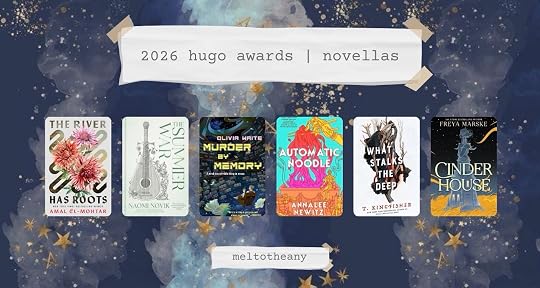
I finally got around to Murder by Memory thanks to the local library and was reminded that the worst thing about paper books is the inability to highlight quotes. The best thing is that you can get a rapid sense of pacing by the number of pages, and in this, I was continuously astounded by how few pages were left in the story. A short length can mean minimal character and world-building when it comes to science fiction, unless you are Roger Zelazny. While I found Memory enjoyable enough, Waite is no Zelazny–more like Encyclopedia Brown in space. At just over 100 pages, it doesn’t have time–or the chops–to develop the world adequately enough to astound the reader with the crime and its resolution.
It begins with a generation ship detective, Dorothy Gentleman, suddenly awakening in a new body. We discover this is in contrast to all protocols but happens because the AI mind running the ship is going through a strong magnetic storm, rendering it drunk (now that would be a short story title: Intoxicated on Your Magnetic Storms). Dorothy is tasked with solving the murder of another passenger, Janet Dodd. Luckily, Janet will be able to be re-sleeved into a newly-grown body in a couple of days, so no harm done. Unfortunately, the same cannot be said of the person who inhabited the body Dorothy is now in, Gloria, as her ‘memory book’ was deliberately destroyed.
So curiously, despite this set-up, Dorothy spends more time solving the murder of Janet, which was impermanent, and not as much time solving the murder of Gloria, which is. I thought the solutions to the mysteries came in a rather quick dump, without any emotional stakes involved. Additionally, the solution(s) to the crime(s) came with a lot of information related to how the generational ship and the human society worked, so it left less impactful. I found myself with so many questions about the ship, but Waite is definitely not of the KSR school of world-building. Richard Morgan puts the ‘memory book’ device to much better–albeit more violent–use.
Character building is alright–one hundred pages doesn’t allow for much–but mostly surrounds the current zeitgeist favorites of knitting, non-hetro relationships, and drinking. I did love Waite’s twist on memory-evocative drinking and brewing (but so many questions!). Her description of a memory rainstorm put me in mind of Zelazny’s storm descriptions.
In short, a mildly interesting mystery with awkward though tantalizing world building. It has the bones of an exploration of memory, embodiment and identity in really curious ways—but ultimately treats those ideas more as setting than substance. Locus worthy? Not yet, or not in this version. I’ll certainly read the next but without any sense of urgency.