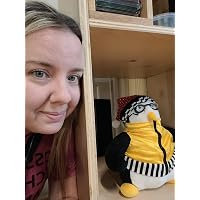
Friends ran for ten years, beginning in 1994 and airing its final episode in 2005. The show is inarguably the peak sitcom of its era. It's the most remembered, most quoted and so essential that companies have spent hundreds of millions on the streaming rights to Friends in recent years. But why does Friends mean so much to so many? What did this sitcom have that the other giant shows of that era didn’t?
This is a deep dive into the history of Friends, but it’s also the history of ten years of network television. How did the world of sitcoms evolve through that decade? How much of a show’s success is down to small details like schedules and syndication, and how much of it is down to the content itself?
The landscape of television has changed drastically in the years since the end of Friends, but the biggest show of sitcom’s golden age has endured like no other. This look at the history of Friends, its legacy and the history of television in general will show you why. Both why the television industry has become what it is today, and why Friends has survived long beyond its decade. This is a celebration of Friends, an interrogation of its success, and a history of television that explains much of what’s on our screens today.
In a Nutshell: A seasonal analysis of FRIENDS, and the other sitcoms and shows before and during the “golden age”. The focus is not just on sitcoms, the feedback is not just positive, and the approach is more like a hindsight-analysis with 2024-glasses on. I'm a FRIENDS superfan, so some (actually, most!) of this review comes from biased eyes. Take it with a pinch of salt!
~~~~~~~~~~~~~~~~~~~~~~~~~~~~
As a FRIENDS fanatic, I have watched the show umpteen times, I can still watch any episode any day in any random order without any confusion, and I can even quote lines from multiple episodes. So when I saw this title listed on NetGalley, my reaction obviously was, “Could I BE more excited?” The execution of the book, however, has left me with mixed feelings.
FRIENDS is not the only hit sitcom of its time, but it's probably the only one that still has a loyal fanbase not just from its original viewership but also among the younger generation, thanks to OTT channels. Because of the latter factor, it has also been subject to intense modern scrutiny, and isn’t always able to match current inclusivity standards. The book covers all this and more.
The content provides not just a generic analysis of FRIENDS but also a season-by-season assessment. It even has an in-depth evaluation of the changing dynamics of shows over the last three decades on television, and the impact of the entry of OTT channels and the modified viewership habits on TV shows.
You don’t require a comprehensive knowledge of American sitcoms to grasp the analytics provided. My knowhow is limited to iconic sitcoms from the “golden era” such as Seinfeld, Frasier, 3rd Rock from the Sun, Everyday Loves Raymond, Dharma and Greg, and That 70s Show. While the book covers many more shows (sitcoms and more), I didn’t find myself struggling to comprehend the information.
Each chapter is cleverly titled in the FRIENDS episode title format: “The One Where/With...”. There is also some smart chapter numbering, with chapters one to ten corresponding to seasons one to ten, even though there are fourteen chapters in all.
The book starts off quite well. The initial two chapters (which highlight the then status quo of TV viewership and the early sitcoms that paved the way towards FRIENDS) set the right foundation for the book. Even the first chapter, that highlighted Season One and how the cast and the rest of the team came together, is superb. FRIENDS fans might already know many of the details, but this book provides them in a structured way.
Things start going downhill from the second chapter onwards, when the focus shifts more towards a clinical approach, with loads of data about other shows, TV ratings, network positions, and so on. This becomes too tedious after a point. The FRIENDS-related information is intriguing, what with a proper exploration of each season’s focal point, the dynamics of the six friends, and the season finale. However, the rest of the data dulls the impact of the FRIENDS content. As a FRIENDS fan, I was interested in knowing more about the show and its competition, but not in such a dry manner.
What bugged me the most during the season-focussed chapters was the constant criticism about how FRIENDS hasn’t aged well. Yes, we fans know that it doesn’t completely pass muster in today’s world. But if a programme has to be analysed, it has to be seen not from NetFlix-generation opinions but from the original 90s viewpoint. When FRIENDS was produced, its creators wouldn’t have thought, “Hmmm, let’s ensure that we can satisfy the viewers watching our show thirty years hence.” The show was made for the people of the 1990s by people of the 1990s, and was partly based on the (white) creators’ post-college experiences. As David Schwimmer said in a 2020 interview to ‘The Guardian’, “A lot of the problem today in so many areas is that so little is taken in context. You have to look at it from the point of view of what the show was trying to do at the time.”
That said, FRIENDS still broke the mould by showing a lesbian relationship & wedding (Carol & Susan), having a Black actor (Aisha Tyler as Charlie) and a POC actor (Lauren Tom as Julie) in a key role – nine and seven episodes respectively – AND having a transgender character (Chandler’s dad Helena Handbasket, though the casting of Kathleen Turner in this role is somewhat questionable.) The other shows of the era didn't do any of this, with the only prominent exception being Will & Grace and its two homosexual main characters, though one of them – Sean Hayes’ character Jack McFarland – was an extremely camp portrayal of a gay man. Why call it the golden age of the sitcom era and then go to bash the show for things the entire television business was guilty of?
I disagree with the author that calling something "of the era" is a lazy way of justifying it. No, calling something “of the era” is a way of acknowledging that we know there were mistakes made in the past, that the work doesn’t hold to modern standards, and that we shouldn’t repeat those errors in future. It indicates that this knowledge has come to us in hindsight, and hence we need to learn from those mistakes, not castigate those who were reflecting prevalent social trends and the systemic racism without even realising it. (Aren’t shows guilty of the same even today, though awareness is so much greater? You think the storyline of Raj Koothrappali of The Big Bang Theory is a genuine Indian representation? Think again! I’d rather not have our representation on shows than to have such stereotypes perpetuated.)
Some of the points of criticism were just silly. Like saying that the use of pagers and answering machines places FRIENDS firmly in that era. Of course, it does! You think modern audiences don't realise that it's a thirty-year-old show? There has been so much technology that has come and even gone in the interim, so tech shouldn't be used to judge the timelessness of any show! Almost every show is OF ITS ERA when it comes to technology, and this cannot be used as a shortcoming.
The proceedings improve to a great extent from Chapter Ten (focussed on Season Ten) onwards. The tone in these final three chapters is more enthusiastic and nostalgic, and reminded me of why I had opted for the book in the first place. If only that same impartial and wistful approach had been retained throughout the book, this would have been an easy winner.
There are some photos at the end of the book, but all of them are stock pictures that are easily available on the internet. I found nothing striking, innovative, or memorable in the chosen photos.
All in all, the nerd in me did like the analysis of the TV trends and the final three chapters were exactly what I wanted, but the FRIENDS fan in me was mostly disappointed with the remaining writing choices. With such a title, I would have appreciated seeing a bit more warmth and enthusiasm and a little less data and unwarranted criticism throughout. FRIENDS is celebrating the 30th anniversary this year, marking three decades since the pilot episode aired on September 22, 1994. In such a momentous month, I’d rather have read something that celebrated its longevity than reproved it for not doing better.
I am not sure whom to recommend this book to, as non-FRIENDS-fans won’t be interested in this kind of topic, and FRIENDS fans won’t be that happy with it. I guess it might work for those who are interested in studying TV trends as the insights on this specific topic are engaging enough.
2.5 stars, rounding up for FRIENDS.
My thanks to Pen & Sword for providing the DRC of “Friends and the Golden Age of the Sitcom” via NetGalley. This review is voluntary and contains my honest opinion about the book.
A comprehensive overview of all ten seasons, but very data heavy. The series does not measure up to the author's measuring stick. Found myself skimming quite a bit. Rounding up from 2.5.
“Friends” was NBC’s Must See TV from 1994-2005 and I don’t know whether there’s an episode I haven’t seen, either first run or on re-run. I notice that it seems to be gaining popularity again now based on the number of really young people I see with “Friends” shirts and other paraphernalia. This book was meant to be about the impact of the show and how the sitcom changed television, and while there was a bit of this, it was mostly a recap of popular episodes season by season and a list of other shows that NBC (and other networks) were putting on.
The book was written by British writers so there was also some discussion about what British networks were airing the show and its ratings there. Obviously that was of little interest to American who hadn’t heard of the other shows mentioned.
Oh, and this was an ARC, so normally I wouldn’t mention this, but Courteney Cox’s name was misspelled throughout the entire book. Odd for a book that is practically one-sixth about her. Probably a 2.5, there’s a better book to be had about “Friends.”
ull disclosure: I am a Friends fan, despite being aware of its more problematic features. I find myself quoting it constantly in real-life situations. I've done the Friends' "Experience" three times (once driving from NYC up to Boston on a day trip just to do so). And I've read all the books, articles, and interviews with various cast members, producers, and anyone who has ever been involved with the show and has spoken about it. So I was curious to see if I would learn anything new from this book.
And I did. If you are interested in the show and/or the rise and fall (and maybe rise again?) of the situation comedy in the 90s and early 2000s, this is a fascinating read. And it turns out I am. Of course, I'm old enough to remember some of the shows discussed--on the other hand, I had no idea how many shows passed through the small screen briefly.
I was fascinated by the discussions of how the shows were filmed, what constituted a "concept" show, and in how Friends was situated in these contexts. I found the discussions of how reality shows impacted the industry as well as the tidbits about how different casts interacted with each other, what personal factors informed outcomes on many shows. While I'm interested in theater and films, I did not expect to find this kind of information as engaging, even absorbing, as I did.
This is at least in part due to the excellent quality of the writing. Smooth, fluid, easy to follow, I was carried along the flow of information presented in a conversational, informal tone. The author expresses her personal opinions from time to time but in a way that augments rather than interferes with flow of the book.
Reading this book felt like having a conversation with a very knowledgeable industry insider, one who loves the show and the business of television and is eager to share it. Also, someone who is articulate and easy to listen to.
The more problematic aspects of Friends are covered: the fat jokes, the homophobic jokes, the lack of diversity, amongst others. Also covered are the strengths: ways in which Friends avoided many of the common pitfalls of sitcom writing, the strengths of the relationships of the characters, The favorable depiction of Ross's ex-wife marriage (Susan--his ex-wife's wife--is presented for the most part in a negative light but I would argue that this more because she committed adultery with Carol and, from his point of view, broke up their marriage--however, Susan and Carol's relationship is clearly strong and loving).
As a fan, I naturally loved the discussions of the more technical aspects of the show, the writing, direction, plot choices. I thought I'd read all there was to say, but not at all. Of course I was familiar with much of the information but there was much more that was unfamiliar and the placing the show in the context of its time as well as its position in NBC's line-up gave the subject greater depth than a usual simple fan read.
I highly recommend this book if you like Friends and/or are interested in the television industry and its relationship to the society in which it's situated.
A big thank you to NetGalley, Publisher Pen and Sword/White Owl, and the author for providing me with a copy of this book in exchange for an honest review. Friends and the Golden Age of the Sitcom is scheduled for publication on August 30, 2024.
Okay, people, I have a confession. I was late to the "Friends" party. Like, *really* late. As in, I just finished binge-watching all ten seasons for the first time *ever* late. (I know, I know, where have I been?!) I was excited when I saw this book pop up on NetGalley and I decided to pair it with my "Friends" marathon. I had to pace myself with this book - I didn't want any spoilers!
What I loved most was how Hagan puts "Friends" into context. It wasn't just some random sitcom that appeared out of thin air. She talks about the evolution of sitcoms in the 90s, bringing back so many memories of shows I used to watch (and some I'd totally forgotten about!). Remember "Frasier"? "Mad About You"? "Dharma & Greg"? Hagan takes you on a trip down memory lane, reminding you of all the gems that graced our screens back then.
What I appreciated most was how Hagan dug into the nitty-gritty of why *Friends* worked so well. She explains how little things—like syndication deals and prime-time slots—played a huge role in its success. It contextualizes *Friends* within the broader landscape of television, weaving in shows like *Seinfeld*, *Frasier*, and *Scrubs* (flashback to me binge watching Scrubs on my laptop while stuck at an airport during a flight delay!).
There were discussion points on the the problematic aspects of "Friends." The lack of diversity, the fat-shaming of Monica, and some of the questionable storylines...it dove into the characters, the writing, and the cultural impact of the show.
I found the book to be engaging and informative, enough history sprinkled in to feel like I was learning but lots of references to each episode that paired well with me watching the show alongside it. Plus, if you’re a 90s kid, this book is packed with blasts from the past that bring you back to the good ol’ days when you actually had to wait a week for the next episode AND watch the commercials.
I adored Friends, and love the resurgence of the sitcom with the younger generation thanks to Netflix and re-runs. (My friends daughter is 12 and wasn't even alive when it was first airing, she loves it!!)
I would call myself a huge fan! Not to blow my own trumpet, but i'm a real Friends-geek! So when I come across a book with facts that I genuinely don't know it's great! I want to know everything!! (And like to brag about my sometimes useless friends knowledge!!)
This book is a bit dense at times, especially at the beginning - but it is still a must read for a friends fan! Who knows, you may even learn something new!
Joanna Hagan, Friends and the Golden Age of the Sitcom, Pen & Sword | White Owl, August 2024.
Thank you, NetGalley and Pen & Sword for providing me with this uncorrected proof for review.
There is a wealth of information about Friends, and other television shows that featured in the period in which the sit com was initially screened, between the covers of this exciting publication. Friends may or may not have been one of your favourite programs, but regardless, there is something here for anyone interested in television in the 1990s to the early 2000s. Seinfeld, Frasier, and comedies from the past such as I Love Lucy, feature; dramas, for example ER and The West Wing, are discussed; the introduction of reality shows, the first of which was Survivor, gain a mention; the start of Grey’s Anatomy and its enduring popularity are referred to. Importantly, the process of creating and producing a sit com is provided in detail as episode after episode of Friends is laid out, familiar situations and analysis featuring side by side.
The way in which the material is woven together is the strength of this work, with Friends usually the pivotal point from which the additional information extends, building an engaging look at this Golden Age from the perspective of one of its most popular examples from 1994 to 2005. Other sit coms, and their particular focus and idiosyncrasies – some successful, some not - are contrasted with significant effect. The attention to other sit coms provides valuable insight into the field of work in which Friends competed. Moving more widely into the dramas also in the field is also instructive, providing awareness of the range of television choices available while Friends maintained its impetus.
The analysis of the show, with its successes, faults, challenges, and story lines often dealt with in detail, and always with respect for the work of the writers and actors is impressive. But details about these aspects of Friends is not the only perspective. Joanna Hagan is adept at drawing out the importance of scheduling, competitors, the role of producers and the networks, and the essential role of ratings in maintaining a program in prime time and scheduled for particular days. So, too is the role of leading in programs shown to have an immense impact on the way in which audiences responded.
But, for me, the real interest lay in the way in which the stories were developed and told. There is nothing that resonates as much as this part of the book. The characters are brought to life, and the storylines and topics engender the laughter, angst, appeal and sometimes querying on the page as they did on the screen. Hagan has written an engaging book, with its clever weaving of the detail about Friends with a television history of the time. I really enjoyed reading it.
When I saw Friends and the couch on the cover of this book, I immediately wanted to read it. I had never heard of Joanna Hagan, but I wanted to hear more about Friends and was curious about Friends and the Golden Age of the Sitcom.
"...sitcoms are a form of storytelling like no other. They're funny-or at least they're supposed to be."
I had not heard of many of the sitcoms mentioned in the book. While the book is a deep dive into each season of Friends, it's also a wealth of information about the sitcoms that came out during the same time frame (late 90s and early 2000s) that Friends ran.
Some of the shows that I did recognize and got plenty of space in this book were: Will and Grace, Scrubs, ER, CSI: Miami, Everybody Love's Raymond, Seinfeld, ER, Frasier, The Drew Carey Show, Buffy the Vampire Slayer, and CSI.
I was surprised by such an in-depth exploration of Friends that Courteney Cox's name was spelled wrong throughout the book.
I can't tell if the author loved or hated Friends. I would think to dedicate a book to it, she would enjoy it, but she kept harping on how it all looks different through a modern lens. Friends is one of the few sitcoms mentioned in the book that is still loved and easily accessible today, and another generation has risen up and loves it as much as the original audience did (and still does).
Pictures are included at the very end of the book. It would have served the book better had the images been in the story, not at the end. Also, while the author puts resources at the end, it is very generic, and would be impossible to say where she got her "specific" information from. For example, she gives a lot of statistics throughout the book, but her resources are not mentioned by chapter, she lists books, newspapers, magazines, and websites used, but no articles on the websites, which is a lazy way to back up your research.
I will say, the nostalgia I felt while watching Friends, especially the final season, I felt all over again reliving the moments that were shared in the book. While I didn't care about a lot of information shared in the book, I did appreciate and enjoy most of what was shared about Friends.
Thank you to Net Galley and the publisher for the opportunity to read this book. I was not required to provide a positive review. All thoughts and opinions are my own.
For this and other reviews and content, subscribe to my newletter at www.bargain-sleuth.com
Thanks to White Owl and NetGalley for the digital ARC of this book; I am leaving this review voluntarily.
First off, this book is not just about Friends, the popular 1990s TV show, but about the 1990s sitcoms and television in general from that period of time. The majority of the book is about Friends, the NBC network’s Must-See TV lineup, which started back in the 1980s with The Cosby Show, and how they tried to dominate by offering up endless sitcoms. There is some talk about British television in the fact that some of the American shows were exported to various channels there, much like some British shows appear here in the U.S. on PBS.
What I find interesting about the book is not the rehash of Friends’ seasons, which can be had in any number of places, but how the show evolved and changed. Also important to note is the reflections of the show’s creators addressing the now-problematic issues with the show: fatphobia, homophobia, lack of diversity, and how they admit they got those things terribly wrong. It’s clear most of us have learned and grown with the years, and some aspects of the show which we once thought were hilarious fall flat now.
Some of the other shows mentioned include Suddenly Susan, Sports Night, Veronica’s Closet, Just Shoot Me, Caroline in the City, Spin City, The Drew Carey Show, Dharma & Greg, Will & Grace, and Ellen. Many of those shows are in syndication on retro TV channels in the U.S. right now like Antenna TV, Catchy TV, and Me TV, and some have aged better than others.
There’s also discussion of the TV landscape in general, with popular dramas like E.R. and The West Wing, Law & Order, and the return of the prime-time game show like Who Wants to Be a Millionaire, as well as the major networks’ foray into reality TV with Survivor and The Bachelor.
I found this book very interesting from a nostalgia standpoint, not only for Friends, but also the time in which the show aired.
If you're a television nerd like me I think you'll really enjoy this. This is a great behind the scenes look at one of the biggest sitcoms of all time, but also an in-depth look at the business of broadcasting and the landscape of primetime American television in the 90s and early 2000s.
This was well-researched and interesting. Each chapter covers a season of Friends and I really liked how the author framed what was happening in the show, with what was happening with other shows, across the networks and in the world in general. I love television and while I was too young to be paying attention at the very beginning of Friends' run, that early 2000s era is the one I grew up with and is where my love of television really developed. I also appreciated that there was focus given to the UK television and sitcom landscape at the time, as well as the impact that Friends had in the UK.
I will say, if you aren't too interested in the tv industry and are looking for a pure in-depth, behind-the-scenes look at Friends and only Friends - you might not really enjoy this. While Friends is definitely the focal point, like I mentioned above, we do spend a lot of time discussing things that aren't Friends.
Some parts are repetitive and could have done with a bit of editing down - we know that 'Fat Monica' (among many other things) doesn't age well, we don't need to reiterate that point every time it comes up in the show. Equally, even for a self-proclaimed tv nerd like myself, I couldn't really bring myself to care about the repeated explanations of what show was on in what time slot on what day of the week.
Overall, though a really interesting book that seems like it was written specifically for my interests. I would recommend this to anyone interested in television and sitcoms of the 90s/00s and I will definitely be on the lookout for more books like this in the future.
A big thank you to the publisher, Pen & Sword | White Owl, for granting my wish to read Friends and the Golden Age of the Sitcom by Joanna Hagan. This book was a nostalgic journey for me, as Friends has always been, and continues to be, my ultimate comfort show. I often rewatch the series, and diving into the behind-the-scenes details made the experience even more enjoyable.
The book offers a deep dive into the making of Friends while also exploring other iconic NBC shows from the same era, such as Will & Grace and Frasier, which are also personal favourites of mine. It was fascinating to learn how Friends consistently topped NBC’s ratings season after season and how many of the creative decisions made were groundbreaking for television at the time.
While I thoroughly enjoyed the wealth of information provided, the only aspect lacking was the inclusion of photographs. While there are several in the book, I would have loved to see more behind-the-scenes images that could further enhance the reader’s connection to the show and its production. Adding more visual elements from the set, cast, or even script readings would have added an extra layer of depth to the storytelling.
Since reading this book, I’ve been inspired to revisit many of the shows mentioned, and it’s been a fantastic trip down memory lane. Despite my desire for more photographs, Friends and the Golden Age of the Sitcom is a must-read for fans of the show and anyone who loves the golden era of ’90s sitcoms.
Thank you again to the publisher for granting me this reading wish. It was a wonderful and insightful experience!
Friends and the Golden Age of the Sitcom by Joanna Hagan is not just a trip down memory lane, it is a deep dive into how TV and soceity changed so drastically throughout its exceptional (and well deserved) success
"TV is not my jam, it is predictable, dull and utterly fake and I would certainly not waste my time with an American sitcom". Or so I thought in my cynical late teens when Friends hurtled on to our screens, kicking the door down into our living rooms and plonking itself down on our couch. The group consisted of 6 friends, the main set being in the Central Perk Coffee Shop or Monica's loft and a delightful interconnectedness and interplay between each of the characters.
Were they immaculately groomed and a little bit pigeonholed/ stereotypical? Yes. Did we all fall for Joey, Laugh with Chandler and laugh at Ross's PIVOT! Yes, yes we did. Did e all sing Silly cat with Phoebe, secretly want a Rachel haircut, and at every opportunity replicate Monica's "Pribe of Libe!" We might have done. We might also have related to each of the characters, or seen our friends in them. Fact is, it was in our homes, in our lives and it was the last of its kind
This book is very well written and interesting not just because of how Friends was able to endure beyond its highly successful run, but how with the advent of social media and soceity as a whole, TV began to change into something quite unrecognisable
A fascinating and nostalgic read
Thank you to Netgalley, the author and Pen & Sword | White Owl for this fascinating ARC - My review is left voluntarily and all opinions are my own
I have one friend who still talks about watching Friends every week in college, clapping to the theme song with her roommates. I have another old friend who made sure we knew that when Friends was on, we could call but she wouldn't answer. So I was late to the party but I had friends paving the way to my fandom. Ironically, I have never watched a single episode of most of the shows mentioned in this book, although I've heard of most of them. But I've watched Friends so many times I'll bring up the corresponding episode when something happens in real life. TV isn't my thing so I didn't have cable, but I bought all the DVDs and went to the Friends finale at the IMAX theater. What was it about Friends? Maybe the characters were so exaggerated it was easy to relate to them, or maybe it's just because they dealt with such normal issues. This book covers the history of the show while talking about the other popular shows happening at the same time, and it was like a real history lesson. So many things happen in the world while we're interacting with our chosen entertainment, and everything leaves an impression. I can remember what was happening in the world during certain parts of the show. This book isn't very long but it's just so full of information that is relevant to my own experiences. That's impressive to me considering the little time I normally give television. Friends is really part of the zeitgeist. Thanks to NetGalley for letting me read this
La série Friends a duré 10 ans, de 1994 à son épisode final en 2005. C’est incontestablement la meilleure sitcom de son époque. C'est celle dont on se souvient le plus, qui est la plus citée et qui est si essentielle que des entreprises ont dépensé des centaines de millions pour obtenir les droits de diffusion en continu de Friends ces dernières années. Mais pourquoi Friends revêt-il une telle importance pour tant de gens ? Qu'est-ce que cette sitcom avait de plus que les autres grandes séries de l'époque ?
Il s'agit d'une plongée dans l'histoire de Friends, mais aussi dans l'histoire de dix ans de télévision de réseau. Le paysage télévisuel a radicalement changé depuis la fin de Friends, mais la plus grande série de l'âge d'or des sitcoms a perduré comme aucune autre. Il s'agit d'une célébration de Friends, d'une interrogation sur son succès et d'une histoire de la télévision qui explique une grande partie de ce que l'on voit sur nos écrans aujourd'hui.
Un livre très intéressant qui n’est pas uniquement centré sur Friends mais sur les autres sitcoms populaires de cette génération; sur la bataille des chaînes télévisées de l’époque qui se battaient pour avoir le monopole. Tout en revisitant l’histoire des sitcoms, nous en venons petit à petit au succès grandissant de la série Friends, qui reste la plus populaire aujourd’hui.
Friends was a revolutionary sitcom with a large fan base following. Originally I thought this was a book just about friends. However, there were a number of well loved and breakout sitcoms during the Friends 10 year run.
This book is a bit of an analysis on Friends throughout the years (season by season) and goes through some of the changing dynamics of the cast and fan base.
Other sitcoms mentioned include Seinfeld, Everyone loves Raymond, Fraser, 3rd Rock from the Sun, etc.
The book was very data driven throughout with heavy analysis on TV rating etc. The author also focuses on the how problematic Friends was and it doesn’t age well. However, most of their supporting information includes things like electronics (pagers, faxes) and other things that to me actually make it iconic. Of course they weren’t using iPhones, they didn’t exist.
This was an interesting read, I found myself skimming a bit over the analysis and data though. It got a bit overwhelming at times. This is a 3 star read for me.
Disclaimer: I voluntarily read and reviewed an advanced copy of this book. All thoughts and opinions are my own.
I was so excited to read this book as I love sitcoms, especially Friends.
I had expectations which led to disappointment. I was hoping to learn new information about sitcoms I love but that didn’t happen apart from how the different sitcoms dealt with 9/11.
So when it came to Friends the author did give plenty of information but being a huge Friends fan I already knew most of it and anything new wasn’t pretty minor. The author would describe episodes and since I know them all so well they would play in my head as I read. That was the most enjoyable part of the book.
As for the other sitcoms it was all about when they aired, what network they were on, which time slots and up against which other shows, as well as ratings etc but nothing about the cast and crew, behind the scenes, interesting facts etc. This for me was really boring.
I also found it disappointing that a book about sitcoms which are produced to make their audience laugh would be written in such a serious way. I was expecting at least a few laughs but unfortunately I didn’t laugh once.
Overall there were some interesting parts but the book just wasn’t what I expected and hoped for.
I liked Friends and watched it throughout its run and still watch it occasionally. This book gives you a high level yet comprehensive review of the show. It was interesting getting the behind-the-scenes scoop on what was happening with some of the episodes. With the series, I was happy when the focus shifted from Rachel and Ross and I hated the Rachel-Joey crush/romance.
I also found it interesting to read about what was happening during Friends' run with the other networks and why some decisions about shows and programming were made. Lots of TV shows are discussed and I found myself Googling them because I'd forgotten about them, wondered why I hadn't watched some or hadn't heard of them. During Friends' original run, I was traveling for work often, taking lots of courses at night, didn't have a PVR or I guess just wasn't interested.
I found it odd there was a large focus on British viewers, their channels and shows and see the author is in England ... it at times felt like it was being directed at British readers rather than world-wide fans.
Friends is one of my all-time favorite shows, so of course I had to read this! There have been several books that have examined the show's 10-year run, but this was a bit different, in how it really looked at the evolution of sitcoms overall, and how Friends fit into and drove that evolution. * I don't think I learned all that much about Friends from this book, but honestly I already knew quite a bit :) (I probably learned more about Scrubs, which was ok because I also love that show!) But it was certainly interesting to look back at how primetime TV changed through the 90's and early 2000s. * While there's a ton of nostalgia, and it was fun to be reminded of episodes I loved, and other shows that were popular, it does read somewhat slow. For such a short book, it took a surprisingly long time to get through. Many chapters felt like long lists of TV shows more than anything else. * If you're interested in how TV has evolved, how the sitcom fits in with the growing popularity of reality TV, game shows, and procedural shows, then this is a great one to read! Maybe not the best if you want to learn more about Friends, but still fun to read.
You can also see this review, along with others I have written, at my blog, Mr. Book's Book Reviews.
Thank you, Pen & Sword, for providing this book for review consideration via NetGalley in exchange for an honest review. All opinions are my own.
Mr. Book just finished Friends And The Golden Age Of The Sitcom, by Joanna Hagan.
This was a very good look at Friends and it’s ten-season run on TV. The book covered so much good material and will be enjoyed by any Friends fan. To a lesser extent, the book also discussed other shows during that era, which also made good reading.
I give this book an A. Goodreads and NetGalley require grades on a 1-5 star system. In my personal conversion system, an A equates to 5 stars. (A or A+: 5 stars, B+: 4 stars, B: 3 stars, C: 2 stars, D or F: 1 star).
This review has been posted at NetGalley, Goodreads and my blog, Mr. Book’s Book Reviews
Mr. Book originally finished reading this on August 2, 2024.
Thanks to NetGalley and Pen & Sword for my advanced reader copy of this book in exchange for an honest review.
Actual rating: 3.5 stars.
I really enjoyed this non-fiction all about Friends and a brief history of sitcoms.
I'm a big Friends fan – and, yes, I can admit it has plenty of pitfalls and shortcomings – so this made for a light, easy and fascinating end-of-summer read. In it, Hagan expertly delves into the success of Friends and how it came to be, but also what it became. The author shares behind-the-scenes snippets that add weight to her opinions, and it felt like a well-researched book. What's more, it's interwoven with the fabric of sitcom life in the US and UK. I appreciated the backdrop of other sitcoms that were popular at the time – especially understanding some of the cameos in the show! I liked that Hagan criticised the diversity and inclusivity of the show, the awful sexism and fatphobia, and picked up on other issues too. An insightful and compelling read.
As a huge Friends fan, this was a fun read for me! There are very few TV shows that I enjoy rewatching but this is one of them! Not only have I rewatched the entire series multiple times when it went to streaming, but also rewatched favorite episodes many many times on best of DVDS, and of course on reruns. This made it very easy and enjoyable to understand references throughout the book without having to rewatch anything. It was very interesting to learn why the NBC network made different decisions as well as the writers. It was also interesting to learn about how these decisions played out within the time period of 1994-2004, as well as within the landscape of other TV shows at the time. At times, the book went into a bit too much detail about other shows and networks, sometimes interesting and sometimes not. This resulted in 4 star rating instead of 5.
This entire review has been hidden because of spoilers.
I received a free ebook from Netgalley in exchange for a fair and unbiased review. I am and was a big Friends fan. I have seen each episode so many times. I was excited to read this book.
It's a good book for Friend's fans. It talks about the show and the episodes of Friends. The book, also, talks about some of the problems with the show. At the time, I thought it was a revolutionary show. It probably was.
The book is fairly easy to read. The chapters aren't too long. The chapters talk about various episodes of the book. The book, also, talks about other sitcoms of that time.
The book doesn't give a lot of information about the show that I didn't know. It's nice to read about the book in context. It's the first book I have read on the series.
It's a good book for fans of Friends to read. I am thankful for the author for the opportunity to read this book.
Thanks to NetGalley and the publisher for providing an ARC for review.
As a long-time Friends fan, I was reluctant that this book would give me any new insights. I was wrong! I really enjoyed this in-depth look that not only gives new tidbits of Friends trivia, but also situates the show within the context of the television landscape at the time. You hear about how Friends got on the air and how it competes against other shows on the network and on other networks, too. It's an interesting look at the dynamics at play in the entertainment industry. There are investigations into the things that worked well on Friends and the things that don't hold up so well later on (racism, fat shaming, etc.).
I'm not a fan of Friends. I read this in order to support Joanna Hagen as she co-hosts my favourite podcast - The Truth Shall Make You Fret. However, despite my lack of interest in the major subject of the book, I still thoroughly enjoyed it. I love hearing people be passionate about something - their joy makes me feel joy. One of my other favourite books is Hip Hop Family Tree which is a graphic novel history of hip hop. And, I like that significantly less than I like Friends. Joanna's love and knowledge of both Friends and the period in which it was made shines through making Friends and The Golden Age of Sitcom an absolute pleasure to read.
Like most millennial women I grew up devouring Friends, both live on Thursday nights & in reruns. So I had to check this book out. I unfortunately did not care for it. It just seemed very dry & fact based. It didn’t feel like it had its own voice. I also did not like how there was so much criticism about how the show hadn’t aged well. Sitcoms are not made for the future, they’re made for the time they’re happening. The technology of the time should not have been criticized, they were cutting edge at the time & that adds to the nostalgia of the show.
‘It’s so distinctly a part of modern culture that just the sight of an orange sofa, of purple walls and a yellow picture frame, of reclining chairs and a stuffed penguin toy, bring up memories of this television giant.’
Friends is my number one show to watch! If I’m sad, depressed, unwell, or going through something scary, I will ALWAYS return to friends.
Loved this and it is the perfect read for any Friends fan.
‘A whole new golden age of television awaits, but there will never be another friends.’
This person knows Friends but if you are a die hard Friends fan, like me, you will not learn anything new from this book. It has a serious take, which is unfitting for a book about a sitcom. This focuses on casting and features details about certain episodes and storylines, but doesn't offer anything new. As a UK reader I wasn't interested in the snippets of info of other US sitcoms and hadn't heard of half of those either.
I'm not sure who the right readership is for this book, as die hard fans will know this, and those less interested would be unlikely to pick this up.
I am a huge 'Friends' fan so naturally this peaked my interest. It was not too bad, if you are interested in the technical side of sitcoms and how everything works, especially early 90s sitcoms, this would be up your alley. A lot of the 'Friends' information was stuff I already knew but a lot was new information to me.
Thank you NetGalley, the author and Pen & Sword for a copy in exchange for an honest review.
i enjoyed this! I liked reading about what made FRIENDS so special compared to other shows at the time. it was fun to read about the networks and shows of the 90s and how shows were picked up or canceled, the introduction of HBO, the rise of game shows and reality TV.
NetGalley gave me the chance to read and review this book. I enjoyed the overall content but I feel like the chapters could have been more split up as the title of the chapter would start off correct but veer off into a totally different topic. For a small book this took me a long time to read but as a Friends fan and a fan of early 2000s sitcoms, it was worth a read.