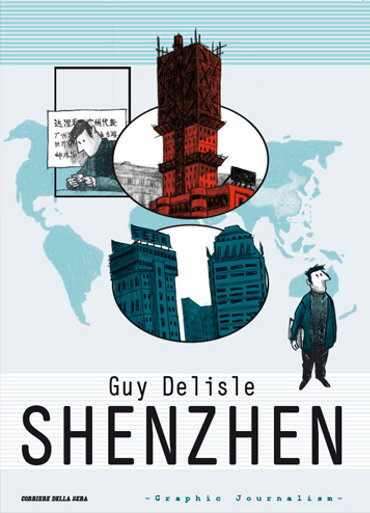
Shenzhen is entertainingly compact with Guy Delisle's observations of life in urban southern China, sealed off from the rest of the country by electric fences and armed guards. With a dry wit and a clean line, Delisle makes the most of his time spent in Asia overseeing outsourced production for a French animation company. He brings to life the quick pace of Shenzhen's crowded streets. By translating his fish-out-of-water experiences into accessible graphic novels, Delisle skillfully notes the differences between Western and Eastern cultures, while also conveying his compassion for the simple freedoms that escape his colleagues in the Communist state.
Born in Quebec, Canada, Guy Delisle studied animation at Sheridan College. Delisle has worked for numerous animation studios around the world, including CinéGroupe in Montreal.
Drawing from his experience at animation studios in China and North Korea, Delisle's graphic novels Shenzen and Pyongyang depict these two countries from a Westerner's perspective. A third graphic novel, Chroniques Birmanes, recounts his time spent in Myanmar with his wife, a Médecins Sans Frontières administrator.
Paganini non ripete, Guy Delisle invece sì. Avendo scoperto la formula vincente – che per me si identifica con Cronache di Gerusalemme, il migliore dei suoi fumetti che ho letto - il canadese globetrotter Delisle non esita un istante a ripeterla. Funziona? Meno. Non solo per l’effetto sorpresa che viene a mancare, non solo per l’effetto ripetizione che aumenta, ma anche perché i difetti (nascosti) della formula vincente man mano vengono esaltati, diventano più evidenti, più irritanti. Vuoi la saccenteria del personaggio io narrante, modellato sullo stesso Delisle, vuoi la banalità di scoprire che posti come la Birmania, la Corea del Nord, e qui Shenzhen, hanno aspetti anomali, peculiari, bizzarri, quando non inquietanti, vuoi un filo di supponenza…
Che Delisle ne sia consapevole? Il sospetto mi viene davanti a una vignetta dove la descrizione recita: Gli stessi disegni… Le stesse battute… e il lui-Delisle dice tra sé: Ma fa ridere? Solo che il Delisle di Cronache di Gerusalemme non voleva far solo ridere: voleva raccontare, spiegare, penetrare, intenerire, commuovere…
Ciò detto, comunque è formula che funziona, che intrattiene, il punto di vista è sempre arguto. E i disegni sono sempre piacevoli e divertenti. Senza trascurare che è il primo della serie, il suo primo reportage di viaggio, al quale seguiranno quella dalla Corea del Nord (Pyongyang), le Cronache birmane e quelle di Gerusalemme. Per cui, pur se con un pizzico meno di entusiasmo, quattro stelle anche questa volta.
In ‘Shenzhen: A Travelogue from China’, by the Canadian author, illustrator and animator Guy Delisle we meet the perspectives of an outsider who is trying to understand the customs and life of a society – limited to the short time he spends there and limited to the small area which he is allowed to visit - which is totally alien to him. On a three-month visit to Shenzhen, in People’s Republic of China, as a coordinator between a Belgian animation company and a Chinese studio, Guy Delisle narrates the tediousness of the daily life that he encounter, difficulties caused by the language barrier and the culture shock through elegant deep black charcoal pencil illustrations.
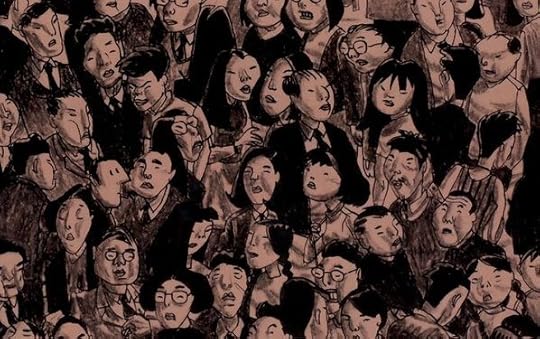
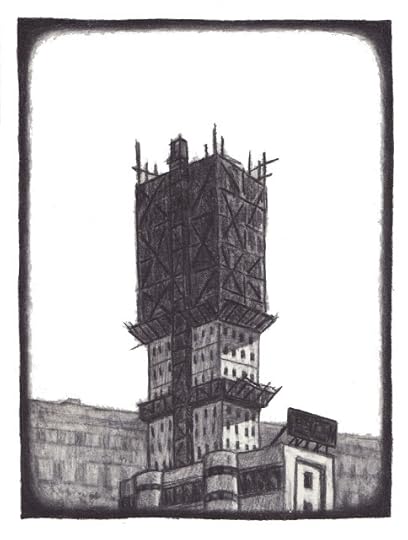
Guy Delisle captures some of the key moments of his stay at ‘Shenzhen’ – like his routine work related frustrations, mainly due to language issues, that he has with the animators, often resorting to drawing for the purpose of communications; his culinary adventures; his experiences with Chinese art books; his Christmas dinner with a colleague; his weekend trips to canton and Hong Kong; his attempts at experiencing the local sights by riding bikes; - all scrupulously through his visual narrative. He picks both moments which are trivial and moments which are socially and politically of importance from his keen sense of observation for illustrations. The artwork by Delisle is fascinating with its charm and level of detailing and his use of shadows and darkness to contribute a layer of added meaning to the frames is laudable. His skills as an illustrator are best observed in his drawings of cityscapes and architecture.
‘Shenzhen: A Travelogue from China’ can be seen as a portrayal of his intimate thoughts, reactions to alienation and personal experiences, as the level of political observations that Delisle make in this volume is too shallow when compared to ‘Pyongyang: A Journey in North Korea’. The personal disorientation that Guy Delisle feels in the cultural surroundings of ‘Shenzhen’ - which is totally new to him - is captured lively in these cartoon panels and is portrayed with a haziness of dark tones that underline this chaos.
One scene from the book, which left too much of a distaste was the way in which he represents the ‘Rural Flight’ in China metaphorically by comparing it to the Dante’s visions of ‘Inferno, Purgatorio, and Paradiso’. It felt exaggerated and born from arrogance, as his trips outside the ‘Shenzhen’ and to Chinese countryside were too limited to form such opinions.
His attempts in understanding the culture, life and people by relating them to his own experiences back home cause further confusion and this offers the reader a unique viewpoint of observation. This candidness and straightforwardness may make the reader feel the narrative being obnoxious and insensitive but it is those elements which make reading Guy Delisle’s works a different experience.
This is another wonderful account by Guy Delisle of working in a bizarre and off-the-beaten path in his animation job. Having been to Shenzhen, I can say that to the extent that I visited that polluted city, I can say that it is pretty accurate. His keen sense of observation and his sense of humor as well as his great and original artwork are a pleasure to read. As with his other books, this one is excellent!
While I couldn't articulate it myself, this excerpt from a review by The Guardian's Michael Faber is exactly on point on both Pyongyang and Shenzhen -"Both books are arguably diminished by lack of respect for non-western mindsets and traditional values. At times, Delisle seems to believe that good coffee, hi-tech gadgets, acid jazz CDs and sexily dressed women are crucial to an evolved society, and that the communal responsibility celebrated by collectivist cultures is worthless. There's always a risk that disdain for an oppressive regime can cross the line into disdain for people too poor to be cosmopolitans."
کتابی مفرح و جذاب و گاهی غریب! خوندن سفرنامه واقعا لذتبخشه، اون هم سفرنامهای تصویری و کمیکوار! شیوهی نوشتن ایشون هم خیلی خوبه. خیلی روزمره و عادی دربارهی چیزهای کوچیک زندگی در کشوری غریب! بسیار صمیمی. مرسی از نشر اطراف برای آشنا کردن من با این شیوه از نوشته!
یه جاییش هم هست که یه ارجاعی میده - به صورت تصویری - به تن تن و نیلوفرآبی و پیدا کردنش لذتبخش بود!
اگر بخوام با کارهای دیگهی گای دولیل مقایسه کنم، خیلی ضعیفتر بود هم از نظر بصری و کیفیت طراحیها و هم از نظر سفرنامهای و خنددار بودن و یا حتی آموزنده بودن بقیه هم در این مورد گفتن، سرعت پیشرفت عجیب غریب چین باعث میشه این سفرنامه یه جورایی به درد نخور و خیلی خیلی قدیمی به نظر بیاد، مطمئنا این اتفاق برای سفرنامه کره شمالی یا فلسطین نمیافتاد. ولی خب نویسنده هم از اول سفر خیلی دل و دماغش رو نداشته و یه جاهایی مشخص هست خسته و کلافه شده. در هر صورت باز میشه جذابیتهایی ازش پیدا کرد و باهاش خندید.
پانوشت: طرح جلد رو با جلدهای دیگه در دنیا مقایسه کردم، فکر کنم طراح جلد ایرانی خواسته به خواننده در پیدا کردن چهره نویسنده کمک کنه ولی بدجور گند زده، صورت این یه نفر رو برداشته سفید کرده. (انقدر سفید آخه؟)
As a kind of comics completist, I seem to to need to read all or most of the works of certain artists. This is one I had not read, and probably deliberately, since I had not liked his Burma and North Korea books. DeLisle worked in a studio for a few months in Shenzhen, a place he did not like, not speaking Chinese, getting to know no one. He makes it clear that this experience did not endear him to China, though he visited Canton and liked that better. And Hong King, because he could speak English there! And yes, he liked the food in China, his favorite part, okay. And he's a very good artist who developed some more self-deprecating skills about his parenting that I found nakes him a bit more friendly, if not endearing. But I didn't even like his Hostage or his book Factory Summer, about his work as a teen in a factory.
The work almost always falls flat for me, but as I say, I have loved some of his books and always find his artwork inviting. There, I read it. At least this wasn't a scathing and angry review, as my Pyongang review really was. Will I read his next work? You know, I probably will. He's a fine artist.
حس شرمندگی و حتی عذاب وجدان دارم که توی این شرایط دارم کمیک میخونم، ولی واقعا جز اینکار کوپینگ مکانیسم دیگهای ندارم:( -------------‐-------- دو ستاره : یکی برای طراحیها که بد نبودن هرچند سبکشون کمی تکراری و یکنواخت بود، و دومی برای حس روزمرگی و غریبیای که به خوبی توی داستان گنجونده شده بود و همچنین کمی بامزگی. به غیر از این، احساس کردم با عینک بدبینی و "غربیِ متمدن" داشت به همه چیز نگاه میکرد... درباره چیزایی که بنظر من جدید و جالب بودن غر میزد و انتظار داشت همه بتونن باهاش انگلیسی حرف بزنن(چهل سال پیش، اونم توی یه شهر درحال توسعه)! بصورت پیشفرض وقتی داریم یه جای جدید سفر میکنیم باید یکم آمادگی برای پذیرش فرهنگ جدید و همرنگ جماعت شدن و انجام دادن کارایی که برامون عجیب و نامفهومه رو داشته باشیم ولی گی دولیل رفته چین و همش دنبال آمریکا میگرده اونجا:/ یچیزی هم که خیلی اعصاب خردکن بود، این بود که برای نشون دادن اینکه همه جا چینی نوشته و خودش هیچی نمیتونه بخونه، همه جا کاراکتر های چینی گذاشته، مثلا روی اسم ساختمونها یا حتی دیالوگهای چینیها و بجای اینکه واقعا کلمات معنیدار چینی بنویسه، یهچیزای نامفهوم من درآوردی نوشته، میتونست از ینفر که چینی بلده کمک بگیره یا خیلی کارای دیگه، برای مثال میگه امروز رفتم بانک، بعد روی تابلوی بانک به چینی نوشته شده " بلیط، استفاده" یا میگه دوست چینیم داشت جوک برام تعریف میکرد، بعد چیزی که به چینی نوشته اینه: سیب مستقیم جلوی گمرک اصلی ساده هزینه نیلوفرآبی ! هاهاها!
من به صورت کلی کمیک خیلی دوست دارم؛ سفرنامه هم همینطور و این کتاب مخلوط هر دو بود. نمیدونم خود نویسنده چهقدر تلاش کردهبود که بامزه و جالب بهنظر بیاد، اما من بعضی جاها خیلی بهش خندیدم؛ به بدشانسیها و شرایط بیدلیل و مضحک سه ماهی که در چین بوده. زیبا بود.
سه و نیم. کلاً بهچشم سفرنامه نخوندم چون برای بیست سال قبله. بیشتر برای سرگرمی بود و سرگرمیِ خوبی هم بود. دوساعته تمومش کردم. یکونیم امتیاز رو از غرهای فراوان و انتظارات عجیبش (اینکه همه انگلیسی بلد باشن) کم کردم.
Guy Delisle is not happy in China. He is not cramped by minders and translators as he was in North Korea, but he is still bored in his time off. He yearns for someone who can speak his language. He has access to translators, but their proficiencies are low.
His best vignettes are about bicycle riding in packs with other aggressive riders, about spending Christmas with a thoughtful host, and about he relief this trip to Hong Kong brought him. There are a few workplace stories, such the animator who attempted to bribe his approval with Big Macs and then resorted to pictures of herself that she might have considered erotic.
This book is better than the one on Burma. It reads more smoothly that Pyongyang, but while each episode is more pithy than the ones for Burma, overall, the Shenzhen book has less content than the others.
This "Guy" is a schmucky schlup. Same old travelogue style but with a narrator who seems to go out of his way to not connect with the locals. I didn't like the drawings and I didn't like this guy as a person. Laughing about eating dogs and cats and people falling down/getting hurt is not my idea of comedy. It's all been done before and much better written/drawn and by more like-able creators.
PS: I just figured out this is the same guy who did the Burma Chronicles which I really liked. Seems like he matured quite a bit in the years since he went to Shenzen.
ça a tellement mal vieilli et c'est tellement infusé de racisme ordinaire que je ne m'aventurerai pas à noter la BD lol c'est bien fait bien bidouillé bizarrement fascinant malgré l'absence totale d'action et l'atmosphère est très saisissante mais alors gros sayer le niveau de remarques racistes et autres dogwhistles..................... je crois entièrement en la bonne foi de Delisle qui était juste en mode "observateur extérieur je raconte ce que je vois" et qui était inconscient de ses biais racistes mais gros sayer c'est pas pour autant qu'on va fermer les yeux mdrrrrrrrrrrrrrrrrrrrr
This is the third travelogue I am reading from Delisle. I have been already a fan of his work. After reading his Pyongyang and Burma Chronicles , I have been intently looking for his other work. They are hardly available here. :( But today has been a lucky day. I found some of the graphic novels from my cherished want-to-read list. :D It must be a blessing O:)
On my way from work to home, I was pondering over Delisle's work. They are not mere travel stories because Delisle is not seeing things just as a tourist. Rather he is showing us things as a guide from various countries he had to stay for his projects and work. we can trust this guide because he is going to show us both the dazzling and vulnerable sides. And you can see it in his comics - he is not only showcasing the tourist spots and the bright sides of the country. Rather he gives an image of how does it feel to be in a foreign country where you are staying for your work and little by little you get to know the locality, its culture. How it amazes you, awes you and even pisses you off sometimes.
And you can realize that many of the oddities of your country that piss you off every now and then - are more or less present in the cities of these countries too.
I read this in 2012 at Livraria Cultura bookshop in Sao Paulo. Being overwhelmed by the Southern Hemisphere's biggest city at the time, this book about someone else's culture shock was soothing reading. Graphic novels were about right for my Portuguese level, and I was also drawn to this book as I had lived in China on and off from 2001 to 2007. I was already familiar with Shenzhen, as it was a convenient stop-off for me between Shanghai, where I worked for a time, and Hong Kong, where I got visas. I probably stayed in the wrong part of town, the Louhu border area was very sleazy in those days. In any case, I didn't become a big fan of the city.
Delisle doesn't try to candy coat things and tell us what a great time he's having. He describes the loneliness of being in a very foreign culture and how apparently simple things can become complicated in China. This is set in 1997, 25 years ago - but it might as well be a 100 considering how much Shenzhen has changed.
I liked his relatively basic black and white drawings, although he could have done better with Shenzhen's developing cityscape. It's rare to find a graphic novel which really does urban landscapes well - this one is accomplished, but nothing spectacular.
When somebody speaks Chinese in the book, the speech bubbles are full of random Chinese characters and sentence fragments. I get the Chinese characters are there primarily to show Delisle's incomprehension and linguistic isolation - but he could have asked a Chinese person to help him write real sentences. Or maybe he had nobody to ask - or nobody he trusted at least? I just got Delisle's Pyongyang out of the library - that and reading 'White Faced Lies' a new graphic novel set in China, got me thinking about this book.
I definitely found this relatable in some aspects, but I have to agree when the author himself says that it "doesn't seem like the kind of trip anyone would want to read about."
Shenzhen: A Travelogue from China is a graphic novel diary of the time Guy Delisle spent working in Shenzhen in 1997. I lived in China on and off for 4 years in total, and spent 10 months living and working in Shenzhen myself, so I was interested to see how his experiences in the city differed given that he lived there 20 years before I did.
One thing I totally found myself relating to was his desire to escape Shenzhen at the weekends, where he was attracted to the culture in Guangzhou (did people really still call it Canton in 1997?!) and buzzy Hong Kong - somewhere he found himself blending in to the crowd. I also found Shenzhen stifling, frequently bemoaning its lack of sights and history, and I too felt after visiting Hong Kong that "the thought of going back to Shenzhen [was] depressing". (I feel compelled to add that I don't feel this way about any other city in China, Shenzhen is just a weird and kind of soulless place.) I think any foreigner who has spent an extended time in China will end up staring out of a window and asking themselves "what the hell am I doing here?" as Delisle does at one point in the book.
So, I liked that I could relate to some of his feelings and thoughts. But I felt equal parts frustrated with his observations and thoughts about China and Chinese people. Yes, it is frustrating when nobody speaks English, but, you know, you could always make an attempt to learn Chinese. At no point does he even appear to try to learn the language, or even make fumbling attempts using a phrasebook. I don't know, this is just something I find maddening. Just because English is one of the most widely spoken languages in the world, doesn't mean you should expect everyone to have a command of it!
Delisle also makes the oh so unique observation that Chinese people eat everything and that some of those things are gross. Did he stop to consider why people act this way? Lets just say.. don't expect any deep cultural insights from this book.
This actually kind of reminded me of French Milk (another graphic novel cum travelogue) - nothing more than basic observations about people's behaviour, people he meets and his work (he's an animator). Yes, being in China in 1997 (the handover happened that year! It must have been super interesting to be there then, right? Yet there is no mention of this at all) must have been kind of wild, but just because something happens abroad doesn't mean it's necessarily noteworthy or profound. Delisle seems to spend most of his time going to the gym and lying on his hotel bed.
Ultimately this was pretty disappointing. It held my interest - probably due to my personal connection with the topic - but there isn't much to write home about here.
This was a second travelogue written by Guy Delisle after Pyongyang: A Journey in North Korea. The plot is almost identical to Pyongyang. Guy Delisle goes to Shenzhen, China to work on an animation project for 3 months. But unlike Pyongyang, Shenzhen: A Travelogue from China is totally devoid of any political snippets. The only thing Delisle writes in his travelogue is about the cultural shock experienced by him on his 3 months long stay in China.
I would rather recommend reading Burma Chronicles first if you have never read anything by Delisle. Then perhaps Pyongyang and Shenzhen; in no particular order.
One consistent thing you will find in all of his works is that humor is very good and you would actually laugh out loud at least a couple of times while reading each of them.
And the most important part is that his sketches are exceptional. Even if you are not into these type of stories, the books are more than worth to look at to admire his art.
Un Delisle ancora acerbo nel suo primo reportage a fumetti - tre mesi in Cina per lavoro sul finire degli anni Novanta - lascia però intuire l’ironia, l’arguzia e la capacità di osservazione del Delisle che verrà.
This is another illuminating travelogue from Guy Delisle, who was sent to Shenzhen in 1997 to work on an animated TV show. (As he explained in his book Pyongyang, a lot of animation work was being done in Asia.) Guy spent several months in the southeastern city, during which he felt lonely and isolated. He described Shenzhen as a modern city that is near Hong Kong, but it had few bilingual Chinese, and there wasn't a university or cafe for him to meet young people interested in the West.
Guy's drawings are in black and white, and this book was darker and more melancholy than his other graphic travelogues. He wrote that there were days he didn't speak a word to anyone, and his routine was so tedious that it felt like time was standing still. It was interesting that he referenced Dante's descent to Hell, and he put Shenzhen in the middle of the descent. Of course, this is his Western point of view, and he admits that for the Chinese, the big cities are desirable places to live compared to the country because they offer more job opportunities.
Guy did have one amusing exchange with a Canadian tourist in a bar. Guy, who is also Canadian, shares his opinions about Canada's cultural identity. He says the big problem is that no one knows where the northern border ends: "Hudson Bay? ... The Arctic Circle? ... After that, it's all ice. You can't even tell if there's ground underfoot! How can anyone expect to know where they're going in a country that has no north?" The scene ends with the poor tourist gaping open-mouthed at Guy, unsure how to respond to his rant.
There are several pages devoted to Guy's experiences going bicycling in Shenzhen. which is a popular mode of transport. He said he had to put away his culturally ingrained politeness when biking, because Chinese bicyclists ride close together and frequently cut in to any open space. In several breathless images, he describes riding in a large group of cyclists: "Before reaching the hotel, the street slopes gently for a half mile. You can let yourself go; nobody pedals. The visual effect is disturbing since we're all stationary but moving forward. I get the strange impression that the street itself is moving. It's like the world is spinning under our wheels without managing to pull us along."
Guy made an effort to take side trips to other cities in the region, and his favorite seemed to be a trip to Hong Kong, which he described as a "tropical New York." He was thrilled to speak English for a weekend, to visit cafes, record stores, bookshops and movie theaters. And then he was sad when he had to return to his lonely hotel room in Shenzhen, wishing it was easier to travel to Hong Kong more regularly.
During one sightseeing trip, he talks with his translator about places they'd like to visit. Guy realizes how much more freedom he has compared to his Chinese translator: "When I think that all I've got to do is buy a ticket. I can go where I like... We hardly ever stop to notice how amazingly free we really are."
Las historias de ilustradores occidentales que se van a pasar una época a algún lugar de Asia y hacen un cómic sobre ello se han convertido prácticamente en un subgénero dentro de las historietas que a mí, personalmente, me maravillan. En los libros como estos se suele hablar del choque cultural, de las dificultades de la comunicación, de curiosidades culturales y de otros detalles que salpican la experiencia del autor y que sirven como marco para narrar la historia de esa estancia. Hasta ahora yo siempre he visto en estas historias interés en lo desconocido, ganas por descubrir al otro y fascinación por la cultura ajena. Pero nada de eso se encuentra en Shenzhen.
Guy Delisle cuenta en este cómic los meses que pasó trabajando en un estudio de animación de una ciudad provinciana de China, cerca de Hong-Kong. Desde el primer momento deja claro que este trabajo es algo que no le apetece hacer y que el cómic que elabora durante esas semanas es una forma de matar el tiempo. Pero en realidad, en mi opinión, la elaboración de este libro es un desahogo a lo terrible de ese encargo, a lo poco que le gusta la ciudad y a las ganas que tiene de que esa experiencia acabe para volver a su casa. En este libro no se ve ningún aprecio por la cultura china, a la que se trata con una mezcla de condescendencia, paternalismo y repulsión. Incluso los episodios que cuenta habrían sido de gran interés si los hubiera enfocado desde el humor, la curiosidad o, al menos, el respeto... pero su narración es tan amarga que hace muy difícil que un lector pueda disfrutar de algo que él ha odiado.
هرچقدر "سرزمین مقدس" جذاب بود، شینزن خوب نبود. شاید چون تجربه اول نویسنده بوده و حدود بیست سال قبل نوشته شده (تاریخش رو دقیق نمیدونم، گمونم نوشته بود سال دوهزار رفته شینزن) نفاشیها کاملا مشخص بود که نسبت به سرزمین مقدس، خیلی ابتدایی و غیرحرفهایه. داستان و روایتگویی هم همینطور؛ مدام می گرید و خواننده رو سردرگم میکرد. خیلی اطلاعات خاصی هم درباره شهر نداد جز چند مورد. سیر حرفهای شدن رو تو کتابای دولیل کاملا میشه حس کرد
Guy Delisle is a Canadian animator-cartoonist who's based in Paris and who does very quiet, lovely travelogues--- often with a hidden bite. His "Pyongyang" and "Burma" are heartfelt and powerful. "Shenzhen" is his account of a long job assignment in Shenzhen, the Chinese city just north of the Hong Kong "special zone". Delisle makes no pretense to a "deep understanding" or special knowledge. He's in Shenzhen to work on animation projects, and knows almost nothing about China. But what he does is capture not just his own isolation but the dislocation of a city being industrialised and modernised at a frantic pace, amid a population that's diving headlong into China's new century, amid a culture that's building up its own imaginary sense of what "modern" means. "Shenzhen" is charming, disorienting, and rather funny. Rather worth a look.
این کتاب میشه دومین کتابی که از این نویسنده خوندم و به نظرم یکبار خوندنش برای هر کسی میتونه جالب باشه، هر چند خودم از «پیونگ یانگ» به خاطر اون فضای خاص کره شمالی و اطلاعات عجیبی که از اون کشور دستگیرم شد بیشتر خوشم اومد.
در مورد نوع نگاه گیدولیل هم به نظرم به چینیها تو بعضی موارد، نگاه بالا به پایین یا حتی نگاه به بیگانه داره یا حداقل من اینطوری حس کردم، هر چند از طرف دیگه هم میشه این شوخیها رو به حساب لحن کمدی این نویسنده گذاشت. اما دارم به این فکر میکنم که اگه گیدولیل به ایران میاومد و خاطراتش رو به صورت کمیک طراحی میکرد و من اون کتاب رو میخوندم، چقدر از این نگاهش به فضای اجتماعی ایران و مردم ایران خوشم میاومد؟
Diğer kitaplarıma göre çizgileri biraz daha karanlık, siyahı bol olmuş bir 3 ay. Çin hakkında ezelden beri okuduğumuz her şey aşağı yukarı aynı aslında. 1. Baskında; 5/6 sayfa bomboş, baskı hatası sanırım. Umarım dünyanın sırrı yazmıyordu o sayfalarda ya. Yoksa valla üzülürüm.
Except for Amy Tan and Pearl S Buck books read long long ago and a biography called Wild Swans , this is my first arm chair visit to China ... Shenzhen was a new place to me.. and I was astonished to know China is dirty and crowded .. I was under the impression, despite its population it wouldn't be crowded as it is a huge country .. and I also was under the impression the rich nation will be clean and hygienic . Loved seeing China and it's people through Delisle's eyes and brush strokes .
I don't have much to say about Guy Delisle's Shenzhen. It's a travelogue set in China's special (artificial) economic zone, Shenzhen. Based on my own experience, I'd say it's also rather dated, depicting a 1997 society in a country that evolved in the past decade faster than any other country in world history.
Overall, I'd instead recommend reading Pyongyang for your dose of delisle-tful humor. (The latter is also rebellious with a cause, whereas Shenzhen falls rather flat.)
The graphical assortment is in typical Delisle style, simplistic but rich in local flavor. We get samples from Shenzhen, Canton, Hong Kong, and a few of the seedier places around the world; the latter are a product of Guy's desire to leave Shenzhen.
There is also the usual assortment of quirks and funny local situations, but much less targeted and enthusiastic than in Pyongyang. Delisle seems to feel the locals are rather well off when compared with other Chinese, and definitely vs North Koreans, so he places Shenzhen at most as the second wrung from Heaven (in a humorous parallel with Dante's descent to Hell, see p.38). The workers are eager to please but culturally inept, willing to work but technically poor, and interesting as much as clones can be (Delisle has visited China before). There's little interaction with the locals as English is a scarce commodity in one of the most business-like corners of China (again, it's 1997). The rest seems chaff.
My main issue with this book is it's snarky depiction of a society that perhaps does not exist anymore. From my own work- and leisure-related trips to China, which include Beijing and Shanghai, and from my daily interaction with Chinese Ph.D. students, I have seen another culture taking shape in international cities in China: more Westernized (although claiming more strongly a national identity), more English-speaking, more professional. Less Delisle's North Korean and more our daily Seattle, WA, US and even Paris, FR. I may be wrong here.
I read Delisle's Pyongyang travel-log some time ago and loved learning about his time in North Korea. I was expecting pretty much the same thing with Shenzhen, and, in a way, I did get it. The art style was the same, as was the way of telling his experiences. But I felt like he didn't really do much of anything in China other than work. He did visit Canton and Hong Kong, but that's pretty much it. So Shenzhen wasn't that interesting - much of the anecdotes shared felt a bit forced, like Delisle was trying really hard to find anything he could to make his graphic novel longer. That's not his fault, of course, but it does make it harder to engage with the book. Still, with all of that taken into consideration, it's always good to see someone's perspective of a different culture and I do like his sense of humor.
I am a big fan of Guy Delisle's sketching style,his sense of humor and observation skills. I think I am up to date on completing his collection so far by reading this book. I appreciate his honest portrayal of a typical western mind when it comes to understanding a different cultures. Even though no amount of prep work or education will prepare you for a culture shock, not very many westerners make a sincere attempt at doing just that before their trip to a country or even during their stay there no matter how long the stay is. Guy doesn't pretend that he did all that and he does not appy any filters or sanitation in portraying his experiences in the name of not being offensive. It is raw, honest and funny.