This revised and updated edition includes a preface that references the atrocities of Oct 7th.
Since September 11th, 2001, the Western world has been preoccupied with Islam and its role in terrorism. Yet public debate about the faith is polarized—one camp praises "the religion of peace" while the other claims all Muslims are terrorists. Canadian human rights activist Yasmine Mohammed believes both sides are dangerously wrong.
In How the West Empowers Radical Muslims, Yasmine speaks her truth as a woman born in the Western world yet raised in a fundamentalist Islamic home. Despite being a first-generation Canadian, she never felt at home in the West. And even though she attended Islamic schools and was forced into a marriage with an Al Qaeda terrorist at nineteen, Yasmine never fit in with her Muslim family either. With one foot in each world, Yasmine is far enough removed from both to see them objectively, yet close enough to see them honestly.
Part Ayaan Hirsi Ali's Infidel, part The Handmaid's Tale, Yasmine's memoir takes readers into a world few Westerners are privy to. As a college educator for over fifteen years, Yasmine's goal is to unveil the truth. When you use term "Islomophobia", who are you really protecting? Is the hijab forced or a choice? Are groups like ISIS and Hamas a representation of "true" Islam or a radical corruption? And why is there so much conflicting information? Like most insular communities, the Islamic world has both an "outside voice" and an "inside voice." It's all but impossible for bystanders to get a straight answer.
Through sharing her own life experiences and insights, Yasmine navigates the rhetoric and guides truth-seekers through media narratives, political correctness, and outright lies while encouraging readers to come to their own conclusions.
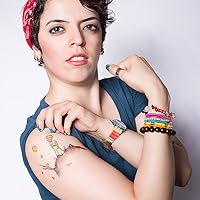
Canadian human rights activist Yasmine Mohammed advocates for the rights of women living within Muslim majority countries, as well as those who struggle under religious fundamentalism anywhere. Yasmine is the founder of Free Hearts Free Minds, the only non-profit organization dedicated to supporting those who renounce Islam across the globe, especially those within Muslim majority countries where the state-sanctioned punishment for leaving Islam is execution. Today she lives in Canada with her two daughters, who let their gorgeous hair flow, and with her loving, supportive husband who had no idea what he was in for when he married her almost two decades ago. Meet Yasmine at www.YasmineMohammed.com.
An important book at this point in history. Simply put we western feminists need to put our fears aside of being labeled as racists and bigots because our sisters in Muslim majority countries are anticipating our support.
If these horrible atrocities can happen to a girl child in Canada, one can only imagine what’s happening in countries where women have very limited to no rights.
Yasmine’s memoire throws light on our own hypocrisy. Our western values are there to build up female empowerment, lgbtq rights, freedom of speech, etc, but somehow in our zeal to be tolerant, we are unwittingly supporting extreme far right wing ideology of fundamental Islam. It’s time to get our liberal values in check again, and start defending the minorities within minorities... such as women, lgbtq people, and freethinkers.
Good luck to you Yasmine, it was obvious from your story that you are still healing. My best wishes to you!
The subject of the book is very difficult, but the book itself was easy to read. The author tells her personal story, adding general information about the situation in Muslim-majority countries, showing that her story is not unique, but is actually common around the world. Her personal story of abuse is a specific illustration of a general trend. She, however, was born in Canada, and she was betrayed by the Canadian court in the name of political correctness. It is hard to imagine that such things happen, let alone in the West. It is even harder to learn that the West allows and even supports it. I will not say much about the appalling abuse the author has survived – you can read about it yourselves. I will rather mention some of the takeaways for me from this book. The first is how wannabe feminists & liberals are failing those who need them most in the name of PC, cultural sensitivity & religious freedom. How they are being nothing but racist out of fear to be perceived as such. If a child is white, she should be protected from abuse. But if she is "brown", of Middle Eastern or foreign origin, then let her be abused! They only care about women and LGBT rights as long as fundamental religious feelings are not concerned. When white western women of Christian descent are abused, it is wrong; when it happens to Muslim, brown, Middle Eastern, or immigrant women, "it's their culture". People who want to consider themselves liberal should avoid double standards. People who claim to oppose racism should apply the same standard to all people, of all races. "All little girls bruise, regardless of ethnicity". All women & girls should be protected, not only white ones. Denying some girls protection because of their ethnicity or culture is nothing but racism. Cultural sensitivity is hurting minorities within minorities, e.g. women & LGBT living in Muslim communities. Saying that abuse is ok if it is done by someone from a foreign culture or within a minority community is actually saying that it is ok to hurt a person as long as they are Muslim (in this case). The case when the narrator was denied protection by the authorities and handed back to her abuser to keep abusing her is just one example of the general mindset of pseudo-liberals & pseudo-feminists. Another one is the typical reaction of the "liberals" to any attempt to criticize or reform the state of affairs in the East (Muslim-majority counties). People doing so are often labeled "Islamophobic" or "racist", even when they are themselves Muslim or represent an ethnic minority! Western (often white) people feel entitled to tell them what they should and shouldn't say about their own cultures! Do they really believe that only western women deserve rights & progress, while others shouldn't even try to reform their societies? Who are they to tell women of Islamic background that criticizing their own culture is racist?! Another takeaway is the following: "With no legitimate problems to overcome, they [young Western women] invented problems so they could fulfill their desire to solve them". When there seem to be no real issues for them to solve, they make some up! But there are real problems for them to solve! They just don't want to address some issues out of fear, so they invent some fake ones to look busy and distract themselves & others from their inactivity. This way they look like activists without having to do any real work & without the risk of facing any real, potentially dangerous consequences. Unlike the ones they betray. They celebrate the brave Western feminists of the past, yet ignore contemporary feminists in the East. True feminism & liberalism must be global: we can't fight abusive practices in the West while supporting them in the East. The author brings up the role of the internet & social media in connecting with other people, getting information and transforming lives. With internet as common as it is today, ignorance is now a choice. The books reminds us that these ideas of misogyny, homophobia and hate travel across borders. People who move to another country do not magically change their mentality once they cross the border. It is important to not demonize the entire faith, but we should not let our fear of sounding insensitive make us betray Muslim liberals & liberals in the Muslim world. We should not allow them be tortured and abused & their voice to be silenced in the name of political correctness, cultural sensitivity & fear of hurting someone's feelings. Living people should be more important than religious sentiments. Criticism does not equal 'hate'. Pointing out the negative aspects of a system of belief is not "bigotry". Denying someone protection from abuse justified by that belief is bigotry. Let us come together on the basis of ideas, not identities.
In the acknowledgements in Unveiled: How Western Liberals Empower Radical Islam Yasmine Mohammed thanks Ben Affleck "most of all" for his "off the rails tirade" on Bill Maher's show Real Time for inspiring her to take up activism and ultimately write this book. Affleck called fellow guest Sam Harris' strong criticism of Islam (not Muslims) gross and racist. (Since when is criticizing a religion "racist"?). No matter whose side you fall on, this book is worth reading. Once started, it is hard to put down. The book’s notes state that it is part Infidel (I need to read this) and part The Handmaid's Tale. She pulls no punches in her criticism of fundamentalist Islam and western liberals who fail to recognize the true nature of how these unenlightened patriarchal societies treat women.
I've heard Yasmine on a couple of podcasts so I knew bits of her story prior to starting the book. Although she was born in Canada, she was raised in a strict fundamentalist Islamic home. She ended up moving to and from Egypt a few times growing up as she was subject to the whims of her highly irrational mother. Her mother and fathers (referred to as "uncles" in Canada where a woman can only have one husband) were very strict and were advocates of corporal punishment (on parts of the body where teachers couldn't see the marks) and mental abuse, all in the name of and in accordance to Islamic laws. The slightest mistake would be enough to trigger a flogging, usually with hands and legs tied, and one time hanging from a hook. Seriously. Life didn't get easier as a teenager and young adult under her mother's roof. Her mother treated her as an enemy. Imagine having someone who says they hate you pick your future spouse. The chapters about her life in Egypt as a young Muslim girl were equally interesting and poignant. Much of her life story is hard to read. You'll cringe when you read what happens after a teacher in Canada discovers that she is being physically abused. Spoiler alert: human rights abuses are OK if they are "cultural norms.".
In addition to telling her life story, Yasmine attempts to shed light on the Quaran which I've never read but should, and in the final chapter, Hope, she calls out the western liberals who are doing more harm than good by not addressing the harm done to women who are treated as property in these radical patriarchal societies. My favorite quote from this chapter is as follows: "Barbie, once a beacon of femininity and feminism, now dons a hijab so she won't entice men who might rape her. Marks & Spencer, one of the UK's largest department stores, and Banana Republic sell hijabs for girls. The free West, where these brave girls used to look to as a beacon of light and hope, is supporting their oppressors and ultimately fighting against their progress. In Saudi Arabia, woman are burning their niqabs. In Iran, women tie their hijabs on sticks and way them silently, defiantly in the streets as they are arrested in droves. In the West we put a Nike swoosh on hijabs.
Five stars for this brutal, eye-opening book. What an strong and brave woman.
I picked up this book after listening to Yasmine on Sam Harris’s Making Sense podcast. Halfway through that podcast I sent it to my family. Immediately finishing it, I picked up her book. Thirty-six hours later I finished it.
What a compelling story, one much in the vein of Ayaan Hirsi Ali’s Infidel. Most terrifying is she endured many of Ayaan’s worst troubles, but in Western Canada, not Somalia. These stories of women living in devout Muslim households are always heartbreaking. The pain of that ideology was all the more amplified by a psychotic mother.
Also heartbreaking was the Canadian system’s inability to help her. Sexual misconduct, severe domestic abuse, and general oppression were ignored due to the unfortunate support for moral relativism. Yasmine clearly and passionately paints the picture that those most wanting to undermine racism are those perpetuating it: the Canadian government would have quickly extricated a white child from such an abusive household, but because Yasmine was Arab, such abuse was legally permitted. Different treatment based on race—is this not the definition of racism?
In her words: “People in Muslim majority countries are just trying to progress their culture in the same way Western culture have. You have been able to abolish slavery. You have been able to fight for women’s equality. We just want to do the same. Why is it that when we try to progress, suddenly it’s a bad thing? We get called Islamophobic for criticizing Sharia and pushing for change. Why should we have to retain our misogynist, homophobic cultures? Cultures… are meant to be changed with human progress. That is not a bad thing. It was not a bad thing for you and it is not a bad thing for us.”
While this is and important message and subtitled on the book (“How Western Liberals Empower Radical Islam”), these notes were secondary to the immersive and honest biographical narrative. You follow her from childhood on as she shares her most private thoughts. This is to include those which are naive and embarrassing in hindsight. She discusses her handicap in much of what it's like to live a normal life, and her slow triumph to recover decades later.
Yasmine’s story is not a typical one; I’d guess a small minority of Canadian Muslims go so far as to dress with full niqab. But many of her experiences are not atypical either, especially for women in Islamic nations. Uncountable #freefromhijab tweets and similar stories underline the oppression that women feel the world over. Blatant double standards, objectification, and persecution of women are not uncommon, and are often the norm in many of these countries; she cites research that 99.3% of Egyptian women report being sexually harassed. The Pew research on Sharia and apostasy, which I've read elsewhere, are likewise jaw-dropping.
You should read this book. It is one of my favorites this year. If you will not, please at least listen to Yasmine on Episode 175 of Making Sense. You will not regret it.
View my best reviews and a collection of my mental models at jasperburns.blog.
The style and honesty are worth two stars. It's that the author takes horrible instances of abuse and claims it's all of Islamic thought behind it rather than the parent's abuse and sect behind it. It paints a biased look that, instead of focusing on the horrors of abuse and abuse of religion, pushes a stereotype weaponized by all sides.
To say "my Muslim parents abused me greatly and this is what I want people to understand" is entirely on the level. Claiming all families are like the authors and saying "because Islam"fuels lies and hate.
As a young girl Yasmine had a horrid upbringing. Her mother was relentlessly oppressive (psychologically and physically). She actually got married against her will and had a child (daughter) thinking that finally her mother would accept her – maybe even love her. She finally, after many years, realized that this was never going to happen – and gathering all her strength, and her daughter – left.
It took her several years to reconstruct herself and to realize the paradigm of Islam and the familiar severe constraints that had surrounded her was all a mirage. She removed her burqa and then her hijab.
As she mentions, if she had not been raised in a Western democratic city (Vancouver, Canada) this breakthrough and liberation would have been far more difficult, indeed lethal.
She upbraids Western society for providing too many exceptions to the Islamic religion. As she says (page 270) “Religious rights cannot supersede human rights.” As a young teenager in high school she appealed to the authorities (via her high school) to be placed in a foster home because of the brutality (physical beatings and sexual abuse) that was inflicted on her by her mother and step-father. She wanted desperately to leave this horrible situation, but was refused. The “authorities” gave the reason that corporal punishment was permissible in certain “cultures”. As she says, if she had been from a culturally “Canadian” household she would have been removed to outside care and criminal charges could have been brought against her mother and step-father.
I could not help feeling as I was reading this that not all Muslims undergo an upbringing that the author underwent. The last time I was at the hospital I was interviewed and examined by a young female Muslim intern whose parents obviously valued her and educated her.
But this is a powerful account of young girl who maintained her individuality and developed the resilience when she became an adult to escape her cultish rigid upbringing.
Page 39 (my book)
In whatever culture, if Islam is the dominant religion, there are variations of the word eib (shame) being spat at girls…Girls are all hearing this because the families honour lies with the girls in the family – specifically between the legs of the girls in the family.
Girls are how the level of a man’s or his family’s honour is measured. The more control he has over his wife and daughters, the more honourable he is. It is his responsibility to guard his family’s honour by making sure the women in the family dress modestly by covering themselves up in hijab, and that they act honourably by keeping their voices low, keeping their eyes downcast, by being demure. The most important aspect of honour is a girl’s virginity. It must be guarded at all costs. Girls must not ride bikes, horses, or engage in sports lest the hymen break.
An important book that deals with an issue that must be discussed in an ethically responsible fashion.
I heard about Yasmine's story a year or so ago, via online discussions in a variety of podcasts. I was familiar with some aspects of it with regards to her dealings with religious dogma and her journey both towards atheism and a free life here in the West. The read was an extremely difficult one as she detailed out significant events of her life dealing with the abuse/horror stemming forth from Islamic fundamentalism. The sad thing is that her story is not a unique one, with many other women subject to the same conditions that made her life a living hell. The book is an extremely important read as it shines a light on those suffering under human rights abuses in the name of religion. Between the outright bigotry on the political Right and self-righteous sanctimony on the Left(hence the title), necessary conversations regarding Islam that must be discussed in nuance have become nearly impossible. In addition to Ayaan Hirsi Ali's Infidel, this book is a way to stir the conversation forward in a defense of both the people who do not fall into the fundamentalist camp and the liberal values of free-thought, feminism and religious freedom we hold dear in the West. Highly recommended read.
Yasmine was very brave in writing this book and I want to be clear about how much I respect her. But, at the same time, I very much feel like that this is NOT the book it is marketed to be. The title of this book is absolutely a misnomer. It is very, very much a personal memoir. Her discussion of “how western liberals empower radical Islam” is pretty much limited to a few brief, sardonic asides about white guilt and a handful of stats.
Plainly, this book is a memoir, and Yasmine fails to offer much meaningful commentary on the tension between Western liberalism and radical Islam because the book is so entrenched in her personal experiences. I don’t mean to suggest that her personal experiences aren’t meaningful, or worth writing about—they are, and there’s certainly a market for that (it just isn’t me). But yeah, if you’re going to market this book in the way that it has been marketed, that’s a pretty big failing.
The thing that I kept thinking while reading this book is that, well, you could take the account of any girl from any fundie Christian family and probably have a lot of very similar material. The one difference being, liberals are lots more comfortable condemning one of these two narratives, although as I said, Yasmine’s treatment of this very real phenomenon is so abbreviated (and so flippant) that I really have trouble understanding why the book is subtitled as it is?
Again, I don’t mean to sound unsympathetic to Yasmine or the abuse she endured, AT ALL. But this book presents a very bold thesis, and the evidence presented by this book in support of this thesis just isn’t sufficient. I’m not making any comment on the rightness or wrongness of this thesis, just saying that the contents of this book fail to prosecute the case compellingly.
(FYI, for what it's worth, I find that there is a much more thoughtful, balanced discussion of Islam, liberalism, and the tension therein is contained in the book Islamic Exceptionalism by Shadi Hamid. Although rather less gripping than Yasmine's book, I do think it's well worth a look if the lack of data and analysis in this book was a real sticking point for you too.)
When the feminists, of the first world nations, couldn't find a real issue to fight, they channelized their energizes into made up causes of equality like Free The Nipple movement. They failed to see and appreciate that their is no dearth of women who are crying out for help in their own backyard. Women who are being sacrificed in the name of religion, customs and family honor.
When feminists of the free nations campaign for and celebrate the Hijab Day. When prominent brands come up with products which lauds the custom of hijab and sanctify it in the popular imagination as religious and personal choice. It feels like a blatant insult of the handful women who are putting their lives at risk by saying no to hijab in Iran, Iraq and other Islamic nations. A disrespect to all those women who want their voices to be heard and usher in the new Era where they can have a fraction of the personal freedom enjoyed by their sisters in western countries.
Stories like this are to be told in an effort that we as a society look hard within us and take an honest stock of ourselves. To ensure that what happened to Yasmine and what is happening to many innocent child like her across the world should not happen to any other kid anymore. But stories like this are still not easy to narrate and it is definitely not easy to read and accept that human beings are capable of so much hate, depravity and brutality.
Yasmine's story is not an isolated case. When the first world nations, who take a high moral ground on all issues related to human rights, are silent on any rights violation wrt one community, it seems farcical. It's even more disconcerting when challenged they chalk it up to religious freedom and conveniently look the other way.
The author throughout her narration posed so many legitimate questions that if the self proclaimed protectors of human rights, the self styled warriors of social justice and are very own dear feminists, all of them were put on dock, they would be unable to look themselves in the mirror anymore.
“Religious rights should never supersede human rights”.
This book is great, not because it’s well written (it’s actually not) but because it’s true. As an ex-Muslim born and raised in a Muslim majority country, I can tell you that every word in this book is the literal truth. It’s such a shame that the western culture is learning towards drooling over Islam and calling everyone who doesn’t agree an “Islamophobe”, but it’s only because they haven’t lived through the horrifying pain and torture of Islam.
Next time I’m in an argument with someone that’s defending this ridiculous religion/culture, I’m gonna ask them to read this book.
Oof. Reading the life of Canadian ex-Muslim activist Yasmine Mohammed is quite affirming in the power of personal strength and the reformative perdurance of reason, but also a wake-up backhand when it comes to the inadvertently censorious nature of discussions of Islam faced by the true reformers within the religion and culture. These thoughts have also been well-articulated by Ali Rizvi, Asra Nomani, Maajid Nawaz, and Yasmine Mohammed contributes a harrowing personal account of these issues.
Growing up in a fundamentalist household with a depraved mother, depraved polygamous and vacant father, constant physical and psychological abuse, abandonment (literally abandoned in Egypt at one point), constant demonization, all culminated in a forced marriage to an Al-Qaeda operative, no, this is not an exaggeration. This story is told in a very direct and raw fashion that not only serves to make the notion of this happening in a "Western" society (Canada) all the more shocking, but also admittedly is being used as a cathartic experience for the author. Good for her and we are all better for being able to understand at least a portion of this experience.
The concluding notions on how to properly engage with this issue - especially for those of us who have no place, identity or history in that culture/religion - and the resources available to those who feel trapped in the same manner the author did will likely have an ameliorative effect for many. The temerarious tendencies of many when discussing this issue results in this either devolving into sheer bigotry or just being an undiscussed "hot-button" issue, Yasmine Mohammed breathes an air of fresh fire into this debate and does so with a personal story that we all wish couldn't still be true, but needs to be heard.
What a powerful book. Kudos to Yasmine for narrating her experience. While a memoir might sound like a walk in the park, 'Unveiled' is not a typical one. I understand that the author still faces risks for writing and publishing her memoir. I wish I could be as brave as Yasmine.
'Unveiled' also questions Western liberals for their silence and sometimes complicit behavior in encouraging regressive and medieval practices.
This a must-read book, especially for those in the West.
More of a book about her life and experiences than the social commentary I was expecting. However the former was possibly more impactful on me as it happened in my own backyard; Canada. It’s easier to read about how bad things are when it’s not happening in your own world. This book is a real eye opener and I think it would do a lot of people good to read this. At the very least it presents a second side to the debate, one that is often drowned out in PC culture.
This is a short book, about 85,000 words at a guess, but I read it in short bursts because it is both unremittingly grim and, at the same time, quite off-putting. It fails in its claim to show 'how western liberals empower radical Islam'. If you are attracted to this book by its subtitle, I think you you would be far better off looking at 'Double Bind: the Muslim Right, the Anglo-American Left, and Universal Human Rights' by Meredith Tax (New York, Centre for Secular Space, 2012).
Yasmine Mohammed is justifiably angry that the Canadian social services failed to remove her from an abusive family, but she falls short of establishing that this failure was a result of a cultural relativism in the care service that holds Muslim households to lower standards of parenting. After recounting abusive practices in Muslim majority countries, the author demands that the authorities in western countries protect girls in their jurisdiction from "the barbaric and archaic families and communities that engage in such atrocities" (p. 49). However, her argument is that Islam is inherently abusive, stating "the sexual exploitation of children is, unfortunately, sanctioned by Islam. […] the practice of raping children is not taboo but actually revered" (p. 48). This is to make every Muslim family in the west suspect by virtue of their religious affiliation; the crimes of her abuser are turned into crimes of a community. This is an illiberal approach.
In a rousing closing chapter the author disparages young western feminists for their preoccupations with what has come to be known as 'everyday sexism' (see p. 272) while Muslim women endure corporal and capital punishment and FGM. Let's be clear, western feminists supporting campaigns against FGM have been at the forefront of drawing a line against a cultural relativism that tolerates physical abuse of women. They have led the way in discussing what cultural differences can be acceptable in liberal democracies and in asserting that FGM is not acceptable on cultural or religious grounds. However, the far right also take an interest in what cultural differences are acceptable and the author takes little account of the way her generalisations about Muslim communities may be received by racists only too ready attack Muslim communities.
As well as physical and sexual abuses, Yasmine Mohammed is angry about being forced by her mother to wear a hijab to school: "I walked into my first year at school with a rag on my head" (p. 72). It is fine for the author to raise the question over whether the hijab should be considered unacceptable in the liberal west - it is open to discussion. However, I find it uncomfortable, given that "rag-head" is a term of abuse used in the UK, that her language seems to normalise racism. That helps no-one.
This is such an important book. Thank you to Yasmine for having the courage to tell her story and for pushing on feminists and liberal people (which I consider myself to be) in western countries to understand more about the oppression so many Islamic women and children face and what they must endure. The last chapter is very thought provoking. She also does a great job on podcasts if you prefer to hear her story in that format. I just finished the fiction book A Woman is No Man and this book is a great nonfiction follow up to that one.
5 stars for the concept. As an ex-Mormon (a church where modesty is heavily emphasized for young women, though not to the extent that their lives are in danger), now liberal in pretty much all the ways, I am baffled at the way Islam has become an icon of freedom and feminism in the West. WHAT? Are you kidding me? Modesty laws NEVER EMPOWER WOMEN. Especially when the doctrine states that they can be killed for not upholding those laws. So you say women should have the choice to wear whatever they want, and when it’s Christians preaching modesty or buying into that bit of rape culture, you rally against it. Where is the choice for women in the Middle East? Or even in the West, when their religion is emphasized to an extreme? It is infuriating. Women who’ve never personally faced dogmatic patriarchal religion cannot completely understand. We should be fighting the dangerous misogyny, not supporting it. We should not perpetuate and accept the shaming of women and package it under “feminism” “liberalism.” When culture and religion is damaging and dangerous, yes we SHOULD question it. I was brainwashed too. One thinks it’s a choice. But one only thinks that because of the myths taught to them which say that women should be hidden. What does that lead to? Men blaming women for their own crimes, male-led groups and congregations, silent and terrified women, who look to the west and see other women flaunting the fact that they do have a choice, rather than fighting for the ones who don’t.
This is not something we should be celebrating in America.
The author’s story of reporting her own abuses as a child, and being turned away by the judge because he refused to disrespect the family’s “culture”... it’s harrowing. If you didn’t feel chilled by that, I’m surprised.
It is Muslims who are most hurt by Islam.
True empowerment will be the death of religion, the death of brainwashing, the death of any unhealthy and powerful group.
Note: 4 stars because it wasn’t the best writing; read more like a series of blog posts. That didn’t make it any less interesting, but it wasn’t 5-star quality, necessarily.
The author's honesty and traumatic life was heartbreaking to read about it. It definitely reflects the lives of a lot of muslim women. She speaks about issues like FGM, forced marriages and honor violence which is very taboo still. However, she seems to project her trauma onto Islam and blames the abuse onto it which doesn't make sense. This abuse mainly stems from culture and narcissistic parents, Islam plays no role in it.
No respectable muslim scholar asks a parent to abuse your child and put them through such physical harm. I'm not denying such scholars might exist but they aren't very qualified and only gain high status in countries due to their cultural norms. Polygamy is not allowed if a man is unable to fulfill the rights of both wives. Also understanding the Quran and it's meanings is strongly encouraged, only certain cultures focus solely on memorizing it and reciting it without knowing the meaning. I believe it's important to talk about the abuse in muslim communities and countries but the blame on Islam sprinkled here and there was quite annoying.
The author grew up in the west where she was disconnected from Islam and the only exposure she gained was through her abusive parents, who distorted it blasphemously to fit their agendas. She would have shed these misconceptions if she talked to an actual muslim scholar. Also I thought the book would mention something like foreign funding of terrorist groups but there isn't really much in there about that or how liberals empower such people, it's more focused on the author's personal life. She seems like a strong person who overcame a lot but the misconceptions about Islam are a serious flaw in her. She also seems to have the naive notion that western feminists can improve the conditions of eastern women through collaboration. This might be possible but western feminism which demonizes islam has been used as an excuse to carry out imperialistic projects and destruction in countries like Afghanistan. No collaboration between women in muslim countries and western countries is possible if they continue to demonize Islam and look at us through an imperialistic lens
3.0 Stars Yasmine is such a survivor. I really admire her from a personal perspective. She has endured a tremendous amount of abuse at the hands of her narcissistic religious mother and al-Qaeda member ex-husband. The stories she tells in this book are heart wrenching, and the fact that she was able to get out at all is extraordinary.
However, while that makes this work a decent memoir, it does not really address the topic that is half the title of this book: how the west empowers radical Muslims.
This topic, which to be frank is the main reason I purchased this book, is addressed, but really only in passing. Yes, we get a few sentences here and there, but never is the topic addressed with the kind of substance and urgency it deserves. The Ben Afflek story at the beginning (that is revisited in the end) is interesting and very illustrative of the problem, but we get very little past that; just a sentence here or there. I’m actually surprised this was not caught by her editor, the miss is so agregious.
If you are looking for a book about a woman’s escape from fundamentalist Islam and all of it’s misogynistic horrors, you will likely find this book to your taste. But if you are looking for a discussion on the problem of the far left becoming a de facto (even if inadvertent) apologist for misogyny, oppression, brutality, religious extremism and even terrorism under the guise of ´tolerance for other cultures’, then you cannot rely on this volume as serious source material.
Yasmine clearly has a lot to offer on this topic. In fact, she’s probably an expert. Pity she didn’t really get around to imparting that knowledge to her readers to any great extent.
"Unveiled" is a book about liberal white racism. It's also an amazing book, half a thriller about Yasmine Mohammed's being forced into niqab and marriage to an ISIS operative and how she fought her way to freedom, half the story of how we liberals in the West, obsessed with our idiotic identity politics, confuse Islam with a race and, insanely, celebrate the violent oppression of women.
Islam is not not a race -- Islam and Christianity are religions, with no racial or ethnic connection, and as my liberal and ex-Muslim friends point out, if you think Islam is a race, you're a racist -- it renders racist liberals incapable of registering violence and oppression against women when the women are brown like Yasmine and the anti-women violence and oppression are carried out by brown people.
It turns out we liberals -- and I'm a hardcore liberal, like Yasmine -- are infected with this insane racism. It almost killed her. She made it out alive. But it maims, destroys, kills other women, and men, in the Muslim world and in Muslim communities elsewhere. If you're a liberal who fights, as we should, tooth and nail against Mike Pence and the Catholic Church's oppression of women when they're Christian and white but suddenly, when Muslims are doing the violence and oppression of women, you go insane and support the same oppression of women when they're brown "because it's their culture," all their blood, all the harm, is on your hands.
Yasmine Mohammed—I salute you for your strong desire to live and to live with freedom, love, and happiness. I solute you for your strong desire to map your own life. I solute you for making it your life mission to be the ambassador of the ex-Muslims from every tribes, every continents and every toxic family’s environments so that their individuals and collective struggles could be heard, so that they too would have a chance to map their own life. You bare your soul naked and vulnerable for the world to see and judge you. What you did was courageous and commendable. You are a hero in my eyes. You have convinced me that I must get off from the fence, the silent observer and to join the fight against the misconception that Islam is a religion of peace, against the like of Ben Affleck of the world, and to bring awareness to the plight of ex-Muslims because I am, one of you.
This was one of the most difficult books I have ever read. I postponed reading it because I knew how painful and triggering it would be. I knew I had to be strong to read it and not want to give up. In all fairness, I started reading this book months into the Revolution that’s ongoing in the Islamic Republic of Iran (after Zhina Mahsa Amini’s death) and I have been pretty raw already. I just wanted to do right by this book. But all my preparations didn’t matter at the end. My trauma, the trauma I share with so many ExMuslims, the suffering we have had to endure at the hands of Islam and Muslims cannot be wished away by preparing oneself. This was a painful read for me. It was personal and real. It was so difficult and yet, it was liberating to know I am not alone. Yasmine gives us a voice. She keeps fighting when you think you can’t fight anymore. She is resilient and strong and one of us. Her pain, her life is so familiar to me. There were parts where I had to pause and remind myself that no, I have never talked to her. I didn’t tell her about this. She doesn’t even know I exist so this isn’t ’my’ story and yet it is! It is my story. And my cousins. And my aunts. And my mom. And my grandmas. And so many millions of women in Iran and Afghanistan. And I cried. I cried. And I cried. I am not sure how Yasmine ever found the strength to write this book and to share her story but I am so grateful to her, to her story and to her unapologetic fight for us all to have a voice and a representation when the whole world seems so intent on silencing us. When nobody wants to hear our stories and our pain. When we are brutalized and assaulted and raped and imprisoned and murdered again and again, and all we hear in response to our pain is silence. Yasmine is breaking this silence. This is our story. Thank you for writing it, Yasmine. Woman, Life, Freedom زن، زندگی، آزادی
Thank you Yasmine Mohammed for writing down your story for the whole world to hear! Thanks for advocating for the rights of women living in Muslim majority countries and in Muslim communities in the West. Every woman beneath the Hijab has her own story and this book gives hopes to all the women who have been subjugated and dehumanised because of Islam. Sad that we women are the victims of misogyny just because we're female. You'll learn a side of Islam that is rarely talked about but many experience. An inspiration for everyone. Powerful, insightful and touching. 💜 #FreeFromHijab
Yasmine's story is a heartbreaking one. To read about the abuse she endured and how she still came managed to break away and make a life for herself is awe-inspiring. These are the women whom Western feminist need to help. It's too bad they're failing them.
Wish more books like these are written to normalize the criticism of Islam. I still do not understand why Islam is given privileges denied to most other religions. We are all so used to jokes about Jesus and Ganesha but when Muhammad is ridiculed, it is considered going too far. Why does Islam still receive this special treatment?
Yasmine's story is everything bad you have heard about Islam put together. The title is rather misleading, as the book really mostly talks about Yasmine's story in a Muslim household and her way out of Islam. Only the last chapter addresses how western liberals are actually stifling women rights in Islamic countries by supporting the very things that oppress these women. Evidently, there are many more women in Islamic families with similar stories. It would greatly help for the reform of Islam if many more such stories were to get published and receive widespread attention.
Review: A book I read in one sitting because it was that good. Everyone should read this book. I am in awe at the strength and bravery of Yasmine, but also so sad and disgusted at what she’s been through - trauma beyond what I’ve ever read or thought possible. What is even more striking is that this abuse and years of physical torture happened in Canada.
Far beyond a story, book was also very informative and allows us to approach societal issues with religion in a more productive way - one that has compassion protects the minorities within minorities. The political argument from this book goes like this: we cannot let violence and mistreatment happen to people, on the sole basis of “cultural differences”, otherwise you are treating people differently based on ethnicity - the very basis of racism. For example, we need to condemn religious homophobia the same way we’d condemn any other homophobia (rather than allow homophobia to happen simply because of religious freedom), or protect children who are being abused even if their abuse is informed through religion or culture.
Yasmine argues that it’s essential to criticize religion and culture, otherwise we do not make progress. For example, the culture of western society has become less sexist, homophobic, and racist throughout the years because we’ve criticized it and pushed for change. If we refuse to criticize parts of a different religion or culture that discriminates again women, LGBT, etc. (for the sake of cultural safety) then we are saying the women/ other minorities within that culture do not matter as much as the minorities within our own culture. This is definitely distinct from the current viewpoint in society.
Quotes: “He (Sam Harris) and Bill Maher began the conversation by lamenting the fact that liberals are failing to stand up for liberal values. Bill recounted how his audience would raucously applaud for principles like freedom of speech, freedom of religion, and equality for women, minorities, and LGBT, but the applause would abruptly halt if anyone mentioned that these principles were not being upheld in the Muslim world. Sam added that liberals are happy to criticize white theocracies, Christian theocracies, but they fail to criticize the same evils in the Muslim world. He clarified that Islam, the religion (a set of ideas) was very different from Muslims, the people.”
“I was taught that the light I clung to was actually the devil. Imagine being told that who you are is evil. What you love and connect with is evil. You try to change who you are. You try to be good and worthy of God’s love, but you never can because you are evil. That constant struggle is debilitating. It crushes your soul and your will to live. This is why ex-Muslims relate to people in the LGBT community so much, especially those who grew up in religious households. We know what it feels like to be told that the core of who you are is evil. Ex-Muslims use phrases like in the closet and come out because they are equally fitting. The plight of a Muslim gay person, a double whammy, has to be the worst possible scenario. A Muslim, gay woman—that has to be the worst fate possible.”
“How disgusting to allow a child to be beaten because her abuser happens to come from another country! What has that got to do with anything? All children should be protected. It doesn’t hurt children any less physically, emotionally, or psychologically if they’re from a different culture. Beatings and sexual abuse are equally damaging to all children, whatever their culture.”
“People that have devoted their lives to protecting children are being forced to actively leave children to continue to be abused because their government is hell-bent on cultural and moral relativism. The need to seem woke supersedes the need to save actual children from abuse. In their effort to be “culturally sensitive,” my own country ended up being viciously bigoted toward me instead. I knew that if I had come from a family of “white” parents, I would have been protected. This is the typical result of regressive-left thinking, when their minds are so open, their brains fall out. They only see the skin colour or the ethnicity of the perpetrator, not the acts they commit. If a white person refuses to bake a wedding cake for a gay couple, everyone will yell bigotry and assert that it is unacceptable. But when bakeries with Muslim owners refuse to bake cakes for a gay couple? The response is deafening silence. It’s their culture, and we have to respect their beliefs—unless you’re an Islamophobic bigot. There is no greater stupidity or double standard today. We need to look at the action, the incident, not the skin colour or ethnicity or religion of the person performing the action. That is irrelevant. An immoral act is immoral regardless of who is doing it! We should all criticize bigotry, misogyny, child abuse, and other acts against humanity. Why do we care who is doing it? It’s all equally wrong. It’s the most heinous racism of low expectations if you do not hold all human beings to the same standards.”
“This evil man, who I would later learn was involved in bombings that killed hundreds of people, a man who had been involved in the largest terrorist court case in Egyptian history—second only to the court case around the assassination of President Anwar Sadat—had more of a heart than my own mother.”
“I was used to being stuck between wanting my mother’s love and wanting to be as far away from her as possible, but these days I was leaning more toward wanting to be away from her. When I held my baby girl in my arms and felt this foreign surge of love flow through me, I finally saw everything from a different perspective. I suddenly could not imagine how my mom could have been so cruel to me for all these years. I would not hesitate to protect my daughter without regard even for my own life! How could she have done all those things to me? How could she have stood idly by as I was tortured by the men she brought into my life? How could she have not protected me?”
“We had this bond that was so immediate and so undeniable, regardless of how many times I pulled away, it was as if he just wouldn’t humour me. He ignored all my skittishness and just continued being amazing to me. He effortlessly rolled with the punches and jumped through all the hoops. I was so used to being logical and factual and ignoring my heart and feelings—it was the only way I could survive. But he was making me want to listen to my heart. I had to go through therapy to learn to trust again. And, eventually, I let him in. I let go of all my fear, anxiety, and trust issues, and just let myself fall in love.”
“People in Muslim majority countries are just trying to progress their culture in the same way Western culture have. You have been able to abolish slavery. You have been able to fight for women’s equality. We just want to do the same. Why is it that when we try to progress, suddenly it’s a bad thing? We get called Islamophobic for criticizing Sharia and pushing for change. Why should we have to retain our misogynist, homophobic cultures? Cultures are not sacred — they are dynamic. They are meant to be changed with human progress. That is not a bad thing.”
“I hope that people will start to assess one another and deal with one another based on ideas and not identities. I hope that when people meet a girl being beaten by her family, they won’t bow down to the ethnicity of her parents. I hope they will realize that all little girls bruise, regardless of ethnicity. I hope they understand that justifying the beating because of the ethnicity of her parents will condemn her to a life of physical and psychological torture that will stay with her until the day she dies, regardless of the colour of her skin. I hope they will choose to protect the child rather than a faceless, nameless culture or religion that is undeserving of protection. Religious rights cannot supersede human rights. I hope they will understand that doing so is not only gross and racist, it is inhumane.”
“We accept and willingly support the subjugation of our sisters to the East, even though we would never accept that for ourselves or our sisters in the West. Here, we demand that women be able to “free the nipple,” but we support those in the East who demand that women “cover their head.”
“And most of all, thank you to Ben Affleck. If he hadn’t had that off-the-rails tirade on Bill Maher’s show, I likely never would have even bothered to take up this activism. After watching him rant incoherently at Sam Harris, I could not help but feel the same way Elaine must have felt, I am sure, in that Seinfeld episode where everyone was eating finger foods—including chocolate bars—with a knife and fork. She stood up and yelled: “Have you all gone mad?” It was that feeling that propelled me into this world. How could I sit idly by as I was surrounded by people who were just being ridiculous? I needed to tell them that it was not Sam who was being gross and racist, it was Ben. He was the one who was treating people differently based on their ethnicity—the very definition of racism.”
This was a tough book to get through. There are only so many pages of child abuse, rape and psychological torture one can stand. I had to read it in small doses. But make no mistake, I had to follow the story to the end.
To say I feel bad for Yasmine Mohammed is an understatement. No one should have to live what she lived through. As a father, I cannot imagine hurting my children the way Mohammed's mother hurt her, both physically and mentally. But if I am to trust her words, that is the norm in fundamentalist Islam.
I have Muslim acquaintances. They are not fundamentalists. They don't wear hijabs, they treat their children like any other parent would, and the daughters seem to be treated as equals to the sons. So my view of this religion, at least the modernized Western version of it, was that it seemed fine to me. But as Mohammed points out in the book, there is a vast difference between Westernized new-age Muslims and old school Fundamentalists. And many of the latter live in North America.
I am not religious but am infinitely interested in Religion as an idea. It has shaped our planet in so many ways. Some good, some definitely bad. I firmly believe in a separation of Church and State, but I don't begrudge anyone their right to worship as they see fit. Do what you want as long as you are not hurting anyone else and as long as everyone is consenting (I do have issues with the indoctrination of young children but that's a whole other issue). It's when religion is used as a tool of oppression that I get upset about it. Which is why I wanted to read this book. I wanted to see how our supposed "woke" society only furthers certain oppressive aspects of religion.
Do we as a society see a woman in a hijab and simply think, well, that's their religion and we must respect it. Or do we see a woman in a hijab and think, she's being forced to wear that against her will. Or is it somewhere in between? I don't know. But as Mohammed explains in the book, there are many women in those hijabs who don't want to be there. And if they voice that opinion it could result in their death. So many of them pretend to like it. Many of them have been forced to marry someone they don't love but pretend to be okay with it. Many of them are forbidden from simple pleasures such as TV, and music and even reading, and must experience these things only when no one is looking (Mohammed's family was not even allowed to take pictures). And, according to Mohammed, many of them live right here in North America. This was definitely an eye-opening read that will have me wondering about those women I see in hijabs out in public.
There are, however, some negatives to the book (and why I'm knocking it down a star). The title, I hate to say it, has almost nothing to do with the story. This is an autobiography of a woman who was raised in fundamentalist Islam in Canada. Only a handful of times does she illustrate how western liberals (and really, it's not just liberals, it's just western society in general) let her down. Perhaps the most illustrative moment is when she finally builds up the courage to ask a teacher for help, to pull her out of her house where she is being beaten and raped by her step-father for not memorizing passages from the Quran (all while her mother watches). After being taken away by social services, it is finally decided that the state has no right to interfere in a family's religious "freedoms" (i.e. torture routines) and Yasmine is returned home, only to receive some of the worst beatings of her life. Beyond that, there isn't much else that fits the title. I originally picked up this book because I was interested in the social commentary aspects of it all, but alas, they are non-existent. Secondly, there were a few times in the book that I felt religion had nothing to do with her plight. Her mom trying to sleep with her husband, for instance. I don’t think that was a religious issue. I think her mom was just an abusive psycho, and fundamentalist Islam gave her free reign to embrace her sadism. Had these moments been followed up with similar examples from other women, it would have lent more credence to it being a religious issue.
In the end, don’t read this for answers as to how Westerners enable Fundamentalist Muslims, but rather to experience one woman’s horrible upbringing in a fundamentalist home (and culture) and how she finally managed to escape. I hope other women in this type of situation can get out as well.