

What do you think?
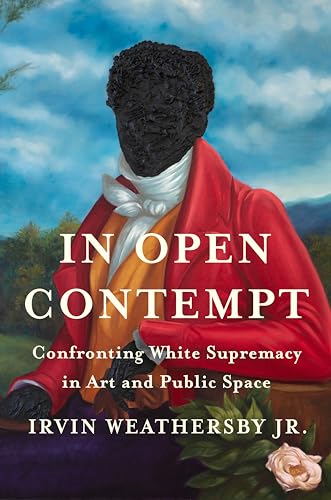
In Open Contempt: Confronting White Supremacy in Art and Public Space
A stirring journey into the soul of a fractured America that confronts the enduring specter of white supremacy in our art, monuments, and public spaces, from a captivating new literary voice
Amid the ongoing reckoning over America’s history of anti-Black racism, scores of monuments to slaveowners and Confederate soldiers still proudly dot the country’s landscape, while schools and street signs continue to bear the names of segregationists. With poignant, lyrical prose, cultural commentator Irvin Weathersby confronts the inescapable specter of white supremacy in our open spaces and contemplates what it means to bear witness to sites of lasting racial trauma.
Weathersby takes us from the streets of his childhood in New Orleans’s Lower Ninth Ward to the Whitney Plantation; from the graffitied pedestals of Confederate statues lining Monument Avenue in Richmond, Virginia, to the location of a racist terror attack in Charlottesville; from the site of the Wounded Knee massacre in South Dakota to a Kara Walker art installation at a former sugar factory in Brooklyn, New York. Along the way, he challenges the creation myths embedded in America’s landmarks and meets artists, curators, and city planners doing the same.
Urgent and unflinchingly intimate, In Open Contempt offers a hopeful reimagining of the spaces in which we can pay tribute to our nation’s true history.
Amid the ongoing reckoning over America’s history of anti-Black racism, scores of monuments to slaveowners and Confederate soldiers still proudly dot the country’s landscape, while schools and street signs continue to bear the names of segregationists. With poignant, lyrical prose, cultural commentator Irvin Weathersby confronts the inescapable specter of white supremacy in our open spaces and contemplates what it means to bear witness to sites of lasting racial trauma.
Weathersby takes us from the streets of his childhood in New Orleans’s Lower Ninth Ward to the Whitney Plantation; from the graffitied pedestals of Confederate statues lining Monument Avenue in Richmond, Virginia, to the location of a racist terror attack in Charlottesville; from the site of the Wounded Knee massacre in South Dakota to a Kara Walker art installation at a former sugar factory in Brooklyn, New York. Along the way, he challenges the creation myths embedded in America’s landmarks and meets artists, curators, and city planners doing the same.
Urgent and unflinchingly intimate, In Open Contempt offers a hopeful reimagining of the spaces in which we can pay tribute to our nation’s true history.
256 pages, Hardcover
First published January 7, 2025
Ratings & Reviews
Friends & Following
Create a free account to discover what your friends think of this book!
Community Reviews
Displaying 1 - 30 of 131 reviews

December 15, 2024
A really ambitious debut book that mixes memoir with cultural reflection. The questions here are so good and compelling. Some of the structure is confusing or clunky—needed a touch more focus. Overall interesting with some fantastic bits.

January 24, 2025
"The denial of justice is so common that grief becomes ritual "
America is racist and loves to show its racism through monuments. Every couple of years the government is shamed into removing some of them to placate people. If they actually cared about these matters it wouldn't take a brutal murder of Black person to do it.
In Open Comtempt is part a memoir of the author and part a history of racist government sanctioned art. It's a quick read and it didn't make me as angry as most nonfiction about racism does. Maybe it's because the author is more hopeful about this country then I tend to be but I did end this book feeling something less than horrible.
I only picked this book up because of its beautiful cover. But I'm happy I did. It's a quick and easy to read for non history readers.
I highly recommend this book
America is racist and loves to show its racism through monuments. Every couple of years the government is shamed into removing some of them to placate people. If they actually cared about these matters it wouldn't take a brutal murder of Black person to do it.
In Open Comtempt is part a memoir of the author and part a history of racist government sanctioned art. It's a quick read and it didn't make me as angry as most nonfiction about racism does. Maybe it's because the author is more hopeful about this country then I tend to be but I did end this book feeling something less than horrible.
I only picked this book up because of its beautiful cover. But I'm happy I did. It's a quick and easy to read for non history readers.
I highly recommend this book

February 12, 2025
"That's the thing with museums and art and public space, how they tend to overlap in purpose and symbolism, how art, when executed in concert with the natural world, raises the stakes and evokes sensations more powerful than can be felt in isolation. This is the force of monuments: they exist equally within the laws of location, time, and imagination. This is why they command our attention, if only we pause long enough to appreciate the experience." (p. 20)---Irvin Weathersby Jr., "In Open Contempt"
I'm not presumptuous enough to know what the average white supremacist thinks, nor can I offer a good explanation as to why white supremacists so vehemently oppose the destruction of memorials that glorify murderers, rapists, and slaveowners, although I can hazard a guess that it has something to do with the fact that they don't give a shit that these memorials offend the sensibilities of rational-thinking people, especially if those people happen to be non-white.
I can only presume to know how I---a non-white (which may be debatable to some, as I am, technically, half-white) person---feel about racist memorials: I think they need to be taken down. I don't like monuments that support or glorify racist systems or memorialize truly atrocious people.
Then again, I am not speaking from a black experience, nor as a person with a black body. I have never experienced that type of racism.
Irvin Weathersby Jr., a black man, has, of course, simply by being an American, experienced---and probably continues to experience, that type of racism. The black experience, and the contemplation of black bodies, is a constant for him. The American legacy of white supremacy is everywhere one looks. White people---and those of us who "pass" for white---take it for granted. Many people don't have this luxury.
Weathersby's book "In Open Contempt: Confronting White Supremacy in Art and Public Space" is a memoir that also straddles a fine line between art criticism and an anti-racist call to arms against the negative legacy of America's history (and policy) of white supremacy.
Whether one is protesting a statue of Jefferson Davis in a city park or visiting Monticello, Thomas jefferson's palatial estate in Virginia, the opportunities to speak out and enlighten others about white supremacy's still-powerful stranglehold on our culture abound.
Thankfully, according to Weathersby, consciousness is rising. More public spaces and memorials are revamping or offering a clearer "revision" of the official record, one that often mitigates or simply ignores the suffering of non-white Americans.
Sadly, pushback is inevitable. The next four years, especially, are going to be a trying time for non-whites, as white supremacy just got a stamp of approval during the November 2024 election. We must continue to be vigilant and protest racist policies.
I'm not presumptuous enough to know what the average white supremacist thinks, nor can I offer a good explanation as to why white supremacists so vehemently oppose the destruction of memorials that glorify murderers, rapists, and slaveowners, although I can hazard a guess that it has something to do with the fact that they don't give a shit that these memorials offend the sensibilities of rational-thinking people, especially if those people happen to be non-white.
I can only presume to know how I---a non-white (which may be debatable to some, as I am, technically, half-white) person---feel about racist memorials: I think they need to be taken down. I don't like monuments that support or glorify racist systems or memorialize truly atrocious people.
Then again, I am not speaking from a black experience, nor as a person with a black body. I have never experienced that type of racism.
Irvin Weathersby Jr., a black man, has, of course, simply by being an American, experienced---and probably continues to experience, that type of racism. The black experience, and the contemplation of black bodies, is a constant for him. The American legacy of white supremacy is everywhere one looks. White people---and those of us who "pass" for white---take it for granted. Many people don't have this luxury.
Weathersby's book "In Open Contempt: Confronting White Supremacy in Art and Public Space" is a memoir that also straddles a fine line between art criticism and an anti-racist call to arms against the negative legacy of America's history (and policy) of white supremacy.
Whether one is protesting a statue of Jefferson Davis in a city park or visiting Monticello, Thomas jefferson's palatial estate in Virginia, the opportunities to speak out and enlighten others about white supremacy's still-powerful stranglehold on our culture abound.
Thankfully, according to Weathersby, consciousness is rising. More public spaces and memorials are revamping or offering a clearer "revision" of the official record, one that often mitigates or simply ignores the suffering of non-white Americans.
Sadly, pushback is inevitable. The next four years, especially, are going to be a trying time for non-whites, as white supremacy just got a stamp of approval during the November 2024 election. We must continue to be vigilant and protest racist policies.

April 7, 2026
i’m drawn to books like In Open Contempt: Confronting White Supremacy in Art and Public Space by Irvin Weathersby Jr. because they sharpen the act of seeing.
not just looking, but confronting what our vision reveals: the art, the monuments, the street signs that shape our everyday landscape.
it’s about naming white supremacy as it exists both in the monumental and the mundane.
Weathersby moves through this with care and precision, weaving the personal with cultural critique in a way that feels both intimate and expansive.
not just looking, but confronting what our vision reveals: the art, the monuments, the street signs that shape our everyday landscape.
it’s about naming white supremacy as it exists both in the monumental and the mundane.
Weathersby moves through this with care and precision, weaving the personal with cultural critique in a way that feels both intimate and expansive.
![Profile Image for laurel [the suspected bibliophile].](https://i.gr-assets.com/images/S/compressed.photo.goodreads.com/users/1645808644i/7494844._UX200_CR0,6,200,200_.jpg)
March 23, 2025
An exploration of physical spaces and art, and how white supremacy infuses each. A lyrical, often meandering work that invites the reader to sit and think in their discomfort, to contemplate the art that moves them, the spaces they walk through.
This is a lot of memoir mixed with some art history and critique. A lot of poignant thoughts mixes with a ton of what-if scenarios and lived history. Do I think that it could have been more focused in places? Yes. Do I feel it was at times a bit too self-indulgent in the what-ifs? Also yes. Do I understand why these narrative choices were made? Absolutely.
I listened to the audiobook, but I think that the print book has pictures of the things he's describing, which I think would have enhanced my appreciation of the artwork (he does a really good job describing them though).
Anywho, a lot to think of in terms of how Black bodies are depicted by white artists (mostly white artists) and how that influences and is influenced by, white supremacist thinking.
It's definitely an invitation to think of what histories we promote and how—from statues of Confederate leaders (traitors) to racist depictions of Black people to how placards are worded to describe the image and historical context.
This is a lot of memoir mixed with some art history and critique. A lot of poignant thoughts mixes with a ton of what-if scenarios and lived history. Do I think that it could have been more focused in places? Yes. Do I feel it was at times a bit too self-indulgent in the what-ifs? Also yes. Do I understand why these narrative choices were made? Absolutely.
I listened to the audiobook, but I think that the print book has pictures of the things he's describing, which I think would have enhanced my appreciation of the artwork (he does a really good job describing them though).
Anywho, a lot to think of in terms of how Black bodies are depicted by white artists (mostly white artists) and how that influences and is influenced by, white supremacist thinking.
It's definitely an invitation to think of what histories we promote and how—from statues of Confederate leaders (traitors) to racist depictions of Black people to how placards are worded to describe the image and historical context.

September 12, 2024
'In Open Contempt' is a timely book that challenges readers to reconsider the monuments that shape our everyday landscapes and the histories they represent. As a therapist, I found this book to be an invaluable resource for understanding how art, monuments, and public spaces can influence both individual healing, racial reckoning and societal transformation. This book is a gift—one that should be read, discussed, and held close as we continue the work of confronting and dismantling white supremacy in our world.
Weathersby takes readers on a journey across the U.S., reexamining the historical and cultural significance of monuments. This book is both a personal memoir and a broader commentary on the role of art in shaping our collective memory. Weathersby skillfully balances education with personal reflection, providing rich historical context for monuments not only in the United States but also in France and other countries he visits. He interrogates the ways in which art, especially art created by non-Black individuals, influences perceptions of Black identity and the engagement with Black humanity.
Weathersby’s personal journey, from his upbringing in New Orleans’s Lower Ninth Ward to visits to key historical sites like Monument Avenue in Richmond, Virginia, and the Whitney Plantation, adds a deeply human layer to the book. His analysis of these spaces isn't limited to their historical significance. He explores the interpersonal interactions and emotional toll of confronting these symbols of white supremacy. His reflections on sites like Breonna Taylor's apartment complex demonstrate how art transcends museum walls and becomes ingrained in the collective memory and imagination, shaping how we interpret what art actually means on a personal and community level.
One of the most powerful elements of 'In Open Contempt' is Weathersby’s emphasis on the importance of engaging with monuments and their stories as a way to understand our reality better. He reminds us that "only when we engage each other do we see things we can't physically and reinterpret the symbols." This act of engagement is critical to dismantling racism and reimagining our public spaces to reflect the true history of the nation- an ugly history but one we should not ignore. If we fail to engage, Weathersby warns, we allow racism to persist and spread, occupying even more space in our minds.
The book also touches on Weathersby’s personal connection to the art world, particularly through his reflections on artists like Basquiat and Kara Walker. His observations about Basquiat, whose immense talent and love for Black people were never enough for his critics, underscore the broader challenges Black artists face in a world that often fails to fully honor or understand them. The tenderness with which Weathersby writes about Basquiat’s struggles and untimely death demonstrates his deep respect for Black art and its power to tell the stories that monuments often erase.
One particularly moving chapter describes Weathersby's visit to the Pine Ridge Reservation, where he discusses the Crazy Horse monument with local tribe members. The monument, based on recollections from those who knew Crazy Horse, underscores the tension between historical erasure and artistic reconstruction. This exploration of Native American history and culture enhances the book’s broader theme of reckoning with America's brutal past and the importance of honoring truth in public spaces.
Ultimately, 'In Open Contempt' is a necessary book that challenges readers to reconsider the monuments that shape our everyday landscapes, the histories they represent, and the impact art has on our inner imaginary and interpersonal relationships.
Weathersby takes readers on a journey across the U.S., reexamining the historical and cultural significance of monuments. This book is both a personal memoir and a broader commentary on the role of art in shaping our collective memory. Weathersby skillfully balances education with personal reflection, providing rich historical context for monuments not only in the United States but also in France and other countries he visits. He interrogates the ways in which art, especially art created by non-Black individuals, influences perceptions of Black identity and the engagement with Black humanity.
Weathersby’s personal journey, from his upbringing in New Orleans’s Lower Ninth Ward to visits to key historical sites like Monument Avenue in Richmond, Virginia, and the Whitney Plantation, adds a deeply human layer to the book. His analysis of these spaces isn't limited to their historical significance. He explores the interpersonal interactions and emotional toll of confronting these symbols of white supremacy. His reflections on sites like Breonna Taylor's apartment complex demonstrate how art transcends museum walls and becomes ingrained in the collective memory and imagination, shaping how we interpret what art actually means on a personal and community level.
One of the most powerful elements of 'In Open Contempt' is Weathersby’s emphasis on the importance of engaging with monuments and their stories as a way to understand our reality better. He reminds us that "only when we engage each other do we see things we can't physically and reinterpret the symbols." This act of engagement is critical to dismantling racism and reimagining our public spaces to reflect the true history of the nation- an ugly history but one we should not ignore. If we fail to engage, Weathersby warns, we allow racism to persist and spread, occupying even more space in our minds.
The book also touches on Weathersby’s personal connection to the art world, particularly through his reflections on artists like Basquiat and Kara Walker. His observations about Basquiat, whose immense talent and love for Black people were never enough for his critics, underscore the broader challenges Black artists face in a world that often fails to fully honor or understand them. The tenderness with which Weathersby writes about Basquiat’s struggles and untimely death demonstrates his deep respect for Black art and its power to tell the stories that monuments often erase.
One particularly moving chapter describes Weathersby's visit to the Pine Ridge Reservation, where he discusses the Crazy Horse monument with local tribe members. The monument, based on recollections from those who knew Crazy Horse, underscores the tension between historical erasure and artistic reconstruction. This exploration of Native American history and culture enhances the book’s broader theme of reckoning with America's brutal past and the importance of honoring truth in public spaces.
Ultimately, 'In Open Contempt' is a necessary book that challenges readers to reconsider the monuments that shape our everyday landscapes, the histories they represent, and the impact art has on our inner imaginary and interpersonal relationships.
This entire review has been hidden because of spoilers.
May 5, 2025
an insightful read with the perfect balance of personal narrative and historical research! this book offered a very expansive definition of monument that I thought was interesting. I also loved learning about so much New Orleans history and understanding more about the complexities of the city. Ambitious and thoughtful!!
February 23, 2025
This book was incredibly personal. Weathersby reflects on his experiences throughout his life starting from childhood, connecting them to the way he perceives art and monuments. He describes how artists have responded to white supremacy and created works that defy racist narratives. I recommend this book to everyone. It encourages one to reckon with their local and national history to work towards a better future.

March 15, 2025
Ok, lowkey I am back to change my review (for the better). I left this feeling like I wasn't fully understanding the central thesis. Admittedly, when a book is described as having "lyrical prose," I tend to struggle to follow the narrative. After sitting with it a few days, I understand. I think this book provided some excellent tools to facilitate discussion and challenge the racist mindset that remains an ugly cornerstone of modern America, as proven by some of the reviews like this one: "the enduring specter of white supremacy is in your head," posted by "Peter Z" with one star (comments limited). I am convinced the individual that left this review is simply an illiterate review bomber, and you can see that by checking out their history lol.
I think if this person took the time to read this book (rather than just the synopsis above), they would have developed just a smidge of empathy.
I think if this person took the time to read this book (rather than just the synopsis above), they would have developed just a smidge of empathy.

May 11, 2025
Honestly - this may sound juvenile, I freely admit - the only criticism I have for this book is that for a book on art there is a severe lack of pictures!
So many monuments and art installations/pieces are discussed and referenced yet there are maybe three photos in the entire book. This really could have been elevated if some images could have been added to help the reader see what was being referenced. The author does describe them all in detail but personally I would have loved to see accompanying images, especially as a number of the exhibits are no longer being displayed.
However; it doesn’t take away from the importance of the message.
So many monuments and art installations/pieces are discussed and referenced yet there are maybe three photos in the entire book. This really could have been elevated if some images could have been added to help the reader see what was being referenced. The author does describe them all in detail but personally I would have loved to see accompanying images, especially as a number of the exhibits are no longer being displayed.
However; it doesn’t take away from the importance of the message.

January 24, 2025
I have a lot of thinking to do & a lot of traveling/visiting of artwork to do. Thanks to author Irvin Weathersby Jr. for contributing his art of writing & teaching as a way toward meeting & confronting our pasts, presents, & futures. I appreciate the conversation & the push. Recommended.


March 8, 2026
A phenomenal handshake of personal anecdote and raw history. To read this in 2026 is to feel a bone-deep ache at where we are now compared to not even a fucking decade ago. Can’t recommend this one enough.
May 2, 2026
"the denial of justice is so common that grief becomes ritual "

February 3, 2025
A necessary introspective and outrospective read.

April 4, 2026
I went into this expecting more of a focus on specifically designated art spaces like museums, galleries, and maybe even art programs. Instead, the author focuses more on public art installations - statues, monuments, and other art installations.
The author includes personal stories and experiences as a Black man and as a Black artist in these spaces. This is almost as autobiographical as it is anthropological.
There’s an interesting focus on Indigenous art that felt a little disconnected, and the timelines can be a little confusing, but they do come full circle with the return to Monticello.
The author includes personal stories and experiences as a Black man and as a Black artist in these spaces. This is almost as autobiographical as it is anthropological.
There’s an interesting focus on Indigenous art that felt a little disconnected, and the timelines can be a little confusing, but they do come full circle with the return to Monticello.

October 11, 2024
In Open Contempt is an amazing book. As an art historian, I loved the author’s exploration of physical spaces and material objects that reveal institutional racism, white supremacy, and prejudice, both subtle and overt. Irvin Weathersby investigates his personal history—the places he has lived, worked, visited—and our collective history as Americans and human beings; the result is a fascinating study that I hope becomes widely read. I loved reading about his travels through plantations and past monuments, asking questions and engaging in thoughtful dialogue—and I felt as if I was exploring and learning with him. As an educator, I cannot recommend this book more highly. Thanks to the author, publisher, and NetGalley for the ARC and the opportunity to provide an honest review.

September 7, 2026
Author and professor Irvin Weathersby Jr. begins this book with a gripping story in which he, a Black man, bravely questions some white supremacists about their decision to sit in front of a monument of a Confederate officer. What continues is Weathersby’s decision to weave together the stories of other monuments, statues, street signs, and similar visible structures and experiences throughout his own life. He digs up America’s shameful past and proves how it’s already on display. Readers will not be able to look away from these visual examples of slavery, Crazy Horse, anti-Black violence, police brutality, the aftermath of Hurricane Katrina, and much more. These examples prove that racism and oppression are still very much a part of what America is today. But there is room for hope. We must tell America’s true story and honor those that some are trying to forget. “…something beautiful can emerge here anew” (216).
I found this book last summer looking for this exact topic. I wanted to learn why so many visible structures and images that connect to racism have never been taken down, and, in some cases, are still celebrated. It took me a while to read it, but it was worth it! Weathersby not only dives into the topic, but shares his own experiences—from an arrest to being a Black professor in a mostly white male world to the opening hook—as a Black man in public space. Beautifully written!
I found this book last summer looking for this exact topic. I wanted to learn why so many visible structures and images that connect to racism have never been taken down, and, in some cases, are still celebrated. It took me a while to read it, but it was worth it! Weathersby not only dives into the topic, but shares his own experiences—from an arrest to being a Black professor in a mostly white male world to the opening hook—as a Black man in public space. Beautifully written!

February 25, 2025
This book, which offers memoir, history, and cultural critique in equal parts, immediately reminded me of Clint Smith's How the Word is Passed and I think suffered for me a little as a result because it couldn't measure up in my mind to that absolutely magnificent book. That said, once my mind loosened its grip on the comparison a little, I was really impressed by this book, particularly as a debut.
Exploring the monuments that loom large in American cities and over American history, particularly the history of racism and segregation, the author adeptly ties his own experiences visiting locations across the nation with the events that took place there in the past and his own life (and the lives of other visitors to the monuments) in the present. While sometimes slightly unfocused in form and style, it's a thoughtful book about an important topic in contemporary life and art.
Exploring the monuments that loom large in American cities and over American history, particularly the history of racism and segregation, the author adeptly ties his own experiences visiting locations across the nation with the events that took place there in the past and his own life (and the lives of other visitors to the monuments) in the present. While sometimes slightly unfocused in form and style, it's a thoughtful book about an important topic in contemporary life and art.

March 29, 2025
Rating: ★★★★☆ (4.5)
(Two chapters: Have you seen our sisters? and The deities of water and canebrake are 5 stars.)
In Open Contempt is a striking exploration of white supremacy in public spaces and efforts to correct this in recent history. Weathersby, Jr. masterfully unravels a narrative that confronts institutional hypocrisy while illuminating the intention of those who challenge it.
What stood out most to me was Weathersby's ability to weave historical context seamlessly into our contemporary context. The parallels drawn between past abuses of power and current events are both unsettling and thought-provoking. While the book takes on specific pieces of art and artists, it is at least 50% memoir.
Fans of memoirs, as well as Clint Smith's How the Word is Passed will enjoy this read.
(Two chapters: Have you seen our sisters? and The deities of water and canebrake are 5 stars.)
In Open Contempt is a striking exploration of white supremacy in public spaces and efforts to correct this in recent history. Weathersby, Jr. masterfully unravels a narrative that confronts institutional hypocrisy while illuminating the intention of those who challenge it.
What stood out most to me was Weathersby's ability to weave historical context seamlessly into our contemporary context. The parallels drawn between past abuses of power and current events are both unsettling and thought-provoking. While the book takes on specific pieces of art and artists, it is at least 50% memoir.
Fans of memoirs, as well as Clint Smith's How the Word is Passed will enjoy this read.

March 27, 2026
Okay. I wanted to like this so much more than I did. I didn’t realize this was a memoir. I went into this book assuming by the cover that this would be an in-depth review of racism in the art space with plenty of history and fact and citations. Based on the cover, I also assumed this would encompass art history more than the modern art scene. Essentially, this memoir of the author (narrated by himself) and is well-written, though I did find the narrator (and this is going to be unpopular) struggled to capture me in the first 75% of this book.
Overall, this is a well-written memoir, but don’t go into it expecting a narrow and detailed historical account of how racism and white supremacy dictate art. His point is much more all-world-encompassing than strictly the art world.
Tl;dr- read the blurb lol
Overall, this is a well-written memoir, but don’t go into it expecting a narrow and detailed historical account of how racism and white supremacy dictate art. His point is much more all-world-encompassing than strictly the art world.
Tl;dr- read the blurb lol
April 2, 2025
✨ 4/5 stars- this book was nothing what i was expecting. for some reason i expected it to be a more formal piece i’d see in my art history classes- while it did have elements of analysis that i love (and weirdly miss), it was so much more. this book recounts an emotional telling of art in america and its impact on black americans has been so gut wrenching and largely rooted in white supremacy and racism. this book did an amazing job of telling a personal story while mixing with the academia of public spaces, art, and museums.

August 2, 2025
It's obvious the author put in the time and legwork required to do this topic justice. It is presented with both clarity and fairness--but also in such an authentic, personal voice. There were times I felt as if I were trespassing.
From the buying, selling, and raping of enslaved people to the genocide of native Americans and the horrific lynchings (that were treated as entertainment), I can't help but feel this is what pedo-n-chief is harkening back to when he says make america great "again".
From the buying, selling, and raping of enslaved people to the genocide of native Americans and the horrific lynchings (that were treated as entertainment), I can't help but feel this is what pedo-n-chief is harkening back to when he says make america great "again".

March 6, 2026
This was a little different than I expected. Weathersby did a fine job of laying out how white supremacy impacts art and our public spaces. When we honor those who fought for the right to dominate and enslave human beings, what does that say about us and our current beliefs and values? Who is the public who deserve to inhabit the space? After finishing this book I have more questions than answers, but maybe that was the point.
This entire review has been hidden because of spoilers.

March 31, 2026
“We wear the mask that grins and lies,
It hides our cheeks and shades, our eyes,-
This debt we paid to human guile;
With torn and bleeding hearts, we smile,
And mouth with myriad subtleties.
Why should the world be over-wise,
Encouraging all our tears and sighs?
No, let them only see us, while
We wear the mask.”
It hides our cheeks and shades, our eyes,-
This debt we paid to human guile;
With torn and bleeding hearts, we smile,
And mouth with myriad subtleties.
Why should the world be over-wise,
Encouraging all our tears and sighs?
No, let them only see us, while
We wear the mask.”

February 19, 2026
Audiobook. I loved learning about the art in public places and the history that brought it forth, with the context of public perception and implications. I feel like it needed a stronger through line.

March 4, 2026
Educational. Confrontational.
“It seems that the names do matter. They always will.”
Street names. School names. Monuments. Who we choose to honor is never neutral.
It’s not just about overt hatred. It’s about infrastructure. Defaults. What’s feels “normal.”
I appreciated the depth of research and the way art history is woven throughout. It has me thinking more about museums (although this one is pretty top of mind for me since I work at one), public memory, and the way power shows up in cultural spaces.
It’s uncomfortable and worth the read.
“It seems that the names do matter. They always will.”
Street names. School names. Monuments. Who we choose to honor is never neutral.
It’s not just about overt hatred. It’s about infrastructure. Defaults. What’s feels “normal.”
I appreciated the depth of research and the way art history is woven throughout. It has me thinking more about museums (although this one is pretty top of mind for me since I work at one), public memory, and the way power shows up in cultural spaces.
It’s uncomfortable and worth the read.

February 28, 2025
I don’t really have words for this one. It’s deep and touching throughout. 4.2 stars

July 1, 2025
For a book with "Art" in the subtitle and visual representation at its center, there were disappointingly few images (all in black and white). Maybe they couldn't get the rights? Otherwise very good.

August 9, 2025
My real rating is a 4.5 ONLY because I wish there were more pictures with the descriptions
Displaying 1 - 30 of 131 reviews