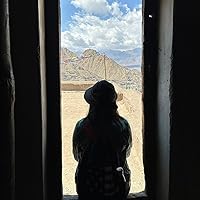
Bupinder Singh Bali, a native of Kashmir, is from the Sikh community residing in the beautiful Valley. This community is a micro-minority there, often facing existential threats. Those Who The Sikhs of Kashmir is a poignant exploration of the Sikhs of Kashmir, their past, present and uncertain future, offering a deeply human perspective on a people often overlooked in mainstream narratives. Bupinder has deftly mixed research, reportage, documented and oral history, survivor testimonies and personal anecdotes to paint a vivid portrait of the Kashmiri Sikh community, exploring themes that are deeply troubling. From the horrors of Partition and the Kabali raids of 1947 to the targeted killings in Chithisinghpora and Mehjoor Nagar, from the three decades of unrest to the abrogation of Article 370, this book offers a rare glimpse into a community's struggle for social, cultural and economic survival in an ever-evolving political milieu.
Bupinder Singh is an educator based in India. He teaches English to high school students. He also works as an Associate Editor for The Universe Journal and as a Reader for The Masters Review. His works have been published in The Week, The Delacorte Review, Non-Binary Review, The Antihumanist, Bending Genres, Whale Road Review, and several others.
His debut book, a docu-memoir titled Those Who Stayed, The Sikhs of Kashmir(Amaryllis Press) is available now.
The book “Those Who Stayed” offers an insightful exploration of identity, conflict and resilience of the micro-minority Sikh community in Kashmir (a region that has historically been at the epicentre of geopolitical turmoil). For me, this is one of those rare books where my words may not do justice to the raw depth of its narrative, and I knew from the first paragraph itself that this is far beyond a typical 5 star read.
The chapters are chronologically precise, beginning with a personal and tragic murder of Supinder Kour, a Sikh school teacher, followed by other killings in 2021, setting the tone for the exploration of how violence seeps into the lives of Kashmir’s residents. Further, the key historical events such as the Partition of India and the subsequent tribal invasion of Kashmir in 1947 (the forgotten battles of Ichahama and Attina), that altered the region’s socio-political landscape and the lives of the Sikhs serve as the foundational backdrop.
Through personal narratives, the author weaves in horrifying historical events like the Indo-Pak wars, the 1990s militancy and massacres like Mehjoor Nagar and Chattisinghpora, emphasising their impact on local communities, particularly the Sikhs who often found themselves caught between sectarian violence and militant insurgency. Despite these challenges, the Sikh community is depicted as resilient, but their sense of identity and security is constantly under threat, posing critical questions about their future.
Kashmir’s strategic importance to both India and Pakistan has often overshadowed the lived experiences of its inhabitants, and the author’s work is a corrective to this imbalance. By focusing on the voices of Sikhs who have been marginalised, he sheds light on the intersectionality of religion, politics, and identity in one of the world’s most heavily militarised region.
It took a while for me to consolidate all my thoughts and absorb the narratives. The exploration of psychological and emotional toll, particularly on the Sikh community in Kashmir was insightful and changed my understanding of conflict-torn areas. I realised that such regions are not just defined by physical violence and loss incurred, but by the long term trauma that lingers in the lives of the survivors. I could sense the vulnerability throughout the book, the scars they carry and a constant fear they live with - Should we stay in Kashmir or leave? Are we safe? Can we flourish here?
What I particularly appreciate is how the author explores not just the events but focuses on its aftermath as well, illuminating the quiet, unspoken suffering of those left behind. Through interviews and stories of the survivors, he does not just record history, but humanises it by giving a voice to the survivors, the people who stayed behind with a believe that Kashmir will return to its normalcy. He ensures that the voices of those who stayed are heard, understood and remembered as for these individuals, leaving Kashmir is not an option, it is their home, and leaving would mean severing a connection to their ancestral roots, culture and identity.
The author’s reflections on controversial laws like Armed Forces Special Powers Act (AFSPA) and the abrogation of Article 370 and Article 35(a) provide a critical lens on the balance between state security and human rights. This further raises important questions about the nature of citizenship and the role of ethnic minorities in conflict zones, particularly in a region where the state is both protector and oppressor.
The complex Sikh-Muslim relationship is another significant theme. The author presents the relationship as one of both strain and cohabitation, emphasising shared cultural values alongside moments of suspicion. A key example is this contribution of Sikhs during the 2014 Kashmir floods, showcasing their interdependence.
Overall, this book goes beyond simplistic binaries of conflict and cooperation, offering a more complex view of how communities navigate life in a region fraught with violence and political uncertainty.
It is a must-read for anyone interested in understanding Kashmir through the voices of those who stayed.
The book (THOSE WHO STAYED: THE SIKHS OF KASHMIR) attracts you with it's intriguing title. While visiting one of the famous bookstore in my city, my spouse came upon this title, which she was genuinely interested to read. She checked its review on Amazon, but it was not like other famous books with thousands of ratings. But she picked the book, purchased it, and gifted in on my birthday, which was in the month of January. This is a small story about how the book reached me.
The cover page of the book is interesting. I tried to decode it, after reading the book and understood three things: 1. Micro minorities i.e. Sikhs in a picturesque Kashmir valley 2. A bullet (sacrifices made by Sikhs) pierced through the neck of Sikh (wearing a turban) 3. A hope (Rising sun) in the valley of Kashmir
It's one of those books, which can't be put aside, once you start reading it. It clarified many basic questions about Kashmir and Sikhs. We have multiple stories about Muslims and Pandits of Kashmir, but never heard one about Sikhs, which Mr. Bali has brought out. It's an extraordinary effort by the author, who spins a unique story about Sikhs in Kashmir, while figuring out his own life and future in the India's paradise.
The book keeps you engaged in each chapter, with your inner self curious about whether Bupinder ji left Kashmir or stayed back. I had guessed, he must have left, with some of his property intact, so that the roots are not totally uprooted, but at the end, it was a different story altogether.
The instances in the book that struck a chord with me :
1. When he is asked to reconsider leaving a secured and well paying Govt. job in Kashmir and move out to find another opportunity for making a living.
2. His decision to take his parents with him, wherever he goes, as I strongly feel, "family is where your family members are", no matter if you have relatives or not.
3. The time after his college life, when he and his friend were on a spree to set up multiple book clubs and events centered around those book cafes and book clubs in Kashmir.
It takes a lot of effort and countless writings to be a writer and exponentially more to be an author. I am truly inspired by the work and hours put in researching and compiling the untold stories about Kashmir and Sikhs. The research work done in bringing out the following stories is really worth praising and worthy of mentioning on suitable platforms :
1. Aftermath of 1947 partition on people of Kashmir.
2. The 3 instances of targeted attacks on Sikhs in the history of militancy in Kashmir since 1990.
3. The history of Sikhs, right from late 18th century, till date in and around India, clearing misconception about every Sikh belonging to Punjab.
4. The role of Sikh community in delaying the mission of Kabalis to capture Kashmir, showcasing their true fervor and determination.
It's a must read for every Indian, specially students who want to know more about India, apart from the usual history text books. Appreciation is an art, which I learnt from one of the authors in my friends circle. And that's why, I cannot complete my review without congratulating Mr. Bupinder Singh Bali (Bupinder Singh Bali), along with his wife, for their remarkable feat in putting out this untold story of Sikhs in Kashmir, for all of us to read and ponder upon. Your journey as a writer, as mentioned silently in the book, is going to inspire many budding writers to get their pens writing and put out a story for the world to remember !!
Enough has been written about Kashmir already—about its beauty and about its sorrow. We know a great deal about the hardships of the Kashmir Pandit and Muslim communities, but the silent struggle of Kashmiri Sikhs who have lived there for centuries hasn't been explored much. This book is a first and will be remembered as a paragon. Along with the day-to-day lives of Kashmiri Sikhs, this book also speaks of their dreams and dilemmas. It is a perfect mixture of history, the reality of present-day Kashmir, and a love story. The writer makes you feel his emotions. The language used is easily understandable, which makes the book come across as a delicious read. Anyone who is even remotely interested in Kashmir, Sikhs, or the lives of micro minorities in general should read this book.
Those Who Stayed: The Sikhs of Kashmir by Bupinder Singh Bali is an evocative and meticulously researched account of the Sikh community’s struggles, resilience, and survival in the Kashmir Valley. As a native of Kashmir and a member of the Sikh community, Bali offers a unique and deeply personal perspective on the challenges faced by this micro-minority, often overlooked in mainstream narratives.
The book deftly combines historical research, reportage, oral histories, and personal anecdotes to provide a comprehensive exploration of the Sikhs of Kashmir. From the horrors of Partition and the Kabali raids of 1947 to the targeted killings in Chithisinghpora and Mehjoor Nagar, Bali chronicles the community’s harrowing experiences over decades of unrest. Bali’s writing is accessible and engaging, making complex historical and cultural issues understandable to a broad audience. The author’s empathy and deep connection to his subject matter are evident throughout, as he vividly portrays the daily lives, dreams, and dilemmas of the Sikh community. The book’s strength lies in its balanced perspective, presenting a fair account without sensationalism or bias.
In addition to documenting the community’s hardships, Those Who Stayed highlights the Sikhs’ contributions to Kashmiri society, their resilience, and their unwavering spirit despite facing existential threats. The personal stories of bravery and perseverance add emotional depth to the narrative, making it a powerful and necessary addition to the discourse on Kashmir. Overall, Those Who Stayed: The Sikhs of Kashmir is a poignant and compelling testament to the resilience of a community caught in the crosshairs of history. It is an essential read for anyone interested in understanding the complexities of Kashmir and the enduring spirit of its Sikh inhabitants.
In October 1947, the Kashmir Valley faced intense violence. Alongside the Hindu community, Sikhs endured significant persecution and displacement. Previously living peacefully among Hindus and Muslims, Kashmiri Sikhs became prime targets for violence during this turbulent period. They suffered massacres, saw their villages burned, properties looted and thousands killed. Local militants targeted their homes and places of worship, leading to a humanitarian crisis , forcing thousands of Sikhs to flee their homes and seek refuge in shelters for 7-8 months. While some eventually returned, many never did, leaving behind stories of loss, pain from the death of loved ones and uncertainty about their future homes.
This book, "Those Who Stayed: The Sikhs of Kashmir," delves into the conditions faced by Sikhs in the valley from 1947 to the present day. It explores their ancestral heritage, the uncertainties they face today and the lack of guarantees about their future. Unlike the numerous accounts available on Kashmiri Hindus, resources on Kashmiri Sikhs are scarce.
Author Bupinder Singh Ji, a teacher, begins his narrative with a poignant event—a Sikh teacher's murder—that revealed a disturbing motive to drive non-Kashmiris out of the region. This news sparked panic among his family and friends. The book chronicles not only the author's personal experiences but also the daily incidents affecting all Kashmiri Sikhs, highlighting childhood memories, educational challenges and the author's marriage to a Hindu woman. It also paints a vivid picture of their ongoing fear and resilience in the face of uncertainty about what may happen next. Specific chapters of the book also detail how Sikhs settled in the valley , their livelihoods, and more. The book recounts the October 1947 Kabali raid in Kashmir, where Sikhs villages were targeted with devastating consequences: hundreds of villages were burned, properties looted and women taken away by invaders into Pakistan and Afghanistan. It vividly portrays the immense suffering endured, narrating stories from survivors who faced dire conditions, with many losing their lives while attempting to protect their families. The book also highlights acts of bravery of Sikhs against the Kabalis. Unfortunately, the violence didn't cease there; later incidents such as the Mehjoor Nagar Sikh massacre and the Chittisinghpura massacre further underscore the enduring challenges and tragedies faced by Kashmiri Sikhs.
In "Those Who Stayed: The Sikhs of Kashmir," Author presents a poignant account of the struggles and resilience of Kashmiri Sikhs from 1947 to the present. This book not only sheds light on the historical injustices and hardships faced by the community but also highlights their ongoing challenges and fears in a volatile region. Through personal narratives and historical events like the Kabali raid and subsequent massacres, author portrays the bravery and endurance of Kashmiri Sikhs amidst adversity. Anyone interested in understanding the lesser-known narratives of Kashmiri Sikhs. This book provides valuable insights into their history, challenges and resilience, offering a deeper appreciation of their experiences in the Kashmir Valley.
I picked up Those Who Stayed: The Sikhs of Kashmir by Bupinder Singh Bali with high hopes, and it surpassed every expectation I had. From the very first pages, I felt drawn into a world I knew little about—one marked by both deep-rooted heritage and wrenching conflict. As someone who believes in amplifying marginalized voices, I found Bali’s docu-memoir to be not just a contribution to Kashmiri history, but a vital testament to resilience and identity.
Immersive Narrative Right away, I was struck by Bali’s skillful weaving of personal anecdotes with broader communal stories. When he recounts the tragic killing of Supinder Kour in 2021, I felt the shock and sorrow as if I were right there in Srinagar. Yet, Bali never lets emotion overshadow detail; each memory and testimony is contextualized with clear-eyed research. This balance kept me engaged throughout the book, eager to learn more about each chapter of Kashmiri Sikh history.
Historical Depth Bali doesn’t shy away from diving deep into historic events—most notably the 1947 tribal invasion of Kashmir. In October 1947, Pashtun tribal militias backed by Pakistan launched coordinated raids across the princely state, leading to widespread violence against Sikh and Hindu villagers, many of whom were killed or displaced. Bali traces his community’s presence in Kashmir back over 500 years, revealing how Sikhs have been both defenders and bearers of local culture.
Chittisinghpora Massacre One chapter that chilled me was his account of the 20 March 2000 Chittisinghpora massacre, when 35 Sikh villagers—lured out of their homes by gunmen in army fatigues—were executed in cold blood. Bali interviews survivors whose haunting testimonies bring this atrocity into stark relief, underscoring how this single event became a turning point in Kashmir’s communal landscape.
Micro-Minority Challenges With Sikhs comprising under 1% of Kashmir’s population today, Bali explores the unique challenges they face—targeted violence, economic hardship, and social marginalization. Census data confirms the community’s precarious numbers in the Valley, hovering well below a single-digit percentage. Yet Bali also celebrates small victories: the revival of gurudwaras, local festivals, and community solidarity that persist against all odds.
Emotional Resonance What really moved me were the first-person survivor accounts sprinkled throughout the text. Hearing directly from individuals who lived through targeted violence and displacement brought an immediacy that dry historical analysis can never match. I found myself reflecting on their courage long after closing the book, recognizing the quiet heroism in simply choosing to stay.
Contemporary Significance Bali discusses how recent political changes—most notably the August 2019 abrogation of Article 370—have intensified Kashmiri Sikhs’ fears of eroded rights and eroded identity. While many analyses focus on Muslim-majority concerns, Bali’s focus on his own community fills a critical gap in our understanding of the Valley’s evolving social fabric.
Personal Takeaways Reading Those Who Stayed reaffirmed for me why storytelling matters. I walked away with not only a deeper knowledge of Kashmiri Sikh history but also a renewed sense of responsibility to share these narratives. Bali’s memoir inspired me to seek out other underrepresented histories and to honor the voices of those who persevere when the world has all but forgotten them.
Conclusion In my view, Those Who Stayed is an indispensable addition to any bookshelf. It educates, it moves, and it challenges preconceived notions about Kashmir. I am thoroughly “for” this book—its compassion, its scholarship, and its unwavering spotlight on resilience make it a landmark work. I wholeheartedly recommend it to anyone interested in history, human rights, or simply in witnessing the indomitable spirit of a community that chose to stay.
Those Who Stayed: The Sikhs of Kashmir" by Bupinder Singh is an illuminating and deeply moving account of the Sikh community's experience in Kashmir, particularly during times of turbulence and strife. The author's work is a poignant exploration of resilience, identity, and the nuanced realities of living in a region often characterized by conflict. He delves into the history, culture, and resilience of this minority group, offering a rich tapestry of personal stories and historical context.
The narrative is both deeply personal and meticulously researched. The book is meticulously researched, drawing on a variety of sources including personal interviews, historical records, and the author's own experiences. Singh provides a comprehensive historical backdrop, detailing the arrival and settlement of Sikhs in Kashmir and their contributions to the region's socio-economic and cultural fabric. This context is essential in understanding the community's unique position and the challenges they face. He blends historical facts with personal anecdotes, creating a narrative that is both informative and emotionally engaging.
The book does not shy away from discussing the difficult periods of violence and displacement that many Sikhs in Kashmir have endured, offering a balanced view of their struggles and triumphs. Singh addresses the impact of the political conflict in Kashmir, including the exodus and genocide of the minorities and the target killings of the minorities also the rise of militancy. He provides a nuanced view of how these events have affected the Sikhs, highlighting incidents of violence, discrimination, and the psychological toll on the community.
Despite the adversities, Singh’s narrative is one of resilience and hope. He showcases the community's efforts to contribute positively to Kashmiri society, whether through social service, education, or fostering communal harmony. The author’s portrayal of individual stories of bravery and perseverance adds depth to the narrative, making it a tribute to the indomitable spirit of the Sikhs of Kashmir.
One of the strengths of Those Who Stayed is its balanced perspective. Singh manages to present a fair account without resorting to bias or sensationalism. His writing is empathetic and respectful, giving voice to a community often overshadowed in discussions about Kashmir. His prose is clear and precise, making complex historical and cultural topics accessible to a broad audience. He excels in vivid descriptions that bring the cultural and geographical landscape of Kashmir to life. His use of personal anecdotes and stories from individual community members adds an intimate and human touch to the broader historical narrative.
Also the pacing is methodical and reflective, aligning with the contemplative nature of the subject matter. Singh takes his time to build a comprehensive historical and cultural context, which can feel slow at times, especially in the sections dense with historical details. This meticulous approach ensures that readers gain a thorough understanding of the background and evolution of the Sikh community in Kashmir. Throughout the book, Singh’s empathy for his subjects is palpable. His reflective tone invites readers to ponder the broader implications of the Sikh community’s experiences in Kashmir.
In conclusion it is a vital contribution to the literature on Kashmir. It is a compelling blend of history, personal testimony, and social commentary that provides a much-needed spotlight on an often-overlooked community. Singh's empathetic storytelling and thorough research make this book an essential read for anyone seeking to understand the complexities of Kashmir and the enduring spirit of its Sikh inhabitants.
THOSE WHO STAYED (The Sikhs Of Kashmir) By Bupinder Singh Bali .
'They call Kashmir the Switzerland of the East. Wrong. It is the Srebrenica of the West.' -Anand Ranganathan
Kashmir has always been a sensitive region since the Independence of India, the people of Kashmir Valley have faced a monster amount of incursions and persecution from the Islamic forces.
Everything started with the Pakistani mercenaries (camouflaged as Tribals) invading the valley killing thousands of people and destroying everything in their way. Since October of 1947, the people of the valley have never seen a peaceful time, be it the war of 1965, 1971, or the exodus of Kashmiri Hindus in the 1990s, their lives have been at constant risk.
But as you read more about the valley and the people who have suffered the wrath of war, you understand how selective the narrative has been all these years. Whenever we get to read about the people of Kashmir it's always the universal minority (Muslims), who are more than 75% of the total population.
Sikhs are just 0.88% of the entire population of the valley, but until reading this book I had never heard about their existence or their exodus. They too faced the same persecution from the Islamic forces and the madness of jihadis for being a member of a distinct religion than theirs, as Kashmiri Pandits faced in the 1990s.
This memoir is more than just a book; it's a powerful chronicle of strength in the face of misfortune. The writer offers an exploration of his community, a micro-minority often overlooked in the region's conflicted history.
The book traces the Sikhs' roots in Kashmir, woven together with terrific research, reports, and personal stories to comprehensively lay down the Sikh community's contributions to the valley's cultural existence. As the narrative moves forward, we get to read about the targeted killings in the late 20th century.
As this book is a memoir it doesn't just present facts; it allows the reader to connect with the human cost of these events through personal accounts and documented oral histories. As the author himself is a member of the Sikh community, it authorizes him to capture the essence of the Kashmiri Sikh identity – their unwavering spirit, their cultural richness, and their yearning for a secure future.
With its exploration of themes like social and cultural survival "Those Who Stayed" is a powerful and necessary addition to the discourse on Kashmir. It's a haunting recount of the resilience of a community caught in the crosshairs of history, deserving a place on everyone's shelves.
'Those Who Stayed: The Sikhs Of Kashmir' by Bhupinder Singh Bali is an insightful and evocative exploration of the Sikhs of Kashmir. This docu-memior is brilliantly compiled and supported by research and documents to offer a vivid overview of the lives of kashmiri Sikh community, a minority facing deadly threats for decades and fighting for their survival in the beautiful valley of Kashmir.
In this book, the author has masterfully woven his personal life story with the problems his community is facing. It delves deeper into the dilemma faced by those who choose to stay behind in Kashmir despite the dangers, contrasting them with the many who have fled the region. Bali explores the idea of "home" as both a place of personal attachment and a symbol of resistance against forces that seek to divide and destroy human lives.
With lucid language and descriptive writing, author Bhupinder Singh Bali offers a nuanced and heartfelt portrayal of the struggles of those who have chosen to stay in their homeland despite the odds. The internal themes of identity, loss, and resilience not only provide a moving and insightful reading experience, but also connect us to the plight and pain carried by the Sikh community for generations.
The author provides a detailed historical backdrop, explaining the complex dynamics of Kashmir's political situation, from the partition of India in 1947 to the rise of militancy in the 1990s. This contextualisation helps readers understand the difficult choices faced by Sikhs, who found themselves caught between the crossfire of Indian state forces and separatist insurgents.
In essence, this book is an engrossing attempt to document the Sikh community's unique historical and cultural identity within the context of the tumultuous period in Kashmiri's history. I found this book quite useful for anyone interested in the history of Kashmir, or the stories of communities caught in the crossfire of geopolitical struggles.
The book is a poignant tale that vividly portrays the enduring strength of a micro-community amidst the years of adversity. Through the author's own experiences, one witnesses the community's unwavering resilience despite facing unimaginable atrocities. Intricately woven into the narrative is a touching love story, prompting the author to contemplate whether to remain amidst the chaos or seek solace elsewhere. With evocative prose and heartfelt reflections, this memoir offers profound insights into the human spirit's capacity to persevere through hardship and the enduring power of love. "Those who stayed" is a compelling testament to resilience and the resilience of the human spirit, leaving a lasting impact on you long after the final page is turned.
Those Who Stayed: The Sikhs of Kashmir is an intimate and powerful exploration of the Sikh community's experience in the Kashmir Valley, tracing its history from Partition to present-day challenges. Author Bupinder Singh Bali, himself a Kashmiri Sikh, uses a blend of research, personal anecdotes, oral histories, and survivor testimonies to provide a deeply moving account of what it means to be a Sikh in a region fraught with political and social turmoil.
Narration
The narrative unfolds in a chronological format, opening with the poignant murder of Supinder Kour, a Sikh school teacher. This incident sets the tone, presenting the enduring struggles and fears of Kashmiri Sikhs. Bali's storytelling is both raw and reflective, capturing moments of violence, loss, and resilience with a deeply human voice.
Writing Style
Bali's writing is both evocative and accessible, filled with empathy and emotional depth. His blending of historical events with personal stories paints a vivid picture of the Sikh community's ongoing struggles. The writing is engaging and thoughtful, guiding readers through decades of turbulence with a strong sense of narrative coherence.
Themes Explored
Survival and Resilience: The book captures the community's struggle for survival amid ongoing violence and uncertainty.
Historical Trauma: Events like the 1947 Partition, Kabali raids, targeted killings, and militancy in the 1990s are woven into the narrative, showing the recurring trauma that shapes the Sikh community's experience.
Cultural Identity and Belonging: Bali reflects on the community's efforts to preserve its identity in a hostile environment, often overshadowed in mainstream narratives.
Why You Should Read This Book
Those Who Stayed is an essential read for anyone interested in understanding the lives of minority communities in conflict zones. Bali's account offers a rare and powerful perspective on the Kashmiri Sikh experience, highlighting themes of resilience, hope, and the unbreakable human spirit. His insightful portrayal of this community sheds light on the often overlooked stories of those who choose to stay in their homeland despite immense challenges
Final Thoughts
Bupinder Singh Bali's Those Who Stayed is both heart-wrenching and enlightening. It stands as a testament to the resilience of the Sikh community in Kashmir, capturing a history that is as painful as it is inspiring. This book serves as a valuable reminder of the strength required to hold onto one's identity amid adversity, and it is a narrative that deserves to be widely read and understood.