Ancient Mesopotamia, a land between two rivers, is known as the 'cradle of civilisation'. At the height of its influence, this region saw the birth of the world's first cities, the first writing system, the first historical records, as well as myths, medicine, literature, astronomy and religion that went on to revolutionise societies around the world.
In Between Two Rivers , historian Dr Moudhy Al-Rashid brings us closer to this ancient past and the lives of the people who lived in this extraordinary society. The hundreds of thousands of clay tablets from ancient Mesopotamia tell wonderfully relatable stories - from a parent desperately trying to soothe a baby, or a bored teenager doodling during class, to a brewer collecting ingredients to make beer and a slave trying to negotiate their freedom. Through the contents of a 2,500-year-old museum, collected together by a princess from the 6th century BC, Al-Rashid introduces us to different periods of Mesopotamia's history, revealing aspects of society and culture that resonate with us today, from war to education and language, and from women's rights to religion and the divine. These artefacts not only bring this region to life, but also show us that people we think of as 'ancient' in fact had a highly developed sense of their own history.
Breathing life and colour into a complex and surprisingly modern society, Between Two Rivers investigates what history meant back then, what it means today, and what we can learn from the distant past.
Many history books can become bogged down in too much academia or dry prose but Mouthy Al-Rashid writes with passion and from the heart.It is almost as though you are with her making a presentation in which she is talking directly to you. Personal reference points in her life and connections to modern life and life in Mesopotamia are made providing further accessibility.
This is a book about communication - the way through which interpreting past lives are made through examining and understanding the little rolls or drums of clay covered with cuneiform writing. ( initially with 2000 signs then many more!) They unlock the world of the Sumerians, Babylonians and Assyrians.
Daily lives are opened to the reader; rulers and royals are explored; architecture and construction unpicked. The recognition of blending myth and history to create stories prevails- but also Mouthy Al- Rashid makes us question how modern history could be interpreted in the future.
Having recently read Elif Shafak's superb There Are Rivers In The Sky, Between Two Rivers felt like the perfect companion book.
Rather like Bethany Hughes and Michael Scott, Moudhy Al-Rashid's writing brings history to life in an entertaining and highly informative way. A brilliant read- highly recommended
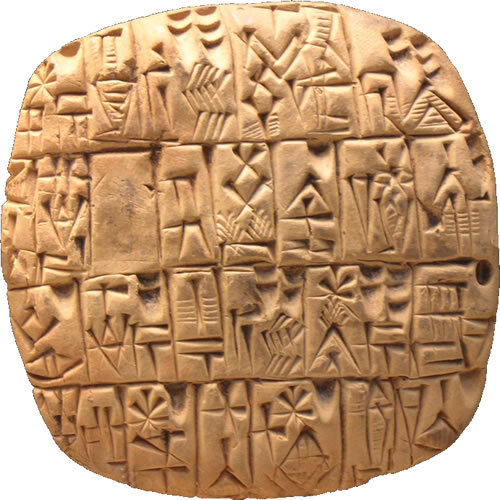
I wanted to like this a lot more than I did. I've recently been on a bit of a Mesopotamia bender, so when this new book came out, I was really excited to see what it could add to the story. The problem is, it didn't add much to what I already knew. I've read reasonably straightforward histories of the region, and this is not trying to be that. instead, it's a discussion of how different aspects of life -- war, trade, school -- can be inferred from artifacts. There were some good bits there. I liked learning about schoolboy tablets, and what we can infer about burial practices and respect for enemies in war from the writings and excavations of mass burials. But even at this task, the end result seemed awfully shallow: examples are re-used and recycled, which makes them seem, on average, less fresh, and led me to wonder whether those case studies are truly all that there is to build a story on. Also, there's an awful lot of repetitive point-making about how Mesopotamians were People Just Like Us, which would have been more powerful if it had been supported, rather than asserted over and over again in far too many words. Finally, and perhaps worst of all, there are no images! All the text spent describing steles and texts and images and artifacts, and not a single image provided to actually show us what it's all about. I had to go to a separate book -- a mathematics book! -- to find an image of the Plimpton tablet, the earliest known set of Pythagorean triples, compiled centuries upon centuries before Pythagoras made his name.
Perhaps this will serve for someone looking for a very gentle introduction to Mesopotamia. But for someone who's looking for more meat, I recommend Paul Kriwaczek's much richer and more informative book on Babylon.
Absolutely breathtaking. The narrative and style of Author are touching to the very core, I’ve completely fell in love with the Mesopotamian reality shown through her eyes. A 10000% recommendation for literally everyone - those who don’t know anything about ancient Mesopotamia and those who are convinced that they’ve read everything important about this period of time. Loved it so much.
Bulgarian review first, followed by the English translation below
Там, откъдето тръгва първото известно на човечеството писмено слово…
Земята между реките Тигър и Ефрат в днешен Ирак е видяла възхода и заника на много царства. В този плодороден отрязък са възниквали първите известни градове-държави (митичният Вавилон, магичните Ур, Урук и Лагаш, изисканата Ниневия), строени са огромни зикурати-прототипи на вавилонската кула, говорели са се шумерски, акадски, вавилонски, асирийски езици. Част от месопотамския мита за Гилгамеш е влязъл в библията с потопа и Ной, асирийските царе отбелязват присъствие в стария завет, а приличащото на птичи стъпки клинописно писмо върху вездесъщите глинени плочки не секва близо три хилядолетия от 3500 г.пр.н.е. до 79 г.пр.н.е. Тези три хилядолетия са обилно документирани в списъци, химни, митове, медицински рецепти, закони (и прочулият се с тях цар Хамурапи), актове за собственост, астрономически наблюдения с религиозни тълкувания, дипломатическа поща и ученически драскулки върху глинени плочки.
Муди ал-Рашид поднася едно интерактивно запознанство с този удивителен регион и неговите обитатели, които през 6 в.пр.н.е. вече са имали над 2000 годишна история… Текстът очертава непрекъснатите паралели на древния бит с технологичното ни настояще, и го прави удачно, защото - за разлика от технологиите - хората не се променят.
Разказът тече под формата на история за историята. През 6 в.пр.н.е. Вавилонската принцеса и жрица Енигалди-Нана е съхранявала множество предмети с вече близо две хилядолетна история. А през 1922 г. археологическите разкопки на Ленърд Ули изкарват на бял свят осем от тях. Историята на всеки предмет маркира отделяна глава и отвежда към аспект от културата, религията, науката, управлението, войните и бита на древните народи в поречието.
Любовта на авторката към древна Месопотамия е повече от доловима и се предава до голяма стелен на читателя. Проблемът е, че древността е оскъдна на цялостни и завършени истории и е по-скоро калейдоскоп от непасващи си парчета от различни истории (голяма част от които - митологични или идеологични), и Муди на моменти твърде много се повтаря или се плъзга по повърхността. Липсата на илюстрации също силно накърнява гладкото възприемане на текста. Неяснотата и догадките са правило, а не изключение. Но това е правилото и на стандартния човешки живот. Дано Междуречието познае скорошно благоденствие и да ни разкрие още много съкровища от необикновената си съдба и история.
3,5⭐️
Хубава съвместна дигитална изложба на няколко месопотамски артефакта на Гети и Лувъра:
Right where humanity's first known written word came alive…
The land between the Tigris and Euphrates rivers in modern-day Iraq has seen the rise and fall of countless empires. This fertile strip of land birthed the world's first known city-states (mythical Babylon, magical Ur, Uruk, and Lagash, and the sophisticated Nineveh). It’s where massive ziggurats—the prototypes for the Tower of Babel—were built, and where Sumerian, Akkadian, Babylonian, and Assyrian echoed through the ages. Parts of the Mesopotamian Epic of Gilgamesh made their way into the Bible via Noah and the Great Flood, Assyrian kings pop up in the Old Testament, and that bird-track-like cuneiform script on ubiquitous clay tablets kept going strong for nearly three millennia, from 3500 BCE to 79 CE. Those three thousand years are heavily documented in king lists, hymns, myths, medical recipes, laws (courtesy of the famous King Hammurabi), property deeds, religiously interpreted star-gazing, diplomatic mail, and even schoolboy doodles on clay.
Moudhy Al-Rashid gives us an interactive introduction to this amazing region and its people, who back in the 6th century BCE already had over 2,000 years of history behind them... The text constantly draws parallels between ancient daily life and our tech-heavy present, and it totally works—because unlike technology, people don't really change.
The narrative plays out as a story within a story. Back in the 6th century BCE, the Babylonian princess and high priestess Ennigaldi-Nanna curated a collection of artifacts that were already nearly two thousand years old. Fast forward to 1922, and Leonard Woolley’s archaeological digs brought eight of those items back into the light. The story of each object shapes a separate chapter, opening a window into the culture, religion, science, governance, warfare, and daily life of the ancient river valley civilizations.
The author’s love for ancient Mesopotamia is incredibly obvious, and a lot of that enthusiasm rubs off on the reader. The only real issue is that antiquity is notoriously scarce on complete, seamless stories; it’s more like a kaleidoscope of mismatched pieces from different tales (mostly mythological or ideological). Because of this, Moudhy tends to repeat herself a bit or just skim the surface at times. The total lack of illustrations also really hurts the flow of the book. Inclusions of ambiguity and guesswork are the rule here, not the exception—but honestly, that’s just the rule of human life in general. Here’s hoping Mesopotamia sees prosperity again soon and uncovers many more treasures from its extraordinary history.
3.5⭐️
A pretty cool joint digital exhibition of several Mesopotamian artifacts by the Getty and the Louvre:
Never has "don't judge a book by its cover" (or its title) rang so true for me. I was captivated by this cover, reminding me of Circe and promising me an earthy, liquid tale of ancient life on the river. In fact, the rivers play just a tiny role in this scattered summary of occasionally interesting, mostly mundane receipts from ancient bureaucracy. The author is passionate to be sure, but is seemingly passionate about the very idea that, 4000 years ago, society functioned in very similar ways to 2000 years ago. I don't know if it's just me, but I was really unsurprised to find out that women were sometimes priestesses, sometimes weavers in 2000 BCE, and some of their kids went to some kind of school to learn their letters; or that wars were fought over holy relics, that leaders likely embellished their triumphs in the historical records or that soldiers were unceremoniously dumped in mass graves. These all seem like very obvious things to me.
The author's passion is for ancient science, and it shows - the most interesting and coherent passages are examining the astronomers and physicians of the time. Yet this makes up a tiny part of a book overly obsessed with the idea that people wrote their day-to-day bookkeeping on bits of clay. There are also many many repetitions of the book's stock phrases - cuneiform is hard to read, cuneiform is fascinating, cuneiform is old. The final nail in the coffin for me is the over-reliance on modern puns and inappropriate threading to modern concepts, which are at best condescending and at worst excruciatingly reductive. I don't need the phrase "donkey DHL" to understand mules were used for goods transport, and I certainly don't need the author to equate a creation myth's genitalia-less clay figure to an original "non-binary" identity. (I am one of those folks - we're not eunuchs?)
Anyway. It was much much duller than it needed to be. There was an interesting article in this, but it shouldn't have been a book - either that, or the author should have stuck to her passion for ancient science and dug deeper instead of so broadly. A shame.
“Between Two Rivers” had me immediately hooked and transfixed. Al-Rashid takes us across thousands of years and under exciting layers of Mesopotamian history, Sumerian myth and people living alongside the twin currents of the Tigris River and Euphrates, the longest river in Western Asia 🌺🌿
This is a moving, collective memory of places that almost become tangible. Thanks to preservation, we bear witness to real names, slices of what life was like and what the landscapes would have looked like around them. You are almost captured in the sweep of their existence. Al Rashid’s writing just pulses with life. I loved the connections between herself as a mother and the Ancient women who mothered, hustled and made their mark.
Between Two Rivers came alive and made me feel like I was stood at the threshold of new beginnings. Refreshing history drawn from the soils of this Ancient and unforgotten land. The land of epic poetry, figures Gilgamesh and Enkidu and influential women like Queen Naqia and Shammuramat of the Neo-Assyrian empire. I’m completely enchanted by its textures and the many journeys it has undergone over millennia 🌳
Mesopotamia (“from Greek meaning “land between rivers”) was the birthplace of writing. The cuneiform script, created in around 3200 BC in Ancient Sumer, came first. Clay that was once soft as river mud, still exists for our eyes today. Fragile tablets made from alluvium and written by long-vanished hands. Minute, mundane details like a receipt for beer to a newborn’s footprint, accidental dog paw prints and a boy of twelve from Nippur who left teeth marks in his school tablet (what a legend). A glimpse at surviving human history that is just magic to me. I hope to see some with my own eyes one day. This is how the Ancient people wanted to be remembered ✨
One of my favourite parts of the book was the mention of female scribes. What fascinated me most was that women were not entirely absent from this new intellectual landscape of language and writing. They too were erudite and educated. I’d never heard of Enheduanna who is considered the earliest known named author in history. She was a prolific poet and priestess, who I now admire so much. Thank you Moudhy for bringing her to light 🌞
Despite the promise of the title, "Between Two Rivers" offers a fragmented reading experience, based on the description of archaeological objects and short contextual stories, without ever building a clear line of historical development. The lack of a chronological progression or a common thread linking the chapters makes the reading seem more like a collection of disconnected spaces than a journey through the birth of Mesopotamian civilisation. For those looking for an evolutionary overview or a broader argument about the emergence of history, the book's structure can be frustrating.
Average. Feels like an introductory chapter of a book than an introductory book. very light - well written and enthusiastic but light. Jumps about discussing various social/cultural topics with a touch of political history for context. Enjoyable bit feels a bit aimless. Much better on the subject out there.
Audiobook (7 hours) narrated by the author, Moudhy Al-Rashid Publisher: HighBridge Company (Highbridge Audio)
The narration is disappointing and not recommended. If you need an audiobook, the author/narrator is very clear, with good pacing and consistent volume. The audio is also flawless. So there is no issue with hearing or understanding. The issue is that the author sounds completely removed and disinterested in her research, as if she is a paid narrator who just phoned it in for a paycheck, speaking in a sing songy voice to just get the information on record. While the information is presented in a dry way, I suspect that reading from print would have a better experience as you would be able to have your own excitement and interest in the things that you are interested in without the background droning.
There are some interesting bits of information found within this 7 hours of audiobook. A lot of it is basic, although the author does go into some details that could be interesting. I suspect that things like the difference in the curls of the letters would be much better presented on paper, especially if printed examples are given, than to hear someone try and explain how this curl of a letter is thicker and flatter at this point than this one and why that may be, along with a point by point explanation of how a drawn letter looks. To be honest, I appreciate the explanation of how it looks, I mean we are talking about the first socialized written language known to man! However, the author talks about it as if it were a grocery list of items that she doesn't want or plan to consume. If she would show some wonder and excitement about her discoveries or research it would up the interest factor significantly.
After reading the entire book, which felt like days rather than 7 hours and that alone is a huge disappointment for someone who is such a nerd about subjects like this one, my take is that during the pandemic the author decided that it was a good time, since she wasn't doing anything else and there wasn't much that could be done, to do some research on something that she had thought about in the past and now had time to do. I would like to think it was a passion project, and it very well could have been. So the author took the time in lockdown to research and study and even do some travel.
The issue is that this comes across more as a personal vacation and now she is sharing her 'vacation photos' and it's delivered like a boring slide show on a 70s Chevy Chase comedy movie. Here's the water fountain. Oh a cup that was left behind by someone, obviously stepped on and smooshed. A local pigeon. All very disinterested descriptors. At one point she does try to be funny when describing something, and for the life of me I cannot recall exactly what it is, but she brings her child into the conversation and says that she attempted to interest her child in this object that she was investigating and her child flatly told her something to the effect of, "Mom, that's just a bowl." I remembered this part as her bringing in a family member and making that line personal was the most personal she sounded in the entire 7 hours.
The author either really isn't as interested as she thought that she was in the subject matter that she chose, she wasn't the one who chose the subject matter, she realized that she didn't care for it once she got into it after it was funded, she just doesn't know how to teach or move information from inside of her head to other people, or a combination of the above.
Despite the lackluster narration and dry delivery, I did find the chapter relating to the construction of housing, bathroom facilities, and really all of the construction fascinating as it was very much ahead of their time. There wasn't a ton of information that I hadn't heard before, but Moudhy was detailed in what she wrote, both on the construction methods as well as their use and how it fit into the time. The other chapter I felt is deserving of a mention is that of the people and their standings socially and politically. The names that one would expect to hear are included. There isn't significant depth as it is just a chapter but it is more than a casual mention and for those either new to the subject or who like to read about it every now and again, it's a decent overview.
The other thing that I really liked about this novel is that at the beginning the author tells the reader exactly what is in each chapter, so I knew going in that chapter 8 was about the people and if I wanted to go right there first and jump around to my interests or read in a different order than what was laid out, I could. There's no reason at all to read in the numbered order of the chapters as there isn't a flow to the book, which, as much as I wish there were more excitement and story, this is a good decision, or lucky mistake, as being able to pull out each chapter as a stand alone is very nice.
Overall I give this a 2 stars. I would recommend finding a better book. I did read the entire thing, as much of a slog as it was, as I do very much enjoy this topic and I was hoping for some sweet gems of information that would make my 7 hours time well spent. Whelp, that didn't happen! The cover is pretty cool though in those sweet gold and blue colors so reminiscent of lapis lazuli, which the author mentions throughout. 🌌
I won this book in a Goodreads giveaway and was really looking forward to diving into Mesopotamian history. Unfortunately, the writing style just fell flat for me. It lacked dynamism and imagery. So many unnecessary phrases and clauses that made sentences unnecessarily long and added no value. Perhaps some maps, timelines, and images would have supported the author’s description of objects and helped establish some atmosphere and immerse readers in that ancient world. There was a rambling quality about the book that didn’t feel purposeful. I really tried to get into this book, but couldn’t get past chapter one, and would recommend that the author read something by Adam Grant or Michael Pollan for inspiration.
Imagine if, 2700 years from now, the only thing anyone ever knew about your entire existence was that your coworker thought you were a colossal dumbass.
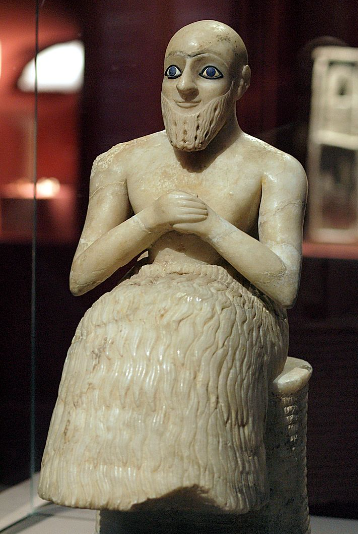
Between Two Rivers starts in Ur with excavations of objects which would have been excavated themselves: what its discoverer dubbed the first museum. A brick. A statue. The head of a mace. A 2500-year-old museum label. In what is perhaps my favourite approach to writing about ancient history, Moudhy Al-Rashid starts with sites and objects, with the written medium and material that we get the history from. This is also about personal connections, what moved the dead, what moves the living scholar, and method. You get to learn a bit about looking at the world like an archaeologist along the way. _____________ Al-Rashid is a historian of medicine and science, though there is unfortunately little of that in the text. She does notes that cuneiform dictionaries did not limit themselves to practical terms and real objects but seemed to be an exploration of all the abstract combinatory possibilities the new technology of writing offered = knowledge-making as free movement, exploration - play, if you will (my interpretation, I think I am bastardizing it from Gadamer.) Her thesis (which is well-worth taking a look at) as well as her further work focus on mental illness and its treatment in Ancient Near East. But Between Two Rivers certainly bears the imprint of her preoccupation with human inner life and embodied experience and the ways language captures that.
An excellent history of Mesopotamia through a collection of objects found in an enigmatic room in the ruins of the ancient city of Ur. Moudhy Al-Rashid writes brilliantly and passionately about how the people of Mesopotamia lived, loved and worked. Her thoughts on history, writing and culture are insightful, and she casts a lot of light into how ancient societies parallel our own, though human needs, but are also vastly different due to their economic structures. Her book doesn't ignore the inequalities of class and gender, and this makes it particularly valuable. There's only the briefest of mentions of the US led Iraq War, but it's made to illuminate ancient warfare in all its simularities and differences. I would, however, have been interested in what Al-Rashid thought of the impact of that war, and its aftermath on our knowledge of the region's history. An excellent history book. Highly recommended.
Ancient Mesopotamia is often presented as a list of firsts: first cities, first writing, first empires, first bureaucracy—civilization as paperwork. That’s how I studied the Ancient Near East, anyway, since history books are too often written as if boredom proves seriousness.
Moudhy Al-Rashid does something better. She gives us the people of Mesopotamia, not just a list of kings and disparate facts. The men, women, children, and slaves here still belong to their own strange, distant world, but they also worry, scheme, mourn, drink, complain, insult each other, go to court, and use divination to understand what they can’t control.
Al-Rashid has a gift for turning cuneiform into human evidence: a lullaby, ghost instructions, beer records, schoolchildren’s awkward writing, and even what may have been the world’s first museum. Her present-day analogies make the material easier to grasp. This is definitely one of the better history books out there. I see that some historians here are skeptical of this book—saying it's not dry enough—but they need to understand that we have to feel connected to the people before we reach another level.
I have only rated it 3 stars . It is vividly written with great verve and enthusiasm. However as a beginner to the subject I found all the jumping around through millenia a little confusing as is the mixture of myth and history. Someillustrations of cuneiform writing would help which is vividly written about but hard to visualise. The author also interposes her own experience as a modern day mother with historical writing This may appeal to some but not to me. The author is clearly very knowledgeable and enthusiastic about her subject and writes in an entertaining manner but I did not feel I got as much of the history I was looking for. Perhaps my own failing!
A highly readable history of Mesopotamia, loosely framed around the idea of how Mesopotamians viewed history themselves. Al-Rashid has a breezy, chatty tone and wants us to love her cast of ancient characters as much as she does. She uses a lot of modern analogies to make this world come alive, but is careful not to tip into obscuring difference either. This was a great introduction to Mesopotamian history and convinced me to add the Epic of Gilgamesh to my TBR.
I swear: In another life, I was meant to be translating cuneiform tablets in the basement of the British Museum.
This was such a fun, readable, introductory look into ancient Mesopotamia. The book is organized around a series of artifacts, with each chapter delving into a different aspect of ancient life. Whether it was warfare, writing, the lives of women, or the Mesopotamian's study of the stars and science, I found that the information included was very high-level, but written with the right amount of enthusiasm and personal anecdotes to get someone hyped up about this part of history.
The only downside to the organization of this book is that it wasn't chronological, and as someone who is just starting to dip their toes into learning about ancient history, it was hard to get a sense of the timelines and orient myself in terms of the different empires. I also felt that this book lacked three things that would have really elevated the reading experience: a map (I wanted this so bad!), a timeline, and, most of all, pictures!! This entire book was organized around artifacts, and yet there were not images of those artifacts included. The amount of times I went to google something that was being discussed was kind of absurd.
However, if you're just looking to get excited about this part of history, and to really encourage yourself to go read more on the topic, then this is definitely a great place to start.
I became interested in the history of the Middle East after a visit to The Maparium in Boston some years ago. Since then I have read several excellent books on the subject. So far, all of the books I have read on the subject have broadened my knowledge. I was thrilled when I won Between Two Rivers in a Goodreads giveawayp because I saw it as another opportunity to further my understanding of the history of the Middle East . Unfortunately, I just couldn’t finish this book. It is way, way too conversational with the author inserting herself into the book in a way that for me was jarring and off putting. Although I appreciate the enthusiasm and passion that the author brings to her subject I found this to be very repetitive and way too narrow a focus to hold my interest. While reading this book I actually began to wonder who exactly was the target audience. Having won this in a Goodreads giveaway, I wish I could give it a glowing review but I found myself putting off reading it; a sure sign, in my book that I am probably not going to see the book through to the end.
Many thanks to NetGalley and to this book's publisher for granting me access to a digital advance reader copy of this delightful, informative, light-hearted romp through the millennia-long history of society and culture in the so-called (perhaps erroneously) "cradle of civilization," otherwise known as ancient Mesopotamia, a Greek portmanteau meaning "land between two rivers," as the title references. One part personal memoir, two parts examination of Sumerian and Akkadian history via extant artifacts housed in some of the world's greatest museums, this was such an unexpectedly joyous and entertaining book!! After reading, I just wish I could spend an afternoon with author and scholar Moudhy Al-Rashid, picking her brain about everyday life in Ur, or Uruk, or Eridu...
Between Two Rivers is structured around a person: Ennigauldi-Nanna: princess, priestess and—potentially—museum curator; and a site: a ‘museum’ room in her palace near the ziggurat of Ur. The story Al-Rashid tells spools out geographically, culturally, and temporally in all directions from that person and that place. Chapters are organised about objects from the ‘museum’ and through them, Al-Rashid takes us through ancient Mesopotamia, across millennia, from legend into history and into the present.
This bridging place—the museum room dates to the 500s BCE—sits roughly midway between the oldest objects found there and the present day. I really enjoyed this book overall, but the issues I had with it stem from this organising structure. It was not, as I thought it would be, a chronological accounting of the (known) history of Mesopotamia. And all the jumping backwards and forwards and sideways through time left me confused about what happened when (even with the chronology provided). The timelines remained fuzzy to me throughout (probably aggravated by the fact that I audiobook’ed it). Rather than giving me a sense of ‘the land between the rivers’, it read like a select history of Ur told through these objects. So if you’re looking for a ‘this happened, then this happened, and because of that this happened’ narrative about ancient Mesopotamia, this is not the book for you.
Standing in that room, with those objects, and with Ennigauldi-Nanna gives Al-Rashid a firm place to stand in history. For instance, when she writes about the discovery of the ruins, she connects Leonard Woolley (who excavated the site in the 1920s) to Nabonidus and Ennigauldi-Nanna, to Irving Finkel and herself, and in doing so we get a picture of how Assyriology evolved from when Nabonidus was reconstructing his cultural past, to Woolley’s excavations, and all the way into the present. I found it rather fascinating.
What this book does incredibly well—and more than makes up for the chronology issue—is to shine a light on the people behind the objects in the ‘museum’, notably the every-day folk, the kind who peopled the world then as now. She tells us of the lives of women, of slaves, of traders and craftsmen, of school children scribbling in their notebooks, of women managing households, of the people who make the bricks and why those bricks were so important.
I recently read Lloyd Llewellyn Jones’ Persians and learned more about Nabonidus the King from the chapters on Cyrus the Great’s conquest of Babylon in Persians than this book. But from this book, I learned of Nabonidus the man, of what he might have been like as a father and of his interest in archaeology and his PR campaign to assert the legitimacy of his kingship. And I found Between Two Rivers all the more interesting because of it.
I knew that there is a male bias in our understanding of history (another thing we have in common with ancient Mesopotamians!) but listening to this book really drove it home. Moudhy Al-Rashid has placed a female figure at the center of the narrative and has filled her history with women and their lives (my favourites are the bartender-turned-queen, Ku-baba and Enheduanna, the poet). For instance, when talking about slaves, she doesn’t just tell us about economy or manual labour, she tells us about wages for wet nurses and miscarriages and rations for pregnant women. When she writes about trade, she tells us about textiles and transport of goods, of weaving, communication and of the labour women provided within and without the home, and uses that lens to examine how relationships might have functioned in Ur.
Another central motif in the book is cuneiform itself. The chapter on the school tablets was delightful, and reminded me of my niece’s attempts at writing (three different scripts at school) and my own shaky, oversized scrawls that grace the front pages of favourite childhood books. I think this effect of bringing the past into conversation with the most personal present is where this book excels.
Moudhy Al-Rashid brings herself on to the page, too, to great effect. From the spark lit by Irving Finkel’s talk (another favourite tidbit from the book because I’ve attended lectures given by Finkel too, and he is absolutely wonderful!) to her education, teaching, and experiences of pregnancy, childbirth, motherhood and pandemics…it all brought the past more vividly to life than any recent history I’ve read.
•• Ta książka to fascynująca podróż w czasie, która pokazuje, że starożytność jest nam bliższa, niż mogłoby się wydawać. ••
▪️𝗥𝗘𝗖𝗘𝗡𝗭𝗝𝗔 ▪️
Są takie książki, które zostają z nami na dłużej. I nawet po skończonej lekturze nie możemy opuścić tego świata, który wywarł na nas tak pozytywne wrażenie. Kiedy rozpoczynamy lekturę książki „Między dwiema rzekami” wkraczamy do świata, w którym czas przestaje płynąć. Strony stają się bramą do epoki, której nie przeżyliśmy. Do miejsc, których już nie ma. Dzięki literaturze możemy towarzyszyć bohaterom, którzy żyli setki lat temu. To tego typu książka, która zdecydowanie wymaga od czytelnika większego zaangażowania w lekturę i która pozostaje na długo w głowie po odłożeniu jej na półkę.
Ta książka to swego rodzaju forma podróży, która nie wymaga maszyny czasu, a dzięki której możemy przenieść się do tamtych czasów. Co najlepsze nie musimy nawet opuszczać własnego pokoju, by bliżej poznać codzienne życie starożytnych mieszkańców Mezopotamii.. Wystarczy sięgnąć po książkę Moudhy Al-Rashid.
Historyczka Moudhy Al-Rashid staje się naszym przewodnikiem, a każde zdanie staje się krokiem na ścieżce prowadzącej od podstaw mezopotamskiej architektury, poprzez tabliczki szkolne odsłaniające ponadczasowe troski uczniów, aż po kamienny obelisk świadczący o ogromnych przepaściach społeczno-ekonomicznych.
„Między dwiema rzekami” to książka, która pozwala spojrzeć na świat oczami ludzi, którzy żyli w innych czasach, zrozumieć ich wartości i lęki. Poznajemy ich wierzenia, obyczaje, edukację i medycynę. Zapewniam was, że lektura tej książki to nie tylko nauka historii, ale coś o wiele więcej. To niezwykła opowieść o tym jak rodziła się jedna z najstarszych cywilizacji świata.
Z pewnością polecam dla czytelników ciekawych świata i historii 🫶🏼
Let's get one thing out of the way first. I generally prefer for the writer of such books to slip into the background and be invisible and here the frequent allusions to the author's personal life sometimes brought me out from reading it. Same with the frequent mentions of the Covid lockdown - I do prefer my history books a bit more 'timeless'. Then again, the author's background provided some unique context and insights that I'm not sure I'd get from author's from a more 'Western' culture. Would I learn how the cuneiform signs that in Assyrian meant 'freeing a slave' were used as graffiti and on banners during protests in Iraq in 2019? Not sure.
What I most loved about this book was how, through zooming on a couple of items from an ancient museum-that-possible-wasn't-a-museum we learn a lot about the individual people from that era. And what do we learn? That they were basically exactly like us. They avoided doing homework, cried when they lost children, cheated on their taxes and so on. Obvious, perhaps, but I've enjoyed it a lot.
To będzie fascynująca podróż. Nie tylko w czasie, ale schodzimy w głąb. Syryjskie i irackie piaski kryją cenne artefakty, które są świadectwem życia codziennego w Mezopotamii, świadczą o rozwoju intelektualnym i technologicznym. Te przedmioty opowiadają nie tylko historię, ale mówią wiele o historii historii. Historiozofia wydaje mi się tu najciekawsza. Okazuje się bowiem, że już wtedy myślano o tym, by zapisać historię, by pamięć po ludziach mieszkających tam, przetrwała. Te teksty, to hołd im oddany. Ci, którzy lubią bardziej wgryźć się w temat, powinni być zadowoleni, bo książka ma bogatą bibliografię. Bardzo zachęcam do lektur. współpraca reklamowa
almost all of my own research/scholarship/whatever focuses on medievalism and medieval perceptions of history, so i spend a lot of time thinking about historiography, and i really related to the ways that al-rashid spoke about her own relationship with the past, and loved hearing about the relationship that people in ancient mesopotamia had with the past, which is an area that i'm less familiar with. i don't have anything particularly insightful to say in this review, just that it made me happy to read a book by someone in another field who clearly finds the topic as special and meaningful as i do.
i love history. i love the human love of history <3.
I’ll hold up my hands and say that my prior knowledge of Mesopotamia was pretty much as follows: cradle of civilization, Epic of Gilgamesh, Code of Hammurabi, Ea-Nasir copper complaint memes.
Luckily, this was a really wonderful introduction to the ancient region that made me curious to learn more. Al-Rashid’s writing style is thorough, passionate, and readable, creating something that has depth but is accessible.
Looking at the history and culture of Mesopotamia through a series of objects that were excavated from what may have themselves been part of an ancient museum, this book explores so many aspects of that bygone world while also drawing through lines to life today.
Drawing parallels between ancient lives and our own is always a worthy endeavour. Seeing allegories in Marvel Superhero stories and The Epic of Gilgamesh, Assyrian kings among others was interesting. Humans have always needed something to aspire to. Sitting exams in Mesopotamia and nurturing a young child while navigating climate change are inveterately relatable.
Some sardonic parallels allegorising a tyrannical invasion of Iraq with ancient kings was well put. I felt the objects and mathematical notation references were fleeting and lacked insight beyond minor ah ha moments. Most of the insights rendered are already perspicacious to a Mesopotamian history savant with too much bouncing around between disparate time periods.
Al-Rashid has talent and articulation in writing style. I felt it all doesn’t come together into a coherent, compelling story which illuminates a deep understanding of the specific past epoch through a relatable protagonist.
This ruled! Really passionate and approachable, and all in service of showing how, just like every other people or place in history, they really were just like us fr.