

What do you think?

Dead Air: The Night That Orson Welles Terrified America
On Halloween Eve 1938, Orson Welles put on a radio play of War of the Worlds and terrorized an uneasy American public on the brink of World War II, perpetuating the greatest hoax in history and changing media forever. Dead Air brings to life this fateful night and follows the life and career of Welles before and after the historic broadcast.
280 pages, Hardcover
Published November 19, 2024
About the author
William Elliott Hazelgrove
21 books28 followersWilliam Elliott Hazelgrove is the national bestselling author of ten novels and fourteen narrative nonfiction titles, including Dead Air: The Night That Orson Welles Terrified America (Rowman & Littlefield, 2024), Greed in the Gilded Age: The Brilliant Con of Cassie Chadwick (Rowman & Littlefield, 2024), and Al Capone and the 1933 World's Fair: The End of the Gangster Era in Chicago (Rowman & Littlefield, 2017). His books have received starred reviews in Publishers Weekly Kirkus, Booklist, Book of the Month Selections, ALA Editor's Choice Awards Junior Library Guild Selections, Literary Guild Selections, History Book Club Selections, and optioned for movies. He was the Ernest Hemingway Writer in Residence. He has written articles and reviews for USA Today, The Smithsonian Magazine, Daily Mail, and other publications, and has been featured on NPR's All Things Considered. The New York Times, LA Times, Chicago Tribune, CSPAN, and USA Today have all covered his books with features.
source: Amazon
source: Amazon
Ratings & Reviews
Friends & Following
Create a free account to discover what your friends think of this book!
Community Reviews
Displaying 1 - 30 of 34 reviews

July 31, 2025
3.5/5 ✩
“Orson slumped down further, wondering for the first time in his life whether he had gone too far - a very alien thought indeed.”
QUICK SUMMARY
Dead Air explores the evening on which Orson Welles and Mercury Theater On Air performed their broadcast of the War of the Worlds and the mass hysteria caused by it. For those familiar with this event, Hazelgrove’s book serves as a closer look at not only the broadcast, but also how Welles’s personality and artistic drive made the performance into the historical moment that it is.
R.E.A.D.S. SCORE
R: 7/10
E: 7/10
A: 6/10
D: 7/10
S: 6/10
Total: 6.60/10.00
“Orson slumped down further, wondering for the first time in his life whether he had gone too far - a very alien thought indeed.”
QUICK SUMMARY
Dead Air explores the evening on which Orson Welles and Mercury Theater On Air performed their broadcast of the War of the Worlds and the mass hysteria caused by it. For those familiar with this event, Hazelgrove’s book serves as a closer look at not only the broadcast, but also how Welles’s personality and artistic drive made the performance into the historical moment that it is.
R.E.A.D.S. SCORE
R: 7/10
E: 7/10
A: 6/10
D: 7/10
S: 6/10
Total: 6.60/10.00
April 4, 2025
I like the glimpse of pre-war America this book presents, but it's also really stretched out to fill 200 pages. This felt like two chapters from a much more interesting book.

July 31, 2025
DNF.
I really only have one question for Hazelgrove. What did Orson Welles do to hurt you? Honestly, it's best if you start this book and DNF it around the 50% mark. This author was all over the place. Once minute, he's lauding Welles as the prodigy who can do no wrong. Then he's mentioning how he was using every drug under the sun and womanizing like there was no tomorrow. Fine, whatever, he was a successful actor in the 30s, what else could we expect right? The book is good and I though was pretty well researched up to the War of the Worlds broadcast and then it devolved into shit. After the broadcast, the author begins randomly painting Welles as a devious, evil, trickster who pulled the wool over everyone's eyes. Accusing Welles of leading people to suicide while also not providing a single case of a death actually associated with the broadcast. Hazelgrove also claims that Welles staged/edited the entire press conference after the broadcast while also providing zero hard evidence or sources. Hazelgrove also takes a shot at historians who are, as he puts it, starting to downplay the severity of the panic. To his point, Hazelgrove cites many cases of the panic that are both familiar and new to me. That's great, however, he occasionally snuck in much of the information that bolstered the case against the national panic that was being claimed. As someone who also studied the War of the Worlds broadcast, I can also defend the fact that there was a surprising amount of panic during the 30ish minutes of broadcast before the break reminding people that it was a radio play; however, what did more damage than Welles were those running to their neighbors and calling their families, before giving them incorrect information. Hazelgrove provided many examples of people claiming that "New Jersey had been destroyed by meteors," that "The Germans were invading the East coast," and my personal favorite was, "That news bulletin must have the wrong information, it's certainly the Germans invading, not Martians." For as much of a catalyst as Welles' broadcast may have been, the American people themselves are just as guilty for flying into a blind panic in seconds. The only thing that I credit this book heavily for reminding me of is the pressure that the American people were under with WWII waging in Europe. Honestly, I still leave feeling that the panic was grappled by the American news media the same way that news today still blows the dumbest things out of proportion. If you know absolutely nothing about the context of the broadcast or Orson Welles himself, I would just recommend you educate yourself with more than just this book as it becomes incredibly biased towards the author's opinion of the events.
I really only have one question for Hazelgrove. What did Orson Welles do to hurt you? Honestly, it's best if you start this book and DNF it around the 50% mark. This author was all over the place. Once minute, he's lauding Welles as the prodigy who can do no wrong. Then he's mentioning how he was using every drug under the sun and womanizing like there was no tomorrow. Fine, whatever, he was a successful actor in the 30s, what else could we expect right? The book is good and I though was pretty well researched up to the War of the Worlds broadcast and then it devolved into shit. After the broadcast, the author begins randomly painting Welles as a devious, evil, trickster who pulled the wool over everyone's eyes. Accusing Welles of leading people to suicide while also not providing a single case of a death actually associated with the broadcast. Hazelgrove also claims that Welles staged/edited the entire press conference after the broadcast while also providing zero hard evidence or sources. Hazelgrove also takes a shot at historians who are, as he puts it, starting to downplay the severity of the panic. To his point, Hazelgrove cites many cases of the panic that are both familiar and new to me. That's great, however, he occasionally snuck in much of the information that bolstered the case against the national panic that was being claimed. As someone who also studied the War of the Worlds broadcast, I can also defend the fact that there was a surprising amount of panic during the 30ish minutes of broadcast before the break reminding people that it was a radio play; however, what did more damage than Welles were those running to their neighbors and calling their families, before giving them incorrect information. Hazelgrove provided many examples of people claiming that "New Jersey had been destroyed by meteors," that "The Germans were invading the East coast," and my personal favorite was, "That news bulletin must have the wrong information, it's certainly the Germans invading, not Martians." For as much of a catalyst as Welles' broadcast may have been, the American people themselves are just as guilty for flying into a blind panic in seconds. The only thing that I credit this book heavily for reminding me of is the pressure that the American people were under with WWII waging in Europe. Honestly, I still leave feeling that the panic was grappled by the American news media the same way that news today still blows the dumbest things out of proportion. If you know absolutely nothing about the context of the broadcast or Orson Welles himself, I would just recommend you educate yourself with more than just this book as it becomes incredibly biased towards the author's opinion of the events.
Read
August 11, 2024Publishers Weekly Review 8/06/24
In this fine-grained account, historian Hazelgrove (Writing Gatsby) chronicles the mass hysteria that accompanied Orson Welles’s infamous 1938 radio adaptation of H.G. Wells’s The War of the Worlds. Hazelgrove presents Welles as an actor of immense ambition and preternatural talent, noting that by age 22, he had put on headline-grabbing plays (the government shut down his 1937 production of The Cradle Will Rock, fearing its pro-labor themes would be incendiary) and traveled around New York City in a faux ambulance to move more quickly between his numerous radio and theatrical commitments. The author recounts the rushed scriptwriting process for War of the Worlds and offers a play-by-play of the broadcast, but he lavishes the most attention on the havoc Welles wreaked. Contemporaneous news accounts reported college students fighting to telephone their parents, diners rushing out of restaurants without paying their bills, families fleeing to nearby mountains to escape the aliens’ poisonous gas, and even one woman’s attempted suicide. Hazelgrove largely brushes aside contemporary scholarship questioning whether the hysteria’s scope matched the sensational news reports, but he persuasively shows how the incident reignited elitist fears that “Americans were essentially gullible morons” and earned Welles the national recognition he’d yearned for. It’s a rollicking portrait of a director on the cusp of greatness. (Nov.)
In this fine-grained account, historian Hazelgrove (Writing Gatsby) chronicles the mass hysteria that accompanied Orson Welles’s infamous 1938 radio adaptation of H.G. Wells’s The War of the Worlds. Hazelgrove presents Welles as an actor of immense ambition and preternatural talent, noting that by age 22, he had put on headline-grabbing plays (the government shut down his 1937 production of The Cradle Will Rock, fearing its pro-labor themes would be incendiary) and traveled around New York City in a faux ambulance to move more quickly between his numerous radio and theatrical commitments. The author recounts the rushed scriptwriting process for War of the Worlds and offers a play-by-play of the broadcast, but he lavishes the most attention on the havoc Welles wreaked. Contemporaneous news accounts reported college students fighting to telephone their parents, diners rushing out of restaurants without paying their bills, families fleeing to nearby mountains to escape the aliens’ poisonous gas, and even one woman’s attempted suicide. Hazelgrove largely brushes aside contemporary scholarship questioning whether the hysteria’s scope matched the sensational news reports, but he persuasively shows how the incident reignited elitist fears that “Americans were essentially gullible morons” and earned Welles the national recognition he’d yearned for. It’s a rollicking portrait of a director on the cusp of greatness. (Nov.)
December 28, 2024
It could have been much shorter. The same resources, references, quotes, and anecdotes were rehashed repeatedly. It was very confusing about the timeline of events in Welles’ life (specifically repeatedly mentioning the birth of his third daughter, but then only referencing one daughter for the rest of the book). Like other reviewers have stated, this book seems to be well intentioned, but is in need of a good editing.

November 5, 2024
Preserving A Clarion Call Against Attempts At Revisionist History. Radio, as Hazelgrove notes in the text here, was a new tech that had found its way rapidly into seemingly every home in America, no matter how remote, over the course of essentially a generation. As Hazelgrove notes, the first "real time" Presidential election returns were broadcast by radio just 18 years before the night Orson Welles issued his clarion call against the dangers of the media.
One idea Hazelgrove hits on early, often, and strongly, is that Welles' Halloween Eve 1938 broadcast of a teleplay version of H.G. Well's War Of The Worlds did not cause any mass panic, that this is some kind of revisionist misinformation itself. Hazelgrove goes to great detail in showing the widespread reports of just how wrong this claim is, of showing numerous media reports from the next day and the following weeks and years citing the exact people and their reactions, showing that this was indeed a widespread mass panic event. One that perhaps some did not fall for, but clearly many did.
This text overall is the entire history of that pivotal six seconds of dead air that night, of everything leading up to it - including a somewhat detailed biography of Welles himself - and of everything that came from it, all the way through the deaths and legacies of the primary people involved - again, specifically, Welles.
Its bibliography comes in at 14%, which is *just* close enough to the 15% or so I've been trying to relax my older 20-30% standard to to avoid a star deduction, but let me be clear - I do wish it had a larger bibliography. Still, given the esoteric nature of the subject and it being a singular event involving a handful of key players, perhaps there literally weren't more sources for this particular text to cite.
One thing that Hazelgrove makes a point of detailing throughout this text is that Welles in particular believed that this play was a clarion call against how easily the radio format could be used to manipulate large swaths of people, and that the fallout it caused proved his point - including the man who attempted to kill him in the early 40s as Welles walked into a diner, because that man's wife had committed suicide the night of the War of the Worlds broadcast due to believing it was completely real.
In that vein of Welles' call, let me point out that it is *still* happening *to this day*, and indeed specifically *on this day*. I write this review on November 5, 2024, the date of yet another US Presidential Election. This one in particular has featured a grievous manipulation by media, one not imaginable even as recently as 12 years ago. The LGBT community has been fighting for its rights and indeed its very right to *exist* legally for 55 years (dating from the Stonewall Riots, a common date used to denote the beginning of this push for rights). It was barely 21 years ago, with Texas v Lawrence, that the Supreme Court of the United States effectively legalized anal sex in the US. It was just 9 years ago, with Ogberfell v Hodges, that that same court ruled that same sex couples have the legal right to marry in the United States. With all of this *recent* history - much of it *within my own adult lifetime* - why is the media of 2024 ignoring the first married gay man running for President who is openly on the ballot for President in 47 States and a recognized write in candidate in the remaining 3 + DC? That man is Chase Oliver, and I can tell you why they are ignoring his historic candidacy: because he dared run under the "wrong" Party label, being the Libertarian Party's nominee. Were he instead the nominee of one of the "two" controlling Parties in the US, this very history would be a primary focal point of that same media over these last weeks.
As Welles proclaimed and showed 86 years ago, the media can and will manipulate you at will. Including, as Hazelgrove makes a point to show through this text, trying to gaslight you into believing history making events never happened to begin with. Another "Or" "Well" - George Orwell - warned us about this in another clarion call book written just a few years after Orson Welles' War of the Worlds event, in a book named 1984. But that is another review entirely. ;)
As it stands, this text is truly well written and truly a bulwark against attempts to revise the history of Welles' astounding avant-garde event.
Very much recommended.
One idea Hazelgrove hits on early, often, and strongly, is that Welles' Halloween Eve 1938 broadcast of a teleplay version of H.G. Well's War Of The Worlds did not cause any mass panic, that this is some kind of revisionist misinformation itself. Hazelgrove goes to great detail in showing the widespread reports of just how wrong this claim is, of showing numerous media reports from the next day and the following weeks and years citing the exact people and their reactions, showing that this was indeed a widespread mass panic event. One that perhaps some did not fall for, but clearly many did.
This text overall is the entire history of that pivotal six seconds of dead air that night, of everything leading up to it - including a somewhat detailed biography of Welles himself - and of everything that came from it, all the way through the deaths and legacies of the primary people involved - again, specifically, Welles.
Its bibliography comes in at 14%, which is *just* close enough to the 15% or so I've been trying to relax my older 20-30% standard to to avoid a star deduction, but let me be clear - I do wish it had a larger bibliography. Still, given the esoteric nature of the subject and it being a singular event involving a handful of key players, perhaps there literally weren't more sources for this particular text to cite.
One thing that Hazelgrove makes a point of detailing throughout this text is that Welles in particular believed that this play was a clarion call against how easily the radio format could be used to manipulate large swaths of people, and that the fallout it caused proved his point - including the man who attempted to kill him in the early 40s as Welles walked into a diner, because that man's wife had committed suicide the night of the War of the Worlds broadcast due to believing it was completely real.
In that vein of Welles' call, let me point out that it is *still* happening *to this day*, and indeed specifically *on this day*. I write this review on November 5, 2024, the date of yet another US Presidential Election. This one in particular has featured a grievous manipulation by media, one not imaginable even as recently as 12 years ago. The LGBT community has been fighting for its rights and indeed its very right to *exist* legally for 55 years (dating from the Stonewall Riots, a common date used to denote the beginning of this push for rights). It was barely 21 years ago, with Texas v Lawrence, that the Supreme Court of the United States effectively legalized anal sex in the US. It was just 9 years ago, with Ogberfell v Hodges, that that same court ruled that same sex couples have the legal right to marry in the United States. With all of this *recent* history - much of it *within my own adult lifetime* - why is the media of 2024 ignoring the first married gay man running for President who is openly on the ballot for President in 47 States and a recognized write in candidate in the remaining 3 + DC? That man is Chase Oliver, and I can tell you why they are ignoring his historic candidacy: because he dared run under the "wrong" Party label, being the Libertarian Party's nominee. Were he instead the nominee of one of the "two" controlling Parties in the US, this very history would be a primary focal point of that same media over these last weeks.
As Welles proclaimed and showed 86 years ago, the media can and will manipulate you at will. Including, as Hazelgrove makes a point to show through this text, trying to gaslight you into believing history making events never happened to begin with. Another "Or" "Well" - George Orwell - warned us about this in another clarion call book written just a few years after Orson Welles' War of the Worlds event, in a book named 1984. But that is another review entirely. ;)
As it stands, this text is truly well written and truly a bulwark against attempts to revise the history of Welles' astounding avant-garde event.
Very much recommended.
October 22, 2024
My thanks to both NetGalley and Rowman & Littlefield Publishers for an advanced copy about a time in America when a man with dreams and the ability to match them, could scare a nation with a burgeoning new social media device, radio.
I have read a lot on Orson Welles and recently I have seen a lot of new books coming out about this fascinating self-made man whose ambitions got in the way of common sense, and well social niceties. Welles was a prodigy, quoting Shakespeare as a child, with a voice, a presence and a will to make himself successful, and create art that is still talked about today. However Welles always had a secret side, a side that made him unloyal in marriage, quick to anger at those who he felt failed him, and a bit of a trickster. Actually a lot of a trickster. The showmen, the story, the voice, the presence and the trickster combined with the talent of voice actors, conductors, and a producer willing to bar a studio with his body all came together one magical night for a radio show. And caused chaos the likes no one had seen. Dead Air: The Night That Orson Welles Terrified America writer and journalist William Elliott Hazelgrove is a look at the Halloween night, a simple tale of aliens that caused people to leave their homes, take up arms, break the law, and maybe even worse.
Orson Welles was born with a love of entertaining, a skill of memorization, a love of magic, and a want for all the attention to be on him. Welles called himself a changeling, a baby switched into his family who he thought dull, but in many ways he was like his skirt chasing alcoholic father, his distant mother, and even his troubled older brother. Welles wanted to lead, to be the lead, the focus, the person that all eyes focused on. Welles left America at 16 traveling to Ireland where he lied himself on stage. Returning to America Welles found many unimpressed by his European work, and coming to New York in the midst of the depression with a new wife, found himself struggling for work. An ability to like a baby got his foot in the door. A meeting with a producer found him a theater group. Being the voice of the Shadow made him a star. Soon Welles was working 18 hours days, with plays and radio shows. Needing product like today's streaming service the idea of adapting H. G. Welles (no relation) War of the Worlds came to mind. With a modern twist. A script was written, and on Halloween night 1938 Orson Welles raised his hands to conduct his greatest moment.
I have read, like I wrote a few books on Welles, but this is the most comprehensive study I have read about the entire War of the Worlds radio show I have read. Hazelgrove is a very good writer, covering radio history, Welles, the show's birth, the players that usually get ignored in the telling, and the aftermath, which was a lot larger than people wanted to admit. I love the way the story is told, from Welles allowing 6 seconds of dead air, a radio nightmare, to really punctuate to people that something odd was happening. This might have been the moment when doubt for many turned to fear. People hitting the roads, screaming the end was coming, smelling smoke hearing screams. Hazelgrove looks at this from a few points of view, the listeners, Welles, and the after effect. The fear that radio could be responsible for. The gullibility of people. And Welles role in this. Hazelgrove has done an amazing amount of research and it shows, but the book is written as almost a mystery, which I enjoyed.
A fascinating book for Welles fans, and one I enjoyed for it leaves a lot of questions. Was Welles just a bad little boy who happened on something, a story that made the news in a career defing way. Or was Welles the magician he always was, making a story that would get him out of radio and into the movies, where he longed to be, and which destroyed him. A fascinating book, especially for people who study social media, and why people believe the things they do.
I have read a lot on Orson Welles and recently I have seen a lot of new books coming out about this fascinating self-made man whose ambitions got in the way of common sense, and well social niceties. Welles was a prodigy, quoting Shakespeare as a child, with a voice, a presence and a will to make himself successful, and create art that is still talked about today. However Welles always had a secret side, a side that made him unloyal in marriage, quick to anger at those who he felt failed him, and a bit of a trickster. Actually a lot of a trickster. The showmen, the story, the voice, the presence and the trickster combined with the talent of voice actors, conductors, and a producer willing to bar a studio with his body all came together one magical night for a radio show. And caused chaos the likes no one had seen. Dead Air: The Night That Orson Welles Terrified America writer and journalist William Elliott Hazelgrove is a look at the Halloween night, a simple tale of aliens that caused people to leave their homes, take up arms, break the law, and maybe even worse.
Orson Welles was born with a love of entertaining, a skill of memorization, a love of magic, and a want for all the attention to be on him. Welles called himself a changeling, a baby switched into his family who he thought dull, but in many ways he was like his skirt chasing alcoholic father, his distant mother, and even his troubled older brother. Welles wanted to lead, to be the lead, the focus, the person that all eyes focused on. Welles left America at 16 traveling to Ireland where he lied himself on stage. Returning to America Welles found many unimpressed by his European work, and coming to New York in the midst of the depression with a new wife, found himself struggling for work. An ability to like a baby got his foot in the door. A meeting with a producer found him a theater group. Being the voice of the Shadow made him a star. Soon Welles was working 18 hours days, with plays and radio shows. Needing product like today's streaming service the idea of adapting H. G. Welles (no relation) War of the Worlds came to mind. With a modern twist. A script was written, and on Halloween night 1938 Orson Welles raised his hands to conduct his greatest moment.
I have read, like I wrote a few books on Welles, but this is the most comprehensive study I have read about the entire War of the Worlds radio show I have read. Hazelgrove is a very good writer, covering radio history, Welles, the show's birth, the players that usually get ignored in the telling, and the aftermath, which was a lot larger than people wanted to admit. I love the way the story is told, from Welles allowing 6 seconds of dead air, a radio nightmare, to really punctuate to people that something odd was happening. This might have been the moment when doubt for many turned to fear. People hitting the roads, screaming the end was coming, smelling smoke hearing screams. Hazelgrove looks at this from a few points of view, the listeners, Welles, and the after effect. The fear that radio could be responsible for. The gullibility of people. And Welles role in this. Hazelgrove has done an amazing amount of research and it shows, but the book is written as almost a mystery, which I enjoyed.
A fascinating book for Welles fans, and one I enjoyed for it leaves a lot of questions. Was Welles just a bad little boy who happened on something, a story that made the news in a career defing way. Or was Welles the magician he always was, making a story that would get him out of radio and into the movies, where he longed to be, and which destroyed him. A fascinating book, especially for people who study social media, and why people believe the things they do.

November 15, 2025
Growing up, I learned two things reading children's non-fiction books about sci-fi: First, that the October 30, 1938 radio broadcast of "War of the Worlds" triggered mass panic and resulted in many deaths -- and, second, that, no, the panic was not widespread, and media reports of national chaos and mayhem were exaggerated or overstated. I was 40 years past my adolescence when William Hazelgrove's "Dead Air" came into my life, but those things about "War of the Worlds" I still knew.
The central premise of "Dead Air" is that Orson Welles was a mythic trickster figure who intentionally staged a hoax, and then spent the rest of his sad miserable life in the shadows, alternately denying or admitting that the Halloween 1938 broadcast *was* a hoax. As the author tells it, CITIZEN KANE, Welles' cinematic follow-up to his "Mercury Theatre on the Air" radio plays, was both a bomb and overrated, something from which Welles could never derive pride. Also, the author believes that the radio panic was real, and was in fact under-reported rather than over-reported by the press.
Here's the thing. I don't think "War of the Worlds" WAS a hoax. Go listen to the first 150 seconds of the broadcast -- it's on "YouTube", one browser tab over (or one app click away, depending on how you're reading this). The first 45 seconds clearly state that this is a Mercury Theatre *dramatization* of H.G. Well's "War of the Worlds". The next 90-plus seconds are Orson Welles *reading the first pages of the book*, as lightly modified to relocate the action from England to New Jersey.
That's a pretty lame way to start a hoax, right?
Where "Dead Air" is invaluable is in adding context to this now 87-year-old broadcast, showing us how the Munich peace talks and Sudetenland crisis, on the eve of World War II, as well as the radio recording of the destruction of the Hindenburg a year earlier, all informed Welles' script. Also wonderful are the contemporaneous media reports of the radio-induced frenzy, almost all dated (per the footnotes) within 48 hours of the broadcast -- so raw, breathless, un-fact-checked.
The rest of the book is iffy. The stories told about Welles' insane personal schedule and insatiable appetites seem like Paul Bunyan-esque tall tales. The book calls "War of the Worlds" a "hoax" so many times I thought Trump was an uncredited ghost-writer. The author *assumes* that many people died while running from their radio sets, and assails the one print commentator who defended Welles, as a eugenicist unwittingly spreading Hitler's message for him. Wait, what?!
"Dead Air" is only 200 pages, but a lot of anecdotes repeat themselves. When this book is good, it's very good, but one thing it's not, is as brilliant as the "War of the Worlds" radio play of 1938.
The central premise of "Dead Air" is that Orson Welles was a mythic trickster figure who intentionally staged a hoax, and then spent the rest of his sad miserable life in the shadows, alternately denying or admitting that the Halloween 1938 broadcast *was* a hoax. As the author tells it, CITIZEN KANE, Welles' cinematic follow-up to his "Mercury Theatre on the Air" radio plays, was both a bomb and overrated, something from which Welles could never derive pride. Also, the author believes that the radio panic was real, and was in fact under-reported rather than over-reported by the press.
Here's the thing. I don't think "War of the Worlds" WAS a hoax. Go listen to the first 150 seconds of the broadcast -- it's on "YouTube", one browser tab over (or one app click away, depending on how you're reading this). The first 45 seconds clearly state that this is a Mercury Theatre *dramatization* of H.G. Well's "War of the Worlds". The next 90-plus seconds are Orson Welles *reading the first pages of the book*, as lightly modified to relocate the action from England to New Jersey.
That's a pretty lame way to start a hoax, right?
Where "Dead Air" is invaluable is in adding context to this now 87-year-old broadcast, showing us how the Munich peace talks and Sudetenland crisis, on the eve of World War II, as well as the radio recording of the destruction of the Hindenburg a year earlier, all informed Welles' script. Also wonderful are the contemporaneous media reports of the radio-induced frenzy, almost all dated (per the footnotes) within 48 hours of the broadcast -- so raw, breathless, un-fact-checked.
The rest of the book is iffy. The stories told about Welles' insane personal schedule and insatiable appetites seem like Paul Bunyan-esque tall tales. The book calls "War of the Worlds" a "hoax" so many times I thought Trump was an uncredited ghost-writer. The author *assumes* that many people died while running from their radio sets, and assails the one print commentator who defended Welles, as a eugenicist unwittingly spreading Hitler's message for him. Wait, what?!
"Dead Air" is only 200 pages, but a lot of anecdotes repeat themselves. When this book is good, it's very good, but one thing it's not, is as brilliant as the "War of the Worlds" radio play of 1938.

October 29, 2025
The first portion of the book was everything I was hoping for. There was a short history of radio as entertainment, some biography of Orson Wells as of 1938, and some background on H.G. Wells's book The War of the Worlds. The chapters dedicated to the broadcast itself were almost as nail biting as the panic it caused. Major props to the author for doing enough research to make it sound like they were there that night.
The last portion of the book became very repetitive. "That night on October 30, 1938" was written at least a dozen times. Newspaper bulletins from across the country were repeated sometimes twice.
One of the last chapters outlined everything Orson Wells wasn't able to do and was told with dripping disdain for the toxic person Orson was but also an admiration of his genius. My guess is the author was in awe of Wells. Then they did the research for this book and was disappointed, as I was that Wells was obsessive, controlling, alcoholic, a womanizer, destructive, brash, verbally abusive, and usually broke. We've all had horrible coworkers and bosses, but I cannot imagine being in the same room with that man. Genius or not.
All in all a good read.
The last portion of the book became very repetitive. "That night on October 30, 1938" was written at least a dozen times. Newspaper bulletins from across the country were repeated sometimes twice.
One of the last chapters outlined everything Orson Wells wasn't able to do and was told with dripping disdain for the toxic person Orson was but also an admiration of his genius. My guess is the author was in awe of Wells. Then they did the research for this book and was disappointed, as I was that Wells was obsessive, controlling, alcoholic, a womanizer, destructive, brash, verbally abusive, and usually broke. We've all had horrible coworkers and bosses, but I cannot imagine being in the same room with that man. Genius or not.
All in all a good read.

Did Not Finish
August 24, 2024I am DNFing this book at 27% but I would absolutely recommend it!
The first part of the book details the events of that one night Orson Welles' radio play caused chaos and confusion and I loved reading about it through different people's perspectives. Unfortunately, the next chapters are about Orson Welles' life and while I am sure that can be super interesting for people who want to learn about his background, I thought the book would be more specifically about the War of the Worlds event which is what I am personally interested in.
I think I will pick up this book as an audiobook once it is available as that is my preferred format for reading biographies and I will finish this book at a later date.
Thank you NetGalley and Rowman & Littlefield | Rowman & Littlefield Publishers for the opportunity to read this ARC.
The first part of the book details the events of that one night Orson Welles' radio play caused chaos and confusion and I loved reading about it through different people's perspectives. Unfortunately, the next chapters are about Orson Welles' life and while I am sure that can be super interesting for people who want to learn about his background, I thought the book would be more specifically about the War of the Worlds event which is what I am personally interested in.
I think I will pick up this book as an audiobook once it is available as that is my preferred format for reading biographies and I will finish this book at a later date.
Thank you NetGalley and Rowman & Littlefield | Rowman & Littlefield Publishers for the opportunity to read this ARC.

September 8, 2026
I was fascinated by this title, having read cultural and historic references to it in various publications. The author is very thorough and shares his sources. While the story is true and it impacted radio in many ways, some of the book is repetitive though I suspect the author is making the point of how wide-spread the panic was due to the performance. The author at times points to factors that make it seem Welles knew the impact he could have with the play, or possibly not since he was contrite afterwards claiming he had no idea people would take the play so seriously. Welles was fortunate not to be penalized harshly given there were suicides and injuries suffered by people trying to run away. One columnist pointed out the American public was to blame for being gullible, especially as events in Europe indicated war was imminent. Points to ponder . . .

November 12, 2024
Thanks so much to NetGalley for the free kindle book! I knew as soon as I saw this book that I wanted to read it. I remember learning about it years ago but only short lessons on school. Never anything in depth. It is amazing how much worse it was than we were ever taught.
So many non-fiction books are so dry and packed with facts that you could use them as a sleep aid. Definitely not this one! I was hooked from the first page.
The cover-up after the fact was crazy, although not surprising. People died and were injured during the panic; in fact, one woman committed suicide rather than let the aliens get to her. I am not surprised that they covered up the details as best as they could, but that they somehow gaslight everyone in the country not to sue?
This is an amazing book! Definitely read it!!!
Thanks again to NetGalley for the free kindle book! My opinions are my own and are freely given.
So many non-fiction books are so dry and packed with facts that you could use them as a sleep aid. Definitely not this one! I was hooked from the first page.
The cover-up after the fact was crazy, although not surprising. People died and were injured during the panic; in fact, one woman committed suicide rather than let the aliens get to her. I am not surprised that they covered up the details as best as they could, but that they somehow gaslight everyone in the country not to sue?
This is an amazing book! Definitely read it!!!
Thanks again to NetGalley for the free kindle book! My opinions are my own and are freely given.
December 4, 2024
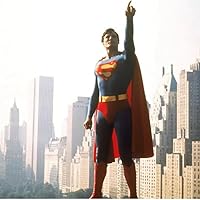
This book was so repetitive. The subject matter of course was very interesting and there's definitely a case made for people (whoever they are, didn't know it was a controversy) who downplayed the effects of the broadcast of War of the Worlds on the radio. But the book was repetitive. Some chapters didn't seem to make sense for the content of the chapter. Many citations were repeated. Over and over. A glaring mistake of naming "George Reeves of Superman" instead of Christopher Reeves seemed odd.
To summarize, this was poorly edited. It could have been a lengthy article instead.
And repetitive.
Sooooo repetitive.
To summarize, this was poorly edited. It could have been a lengthy article instead.
And repetitive.
Sooooo repetitive.

December 20, 2024
I wanted to give this 4 stars, but I found this book only mildly entertaining and interesting. This book was mainly about Orson Welles the man, who is a complicated person who does not come across as all that likable.
It wasn't a waste of time however, so if you think you might find a non-fiction story about a radio show that convinced many people throughout the country that the U.S. was being invaded by Martians an interesting story, then give it go.
I did enjoy learning about the details of that event that I kind of always wondered about.
It wasn't a waste of time however, so if you think you might find a non-fiction story about a radio show that convinced many people throughout the country that the U.S. was being invaded by Martians an interesting story, then give it go.
I did enjoy learning about the details of that event that I kind of always wondered about.

February 10, 2025
The 1938 radio broadcast of War Of The Worlds has always fascinated me.
This is a great look at that legendary broadcast,and at Orson Welles.
While many today downplay the broadcast and its effect on the population that night, this book shows that yes,indeed, thousands of Americans truly believed an invasion from Mars was happening,and that panic did rule the night for many.
We are reminded just how new radio was at the time,and how much people believed what they heard from it.
A very entertaining and enjoyable book.
This is a great look at that legendary broadcast,and at Orson Welles.
While many today downplay the broadcast and its effect on the population that night, this book shows that yes,indeed, thousands of Americans truly believed an invasion from Mars was happening,and that panic did rule the night for many.
We are reminded just how new radio was at the time,and how much people believed what they heard from it.
A very entertaining and enjoyable book.

May 4, 2025
More like 3.5.
As a huge fan of the Welles War of the Worlds broadcast, I was curious what new info this book would have. There is plenty to like, as the author focused on a ton of things happening worldwide that led to the panicnin 1938. The broadcast and the aftermath of it are the main focus for part 2 of the book, and the information is presented well.
My only complaint is that at times it seemed that certain facts (and sometimes quotes) were repeated, and teases for upcoming points to be made were, too.
As a huge fan of the Welles War of the Worlds broadcast, I was curious what new info this book would have. There is plenty to like, as the author focused on a ton of things happening worldwide that led to the panicnin 1938. The broadcast and the aftermath of it are the main focus for part 2 of the book, and the information is presented well.
My only complaint is that at times it seemed that certain facts (and sometimes quotes) were repeated, and teases for upcoming points to be made were, too.

March 19, 2025
So I was the nerdy kid in 5th grade back in 1980 that started collecting radio shows from the 30's and 40's so.....this book is right up my wheelhouse.
We learn about the downfall of newspaper and the rise of radio, of Orson Welles as a person, as an artist, we learn about the show, the script, the panic and the aftermath of the War of the Worlds broadcast.
Good stuff (if and only if you are interested in the subject matter)
We learn about the downfall of newspaper and the rise of radio, of Orson Welles as a person, as an artist, we learn about the show, the script, the panic and the aftermath of the War of the Worlds broadcast.
Good stuff (if and only if you are interested in the subject matter)

July 19, 2025
Overall it was a decent book, not amazing, not overly captivating, but decent. I felt that they stretched the book out by about 10 more chapters than it needed. It became repetitive, after about chapter 9-10, and lost my interest. The big message is, that people have been able to be manipulated by ANY form of media since the beginning of time, and this just proved that, in an age of limited media.
November 10, 2024
This is a book I won on the Goodreads give away contest. It was a good book, taking a look at Orson Welles and the radio program "The War of the Worlds" that terrorized people on October 31 1938.
In reading the book and information about Welles' person and character and I will tell you, I don't like the man. He was an arrogant, egotistical bully.
Well worth the read
In reading the book and information about Welles' person and character and I will tell you, I don't like the man. He was an arrogant, egotistical bully.
Well worth the read

January 31, 2025
Interesting, but repetitive

Did Not Finish
February 3, 2025I thought I would find this interesting but overall am finding I dont really care. I feel like this would be an interesting documentary to watch but I’m finding it a boring read.
February 22, 2025
This book was good but very repetitive and had lots of unnecessary expanded stories of people’s testimonies from the War of the worlds day.

March 24, 2025
Good read on the mood of the country at this time and a good history of the man, Orsen Welles. Lots of sources and interesting anecdotal references.

May 10, 2025
Breezy, but somehow still padded. A lot of Orson Welles backstory is part of the reason for that. But I enjoyed the look at the broadcast, and the aftermath.

May 16, 2025
This was a mildly amusing read.

September 7, 2025
I really wanted to like Dead Air—the premise sounded like the perfect setup for a gripping thriller. But honestly, it just didn’t deliver.

October 25, 2025
At times too drawn out and repetitive.

October 30, 2025
Interesting history of the 1938 radio broadcast of "The War of the Worlds," but a lit of it is repeated.

December 30, 2025
Loved all of the different quotes from newspapers as well as the backstory, but toward the end, the book got redundant.

Displaying 1 - 30 of 34 reviews