

What do you think?

Dionysos Rising: The Birth of Cultural Revolution Out of the Spirit of Music
E. Michael Jones Following up his best-seller, Degenerate Moderns, Jones reveals how major figures connected with modern music projected their own immorality into the field of music which has been the main vehicle of cultural revolution in the West. For the first time ever, a unified theory of music and cultural revolution links the work of figures like Wagner, Nietzsche, Schönborg, Jagger and others to show the connection between the demise of classical music and the rise of rock 'n' roll. Beginning with Nietzsche's appropriation of Wagner's opera Tristan and Isolde, music became the instrument for cultural upheaval. What began at the barricades of Dresden in 1849 found its culmination at Woodstock and Altamont and the other Dionysian festivals of 1969. Jones shows the connection between the death of classical music and the rise of the African sensibility which Nietzsche saw as the antidote to Wagner prostrating himself before the cross in Parsifal. Nietzsche prophesied the end of the age of Christ/Socrates and the return of the spirit of music to philosophy. That return took place at the end of 1969 at an abandoned racetrack outside of San Francisco, and the world has never been the same.
"And a man who has not 'music' in him is apt to disintegrate states since music is equally suggestive of personal love or political concord." - G. Wilson Knight, The Shakespearean Tempest
"And a man who has not 'music' in him is apt to disintegrate states since music is equally suggestive of personal love or political concord." - G. Wilson Knight, The Shakespearean Tempest
204 pages, Paperback
First published April 1, 1994
About the author
E. Michael Jones
71 books379 followersCatholic writer, former professor at Saint Mary's College in Indiana and the current editor of Culture Wars magazine.
E. Micheal Jones is controversial for his criticism against judaism.
E. Micheal Jones is controversial for his criticism against judaism.
Ratings & Reviews
Friends & Following
Create a free account to discover what your friends think of this book!
Community Reviews
Displaying 1 - 17 of 17 reviews

June 11, 2023
The real question in Nietzsche scholarship is whether he went back, either to the brothel in Cologne or to another one in Leipzig. Thomas Mann, for one, thought he did, and not only that, but that he went back and deliberately infected himself with syphilis.
THE SEARCH FOR THE NEXT ANN
Now that I’ve watched every clip of Ann Coulter available on YouTube at least three times each, and now that she’s been blacklisted from ABC, NBC, CNN, FOX, and ITV, I’ve officially run out of content. Her most recent TV appearance seems to be from last year on Murdoch-owned TalkTV’s Piers Morgan Uncensored:
It’s high time I part with the Queen WASP and begin my search for the new public intellectual to fanboy over. And while a few candidates pop into my mind, something that’s been bothering me is Ann’s taste in music:
Ann is a Deadhead. And while there’s certainly no liberal that’s on her level, the only one talking head that is close to being considered an archnemesis would be Al Franken…. who’s also a Deadhead:
Luckily for us, Ann is fully aware that Al’s a GD stan. Apparently they’ve both even been spotted at the same concerts. Of course, she has an opinion to give:
As Christian as I am, I am a sucker for that psychedelic rock stuff, but I never really got into the Grateful Dead. But, hey, why not take musical taste into account in choosing America’s Next iNtellectual .
THE CONTESTANTS
First up, we have Camille Paglia, whose voice has been described as Woody Woodpecker trying to fix a roof. Camille gained attention after her 1990 New York Times op-ed “Madonna – Finally, a Real Feminist” defending the Queen of Pop’s “Justify My Love” music video:
Camille is correct in ending Madonna’s prime at the year 1991. Does anyone else remember during the 2016 Presidential election when Maddy offered to suck our dingdongs in exchange for voting for Hillary Clinton, and then we all promptly tossed our “I’m with Her” pamphlets into the fireplace to use as tinder for the winter?
Camille is also right about Yoko Ono crippling John Lennon. It’s no wonder he had to fake his death to get away from her after the horror that was “Kiss Kiss Kiss”. But we’re not fools, John.
Side note: Someone was telling me how Double Fantasy was one of his favorite albums, and how the amazement he felt at one of Yoko’s concert seeing her surrounded by a luminant sea as fans tomahawked their lightsticks while Yoko hunched, moaned, groaned, and banshee-screamed on stage.
Next up, a darling in the alternate information realm, Miles W. Mathis. A painter, scientist, sculptor, writer, poet, aesthete, and he can play Clair de Lune on the piano. Have you ever seen such a Renaissance man? Let’s see if his taste in music is as sophisticated in his “Billie Eilish: How Your Kids Are Being Messed Up”:
Indeed, what mainstream media platform isn’t? And what important historical figure isn’t a gay Jewish actor? He gets points for knocking down Schoenberg, and bonus points for recognizing that Billie Eilish is just a character constructed in a McKinsey meeting room to sell Celexa, Prozac, and Zoloft to teenagers. I will also be the first to admit that Miles does have nice feet, so extra bonus points for that.
A BIRTHDAY MIRACLE
Piggly wigglies aside, I didn’t feel any of these contenders could live up to the expectation of being my next ANN. Camille – too Freudian. Miles – too Nietzschean.
Then, the end of last year, when I took a sabbatical from my boring tech job to attend bartending school, on the night of November 15th, the birthday of yours truly, God answered my prayers when I decided to do my weekly news check on the well-respected journal the Unz Review , and I saw the headline.
And at that moment, my heart grew three sizes that fateful birthday.
INTRODUCING THE NEXT ANN: E. MICHAEL JONES
Laities and gentile men, join us this August 18, 20XX for an evening of “Jewish doo-wop” as E. Michael Jones covers 33 of the greatest revolutionary, chart-topping hits of the 1960s! with classic tunes like
“Will You Love Me Tomorrow” by Gerry Goffin and Carole King
“Angel Baby” by Rosie and the Originals
as well as originals from E. himself such as
“The Neocon Song”
ANN..NDD SCENE
Suffice it to say, I’m in love. I literally have on Google Docs pages and pages of connections, quotes, and shenanigans surrounding E. Michael Jones, but I’m almost tearing up from frustration because it would take me days to write everything I want to write on the topic of music and EMJ. Music topics would’ve included:
- J.S. Bach and his fugue duel with the homosexual Frederick the Great’s chromaticism
- Wham! telling us outright that the fight for Western Liberalism is the fight for the Gay Disco
- Jackson Wang performing“magic” witchcraft on the Coachella stage
- Archbishop Rembert Weakland destroying Catholic liturgy and using church funds as remittance towards one of his boyfriends’ blackmail
- Jackie Kennedy commissioning Jewish Leonard Bernstein to write a blasphemous Catholic “MASS”
- Whatever Usher is wearing here
- Denise Matthews from Prince’s girl group Vanity 6 appearing on the Joan Rivers Show to talk about her experience with demons and freebasing cocaine, only to have Joan bring on a male stripper to pull his pants down and expose his glittery-thonged bare asscheeks for millions to see on TV to somehow prove that the devil is not at work
- Michael Jackson’s run-in with “the industry”
- Kanye West’s run-in with “the industry”
- Public Enemy’s run-in with “the industry”
- Roger Waters’ run-in with the “the industry”
- Sedevacantists playing classic rock songs backwards
- Tipper Gore vs Dee Snider
And that’s just off the top of my head without going into the real evil, wickedness in the music industry. But this season of reviews will improve from the last with added restraint. So stay tuned!
I never would’ve thought I would spend my Friday nights watching full-length operas on Youtube, but E. Michael Jones managed to convince me to do just that with Dionysos Rising. The same way art students are duped into thinking there is any deep meaning behind paintings by Pollack or Mondrian, is the same way me and other students in music theory class were duped into believing there was anything good in Schoenburg or John Cage.
Could it be said any better? The book is pretty much celebrity gossip, but with historical figures and more “spiritual,” i.e. more fun. There are slow moments where E. repeats himself when discussing atonality, but slogging through that is worth it when we get to the climax where we are introduced to Charles Manson and we are taken to the 1969 Altamont concert. I know we’re supposed to be disgusted by the scene EMJ presents there, but God, if only I could’ve been around to see it.
But in the meantime, this Pride Month, let’s take a cue from Vladimir Zelenskyy and give two big L’Chaims for America and our ANN. Because America is now
❤️🧡💛💚💙💜❤️🧡💛💚💙💜❤️🧡💛💚💙💜❤️🧡💛💚
💜💙💚💛🧡❤️💜💙💚💛🧡❤️💜💙💚💛🧡❤️💜💙💚💛
THE SEARCH FOR THE NEXT ANN
Now that I’ve watched every clip of Ann Coulter available on YouTube at least three times each, and now that she’s been blacklisted from ABC, NBC, CNN, FOX, and ITV, I’ve officially run out of content. Her most recent TV appearance seems to be from last year on Murdoch-owned TalkTV’s Piers Morgan Uncensored:
Ann: You can’t compare everything to Hilter. [Yep. We’re goin’ there.]
It’s high time I part with the Queen WASP and begin my search for the new public intellectual to fanboy over. And while a few candidates pop into my mind, something that’s been bothering me is Ann’s taste in music:
Interviewer: My name is Cassidy. And there may be a song I’m named after that you might–
Ann: NO!!1!1! YOU’RE CASSIDDYYYY??????
Ann is a Deadhead. And while there’s certainly no liberal that’s on her level, the only one talking head that is close to being considered an archnemesis would be Al Franken…. who’s also a Deadhead:
Al: I suppose you get tired of being asked what it’s like to be the new member of the Grateful Dead.
Brent Mydland: Yeah, I’m getting real burned out on the new guy image here.
Al: So Brent, what’s it like being the new member of the Grateful Dead?
Brent: A lot of people asking me what it’s like being in the Grateful Dead.
Al: Uh huh.
Luckily for us, Ann is fully aware that Al’s a GD stan. Apparently they’ve both even been spotted at the same concerts. Of course, she has an opinion to give:
Interviewer: Did the Grateful Dead give you and Al Franken something to talk about during your debates?
Ann: Apart from Al Gore, Al Franken is the most un-Deadhead like person I know of who purports to be a Deadhead.
As Christian as I am, I am a sucker for that psychedelic rock stuff, but I never really got into the Grateful Dead. But, hey, why not take musical taste into account in choosing America’s Next iNtellectual .
THE CONTESTANTS
First up, we have Camille Paglia, whose voice has been described as Woody Woodpecker trying to fix a roof. Camille gained attention after her 1990 New York Times op-ed “Madonna – Finally, a Real Feminist” defending the Queen of Pop’s “Justify My Love” music video:
On “Nightline,” Madonna bizarrely called the video a “celebration of sex.” She imagined happy educational scenes where curious children would ask their parents about the video. Oh, sure! Picture it: “Mommy, please tell me about the tired, tied-up man in the leather harness and the mean, bare-chested lady in the Nazi cap.” O.K., dear, right after the milk and cookies.
Camille is correct in ending Madonna’s prime at the year 1991. Does anyone else remember during the 2016 Presidential election when Maddy offered to suck our dingdongs in exchange for voting for Hillary Clinton, and then we all promptly tossed our “I’m with Her” pamphlets into the fireplace to use as tinder for the winter?
If you vote for Hillary Clinton I will give you a blowjob. I’m really good. I’m not a douche and I’m not a tool. I make eye contact and I do swallow.
Camille is also right about Yoko Ono crippling John Lennon. It’s no wonder he had to fake his death to get away from her after the horror that was “Kiss Kiss Kiss”. But we’re not fools, John.
Side note: Someone was telling me how Double Fantasy was one of his favorite albums, and how the amazement he felt at one of Yoko’s concert seeing her surrounded by a luminant sea as fans tomahawked their lightsticks while Yoko hunched, moaned, groaned, and banshee-screamed on stage.
Next up, a darling in the alternate information realm, Miles W. Mathis. A painter, scientist, sculptor, writer, poet, aesthete, and he can play Clair de Lune on the piano. Have you ever seen such a Renaissance man? Let’s see if his taste in music is as sophisticated in his “Billie Eilish: How Your Kids Are Being Messed Up”:
One look at her should tell you she is bad news. Until today I didn’t know who she was, because I am 58 and have better things to do than listen to crap “music”. But the classical music station I listen to in my long drive to the grocery store was playing Schoenberg, so I hit scan and was immediately taken one station up, to NPR, which was of course pushing Billie Eilish on its audience. I say “of course” because of course NPR is a CIA front and so is Eilish. What isn’t?
Indeed, what mainstream media platform isn’t? And what important historical figure isn’t a gay Jewish actor? He gets points for knocking down Schoenberg, and bonus points for recognizing that Billie Eilish is just a character constructed in a McKinsey meeting room to sell Celexa, Prozac, and Zoloft to teenagers. I will also be the first to admit that Miles does have nice feet, so extra bonus points for that.
No trench foot there. The last one is yogi toes, since I do yoga with Miles and I have never seen anyone spread their toes so far.
A BIRTHDAY MIRACLE
Piggly wigglies aside, I didn’t feel any of these contenders could live up to the expectation of being my next ANN. Camille – too Freudian. Miles – too Nietzschean.
Then, the end of last year, when I took a sabbatical from my boring tech job to attend bartending school, on the night of November 15th, the birthday of yours truly, God answered my prayers when I decided to do my weekly news check on the well-respected journal the Unz Review , and I saw the headline.
PUT YO CHAIN ON, N*GGA
And at that moment, my heart grew three sizes that fateful birthday.
INTRODUCING THE NEXT ANN: E. MICHAEL JONES
Laities and gentile men, join us this August 18, 20XX for an evening of “Jewish doo-wop” as E. Michael Jones covers 33 of the greatest revolutionary, chart-topping hits of the 1960s! with classic tunes like
“Will You Love Me Tomorrow” by Gerry Goffin and Carole King
“Angel Baby” by Rosie and the Originals
as well as originals from E. himself such as
“The Neocon Song”
ANN..NDD SCENE
Suffice it to say, I’m in love. I literally have on Google Docs pages and pages of connections, quotes, and shenanigans surrounding E. Michael Jones, but I’m almost tearing up from frustration because it would take me days to write everything I want to write on the topic of music and EMJ. Music topics would’ve included:
- J.S. Bach and his fugue duel with the homosexual Frederick the Great’s chromaticism
- Wham! telling us outright that the fight for Western Liberalism is the fight for the Gay Disco
- Jackson Wang performing
- Archbishop Rembert Weakland destroying Catholic liturgy and using church funds as remittance towards one of his boyfriends’ blackmail
- Jackie Kennedy commissioning Jewish Leonard Bernstein to write a blasphemous Catholic “MASS”
- Whatever Usher is wearing here
- Denise Matthews from Prince’s girl group Vanity 6 appearing on the Joan Rivers Show to talk about her experience with demons and freebasing cocaine, only to have Joan bring on a male stripper to pull his pants down and expose his glittery-thonged bare asscheeks for millions to see on TV to somehow prove that the devil is not at work
- Michael Jackson’s run-in with “the industry”
- Kanye West’s run-in with “the industry”
- Public Enemy’s run-in with “the industry”
- Roger Waters’ run-in with the “the industry”
- Sedevacantists playing classic rock songs backwards
- Tipper Gore vs Dee Snider
And that’s just off the top of my head without going into the real evil, wickedness in the music industry. But this season of reviews will improve from the last with added restraint. So stay tuned!
I never would’ve thought I would spend my Friday nights watching full-length operas on Youtube, but E. Michael Jones managed to convince me to do just that with Dionysos Rising. The same way art students are duped into thinking there is any deep meaning behind paintings by Pollack or Mondrian, is the same way me and other students in music theory class were duped into believing there was anything good in Schoenburg or John Cage.
That revolution was in many ways similar to AIDS… (p. 163)
Could it be said any better? The book is pretty much celebrity gossip, but with historical figures and more “spiritual,” i.e. more fun. There are slow moments where E. repeats himself when discussing atonality, but slogging through that is worth it when we get to the climax where we are introduced to Charles Manson and we are taken to the 1969 Altamont concert. I know we’re supposed to be disgusted by the scene EMJ presents there, but God, if only I could’ve been around to see it.
But in the meantime, this Pride Month, let’s take a cue from Vladimir Zelenskyy and give two big L’Chaims for America and our ANN. Because America is now
❤️🧡💛💚💙💜❤️🧡💛💚💙💜❤️🧡💛💚💙💜❤️🧡💛💚
🏳️🌈 🇺🇸 🏳️🌈 🇺🇸 🏳️🌈 🇺🇸 🏳️🌈 🇺🇸 🏳️🌈 🇺🇸 🏳️🌈 🇺🇸 🏳️🌈 🇺🇸
🪩 ・:*:・。. 8====D ლ(◉❥◉ ლ) ☆゚.* ・。゚ 🪩
🪩 ☆゚.*・。゚ ONE ☆゚.*・。゚☆゚BIG ☆゚.* ・。゚ 🪩
🪩 ◙▒◙ ♫♩♬ ♩♬ GAY DISCO ♫♩♬ ♩♬ ◙▒◙ 🪩
🪩 ☆.*・。゚ (‿ˠ‿)(◉ ‿ ◉ )(‿ˠ‿) .。・:* 🪩
🇺🇸 🏳️🌈 🇺🇸 🏳️🌈 🇺🇸 🏳️🌈 🇺🇸 🏳️🌈 🇺🇸 🏳️🌈 🇺🇸 🏳️🌈 🇺🇸 🏳️🌈
💜💙💚💛🧡❤️💜💙💚💛🧡❤️💜💙💚💛🧡❤️💜💙💚💛

February 19, 2014
Dionysos Rising is about the role Wagner, Nietzsche, Schoenberg, and the rock artists of the 20th Century had in moving music away from a healthy mix of reason and emotion and toward a self-destructive, irrational frenzy. This one was dense and often hard to follow. There were a lot of new (to me) ideas in it and it will need a second reading to really process them.
A major theme was Western liberals' association of Western culture with Christian values, and of African culture with a free, uninhibited lifestyle. These perceptions led them to attempt to replace Western traditions with elements of African music, dress, and culture. Sometimes I wondered if he was over-generalizing, but the point is very thought-provoking. (Here's a "provoked thought" that Jones didn't address himself: much of contemporary Christianity believes that the church that has been refined through the centuries represents stale and institutional religion. In many ways, they also want to shed this heritage in favor of what they see as a more undeveloped, uninhibited culture coming from Africa.)
Jones does often get bogged down in dramatic descriptions of the personal lives of his subjects. He also constantly makes confident statements about how life events influenced their work. Perhaps the connections he draws are valid, and perhaps not, but I often wasn't convinced that he had demonstrated these connections, rather than merely asserting them. I'm looking forward to more clarity from a second reading.
A major theme was Western liberals' association of Western culture with Christian values, and of African culture with a free, uninhibited lifestyle. These perceptions led them to attempt to replace Western traditions with elements of African music, dress, and culture. Sometimes I wondered if he was over-generalizing, but the point is very thought-provoking. (Here's a "provoked thought" that Jones didn't address himself: much of contemporary Christianity believes that the church that has been refined through the centuries represents stale and institutional religion. In many ways, they also want to shed this heritage in favor of what they see as a more undeveloped, uninhibited culture coming from Africa.)
Jones does often get bogged down in dramatic descriptions of the personal lives of his subjects. He also constantly makes confident statements about how life events influenced their work. Perhaps the connections he draws are valid, and perhaps not, but I often wasn't convinced that he had demonstrated these connections, rather than merely asserting them. I'm looking forward to more clarity from a second reading.

May 7, 2012
E. Michael Jones has a series of books analyzing contemporary culture and its roots. A key to this cultural analysis is the sexual revolution. Jones suggests that that revolution has come from various influence, and his various books trace those influences.
In this book, he traces music from Richard Wagner through to modern times, showing how music itself reflects a growing atheism and an abandonment of order. Abolish creation and replace it with any kind of evolution by chance is to impose an ultimate irrationalism in the universe. This irrationalism shows itself in the development of music in the later part of the 19th century into the contemporary, avant-garde, and abstractionism of the 20th century. Without rules there is no rationality to be displayed either in music or anything else.
The author could have started earlier, with Beethoven, who suggested a goal was "no rules." The development of western music has been the slow abolition of form and harmony with an endless cacophony of sound that has emptied the concert halls around the world.
By charting the history, Jones shows how music became a weapon in the culture wars by people who had as their agenda, the rejection of Christian morality. Perhaps it's time to change the music in our culture if there is to be genuine change.
In this book, he traces music from Richard Wagner through to modern times, showing how music itself reflects a growing atheism and an abandonment of order. Abolish creation and replace it with any kind of evolution by chance is to impose an ultimate irrationalism in the universe. This irrationalism shows itself in the development of music in the later part of the 19th century into the contemporary, avant-garde, and abstractionism of the 20th century. Without rules there is no rationality to be displayed either in music or anything else.
The author could have started earlier, with Beethoven, who suggested a goal was "no rules." The development of western music has been the slow abolition of form and harmony with an endless cacophony of sound that has emptied the concert halls around the world.
By charting the history, Jones shows how music became a weapon in the culture wars by people who had as their agenda, the rejection of Christian morality. Perhaps it's time to change the music in our culture if there is to be genuine change.

February 22, 2022
A supremely and scarily accurate diagnosis of how the culture of the west was and is being plagued by revolution, some of which is coming through music/Dionysian displays. It was very interesting to see the throughline that connects Wagner and Nietzsche to Crowley and Jagger, as well as the implications that arise upon realizing the similarity of the message that started in 1840s Dresden and continues to this day. E. Michael Jones' writing is often incredibly poignant and he hits the nail on the head throughout. My biggest gripe is that my version of the book came with quite a few typos and misspellings, sometimes making certain passages difficult to at first read. The actual content is worth it though. There's a great section around the end of the first chapter where Jones calls into question the extent to which one will take their actions, in the name of liberation and sexual desire, to transgress order. That's one of the fundamental questions asked by Jones and is pertinent throughout the book. To someone who has never been compelled to show even the slightest bit of ambivalence towards sexual liberation and the revolution it brings, I'm sure it (and the book's thesis as a whole) would evoke all kinds of negative feelings and efforts to de-legitimize the relevance of Jones' findings. But to the one who seeks truth and wants to live in a virtuous (much less functional) society, this is especially relevant.
March 19, 2013
This book speaks to a subject that I had no idea about: how music was used to usher in the cultural revolution of the 1960's. It is well researched and easy to understand. Some background knowledge of modern European history would be helpful but it isn't required. If you ever wondered how music is used to shape a culture (for good or for evil), read this book.

March 1, 2009
World class.
November 13, 2025
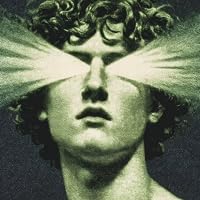
This is the second book in E. Michael Jones' Degenerate Moderns trilogy. Dionysos Rising traces the demise of classical music with the rise of music as a vehicle for cultural revolution from Wagner's chromaticism and Nietzsche's Birth of Tragedy to Negro Jazz, their influences on modern rock and how they ultimately serve as an attack on the culture of the West rooted in the conflict between Dionysian chaos and the harmony of Apollonian order.
"According to the ancients, the order of creation was...bound together in a unity both mathematical and musical...Harmony had come to possess a cosmic meaning, that is, as a manifestation of the music of the spheres, a political manifestation, as seen in the well-ordered state, and a psychological manifestation, as seen in the well-ordered soul. In each instance, the most accurate description of that state of order is taken from the realm of music."
"So sumphonia...is the order introduced into the soul by music, an order which re-establishes the order of the cosmos."
"The ancients attributed to music a purifying and clarifying power, as a result of which the soul is taken out of its state of confusion and returned to its normal condition."
Beethoven once wrote that "music is founded upon the exalted symbols of the moral sense...To submit to these inscrutable laws, and by means of these laws to tame and guide one's own mind so that the manifestations of art may pour out: this is the isolating principles of art. To be dissolved in its manifestations, this is our dedication to the divine, which calmly exercises its power over the raging of the untamed elements and so lends to the imagination its highest effectiveness. So always art represents the divine, and the relationship of men towards art is religion: what we obtain from art comes from God, is divine inspiration, which appoints an aim for human faculties that we cannot attain."
Disorder "transposed into the musical realm would be discord, which transformed into the political would be insurrection."
"Music is thus the antithesis to anarchy. Music bespeaks a receptivity to the order of nature apprehended through reason, rather than a false order imposed on nature by man's desires."
"Music acts directly on the soul. Disordered music leads to disordered lives, which lead to disorder in the state. Plato, sensing the importance of order in the soul, banned the playing of certain modes in his ideal republic in the certainty that the disorder this music introduced into the soul would soon put the state in jeopardy of insurrection."
"Wagner makes the same connection between music and the state that Plato and Aristotle did, but he inverts their values." "The vehicle of rebellion is the overthrow of 'Absolute melody.'"
Wagner's own writings connect the question of music with the state: "As Metternich...could not conceive the State under any form but that of Absolute Monarchy: So Rossini, with no less force of argument, could conceive the Opera under no other form than that of Absolute Melody. Both men said: 'Do you ask for Opera and State? Here you have them;--there are no others!"
Wagner's music therefore rebelled against the order of both monarchy and melody.
"Melody, as the coherent organization of notes around a tonal center that dominated and organized its emotion...was the soul of music; it was to music what plot was to tragedy, according to Aristotle...Wagner and his contemporaries had become radically dissatisfied with both forms of order."
Wagner uses sexual metaphors to explain himself: "Music is a woman...the bearing woman, the Poet the begetter." "Music, in other words, becomes the handmaid of a message imposed upon her from without. She has no need for an organizational principle of her own, because the man...provides one for her."
"Woman," Wagner tells us, "first gains her full individuality in the moment of surrender. She is the Undine who glides soulless through the waves of her native clement, till she receives her soul through the love of a man."
"Wagner's concept of liberation entails the removal of the rational organizing principle or soul from both women and music...He would attempt to subjugate both to his overweening desire." Wagner's creed could be called the first "music ideology, one that sees, a la Schopenhauer, the musical realm as no longer possessing its own laws and rights, but rather nothing more than pure 'feminine' potentiality, which can be fecundated or organized according to his puissant and world-creating masculine will."
"The world," Schopenhauer says, "is my Will." "It is hardly a coincidence that Nietzsche, who apotheosized the Will to Power, would be immediately attracted to Wagner and his music. His music is incipient revolution, sexual liberation, and totalitarianism all rolled up in one."
"The musical idea was known as chromaticism." It reached its highest expression in Wagner's Tristan und Isolde. "Wagner was attracted to the twelve half-tones of the chromatic scale precisely because their indeterminacy bespoke a freedom from order that the diatonic melody would not allow."
"When the melody, maligned as 'patriarchal,' is banned from music, or at the very least subordinated to something extramusical like the poet's text, expressive of his 'yearning' the musical consequences are catastrophic...It emotes endlessly but can find no resolution to the emotions it evokes."
"Classical music, freed from patriarchal melody by Wagner's chromatic modulations, would go into a state of terminal decline."
In The Birth of Tragedy "Nietzsche portrayed Socrates as the villain in the cultural history of the West." Socrates "turned his cycloptic eye on tragedy and was incapable of peering into the Dionysian abyss" and was therefore guilty of the "optimistic dialectic," which used "the whip of its syllogisms to drive music out of tragedy."
"But Nietzsche saw in music 'the immediate replica of the will itself' and, as a result, the metaphysical substratum of all reality." "Music, and here one must remember that he had Wagner's music in mind, would bring about the overthrow of the age of Christ/Socrates and usher in the age of Dionysian excess that Nietzsche had discovered in texts such as Euripides' Bacchae. In Nietzsche, Wagner found an heir and explicator of his theory of cultural revolution."
Nietzsche "absolutized the hatred of reason; he provided a cultural program for banning the entire tradition of the Classical West, which was based on a reverence for reason, whose cause he traced back to Socrates...The advent of Reason among the Greeks signified the death of music and tragedy, the banning of the worship of Dionysos. With the advent of Socrates and the demise of tragedy, music was henceforth to conform itself to reason. This is, indeed, the gist of both Plato's commentary on music in the Republic and Aristotle's in the Politics. It is also the source of the tradition of world harmony in the West."
"Just as Pythagoras could subdue lust by his flute playing, so Wagner could incite it through Tristan...Not only does sensual, Dionysian music dull human reason and unleash revolutionary forces in society; it also tends to become an object of worship,” like in Woodstock.
Nietzsche's predilection for dissonance appears in The Birth of Tragedy as the characteristic of the Dionysian personality. "The Dionysian is the 'womb' out of which both music and tragic myth are born." It is "'the eternal and original artistic violence' that brings the world of appearances into existence. Everything, in other words, springs from the womb of dissonance…The true or Dionysian man is a manifestation of dissonance. The ugly and disharmonic are simply games the will plays with itself."
"In the universe of musical meaning, there are basically two emotional/tonal elements, consonance and dissonance, corresponding to tension and resolution. In the music Nietzsche proposes, "the dissonance is unrelieved, because that is the best expression of the psychic state of Dionysian man...universal dissonance is the best vehicle for bringing about the cultural revolution...the ascendency of Dionysian man and the defeat of the Classical culture of world harmony." Musical discord and social disharmony go hand in hand.
Nietzsche, after infecting himself with syphilis, eventually attacks Wagner’s Christian themes in Parsifal (a return to tonality and morality) as an “apostasy” and decides to sublimate his disease into an intellectual attack on the culture of the West. He turns his back on Wagner by "seeking in Africa the Dionysian liberation he promised but failed to deliver." "The Negro was the photographic negative not only of the white man, but of his values as well."
In the Negro and the sonic ugliness, sensuality and Dionysiac frenzy of his ceremonial music was the catalyst for the overturning of European values. "A whole host of white cultural revolutionaries projected onto the Negro race their own fantasies of sexual liberation...Jazz (which rose out of the religion of voodoo with the purpose of ecstasy), and eventually rock n' roll, persuaded millions of whites that they could throw off Christian morality in the name of racial solidarity. Eventually the two streams, the Nietzschean and the Negroid would coalesce."
The voodoo rite of possession "became the standard of American performance in rock n' roll. They let themselves be possessed not by any god they could name but by the spirit they felt in the music. Their behavior in this possession was something Western society had never before tolerated."
"Negro music--first Jazz, then rock n' roll--was the musical vehicle for the transvaluation of traditional values. Jazz was the Dionysian expression of this world as the cultural revolutionaries' will. With the rise of the United States as the world's primary cultural power after World War II, the American cultural revolutionaries' reading of the Dionysian/Apollonian struggle took on a racial tinge. Now their cosmic drama of Gnostic liberation entailed the black instinctual noble savage pitted against a white 'fascist' moral order."
Once the moral law is abolished it cannot be resuscitated through legal niceties. "It necessitates totalitarian reaction to reestablish at least the image of social order." "The abolition of the natural law leads to tyranny...Libertinism and fascism are two sides of the same coin." "In Germany, Weimar preceded the Third Reich."
"The musical politics of the postwar era were simply the cultural politics of the Third Reich turned upside down. Whatever counted as 'degenerate art' under the Nazis was now promoted...the more 'degenerate' a piece of music might have sounded to the Third Reich, the more 'relevant' it was now."
The Dionysian orgy of rock concerts, infused with the occult and demonic (such as the Stones' "Sympathy for the Devil") became a rebellion against the whole idea of the state, family, and civilization--against all reason, social order, all possible morality and any sexual restraint.
"In an eerie replication of the rites in which the god was torn to pieces by his crazed followers," rock concerts became frenzied and dangerous. Riots broke out and "the performers seemed intimidated by the violent forces their music unleashed. Suddenly they recognized they were not in control of these forces."
Rock fans acted like sacrificial victims, "impelled, as if by some supernatural force, to offer themselves as human sacrifices."
"Sometime during the modern age the work of art ceased to be an act of mimesis, of imitation of nature, as Aristotle would have called it, and became instead a work of sympathetic magic, something that enhanced the power of the 'artist' and brought about the type of world he and his demonic supporters found congenial. Art became a sort of occult terrorism."
This "aesthetic terrorism is still the regnant religious rite at rock concerts which still culminates in human sacrifice on a disconcertingly regular basis" (this is prescient given the deaths at the Travis Scott concert in 2021--rap being a further degeneration of this concept).
Jones sees the culmination of all this in the Manson murders in 1969. Manson saw in music the most potent agent of change and it was his deepest aspiration to become a rock musician to spread his message. "Helter Skelter" (inspired by the Beatles) was Manson's occult term for the apocalyptic uprising that these murders were to presage and provoke to usher in the new Dionysian age.
There can be no culture of Dionysian excess without human sacrifice. "All the manifestations of Dionysian culture follow their rigid trajectory toward death."
"According to the ancients, the order of creation was...bound together in a unity both mathematical and musical...Harmony had come to possess a cosmic meaning, that is, as a manifestation of the music of the spheres, a political manifestation, as seen in the well-ordered state, and a psychological manifestation, as seen in the well-ordered soul. In each instance, the most accurate description of that state of order is taken from the realm of music."
"So sumphonia...is the order introduced into the soul by music, an order which re-establishes the order of the cosmos."
"The ancients attributed to music a purifying and clarifying power, as a result of which the soul is taken out of its state of confusion and returned to its normal condition."
Beethoven once wrote that "music is founded upon the exalted symbols of the moral sense...To submit to these inscrutable laws, and by means of these laws to tame and guide one's own mind so that the manifestations of art may pour out: this is the isolating principles of art. To be dissolved in its manifestations, this is our dedication to the divine, which calmly exercises its power over the raging of the untamed elements and so lends to the imagination its highest effectiveness. So always art represents the divine, and the relationship of men towards art is religion: what we obtain from art comes from God, is divine inspiration, which appoints an aim for human faculties that we cannot attain."
Disorder "transposed into the musical realm would be discord, which transformed into the political would be insurrection."
"Music is thus the antithesis to anarchy. Music bespeaks a receptivity to the order of nature apprehended through reason, rather than a false order imposed on nature by man's desires."
"Music acts directly on the soul. Disordered music leads to disordered lives, which lead to disorder in the state. Plato, sensing the importance of order in the soul, banned the playing of certain modes in his ideal republic in the certainty that the disorder this music introduced into the soul would soon put the state in jeopardy of insurrection."
"Wagner makes the same connection between music and the state that Plato and Aristotle did, but he inverts their values." "The vehicle of rebellion is the overthrow of 'Absolute melody.'"
Wagner's own writings connect the question of music with the state: "As Metternich...could not conceive the State under any form but that of Absolute Monarchy: So Rossini, with no less force of argument, could conceive the Opera under no other form than that of Absolute Melody. Both men said: 'Do you ask for Opera and State? Here you have them;--there are no others!"
Wagner's music therefore rebelled against the order of both monarchy and melody.
"Melody, as the coherent organization of notes around a tonal center that dominated and organized its emotion...was the soul of music; it was to music what plot was to tragedy, according to Aristotle...Wagner and his contemporaries had become radically dissatisfied with both forms of order."
Wagner uses sexual metaphors to explain himself: "Music is a woman...the bearing woman, the Poet the begetter." "Music, in other words, becomes the handmaid of a message imposed upon her from without. She has no need for an organizational principle of her own, because the man...provides one for her."
"Woman," Wagner tells us, "first gains her full individuality in the moment of surrender. She is the Undine who glides soulless through the waves of her native clement, till she receives her soul through the love of a man."
"Wagner's concept of liberation entails the removal of the rational organizing principle or soul from both women and music...He would attempt to subjugate both to his overweening desire." Wagner's creed could be called the first "music ideology, one that sees, a la Schopenhauer, the musical realm as no longer possessing its own laws and rights, but rather nothing more than pure 'feminine' potentiality, which can be fecundated or organized according to his puissant and world-creating masculine will."
"The world," Schopenhauer says, "is my Will." "It is hardly a coincidence that Nietzsche, who apotheosized the Will to Power, would be immediately attracted to Wagner and his music. His music is incipient revolution, sexual liberation, and totalitarianism all rolled up in one."
"The musical idea was known as chromaticism." It reached its highest expression in Wagner's Tristan und Isolde. "Wagner was attracted to the twelve half-tones of the chromatic scale precisely because their indeterminacy bespoke a freedom from order that the diatonic melody would not allow."
"When the melody, maligned as 'patriarchal,' is banned from music, or at the very least subordinated to something extramusical like the poet's text, expressive of his 'yearning' the musical consequences are catastrophic...It emotes endlessly but can find no resolution to the emotions it evokes."
"Classical music, freed from patriarchal melody by Wagner's chromatic modulations, would go into a state of terminal decline."
In The Birth of Tragedy "Nietzsche portrayed Socrates as the villain in the cultural history of the West." Socrates "turned his cycloptic eye on tragedy and was incapable of peering into the Dionysian abyss" and was therefore guilty of the "optimistic dialectic," which used "the whip of its syllogisms to drive music out of tragedy."
"But Nietzsche saw in music 'the immediate replica of the will itself' and, as a result, the metaphysical substratum of all reality." "Music, and here one must remember that he had Wagner's music in mind, would bring about the overthrow of the age of Christ/Socrates and usher in the age of Dionysian excess that Nietzsche had discovered in texts such as Euripides' Bacchae. In Nietzsche, Wagner found an heir and explicator of his theory of cultural revolution."
Nietzsche "absolutized the hatred of reason; he provided a cultural program for banning the entire tradition of the Classical West, which was based on a reverence for reason, whose cause he traced back to Socrates...The advent of Reason among the Greeks signified the death of music and tragedy, the banning of the worship of Dionysos. With the advent of Socrates and the demise of tragedy, music was henceforth to conform itself to reason. This is, indeed, the gist of both Plato's commentary on music in the Republic and Aristotle's in the Politics. It is also the source of the tradition of world harmony in the West."
"Just as Pythagoras could subdue lust by his flute playing, so Wagner could incite it through Tristan...Not only does sensual, Dionysian music dull human reason and unleash revolutionary forces in society; it also tends to become an object of worship,” like in Woodstock.
Nietzsche's predilection for dissonance appears in The Birth of Tragedy as the characteristic of the Dionysian personality. "The Dionysian is the 'womb' out of which both music and tragic myth are born." It is "'the eternal and original artistic violence' that brings the world of appearances into existence. Everything, in other words, springs from the womb of dissonance…The true or Dionysian man is a manifestation of dissonance. The ugly and disharmonic are simply games the will plays with itself."
"In the universe of musical meaning, there are basically two emotional/tonal elements, consonance and dissonance, corresponding to tension and resolution. In the music Nietzsche proposes, "the dissonance is unrelieved, because that is the best expression of the psychic state of Dionysian man...universal dissonance is the best vehicle for bringing about the cultural revolution...the ascendency of Dionysian man and the defeat of the Classical culture of world harmony." Musical discord and social disharmony go hand in hand.
Nietzsche, after infecting himself with syphilis, eventually attacks Wagner’s Christian themes in Parsifal (a return to tonality and morality) as an “apostasy” and decides to sublimate his disease into an intellectual attack on the culture of the West. He turns his back on Wagner by "seeking in Africa the Dionysian liberation he promised but failed to deliver." "The Negro was the photographic negative not only of the white man, but of his values as well."
In the Negro and the sonic ugliness, sensuality and Dionysiac frenzy of his ceremonial music was the catalyst for the overturning of European values. "A whole host of white cultural revolutionaries projected onto the Negro race their own fantasies of sexual liberation...Jazz (which rose out of the religion of voodoo with the purpose of ecstasy), and eventually rock n' roll, persuaded millions of whites that they could throw off Christian morality in the name of racial solidarity. Eventually the two streams, the Nietzschean and the Negroid would coalesce."
The voodoo rite of possession "became the standard of American performance in rock n' roll. They let themselves be possessed not by any god they could name but by the spirit they felt in the music. Their behavior in this possession was something Western society had never before tolerated."
"Negro music--first Jazz, then rock n' roll--was the musical vehicle for the transvaluation of traditional values. Jazz was the Dionysian expression of this world as the cultural revolutionaries' will. With the rise of the United States as the world's primary cultural power after World War II, the American cultural revolutionaries' reading of the Dionysian/Apollonian struggle took on a racial tinge. Now their cosmic drama of Gnostic liberation entailed the black instinctual noble savage pitted against a white 'fascist' moral order."
Once the moral law is abolished it cannot be resuscitated through legal niceties. "It necessitates totalitarian reaction to reestablish at least the image of social order." "The abolition of the natural law leads to tyranny...Libertinism and fascism are two sides of the same coin." "In Germany, Weimar preceded the Third Reich."
"The musical politics of the postwar era were simply the cultural politics of the Third Reich turned upside down. Whatever counted as 'degenerate art' under the Nazis was now promoted...the more 'degenerate' a piece of music might have sounded to the Third Reich, the more 'relevant' it was now."
The Dionysian orgy of rock concerts, infused with the occult and demonic (such as the Stones' "Sympathy for the Devil") became a rebellion against the whole idea of the state, family, and civilization--against all reason, social order, all possible morality and any sexual restraint.
"In an eerie replication of the rites in which the god was torn to pieces by his crazed followers," rock concerts became frenzied and dangerous. Riots broke out and "the performers seemed intimidated by the violent forces their music unleashed. Suddenly they recognized they were not in control of these forces."
Rock fans acted like sacrificial victims, "impelled, as if by some supernatural force, to offer themselves as human sacrifices."
"Sometime during the modern age the work of art ceased to be an act of mimesis, of imitation of nature, as Aristotle would have called it, and became instead a work of sympathetic magic, something that enhanced the power of the 'artist' and brought about the type of world he and his demonic supporters found congenial. Art became a sort of occult terrorism."
This "aesthetic terrorism is still the regnant religious rite at rock concerts which still culminates in human sacrifice on a disconcertingly regular basis" (this is prescient given the deaths at the Travis Scott concert in 2021--rap being a further degeneration of this concept).
Jones sees the culmination of all this in the Manson murders in 1969. Manson saw in music the most potent agent of change and it was his deepest aspiration to become a rock musician to spread his message. "Helter Skelter" (inspired by the Beatles) was Manson's occult term for the apocalyptic uprising that these murders were to presage and provoke to usher in the new Dionysian age.
There can be no culture of Dionysian excess without human sacrifice. "All the manifestations of Dionysian culture follow their rigid trajectory toward death."

January 27, 2017
Insightful, scholarly and sometimes you will find yourself in deep waters, frightening connections drawn between Wagner, Nietzsche, Hitler, Charles Manson and Mick Jagger. The premise of the book is clear that music has served as the vehicle of revolution for the pass 150 years. We must stop and ask ourselves, where is this revolution going and who are its next victims.

November 2, 2022
Nazi scum Jones would have loved to live in nazi germany.
March 27, 2017
Ultimately his methodology is selective, his historical connections are tenuous, and he refuses to acknowledge that the forces which lead to Wagner's leftism, which was Beethoven's transgressive social ideology and compositional philosophy. It's a start at picturing how Plato could think that the musical modes change the foundations of political society, but why does he give a soft ball to "good boy" Classical music? Wagner's an easy target for a post-WWII reader.
June 7, 2023
I should have done more research before wasting my time on this. The writer, E. Michael Jones, is an anti-Semite and Holocaust denier. His views definitely come out in this book too, albeit thinly disguised. Don’t read it unless you are a Nazi.

March 25, 2020
as the back cover says: every good library should contain a copy. Insightful and non-judgmental of a well known Catholic.

Read
June 2, 2020DNF (yet)

August 9, 2021
This is an excellent book, tracing the origin of modern music, and examining how the spirit of music influences our societies, and even ourselves.


June 15, 2026
A bit bizarre, but anyone who can trace a direct line between Wagner’s Tristan and The Rolling Stones’ Altamont fiasco has a good handle on musical culture.

May 8, 2012
read long ago - recall it was good
Displaying 1 - 17 of 17 reviews