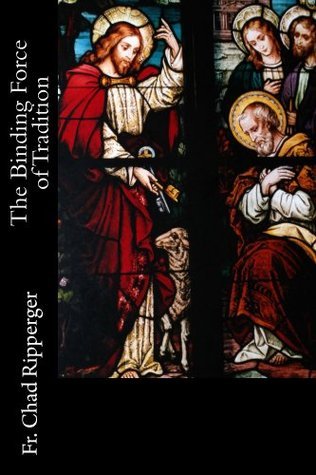
Tradition (or Traditions) are a form of divine revelation, encoded into the life of the Church. They exist alongside Scripture, but are not less authoritative. This view of Tradition is important because it solves a problem which arises when people claim that Revelation is only in Scripture. The problem is that Scripture does not contain a list of its contents, so which bible is the “real” bible. This question is important to resolve but it is impossible to answer from a Sola Scriptura viewing. Another access to Revelation is required, and that is provided by Tradition.
The book makes a detailed case that Tradition has a ‘binding force’ doctrinally and practically. And, quoting St Robert Bellarmine, Church leaders sin if they alter or refuse to pass on what they have received (43%).
The backdrop of these reflections is the Second Vatican Council (1965) and the forces of change which it unleashed upon the Catholic Church. By 1980, very little of the liturgical or devotional Tradition survived to be passed on to future generations. The question posed by the book, although not explicitly charged against the hierarchy, is have they sinned against their responsibilities to the Tradition.
This is a good question, but there is an important issue to resolve before it can be answered. There is a difference between a Divine Tradition and a human custom which has been handed on. An example of this is the ancient practice of women covering their heads in Church. It has existed since the Apostolic times, but is it a divinely mandated Tradition, or just a long enduring human custom?
The Church’s practice suggests the latter, otherwise it has sinned in making it optional for women.
The underlying question is how should people tell the difference between Tradition and custom. The book implies that everything should be treasured so as not to inadvertently lose a Tradition.
That is one approach, but it risks falling into the fallacy of traditionalising, which can present an irrational block upon reflection. That’s why it is generally recorded as a ‘fallacy’. Of course there is the other extreme too, which is the quest for novelty, and that is just as deleterious.
Good thinking, and thus a right balancing of faith and reason, requires a balancing of traditionalising against novelty-ising. These are issues of rationality, as much as they are questions of theology, and so they need exploring in both ways. The theological issues are the focus in the text, and so the wider issues are hinted at, but not drawn out explicitly and given the evaluation that they need.
Overall this is a straightforward text which should be accessible to readers of all backgrounds, although it is mainly focused upon doctrinal issues of interest to Roman Catholics.