

What do you think?

Juniper Time
Man reached for the stars - and failed to keep the Earth in his grasp. With the western United States devastated by drought, the survivors huddle in squalid concentration camps in the east.And still the dream won't go away. In high orbit, an artefact is found that may be man's first contact with aliens. The only woman who can decode it has found her future in the past, in the remote Indian territories of the Pacific Northwest. But in which direction does the planet's survival lie?
282 pages, Kindle Edition
First published January 1, 1979
About the author
Kate Wilhelm
285 books455 followersKate Wilhelm’s first short story, “The Pint-Sized Genie” was published in Fantastic Stories in 1956. Her first novel, MORE BITTER THAN DEATH, a mystery, was published in 1963. Over the span of her career, her writing has crossed over the genres of science fiction, speculative fiction, fantasy and magical realism, psychological suspense, mimetic, comic, and family sagas, a multimedia stage production, and radio plays. She returned to writing mysteries in 1990 with the acclaimed Charlie Meiklejohn and Constance Leidl Mysteries and the Barbara Holloway series of legal thrillers.
Wilhelm’s works have been adapted for television and movies in numerous countries; her novels and stories have been translated to more than a dozen languages. She has contributed to Quark, Orbit, Magazine of Fantasy and ScienceFiction, Locus, Amazing Stories, Asimov’s Science Fiction, Ellery Queen’s Mystery Magazine, Fantastic, Omni, Alfred Hitchcock’s Mystery Magazine, Redbook, and Cosmopolitan.
Kate Wilhelm is the widow of acclaimed science fiction author and editor, Damon Knight (1922-2002), with whom she founded the Clarion Writers’ Workshop and the Milford Writers’ Conference, described in her 2005 non-fiction work, STORYTELLER. They lectured together at universities across three continents; Kate has continued to offer interviews, talks, and monthly workshops.
Kate Wilhelm has received two Hugo awards, three Nebulas, as well as Jupiter, Locus, Spotted Owl, Prix Apollo, Kristen Lohman awards, among others. She was inducted into the Science Fiction Hall of Fame in 2003. In 2009, Kate was the recipient of one of the first Solstice Awards presented by the Science Fiction Writers of America (SFWA) in recognition of her contributions to the field of science fiction.
Kate’s highly popular Barbara Holloway mysteries, set in Eugene, Oregon, opened with Death Qualified in 1990. Mirror, Mirror, released in 2017, is the series’ 14th novel.
Wilhelm’s works have been adapted for television and movies in numerous countries; her novels and stories have been translated to more than a dozen languages. She has contributed to Quark, Orbit, Magazine of Fantasy and ScienceFiction, Locus, Amazing Stories, Asimov’s Science Fiction, Ellery Queen’s Mystery Magazine, Fantastic, Omni, Alfred Hitchcock’s Mystery Magazine, Redbook, and Cosmopolitan.
Kate Wilhelm is the widow of acclaimed science fiction author and editor, Damon Knight (1922-2002), with whom she founded the Clarion Writers’ Workshop and the Milford Writers’ Conference, described in her 2005 non-fiction work, STORYTELLER. They lectured together at universities across three continents; Kate has continued to offer interviews, talks, and monthly workshops.
Kate Wilhelm has received two Hugo awards, three Nebulas, as well as Jupiter, Locus, Spotted Owl, Prix Apollo, Kristen Lohman awards, among others. She was inducted into the Science Fiction Hall of Fame in 2003. In 2009, Kate was the recipient of one of the first Solstice Awards presented by the Science Fiction Writers of America (SFWA) in recognition of her contributions to the field of science fiction.
Kate’s highly popular Barbara Holloway mysteries, set in Eugene, Oregon, opened with Death Qualified in 1990. Mirror, Mirror, released in 2017, is the series’ 14th novel.
Ratings & Reviews
Friends & Following
Create a free account to discover what your friends think of this book!
Community Reviews
Displaying 1 - 30 of 39 reviews

August 6, 2011
Mostly very good, even if, purely as extrapolation a lot of plot elements haven't held up. A very canny and thoughtful derailment of a carefully built-up first contact motif set against a near future world where international conflict and ecological crisis prevail. Where the novel failed for me, right at the eleventh hour, was in the excessively expository manner in which the conflicts and resolutions of the last 20 pages are played out, all tell and no show. Wilhelm has points to make about human motivation, the dehumanising nature of obsession, our pathetic management of the environment, our addiction to one-upmanship and our counter-productive attachment to seeing things as binaries. She also creates at least one fascinating central character; but he is not sympathetic, and one sympathetic character; but she is too good to be true. The rest of the characters are like stock figures in a passion play. Despite which there is some very beautiful writing that displays an admirable sense of place and grasp of metaphor. A wise book, but not enough of a novel. By way of contrast, see Ursula Le Guin's The Lathe Of Heaven, which exemplifies why John Clute describes Le Guin as a 'wise teller of tales'.

July 29, 2012
Jean's father is a visionary, and he cajoles and convinces humanity to fund an international space station. But before the station is even finished, strange and tragic accidents start killing the astronauts and delaying the project. Jean's father is the last to die--after that, the station is mothballed.
Years later, Jean's old childhood friend Arthur Cluny manages to get politicians to restart the station. He and his friends head up to space--only to find a mysterious message encased in gold waiting for them. Unsure whether the message is from aliens or some terrestrial conspiracy, Cluny tracks down Jean, hoping she can translate it. Jean was once a promising PhD candidate linguist, but when the army took over her project she fled. After a terrifying time in welfare housing, she escapes into the desert, where she finds old friends willing to help her. Among the Indians learning to live on the desert, she begins to find peace and stability for the first time. But then Cluny arrives, and their isolation is shattered.
Wilhelm crafts a world that is truly terrifying--and terrifyingly familiar. Her future isn't perfectly correct: the computers are gigantic and practically calculators, while the USSR is still a major threat. But other bits, like the widening class divide or the way supposedly objective research is often the result of guesswork and the desires of funders, ring true. And unlike a lot of 70s sf, women are not only main characters, but they have opinions and careers of their own. The Indians mostly avoid racist tropes, as well. I was wary of them teaching Jean their ~mystic ways~, but it's made clear in the text that there's been a lot of mixing with the rest of American culture and immigrants, and that they themselves are learning to live in the desert and see a more natural reality. They're not experts because of something in their blood.
All of this is a bit secondary to the really poweful part of Juniper Time, which is the way Wilhelm crafts the inner workings of her characters. She has an amazing ability to bring people's personalities to life.
(trigger warning: there are numerous off-hand mentions of sexual assault, a 2 page gang-rape scene, and detailed emotional aftermath of an assault)
Years later, Jean's old childhood friend Arthur Cluny manages to get politicians to restart the station. He and his friends head up to space--only to find a mysterious message encased in gold waiting for them. Unsure whether the message is from aliens or some terrestrial conspiracy, Cluny tracks down Jean, hoping she can translate it. Jean was once a promising PhD candidate linguist, but when the army took over her project she fled. After a terrifying time in welfare housing, she escapes into the desert, where she finds old friends willing to help her. Among the Indians learning to live on the desert, she begins to find peace and stability for the first time. But then Cluny arrives, and their isolation is shattered.
Wilhelm crafts a world that is truly terrifying--and terrifyingly familiar. Her future isn't perfectly correct: the computers are gigantic and practically calculators, while the USSR is still a major threat. But other bits, like the widening class divide or the way supposedly objective research is often the result of guesswork and the desires of funders, ring true. And unlike a lot of 70s sf, women are not only main characters, but they have opinions and careers of their own. The Indians mostly avoid racist tropes, as well. I was wary of them teaching Jean their ~mystic ways~, but it's made clear in the text that there's been a lot of mixing with the rest of American culture and immigrants, and that they themselves are learning to live in the desert and see a more natural reality. They're not experts because of something in their blood.
All of this is a bit secondary to the really poweful part of Juniper Time, which is the way Wilhelm crafts the inner workings of her characters. She has an amazing ability to bring people's personalities to life.
(trigger warning: there are numerous off-hand mentions of sexual assault, a 2 page gang-rape scene, and detailed emotional aftermath of an assault)

June 22, 2026
A character-focused science fiction novel that mostly bored me. I don't have all that much to say about it but I'm a little disappointed given how much I hear people rave about Kate Wilhelm.

August 19, 2019
Now then Coyote tore open the water.
To be sure it broke through,
the water broke through.
Now then Coyote ran in flight.
The water went,
all the salmon went out,
all sorts of things.
Now then Coyote said,
"You are not to be keeping the water!
"Everyone will drink,
"They will not buy it.
"You must not be keeping the water:
"You will be bull frogs,
"You will live on the river bank,
"That is to be your place.
"But you must never keep the water.
"You are to inhabit the river bank."
Tales of Coyote have a long and storied tradition among native peoples. Rather than a culture hero in the conventional sense, his nature is mixed - he is both transformer and trickster. His foibles make him all too human, just as coyotes in the wild seem to evince a wily human-like intelligence. Among communities in Oregon like the Wasco of the Columbia River, coyote stories set in the modern world are used to satirize or hold off encroachment of the Anglo world.
The desert is a place of death and rebirth, of the cycle of eons, of geologic time. Fossils and flow lines in dry desert rock remind that the deserts were once wet and ringed by tall forests. The deserts warn of what might come to be. The UN recently warned that climate change threatens the world's food supply. Some forecasts paint a picture of vast swaths of North America transformed into desert land.
In 1979, Kate Wilhelm imagined such a world: A world of drought and famine; of hotter dryer summers mirrored by brutal winters that fell trees weakened by drought and pine beetle and blow away bare topsoil; of dwindling water resources and the disappearance of water-intensive irrigation crops like corn; of stringent rationing and climate refugee camps housing hundreds of thousands, rife with the rage and violence of jobless, hungry masses. A world going through the four stages of people in the throes of unendurable stress: Anger, stoicism, apathy, and finally insanity and rampages.
JUNIPER TIME was the product of a nascent eco-consciousness awakened by tracts like Rachel Carson's SILENT SPRING and James Lovelock's GAIA. The earth was viewed as a self-regulating organism that would right itself given enough time: Humanity struggles to conquer nature, and occasionally the fight waxes in our favor, but ultimately we are governed by the grand cycle of nature; our victories are but a blip in the grand scheme, and we must ultimately submit to it, revert back to the old ways. So the thinking went. We've learned in recent years that the cycle is even more fragile than we realized and at risk of permanent disruption.
Now as then, humanity is caught between two poles: The earth and the heavens. Day-to-day survival vs dreams and aspirations. Wilhelm's story serves as a fable examining this balancing act.
Kate and Arthur are children of the pioneers who launched the world's first space station. Arthur chases after the dream of using the space station as a launching pad to send humanity into space, while Kate repudiates that legacy and seeks refuge from the chaos engulfing the world in the isolation of the desert and the traditions of the Wasco natives of Oregon. Their narrative arcs diverge in youth and eventually converge again, in the process evoking various themes: Resignation vs struggle in the face of impossible odds, both individual and collective. The masculine tendency towards violence and destruction and the feminine towards harmony and creation. The space station as not only the ultimate achievement of mankind but as a microcosm and proving ground of international politics and the fate of the global order.
In THE DAY THE EARTH STOOD STILL, an alien famously visits earth to warn humanity of its impending doom, stirring the warring nations of earth to unity and peace. It's a beautiful and timeless story that still rings true, but it's also somewhat corny and unrealistic. A fairy tale, a cop-out, a literal deus ex machina. The sad thing is that, yes, that's probably what it would take, but it'll never happen. JUNIPER TIME essentially reworks this story into a form more suited to our modern times of realism and cynicism. What if the alien message was fake, but only you knew that? That is the position into which our protagonist is thrust.
Tasked with translating what purports to be an alien message, Jean perpetrates the biggest lie of all time. Lied to and manipulated all her life, she turns the tables and becomes the manipulator, this time using words to deceive humanity for its own good. Jean's journey to this point mirrors humanity's journey through the four stages outlined above - from complicity in the system working as a linguist for the military, to becoming a victim of that system, then an exile, and finally, ironically, the key to saving the world she abandoned. At the end of her journey, Jean traverses the desert, that land of illusion and transformation, and becomes Coyote the trickster.
Kate Wilhelm herself is Coyote - tricking the reader into believing the alien message gimmick before turning the tables on us with a tsk, tsk. What starts out like a typical sci-fi adventure about a space station turns into something much more unglamorous and grounded and personal, upending Pavlovian genre expectations. The book is layers of delicious trickery thick, at the service of warning us about our credulity.
The book was also, of course, prescient about the existential climate threat we now face, not to mention predicting the ISS by 20 years. It even seems to have exerted its own modest influence on the genre - the alien linguist in Arrival seems clearly inspired by Kate. In sum, although the large cast of characters can sometimes be a jumble, this was a layered and thoughtful book with a pleasingly feminist bent that was fairly successful at bringing together a rather grandiose plot, in the process conveying a number of interesting and ever more relevant ideas in an entertaining package.
As the oak senses the water table dropping, it sends its roots deeper and deeper. The Wasco, facing the end, rather than put themselves into the hands of the refugee camps, decide to take control of their own destiny. They scatter to the four winds and seep back into the natural world. No more sweet potatoes and turnips; now it's back to sweet camas root and sunflower root. No more irrigation, no more wheat; back to acorn flour. The message is more urgent than ever: "We have to learn it all over; we've forgotten so much."
To be sure it broke through,
the water broke through.
Now then Coyote ran in flight.
The water went,
all the salmon went out,
all sorts of things.
Now then Coyote said,
"You are not to be keeping the water!
"Everyone will drink,
"They will not buy it.
"You must not be keeping the water:
"You will be bull frogs,
"You will live on the river bank,
"That is to be your place.
"But you must never keep the water.
"You are to inhabit the river bank."
Tales of Coyote have a long and storied tradition among native peoples. Rather than a culture hero in the conventional sense, his nature is mixed - he is both transformer and trickster. His foibles make him all too human, just as coyotes in the wild seem to evince a wily human-like intelligence. Among communities in Oregon like the Wasco of the Columbia River, coyote stories set in the modern world are used to satirize or hold off encroachment of the Anglo world.
The desert is a place of death and rebirth, of the cycle of eons, of geologic time. Fossils and flow lines in dry desert rock remind that the deserts were once wet and ringed by tall forests. The deserts warn of what might come to be. The UN recently warned that climate change threatens the world's food supply. Some forecasts paint a picture of vast swaths of North America transformed into desert land.
In 1979, Kate Wilhelm imagined such a world: A world of drought and famine; of hotter dryer summers mirrored by brutal winters that fell trees weakened by drought and pine beetle and blow away bare topsoil; of dwindling water resources and the disappearance of water-intensive irrigation crops like corn; of stringent rationing and climate refugee camps housing hundreds of thousands, rife with the rage and violence of jobless, hungry masses. A world going through the four stages of people in the throes of unendurable stress: Anger, stoicism, apathy, and finally insanity and rampages.
JUNIPER TIME was the product of a nascent eco-consciousness awakened by tracts like Rachel Carson's SILENT SPRING and James Lovelock's GAIA. The earth was viewed as a self-regulating organism that would right itself given enough time: Humanity struggles to conquer nature, and occasionally the fight waxes in our favor, but ultimately we are governed by the grand cycle of nature; our victories are but a blip in the grand scheme, and we must ultimately submit to it, revert back to the old ways. So the thinking went. We've learned in recent years that the cycle is even more fragile than we realized and at risk of permanent disruption.
Now as then, humanity is caught between two poles: The earth and the heavens. Day-to-day survival vs dreams and aspirations. Wilhelm's story serves as a fable examining this balancing act.
Kate and Arthur are children of the pioneers who launched the world's first space station. Arthur chases after the dream of using the space station as a launching pad to send humanity into space, while Kate repudiates that legacy and seeks refuge from the chaos engulfing the world in the isolation of the desert and the traditions of the Wasco natives of Oregon. Their narrative arcs diverge in youth and eventually converge again, in the process evoking various themes: Resignation vs struggle in the face of impossible odds, both individual and collective. The masculine tendency towards violence and destruction and the feminine towards harmony and creation. The space station as not only the ultimate achievement of mankind but as a microcosm and proving ground of international politics and the fate of the global order.
In THE DAY THE EARTH STOOD STILL, an alien famously visits earth to warn humanity of its impending doom, stirring the warring nations of earth to unity and peace. It's a beautiful and timeless story that still rings true, but it's also somewhat corny and unrealistic. A fairy tale, a cop-out, a literal deus ex machina. The sad thing is that, yes, that's probably what it would take, but it'll never happen. JUNIPER TIME essentially reworks this story into a form more suited to our modern times of realism and cynicism. What if the alien message was fake, but only you knew that? That is the position into which our protagonist is thrust.
Tasked with translating what purports to be an alien message, Jean perpetrates the biggest lie of all time. Lied to and manipulated all her life, she turns the tables and becomes the manipulator, this time using words to deceive humanity for its own good. Jean's journey to this point mirrors humanity's journey through the four stages outlined above - from complicity in the system working as a linguist for the military, to becoming a victim of that system, then an exile, and finally, ironically, the key to saving the world she abandoned. At the end of her journey, Jean traverses the desert, that land of illusion and transformation, and becomes Coyote the trickster.
Kate Wilhelm herself is Coyote - tricking the reader into believing the alien message gimmick before turning the tables on us with a tsk, tsk. What starts out like a typical sci-fi adventure about a space station turns into something much more unglamorous and grounded and personal, upending Pavlovian genre expectations. The book is layers of delicious trickery thick, at the service of warning us about our credulity.
The book was also, of course, prescient about the existential climate threat we now face, not to mention predicting the ISS by 20 years. It even seems to have exerted its own modest influence on the genre - the alien linguist in Arrival seems clearly inspired by Kate. In sum, although the large cast of characters can sometimes be a jumble, this was a layered and thoughtful book with a pleasingly feminist bent that was fairly successful at bringing together a rather grandiose plot, in the process conveying a number of interesting and ever more relevant ideas in an entertaining package.
As the oak senses the water table dropping, it sends its roots deeper and deeper. The Wasco, facing the end, rather than put themselves into the hands of the refugee camps, decide to take control of their own destiny. They scatter to the four winds and seep back into the natural world. No more sweet potatoes and turnips; now it's back to sweet camas root and sunflower root. No more irrigation, no more wheat; back to acorn flour. The message is more urgent than ever: "We have to learn it all over; we've forgotten so much."

July 19, 2019
Review will be later

May 19, 2016
Juniper Time, by Kate Wilhelm, was published in 1979, her first novel after her Hugo-Award winning book Where Late the Sweet Birds Sang. Once again, Wilhelm was interested in ecological collapse. This time, the disaster is a growing drought and the desertification of large parts of world, specifically the US, throwing the country into economic depression and political chaos. Against this backdrop, two people who share a common past struggle to change the present, with surprising results.
Jean Brighton’s father was a famous astronaut and the “face” of the first international space station, Alpha. Sadly, when Jean was still a child, cost-overruns and accidents — or perhaps sabotage — brought the project to a halt before it was completed. Arthur Cluny’... Read More: http://www.fantasyliterature.com/revi...
Jean Brighton’s father was a famous astronaut and the “face” of the first international space station, Alpha. Sadly, when Jean was still a child, cost-overruns and accidents — or perhaps sabotage — brought the project to a halt before it was completed. Arthur Cluny’... Read More: http://www.fantasyliterature.com/revi...

September 1, 2019
The earnestness and intelligence of this novel is what gives it 3 stars. I read it with interest but sadly without affection. The characters played their part in the contrived story but they weren't very likeable. This is a novel with an agenda but without passion. A pity, because it's a good agenda.
Read
April 12, 2024(alte Bewertung: zwar anspruchsvoll und voll Stoff zum Nachdenken, hat mir aber trotzdem nicht gefallen. 3+)

December 2, 2019
review of
Kate Wilhelm's Juniper Time
by tENTATIVELY, a cONVENIENCE - November 20 - December 2, 2019
SHEESH, my review is just slightly too long for here. Go here to read the full thing: https://www.goodreads.com/story/show/...
A new author for me. According to the front cover: 'HER FIRST NOVEL SINCE THE HUGO AWARD-WINNING WHERE LATE THE SWEET BIRDS SANG". I'm always interested in the Hugo & Nebula award winners since I generally agree w/ their choices.
American Indians play a prominent role in this story. Jean, the main character is introduced to an Indian friend of her father's. Her dad's a mover & shaker in setting up a space station.
"In his speech the Indian had called him Olalo, the Man in the Moon. When Jean was introduced to him later, he touched her hair gently and said, "Olahuene, Daughter of the Moon."
"Af first she had been terrified of him. All she knew about Indians was from television, and she knew they used to scalp whites in years past, especially blond people, she felt certain. More recently they seized buildings owned by the whites and shot at people who tried to make them move. And they shot at people who tried to build dams." - p 3
Obviously, the character's perception of Indians is presented as having been gotten from anti-Indian racist propaganda from mainstream media. This, of course, changes as Jean becomes closer to the Indians & is helped by them.
An interpolation here is that I've called "Indians" "Pre-European-Invasion Native Americans", or some such, wch cd yield the acronym of PEINA (wch cd be pronounced pe-nuh (immediately evocative of the Captain Beeheart song "Pena", wch has nothing to do w/ it)). W/ that in mind, I've always felt annoyed by the word "Indians" as applied to the peoples that the Vikings &/or the European invaders/explorers found living in the Americas already. Nonetheless, I use it here b/c it's part of the language of the bk under review.
A major drought is changing the face of the world.
"The talk drifted to the space station that was being built. "If you can make it rain from up there, you'll keep getting your appropriations,"" - p 4
"The next day Daniel told Jean and Stephanie that he was going back to the station one last time. "Maybe if I try hard I can get to the bottom of the problem up there," he said, and that was the official reason given for his mission." - p 12
Jean's father dies, her father's partner dies, her father's partner's son Cluny seeks out his hidden papers, the reviewer adds another gratuitous relation by suddenly transforming into Jean's kissing cousin.
"The other two trunks had bedding on top, with the contents of several file drawers neatly folded into a comforter in the first one, and into a quilt in the second." - p 28
Cluny sticks his dick in someone.
""Will you marry me?"
"Oh, I thought I told you. Yes, you silly thing. I think it's because you're so tall. You must be the tallest man I ever met who liked me, really liked me. Most of them liked shorter women. Have you ever noticed how it's the little short men who love tall women? I think it's . . ."
"Cluny stopped listening and instead watched the way the light ran up and down her cheek when she spoke, the way her beautiful green eyes shadowed and lightened as her gaze rested on him, then darted away, came back, examined the ceiling. . . . There had never been another woman like her, he knew, no one as beautiful, as desirable, as thrilling to love. It had to be marriage; nothing else would satisfy him. Marriage in the Biblical sense, where a man possesses a woman wholly, completely, forever." - pp 44-45
Do people still do that sort of thing? Are there women who want it? Isn't it more so that the woman can claim all the man's possessions when she manages to kill him off? Yeah, the "Biblical sense": a sex slave. Well, gee, there're still places in the world where that sort of thing can be arranged much more reliably, they're called religious patriarchies — it might not jive w/ Cluny's scientific bent — unless he wants to get into weapons design & manufacture, religious people are always looking for new talent in that department.
Jean becomes a linguist, a profession of perpetual interest to me.
"She was a part of a complex machinery that finally was proving his theories that any language, even the most difficult coded languages, could be understood and decoded by a computer if only it was programmed correctly. The universality of unconscious grammars would yield to the computer, he argued. And during the last two years he had been able to show the first evidence of corroborative proof." - p 48
"To her, language was filled with mystery and magic; words were the long-sought body/mind bridge. She wanted to force her students to grasp the wonder and power of words when they were understood and used correctly. Her students seemed to want nothing more than a passing grade with as little effort as they could apply." - p 57
"They had translated a foreign language message without a clue, without a key, without a Rosetta stone, which was the third factor." - p 64
The drought is devastating ordinary life.
"The house had twelve rooms, a three-car attached garage, a swimming pool with a plastic cover strong enough to park a bus on, and it was all hideous, garish, with fake bricks on the house front, and fake herons in the sand, which had been a lush velvety lawn that had required a truck load of water to be dumped on it three days a week to stay green.
"She found her mother in the living room, staring at the television set, which had not worked for months. The house was as hot and airless as a sunbaked tomb; there was no water, no electricity, nothing at all to drink, although there were empty liquor bottles in the kitchen, dining room, Stephanie's bedroom, the living room. Stephanie looked at Jean without recognition, and then turned her gaze back to the television set. She was gaunt, hollow-eyed, and feverish." - p 52
"The drought was spreading to places that had never known drought before—Ireland, Scotland, Japan. And at the same time other places were getting more than usual rainfall. It was a global weather change that no one could deny any longer. Parts of China were turning into jungles almost and China and Russia were having more serious border clashes than ever before. Russia was as water-hungry as the United States." - p 180
""You like to fuck?" Maggie asked suddenly.
"Jean stared at her. "Why?"
""You can pick up some spare jingle-jangle that way. Make them pay for it—quarter, dollar, whatever you can get."
""Where do they get the money?"
""That's their business. You want to start up a little on the side, give me the word and I'll pass it around."
""I don't think so; not yet anyway."
"Maggie shrugged. "They'll take you anyway; might as well make them pay something."" - p 80
& they do take her anyway, w/ great violence. She goes to the desert only to be rescued by the old friend of her father's.
"Now his voice was somehow touching her. She felt it as the warm air on her skin, soothing her flesh, acknowledging her pain and still denying it. "When the desert truly calls, little sister, you will go to her and feel her embrace. But the time has not yet come."" - p 102
In the meantime, ET & Alien are making porn to earn a few extra bucks on the side.
""Joe found this in orbit today. Don't say a word. He smuggled it back and I haven't left it a second since."
"With a flourish he pulled back the bedcover and revealed a slender cylinder that gleamed like gold. He motioned Cluny closer, then twisted the end of the cylinder and removed it and withdrew a tube which also gleamed like the finest Egyptian gold. He unrolled the tube reverently to reveal a sscroll with figures, sym something embossed on the surface." - pp 115-116
NOW, it looks like there was a printing mistake & that "sym" was supposed to be completed as something more before "something" on the next line. Now, to a simpler mind, the word might've been completed as "symbolic" — making it "symbolic something" — but that doesn't seem quite right. I think this is a key moment in the bk. It was probably intended to read something like this: "symbiotic sexual imagery of the hedonistic coupling of Alien & ET really looks like". I cd be wrong. Am I being anti-authoritarian?
"Every morning she attended the defense classes along with twenty-six Indians, most of them younger than she. There was no class structure as such, and she remembered the books she had read from the agency library, studies done by whites on Indian psychology: they had decided Indian children were very shy because they refused to respond to the usual white programs. But she found that they were not shy at all; they joked and laughed and played freely; they simply did not structure classes or respond to authority the way she had been taught to do from infancy on. For days she stayed in the background, watching, trying to catch phrases of the rapid Wasco language. No one told her to join or participate; no one told anyone what to do. Wesley demonstrated, someone else tried it, then another; someone approached Wesley and together they went through the routine—this one was a simple fending of a blow with the forearm—and presently they were all pairing off and going through the slow motions of attack and defense." - p 158
"Blond Indian squaw" - p 160
Sometime in my life, someone told me that there's a misunderstanding about what "squaw" originally meant. The legend went that a European male was attempting to communicate w/ an Indian one & the European pointed to his own crotch to signify that he wanted a woman. The Indian was then sd to've replied "squaw" to say that that was the word for penis. The European is sd to've misunderstood that "squaw" referred to what he was asking for, "woman". Reading the above prompted me to check if there's any online confirmation of this tale.
"squaw
/skwô/
noun OFFENSIVE
noun: squaw; plural noun: squaws
1 a North American Indian woman or wife.
2 NORTH AMERICAN a woman or wife
3 mid 17th century: from Narragansett squaws ‘woman’, with related forms in many Algonquian dialects." - credited to "From Oxford"
""American Indian woman," 1630s, from Massachuset (Algonquian) squa "woman" (cognate with Narraganset squaws "woman"). "Over the years it has come to have a derogatory sense and is now considered offensive by many Native Americans" [Bright]. Widespread in U.S. place names, sometimes as a translation of a local native word for "woman."" - https://www.etymonline.com/word/squaw
"Definition of squaw
1 now often offensive : an American Indian woman
2 usually disparaging : WOMAN, WIFE
First Known Use of squaw
1622, in the meaning defined at sense 1
History and Etymology for squaw
Massachusett squa, ussqua woman" - https://www.merriam-webster.com/dicti...
"The English word squaw is an ethnic and sexual slur, historically used for Indigenous North American women. Contemporary use of the term, especially by non-Natives, is considered offensive, derogatory, misogynist and racist.
"The English word is not used among Native American, First Nations, Inuit, or Métis peoples. While a similar morpheme is found within some longer words in some of the Eastern Algonquian languages, these languages only make up a small minority of the languages spoken in the hundreds of Indigenous communities affected by this slur. Even in Algonquian, the words used are not the English-language slur, but longer, Algonquian words that contain more than one morpheme. Eastern Algonquian morphemes meaning 'woman', which are found as components in other words and may have been transcribed into English include the Massachusett language squa, skwa, esqua, sqeh, skwe", "que, kwa, ikwe, exkwew, xkwe'', and a number of other variants." - https://en.wikipedia.org/wiki/Squaw
"From Massachusett squàw (“woman”), from Proto-Algonquian *eθkwe·wa (“(young) woman”). Cognate with Abenaki -skwa (“female, wife”), Mohegan-Pequot sqá, Cree iskwew / ᐃᐢᑫᐧᐤ (iskeyw, “woman”), Ojibwe ikwe (“woman”). In the 1970s, some non-linguists began to claim that the word originally meant "vagina"; this has been discredited." - https://en.wiktionary.org/wiki/squaw
Note that none of these 5 entries reinforce the legend I was told. The closest is "In the 1970s, some non-linguists began to claim that the word originally meant "vagina"; this has been discredited."
Thanks to her help from her Native American friends, Jean becomes more attuned to her environment until she manages to flow w/ the desert in a crisis situation.
"". . . across the valley was the ranch and I thought it would be good to spend the night under the roof, but the wind led me along the butte and then the plane came back and if I had been down in the valley, they would have seen me. . . ."" - p 247
"She had talked as if the desert had opened a path for her, had sheltered her when she needed shelter, had provided hiding places when the plane had circled overhead, had guided her to berries, to a spring in the dry Dog River. She had talked of a coyote keeping her company during the long nights." - p 249
Cluny is used as a foil to Jean's development. They grew up together, w/ fathers who were partners in the space station. But Cluny gets incorporated into & subsumed by the technocracy, losing power over himself.
"He couldn't make decisions, he thought angrily. With any agency, any group effort, no one could preempt authority, do things alone, or the entire project would fall apart. There had to be chains of command. The alternative was anarchy." - p 261
Indeed, the alternative IS anarchy.
""You're talking about revolution," Cluny said.
""Without the aliens wouldn't it have been revolution, anarchy, chaos? Isn't that what the militarists wanted to squelch before it could get under way?["]" - 287
OF COURSE, it's "what the militarists wanted to squelch before it could get under way" b/c otherwise they might lose their control over others. Heaven forbid that people shd control themselves.
Kate Wilhelm's Juniper Time
by tENTATIVELY, a cONVENIENCE - November 20 - December 2, 2019
SHEESH, my review is just slightly too long for here. Go here to read the full thing: https://www.goodreads.com/story/show/...
A new author for me. According to the front cover: 'HER FIRST NOVEL SINCE THE HUGO AWARD-WINNING WHERE LATE THE SWEET BIRDS SANG". I'm always interested in the Hugo & Nebula award winners since I generally agree w/ their choices.
American Indians play a prominent role in this story. Jean, the main character is introduced to an Indian friend of her father's. Her dad's a mover & shaker in setting up a space station.
"In his speech the Indian had called him Olalo, the Man in the Moon. When Jean was introduced to him later, he touched her hair gently and said, "Olahuene, Daughter of the Moon."
"Af first she had been terrified of him. All she knew about Indians was from television, and she knew they used to scalp whites in years past, especially blond people, she felt certain. More recently they seized buildings owned by the whites and shot at people who tried to make them move. And they shot at people who tried to build dams." - p 3
Obviously, the character's perception of Indians is presented as having been gotten from anti-Indian racist propaganda from mainstream media. This, of course, changes as Jean becomes closer to the Indians & is helped by them.
An interpolation here is that I've called "Indians" "Pre-European-Invasion Native Americans", or some such, wch cd yield the acronym of PEINA (wch cd be pronounced pe-nuh (immediately evocative of the Captain Beeheart song "Pena", wch has nothing to do w/ it)). W/ that in mind, I've always felt annoyed by the word "Indians" as applied to the peoples that the Vikings &/or the European invaders/explorers found living in the Americas already. Nonetheless, I use it here b/c it's part of the language of the bk under review.
A major drought is changing the face of the world.
"The talk drifted to the space station that was being built. "If you can make it rain from up there, you'll keep getting your appropriations,"" - p 4
"The next day Daniel told Jean and Stephanie that he was going back to the station one last time. "Maybe if I try hard I can get to the bottom of the problem up there," he said, and that was the official reason given for his mission." - p 12
Jean's father dies, her father's partner dies, her father's partner's son Cluny seeks out his hidden papers, the reviewer adds another gratuitous relation by suddenly transforming into Jean's kissing cousin.
"The other two trunks had bedding on top, with the contents of several file drawers neatly folded into a comforter in the first one, and into a quilt in the second." - p 28
Cluny sticks his dick in someone.
""Will you marry me?"
"Oh, I thought I told you. Yes, you silly thing. I think it's because you're so tall. You must be the tallest man I ever met who liked me, really liked me. Most of them liked shorter women. Have you ever noticed how it's the little short men who love tall women? I think it's . . ."
"Cluny stopped listening and instead watched the way the light ran up and down her cheek when she spoke, the way her beautiful green eyes shadowed and lightened as her gaze rested on him, then darted away, came back, examined the ceiling. . . . There had never been another woman like her, he knew, no one as beautiful, as desirable, as thrilling to love. It had to be marriage; nothing else would satisfy him. Marriage in the Biblical sense, where a man possesses a woman wholly, completely, forever." - pp 44-45
Do people still do that sort of thing? Are there women who want it? Isn't it more so that the woman can claim all the man's possessions when she manages to kill him off? Yeah, the "Biblical sense": a sex slave. Well, gee, there're still places in the world where that sort of thing can be arranged much more reliably, they're called religious patriarchies — it might not jive w/ Cluny's scientific bent — unless he wants to get into weapons design & manufacture, religious people are always looking for new talent in that department.
Jean becomes a linguist, a profession of perpetual interest to me.
"She was a part of a complex machinery that finally was proving his theories that any language, even the most difficult coded languages, could be understood and decoded by a computer if only it was programmed correctly. The universality of unconscious grammars would yield to the computer, he argued. And during the last two years he had been able to show the first evidence of corroborative proof." - p 48
"To her, language was filled with mystery and magic; words were the long-sought body/mind bridge. She wanted to force her students to grasp the wonder and power of words when they were understood and used correctly. Her students seemed to want nothing more than a passing grade with as little effort as they could apply." - p 57
"They had translated a foreign language message without a clue, without a key, without a Rosetta stone, which was the third factor." - p 64
The drought is devastating ordinary life.
"The house had twelve rooms, a three-car attached garage, a swimming pool with a plastic cover strong enough to park a bus on, and it was all hideous, garish, with fake bricks on the house front, and fake herons in the sand, which had been a lush velvety lawn that had required a truck load of water to be dumped on it three days a week to stay green.
"She found her mother in the living room, staring at the television set, which had not worked for months. The house was as hot and airless as a sunbaked tomb; there was no water, no electricity, nothing at all to drink, although there were empty liquor bottles in the kitchen, dining room, Stephanie's bedroom, the living room. Stephanie looked at Jean without recognition, and then turned her gaze back to the television set. She was gaunt, hollow-eyed, and feverish." - p 52
"The drought was spreading to places that had never known drought before—Ireland, Scotland, Japan. And at the same time other places were getting more than usual rainfall. It was a global weather change that no one could deny any longer. Parts of China were turning into jungles almost and China and Russia were having more serious border clashes than ever before. Russia was as water-hungry as the United States." - p 180
""You like to fuck?" Maggie asked suddenly.
"Jean stared at her. "Why?"
""You can pick up some spare jingle-jangle that way. Make them pay for it—quarter, dollar, whatever you can get."
""Where do they get the money?"
""That's their business. You want to start up a little on the side, give me the word and I'll pass it around."
""I don't think so; not yet anyway."
"Maggie shrugged. "They'll take you anyway; might as well make them pay something."" - p 80
& they do take her anyway, w/ great violence. She goes to the desert only to be rescued by the old friend of her father's.
"Now his voice was somehow touching her. She felt it as the warm air on her skin, soothing her flesh, acknowledging her pain and still denying it. "When the desert truly calls, little sister, you will go to her and feel her embrace. But the time has not yet come."" - p 102
In the meantime, ET & Alien are making porn to earn a few extra bucks on the side.
""Joe found this in orbit today. Don't say a word. He smuggled it back and I haven't left it a second since."
"With a flourish he pulled back the bedcover and revealed a slender cylinder that gleamed like gold. He motioned Cluny closer, then twisted the end of the cylinder and removed it and withdrew a tube which also gleamed like the finest Egyptian gold. He unrolled the tube reverently to reveal a sscroll with figures, sym something embossed on the surface." - pp 115-116
NOW, it looks like there was a printing mistake & that "sym" was supposed to be completed as something more before "something" on the next line. Now, to a simpler mind, the word might've been completed as "symbolic" — making it "symbolic something" — but that doesn't seem quite right. I think this is a key moment in the bk. It was probably intended to read something like this: "symbiotic sexual imagery of the hedonistic coupling of Alien & ET really looks like". I cd be wrong. Am I being anti-authoritarian?
"Every morning she attended the defense classes along with twenty-six Indians, most of them younger than she. There was no class structure as such, and she remembered the books she had read from the agency library, studies done by whites on Indian psychology: they had decided Indian children were very shy because they refused to respond to the usual white programs. But she found that they were not shy at all; they joked and laughed and played freely; they simply did not structure classes or respond to authority the way she had been taught to do from infancy on. For days she stayed in the background, watching, trying to catch phrases of the rapid Wasco language. No one told her to join or participate; no one told anyone what to do. Wesley demonstrated, someone else tried it, then another; someone approached Wesley and together they went through the routine—this one was a simple fending of a blow with the forearm—and presently they were all pairing off and going through the slow motions of attack and defense." - p 158
"Blond Indian squaw" - p 160
Sometime in my life, someone told me that there's a misunderstanding about what "squaw" originally meant. The legend went that a European male was attempting to communicate w/ an Indian one & the European pointed to his own crotch to signify that he wanted a woman. The Indian was then sd to've replied "squaw" to say that that was the word for penis. The European is sd to've misunderstood that "squaw" referred to what he was asking for, "woman". Reading the above prompted me to check if there's any online confirmation of this tale.
"squaw
/skwô/
noun OFFENSIVE
noun: squaw; plural noun: squaws
1 a North American Indian woman or wife.
2 NORTH AMERICAN a woman or wife
3 mid 17th century: from Narragansett squaws ‘woman’, with related forms in many Algonquian dialects." - credited to "From Oxford"
""American Indian woman," 1630s, from Massachuset (Algonquian) squa "woman" (cognate with Narraganset squaws "woman"). "Over the years it has come to have a derogatory sense and is now considered offensive by many Native Americans" [Bright]. Widespread in U.S. place names, sometimes as a translation of a local native word for "woman."" - https://www.etymonline.com/word/squaw
"Definition of squaw
1 now often offensive : an American Indian woman
2 usually disparaging : WOMAN, WIFE
First Known Use of squaw
1622, in the meaning defined at sense 1
History and Etymology for squaw
Massachusett squa, ussqua woman" - https://www.merriam-webster.com/dicti...
"The English word squaw is an ethnic and sexual slur, historically used for Indigenous North American women. Contemporary use of the term, especially by non-Natives, is considered offensive, derogatory, misogynist and racist.
"The English word is not used among Native American, First Nations, Inuit, or Métis peoples. While a similar morpheme is found within some longer words in some of the Eastern Algonquian languages, these languages only make up a small minority of the languages spoken in the hundreds of Indigenous communities affected by this slur. Even in Algonquian, the words used are not the English-language slur, but longer, Algonquian words that contain more than one morpheme. Eastern Algonquian morphemes meaning 'woman', which are found as components in other words and may have been transcribed into English include the Massachusett language squa, skwa, esqua, sqeh, skwe", "que, kwa, ikwe, exkwew, xkwe'', and a number of other variants." - https://en.wikipedia.org/wiki/Squaw
"From Massachusett squàw (“woman”), from Proto-Algonquian *eθkwe·wa (“(young) woman”). Cognate with Abenaki -skwa (“female, wife”), Mohegan-Pequot sqá, Cree iskwew / ᐃᐢᑫᐧᐤ (iskeyw, “woman”), Ojibwe ikwe (“woman”). In the 1970s, some non-linguists began to claim that the word originally meant "vagina"; this has been discredited." - https://en.wiktionary.org/wiki/squaw
Note that none of these 5 entries reinforce the legend I was told. The closest is "In the 1970s, some non-linguists began to claim that the word originally meant "vagina"; this has been discredited."
Thanks to her help from her Native American friends, Jean becomes more attuned to her environment until she manages to flow w/ the desert in a crisis situation.
"". . . across the valley was the ranch and I thought it would be good to spend the night under the roof, but the wind led me along the butte and then the plane came back and if I had been down in the valley, they would have seen me. . . ."" - p 247
"She had talked as if the desert had opened a path for her, had sheltered her when she needed shelter, had provided hiding places when the plane had circled overhead, had guided her to berries, to a spring in the dry Dog River. She had talked of a coyote keeping her company during the long nights." - p 249
Cluny is used as a foil to Jean's development. They grew up together, w/ fathers who were partners in the space station. But Cluny gets incorporated into & subsumed by the technocracy, losing power over himself.
"He couldn't make decisions, he thought angrily. With any agency, any group effort, no one could preempt authority, do things alone, or the entire project would fall apart. There had to be chains of command. The alternative was anarchy." - p 261
Indeed, the alternative IS anarchy.
""You're talking about revolution," Cluny said.
""Without the aliens wouldn't it have been revolution, anarchy, chaos? Isn't that what the militarists wanted to squelch before it could get under way?["]" - 287
OF COURSE, it's "what the militarists wanted to squelch before it could get under way" b/c otherwise they might lose their control over others. Heaven forbid that people shd control themselves.

July 24, 2019
First read this in the mid-80s and it made a big impression on me, because the heroine is an intelligent, single woman who stands on her own two feet better than most of the men around her. And she keeps learning and improving herself as well as consistently seeking friendships with other women as she moves from place to place looking to build a life. She also gains from kindnesses of others, she’s not unrealistically able to handle everything on her own all the time.
Wilhelm’s nature writing as well is lyrical. The sense of place she imparts, particularly of a drought-ridden western landscape, stuck with me for decades.
She also gives a feminist viewpoint of three types of men who often are seen as heroes - pricking their bubbles with a woman’s perspective - the tall, handsome prince-figure, the brilliant professor and the cute older guy with a string of young girlfriends. It’s done in such a graceful way, ‘aren’t men idiots?’ She’s saying and smiling.
Unlike this generation’s books, although there’s a hopeless (sad, drunk) mother, she neither serves as a weight on her adult child nor as an illumination into that child’s character. She just exists as a person in her own right. Plus, there’s a highly competent adult mother shown as well for another character, who also isn’t that affected one way or another by it. What a relief to find a world in which older women exist outside of their adult children!
However, and here’s where the book lost a star, it’s very much a product of its time as several key characters are examples of “the good Indian”. I think this is a more sensitive portrayal than most. Native Americans are seen as just as human and intelligent as everyone else. Except, there are passages where the heroine uses a supposedly Native American worldview to elude white pursuers in the desert. And I’m thinking, if I were Native American, would I be wincing right now?
I don’t know. It was written before folks used sensitivity readers. I can’t say. I suspect no matter how positive a portrayal, you might want to use one.
Lastly, there are a few scenes in outer space, which always make me happy.
Wilhelm’s nature writing as well is lyrical. The sense of place she imparts, particularly of a drought-ridden western landscape, stuck with me for decades.
She also gives a feminist viewpoint of three types of men who often are seen as heroes - pricking their bubbles with a woman’s perspective - the tall, handsome prince-figure, the brilliant professor and the cute older guy with a string of young girlfriends. It’s done in such a graceful way, ‘aren’t men idiots?’ She’s saying and smiling.
Unlike this generation’s books, although there’s a hopeless (sad, drunk) mother, she neither serves as a weight on her adult child nor as an illumination into that child’s character. She just exists as a person in her own right. Plus, there’s a highly competent adult mother shown as well for another character, who also isn’t that affected one way or another by it. What a relief to find a world in which older women exist outside of their adult children!
However, and here’s where the book lost a star, it’s very much a product of its time as several key characters are examples of “the good Indian”. I think this is a more sensitive portrayal than most. Native Americans are seen as just as human and intelligent as everyone else. Except, there are passages where the heroine uses a supposedly Native American worldview to elude white pursuers in the desert. And I’m thinking, if I were Native American, would I be wincing right now?
I don’t know. It was written before folks used sensitivity readers. I can’t say. I suspect no matter how positive a portrayal, you might want to use one.
Lastly, there are a few scenes in outer space, which always make me happy.
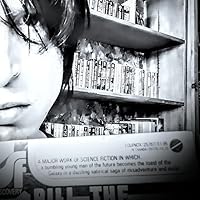
January 16, 2016
Another well written speculative fiction piece by Ms. Wilhelm. I have no huge complaints...it's just that this writer can be so slow in plot development that by the time you finish the book, you aren't as impressed as when you were reading it.

September 3, 2008
Such beautiful writing. SF is the genre perhaps best suited for asking, "Why are we such assholes," and this book asks that question elegantly.

June 6, 2015
1982 grade F+

March 6, 2023
An author astute enough to foresee the privation of climate catastrophe but not astute enough to avoid all the magical Indians stuff
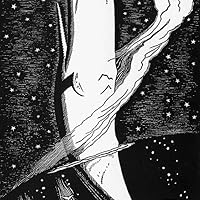
September 11, 2021
I cannot give this book high marks for storytelling. The story is too thin and seems more like a rack for the author to hang ideas about climate change, native culture, and the cold war. The book does contain a great deal of wisdom and some singular moments. In this way, thin story, good ideas, it is similar to Where Late the Sweet Birds Sang, though I found that book to be more compelling.
August 22, 2020
Set during a time eerily familiar from today's newsfeeds, this is about hope. You have to generate it from your own elan vital, asserts Kate Wilhelm, because any external source of hope is inherently untrustworthy. Such hopes could easily be a mirage, or a phantom of your own need for hope.
This is a dark book, with a troubling scene of assault. It is also a contrarian view of the SETI contention.
It is also the least regrettable depiction of, and speculation about, indiginous American culture and people I can remember reading.
I recommend it.
This is a dark book, with a troubling scene of assault. It is also a contrarian view of the SETI contention.
It is also the least regrettable depiction of, and speculation about, indiginous American culture and people I can remember reading.
I recommend it.
September 20, 2020
Full review: https://sciencefictionruminations.com...
Nominated for the 1980 Nebula Award
"At the heart of Kate Wilhelm’s Nebula-nominated novel Juniper Time (1979) is the notion of historical cyclicality at both the macro- (earth cycles) and the micro- (human historical time) levels. The near future mysteriously drought stricken world where Wilhelm is an important juncture of two such cycles. The macrocycle concerns devastating world-wide [...]"
Nominated for the 1980 Nebula Award
"At the heart of Kate Wilhelm’s Nebula-nominated novel Juniper Time (1979) is the notion of historical cyclicality at both the macro- (earth cycles) and the micro- (human historical time) levels. The near future mysteriously drought stricken world where Wilhelm is an important juncture of two such cycles. The macrocycle concerns devastating world-wide [...]"

October 30, 2022
This book almost ended up as a DNF. I only persevered as I loved her 'Where Late the Sweet Birds Sang' so much. But, by the end it comes together. The problem for me is it's trying to be generational like the other book. We start with the main characters as kids and follow their whole lives. But it doesn't work as well in this book. The first half was a struggle to see any relevance or plot. It's also very mired in cold war/MAD mindset as a result of when the book was written. I'd still still recommend it as a good read, but with the above qualifications.

May 2, 2023
A bit patchy I’m afraid. The climate change setting was interesting and the Native American Indian treatment was enjoyable through my rather naive and ignorant eyes. However the space content was surprisingly hackneyed and the writing itself seemed a lot more inconsistent than I remembered of her other work. It was nominated for a Nebula in 1980 so maybe it’s just me, but patchy with some good bits and a strong message, is about all I can give it.

July 19, 2018
Mixed feelings about this one. It's dated quite poorly - particularly with regards to gender issues - some of the male viewpoint chapters drip with disrespect for women and there's also some unnecessary sexual violence that has essentially no impact on the plot whatsoever. The writing is quite lyrical and I did find it compelling but it then doesn't deliver much of an ending.
December 16, 2018
This book peels back the onions of motivation on several characters, and does it quite well.. it also gets pretty far into “what is truth, relative to belief” territory, and it does it with Wilhelm’s easy writing style.
Recommended.
Recommended.
February 17, 2019
Thought provoking near future environmentalist novel.

August 30, 2019
I had actually forgotten until quite recently that I'd read something by Kate Wilhelm in high school. It's been so long ago, I should probably put this on my re-read list.

February 22, 2020
Good plot and characters. A bit romantic.

February 15, 2022
Walk through the desert
watch the earth rot from above
learn nothing, stay numb.
watch the earth rot from above
learn nothing, stay numb.

January 28, 2026
had interesting ideas and I think Wilhelm's prose are good. But a lot of this novel felt like a watered down Ursula K Le Guin book...which just makes me want to read Le Guin instead

January 17, 2013
‘The technological dream is over...
Man reached for the stars – and failed to keep the Earth in his grasp. With the Western United States devastated by drought, the survivors huddle in squalid concentration camps in the east.
And still the dream won’t go away... In high orbit, an artefact is found that may be man’s first contact with aliens. The only woman who can decode it has found her future in the past, in the remote Indian territories of the Pacific Northwest.
But in which direction does the planet’s survival lie...’
Blurb from the 1981 Arrow paperback edition.
Wilhelm here gives us a bleak portrayal of a near-future America devastated by drought in which two childhood friends find themselves forcefully reunited due to their fathers’ involvement in an aborted space-station project.
Jean Brighton has begun a career working on a project to develop computer programmes which aim to decode languages without a Rosetta Stone.
Arthur Cluny is fighting to have the Space Station project reopened in a political climate where most of the American population is being moved away from areas which are turning to desert.
Both Jean and Arthur are involved in relationships which end badly, Arthur’s when he accidentally kills his wife whose death is recorded as an accident.
Later, out in space, Arthur’s team discover an apparently alien artefact containing a written message. Arthur then has to persuade Jean, who has joined a tribe of Native Americans, to help him translate the message.
It’s a beautifully written novel of an America facing disaster, and peopled with complex and very real characters.
In one sense this may be described as being only borderline science fiction, but that would be missing the point, since the very best SF is that which employs the devices of SF to examine the human condition and this novel achieves that end superlatively. It is very much character driven and is as much a novel about America itself as it is about the relationship between Jean and Arthur and how each of them had to suffer before discovering their real selves.
Although listed in Pringle’s ‘100 Best SF Novels’ this is a little-known gem which deserves a far wider audience.
Man reached for the stars – and failed to keep the Earth in his grasp. With the Western United States devastated by drought, the survivors huddle in squalid concentration camps in the east.
And still the dream won’t go away... In high orbit, an artefact is found that may be man’s first contact with aliens. The only woman who can decode it has found her future in the past, in the remote Indian territories of the Pacific Northwest.
But in which direction does the planet’s survival lie...’
Blurb from the 1981 Arrow paperback edition.
Wilhelm here gives us a bleak portrayal of a near-future America devastated by drought in which two childhood friends find themselves forcefully reunited due to their fathers’ involvement in an aborted space-station project.
Jean Brighton has begun a career working on a project to develop computer programmes which aim to decode languages without a Rosetta Stone.
Arthur Cluny is fighting to have the Space Station project reopened in a political climate where most of the American population is being moved away from areas which are turning to desert.
Both Jean and Arthur are involved in relationships which end badly, Arthur’s when he accidentally kills his wife whose death is recorded as an accident.
Later, out in space, Arthur’s team discover an apparently alien artefact containing a written message. Arthur then has to persuade Jean, who has joined a tribe of Native Americans, to help him translate the message.
It’s a beautifully written novel of an America facing disaster, and peopled with complex and very real characters.
In one sense this may be described as being only borderline science fiction, but that would be missing the point, since the very best SF is that which employs the devices of SF to examine the human condition and this novel achieves that end superlatively. It is very much character driven and is as much a novel about America itself as it is about the relationship between Jean and Arthur and how each of them had to suffer before discovering their real selves.
Although listed in Pringle’s ‘100 Best SF Novels’ this is a little-known gem which deserves a far wider audience.

Read
July 14, 2016Kate Wilhelm's 1979 novel Juniper Time continues the fascination in Science Fiction with Linguistics that kept cropping up in the 70s (see The Ophiuchi Hotline, The Embedding, Looking Backward from the year 2000, and, most famously Close Encounters of the Third Kind).
The story felt a lot like Christopher Nolan's Interstellar (2014), as it takes place on an earth at the end of environmental disaster and focuses very strongly on issues of parent/child relationships. The novel covers about thirty years of time and focuses largely on Jean, a Linguistic scientist and Cluny, an astronaut, both children of world famous astronauts themselves.
Much of the novel focuses on issues of priorities; in a world were resources are quickly being depleted Cluny ends up in a consistent race to get resources for a space station orbiting the planet, while Jean attempts to advance linguistic theory without attracting the attention of big business or the military, both of which have the right to effectively conscript her into work for life.
As the world gets into worse and worse shape, New Towns (the inhabitants of which are called newtons in the book), are formed and it is in these that society quickly begins to crumble; Jean's residence in one quickly turns nightmarish and underlines how terrible things can get under the guise of playing fair.
As with her previous work Where Late the Sweet Birds Sang (1977), the book is a wonderful look at the big questions Science Fiction can attempt to answer as a genre, and the questions the book left me with will probably stay with me for quite some time.
The story felt a lot like Christopher Nolan's Interstellar (2014), as it takes place on an earth at the end of environmental disaster and focuses very strongly on issues of parent/child relationships. The novel covers about thirty years of time and focuses largely on Jean, a Linguistic scientist and Cluny, an astronaut, both children of world famous astronauts themselves.
Much of the novel focuses on issues of priorities; in a world were resources are quickly being depleted Cluny ends up in a consistent race to get resources for a space station orbiting the planet, while Jean attempts to advance linguistic theory without attracting the attention of big business or the military, both of which have the right to effectively conscript her into work for life.
As the world gets into worse and worse shape, New Towns (the inhabitants of which are called newtons in the book), are formed and it is in these that society quickly begins to crumble; Jean's residence in one quickly turns nightmarish and underlines how terrible things can get under the guise of playing fair.
As with her previous work Where Late the Sweet Birds Sang (1977), the book is a wonderful look at the big questions Science Fiction can attempt to answer as a genre, and the questions the book left me with will probably stay with me for quite some time.

February 18, 2014
This is an wonderful and unexpected future novel about culture and culture conflict. It illuminates social assumptions and explores the parallel between our relation to native americans and our potential relation with extra-terrestrials. The dominant theme is contrasting our Western culture of hard separation between ourselves and the universe around us with other approaches, using native american culture as an example.
I have seen Wilhelm referred to as a master of the psychological. But I have so often found that it is her anthropological insight into culture that is key to her sensitive and insightful exploration of literally different worlds.
I have seen Wilhelm referred to as a master of the psychological. But I have so often found that it is her anthropological insight into culture that is key to her sensitive and insightful exploration of literally different worlds.

September 11, 2014
I think that Kate Wilhelm has created a sci-fi story that appeals to the senses as much as it does the imagination. Although the book is about the future discovery of aliens, Kate Wilhelm keeps her perspective rooted in the ancient healing ways of the native americans as well as the mighty power of love. Many times I found myself meditating on my surroundings to realign with the facts it was so realistic. The main characters of Juniper Time were portrayed honestly if not a tad romance n ovelesque. I am making my own words here. Obviously, I haven't written a book report in a while. I was lucky to have happened upon this Hugo-award winning novel. Five stars.
Displaying 1 - 30 of 39 reviews