The history of sport has seen many great gladiatorial clashes: Ali v Frazier in boxing, McEnroe v Borg in tennis, Prost v Senna in motor racing. None however can quite compare to the intensity of the rivalry between those two great world chess champions: Garry Kasparov and Anatoly Karpov. Between 1984 and 1990 they contested an astonishing five World Championship matches consisting of 144 individual encounters. This volume concentrates on the first two of those matches.
The epic 1984/85 contest which was lasted six months before being controversially halted "without result" by the then President of FIDE Florencio Campomanes.
The 1985 match when Kasparov brilliantly won the final game to take the title and become - at the age of 22 - the youngest ever world champion.
Great chess contests have often had resonances extending beyond the 64 squares. The Fischer v Spassky match was played during the Cold War with both champions being perceived as the finest products of their respective ideologies. The Karpov v Korchnoi battles (three matches between 1974 and 1981) were lent an edge with Karpov being a Russian hero of the pre-Glasnost era whilst Korchnoi was the disaffected dissident. The Kasparov v Karpov encounters mirrored a battle between the new Russia and old Russia with Kasparov seen as a symbol of the new ideology emerging under Gorbachev whereas Karpov was seen to represent the old regime of die-hard Communists such as Brezhnev.
In this volume Garry Kasparov (world champion between 1985 and 2000 and generally regarded as the greatest player ever) analyses in depth the clashes from 1984 and 1985, giving his opinions both on the political machinations surrounding the matches as well as the games themselves.
Russian (formerly Soviet) chess grandmaster, former World Chess Champion, writer, and political activist, whom many consider the greatest chess player of all time.
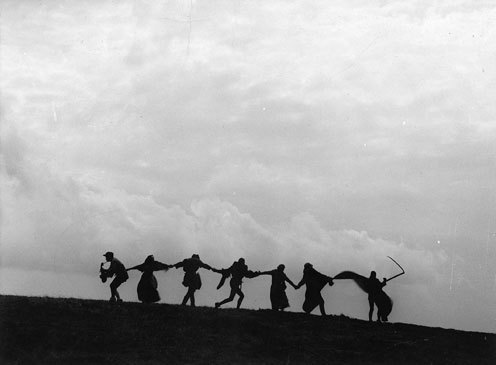
When Ingmar Bergman died in 2007, his literary executor found a number of sealed packages containing several projects in various stages of completion. I am proud to present extracts from Bergman's unfinished masterpiece:
Åttonde Inseglet (The Eighth Seal)
DRAMATIS PERSONAE
THE KNIGHT......Garry Kasparov
DEATH...............Anatoly Karpov
THE SQUIRE.......Gennadi Timoshchenko
GOD...................Florencio Campomanes
The rest of this review is available elsewhere (the location cannot be given for Goodreads policy reasons)
Like all of his previous series, “Garry Kasparov on Modern Chess” is shaping up to be a must read. Volume two covers the infamous first two matches between these two chess titans.
While I was familiar with many of the important games played within these matches, it was quite amazing to read Kasparov’s blow by blow account of ALL the games, including the draws, that provided great insight into not only the match itself, but the players as well.
For many years I was a fan of the Capablanca, Petrosian and Karpov school of thought, but as I got older and less concerned about winning/losing tournament games, I drifted over to the Kasparov and Tal school of play. My respect for Kasparov’s play has increased over the years and his strength at the board was to be admired. But, his insights into the gameplay and the politics surrounding them is quite astonishing at times.
As usual, Kasparov’s analysis is quite brilliant and well worth reading - especially against a player of Karpov’s stature.
I’m looking forward to the next volume, as I am even more familiar with the matches/games contained within.
Tremendously exciting - I remember well these matches, following them in the news, and sensing early on that this was not an ordinary, internal Soviet setup. It's hugely interesting from a sporting view, but also in a geopolitial sense, we can glimpse the opposing sides of the Soviet regime in the 1980s, culminating with the rise of Gorbachev, which very probably saved Kasparov from being defaulted from the second match, before a single move had been played.
I am interested in chess as a sport, and mostly skim through all the variations with their built-in nuances, but even so one can find insightful comments, which illustrate the intense battle, both at the board and behind the scenes. If I have anything more to wish for, it would have been perhaps interviews from some of the other top players at the time. What did Korchnoi think? Tal? Botvinnik? There are occasional quotes from them, which are insightful and entertaining, but leaves you wanting more, more! But highly recommended in any case.
Detailed analysis of the abandoned First match-duel along with the Second match with his nemesis Karpov Reviewed in the United States on September 8, 2008 Verified Purchase The book covers the duels Kasparov had with Karpov, starting from the pre-matches era, and then the First abandoned match and finally the Second match which crowned the youngest Champion in history. The book is a part of the ongoing series which promises to cover all the battles between Kasparov and Karpov.
The previous chess books in English namely Kasparov v/s Karpov by Mark Taimanov and Yuri Averbakh and The New World Champion by Kasparov exclusively covered the match that crowned Kasparov in detail while chess lovers were left waiting, with bated breath, for some informed analysis of the abandoned match. The wait is now over after two decades, and all the First Match games are covered in detail.
Both rivals were engaged in bitter contests on board as well as off board. Kasparov in his The Unlimited Challenge and Karpov, in Karpov on Karpov had their difference of opinions about their rivalry. In the Foreword of the reviewed book there is a nice episode about Karpov wanting to visit the imprisoned Kasparov to show solidarity. Kasparov says that this one gesture outweighs all past negative factors. A case of Foe turned Friend.
Generally, in the past, there has been a dearth of annotations of World Championship games by the Champion himself or by the Contender. This present book is a rare exception like Botvinnik-Smyslov Three World Chess Championship Matches 1954, 1957, 1958 by Mikhail Botvinnik recently released by New in Chess or on a smaller scale Tal Botvinnik 1960 match by Mikhail Tal.
One can relive the glorious moment of the brilliant 16th game of the 1985 wee match where Karpov is in zugzwang from an opening that had occurred regularly for over 50 years in the Sicilian Defense and now named by some as Kasparov's Gambit (the game will find itself in any greatest games list and also clearly demonstrates that the romantic gambit era finds a place in Modern Chess) or Karpov's 'White Symphony' (as christened by Taimanov and Averbakh) wherein Karpov makes 17 moves on White squares and Kasparov deprived of the guardian of White squares namely the White Bishop can just wait and watch or when Kasparov suddenly makes a Queen sacrifice out of the blue in a position which calls for quiet maneuvering on the surface (A newspaper vividly described Kasparov as loosening his tie and capturing the ook with a bang to add effect) and the first game of the wee 1985 match where Karpov commits the grave error of making Queen moves in the opening at the cost of development and is punished. The book is replete with such high caliber games which can entertain as well as instruct.
The great value of this book is that it explains each game of their first marathon WC in detail. As a young player, the endless (often short) draws seemed all dull games, but this book shows the action below the surface of those games. I hoped the same level of detail would be given for his Short match (discussed later in the series), but unfortunately that did not happen.
This book wraps up the series about all the games between two perennial opponents – Anatoly Karpov and Garry Kasparov. The last volume is probably as exciting as the previous ones, if not the most exciting one. It has more tournament games than the previous ones, and includes the 1990 Match in New York/Lyons, about which I already have read/reviewed another book – Five Crowns.