

What do you think?

The Sea Priestess
The Sea Priestess is the highly acclaimed novel in which Dion Fortune introduces her most powerful fictional character, Vivien Le Fay Morgan a practicing initiate of the Hermetic Path. Vivien has the ability to transform herself into magical images, and here she becomes Morgan Le Fay, sea priestess of Atlantis and foster daughter to Merlin! Desperately in love with Vivien, Wilfred Maxwell works by her side at an isolated seaside retreat, investigating these occult mysteries. They soon find themselves inextricably drawn to an ancient cult through which they learn the esoteric significance of the magnetic ebb and flow of the moontides.
235 pages, Paperback
First published January 1, 1935
About the author
Dion Fortune
213 books505 followersViolet Mary Firth Evans (better known as Dion Fortune), was a British occultist and author. Her pseudonym was inspired by her family motto "Deo, non fortuna" (Latin for "by God, not fate").
From 1919 she began writing a number of novels and short stories that explored various aspects of magic and mysticism, including The Demon Lover, The Winged Bull, The Goat-Foot God, and The Secrets of Dr. Taverner. This latter is a collection of short stories based on her experiences with Theodore Moriarty. Two of her novels, The Sea Priestess and Moon Magic, became influential within the religion of Wicca, especially upon Doreen Valiente.
Of her non-fiction works on magical subjects, the best remembered of her books are; The Cosmic Doctrine, meant to be a summation of her basic teachings on mysticism; The Mystical Qabalah, an introduction to Hermetic Qabalah; and Psychic Self Defence, a manual on how to protect oneself from psychic attacks. Though some of her writings may seem dated to contemporary readers, they have the virtue of lucidity and avoid the deliberate obscurity that characterised many of her forerunners and contemporaries.
From 1919 she began writing a number of novels and short stories that explored various aspects of magic and mysticism, including The Demon Lover, The Winged Bull, The Goat-Foot God, and The Secrets of Dr. Taverner. This latter is a collection of short stories based on her experiences with Theodore Moriarty. Two of her novels, The Sea Priestess and Moon Magic, became influential within the religion of Wicca, especially upon Doreen Valiente.
Of her non-fiction works on magical subjects, the best remembered of her books are; The Cosmic Doctrine, meant to be a summation of her basic teachings on mysticism; The Mystical Qabalah, an introduction to Hermetic Qabalah; and Psychic Self Defence, a manual on how to protect oneself from psychic attacks. Though some of her writings may seem dated to contemporary readers, they have the virtue of lucidity and avoid the deliberate obscurity that characterised many of her forerunners and contemporaries.
Ratings & Reviews
Friends & Following
Create a free account to discover what your friends think of this book!
Community Reviews
Displaying 1 - 30 of 89 reviews

June 27, 2018
NB: Should you choose to read this book, I do not recommend the Kindle version pictured here (published June 1st 2003 by Weiser Books). The publisher put almost no effort into producing this, which is a shame and disrespectful to the author. Judging by the outcome, I assume a manuscript was scanned and then word-recognition software was used to translate it. The formatting is a muddle and it's full of typos, some of which are so mutilated that I struggled to figure out what the words should have been: Imagine if the auto-correct function on your phone wrote a book for you; it's like that.
*Warning: Plot Spoilers Ahead, and Excessively-Long Review*
The Sea Priestess is a novel about Pagan spirituality, ritual magic, and the archetypal Goddess representing the "divine feminine", whose passions reveal themselves through the ever hypnotic Moon and the Sea in her infinite mystery.
Dion Fortune's (1890-1946) novels were a medium through which she shared her spiritual beliefs and practices. She was a highly successful Jungian analyst, an occultist, a priestess of a pagan religion which worshiped the "old gods" as the embodiment of nature's elemental forces, and a ceremonial magician. If you don't know much about her, it's worth perusing her Wikipedia page: Fortune is recognised as one of the most significant occultists and ceremonial magicians of the early 20th century. The Fraternity she founded survived her and in later decades spawned a variety of related groups based upon her teachings. Her novels in particular proved an influence on later occult and modern Pagan groups such as Wicca.
I learnt of Dion Fortune because I read a lot of Phil Rickman novels, which frequently involve the pagan elements and rituals of pre-Christian Britain, many of which seem to have carried on into modern times. Fortune, unlike Rickman, was writing truth (as she defined it) masked as fiction, I found some of the beliefs and practices sinister and disturbing. If you have ever seen the old 1973 cult film The Wicker Man, you will have a good idea of what I mean.
Our hapless protagonist, Wilfred, feels himself to be a bit of a loser. He lives in a small English town in Somerset, near the coast, where he looks after his mother and sister in the family home, his father having died some years earlier. Wilfred runs an estate agency and, in turn, is run by his mother and sister. At the novel's opening, he is a self-described mother's boy who quarrels endlessly with his pushy sibling. Watching him change to embrace his manhood and its attendant virility as the novel progresses is satisfying in some ways and disturbing in others. (There is a phase in Wilfred's development in which he becomes, for a while, an obnoxious drunk and a bit of a lout; but he overcomes this by the end of the novel.)
Wilfred's catalyst for change comes in the form of a beautiful and mysterious woman who goes by the name of Vivien Le Fay Morgan. A long-term client of Wilfred's real estate firm, the two meet after many years of doing business solely through letters. Wilfred, to his surprise, finds a young, vibrant, and magnetic female instead of the ninety-year-old granny he should, by rights, have encountered. He is immediately drawn to her as representing everything his life lacks: beauty, sex, vitality, strength, courage, and unconventionality. To be sure, Wilfred had been waiting for something or someone like Vivien his whole life, never having been content to go along with the mindless herd, whom he sees as beneath him. One also feels that he needs to give himself in subjugation to an object of worship, and Vivien is more than happy to receive his veneration. Wilfred's faith in Vivien nurtures the Sea Priestess image that they both hold of her, which calls to them from their remote shared past and from the "fourth dimension" which is accessible to them only in dreams and visions.
The relationship between the two, while fascinating on a spiritual level, ends up being frustrating for Wilfred. In short, Vivien will neither marry Wilfred nor become his mistress. However, she is willing to "sacrifice" him ritually (i.e. use his masculine life force to counter her feminine one in ceremonial magic), to feed him well, and to put him up for the weekends in her refurbished fortress by the sea. Poor Wilfred has a hard time learning that he will never "get the girl" though since, as a priestess, she has set herself apart to serve her goddess, and no mere mortal can touch her. Nevertheless, the two become intimate emotionally and spiritually, if not physically.
Don't worry though. Things turn out okay for Wilfred in the end. He marries a lovely and perfectly decent young lady and moves her out to the old farm down by the abandoned temple (at her insistence), where she begins to speak to the Moon and turn herself into a priestess, just as Vivien had been.
There are some really ludicrous ideas in this book, as you may have gleaned. Taken as fantasy, it was fun; but then, I am not into the woman-as-goddess mysticism, as a spiritual belief system or even as a useful metaphor. Also, several of the plot elements and their implications just irked me. Firstly, why do people who believe themselves to be reincarnated insist on being some character of legend or, at the very least, an important figure in history? In this case, Vivien is meant to be Morgan Le Fay (but of course!). One wonders if Dion Fortune thought herself to be a reincarnation of someone fabulous and legendary. Probably yes.
Regarding that "Probably yes": Gareth Knight is one of the world's foremost authorities on ritual magic, the Western Mystery Tradition and Qabalistic symbolism. He trained in Dion Fortune's Society of the Inner Light, and has spent a lifetime rediscovering and teaching the principles of magic as a spiritual discipline and method of self-realisation. (Source) I read this blog essay he wrote about The Sea Priestess. One of the comments which follows says:
Secondly, the sacrificing of oneself to these elemental pagan gods really creeped me out. The earlier scenes describing men who were drowned in caves as offerings to the sea goddess were disturbing enough. (Oh but they are blessed because they will pass into the temples of the gods, under the sea, and live happily forevermore!). Talking men into killing themselves by promising them good fortune in the realms of the dead reminds me of Islamic suicide bombers who are told they will be blessed with virgins in heaven. It's deeply perverse and profoundly wicked.
Human sacrifice to sate a hungry god is evil, in my opinion, and cannot be justified. But the sex rite that completes the story was somehow even worse, to my mind. By the end of the book, Wilfred and his lovely new wife, Molly (who is no siren like Vivien but a very sweet and capable girl) have offered themselves up to the Moon Goddess, who represents ALL goddesses. In Fortune's religion, all gods are one god, all goddesses are one goddess, and the masculine and feminine energies come together, physically and spiritually, in an eternal dance of give and take. These elemental gods and goddesses are ruled over, themselves, by the One, who is the great Initiator of all creation and whom, as I understand it, Dion Fortune believed to be Christ. Oddly, Fortune did consider herself to be a Christian, albeit a very unorthodox one, and considered both Christianity and the ancient Pagan religions of the West to be the right and proper traditions for the Anglo Saxon peoples. She believed it to be spiritually unhealthy and unwholesome to take on other races' and cultures' gods, saviors, rituals, and traditions.
Anyway, back to the sex rite. The upshot is that Molly offers herself sexually to her husband, Wilfred, after both of them have already offered themselves spiritually to the Moon Goddess. This takes their lovemaking to a whole new level, one in which they are no longer simply themselves but representative archetypes of All Men and All Women. In a shared vision, Molly and Wilfred make love in a pagan temple while the nature gods watch on with approval, and the elemental forces of the universe flow through them. This is supposed to be an awesome blessing from the gods, but it bothered me on a visceral level.
Why would anyone want to offer themselves, body and soul, to these supposedly sentient embodiments of Nature? For these beings are never depicted as sympathetic to and nurturing of our species. In fact, I kept recalling the opening paragraph of H.G. Wells's The War of the Worlds: Yet across the gulf of space, minds that are to our minds as ours are to those of the beasts that perish, intellects vast and cool and unsympathetic, regarded this earth with envious eyes, and slowly and surely drew their plans against us.
To be fair, I do not understand women who need to envision themselves as goddesses or as figures of myth and legend. I mean, I can understand enjoying the fantasy for as long as the book or film lasts,* but not embracing this as one's personal truth. Why isn't being a human being, a real woman in the real world, sufficient for us and for our men? I am absolutely sure that my husband would not want to take me to bed whilst imagining some crumbling old god leering over us and nodding approval. Peter Beagle** said, The grave's a fine and private place ... and, to us, so is a marriage bed. It's a microcosm made for two and inviting onlookers would be a corruption, turning the sacred profane.
Here's an excerpt from the sex rite:
*About the setting*
My favourite part of the book was the setting. The old abandoned fort sitting atop a promontory facing the vast and lonely sea is a romantic image. Wifred undertakes to repair and redesign the fort as a temple for his goddess, sculpting bridges and arches festooned with sea creatures, painting wild sea murals on interior walls, replacing bricks with wide panes of glass to open up a panoramic view of the sea, and creating gothic arches over the windows to soften the stark facade. The setting was based upon Brean Down, which is described as follows in Wikipedia: A promontory off the coast of Somerset, England, standing 318 feet (97 m) high and extending 1.5 miles (2 km) into the Bristol Channel at the eastern end of Bridgwater Bay between Weston-super-Mare and Burnham-on-Sea.
Made of Carboniferous Limestone, it is a continuation of the Mendip Hills. Two further continuations are the small islands of Steep Holm and Flat Holm. The cliffs on the northern and southern flanks of Brean Down have large quantities of fossils laid down in the marine deposits about 320–350 million years ago. The site has been occupied by humans since the late Bronze Age and includes the remains of a Romano-Celtic Temple. At the seaward end is Brean Down Fort which was built in 1865 and then re-armed in the Second World War.
Brean Down is now owned by the National Trust, and is rich in wildlife, history and archaeology. It is a Site of Special Scientific Interest due to both the geology and presence of nationally rare plants including the white rock-rose. It has also been scheduled as an ancient monument.
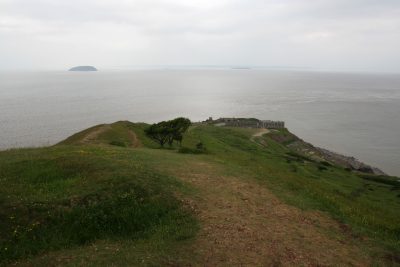 Image Source
 Image Source
* Admittedly, I kept grabbing hold of the rubbish bin lid and yelling "shield!" to my husband for weeks after seeing Wonder Woman. I blame Robin Wright for being so fabulous in that movie.
** As my GR friend, Richard, points out, Beagle is quoting Andrew Marvell's poem To His Coy Mistress but, honestly, I was thinking of Beagle and had forgot Marvell when I wrote this so I will leave it as is.
*Warning: Plot Spoilers Ahead, and Excessively-Long Review*
The Sea Priestess is a novel about Pagan spirituality, ritual magic, and the archetypal Goddess representing the "divine feminine", whose passions reveal themselves through the ever hypnotic Moon and the Sea in her infinite mystery.
And I saw in my imagination all the life that is behind the sea, and it seemed to me that there was intelligence behind it; a mind not unlike our own, but vaster, and vastly simpler. The life of elemental nature differed from our life in degree, but not in kind. It had the same kind of corporate being as a hive or a herd, which is not embodied, but overshadowed.It is a lively and engaging read that made me feel a bit dizzy by the end with all the atmospheric goings on. I say "lively" and, while that is true, it's also full of long passages of philosophical musings that not everyone will like. As I am a bit given to musing myself, I enjoyed it, but I would add that how you feel about The Sea Priestess will largely depend on your world view and whether you take it seriously as a spiritual text. I read it as fiction but the author meant for it to be much more than that.
Dion Fortune's (1890-1946) novels were a medium through which she shared her spiritual beliefs and practices. She was a highly successful Jungian analyst, an occultist, a priestess of a pagan religion which worshiped the "old gods" as the embodiment of nature's elemental forces, and a ceremonial magician. If you don't know much about her, it's worth perusing her Wikipedia page: Fortune is recognised as one of the most significant occultists and ceremonial magicians of the early 20th century. The Fraternity she founded survived her and in later decades spawned a variety of related groups based upon her teachings. Her novels in particular proved an influence on later occult and modern Pagan groups such as Wicca.
I learnt of Dion Fortune because I read a lot of Phil Rickman novels, which frequently involve the pagan elements and rituals of pre-Christian Britain, many of which seem to have carried on into modern times. Fortune, unlike Rickman, was writing truth (as she defined it) masked as fiction, I found some of the beliefs and practices sinister and disturbing. If you have ever seen the old 1973 cult film The Wicker Man, you will have a good idea of what I mean.
Our hapless protagonist, Wilfred, feels himself to be a bit of a loser. He lives in a small English town in Somerset, near the coast, where he looks after his mother and sister in the family home, his father having died some years earlier. Wilfred runs an estate agency and, in turn, is run by his mother and sister. At the novel's opening, he is a self-described mother's boy who quarrels endlessly with his pushy sibling. Watching him change to embrace his manhood and its attendant virility as the novel progresses is satisfying in some ways and disturbing in others. (There is a phase in Wilfred's development in which he becomes, for a while, an obnoxious drunk and a bit of a lout; but he overcomes this by the end of the novel.)
Wilfred's catalyst for change comes in the form of a beautiful and mysterious woman who goes by the name of Vivien Le Fay Morgan. A long-term client of Wilfred's real estate firm, the two meet after many years of doing business solely through letters. Wilfred, to his surprise, finds a young, vibrant, and magnetic female instead of the ninety-year-old granny he should, by rights, have encountered. He is immediately drawn to her as representing everything his life lacks: beauty, sex, vitality, strength, courage, and unconventionality. To be sure, Wilfred had been waiting for something or someone like Vivien his whole life, never having been content to go along with the mindless herd, whom he sees as beneath him. One also feels that he needs to give himself in subjugation to an object of worship, and Vivien is more than happy to receive his veneration. Wilfred's faith in Vivien nurtures the Sea Priestess image that they both hold of her, which calls to them from their remote shared past and from the "fourth dimension" which is accessible to them only in dreams and visions.
The relationship between the two, while fascinating on a spiritual level, ends up being frustrating for Wilfred. In short, Vivien will neither marry Wilfred nor become his mistress. However, she is willing to "sacrifice" him ritually (i.e. use his masculine life force to counter her feminine one in ceremonial magic), to feed him well, and to put him up for the weekends in her refurbished fortress by the sea. Poor Wilfred has a hard time learning that he will never "get the girl" though since, as a priestess, she has set herself apart to serve her goddess, and no mere mortal can touch her. Nevertheless, the two become intimate emotionally and spiritually, if not physically.
There is a curious power in silence when you think alike without word spoken and each knows the other's thoughts. As long as nothing is said, the thing you are thinking remains in another dimension and is magical, but as soon as you speak it, you lose it. It is the old story of the jewels bought in the goblin market, which you must only look at by moonlight or you find them to be a handful of dead leaves.Over the weeks that follow, as Wilfred paints sea murals over the interior walls of the temple he has redesigned and refurbished for his goddess, from the remains of an old fort, the two spend many hours together, basically getting high on the elements. They spend evenings staring into fires made of particular woods that bring about visions. They stand on slippery rocks at the edge of the sea, beneath the full Moon, and let the sea water lap at their ankles. They are able to confirm through a series of visions manifested during ceremonial magic that they have been together in a previous life, she as the Sea Priestess and he as her sacrificial victim. Once this knowledge is certain and Vivien feels that Wifred is ready, all that is left for them is the playing out of an ancient ritual, in which Wilfred loses not his earthly life but certainly his reason for living. The Rite of Isis completed, Vivien leaves him cold, and he never sees her again.
Don't worry though. Things turn out okay for Wilfred in the end. He marries a lovely and perfectly decent young lady and moves her out to the old farm down by the abandoned temple (at her insistence), where she begins to speak to the Moon and turn herself into a priestess, just as Vivien had been.
There are some really ludicrous ideas in this book, as you may have gleaned. Taken as fantasy, it was fun; but then, I am not into the woman-as-goddess mysticism, as a spiritual belief system or even as a useful metaphor. Also, several of the plot elements and their implications just irked me. Firstly, why do people who believe themselves to be reincarnated insist on being some character of legend or, at the very least, an important figure in history? In this case, Vivien is meant to be Morgan Le Fay (but of course!). One wonders if Dion Fortune thought herself to be a reincarnation of someone fabulous and legendary. Probably yes.
Regarding that "Probably yes": Gareth Knight is one of the world's foremost authorities on ritual magic, the Western Mystery Tradition and Qabalistic symbolism. He trained in Dion Fortune's Society of the Inner Light, and has spent a lifetime rediscovering and teaching the principles of magic as a spiritual discipline and method of self-realisation. (Source) I read this blog essay he wrote about The Sea Priestess. One of the comments which follows says:
I truly believe that Dion Fortune was a reincarnation of Morgan Le Fay , I am sure they were from the same soul group and even Dion's style for red dresses long cloaks all reflecting her past soul connection to Glastonbury and this area of the Earth. I wonder if Dion realized that she was in affect channeling her her soul origins, and her origins as a high priestess of Isis. Even the land she lived on in Glastonbury is the same land that Morgan Le fay lived on, as she was able to awaken the land and work with and its magical properties. Its a shame that as I walk past that land now it seems sad, like it holds many secrets, also that it has many tales to tell .I don't know whether Fortune believed herself to have been the mythical Morgan Le Fay, but it appears that at least some of her fans believe it.
Secondly, the sacrificing of oneself to these elemental pagan gods really creeped me out. The earlier scenes describing men who were drowned in caves as offerings to the sea goddess were disturbing enough. (Oh but they are blessed because they will pass into the temples of the gods, under the sea, and live happily forevermore!). Talking men into killing themselves by promising them good fortune in the realms of the dead reminds me of Islamic suicide bombers who are told they will be blessed with virgins in heaven. It's deeply perverse and profoundly wicked.
Human sacrifice to sate a hungry god is evil, in my opinion, and cannot be justified. But the sex rite that completes the story was somehow even worse, to my mind. By the end of the book, Wilfred and his lovely new wife, Molly (who is no siren like Vivien but a very sweet and capable girl) have offered themselves up to the Moon Goddess, who represents ALL goddesses. In Fortune's religion, all gods are one god, all goddesses are one goddess, and the masculine and feminine energies come together, physically and spiritually, in an eternal dance of give and take. These elemental gods and goddesses are ruled over, themselves, by the One, who is the great Initiator of all creation and whom, as I understand it, Dion Fortune believed to be Christ. Oddly, Fortune did consider herself to be a Christian, albeit a very unorthodox one, and considered both Christianity and the ancient Pagan religions of the West to be the right and proper traditions for the Anglo Saxon peoples. She believed it to be spiritually unhealthy and unwholesome to take on other races' and cultures' gods, saviors, rituals, and traditions.
Anyway, back to the sex rite. The upshot is that Molly offers herself sexually to her husband, Wilfred, after both of them have already offered themselves spiritually to the Moon Goddess. This takes their lovemaking to a whole new level, one in which they are no longer simply themselves but representative archetypes of All Men and All Women. In a shared vision, Molly and Wilfred make love in a pagan temple while the nature gods watch on with approval, and the elemental forces of the universe flow through them. This is supposed to be an awesome blessing from the gods, but it bothered me on a visceral level.
Why would anyone want to offer themselves, body and soul, to these supposedly sentient embodiments of Nature? For these beings are never depicted as sympathetic to and nurturing of our species. In fact, I kept recalling the opening paragraph of H.G. Wells's The War of the Worlds: Yet across the gulf of space, minds that are to our minds as ours are to those of the beasts that perish, intellects vast and cool and unsympathetic, regarded this earth with envious eyes, and slowly and surely drew their plans against us.
To be fair, I do not understand women who need to envision themselves as goddesses or as figures of myth and legend. I mean, I can understand enjoying the fantasy for as long as the book or film lasts,* but not embracing this as one's personal truth. Why isn't being a human being, a real woman in the real world, sufficient for us and for our men? I am absolutely sure that my husband would not want to take me to bed whilst imagining some crumbling old god leering over us and nodding approval. Peter Beagle** said, The grave's a fine and private place ... and, to us, so is a marriage bed. It's a microcosm made for two and inviting onlookers would be a corruption, turning the sacred profane.
Here's an excerpt from the sex rite:
(Molly speaks)Interestingly, Fortune herself seems to have been more like Vivien, who, as a priestess, did not indulge in sex. Fortune married once but was ... well, unfortunate. From what I can glean, sexual chemistry did not spark between Dion and her husband, and he sought partners elsewhere, which led to their divorcing. She seems to have been rather prudish sexually, which explains a lot about this book and her philosophies. Pagan priestess or not, Fortune was born in a time when bold female sexuality belonged only to whores. So perhaps she had to make something grand, cosmic, and sacrificial out of lovemaking, because she could not appreciate it in its (natural and human) right.
"Lo, I receive the gifts thou bringest me
Life and more life-in fullest ecstasy
I am the Moon, the Moon that draweth thee.
I am the waiting Earth that calleth thee.
Come unto me, Great Pan, come unto me!
Come unto me, Great Pan, come unto me!"
(Wilfred reflects while watching Molly)
I knew that she was exercising her ancient right and giving me the mating-call in the name of the moon, far truer to Nature than any convention of duty and modesty. And I knew why Morgan had said that on the inner planes the woman is positive and should take the initiative, for the Astral Plane is ruled by the moon and woman is her priestess; and when she comes in her ancient right, representing the moon, the moon-power is hers and she can fertilise the male with vitalising magnetic force. And the answering power awoke in me from the very deeps of my being, far deeper than the overflow of desire that comes from a physical pressure; for she called up from me the reserves of vital force and brought them into action-the reserves that the law of our nature guards against the great crises when we fight for life itself—the things that give the madman his strength and the poet his creative frenzy. Not until these things are called up by the call of the beloved can we be said to have mated to the depths of our being. They are not called forth when the man wooes the woman because he feels like it, but they are called forth when she comes to him in the name of Great Isis and bids him worship the goddess with her and through her.
*About the setting*
My favourite part of the book was the setting. The old abandoned fort sitting atop a promontory facing the vast and lonely sea is a romantic image. Wifred undertakes to repair and redesign the fort as a temple for his goddess, sculpting bridges and arches festooned with sea creatures, painting wild sea murals on interior walls, replacing bricks with wide panes of glass to open up a panoramic view of the sea, and creating gothic arches over the windows to soften the stark facade. The setting was based upon Brean Down, which is described as follows in Wikipedia: A promontory off the coast of Somerset, England, standing 318 feet (97 m) high and extending 1.5 miles (2 km) into the Bristol Channel at the eastern end of Bridgwater Bay between Weston-super-Mare and Burnham-on-Sea.
Made of Carboniferous Limestone, it is a continuation of the Mendip Hills. Two further continuations are the small islands of Steep Holm and Flat Holm. The cliffs on the northern and southern flanks of Brean Down have large quantities of fossils laid down in the marine deposits about 320–350 million years ago. The site has been occupied by humans since the late Bronze Age and includes the remains of a Romano-Celtic Temple. At the seaward end is Brean Down Fort which was built in 1865 and then re-armed in the Second World War.
Brean Down is now owned by the National Trust, and is rich in wildlife, history and archaeology. It is a Site of Special Scientific Interest due to both the geology and presence of nationally rare plants including the white rock-rose. It has also been scheduled as an ancient monument.
Image SourceImage Source* Admittedly, I kept grabbing hold of the rubbish bin lid and yelling "shield!" to my husband for weeks after seeing Wonder Woman. I blame Robin Wright for being so fabulous in that movie.
** As my GR friend, Richard, points out, Beagle is quoting Andrew Marvell's poem To His Coy Mistress but, honestly, I was thinking of Beagle and had forgot Marvell when I wrote this so I will leave it as is.

August 18, 2022
3.5 stars
"The Sea Priestess" is an entertaining novel about a grumpy, asthmatic Mama's boy finding his way to masculinity through a mysterious older woman, who claims to be adept at magic from Atlantis and a Priestess of the Moon. (Sound like the plot of an erotic novel? Isn't.)
It's charming in its own way, but the esoteric parts can be a real slog and many of the notions presented might appear rather old-fashioned today.
What I really loved was the 1920s-30s English slang used by the narrator, Wilfred Maxwell. I've tried to find lists of turns of phrase from that time, but none compare to the treasure trove of what's in The Sea Priestess. Some of Wilfred's sentences are so dated, I had no idea what he was talking about!
While I personally enjoyed that aspect, it might not have been the best narrative choice for an occult novel with a didactic aim. For someone coming to the ideas cold, what Fortune is getting at exactly is already going to be opaque in many ways, but have your narrator speaking in a highly slangy way...that's not going to age well.
If the language was my personal highlight-- and asthmatic Wilfred too, despite his unforgivable immature actions (driving drunk on purpose/ slugging his sister/treating women like servants under his thumb) -- I'll have to admit my personal lowlight: I just can't take anything relating to Atlantis seriously. Nor anyone's claims of having been a mythological or legendary figure in a past life...or to calling themselves that now. (How many Robin Pendragons and Uther Lockleys abound in Neo-Pagan circles? Exactly.)
That made it impossible for me to take the character of Le Fay Morgan or her mission seriously, as vague as it was. Which is a shame as it is the core of the novel.
Now, I realise I read this novel with Hindsight Goggles on.
I know about modern Neo-Paganism and while I'm a part of the esoteric community, I'm also highly critical and sceptical of it. When this novel was published in the 1930s, much of the stuff we have in the way of modern Paganism wasn't around yet.
Occult groups were small and scattered, usually based around one single figure (Crowley, Blavatsky, Cayce, etc), all studying the same texts but developing their own, highly self-referencing notions from it. Those groups weren't privy to the vast modern scholarship on ancient culture we have today but were using information provided largely by Victorian scholars -- which we know today to be highly misleading and downright incorrect in many ways.
We can't fault them for using the information they had, but we can see how the culture and time period they lived in influenced their ideas (as they do ours). What might have been a legit POV then is most likely not today.
The Zeitgeist is subject to change.
We could argue today, for example, the "all women are one woman" and the "all men are one man" notion is outdated, citing our new fangled gender spectrum ideas. You CAN assign "masculine" and "feminine" to abstracts or objects such as the Chinese have done with the yin-yang principle, but not to people.
No one human woman can embody ALL women and no one human man can embody ALL men, not even metaphorically -- we are too diverse. And what does male and female mean anyway? Are we referring to sociological ideas of gender or biological-experiential ones? Where do trans people come in to that, or homosexuals for that matter, if the magic system is firmly based on a male-female, heteronormative, cis gender idea?
There were other points that bothered me, such as the mixing of ancient traditions and making the outlandish claim that all goddesses are merely versions of Isis.
Also the glorification of the need for blood sacrifice -- the idea that the gods demand "worship" and living sacrifice (which I would again claim is an outdated notion) -- and applauding women as 2nd class citizens with no roles outside of "church, kitchen and kids". (Morgan is a priestess, so in the safe feminine realm of "church". For all her POWER she is the empty female vessel waiting for the male to fill her, as she says herself and just as all the women in the novel are portrayed...empty vessels waiting for the male to fill them with purpose for his ends.)
The novel isn't bad, it's quite funny and enjoyable in parts, but it is best read as a historical document. That is, these were the notions of magic and the occult in the ages of the Bull and the Fish. If they are still useful or applicable in the Age of the Water Bearer or not...that's up to the individual to decide.
"The Sea Priestess" is an entertaining novel about a grumpy, asthmatic Mama's boy finding his way to masculinity through a mysterious older woman, who claims to be adept at magic from Atlantis and a Priestess of the Moon. (Sound like the plot of an erotic novel? Isn't.)
It's charming in its own way, but the esoteric parts can be a real slog and many of the notions presented might appear rather old-fashioned today.
What I really loved was the 1920s-30s English slang used by the narrator, Wilfred Maxwell. I've tried to find lists of turns of phrase from that time, but none compare to the treasure trove of what's in The Sea Priestess. Some of Wilfred's sentences are so dated, I had no idea what he was talking about!
While I personally enjoyed that aspect, it might not have been the best narrative choice for an occult novel with a didactic aim. For someone coming to the ideas cold, what Fortune is getting at exactly is already going to be opaque in many ways, but have your narrator speaking in a highly slangy way...that's not going to age well.
If the language was my personal highlight-- and asthmatic Wilfred too, despite his unforgivable immature actions (driving drunk on purpose/ slugging his sister/treating women like servants under his thumb) -- I'll have to admit my personal lowlight: I just can't take anything relating to Atlantis seriously. Nor anyone's claims of having been a mythological or legendary figure in a past life...or to calling themselves that now. (How many Robin Pendragons and Uther Lockleys abound in Neo-Pagan circles? Exactly.)
That made it impossible for me to take the character of Le Fay Morgan or her mission seriously, as vague as it was. Which is a shame as it is the core of the novel.
Now, I realise I read this novel with Hindsight Goggles on.
I know about modern Neo-Paganism and while I'm a part of the esoteric community, I'm also highly critical and sceptical of it. When this novel was published in the 1930s, much of the stuff we have in the way of modern Paganism wasn't around yet.
Occult groups were small and scattered, usually based around one single figure (Crowley, Blavatsky, Cayce, etc), all studying the same texts but developing their own, highly self-referencing notions from it. Those groups weren't privy to the vast modern scholarship on ancient culture we have today but were using information provided largely by Victorian scholars -- which we know today to be highly misleading and downright incorrect in many ways.
We can't fault them for using the information they had, but we can see how the culture and time period they lived in influenced their ideas (as they do ours). What might have been a legit POV then is most likely not today.
The Zeitgeist is subject to change.
We could argue today, for example, the "all women are one woman" and the "all men are one man" notion is outdated, citing our new fangled gender spectrum ideas. You CAN assign "masculine" and "feminine" to abstracts or objects such as the Chinese have done with the yin-yang principle, but not to people.
No one human woman can embody ALL women and no one human man can embody ALL men, not even metaphorically -- we are too diverse. And what does male and female mean anyway? Are we referring to sociological ideas of gender or biological-experiential ones? Where do trans people come in to that, or homosexuals for that matter, if the magic system is firmly based on a male-female, heteronormative, cis gender idea?
There were other points that bothered me, such as the mixing of ancient traditions and making the outlandish claim that all goddesses are merely versions of Isis.
Also the glorification of the need for blood sacrifice -- the idea that the gods demand "worship" and living sacrifice (which I would again claim is an outdated notion) -- and applauding women as 2nd class citizens with no roles outside of "church, kitchen and kids". (Morgan is a priestess, so in the safe feminine realm of "church". For all her POWER she is the empty female vessel waiting for the male to fill her, as she says herself and just as all the women in the novel are portrayed...empty vessels waiting for the male to fill them with purpose for his ends.)
The novel isn't bad, it's quite funny and enjoyable in parts, but it is best read as a historical document. That is, these were the notions of magic and the occult in the ages of the Bull and the Fish. If they are still useful or applicable in the Age of the Water Bearer or not...that's up to the individual to decide.
February 26, 2023
It was many years ago at a party explaining to this Greek girl Dechteres some of the odd psychic experiences of my life that she recommended reading The Sea Priestess, a book that deeply affected me and changed my life as it set me in a long path of reading an enormous number of esoteric books (including all of Fortune’s other works) and the continuation of my psychic discoveries.
While this part of my life has slowly faded away, I felt the urge recently to pick up The Sea Priestess again and reread it more from the colder intellectual approach I’ve acquired which largely suppressed the spiritual part of me.
And yes while reading it again the glaring flaws of the book were more evident than ever, but the mystery and magic is still there.
This book is for all who feel lost on their spiritual path in life, or those who feel a richer, heightened experience of these matters but who feel religion in its traditional forms is inadequate.
The book is garbled, ridiculous, incoherent, and yet running through it is this rich spiritual beauty. The beauty is extremely intense at times and Fortune has considerable skill as a writer especially describing psychological matters.
This book is largely devoid of “literary” merit, and the flaws are so evident but entirely irrelevant. I cannot put the book down or not feel its power. I so very much want to light a Fire of Azarel. Maybe I will do it now. I love this book.

August 4, 2016
While I wouldn't say this book is a page-turner or the best literature, it's an enjoyable book to read, especially for those interested in the occult and the western magickal tradition. It was originally published in 1935, so you're not going to find any sultry sex magick here, but the gender dynamics are n't as heavy handed as they could be--Fortune talks about dynamics, rather than totally essentializing--so that's nice. Also, Fortune is a female author, and therefore, respects women--something which was missing from Aleister Crowley's Moonchild. One similarity between the books which I appreciated was how the characters in both truly created immersive environments to invoke the energies/deities with whom they were working (the moon/the sea). I also appreciated how the story did not just culminate in the ritual, but showed how the magical training could be incorporated in Maxwell's life about town, and with other characters that appeared. I feel like that gives the readers more of a realistic expectation than simply fantasizing about their own version of a Sea Priestess appearing in their lives.

pass
December 15, 2020Had to give up on Dion Fortune at this point. The narrator is an epic bore, the heroine is a lot too much Eternal Feminine for tolerability. Also, the edition I got (with the big wave on the cover, Youcanprint Kindle ed) is unreadable as there are no paragraph breaks at all. Annoyingly, I got this one because the Weiser editions of Fortune are so appallingly, sloppily OCR'd as to be unreadable. If I were Dion Fortune, I'd haunt people.

July 4, 2011
Originally written (and self-published) in 1938, this novel is filled with wonder and wisdom. Wilfred Maxwell as a character is a superb representation of human nature at its most paradoxical. From his on-going battle with his narrow minded, domineering sister, to his passion for the mysterious Vivien Le Fay Morgan and his tenderness for the young Molly, Wilfred’s spiritual growth is as fascinating as his sly wit is hilarious.
The style of the novel is a free-flowing and deep as the sea itself. When one remembers that it was written in the early part of the 20th century, it’s all the more remarkable for the forward- thinking philosophies and topics it touches on. And yet the wisdom contained in those philosophies are as ancient as ocean from which all life emerged.
The first 70% of the story swept me along with vivid imagery, excellent characterisation and profound ideas which are often lacking in today’s stories.
There was a section near the end of the story – where the occult rites were described in a lecturing tone, rather than a story telling one – where my interest waned, but in the last 10% of the novel, dealing with the aftermath of Wilfred & Molly’s experience with the mysterious Priest of the Moon, the pace picked up again.
The strength of this novel lies in Fortune’s compassionate understanding and insight into human nature. Her esoteric knowledge adds depth and imagination to a most unusual and interesting read.
The style of the novel is a free-flowing and deep as the sea itself. When one remembers that it was written in the early part of the 20th century, it’s all the more remarkable for the forward- thinking philosophies and topics it touches on. And yet the wisdom contained in those philosophies are as ancient as ocean from which all life emerged.
The first 70% of the story swept me along with vivid imagery, excellent characterisation and profound ideas which are often lacking in today’s stories.
There was a section near the end of the story – where the occult rites were described in a lecturing tone, rather than a story telling one – where my interest waned, but in the last 10% of the novel, dealing with the aftermath of Wilfred & Molly’s experience with the mysterious Priest of the Moon, the pace picked up again.
The strength of this novel lies in Fortune’s compassionate understanding and insight into human nature. Her esoteric knowledge adds depth and imagination to a most unusual and interesting read.

June 9, 2010
This 1938 'novel of the occult' by the well-known psychic Dion Fortune (born Violet Firth), was initially self-published, which, I have to admit, gave me some serious doubts about its quality - but after reading it, I would have to say that her difficulty in finding a publisher was probably indeed due to its subject matter, not her ability as a literary stylist (the book has stayed in print, posthumously, until the present day.)
This however, is not to say that a modern reader will find any of the events in this book particularly racy or shocking - standards have certainly changed over time.
The story deals with Wilfred, a young man in a strait-laced small British town, who feels oppressed by his family, his job, his sickly constitution, and his situation in general. But when his position as an estate agent (realtor) leads him to meet a beautiful and mysterious woman of uncertain age, he not only falls in love, but is led to a spiritual awakening, as the woman who calls herself Morgan Le Fay recreates the spiritual rites of Atlantis, communing with the moon and the sea and bringing Wilfred to the realization that life has more to offer than he knew.
This book reminded me a bit of Aleister Crowley's 'Moonchild,' (1929) although it's a bit less 'flashy' as far as its occult elements - but it has the same element of showing social non-conformists against a background of a restrictive society.
This however, is not to say that a modern reader will find any of the events in this book particularly racy or shocking - standards have certainly changed over time.
The story deals with Wilfred, a young man in a strait-laced small British town, who feels oppressed by his family, his job, his sickly constitution, and his situation in general. But when his position as an estate agent (realtor) leads him to meet a beautiful and mysterious woman of uncertain age, he not only falls in love, but is led to a spiritual awakening, as the woman who calls herself Morgan Le Fay recreates the spiritual rites of Atlantis, communing with the moon and the sea and bringing Wilfred to the realization that life has more to offer than he knew.
This book reminded me a bit of Aleister Crowley's 'Moonchild,' (1929) although it's a bit less 'flashy' as far as its occult elements - but it has the same element of showing social non-conformists against a background of a restrictive society.

August 16, 2011
the old ways were passed on in stories such as these. a woman, a man, a temple, the sea, the moon: nothing more is needed, but more can always be said, and the added details are specific to an age and its people, and make the deeper truths the more real--the more useful, the more applicable to their own lives--for them. evoking a series of vivid images that bring to life the workings of a particular sort of magic, this book accomplishes for the reader what its characters, in its pages, set out to do for themselves.
i haven't read much occult literature, so i was perhaps more surprised than i should have been at the sophistication and currency of the magical perspective illustrated in this story. (classics are classic for a reason, after all.) especially nice were the hints and brief forays into the other realms that did not play major roles in this tale--those of the sun, and other elements, and other gods.
in meta matters, i particularly liked the way Fortune, in her introduction, tells us flat out that her narrator will vacillate between "curt, brief Anglo-Saxon" and high poetry, as his mood and circumstance warrant. as covers for authorial inconsistency go, it's a keeper, but the admission also served to make me more aware of those shifts, and i found them almost always well matched to the timbre of the scenes.
i haven't read much occult literature, so i was perhaps more surprised than i should have been at the sophistication and currency of the magical perspective illustrated in this story. (classics are classic for a reason, after all.) especially nice were the hints and brief forays into the other realms that did not play major roles in this tale--those of the sun, and other elements, and other gods.
in meta matters, i particularly liked the way Fortune, in her introduction, tells us flat out that her narrator will vacillate between "curt, brief Anglo-Saxon" and high poetry, as his mood and circumstance warrant. as covers for authorial inconsistency go, it's a keeper, but the admission also served to make me more aware of those shifts, and i found them almost always well matched to the timbre of the scenes.
Read
July 23, 2022The Sea Priestess had been for quite a while in my library until one day when I finally decided I wanted to go back to her. For certain books, I feel we need to be prepared, to open emotionally before reading them, hence my lack of commitment in the past whenever I tried to read it. Many people point out the lack of action in the book and the ambiguities that Wilfred lives with especially when sharing moments with Morgan. Yet I find that in fact, a lot of things are happening, yet they are maybe overlooked since they represent the inner world and not the outer one.
Wilfred’s character evolution is pleasant to witness. Morgan is out of this world and I admit that at certain moments she seemed like a sort of hallucination, a creation of Wilfred’s unconscious. But most importantly, I feel that the book transmits how relevant and powerful certain things or people are, and how energy in its polarities moves us emotionally, spiritually, and physically.
Wilfred’s spiritual journey is a quest of the reader as well. As he is represented as some sort of uninitiated character finding his answers, I feel that many things about the true nature of love, intimacy, magic, nature and the world around us are explained here. The book is thus addressed to both, uninitiated people who like Wilfred, may be seeking answers without knowing it, or people who might think that they have already figured it out when it comes to the spiritual realm or even the realm of the senses.
Wilfred’s character evolution is pleasant to witness. Morgan is out of this world and I admit that at certain moments she seemed like a sort of hallucination, a creation of Wilfred’s unconscious. But most importantly, I feel that the book transmits how relevant and powerful certain things or people are, and how energy in its polarities moves us emotionally, spiritually, and physically.
Wilfred’s spiritual journey is a quest of the reader as well. As he is represented as some sort of uninitiated character finding his answers, I feel that many things about the true nature of love, intimacy, magic, nature and the world around us are explained here. The book is thus addressed to both, uninitiated people who like Wilfred, may be seeking answers without knowing it, or people who might think that they have already figured it out when it comes to the spiritual realm or even the realm of the senses.

May 28, 2013
I had to read this for a Seminar "The Occult in modern literature" and therefor it was interesting, no doubt, but in the reading it wasn't much fun. So, if you are interested in the Tradition of Western Occultism this is an interesting lecture, but if you are searching for a good novel - choose something else.
June 30, 2021
Graceless and dry mysticism textbook drawn out repetitively into a boring, almost entirely unnecessary narrative with flat and irritating characters
October 10, 2018
För den som inte redan vet det har jag de senaste åren intresserat mig allt mer för ickematerialistiska frågor, meningen med livet, finns gud, varför skaver existensen i hjärtat på så många moderna människor, och så vidare. Inititerat av den livskris föräldraskapet inneburit för mig, och kryddat av en komplicerad underbensfraktur som gett mig kroniska smärtor. Den flitige bloggläsaren vet det redan. Men jag läser alltså också en hel del grejer som ännu inte visat sig i bloggen, annat än i mina reflektioner kanske. Exempelvis ligger Bibeln och böcker av Nietzsche och Carl Jung också på mitt läsbord. Jag fascineras, och har nog egentligen alltid gjort (även om jag under några anarkistiska år förträngde det totalt) av religion, tro och andlighet. Men till skillnad från då jag var indienresande hippie letar jag inte längre efter en tro/religion att anamma, jag letar efter vad som känns rätt för mig, och skiter i vad det betyder för andra. En 'kosmisk anarkist' som min käre vän Simon vist kallade det. Klivet var därför givet till ockultism och esoterism (dessutom hade ett liv i hårdrock och metal redan smörjt upp banan för mig genom att ha grundat mig med retorik, symboler och begrepp).
Detta ledde mig iallafall fram till Dion Fortune och hennes författarskap. Hon har skrivit mer teoretiska böcker om kabbalah och tarot, som jag inte läst, men är också känd för att ha gestaltat ockultismen i sin litteratur och gjort praktiken tillgänglig. Fortune var yngre men halvt om halvt samtida med Aleister Crowley, de bägge delade mycket, rörde sig under en tid bägge i Golden Dawn (det esoteriska nittonhundratalssällskapet, inte det nutida grekiska nazistpartiet) även om de också skiljer sig markant åt i sina läror. Fortune var också en kontroversiell figur, bröt med flera sällskap utvecklade egna och höll låda. Fortune såg hur hårt samtiden dömde Crowley för hans utsvävningar kring sexualitet, och gömde sig därför delvis i skönlitteraturen. Men i sina verk har hon vävt in sina erfarenheter från ett liv i ockultismen, och som jungiansk analytiker. ”The Sea Priestess” handlar inte om ockultism, ockultismen är själva handlingen. Boken ska, hos mottagliga, ge samma resultat som esoteriska ordnars initiationsriter, och Fortune fick skit av otaliga mystiker för att genom sina böcker ha gjort hemlig kunskap tillgänglig för vem som helst som kan läsa.
Boken handlar om Wilfred, en ung och ekonomiskt oberoende man som plågas av astma och tillvarons ytlighet och monotoni. Genom sitt arbete som delägare i en mäklarfirma (ärvd från sin far) kommer han i kontakt med den mystiska kvinnan Viven Le Fey. Vivien drar honom till sig, både sexuellt, emotionellt och spirituellt och hon blir hans esoteriske vägvisare. En stor del av boken utspelar sig sedan i det halvt förfallna slottet vid Atlanten som Le Fey köper från Wilfreds firma, en underbart fantasieggande miljö som ramar in samtalen och dynamiken mellan Wilfred och Le Fey.
”I judge a personality not so much by what they say, or even by what they do, but by the way they affect you. For a person may do a lot in the world by virtue of the start he has been given in life, or because he has got something that is wanted at the moment, but that does not constitute a personality as I use the word. A personality fetches a reaction out of you of one sort or another, and it need not necessarily be a pleasant recaction.”
Fortune målar en värld med en skapar gud/gudinna (Isis?), och samtidigt flera andra osynliga men verksamma krafter. Exempelvis blottar hon vårt vetenskapliga paradigm genom nedanstående citats olika syn på naturkrafterna (har är det ju spännande att minnas exempelvis hur gravitationen fortfarande är en ockult kraft. Vi vet att den finns, men egentligen inte hur den fungerar)
”Only in Its works is It known to us, and from these we deduce Its nature, and Its nature is Nature. Primitive man personified Its powers and called them gods; modern man depersonifies them and calls them forces and factors. Both are true,” said she. ”but neither is the whole truth; for the gods are forces, and the forces are intelligent and purposive, being exoressions of the nature of the One.”
”The Sea Priestess” handlar mycket om hur solen ger livet, men månen styr det. Jag tyckte det kändes underligt, tills citatet nedan dök upp:
”She told me, too, that the moon had a profound effect on mental states and moods, as is well known to any who have to do with the mentally sick; and even we who consider ourselves nominally normal are more affected than we choose to belive.”
Och, till den som skrattar bort detta, kan jag säga att jag i jobbet (sjuksköterska) den 28e juli i år ringde polisen för handläggning av ett LPT (lagen om psykisk tvångsvård) kring en patient som blivit psykotisk och våldsam, och alfahannen som svarade sa ”vad håller ni i vården på med idag, är det blodmånen eller? Vi har femton väntande LPT-ärenden, och det är fortfarande bara eftermiddag.”
Det skulle gå att skriva kritiskt om det biologistiska man-kvinnapolariteten som Fortune målar upp och gör gudomliga entiteter av, men jag har läst lite Jung och ser därför det snarare som arketyper som Fortune leker med, manligt och kvinnligt, där varje individ bär på olika mängder av bägge, oavsett biologiskt kön. Samtidigt som jag tycker mig förstå varför kvinnan leder mannen genom boken, då kvinnor generellt har bättre kontakt med sitt känsloliv och således med vad som formar vår syn på världen.
Det skulle också gå fint att göra sig lustig över att Viven Le Fay visar sig tro att hon är en återfödd Morgan Lefay, alltså Merlins häxa, och hur hon ämnar bli en prästinna för det förlorade Atlantis. Men jag tar inte heller det helt bokstavligt, jag tycker det viktiga är perspektivet som Fortune gestaltar: Vi formar vår värld genom våra sinnen, men hur vi tolkar sinnesintrycken är beroende av hur vi kodar vår hjärna, och den kodningen kan man manipulera genom kunskap, ritualer, droger, genom att 'fake it til you make it'. Och vissa saker kan vi inte bevisa hur de funkar, men vi kan känna, se och uppleva att de gör det.
”Sometimes I think one thing about myself, and sometimes I think another. As long as I believe in myself I find I can do certain things. If I ceased to believe in myself, I think I should just crumble into dust, like an unwrapped mummy.”
Den vetenskapligt sinnande kan förklara det med att jag är mottaglig, skör, lever genom en medelålderskris, är liten och törstar efter en större mening med tillvaron eller whatever, men ”The Sea Priestess” är en magisk bok. Fortune blottar faktiskt en del av det kollektivt omedvetna för mig, det jungianska begreppet för den gemensamma delen av vårt inre, det som inte går att vetenskapligt bevisa, men som går att känna.
Oavsett, och det är detta är centralt med ockultismen för mig. Jag tar det som är värdefullt för mig, lämnar allt annat, och uppmanar dig till att göra detsamma. Jag skriver inte det här för att övertyga någon, utan för att dela med mig. Vi vet vetenskapligt att människor som tror på en större mening med tillvaron är lyckligare, men vi kan ännu inte vetenskapligt varesig verifiera eller falsifiera det (även om kvantfysiken och matematiken verkar vara det på spåren). Men vi kan välja hur vi vill se på tillvaron, vår hjärna är exceptionellt anpassningsbar, så låt oss utnyttja det. Livet blir magiskt om vi väljer att se det så.
”And because it was real to her it became real to me and infected me with its emotion.”
Detta ledde mig iallafall fram till Dion Fortune och hennes författarskap. Hon har skrivit mer teoretiska böcker om kabbalah och tarot, som jag inte läst, men är också känd för att ha gestaltat ockultismen i sin litteratur och gjort praktiken tillgänglig. Fortune var yngre men halvt om halvt samtida med Aleister Crowley, de bägge delade mycket, rörde sig under en tid bägge i Golden Dawn (det esoteriska nittonhundratalssällskapet, inte det nutida grekiska nazistpartiet) även om de också skiljer sig markant åt i sina läror. Fortune var också en kontroversiell figur, bröt med flera sällskap utvecklade egna och höll låda. Fortune såg hur hårt samtiden dömde Crowley för hans utsvävningar kring sexualitet, och gömde sig därför delvis i skönlitteraturen. Men i sina verk har hon vävt in sina erfarenheter från ett liv i ockultismen, och som jungiansk analytiker. ”The Sea Priestess” handlar inte om ockultism, ockultismen är själva handlingen. Boken ska, hos mottagliga, ge samma resultat som esoteriska ordnars initiationsriter, och Fortune fick skit av otaliga mystiker för att genom sina böcker ha gjort hemlig kunskap tillgänglig för vem som helst som kan läsa.
Boken handlar om Wilfred, en ung och ekonomiskt oberoende man som plågas av astma och tillvarons ytlighet och monotoni. Genom sitt arbete som delägare i en mäklarfirma (ärvd från sin far) kommer han i kontakt med den mystiska kvinnan Viven Le Fey. Vivien drar honom till sig, både sexuellt, emotionellt och spirituellt och hon blir hans esoteriske vägvisare. En stor del av boken utspelar sig sedan i det halvt förfallna slottet vid Atlanten som Le Fey köper från Wilfreds firma, en underbart fantasieggande miljö som ramar in samtalen och dynamiken mellan Wilfred och Le Fey.
”I judge a personality not so much by what they say, or even by what they do, but by the way they affect you. For a person may do a lot in the world by virtue of the start he has been given in life, or because he has got something that is wanted at the moment, but that does not constitute a personality as I use the word. A personality fetches a reaction out of you of one sort or another, and it need not necessarily be a pleasant recaction.”
Fortune målar en värld med en skapar gud/gudinna (Isis?), och samtidigt flera andra osynliga men verksamma krafter. Exempelvis blottar hon vårt vetenskapliga paradigm genom nedanstående citats olika syn på naturkrafterna (har är det ju spännande att minnas exempelvis hur gravitationen fortfarande är en ockult kraft. Vi vet att den finns, men egentligen inte hur den fungerar)
”Only in Its works is It known to us, and from these we deduce Its nature, and Its nature is Nature. Primitive man personified Its powers and called them gods; modern man depersonifies them and calls them forces and factors. Both are true,” said she. ”but neither is the whole truth; for the gods are forces, and the forces are intelligent and purposive, being exoressions of the nature of the One.”
”The Sea Priestess” handlar mycket om hur solen ger livet, men månen styr det. Jag tyckte det kändes underligt, tills citatet nedan dök upp:
”She told me, too, that the moon had a profound effect on mental states and moods, as is well known to any who have to do with the mentally sick; and even we who consider ourselves nominally normal are more affected than we choose to belive.”
Och, till den som skrattar bort detta, kan jag säga att jag i jobbet (sjuksköterska) den 28e juli i år ringde polisen för handläggning av ett LPT (lagen om psykisk tvångsvård) kring en patient som blivit psykotisk och våldsam, och alfahannen som svarade sa ”vad håller ni i vården på med idag, är det blodmånen eller? Vi har femton väntande LPT-ärenden, och det är fortfarande bara eftermiddag.”
Det skulle gå att skriva kritiskt om det biologistiska man-kvinnapolariteten som Fortune målar upp och gör gudomliga entiteter av, men jag har läst lite Jung och ser därför det snarare som arketyper som Fortune leker med, manligt och kvinnligt, där varje individ bär på olika mängder av bägge, oavsett biologiskt kön. Samtidigt som jag tycker mig förstå varför kvinnan leder mannen genom boken, då kvinnor generellt har bättre kontakt med sitt känsloliv och således med vad som formar vår syn på världen.
Det skulle också gå fint att göra sig lustig över att Viven Le Fay visar sig tro att hon är en återfödd Morgan Lefay, alltså Merlins häxa, och hur hon ämnar bli en prästinna för det förlorade Atlantis. Men jag tar inte heller det helt bokstavligt, jag tycker det viktiga är perspektivet som Fortune gestaltar: Vi formar vår värld genom våra sinnen, men hur vi tolkar sinnesintrycken är beroende av hur vi kodar vår hjärna, och den kodningen kan man manipulera genom kunskap, ritualer, droger, genom att 'fake it til you make it'. Och vissa saker kan vi inte bevisa hur de funkar, men vi kan känna, se och uppleva att de gör det.
”Sometimes I think one thing about myself, and sometimes I think another. As long as I believe in myself I find I can do certain things. If I ceased to believe in myself, I think I should just crumble into dust, like an unwrapped mummy.”
Den vetenskapligt sinnande kan förklara det med att jag är mottaglig, skör, lever genom en medelålderskris, är liten och törstar efter en större mening med tillvaron eller whatever, men ”The Sea Priestess” är en magisk bok. Fortune blottar faktiskt en del av det kollektivt omedvetna för mig, det jungianska begreppet för den gemensamma delen av vårt inre, det som inte går att vetenskapligt bevisa, men som går att känna.
Oavsett, och det är detta är centralt med ockultismen för mig. Jag tar det som är värdefullt för mig, lämnar allt annat, och uppmanar dig till att göra detsamma. Jag skriver inte det här för att övertyga någon, utan för att dela med mig. Vi vet vetenskapligt att människor som tror på en större mening med tillvaron är lyckligare, men vi kan ännu inte vetenskapligt varesig verifiera eller falsifiera det (även om kvantfysiken och matematiken verkar vara det på spåren). Men vi kan välja hur vi vill se på tillvaron, vår hjärna är exceptionellt anpassningsbar, så låt oss utnyttja det. Livet blir magiskt om vi väljer att se det så.
”And because it was real to her it became real to me and infected me with its emotion.”

December 17, 2013
All of Fortune's novels fall into the category of the "Literature of Ideas", and in her case, the ideas concern the practice and rituals of Magick. They are not meant to be entertainments, though at moments they can entertain, or "fun fast reads".
When the character of Vivian Le Fay Morgan appears, the book takes wings and flies. When she leaves, it's back to earth for a tidy wrap-up. Still, this novel and its sequel, MOON MAGIC, show Fortune's ideas at their most mature. They make the pair well worth reading and pondering.
When the character of Vivian Le Fay Morgan appears, the book takes wings and flies. When she leaves, it's back to earth for a tidy wrap-up. Still, this novel and its sequel, MOON MAGIC, show Fortune's ideas at their most mature. They make the pair well worth reading and pondering.

March 10, 2013
See the full review here-- http://diamondlovestoread.blogspot.co...
Review: I loved this book. After thinking of my feelings of this beautiful novel I kept having trouble in a way I hadn't before. This novel causes a lot of introspection and it's very spiritual and New Age. I had to continually remind myself it was written in the 1930s. So if I were to write a review about how this book made me feel and what it did to me-- I'd be revealing the most intimate aspects of my soul. And well, I love you all but I'm just not comfortable with that. Suffice it to say that I found the ideas presented as nothing short of amazing. I am in love with Dion's hero, Wilfred Maxwell. She mentions in her introduction that she wrote him with flaws because her characters are more real that way. I loved him with his flaws, his temper and funny way of dealing with things endeared me to him quite a bit. He was magnetic. His love for the sea priestess, Morgan Le Fay was so heartbreaking and enchanting. She reminded me of myself a bit. Their dynamic and relationship can be summed up in a song that has been playing in my mind ever since I finished the book. It perfectly matches what their relationship is and I just find it actually jives really well with the book in general. Now I have never simply played a song and the lyrics for a review before, but it seems like a cool idea and it's my blog so I can do these fun things. I'm so glad I picked this book up at the library bookstore. Ill forever cherish it and read it again. If you want a book that is provides insight about spirituality and the duality dynamic between male and female, and speaks of goddesses-- while all the while establishing the origins of what we call New Age now..read this book. 5/5 stars. A new favorite.
Music video-- Rihanna's Stay feat. Mikky Ekko
Here's the link it's not letting me embed the video--- http://m.youtube.com/watch?feature=pl...
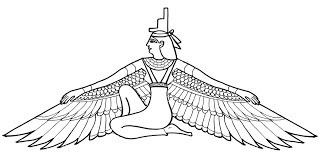
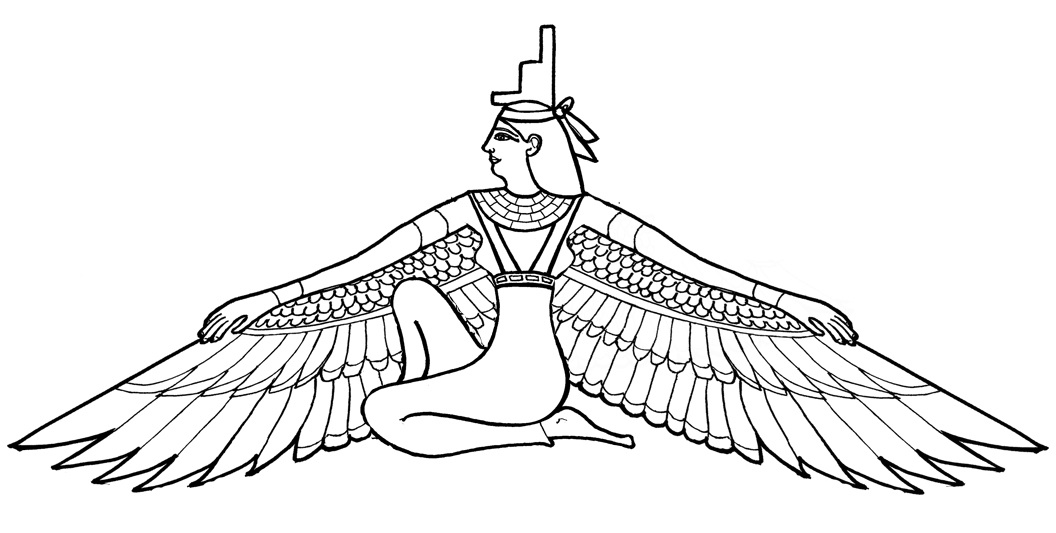
Oh, and you know what's super crazy? This song Stay, resonated so much with me and the meaning of this book. Then I looked at the cover image on iTunes for her album, and see a magnificent photo of Rihanna showing the Goddess Isis under her breast. I was like HOLY CRAP no way! Coincidence? I don't know. Then again who has a tat of Isis, and sings a song that corresponds with a book based on the Goddess Isis and her embodiment in all women? One major point the book made was that as a woman if we channel the connection we have to ALL women, well...that's where the magic happens. Seems like this could be more than a coincidence. I swear I didn't know she had the tattoo when I linked the book to this song. I'm not too into rihanna before this. I like her, now I love her. Here are some pics of the amazing tattoo.

Review: I loved this book. After thinking of my feelings of this beautiful novel I kept having trouble in a way I hadn't before. This novel causes a lot of introspection and it's very spiritual and New Age. I had to continually remind myself it was written in the 1930s. So if I were to write a review about how this book made me feel and what it did to me-- I'd be revealing the most intimate aspects of my soul. And well, I love you all but I'm just not comfortable with that. Suffice it to say that I found the ideas presented as nothing short of amazing. I am in love with Dion's hero, Wilfred Maxwell. She mentions in her introduction that she wrote him with flaws because her characters are more real that way. I loved him with his flaws, his temper and funny way of dealing with things endeared me to him quite a bit. He was magnetic. His love for the sea priestess, Morgan Le Fay was so heartbreaking and enchanting. She reminded me of myself a bit. Their dynamic and relationship can be summed up in a song that has been playing in my mind ever since I finished the book. It perfectly matches what their relationship is and I just find it actually jives really well with the book in general. Now I have never simply played a song and the lyrics for a review before, but it seems like a cool idea and it's my blog so I can do these fun things. I'm so glad I picked this book up at the library bookstore. Ill forever cherish it and read it again. If you want a book that is provides insight about spirituality and the duality dynamic between male and female, and speaks of goddesses-- while all the while establishing the origins of what we call New Age now..read this book. 5/5 stars. A new favorite.
Music video-- Rihanna's Stay feat. Mikky Ekko
Here's the link it's not letting me embed the video--- http://m.youtube.com/watch?feature=pl...
Oh, and you know what's super crazy? This song Stay, resonated so much with me and the meaning of this book. Then I looked at the cover image on iTunes for her album, and see a magnificent photo of Rihanna showing the Goddess Isis under her breast. I was like HOLY CRAP no way! Coincidence? I don't know. Then again who has a tat of Isis, and sings a song that corresponds with a book based on the Goddess Isis and her embodiment in all women? One major point the book made was that as a woman if we channel the connection we have to ALL women, well...that's where the magic happens. Seems like this could be more than a coincidence. I swear I didn't know she had the tattoo when I linked the book to this song. I'm not too into rihanna before this. I like her, now I love her. Here are some pics of the amazing tattoo.


August 7, 2020
This is a hard one to rate. There were times where I thought it was one of the most beautiful books I’d ever read. But there were other times where it dragged, notably the overlong denouement that was less enjoyable. Worse, the main character, Wilfred Maxwell, is stuck in the time period it was written (1930s) so some of his actions/attitudes prove problematic to a modern reader - weirdly, it is as the novel progresses that he gets harder to take.
Dion Fortune was a British occultist who’s writing and philosophies were influential in shaping modern Wicca. Her work has inspired Doreen Vailente and novelist Marion Zimmer Bradley. I had also heard, prior to reading this, that she used her novels as a way of giving examples for the occult practices/philosophies found in her other writing. So I found it interesting, first of all just for those aspects. But her writing is quite lovely on its own. Even if you don’t know the history, I believe there is a lot to be enjoyed in this novel.
First, the good: I found The Sea Priestess enchanting, with its gentle leisurely pace, depictions of the English coast and the stormy sea, the old fort being transformed into a temple and Wilfred and the enigmatic Morgran Le Fay’s curious relationship. Wilfred was a character I found very believable and easily relatable when we first meet him. Morgan Le Fay was distant and strange, but then she is supposed to be and that is all part of the fun.
Wilfred is a quiet man, trapped in a decent but boring job in a tiny English town where he supports his bitter and unpleasant sister and mother and has never really had the chance to have a life of his own. After developing asthma and having an out-of-body experience as a result of the attacks and medication, he begins to cautiously explore some esoteric writings. He also gains a little space from his domineering family by relocating to an old set of stables and turning them into a cozy home for himself.
These small steps set him on the path to be ready for his meeting with Vivien Le Fay Morgan (later called Morgan Le Fay) a woman who should be ancient, but appears beautiful and intensely mysterious. She enlists Wilfred to help her transform an old abandoned fort by the sea into a temple to the gods of the sea. Wilfred begins to experience visions, wherein a past life she was a priestess from Atlantis who journeyed to England to perform human scarifies to the sea to save Wilfred’s people and he was one of the sacrifices. She was also the Morgan Le Fay from Arthurian legend.
Unfortunately, Wilfred by the end of the novel is strangely unsympathetic. Although we modern readers can cheer him for standing up to his domineering relatives, it is much less comfortable for us when he, say, smacks his sister in the face. And although I liked that he used Morgan’s teachings to then in turn help Molly grow, there was something condescending and just . . . odd? in his feelings towards her. I really could have done without the long Wilfred/Molly denouement.
Dion Fortune was a British occultist who’s writing and philosophies were influential in shaping modern Wicca. Her work has inspired Doreen Vailente and novelist Marion Zimmer Bradley. I had also heard, prior to reading this, that she used her novels as a way of giving examples for the occult practices/philosophies found in her other writing. So I found it interesting, first of all just for those aspects. But her writing is quite lovely on its own. Even if you don’t know the history, I believe there is a lot to be enjoyed in this novel.
First, the good: I found The Sea Priestess enchanting, with its gentle leisurely pace, depictions of the English coast and the stormy sea, the old fort being transformed into a temple and Wilfred and the enigmatic Morgran Le Fay’s curious relationship. Wilfred was a character I found very believable and easily relatable when we first meet him. Morgan Le Fay was distant and strange, but then she is supposed to be and that is all part of the fun.
Wilfred is a quiet man, trapped in a decent but boring job in a tiny English town where he supports his bitter and unpleasant sister and mother and has never really had the chance to have a life of his own. After developing asthma and having an out-of-body experience as a result of the attacks and medication, he begins to cautiously explore some esoteric writings. He also gains a little space from his domineering family by relocating to an old set of stables and turning them into a cozy home for himself.
These small steps set him on the path to be ready for his meeting with Vivien Le Fay Morgan (later called Morgan Le Fay) a woman who should be ancient, but appears beautiful and intensely mysterious. She enlists Wilfred to help her transform an old abandoned fort by the sea into a temple to the gods of the sea. Wilfred begins to experience visions, wherein a past life she was a priestess from Atlantis who journeyed to England to perform human scarifies to the sea to save Wilfred’s people and he was one of the sacrifices. She was also the Morgan Le Fay from Arthurian legend.
Unfortunately, Wilfred by the end of the novel is strangely unsympathetic. Although we modern readers can cheer him for standing up to his domineering relatives, it is much less comfortable for us when he, say, smacks his sister in the face. And although I liked that he used Morgan’s teachings to then in turn help Molly grow, there was something condescending and just . . . odd? in his feelings towards her. I really could have done without the long Wilfred/Molly denouement.

July 4, 2008
I’ve long had an interest, however weak, in esoteric matters. Since the birth of my daughter I’ve been particularly interested in goddess worship, or more specifically the modern revival of ancient goddess religion. That interest led me to this novel by Dion Fortune.
This is the tale of a bored British real estate broker who gets involved with a seemingly ageless woman who may just happen to be the reincarnation of a priestess from ancient Atlantis. They get up to some pretty occult stuff together. I think if Dion Fortune had written this a couple centuries earlier she might have been burned at the stake. It gave me a little thrill to see my daughter’s name mentioned in some of their ritual chants.
Choice quote:
My juvenile amusement at these place names was, unfortunately, the highlight of the book. It’s not that the book was bad, just kind of boring. It was not too too boring — I finished it after all — and it was pleasant in its own way, as reading a chapter or two helped me get to sleep at night.
However, because of these somnorific qualities, it took me longer to finish than it should have.
This is the tale of a bored British real estate broker who gets involved with a seemingly ageless woman who may just happen to be the reincarnation of a priestess from ancient Atlantis. They get up to some pretty occult stuff together. I think if Dion Fortune had written this a couple centuries earlier she might have been burned at the stake. It gave me a little thrill to see my daughter’s name mentioned in some of their ritual chants.
Choice quote:
‘Is that the river down below you?’ she said.
I told her it was.
‘The one that comes out at Dickmouth?’
I told her that was so. ‘This is the Narrow Dick,’ I said. ‘Where the Broad Dick is, I have never been able to discover.’
My juvenile amusement at these place names was, unfortunately, the highlight of the book. It’s not that the book was bad, just kind of boring. It was not too too boring — I finished it after all — and it was pleasant in its own way, as reading a chapter or two helped me get to sleep at night.
However, because of these somnorific qualities, it took me longer to finish than it should have.

May 22, 2007
Although this book is a "classic" in spiritual novels and I was spellbound by the description of moon magic, mythology, rituals and the great occult wisdom by Dion Fortune I found it sometimes.. long-winded. But if you have made it through the boring description of Wilfrid´s life and the mysterious Vivien arrives it gets better and more interesting. The writing style of the author and the way of thinking and the behaviour of the characters appear often antiquated to me (it was written around 1930). Nonetheless it´s a worth read if you are interested in occult wisdom in the form of a novel but honestly – it didn´t sweep me of my feet.

December 28, 2016
I read this book a long time ago and really loved it.
Dion Fortune was a famous occultist from the 1930s and learnt all that Qabalistic stuff from the Hermetic Order of the Golden Dawn so all of that ritual and Philosophy is in her novels.
I prefer her last book Moon Magic but this book also provides many of the keys to the Hermetic arts.
Apart from the Hermetic side, the novel hasa very strong female protagonist in the Sea Priestess Lilith Le Fey.
Its main strentgh is that the book bridges the world of fantasy and reality and joins them magically together.
Well worth looking at
Dion Fortune was a famous occultist from the 1930s and learnt all that Qabalistic stuff from the Hermetic Order of the Golden Dawn so all of that ritual and Philosophy is in her novels.
I prefer her last book Moon Magic but this book also provides many of the keys to the Hermetic arts.
Apart from the Hermetic side, the novel hasa very strong female protagonist in the Sea Priestess Lilith Le Fey.
Its main strentgh is that the book bridges the world of fantasy and reality and joins them magically together.
Well worth looking at

March 30, 2009
Yes, the book is about Morgan, but it's really about Wilfred, our narrarator, who starts off the book as a self-described "mother's boy", directionless and hating his life. Morgan turns his life around completely. The book features some gorgeous poetry and ritual centered around the Great Goddess Isis. I had to keep reminding myself this book was written in the 1930's because so much of it has influenced contemporary writing on Magick, Witchcraft, and the Occult!

July 9, 2015
Before reading The Sea Priestess forget all your notions of how a traditional novel should read, and you will enjoy it immensely. It starts slowly, but unfolds like a visceral and psychedelic poem, and in the end is well worth the effort.
Without question the novel is very wordy, and an editor would have had much to work with. However, I admire Fortune for publishing the book privately, and staying true to her artistic vision.
Without question the novel is very wordy, and an editor would have had much to work with. However, I admire Fortune for publishing the book privately, and staying true to her artistic vision.

April 9, 2012
Fun read for a lark. I like this sort of stuff.
This book spells out some of Fortune's thinking and beliefs. Fortune reported visions of Atlantis at a very early age and later developed psychic abilities. Drawn to the occult, she joined the Theosophical Society. Sea Priestess and another book Moon Magic, became influential within Wicca.
This book spells out some of Fortune's thinking and beliefs. Fortune reported visions of Atlantis at a very early age and later developed psychic abilities. Drawn to the occult, she joined the Theosophical Society. Sea Priestess and another book Moon Magic, became influential within Wicca.

October 28, 2012
Estate agent Wilfred Maxwell, stricken with asthma, assists mysterious Le Fay Morgan by transforming an old fort by the sea into a villa for her to inhabit. As he bumbles through this task, he is assaulted with memories of being drowned in a sea cave underneath the fort and agrees to revive occult the practices of Atlantis with her.
December 5, 2013
Haunting. I am new to Dion Fortune. Her books were recommended to me by a tarot reader on a forum. I am also a tarot reader & I can't believe that it's only now that I have discovered her. So interesting to hear her language from the time. Very quaint. But also interesting to see how she inserts magical instruction in the framework of a story.

August 18, 2013
An interesting story. The first in two books that are linked. Although I feel that Moon Magic was the superior book, this book was good in its own right. Occult truths given out and placed into a fictional setting.
This is something that Dion Fortune excelled at.
This is something that Dion Fortune excelled at.

April 2, 2017
For those who want to experience the special sensuality of a reincarnated atlantean pristess.
Para aquell@s que quieren expiramentar la sensualidad de una sacerdotica atlantisense reincarnada.
Para aquell@s que quieren expiramentar la sensualidad de una sacerdotica atlantisense reincarnada.

July 9, 2021
Worth it for the descriptions of ritual alone, but there’s a lot in here for practitioners to unpack. I’m going to have to reread it after digging into her work on the Tree of Life.

April 27, 2023
“The Sea Priestess” is a novel by Dion Fortune, originally published in 1938. It was her 7th novel, having previously published a few under her own name, as well as a few under the name V. M. Steele. She also wrote numerous non-fiction/occult philosophy books.
Since I'm very interested in the figures of the Golden Dawn era and their writings, I was drawn to Dion Fortune as perhaps the most well-known woman among them. Last year, I read two of her other books, the famous “Mystical Qabalah” (1935) and her collection of interrelated short stories called “The Secrets of Dr. Taverner” (1926) which was her first foray into fiction.
The basic story revolves around the narrator, Wilfred, who works in real estate in a stuffy old-fashioned English small town (again, this was written and published in the 1930s and in shows in the colloquialisms of the dialogue, as well as their social conventions). Wilfred lives with a domineering mother and sister, with whom he has nothing in common, and seems to have some budding interest in the occult, which he reads about while laying convalescent from asthma. A funny detail – he specifically mentions reading a book called “Projection of the Astral Body” by Muldoon and Carrington (originally published in 1929), and this was also one of the first occult books that I ever read, too (I reviewed it a long time ago). Wilfred gets so irritated by his family that he moves into an outbuilding on their property previously used for horse stables, which he has fixed up and where he gains some peace and privacy:
"...everybody said I was damned unsociable, but god knows I wasn't unsociable if I could have got the sort of society I liked... So I read variously and I read queerly. I read a lot of Theosophical stuff, for one thing, which I couldn't have done, not in comfort anyway, if I had still been at the house. Some of it I liked, and some I didn't. I accepted reincarnation; it was the best thing of its kind I had ever come across and helped me a lot. This life looked like being a wash-out, so I pinned my hopes to the next..."
"I also developed my power of 'feeling-with' nature things. I had my first experience of this when I accidentally got in touch with the Moon during my first attack [of asthma]; later I read 'The Projection of the Astral Body' by Muldoon and Carrington. This gave me ideas. Muldoon had poor health, and when he was lowered by illness he found he could slip out of his body..."
Eventually a mysterious woman comes to town looking for a suitable property (to do works of High Magick, as it turns out) and incidentally gives Wilfred exactly the type of company he craves. Wilfred both helps her find a place for her temple (an abandoned fort along the coast), and is initiated into her magick work as well. He falls madly in love with her, of course, but the woman, Vivien Le Fay Morgan does not reciprocate. She is all business (in the occult sense - which is to say she is celibate); this is not Crowleyan sex magick, though there are sexual undertones at times. What might have raised eyebrows when this was published all reads as very tame now.
In the book’s introduction, Fortune says that her novels are meant to “give the practice” of magick, while her Mystical Qabalah “gives the theory”. But honestly, since ‘esoteric secrecy’ was taken so seriously in those days, Fortune is somewhat ambiguous regarding details of ceremonial magick, and it doesn’t end up being as instructive as it could be (the book’s Introdution by Gareth Knight discusses this briefly). My main practical takeaway was the Fire of Azrael – a burnt combination of cedar, juniper, and sandalwood that “produces a clear, glowing ash which is used in clairvoyance, much as a gazing crystal is, to induce as vision, or to provide a bridge between conscious and sub-conscious.”
I have to admit, this was my least favorite of the three books I’ve now read by Fortune. It’s not to say that I didn’t enjoy and appreciate some aspects of the novel, but I guess it didn’t live up to my expectations. It gets off to an interesting start but lags through the middle portion and the ending, while not terrible, is not as satisfying as I hoped. In contrast, Fortune’s “Mystical Qabalah” was an illuminating read and I’d consider it an essential occult text – at least if you want to begin to understand the qabalistic references that appear quite often in the magickal lore of this time period and before. But even in terms of her fiction, I think I enjoyed “Secrets of Dr. Taverner” more. The short story form might be better suited to her strengths, and in general, I think she might be better as a writer of occult non-fiction, rather than a creator of Literature. Perhaps one day I will read her other famous novel "Moon Magic" but for now, I have the rest of a pile of books to finish...
--------------------------------------
follow mother_lachrymarvm on instagram for occult content and more...
https://www.instagram.com/mother_lach...
Since I'm very interested in the figures of the Golden Dawn era and their writings, I was drawn to Dion Fortune as perhaps the most well-known woman among them. Last year, I read two of her other books, the famous “Mystical Qabalah” (1935) and her collection of interrelated short stories called “The Secrets of Dr. Taverner” (1926) which was her first foray into fiction.
The basic story revolves around the narrator, Wilfred, who works in real estate in a stuffy old-fashioned English small town (again, this was written and published in the 1930s and in shows in the colloquialisms of the dialogue, as well as their social conventions). Wilfred lives with a domineering mother and sister, with whom he has nothing in common, and seems to have some budding interest in the occult, which he reads about while laying convalescent from asthma. A funny detail – he specifically mentions reading a book called “Projection of the Astral Body” by Muldoon and Carrington (originally published in 1929), and this was also one of the first occult books that I ever read, too (I reviewed it a long time ago). Wilfred gets so irritated by his family that he moves into an outbuilding on their property previously used for horse stables, which he has fixed up and where he gains some peace and privacy:
"...everybody said I was damned unsociable, but god knows I wasn't unsociable if I could have got the sort of society I liked... So I read variously and I read queerly. I read a lot of Theosophical stuff, for one thing, which I couldn't have done, not in comfort anyway, if I had still been at the house. Some of it I liked, and some I didn't. I accepted reincarnation; it was the best thing of its kind I had ever come across and helped me a lot. This life looked like being a wash-out, so I pinned my hopes to the next..."
"I also developed my power of 'feeling-with' nature things. I had my first experience of this when I accidentally got in touch with the Moon during my first attack [of asthma]; later I read 'The Projection of the Astral Body' by Muldoon and Carrington. This gave me ideas. Muldoon had poor health, and when he was lowered by illness he found he could slip out of his body..."
Eventually a mysterious woman comes to town looking for a suitable property (to do works of High Magick, as it turns out) and incidentally gives Wilfred exactly the type of company he craves. Wilfred both helps her find a place for her temple (an abandoned fort along the coast), and is initiated into her magick work as well. He falls madly in love with her, of course, but the woman, Vivien Le Fay Morgan does not reciprocate. She is all business (in the occult sense - which is to say she is celibate); this is not Crowleyan sex magick, though there are sexual undertones at times. What might have raised eyebrows when this was published all reads as very tame now.
In the book’s introduction, Fortune says that her novels are meant to “give the practice” of magick, while her Mystical Qabalah “gives the theory”. But honestly, since ‘esoteric secrecy’ was taken so seriously in those days, Fortune is somewhat ambiguous regarding details of ceremonial magick, and it doesn’t end up being as instructive as it could be (the book’s Introdution by Gareth Knight discusses this briefly). My main practical takeaway was the Fire of Azrael – a burnt combination of cedar, juniper, and sandalwood that “produces a clear, glowing ash which is used in clairvoyance, much as a gazing crystal is, to induce as vision, or to provide a bridge between conscious and sub-conscious.”
I have to admit, this was my least favorite of the three books I’ve now read by Fortune. It’s not to say that I didn’t enjoy and appreciate some aspects of the novel, but I guess it didn’t live up to my expectations. It gets off to an interesting start but lags through the middle portion and the ending, while not terrible, is not as satisfying as I hoped. In contrast, Fortune’s “Mystical Qabalah” was an illuminating read and I’d consider it an essential occult text – at least if you want to begin to understand the qabalistic references that appear quite often in the magickal lore of this time period and before. But even in terms of her fiction, I think I enjoyed “Secrets of Dr. Taverner” more. The short story form might be better suited to her strengths, and in general, I think she might be better as a writer of occult non-fiction, rather than a creator of Literature. Perhaps one day I will read her other famous novel "Moon Magic" but for now, I have the rest of a pile of books to finish...
--------------------------------------
follow mother_lachrymarvm on instagram for occult content and more...
https://www.instagram.com/mother_lach...

January 1, 2022
Rating: 2.4 / 5
DNF at 80 pages
So sorry, I really wanted to like this, but I just...didn't and couldn't. Sure, I'm reading it for the spirituality as well as the fiction, but I feel like the author doesn't quite hit the mark in either category.
Basically, in terms of both Wilfred and Vivien as characters, I don't get a sense so much of "character" as I do of mystery with regards to Vivien (and, by the way, I think it's ridiculous in any context for an author to expect the reader to buy into the fact that a 70+ year-old woman can still look like she's in her 30s), and so I had a hard time caring about what happens to them. I think part of the weakness if telling everything through Wilfred's perspective because, much like how he says his job is boring, his narration is boring as well. True, I liked how it's through his asthma that he first begins to discover some mysticism in his life via the Moon, but then when the author introduces "dope" (aka drug use) as part of helping him achieve that, I'll confess that she kind of lost me.
Drug use and the hallucinations thereof are NOT spirituality, and they are NOT the same as meditation.
Apart from that, in terms of where the plot was going I got a sense of the general direction, but it just didn't interest me very much. I think part of the fact is definitely that this book is outdated in terms of how to view the occult and how accessible it is, with an emphasis on bloodlines and names and inheritances and all that other old-timey stuff that turns me off from traditional religions, never mind esoteric ones!
Therefore, unfortunately, I wasn't quite able to get through this one, though I did give it a valiant effort as my first book of the new year! The cover is my favourite part, and in any case, I appreciate what the author was trying to do in her day and context. Maybe it worked out better then than it does now.
DNF at 80 pages
So sorry, I really wanted to like this, but I just...didn't and couldn't. Sure, I'm reading it for the spirituality as well as the fiction, but I feel like the author doesn't quite hit the mark in either category.
Basically, in terms of both Wilfred and Vivien as characters, I don't get a sense so much of "character" as I do of mystery with regards to Vivien (and, by the way, I think it's ridiculous in any context for an author to expect the reader to buy into the fact that a 70+ year-old woman can still look like she's in her 30s), and so I had a hard time caring about what happens to them. I think part of the weakness if telling everything through Wilfred's perspective because, much like how he says his job is boring, his narration is boring as well. True, I liked how it's through his asthma that he first begins to discover some mysticism in his life via the Moon, but then when the author introduces "dope" (aka drug use) as part of helping him achieve that, I'll confess that she kind of lost me.
Drug use and the hallucinations thereof are NOT spirituality, and they are NOT the same as meditation.
Apart from that, in terms of where the plot was going I got a sense of the general direction, but it just didn't interest me very much. I think part of the fact is definitely that this book is outdated in terms of how to view the occult and how accessible it is, with an emphasis on bloodlines and names and inheritances and all that other old-timey stuff that turns me off from traditional religions, never mind esoteric ones!
Therefore, unfortunately, I wasn't quite able to get through this one, though I did give it a valiant effort as my first book of the new year! The cover is my favourite part, and in any case, I appreciate what the author was trying to do in her day and context. Maybe it worked out better then than it does now.

September 30, 2023
I really wanted to like this, it hit all the themes I love--the priestess path, mysterious woman, ancient goddess, paganism, high magick, oldy worldy tone. But the entire novel was just dull.
The narration was utter hog wash, it was like reading the wafflings of an old man's diary, it was that dry my mind was so parched I kept wishing the sea priestess would magically send the sea my way to energetically feel the water element that this book promises.
Apparantly this book is sold out often in Treadwell's...Why? I don't know. I don't know it's appeal, I don't understand why it's such a popular 'must read' in the pagan/occult community.
It is meant to reference secret information about magick within the story, maybe I'm not witchy enough (practicing hedgewitch and priestess) because all I read was a man twittering on about his dull life, his asthma, his infactuation with the priestess and building her a temple on the coast and random characters he drivels on about like a drunkard trying to tell a story.
The excuse is 'this is a novel of it's time' because it was written in 1935 but that is such a lame excuse given that 'Gone with the Wind' was written in 1936, 'The Hobbit' was written in 1937, 'Murder on the Orient Express' was written in 1934.. Basically Dion Fortune is just not a good novelist, perhaps her non-fiction is better.
Out of 235 pages about 50 of them were lush and full of mysticism of the landscape, weather, dreams, the priestess and ritual and I wish Dion fleshed out this novel better.
The narration was utter hog wash, it was like reading the wafflings of an old man's diary, it was that dry my mind was so parched I kept wishing the sea priestess would magically send the sea my way to energetically feel the water element that this book promises.
Apparantly this book is sold out often in Treadwell's...Why? I don't know. I don't know it's appeal, I don't understand why it's such a popular 'must read' in the pagan/occult community.
It is meant to reference secret information about magick within the story, maybe I'm not witchy enough (practicing hedgewitch and priestess) because all I read was a man twittering on about his dull life, his asthma, his infactuation with the priestess and building her a temple on the coast and random characters he drivels on about like a drunkard trying to tell a story.
The excuse is 'this is a novel of it's time' because it was written in 1935 but that is such a lame excuse given that 'Gone with the Wind' was written in 1936, 'The Hobbit' was written in 1937, 'Murder on the Orient Express' was written in 1934.. Basically Dion Fortune is just not a good novelist, perhaps her non-fiction is better.
Out of 235 pages about 50 of them were lush and full of mysticism of the landscape, weather, dreams, the priestess and ritual and I wish Dion fleshed out this novel better.

June 6, 2017
This is one of Fortune's classic teaching novels, in which some of the key ideas of her NeoPagan faith are explored through narrative. I'd read some of her non-fiction work before, but not any of her novels, and it seems to me that this is a very effective way of handling the material. Although partially imposed by the legal situation at the time (this was first published in 1935; the practice of witchcraft was illegal in England until 1951, hampering the writing of Fortune, Gardner and others on the topic), the use of a narrative structure in which a seeker gradually learns about the ancient faith both allows the reader to reject without undue stress those bits which do not appeal (I confess I find Atlantis requires a large pinch of salt... fortunately it's well-provided with sea salt!), and takes one along gradually through material which, presented as a list of propositions or instructions, would be unwieldy and unappealing. I only found the POV character, Wilfred Maxwell, moderately sympathetic, but there are two key women, Morgan le Fay and Molly Coke, who are both - although very different - attractive and engaging. Overall, it's both a pretty good read as fantasy fiction, and an interesting insight into Fortune's occult system and Goddess worship.
Displaying 1 - 30 of 89 reviews