"I do not think I hardly ever admired a book more than Paley's Natural Theology: I could almost formerly have said it by heart." Charles Darwin, 1859.
More than two hundred years ago, Dr. William Paley wrote a series of books that marshaled evidence for the Christian faith. His books were often required reading at major institutions of learning. Believers and unbelievers alike wrestled with Paley's arguments and his compelling presentation of them. Paley's Natural Theology was one of those books. In it, he showed from biology and human anatomy that the argument for design was a clear and self-evident inference from the facts, and from that point of departure proposed that only a designer God could adequately account for those facts. His famous analogy from an intricate watch to the required deduction that there exists a watchmaker persists to this day. When evolutionary theory rose to dominance, it was thought that Paley's views on 'intelligent design' had been fully put to rest. However, each new generation discovers anew that evolutionary theory requires them to accept as true what appears, on its face, to be patently absurd: that immense complexity, surpassing in its apparent genius what 1,000 human geniuses cannot create was nonetheless the product of unguided, intrinsically dumb, natural forces. Unsatisfied, they consider the alternatives. The argument is sure to rage for another two hundred years and Dr. Paley's Natural Theology will prove to be relevant then as it is relevant today, advances in our understanding of biology notwithstanding, and, actually, because of those very same advances.
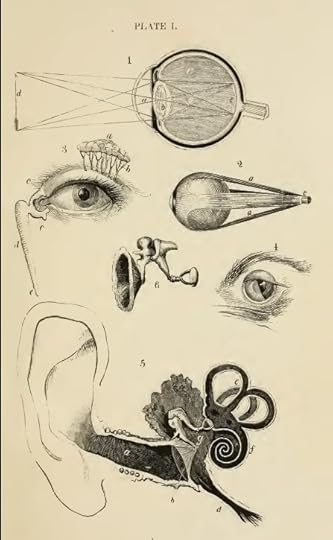
While Paley wrote this book in 1809, this text reflects the 1860 edition, updated by Paley and footnoted by Dr. John Ware, who also produced illustrated plates for the book which have become classics in themselves. A modern day reader's guide and some up to date illustrations augment the work, but these are unobtrusive, and are not mixed into Paley's original text. Finally, a contemporary foreword briefly puts Dr. Paley's monumental work in its modern context, arguing why the book, and the arguments it contains, are still worthy of consideration.
This edition corresponds to the print edition at ISBN: 978-1-936830-27-5
My name is William Paley; I was born into this world in 1743, and I departed it in 1805. How I come to be writing these lines on your website, I am not at liberty to relate; but I have now been a visitor in the 21st century for several months, and there are matters I have been ruminating almost since my arrival, that I feel, after mature consideration of the circumstances, that I am not without justification in wishing to divulge to a wider audience.
You may have heard mention of a book I wrote, some two hundred years ago, with the title Natural Theology. I understand that the opening passage is still on occasion cited today: I beg the reader to consider his answer should he pitch his foot against a stone while walking across a heath, and wonder how it came to be there; and then compare it with his different answer, should he instead have found a watch. A stone may, for all one knows, have lain there forever; but a watch, every reasonable man will agree, implies the existence of a watchmaker. From this beginning, I argued that the case of living creatures is in all respects exactly analogous; that they are all possessed of contrivances as clearly mechanical as the spring, gears, chain, fusee &c of any watch, and as clearly the product of an Artificer.
I well understand that, with the advantage of two centuries' more learning, some of you may smile and wink at my honest misunderstanding; it will be within the compass of a diligent schoolboy's powers to correct my error, and explain that the adaptation of each living creature to its environment, which I marvelled at and named as evidence of Divine Contrivance, is in fact result of the process of Natural Selection so well described by Mr. Darwin. But does this mean that I repent of my attempt to demonstrate the existence of the Creator from the evidence of His handiwork? To the question, I give a resounding no! I regret, merely, that when I wrote my book I had available but the meager resources afforded me by the natural philosophy of my day; had I (as I have now,) been granted access to the stores of modern knowledge, which treat of phænomena undreamed of in my 18th century, I could have couched the argument in terms a hundred, nay, a thousand times more apt to convince the sceptical reader.
In 1802, when I completed my book, the notion of contrivance was but a poor and simple one, and amounted to little more than the art of the watchmaker and the plumber: and thus, the examples of natural contrivances which I furnished, the joints, ligaments, valves &c, of the human body were no more than clockwork and plumbing. But now, any citizen of your age who is habituated to the ways of the Internet, has an understanding immeasurably deeper of what contrivances may be devised even by human art. It can happen that an uninstructed person, faced for the first time with that marvel of artifice called Google Translate, notes that the device allows for the translation, albeit imperfect, from Icelandic to Indonesian, and wonders at the difficulty of locating persons conversant with both these languages, and also familiar with the means of creating mechanical dictionaries and grammars; yet any man who but has a little acquaintance with the methods of software engineering will tell him, that no such persons are required. The engine of Google Translate needs merely a good stock of examples which associate sentences of Icelandic to their Indonesian counterparts; and, of its own accord, it will adapt itself to the peculiarities of this pair of languages. The skill of the artificer is at one remove from the result; it resides not in the production of the contrivance itself, but in the production of utensils, more general in form, which have the power of adapting themselves to new circumstances.
Now if the human enterprise of Messrs. Page and Brin can create such an engine, how much more subtle an engine may not be created by the Divine Power! On perusing the learned articles of Francis Crick and James Watson, I was awed and humbled to discover that the Creator had no more to devise multiple species of animal and plant, than the artificers of Google Translate to devise multiple engines of translation. One single engine, the DNA molecule, sufficed; and Mr. Darwin's process of Natural Selection then performed the whole of the remaining task, of painstakingly achieving the adaptation of each species to its particular environment.
I am aware that there be men who argue, that the DNA molecule itself be the product of chance, not artifice: and to these I say, shew me the sufficient reasons, that explain how such a thing may arise. Were it necessary to inquire into the motives of these men's opinions, I mean their motives separate from their arguments; I should almost suspect, that, because the proof of a Deity drawn from the constitution of nature is not only popular but vulgar (which may arise from the cogency of the proof, and be indeed its highest recommendation), and because it is a species almost of puerility to take up with it; for these reasons, minds, which are habitually in search of invention and originality, feel a resistless inclination to strike off into other solutions and other expositions. The truth is, that many minds are not so indisposed to any thing which can be offered to them, as they are to the flatness of being content with common reasons: and, what is most to be lamented, minds conscious of superiority, are the most liable to this repugnancy.
In my book, I briefly alluded moreover to proofs drawn from the realm of Astronomy, though I noted, that in my opinion such proofs were less convincing that those based on Anatomy; here, too, I discover that I was mistaken, and that new learning has shewn the Heavens to even greater extent the work of Artifice than is the fabric of life. But to adduce such proofs to an article intended as brief, would be wearisome; rather, I should prefer to revise my book in the light of this new science, a project I most earnestly wish to attempt, can my sojourn in the 21st century be but adequately prolonged.
This book is a must read for those interested in the intelligent design debate. William Paley wrote this classic on intelligent design in 1802. It was the standard apologetic book against atheistic views emerging at the time. This archdeacon in the Church of England was remarkably informed on the science of the day. He ably discusses the intricacies of the human body and other creatures giving all praise and glory to the Creator. He is to be credited with the familiar watch and watch maker analogy. Michael Behe and others stand on the shoulders of this giant, strengthening the same thesis with modern scientific insights from the molecular realm. Even Dawkins riffs off of his watch maker analogy with his book "The Blind Watch Maker". Darwin thought he overturned Paley's work as do his modern disciples, but they are all sorely mistaken. This quote is taken from chapter 5 "What does chance ever do for us? In the human body, for instance, chance, i.e. the operation of causes without design, may produce a wen, a wart, a mole, a pimple, but never an eye."
While this is a bit dry in places, his use of analogy and even allegory is delightful and I thoroughly enjoyed this book. I do want to read it again in the future while reading The Origin of Species at the same time, I think they need to be experienced together as these two books are the foundation of the debate that occurred when Darwin produced his work.
It's sad that more than two hundred years later, intelligent design proponents are still using an argument that opens Paley's book ("watch-watchmaker"), which was published in 1802.
Perhaps, as my punny friend Jimmy says, I.D. does not evolve.
I mistakenly read this entire book for a Victorian Science class, when I was actually supposed to just read a much shorter pamphlet that was written by Paley under the same title. Nonetheless, it was really interesting, in light of this Marxist historiography of 19th-century science by Robert Young who comments liberally on Paley to show that even if the Tory establishment that he represented was defeated with respect to the issue of evolution and natural history, these conservatives still managed to set into motion a lasting understanding ‘nature’ and 'society' that would perpetuate relations of domination, this time in the form of bourgeois capitalism, with a domesticated theory of evolution repurposed for their own class interests.
One of Paley’s central arguments for the existence of God was how nature’s complexity, its resemblance to ‘contrivance’ and ‘design’, must imply some sort of ‘designer’, Creator, and so on.
What is fascinating here is the obvious co-production (Sheila Jasanoff’s term) here between technology and science, and then also co-production between technoscience and society. The technologies that were emerging over the course of the so-called industrial revolution were shaping the main tenets of natural theology (obvious from the number of times Paley uses the word 'mechanism' in this book to describe the bodies of natural organisms). Natural theology was the main mode of respectable science at the time. And the science was also shaping perceptions of society and normative ideas of social order.
Theories of evolution predated the release of Darwin’s Origin of Species by a number of decades (as I’ve encountered in class, reading books like Adrian Desmond’s “The Politics of Evolution”). French comparative anatomy and Lamarckian evolution were being imported into radical medical unions and anatomy curricula in Edinburgh, and from Scotland slowly infiltrating London anatomy classes. These theories and forms of science were associated with atheists, materialists, republicans, working-class radicals, and the French Revolution. Evolution was a theory that implied the natural ability for a collective species to naturally self-organize and improve itself, to rise above its current place in the world. That species were not simply fixed to their place in the world, but that they could adapt, change, and arise to a new place in nature.
Paley’s argument was quite the opposite. That God had carefully created everything in nature with a specific purpose and a specific place, and any deviance was deviance against the order of God, and God himself (naturally… male). The main analogy that Paley uses is that of a watch, so intricate a mechanism that it would be absurd to suggest it came together on its own, an old argument that Hume had long shown to be rather unpersuasive. What I was fascinated by though was Paley also using watermills in the exact same way as the watch. I of course am researching watermills in long 19th century Ontario, and I was delighted to find that Paley chose such an analogy also. Some excerpts:
“We might possibly say, but with great latitude of expression, that a stream of water ground corn:* but no latitude of expression would allow us to say, no stretch of conjecture could lead us to think, that the stream of water built the mill, though it were too ancient for us to know who the builder was. What the stream of water does in the affair is neither more nor less than this: by the application of an unintelligent impulse to a mechanism previously arranged, arranged independently of it, and arranged by intelligence, an effect is produced, viz. the corn is ground. But the effect results from the arrangement. The force of the stream cannot be said to be the cause or author of the effect, still less of the arrangement. Understanding and plan in the formation of the mill were not the less necessary, for any share which the water has in grinding the corn: yet is this share the same, as that which the watch would have contributed to the production of the new watch, upon the supposition assumed in the last section.”
Paley uses machines like mills to emphasize the ‘artifice’ of human muscles:
“muscles, most artificially disposed for carrying on the compound motion of the lower jaw, half lateral and half vertical, by which the mill is worked…”
“The long tendon, as it is called, in the foot, which bends the first joint of the toe, passes through the short tendon which bends the second joint; which course allows to the sinew more liberty, and a more commodious action than it would otherwise have been capable of exerting. There is nothing, I believe, in a silk or cotton mill; in the belts, or straps, or ropes, by which motion is communicated from one part of the machine to another, that is more artificial, or more evidently so, than this perforation.”
“I have sometimes wondered, why we are not struck with mechanism in animal bodies, as readily and as strongly as we are struck with it, at first sight, in a watch or a mill.”
And again the analogy he uses to refute the emerging field of comparitive anatomy that was being used to imply the theory of evolution:
“Arkwright’s mill* was invented for the spinning of cotton. We see it employed for the spinning of wool, flax, and hemp, with such modifications of the original principle, such variety in the same plan, as the texture of those different materials rendered necessary. Of the machine’s being put together with design, if it were possible to doubt, whilst we saw it only under one mode, and in one form; when we came to observe it in its different applications, with such changes of structure, such additions, and supplements, as the special and particular use in each case demanded, we could not refuse any longer our assent to the proposition, ‘that intelligence, properly and strictly so called (includ- ing under that name, foresight, consideration, reference to utility,) had been employed, as well in the primitive plan, as in the several changes and accommodations which it is made to undergo.’”
The recurring word for Paley is ‘contrivance’:
“who stands by a stocking-loom, a corn-mill, a carding-machine, or a threshing-machine* at work, the fabric and mechanism of which, as well as all that passes within, is hidden from his sight by the outside case; or, if seen, would be too complicated for his uninformed, uninstructed understanding to comprehend. And what is that situation? This spectator, ignorant as he is, sees at one end a material enter the machine, as unground grain the mill, raw cotton the carding-machine, sheaves of unthreshed corn the threshing- machine; and, when he casts his eye to the other end of the apparatus, he sees the material issuing from it in a new state; and, what is more, in a state manifestly adapted to future uses; the grain in meal fit for the making of bread, the wool in rovings* ready for spinning into threads, the sheaf in corn dressed for the mill. Is it necessary that this man, in order to be convinced, that design, that intention, that contrivance has been employed about the machine…”
If one reads another pamphlet Paley writes on behalf of the ruling class, attempting to explain to poor people why they have it really good and it is quite a burden to be rich and powerful, and how much better it is to be poor… “Reasons for contentment: Addressed to the labouring part of the British public”
One sees Paley use precisely the same language of 'contrivance':
“But Providence which foresaw, which appointed indeed, the necessity to which human affairs are subjected, and against which it were impious to complain, hath contrived that, whilst fortunes are only for a few, the rest of mankind may be happy without them. And this leads us to consider the comparative advantages and comforts which belong to the condition of those, who subsist, as the great mass of every people do and must subsist, by personal labour, and the solid reasons they have for contentment in their stations.”
Seminarians of Upper Canada’s ruling class read the natural theology of Paley, at the University of Toronto, in which watermills were metaphors of order and intelligent design analogous to hierarchical social orders divinely 'contrived' and sanctioned.
Yet even when Darwin overturned many of the major assumptions of Paley’s natural theology, an underlying social aspect was left untouched. Adrian Desmond writes how Darwin was the perfect reflection of middle-class respectability and in fact long held back publications on his theory of evolution (which he was familiar with in some form since his younger days as a medical student in Edinburgh). This self-censorship was done over fears of evolution’s well-established association with radicals and revolutionaries. Adrian Desmond writes:
“Even in Edinburgh Darwin knew that much of the Lamarckian, materialist, phrenological ground was held by radicals. He heard the debates… Darwin would not have wanted his evolutionary views associated with this fierce radicalism; indeed his mature Malthusian theory supported a far less destructive social program… The Darwin-Wedgwood family typified the wealthier aspects of the provincial Whig squirearchy, not least in its practical attitude toward the social and recreational benefits of a Church career…
Yet like Uncle Josiah Wedgwood (Whig M. P. for Shropshire), the whole family loathed the "fierce & licentious" radicals. The news from home was full of foreboding and fears that the radicals were "gaining strength." In the clubs and learned societies these worries were just as pronounced. Darwin on his return now steered an antiradical and storm-free course suited to a gentleman drawing on father's bank (Charles and Emma married in 1839 on a combined allowance of £1,300 a year). He hated loudmouth radicalism.”
The Marxist historian of science Robert Young writes: “Darwin later admitted that even in overthrowing Paley's world view, he was surprised to discover how many of Paley's most basic assumptions he had retained.”
Going on Young speaks of “Paley's theodicy of harmony” laid out in his Reasons for Contentment and how they were basically repurposed in the Darwinian form of evolution that was made palatable to the emerging middle-class, bourgeois capitalists. It is a shift from the rural, feudal and aristocratic natural theology of Paley, to the new urban, industrial, bourgeois capitalist values of competition, survival of the fittest which Malthus had already putforward earlier, and was already adopted by Paley in his later years. Young writes:
“Malthus himself drew this conclusion, that charities and poor-rates are, properly speaking, nonsense, since they serve only to maintain, and stimulate the increase of, the surplus population whose competition crushes down wages for the employed”
These formulations had took uglier forms in the eugenicist and social Darwinist ideologies that would appropriate Darwin’s respectable middle-class evolutionary theory into an uglier version that went beyond mere class warfare.
But the main point is as Young summarizes it:
“Rather than focus on the overthrow of the relatively static theistic cosmology by a secular and progressive one, an interpretation must be worked out which stresses the development from one theodicy - in both its scientific and its social aspects - to another. The first was suitable for a relatively static and rural economy while the other was developed for a rapidly changing and industrializing society. Although the theories of Lyell and Darwin were at the center of the role of science in this change of rationalization.”
I planned to read Richard Dawkins' The Blind Watchmaker, and decided that I owed it to the good Archdeacon to read his long ago treatise containing the analogy from which Dawkin drew his title. I'm glad I did, but the entire book, a lengthy exposition of the Argument from Design, can be summed up in the opening paragraph. "In crossing a heath, suppose I pitched my foot against a stone and were asked how the stone came to be there: I might possibly answer, that, for anything I knew to the contrary it had lain their forever: nor would it perhaps be easy to show the absurdity of this answer. But suppose I had found a watch upon the ground, and it should be inquired how the watch happened to be in that place; I should hardly think of the answer which I had before given, that, for anything I knew, the watch might always have been there. . . When we come to inspect the watch, we perceive (what we could not discover in the stone) that it's several parts are framed and put together for a purpose . . . the inference, we think, is inevitable, that the watch must have had a maker: that there must have existed, at some time and at some place or other, an artificer or artificers who formed it for the purpose which we find it actually to answer; who comprehended its construction and designed its use." Paley's Natural Theology is still in print more than 200 years later, so it's worth reading the whole thing if you're so inclined, but that's pretty much all you need to know about this book. AW.
In Natural Theology, William Paley puts forth an argument for the existence of God based on observations about the order of the natural world, and, while I don't necessarily disagree with the basic foundation of his argument, I think he favors the wrong evidence out of his inability to think beyond his limited Christian viewpoint.
The foundation of the argument is thus: an uncultured man, ignorant of any kind of mechanical knowledge, coming across a watch in the middle of a hike, would immediately be able to discern it as something that was created rather than something that spontaneously assembled itself by chance. Similarly, when looking into the structure and suitability of various plant and animal biological processes, we see the same evidence of design.
It's not a bad argument in theory, and, as an agnostic, I do agree with the basic premise that the universe is too orderly to not have some source of order, but I do think his evidence is flawed. Of course, it's a little bit unfair: I'm looking at Paley's argument from a modern understanding of evolution--a theory that was still in its nascent stages at the time that Natural Theology was published. Paley even makes reference to the emerging theory, but quickly dismisses it as absurd. He also glosses over the laws of physics, which I actually feel make a stronger case for the ordered universe=source of authority argument.
My biggest issue with Paley's argument is that, while he obliquely references the formation of the earth and stars, he ultimately treats the world and the universe at large as though it has always been a certain way. He points to how wonderfully adapted plants and animals are to their environment, but fails to take into consideration how that environment has changed over time. The animals that exist now are adapted to how the world is in its current state, but if the world has been different in the past, doesn't it stand to reason that the animals of the past would have also been different? How does Paley account for fossils? Or historical records of plants and animals that either no longer seem to exist or are clearly ancestors of contemporary flora and fauna that nonetheless have key differences from their originators?
Paley also seems to find the idea of evolution absurd on account that it would mean that new species would constantly be springing up, but it's not like he wouldn't have seen new or different genera during his lifetime. Animal and plant husbandry would have been a common and accepted part of farming during his time. A Damascus goat and a cashmere goat are very different, and yet they're clearly cast from the same mold. If mankind can control the process of evolution to create new genera of a species that is better adapted to its environment or his or her purposes, it stands to reason that these things could happen spontaneously, particularly in the cases where reproduction is more passive, like in the case of plants (a process that Paley details at length). And if a species can go extinct, why wouldn't the opposite also be true?
In the end, Paley dismisses the idea of evolution and generational change by asserting his allegiance to Christianity, but I think his discomfort speaks to something even deeper than the idea of the existence of God--humankind's place within creation. In the same way that the heliocentric model of the solar system was rejected for its decentering of Man at the center of creation two centuries earlier, my suspicion is that, at the root of Paley's objection is an uncomfortable question about mankind's primacy and perfection among all of God's creatures.
Worth the read and I'm glad I didn't merely accept the 20 pgs we were assigned at school...that being said the 20 pages we were assigned were by far the most relevant and reading this entire thing is not going to be valuable to people looking to simply grasp Paley's position. But, grasping the position in all its robustness was (and generally always is) well worth the time for me.
Paley's design theory was the most convincing (not entailing convinced) argument for God's existence that I encountered in my philosophy studies, and after reading his entire treatise, I do believe that is still the case. However, what I did discover was an inherent difficulty for the position.
Considering this was written before Darwin, and his "On The Origin of Species" was an essentially direct response (Darwin read this in university), there is a fair amount in this that Paley gets wrong simply as a product of the times (1802 publication), which isn't a knock on Paley, but inherently harms some of his premises. Additionally, with evolution (which he refers to as "appentency") not having been more concretely fleshed out, Paley hardly addresses it, and its difficult to hold a philosophical position that (at times, seemingly disingenuous) doesnt address its strongest counter and critique.
Paley as a writer was very impressive though, and Darwin's compliments about structure and the argument by analogy I think are deserved. My copy was heavily annotated, and this piece is one of the most interconnected that I've read. I'm glad to be done. My next thinking book will be far shorter.
This's the second dawn-of-the-nineteenth-century Christian apologetics book I've read by Rev. William Paley, (Anglican) Archdeacon of Carlisle. What's more, this's the book that originated the apologetic "Argument From Design", arguing that the intricate purposeful arrangement of the universe proves that it was designed by Someone.
This was written before Darwin; what Paley was arguing against was less-developed ideas involving spontaneous generation. But still - like his previous book - what struck me most is how contemporary the arguments sound. Modern apologetics books cite his argument to argue explicitly against evolution, but with only a few addenda, Paley's original book could do just as well.
That said, I don't necessarily recommend this. Paley goes on at length about numerous details of animal and plant anatomy, citing example after example of design at great length. Unless you'd like to read an 1802 treatise on anatomy, I'd recommend perhaps the first couple chapters, and then continuing to other apologetics books.
"Design must have had a designer. That designer must have been a person. That person is God." (Chapter XXIII, pg. 229)
Skim read because this work is on the whole very dry. But it is an important book to know of as a Christian within the history of Apologetics and Christian views on Science. This is where the "nature/the universe is like a clock" analogy was popularized.
Paley was a very gifted legal writer, as this book reads like a legal brief (which makes for frankly boring reading, but useful for the academician). He was also clearly a very happy and contented man.
Worth reading at least a few of the highlights and the OWC Introduction.
Paley presents a formidable prima facie case for contrivance in nature. Since the publication of this book, authors ranging from Darwin to Dawkins have attempted to answer him. The content and historical value of this book are worthwhile, but Paley is also a tedious naturalist, which makes the work tiresome.
Very compelling argument against infinite regression. Felt comforted by his advocacy for resting in the unseen, unknown and unfathomable. The infamous watchmaker analogy is always a pleasure to review.
I thought it was too long but Paley needed to really prove to us that there was a Designer to the function of nature. He was a great influence for Charles Darwin so it is an important book to read to get a better understanding of the development of the Darwin's evolution by natural selection.
Richard Dawkin's responds to this work through the Blind Watchmaker using the watchmaker analogy as well. I also did not enjoy Dawkin's book and I'm a biologist.
En fremragende bog, som er en fin indføring i tesen om intelligent design. Her er det at det populære 'the watchmaker'-argumentet kommer fra. Anbefalelsesværdig bog.