Manhattan 2012: Nat Hamlin's brilliant career as an artist came to an end the day he went insane and embarked on a murderous rampage ... his sentence: Total Personality Replacement. Lissa loved Nat for his passion, now she loves him again - but as Paul Macy - for his warmth and kindness. Now each personality wants her help in battling the other, for with her Power, the man she chooses can kill the other. Lissa is terrified. She has to send one of her loves to his destruction. If she chooses the wrong man, the horror will never end.
There are many authors in the database with this name.
Robert Silverberg is a highly celebrated American science fiction author and editor known for his prolific output and literary range. Over a career spanning decades, he has won multiple Hugo and Nebula Awards and was named a Grand Master by the Science Fiction and Fantasy Writers of America in 2004. Inducted into the Science Fiction and Fantasy Hall of Fame in 1999, Silverberg is recognized for both his immense productivity and his contributions to the genre's evolution. Born in Brooklyn, he began writing in his teens and won his first Hugo Award in 1956 as the best new writer. Throughout the 1950s, he produced vast amounts of fiction, often under pseudonyms, and was known for writing up to a million words a year. When the market declined, he diversified into other genres, including historical nonfiction and erotica. Silverberg’s return to science fiction in the 1960s marked a shift toward deeper psychological and literary themes, contributing significantly to the New Wave movement. Acclaimed works from this period include Downward to the Earth, Dying Inside, Nightwings, and The World Inside. In the 1980s, he launched the Majipoor series with Lord Valentine’s Castle, creating one of the most imaginative planetary settings in science fiction. Though he announced his retirement from writing in the mid-1970s, Silverberg returned with renewed vigor and continued to publish acclaimed fiction into the 1990s. He received further recognition with the Nebula-winning Sailing to Byzantium and the Hugo-winning Gilgamesh in the Outback. Silverberg has also played a significant role as an editor and anthologist, shaping science fiction literature through both his own work and his influence on others. He lives in the San Francisco Bay Area with his wife, author Karen Haber.
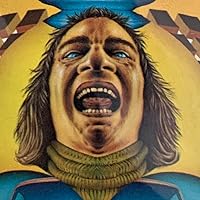
The Second Trip was serialized in Amazing Stories magazine edited by Ted White in July and September of 1971, and then released in hardback by Doubleday and the Science Fiction Book Club the following year with an unusual cover that's a photograph of a Gene Szafran sculpture. It's set forty years in the future (which was 2011!) and postulates a society which has replaced capital punishment with mind modification to make the criminals productive and beneficial members of society. It's an interesting story, but not among Silverberg's best. The question of identity was a big theme for him in the early 1970s. It's become rather dated in various ways; for example, Silverberg seems to want it known that all of his female characters have breasts. It offers something of a riff on A Clockwork Orange (or on Doc Savage's crime college for old timers) and then turns into something of a Jekyll and Hyde story when the new personality of a serial rapist begins to battle for control with the newly implanted persona.
In his 1969 novel "To Live Again," Robert Silverberg posited a world of the near future in which it is possible for the very rich to have their personae recorded and preserved, and later placed in the mind of a willing recipient after their own demise, as a means of surviving the death of the body and sharing their consciousness with another. It is a fascinating premise and a terrific book, and thus this reader was a tad apprehensive at the beginning of Silverberg's similarly themed novel "The Second Trip." Would Silverberg merely repeat himself here, to diminished effect, and offer his audience a mere rehash of an earlier great work? As it turns out, I needn't have been concerned. Silverberg, sci-fi great that he is--especially during this, his remarkable second phase of writing, lasting from 1967 - '76--couldn't produce a dull, repetitive work if he tried. "The Second Trip" initially appeared in serialized form in the magazine "Amazing Stories" from July - September 1971, made its first book appearance as a Doubleday hardcover the following year (the author's 40th sci-fi novel since his first in 1954, and NOT counting that same period's over 190 sex novels and 87 nonfiction works!), and is as original and stunning a vision of Earth's future as any reader could hope for; another glorious work from the author's glory days.
In the novel, in the futuristic world of, uh, 2011, the authorities have come up with a very effective means of dealing with the criminally insane. Using "electronic scrambling" and various mind-wiping drugs, a subject's entire personality and memories can be erased and a new, artificially constructed persona created to inhabit the emptied brain shell. And that is precisely what happens to Nat Hamlin, a "psychosculptor" who had gone mad and become a serial rapist. When we first encounter him, he has just been released from confinement after a four-year stay, and with his new identity of Paul Macy, is about to embark on a career as a TV news anchor. Unfortunately, a chance meeting with one of Hamlin's old girlfriends named Lissa Moore--who is experiencing a breakdown brought on by her recently acquired telepathic abilities, and who Macy naturally cannot remember--causes the supposedly obliterated remnants of Hamlin to fully resurface, leading to two personalities struggling for dominance in the Hamlin/Macy mind. In "To Live Again," a persona attempting to take over its host's body was referred to as a "dybbuk" and was treated as an incidental plot point; in "The Second Trip," it is the novel's front-and-center story line, and the struggles between the two personalities to gain the upper hand, and Macy's evolving relationship with the befuddled mess that is Lissa Moore, make up the bulk of this hugely entertaining, beautifully written and expertly crafted tale.
Writing in Silverberg's "Quasi-Official Web Site," host Jon Davis tells us that he found the interior conversations between Hamlin and Macy to be "tiresome and repetitive" (although he does go on to praise the book), but this reader had no such problem, and indeed found these dialogues to be quite fascinating. In one particularly interesting passage, psycho psychosculptor Hamlin pleads his case, saying that he--an acknowledged great artist--has more to offer to the world than Macy, a bland and synthetic creation, while the newborn Macy defends his right to exist. Hamlin almost manages to win us over, too, until later events demonstrate the wisdom of the authorities in attempting to wipe him out to begin with. Silverberg, as was typical for him back when, takes full advantage of the recent freedoms granted to sci-fi writers as regards language and sexual situations. Hamlin drops the "F bomb" quite often, as does his Dr. Gomez at the rehab center, and there are any number of sexually frank scenarios, including the lovemaking scenes between Paul and Lissa and, most unpleasantly, the old and new rapes perpetrated by Hamlin that are delineated. The author laces his book with scads of fascinating futuristic detail, such as a sonar headband for the blind (what a great idea!), tesseract paintings, a fully detailed look at just what psychosculpting entails (this art form HAD been mentioned in some of the author's previous novels), a grotesquely obese character who is trying to reach the 1,000-pound mark as some kind of fashion statement, and a burnt-out Columbia University, the charred rubble of which is now fit only for muggers and rapists. (Silverberg had graduated from Columbia in 1956.) He also makes some prescient predictions during the course of his tale, what with the legalized pot ("golds") sold in packs and the "portable terminals" that sound very much like laptops or iPads. The author also employs various styles of writing to tell his enthralling story: well-written conversations here, interior monologues there, with some psychedelic dream sequences and staccato, impressionistic images strewn about. "The Second Trip" is not a perfect book, and Silverberg, usually the meticulous perfectionist, does make some minor flubs here and there. For example, he repeatedly uses the word "umbilicus" when he means "umbilical cord," and suggests that 6/4/11 was a Friday, when in fact it was a Saturday. Still, these minor gaffes are nothing compared to the greatness of this novel. Peopled with some truly fascinating characters (Lissa can almost be seen as a telepathic warm-up for the David Selig character in another of Silverberg's great novels from 1972, "Dying Inside") and concluding in a manner that should please just about any reader, "The Second Trip" surely is a trip worth taking....
I read this about 35 years ago and although I don’t remember the story, the effectively horrifying premise stuck with me vividly all these years — a criminal is rehabilitated by implanting a new personality, but the old personality starts breaking through: “Nat Hamlin wasn’t gone... he was still there, trying to gain control...”
Looking forward to a re-read.
(Silverberg’s weaknesses as a writer are far more apparent to adult me than adolescent me, but he had real brilliance, too, and I still find that nearly anything he wrote 1967-1975 keeps me glued to the page. And literally nobody was better at extrapolating the cultural changes of the swinging sixties into plausible future worlds. The results are now dated, but in a good way: they provide real insight into that era.)
UPDATE after re-read: disappointing, thin, a novella’s worth of material at best stretched to novel length, cycles through Silverberg’s usual themes and obsessions to little effect.
DNF. There’s a good idea for a novel here, but this isn’t it. I was surprised how disjointed the story was.
This is a story about former criminals being mind-wiped and having an entirely new set of memories, identity, and personality implanted in their brain.
Very little time was spent setting up the premise. This is not necessarily a problem, but we barely get introduced to Paul Macy before he’s confronted with someone from Nat Hamlin’s past (happens on page 5). Normally I’d trust Silverberg to move a story along at whatever pace he chooses, but it just misfires here.
So the obvious thing happens and a mental battle breaks out between Macy and Hamlin for control over their shared brain.
I’d prefer a slower burn to get to know Macy, and if I can’t have that, make Macy a sympathetic character instead of an a-hole. Hamlin the criminal is a much bigger a-hole, so I guess that’s supposed to make me like Macy? Nah.
Plenty of sex in the 70 or so pages I read too. That’s fine, but it wasn’t necessary.
This book feels like stream-of-consciousness ideas put down on paper without coming together as a cohesive whole.
Interesting read. "Two minds in one body...one of them must die." Published in 1972, set in 2012. Fun to see what Silverberg got right and what he missed. Holographic TV close enough to HD TV, I guess; Portable desk top (lap tops)--but he only sees them in a business application; some things close--cashless transactions but using a thumbprint scan; some things that we haven't made yet 300 mph-tube transit and lots of robot workers (including a robot jury!); things he missed-cell phones, internet and GPS. A little crass but, maybe that is the way some men (especially a rapist) think of women and sex.
Interesting questions--what makes a person or personality? where does our strong sense of self-preservation come from?
A minor work when comparing to what else Silverberg published during this time (say 4 years before and after). This was one of three novels I read by Silverberg in a short time that shared the theme of reliving one’s life in some form, (“Recalled to Life (1958) and “To Live Again” (1969) were the other two) therefore this is an idea he had toyed around with for quite some time - there might be more examples, I have not read that much of his work (there is so much of it). This novel in particular also reminded me of another book written by Robert Charles Wilson, “The Divide” (1990) which was also a story based on two male personalities sharing the same mind and then being mixed up with a girl known to the other… Jackal and Hyde type of stories.
This one was short, and yes, Silverberg got to add in his usual weird boob obsessions and up things with sexual shock value - one of the personalities was/is a sex criminal. What was most troubling for me was why, as a punishment, a sex criminal would have his personality wiped out of his own body only to be replaced by a constructed one packed with a fake background with the intention to live a simple life and do a specific job - television news broadcaster in this case. Why? Why make up people out of thin air to occupy an ‘empty’ body? Aren’t there enough people around already? And if there is some sort of rational to this, shouldn’t this fake person be conditioned to do a more useful job or serve a better purpose, like teach sensitivity courses on non-violence with a focus on respecting those of the opposite sex and such?
I don’t know but I believe there might have been a missed opportunity with this version of this rather tired idea.
A direct but intimate meditation on changing identity in the wake of trauma. As with the best of Silverberg, the surface-level conceit, while a fun sf hook, is really an opportunity to explore something about the human condition. On both fronts, Silverberg delivers: a (mostly) taut narrative (that only slackens briefly in the third quarter) married to trenchant and evocative soul-searching. The first act in particular is wonderful. Silverberg's dialogue is literary but believable, and his grasp of texture, nuance, and balance in the prose is magnificent; the worldbuilding is quiet but optimistic (4-day work-weeks and sexual liberation go by unremarked, balanced somewhat by the overzealous justice system in this far-future 2011). The only major flaws are the lull in the third quarter, and perhaps some gratuitousness in the number of sex scenes (which you should fully expect, given it's Silverberg), but even they pay off down the line. A classic among the master's works, and a highlight in the sf canon, by turns a bleak depiction of woe and ruin, and a kind word of encouragement from a good friend; is this what art is for? Recommended to anyone who's had to put themselves together after major upheaval.
First the good bit. Silverberg can write very well - here we have an vivid novel that engages the reader in the whole time even though very little actually happens in terms of actual plot. Rather we mostly have internal thought processes, sometimes shifting into the internal mind struggle between the two rivial consciousnesses. Yet Silverberg pulls it off, and unlike many other related scifi 'singularity' type ideas which become a little esoteric, everything remains clear and understandable... that is until the ending.
What was that ending supposed to be? It became an over 'arty' meander into meaninglessness - had he lost his grip on reality? Was it real or had Silverberg himself finally run out of steam?
Then the whole thing was repugnant. The whole idea of a sadist rapist is not a nice thing to write about and increasingly the book became objectifying sexual defilement. I don't know whether Silverberg intended it or not but codependency is another upsetting theme.
Are there no good people or goodness in the world? Don't read this - it feels like contamination.
Robert Silverberg’s late 60s and early 70s science fiction novels were often well-wrought ruminations on acute social alienation. For example, in Dying Inside (1972) a man slowly loses his telepathic abilities and thus, a core component of his identity. In The Man in the Maze (1969), a man rendered incapable of interacting with other humans, goes into self-imposed exile. In Thorns (1967), two manipulated/modified souls (a man surgically altered by aliens and a young girl who’s the virgin mother of hundreds of children), find strange solace in each other’s company. In The World Inside (1971), our heroes feel disconnected from the unusual world they’ve grown up in — and rebel in their own ways.
Robert Silverberg is one of our great SF writers, but this 1972 novel was not one of his best. It might have made for an interesting short story but at novel length the interior battle between a loathsome but brilliant artist whose personality has been wiped and the construct who has replaced him becomes tiresome. Part of what dates it is not so much that it is in the far future of 2011, as the sexual attitudes expressed -- so daring in 1972 -- now grate as the female characters (with one exception) are reduced to body parts and sex objects.
Interestingly his far superior "Dying Inside" was published the same year.
Upon reviewing the bibliography of Robert Silverberg, once I had finished this book, I noted that he wrote it within his most frenetic period, from the mid 60's until the late 70's, around the time when he was reaching the zenith of his writing powers (although this particular story followed the Son of Man, which others have noted as being completely out there, even for this most esteemed science fiction writer).
As I have noted in other reviews of Silverberg's works, he never wrote the same story twice, but there is definitely an overlap in the core fundamentals of the story here to perhaps his most revered work Dying Inside in the ideas of shared consciousness. The year is 2011, and capital punishment has been deemed as too harsh, too inhumane by the powers that be. So instead the naughty members of society are subject to aggressive therapy, where their personalities are erased and artificial memories planted in their stead.
This is a dark, dystopian work within which one of Silverberg's most sinister characters, Nat Hamlin resides. An eccentric, dangerous artist whose body has been repossessed by a somewhat more placid character in Paul Macy, a career criminal who somehow comes out this story being the lesser of two evils, this is a visionary work considering it was written in 1967. It turns out that this caused quite the stir when it was released for obvious reasons, and whilst I doubt it would make quite the same waves today, don't think for a second this is an easy ride.
The tone is a little uneven throughout in its pacing and writing style, but I found myself filled with a morbid curiosity to advance the story the more I read. Whilst not Silverberg's best work, I know that this one will stay with me for a while. It is a dark, disturbing dive into the human psyche filled with flawed characters and questionable motives.
A vicious rapist (artist Nat Hamlin) has undergone erasure freeing his body for the establishment of a new identity (Paul Macy). After four years in a rehabilitation centre to establish the new mind and false memories in the Hamlin body, Paul is released into the community and given a job as TV news anchor. Unfortunately on his first day out of rehab he bumps into Hamlin's former lover and the encounter somehow reawakens the Hamlin identity. A battle for control of the body ensues between Macy and Hamlin. Hamlin is hell bent on removing Macy so that he can resume his old life as an artist (and rapist), which Macy is fighting for his very survival. I read and enjoyed a lot of Silverberg back in the 1980s and have only recently picked up this and a couple of other novels and I am quite disappointed by them. The future visions do not withstand scrutiny (for example this book was set in 2011) and Silverberg has a few major obsessions which he endlessly recycles in different stories. Sex is one obsession that is prominent in this book (Silverberg characters get it on at every available opportunity), along with telepathy and the theme of an internal struggle between identities. Aspects of The Second Trip were reminiscent of another Silverberg novel, Dying Inside and even uses some of the same imagery (such as a telepath being described as a vampire). I think that the telepathic character in this book may even be a first draft of the main character in Dying Inside. This was an OK story I suppose, but it has not passed the test of time (written in 1972).
Selle klassikalise, 1972. aasta romaaniga on vanameister mu meelest lati alt läbi jooksnud. Intriig on iseenesest päris huvitav - süüdimõistetud kurjategija (vägistaja) mõistus kustutatakse ja tema ajusse istutatakse kunstlikult loodud uus teadvus, korraga aga ärkab kuskilt ajusopist siiski säilinud vägistaja teadvus ja tahab oma keha tagasi - aga see oli paberile pandud kuidagi tuimalt, puiselt ja kiretult. Kiretult loo kulgemise mõttes, higiseid paaritumisi oli muidu küllaga, ajastule vastavalt. Romaan koosnes sellisest mudamaadlusest, kord haaras vägistaja võimu enda kätte, siis jällegi kasutas uus teadvus juhust ja seljatas vägistaja. Lõpp oli kunstliku mekiga, kõik otsad jooksid õnnelikult kokku, paha sai karistada ja heade probleemid lahenesid ühekorraga ja positiivselt. Ega ta mööda külgi maha jooksnud aga vaevalt et seda kunagi uuesti loen. Samuti ei usu ma et keegi kunagi vaevub seda eesti keelde tõlkima. Nõrgapoolne "kolm".
A nice short book. The first chapter could be a short story on its own. In the future, serious criminals have their mind erased and replaced with a new personality developed by doctors. In this case, a misogynist rapist who is also a famous sculptor is erased and replaced with a minor TV presenter.
However, the sculptor isn't completely erased somehow and wants his body back.
I bought it because it was 99p. Probably not worth buying at full price.
The SA makes it impossible to recommend, and I’m also not that interested in a debate over whether something that’s sexually explicit and written in the 70’s is automatically a write-off as misogynist. What it does do is create a high contrast lens through which to explore endlessly recursive themes about self and identity and art and value to society.
I really enjoyed this book. The setting and the state of the world was fascinating. My favorite part was the way it was written makes the reader feel as if they are inside someone’s head; with little witticisms added in here and there which kept me entertained and laughing too.
Uhh ok it took me like a solid 7 months of very interrupted reading to finish. I don’t know why I stuck through all those pages describing his wants, desires, crimes and the women yet i did and nonetheless enjoyed the book. It is very dated yet still holds as an interesting premise.
Ngl it’s kinda mid, but also kinda fascinating because I’ve never really read a book about something like this. Too many scenes about boobs in this book too 💀
A very strange, yet interesting read. There is a bit of sex in this story, but it's not gratuitous. It's used to tell the story of a rapist caught in a world where such crimes are punished by having one's memories wiped, and a new personality implanted for the criminal to serve out the rest of his days. As such, the criminal becomes a rehabilitated model citizen. But what happens if the old personality shows up again? Well, that's the scenario Silverberg draws for us.
More interestingly, this book uses some very interesting writing techniques. It's written in the 3rd person, but the narration can, at times, go into the first person as a way of bringing the reader closer into the conscious of the two main characters, both fighting for control of the single body they must share. I found Silverberg's wordsmithing here to be of great interest. Writers looking to better understand narration would be well rewarded to study this book, even if the story turns out to be less than appealing.
I'm of two minds about this book. I love the setting (some sort of post Cold War, Socialist America). I love the way the author handles the setting: just enough of it is given to the reader to attach their interest. Events like the great Population Correction are offhandedly mentioned in the description of the algae-burgers and Lenin cola the characters eat, and the implications and imaginings are left for the reader. The characters go to a People's Eatery and one lives in a People's Hotel. All of this creates a paranoid world for the characters to occupy, one where "Rehabilitation" as it exists in this "what-if" is not only entirely plausible but terrifyingly normal.
Where the story loses me is the story itself. While there are fascinating moments throughout and a few interesting questions are raised, but plot itself ends in a disappointing moment of mental violence.
Not one of Silverberg's great novels, The Second Trip is further evidence for him as a master-craftsman. A constructed personality inhabits a body once owned by a violent criminal, but when the the criminal's personality resurfaces, both men must fight for control of the same body. Silverberg shows off his writing-chops, fine as they were in this period of his career. But The Second Trip lacks the themes - alienation, guilt, redemption, transcendence - that give Silverberg's best work its heart. A fine technical exercise, enjoyable at the 200 or so pages that characterised so many of the 1960s and 1970s SF novels.
Fun, quick read. If you're on a 60's to 70's SF kick, dig right in. Otherwise, I'm unsure. Silverberg writes in repetitive tones perfectly to illustrate a vulnerable psyche/anima of the protagonist and antagonist. The troubled perversion of the latter is uncomfortable to read at times (especially the details of children being involved in instances of rape that are NEVER tied to any plot point aside from the antagonist being a sex criminal (already detailed enough)/irrelevant), but it holds a steady shock factor throughout the novel. Another genre this book would categorize under: romance.
From Silverberg’s best era(?), this short, sharp novel contains some fascinating concepts about mind control and capital punishment. However, the story is a bit thin and could have been a novella. It may not be as good as his other major works from that period but still worth a read.
Trigger warning: one of the characters is an unrepentant rapist and there are some brief graphic descriptions that might upset some people.
I really did enjoy this good bit of science fiction, and I would probably give it a higher review if not for the rather lack-luster final act (which I thought could have been quite a bit more ambiguous and thought-provoking). I dig Silverberg's style though -- very reminiscent of Philip K. Dick -- and I'm excited to venture into some of his other work.