A while back a teacher and friend asked me: “What I wonder is, to what extent is Momaday a man of words on account of his adherence to his Kiowa side (the way Stegner adhered to his Norwegian side), and to what extent is he a man of words because he is a literary man? There is no doubt the genesis of the word-man comes from the native side, which mainlines right into that great sermon in House Made of Dawn, preached from the text, "In the beginning was the Word."
Here are a couple of extracts from the great sermon referenced:
“… in the beginning was the Word and the Word was with God, and the Word was God." … it was the Truth, all right, but it was more than the Truth. The truth was overgrown with fat and the fat was God. The fat as John's God and the fat stood between John and The truth.”
…
“In the white man’s world, language, too—and the way in which the white man thinks of it—has undergone a process of change. The white man takes such things as words and literatures for granted, as indeed he must, for nothing in his world is so commonplace. On every side of him there are words by the millions, an unending succession of pamphlets and papers, letters and books, bills and bulletins, commentaries and conversations. He has diluted and multiplied the Word, and words have begun to close in upon him. He is sated and insensitive; his regard for language—for the Word itself—as an instrument of creation has diminished nearly to the point of no return. It may be that he will perish by the word." (pp. 82-4)
I’m going to try and back into an answer.
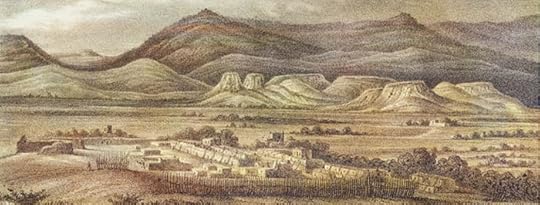
First, House Made of Dawn is exceptional. It tells many stories, but Abel is the character at core. Although the book speaks of more than one place, the central place is Jemez, New Mexico. Abel is a composite of many American Indians. But, he is more than that. He is a WWII veteran who saw combat and there is enough in the way of flashback to recognize what we now call PTSD. He is a man who learns from his family and extended family. He suffers alcoholism and alienation. He loves and is loved by his grandfather. He knows women intimately. He suffers, is abused, kills, and is beaten almost to death. In short, he is portrayed in enough depth that it is easy to identify and empathize with him. Could a character like Abel have existed in other circumstances, i.e. outside of the Native American culture? Yes, suffering, alienation and abuse are common enough themes. Momaday has stated that Abel is a composite character based on people he knew. The literary man, Momaday, drew on his experience to draw his character. AND, by reading Momaday’s recounting of Abel’s past I can more easily identify with Guy Sajer’s The Forgotten Soldier and perhaps even my own father’s experience on Guadalcanal. Yes, Kiowa, but so much more than that.
Second, Momaday is – by his own description – a poet. And, I seem to recall that he has suggested at least once that House Made of Dawn is an extended poem. When I read passages like this:
“But the great feature of the valley was its size. It was almost too great for the eye to hold, strangely beautiful and full of distance. Such vastness makes for illusion, a kind of illusion that comprehends reality, and where it exists there is always wonder and exhilaration. He looked at the facets of a boulder that lay balanced on the edge of the land …” (p. 16)
I read it sparely with pauses as with poetry:
“The great feature
of the valley
was its size.
almost too great
for the eye to hold,
strangely beautiful
full of distance.
vastness makes for illusion,
illusion that comprehends reality,
where it exists …”
I’ve read several interviews with Momaday. One that sticks with me is done by Matthias Schubnell. They had been talking about Emily Dickinson whom Momaday describes, perhaps lovingly, as “nearly infinite in her expression” with “a kind of regard for language that a great writer must have…. I think her survival was largely intellectual.” Schubnell follows up with this: “And you see that function of creative work as a way to accommodate life in your own case?” Momaday responds: “Yes, and more and more so. … I believe that I fashion my own life out of words and images and that’s how I get by. If I didn’t do those things, I think that I would find my existence a problem of some sort. Writing gives expression to my spirit and to my mind, that’s a way of surviving of ordering one’s life. That’s a way of living, of making life acceptable to oneself.” *
I’m not sure I have answered my friend’s question. I’m not sure he was looking for a definitive answer. I miss being in his seminar, where I first read Momaday.
Not quite finished (I do go on), one more observation. I’ve sort of read Momaday backwards. I started with more recent Momaday works including: Rainy Mountain, The Man Made of Words and In the Bear’s House. In the Bear’s House is my favorite. It is a mature Momaday and it is just absolutely beautiful writing. It is, in my opinion, magical and it is Momaday at the height of his power with words. Momaday wrote House made of Dawn over two years when he was in his early thirties. He wrote In the Bear’s House at 65. Reading these two books and considering differences in Momaday’s age brings to mind these words from the Analects:
“At fifteen I set my heart on learning; at thirty I took my stand; at forty I came to be free from doubts; at fifty I understood the Decree of Heaven; at sixty my ear was attuned; at seventy I followed my heart’s desire without overstepping the line.” **
*Conversations with N. Scott Momaday, ed. Matthias Schubnell. P. 84
** Analects, Book II, Chap 4