In award-winning poet Robin Walter’s debut collection, Little Mercy, writing and looking—seeing feelingly—become a practice in radical care. These poems pursue moments of shared recognition, when looking up to see a deer across a stream, or when sunlight passes through wingtip onto palm, the self found in other, the river in vein of wrist.
Attuned to the transparent beauty in the natural world, Walter’s poems are often glancing observations unspooling down the page, their delicacies belying their powers of profound knowing. The formal logic of this work is the intricate architecture of a nest. Each line becomes a blade of grass, each dash a little twig, each parenthesis a small feather—all woven together deliberately, seemingly fragile but held fast with surprising strength. In their lyric variations, repetitions, and fragments, employed toward a deep attention to wren, river, and reflection, the human almost falls away entirely, a steady and steadying state of being that is unconscious, expansive.
Written out of a broken landscape in a broken time, Little Mercy is a book of gratitude, one that draws our inner selves to the present and living world, to the ways we can break and mend.
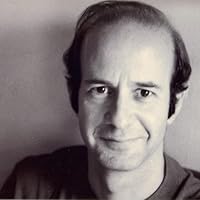
Robin Walter (she/her/hers) was born in Colorado Springs, Colorado. She received a BA from Colorado College and an MFA from Colorado State University.
Walter is the author of Little Mercy (Graywolf Press, 2025), which was selected by Victoria Chang as the winner of the 2024 Academy of American Poets First Book Award. Her poetry and essays have been featured in American Poetry Review, Poets.org, Seneca Review, West Branch, Wildness and elsewhere.
Walter is an Assistant Professor at Colorado State University and lives in Fort Collins, Colorado. She has one well behaved dog (Banjo) and another poorly behaved dog (Fiddle).
Vinc de Seuss i dels seus poemes llargs i narratius. Aquest llibre, en canvi, està fet de poemes curts, versos d'una sola paraula, sovint, construïts com es podria construir un niu, branquilló a branquilló. I m'ha agradat molt.
The keenly observed poems in Little Mercy are meditations on the magic of paying attention, of immersing oneself in the rhythms of a wren visiting her nestlings, of noticing the morning sun seeming to revolve around a daisy, or delighting in the the finer points of the letter "j." There's a self-consciousness to the poems. In multiple places, the speaker mentions considering some writing choice--say, how to describe the color of a worm--then goes on to make the choice. It's an expressed uncertainty that's vulnerable and appealing, and yet adds to the sense of inner turmoil roiling just beneath the surface of all the vivid nature imagery. In this collection, the solace that nature has to offer filters through grief and pain on its way to the page--and it becomes richer and more textured in the process.
Little Mercy is a joy to read. The poems are accessible, and there are flashes of memorable poetic language throughout. Because of some funky formatting in my digital review copy, it was hard to tell where one poem ended and the next one began, but that ended up working just fine for me. You really can read and enjoy the collection as one extended book-length poem.
My thanks to NetGalley and Graywolf Press for providing me with a copy of Little Mercy in exchange for my review.
I cannot recall the last time I came across poetry -- not to mention an entire book of poems -- that so evoked what it means to be alive, while comparing life's passages with those of nature. Robin Walter's language is evocative, playful, plaintive, surprising and sprinkled with aha moments. She is, quite simply, in the truest sense of the word, wonderful!
There is probably a better way to articulate this but here we go: I don’t like comparing poets to other poets because I’m always worried, what if they don’t like that poet and don’t want to be compared to them. But relatedly in a roundabout way, have you ever read a poem that sticks you viscerally and never really leaves? Like it just becomes a part of you and becomes one that will always bring on intense feelings whenever you think about it, or reread it? That’s how I felt reading many of the poems here by Robin, and I haven’t felt that way since I read the poem Song by Brigit Pegeen Kelly. “The beginning of July” and Three birds” will rest in my chest forever. There is so much beauty, tenderness, hurt, grief, and love in these poems. And the noticing! Take how she chose to use a vole of all creatures for a poem. Not a mouse, or shrew. So much detail. There is also an undercurrent of unease at times, and questioning the will to live, but continuing on anyway and the speaker protecting themselves from their thoughts. I also really liked the focus on human vs animal, and how we are animal too. It’s a gorgeous collection about existing with the natural and animal world and how we are never really that far apart, and maybe intertwined more than we realize. Overall an amazing read.
A beautiful collection of poems taking notice to the simplicity of nature.
You can fall a long way in sunlight. You can fall a long way in the rain.
This was a very quick read, but filled with vivid imagery of wildlife and nature. Several poems are centered around the simple wren and her nest.
This is not the typical type of poetry that I seek out, but I could still appreciate the author's words and care behind each poem. Definitely a read for any nature lovers out there!
A meaningful addition to any poetry collection. Walter has a keen eye for beauty, a heart that understands pain, and a way with words that expresses both.
Grateful to Goodreads and the publisher for an ARC of this book. The review is my own honest opinion.
Little Mercy: Poems by Robin Walter invokes the feeling of laying in the grass on a summer’s day and smelling the breeze, running through a cold clear creek and dewdrops on grass. Winner of the Academy of American poets first book award, this book has a few truly striking poems mixed in with a few that just invoke atmosphere. The beginning of this book builds a solid oak foundation, and as the reader progresses the poems get shorter and shorter, feeling like gasps of breath. It almost overwhelms the reader in an intentional sense with how much there is to notice; several poems are called “consider” and ask the reader to draw deeper notice of what’s around them. Robin Walter effectively manages this goal, drawing connections as small as the reflection of the forest on the wetness of a deer’s nose. While I enjoyed this book, and am still thinking about some of the poems, others felt too brief to be fully immersive. I connected greatly with the poem “The Beginning of July” with beautiful lines such as “we were practicing love, then grief / then both” and “this morning, held the empty hollow of a robin’s egg in palm - / tried hard not to crush it. Crushed it anyway”. To me, this poem brings to life vividly what it is like to discover as a child that if you touch a baby bird, it will be abandoned by its mother. That a trauma response to a human scent is literally ingrained in their biology. That there’s nothing you can do to help, because in the past other people have hurt - and we, through no fault of our own, have to carry on that legacy. The guilt we carry just being human is a complex feeling captured perfectly in Walter’s words. “There are so many ways to want”, she describes, which is a line worthy of analysis in its own right, but also articulates the yearning for the ability to help, or be an impartial observer, and not carry the inheritance of what some humans have done to nature. But while this poem puts words to complicated human experiences, as I believe poetry should do, others felt too abrupt. Walter is capable of doing effective short poetry- one of her “consider” poems describes in less than 20 words the reflection of morning on a doe’s nose, like I described above, which was a small detail that clearly stuck with me, and was something that I wouldn’t have noticed if not for Walter’s attention to detail. However, other short poems, the ones under ten words, list things, and feel cut off, like they’re short when they don’t have to be. “-Sometimes, Cold River” is a good example of this - “mercies / tongue / & moon / rinses / wrist -” is the whole poem. As I talked about, the brief nature of the poem, with the em dashes at the beginning and end, makes it feel like a gasp rather than a breath of fresh air. After reading the book, this does not feel like what she intended to do. Without significant description or emotion, the poem takes up about one eighth of the physical space of the page, and, at least in my experience, leaves without imparting much space in the mind. I can see this lighter form of poetry being a personal preference, and though it may not be mine, I think that it may have literary merit that I just don’t understand. The little poems, while not my favorite, did not detract from any positive experiences that I had with the book, and I did really like her longer works. Her attention to detail, in textures, sounds and gentle observations, make the world around Walter feel real, and has given me greater appreciation for the natural world in my personal life. She crafts a setting that is small in scope but big in emotion, exploring themes of power, guilt, control, and the balance between humans and nature. I don’t read poetry often, so I do not feel comfortable stating that this book did or did not deserve the award it received - but I do feel comfortable saying that I enjoyed this book, and I think that many of the poems here are accessible and relatable without sacrificing their depth.
These so called poems have no energy with their one and two word lines. the poet has no concept of lineage. They are repetitious. In effect, we have 96 pages of poems that are about the one time a wren landed on the poet's hand. yes, a few other images come up but they are never followed through. They are placed on the page in a general way but nothing is done with them. Over and over, I found myself thinking that's an excellent beginning to a poem. Too bad the poet didn't bother to write the poem. The images repeat. The words repeat. The few long poems are general and abstract. The interstitial short poems which is what most of the book consists of, honestly, read like AI generated fragments. The repetition, the generality, the short lines, the interstitial fragments all reek of AI. No. I cannot prove it. But consider yourself warned. More importantly, the Academy needs to take steps to be aware of how good AI has gotten and to see the patterns. There are two short fragments about suicidal ideation. Too bad the poet didn't pursue those thoughts in poetry further. They could have been of value. (Honestly there may have been more, but I found myself nodding off and skimming due to the lack of energy and the constant sameness of the poems. Same subject matter. Same images. Same words. Same fragmented interstitial poem ideas. Same form. Same syntax.) I'm not surprised the designer chose a stump as the cover. These "poems" which would be better labeled insta-posts wasted a lot of trees. Yes, they are accessible. But that doesn't make them worthy of this major prize. The author needs to use a thesaurus and stop reusing the same words over and over again. She also needs to come up with something else to write about than the one time a bird landed on her hand. 96 pages of this. Shame on the Academy for choosing this.
If you like easy, simple poems with some good words and images scattered throughout, then this book is for you. If you are looking for something worthy of winning a major first book prize, this isn't it.
Robin Walter’s Little Mercy is a balm—a collection of poems that recognizes how difficult it is to be fearlessly gentle in this world.
So many of my poetry reviews return to Simone Weil’s assertion that absolutely unmixed attention is prayer, and that mindset feels like the anchor of Walter’s work here. These are poems that are so attuned to the world that they upend the disorder we bring to the natural order, almost to the point of spirituality.
It’s tempting to describe the language as “economical,” but “essential” is more apt. The poet removes everything unnecessary and asks us to feel the full, tactile weight of every word, turning them over like pebbles in hand. Walter clearly loves nature, and not in a tropey, poet way.
We might normally interpret a woodpecker’s work as a noisy—if novel—interruption, but the speaker re-tunes our ears to recognize everything else as a distraction. Likewise, Walter reorients our grammar—when we read about “rivers” as nouns, their constant motion has a grounding effect. When the same word appears as a verb, it’s often in the context of violent efforts to exercise strength. We must accept that stability is outside of us.
That might sound pretentious, but this is a book too concerned with gentleness to distance itself from the reader in any way. It suggests that people are at their most human when they are at their most animal, and it acknowledges our propensity for violence without ever indicting us. It is so difficult to be soft, and our clumsy efforts often reveal that through harm.
The speaker describes trying to hold a robin egg while knowing they’ll crack it, but they also name a world that “mercies”—a world where nature is constantly forgiving and cleansing us.
Little Mercy is an excellent collection that lives up to its title, and it is exactly the book I’d turn to in response to the world’s cacophony.
"Little Mercy" is a poignant collection of poems that invites readers to slow down and appreciate the beauty of the natural world. Robin Walter's evocative language and thoughtful observations will transport you to serene landscapes where the rhythms of nature soothe the soul.
Standout Elements:
• Vulnerable Self-Consciousness: The speaker's expressed uncertainty and self-awareness add a layer of vulnerability, making the poems feel more intimate and relatable. • Nature as Solace: The collection explores the complex relationship between nature, grief, and pain, resulting in a richer and more textured reading experience. • Accessible and Engaging: The poems are a joy to read, with flashes of memorable poetic language throughout.
TROPES:
• Nature poetry • Mindfulness • Grief and loss • Self-discovery
A Unique Reading Experience: Due to the fluid structure of the collection, it's possible to read and enjoy "Little Mercy" as one extended book-length poem. This format allows the reader to immerse themselves in Walter's world, where the boundaries between individual poems blur.
Recommendation: If you appreciate poetry that explores the human experience through the lens of nature, you'll likely find "Little Mercy" to be a moving and contemplative read. Fans of Mary Oliver, Walt Whitman, or Marie Howe may enjoy Robin Walter's lyrical and introspective style.
Reading LITTLE MERCY is an incredible joy. These slender poems are teeming with care for the high prairie and western foothills, and care for all the bodies making their way and their homes therein—including the speaker’s and, ultimately, the readers’. The way Robin Walter weaves together inner and outer care alongside paradoxes such as “—Sometimes, river // shreds / moon // into bright / ribbons // that lift / the body // beneath” (79) invites us to deepen our attention and engagement with not just the natural world around us but with our own miraculous minds and bodies. I am so grateful for this book right now.
A collection of poems about nature / the natural world.
from The beginning of July: "I thought I heard my mother crying, / but it was just the cold creek emptying— // At sunrise the chickadee pulls the morning open. / At noon, shadow of chokecherry slips across collarbone— // There are so many ways to want."
from July prayer to survive the summer: "I am ahead of myself again—wanted / to tell you about instincts—how sometimes / they betray the body—no, sometimes // I betray the body—"
from Hold gentle the name: "Here, on earth, / we honor our dead // by holding their names / gentle in our hollow mouths—"
These mostly spare poems encourage the reader to find the self in the natural world, and to locate the natural world in the self. Each poem serves as a discovery -- of nature, of self. The speaker's memories occasionally enter the discussion with no resolution; they seem to make guest appearances only, as if intruding on larger ideas. It would be easy to label Walter's collection as musings, but the works are more than that. They read as the author's reckonings with her unfolding environment. If you're intrigued by poetry that steps out onto a limb, read "Little Mercy".
“There are so many ways to want,” the poet muses in this notable debut collection. And so many ways to witness the wonder and woundedness of the world in these poems. Each has been whittled to the heartwood of sense, hollowed to the bore for the purest sound.
Favorite Poems: “Beyond the meadow” “The beginning of July” “Three birds” “Proximal worlds coupling briefly” “Last July light” “—Search for a coherence” “Hold gentle the name”
I really enjoyed this volume. The poems are interlinked as one reads. The story of a wren family unfolds across the pages; the moon rises, the sun shines. There are moments in the poems that touch, ever so delicately, on the dark thoughts we human can have. I found these moments particularly vivid and moving in their delicacy and sudden appearance and then disappearance. This book is a thought provoking, enriching read.
"I must have suspected, / even then, the need / to bury the scissors so they are not - / so they are not so close to me - / when trimming back / the tomatoes (small / miracle)."
As someone who can only write long, sprawling poems (often over explanatory at that) I so admire poets who can write in short, quick punches that leave you gasping, teary eyed, or often both. So loved this collection and can't wait to see what the author has in store for us next.
A beautiful collection of poems that take you somewhere your soul needs to go. I’ve read and reread them and find something new and precious each and every time, each and every page, each and every word.
What a wonderful gift to poetry lovers everywhere. Thank you The Academy of American Poets for sending this to me as the winner of the First Book Award.