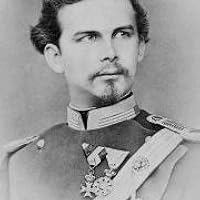
Stefan George (1868-1933) was one of the most important and influential poets to have written in German. His work, in its originality and impact, easily ranks with that of Goethe, Holderlin, or Rilke. Yet George's reach extended far beyond the sphere of literature. Particularly during his last three decades, George gathered around himself a group of men who subscribed to his homoerotic and idiosyncratic vision of life and sought to transform that vision into reality. George considered his circle to be the embodiment and defender of the "real" but "secret" Germany, opposed to the false values of contemporary bourgeois society. Some of his disciples, friends, and admirers were themselves historians, philosophers, and poets. Their works profoundly affected the intellectual and cultural attitudes of Germany's elite during the critical postwar years of the Weimar Republic. Essentially conservative in temperament and outlook, George and his circle occupy a central, but problematic, place in the rise of proto-fascism in Germany. Their own surrogate state offered a miniature model of a future German state: enthusiastic followers submitting themselves without question to the figure and will of a charismatic leader believed to be in possession of mysterious, even quasi-divine, powers.When he died several months after the Nazi takeover, George was one of the most famous and revered figures in Germany. Today the importance of George and his circle has largely been forgotten. In this, the first full biography of George to appear in any language, Robert E. Norton traces the poet's life and rise to fame.
An incredibly erudite study of German poet Stefan George and his circle of disciples. Norton draws from rare sources (little of George's correspondence survived his death) and his knowledge of the period to paint a vivid, if at times grotesque, picture of a Germany hidden beneath the power politics of the Prussian state. George's dealings with his most notable disciples like Friedrich Gundolf and Friedrich Wolters is chronicled in depth showing the fanatical devotion they held towards their beloved Master. Perhaps more interestingly are Norton's portrayals of those jilted by or frightened by George's commanding presence, including the famed Austrian poet Hugo Von Hoffmanschall. The great strength of this work is the depth of research conducted by Norton as well as his ability to translate the source material into a vibrant universe.
Despite it's considerable strengths, there are a few points in "Secret Germany" that I found wanting. First, the translations and analyses of George's poetry seem uninspired and of secondary concern. Without sufficient emphasis on the greatness of George's poetry it is difficult to understand why he attracted such a following and achieved legendary status in Germany. Another concern is the one sided portrayal of George as a manipulative villain who had little emotional attachment to any in his cadre. I don't doubt that George was a reprehensible character, especially in his personal relationships, but Norton is a least partially writing "Secret Germany" as a corrective to the overwhelming pro-George scholarship churned out by his disciples. At times George comes across as almost comically evil whether he is lusting after young boys or wordlessly dismissing loyal disciples. Norton could have avoided this, but clearly intentionally chose to portray George in this way for effect.
An intentionally flawed, but at times incredibly compelling, history of a little understood poetic movement and the evil genius who led them.
Stefan George, at one time ranked in importance with Gandhi and Lenin, but since forgotten in the Anglosphere, with very little in the way of available translations. Norton's work has done a great service in re-introducing George. It traces his development from misfit gay poet to cultural prophet in the wake of the First World War. He gathered around him a coterie of men from whom he demanded absolute loyalty. Among his group were the Stauffenberg brothers, Ludwig Klages, Friedrich Gundolf, Friedrich Wolters, and Alfred Schuler. Articulating rather ephebophiliac visions of an elite, masculine, militant,anti-materialist form he could be called the poet laureate of the Conservative Revolutionary Movement (not to be confused with latter day American conservatism), which sought to end what they saw as a crass culture dominated by the masses, by revolutionary if necessary. In many ways a precursor to certain elements of Nazism but of a much higher, hierarchical nature than that failed movement. George was not a rabid anti-Semite, indeed some of his followers were of Jewish ancestry, but he expressed racial sentiments that are not, shall we say, kosher. George to his credit refused to associate with any political party.
There are flaws, Norton's translations lack the meters and style of George's original poems. Norton has a tendency to pass smug moral judgments on some of his views.
If you are a historian or a lover of literature, this book will be illuminating.
This is not only a riveting biography but also an exploration of a complex and morally ambiguous phenomenon during a crucial period of German aesthetic and political history. Stefan George was for many German youths prior to the Great War, including Walter Benjamin and his closest friend, the writer who best captured their idealizing emotional states and their hopes for Germany. He thought it his duty to use his poetry, through its very style, images, and music when it was recited in a cult-like manner, to shape the mental lives of German youth, making them ready to sublimate their everyday energies into a lofty service to the working of Geist or spirit. George downplayed political commitments and claimed that while Germany went through its ordinary political and cultural events, the true Germany of the future, with its important spiritual-cultural tasks, was being formed by a small coterie of poets and writers, with George as their leader. While his early poetry copied the decadent French poets, he later turned to a poetry that emphasized a classical, aristocratic beauty and form, though its devotion to a militarized sense of a new knighthood with a special cultural destiny hinted at a favoring of violence against those who did not go along with the new form of life. George was strongly attracted to good-looking young men and tried to gather them around him in his “secret Germany.” One in particular, just in his mid-teens, George considered the descent of a divine being into the George circle, though the boy, called Maximin, died of meningitis soon after. Norton’s admirably engaging, thoroughly researched, and vividly detailed telling of this important story sometimes has the unneeded rhetorical tone of an author working hard to present George as a precursor to Hitler, so that an implicit moralizing assessment seems to enter from without. It is as if, on occasion, Norton is pointing from the margins and nudging the reader to see that George was referred to by some followers as their “Führer,” or he is asking the reader to participate implicitly in a moral judgment of, and an ironic treatment of, George's being attracted to young males, as if the reader were incapable of making such judgments on her own. Very much of George's aesthetic and political sensibility made him despise the National Socialists from his stance of favoring a Germany led by elitist, aristocratic individuals trained by aesthetic practice to serve the highest spiritual goals of culture, and when he was offered honors by the Nazis in 1933, just prior to his death, he refused to leave Switzerland. On the other hand, it is certainly true that George despised liberal democracy and egalitarian socialism and he offered only scorn and disgust for the everyday political and legal structures of Germany. His poetry and his movement helped form a field of play in which all the institutions that might have stood up to Hitler were discredited and in which many well-educated Germans were ready for the leadership of a single figure promising a German revival rather than for the messier liberal doings of the Weimar Republic. This book is a special interest to those curious about the relationship of the history of homoerotic aestheticism to radically anti-democratic tendencies.
An amazing biography. Randomly picked it up at my school library and thought it seemed interesting and could not put it down. Full of interesting character studies and unknown aspects of modern European history. Not to pass up if you like literary biographies, or biographies in general.