Arriving in Victorian London, the Doctor, Nyssa and Tegan run straight into trouble. Nyssa is kidnapped by Egyptian religious fanatics and something is playing with time. Can the Doctor work out what's happening before it''s too late?
Justin Richards was a British writer of science fiction, fantasy, and adventure fiction. He wrote science fiction and fantasy novels, including series set in Victorian and early 20th-century London, as well as contemporary adventure stories. He was best known for writing numerous spin-off novels, reference books, and audio plays based on the long-running BBC science fiction television series Doctor Who. Richards served as Creative Consultant for the BBC Books range of Doctor Who novels until 2017.
Yet again, Nyssa is kidnapped and spends most of the book off stage. Poor kid, she really got a raw deal in this series. Otherwise a decent read with an old villain showing up. This was good because it expanded on the original TV show, rather than trying to 'fix' things, ehich some of the 'Missing/New' books tried to do.
Justin Richards is a legend in the expanded media corners of Doctor Who. He's been writing tirelessly for it ever since publishing his first novel 'Theatre of War'. Most of his stories are enjoyable, if perhaps flawed, but that doesn't stop his work from being incredibly accessible and fun. The Sands of Time is one of his works I've been incredibly excited for, and now I'm finally giving it a read.
An unknown assailant kidnaps Nyssa after The Doctor, Tegan, and Nyssa arrive in Victorian London inside the British Museum, and things quickly take a turn for the worst. The Doctor and Tegan soon discover they've already somehow made friends in London; things are about to get very complicated quickly. An ancient force is about to reawaken, and the Doctor, Tegan and their new friend Atkins must travel up and down through Earth's history and across the globe to prevent Sutekh's wife from waking up. The end is near.
Justin Richards has written an incredibly timey-wimey and intense gothic horror novel that's a love letter to Pyramid of Mars while being a sequel and a prequel to said story. It's a complicated and terrifying adventure that show's a much more calculating side to the 5th Doctor, while having Tegan see a side to The Doctor she hasn't seen before. Nyssa isn't in this novel much, but her presence is still vital to the overall narrative and is key to the finale.
Overall: An incredible novel that is gruesome, terrifying and oh so terribly clever. 10/10
I enjoyed this one so much! Justin Richards did an excellent job with the Fifth Doctor & Tegan! Not only does it give them a great adventure together, but also develops their relationship. I also really like Atkinson the companion for this story. The locations and detail are fantastic! The basics of this story could been a story in the series, but the scope works so well for the novel being able to imagine Egypt and the Pyramids landscapes. A Grand story!
This book was such a surprise. I loved it. Justin Richards is very hit or miss for me, and this particular Who novel just did everything right. This was my first 5th Doctor novel and it was so, so good. Tegan's character was toned down to the point where she was tolerable. Since Nyssa was indisposed for almost the whole novel, another part-time companion stepped in- a butler from 1896. He took the time-traveling in stride and was capable and intelligent and I'm almost sorry he didn't stay on in the Tardis. Speaking of time travel, there's A LOT of it here. The Tardis is used often in the novel, which isn't usually the case. Typically it's used as a vehicle to start the story, but isn't used as a plot device like it is here. I loved the Egyptian lore, the excavation, and the use of the mummy robots. They didn't feel shoehorned in or contrived. The way the story was told took a little getting used to, as you're constantly shifted back and forth in time to relay the events. It's a little violent, so heads up on that- at least half a dozen or so people die rather grotesquely. Davison's Doctor was spot on and he acted exactly as I would expect him to. He was calm, intelligent, a little scatter-brained and observant. His mannerisms were exactly right, to the point where this really could have been a 6 part or so arc of the show. This novel fits in a short time after Adric was lost, so watching Earthshock and having that frame of reference might help, but I'd really recommend watching Tom Baker's story arc The Pyramids of Mars before you dive into this one. It gives you background on Sutekh, the Osirians and the robot mummies seen here. Sands of Time was just FUN. The story was constantly moving and pieces of the puzzle were being uncovered right up until the end. I'd highly recommend this one if you're a fan of classic Who.
With Tegan rejoining the Doctor and Nyssa on their travels, the trio travel to the British Museum in 1896. No sooner does the TARDIS materialize in the Egyptian Room, however, then Nyssa is kidnapped. The Doctor and Tegan give chase, only to lose their quarry outside — whereupon they are met by a butler with an invitation to the unwrapping of a mummy. The arrive to find to their astonishment that Nyssa is underneath the bandages, having somehow been transported 4,000 years into the past for the nefarious goals of one of the most dangerous foes the Doctor has ever faced.
This is the second of Justin Richards's many Doctor Who novels that I have read, and in many was it reads like the previous one, Dreams of Empire, in that it starts with disparate threads that are then woven together over the course of the book. It's not a writing approach that I particularly enjoy, yet Richards pulls it off well and sticks the proverbial landing nicely. Yet I finished the book feeling as though the author was a little too ambitious in his designs. His book serves as a sequel of sorts to the Fourth Doctor serial Pyramids of Mars, which is regarded as one of the best of the original television series. It's admirable that Richards takes it on, and while his story measures up well I feel as though he doesn't quite pull off the degree of menace conveyed by Sutekh in Lewis Greifer and Robert Holmes's original story. Perhaps such a comparison is unfair, but it's one that Richards himself invites by taking on such an iconic tale and can't help but influence any judgment of the book.
Eine sehr gute Geschichte über Zeitreisen, die Auswirkungen und das alte Ägypten. Die Charaktere sind gut geschrieben und vielseitig. Anfangs etwas verwirrend bei den Zeiten die Übersicht zu behalten, aber insgesamt echt gut überlegt.
Very wibbly-wobbly, timey-wimey. It could be challenging to follow, but I enjoyed it. Need to watch Pyramids of Mars. I'm pretty sure I've seen it, but I don't remember anything about it and it ties in.
I know that there are better Doctor Who novels than The Sands of Time by Justin Richards--I've read them. But unfortunately I hadn't realized until partway into this one that it was written by the same gentleman who wrote The Clockwise Man... which was a shame, since this made for a less than impressive first novel exposure to the Fifth Doctor.
Now, to be fair, Mr. Richards was also starting off a bit handicapped with this one, writing about the Fifth Doctor in the first place. My Fifth Doctor fu is admittedly scanty; of the various Classic Doctors, he's one of the ones for whom I've seen only a tiny handful of episodes. But so far my impression of him is... well, let's put it this way. Five isn't half-bad looking, and I'll give him marks for brains, but he's just dull. Especially when compared against the vivid charisma of Tom Baker's Four, and certainly compared to Nine and Ten. I am told by LJ user spazzkat and LJ user solarbird that yeah, that's about the size of things with Five. Problem was, when I compare this book to the other Richards Doctor book I've read, I could see practically no difference whatsoever between his handling of Five and his handling of Nine, past basic physical description. This does not assure me well that this gentleman would do better writing any of the other Doctors.
It also doesn't help that Five's companions, at least in this novel, are deeply annoying. Nyssa didn't get to do much more than lay around in an induced coma through most of the plot, and Tegan? Tegan was actively grating. She pretty much spent the first half the book whining about how bored she was, which honestly made me want to punch her lights out. I kept wondering exactly why this girl had decided to go haring off with the Doctor to begin with. I mean, sure--Four and Ten do just as much if not more technobabbling than Five, but at least with Sarah Jane or Rose or Martha, you have the sense that even if they don't understand half of what the Doctor's yammering on about, they at least give enough of a damn to try to pay attention and get a decent idea of what's going on. I am informed that this is also rather par for the course with Tegan in the actual episodes--so again, while one can give Mr. Richards marks for accurate portrayal of the character, this doesn't say much when the character in question needs to be pitched headfirst out the TARDIS door.
There are aspects of this book I did like--as with Jonathan Morris' excellent Festival of Death, Richards does try to liven things up a bit by jumping around in time and reminding the reader that why yes, the Doctor is after all a Time Lord and his adventures will sometimes just not be linear. That in fact is what kept me just interested enough to read through until the end to see what happened, but once I was finally done, I'm afraid I came out of it with an overall "meh". Sorry, Mr. Richards. One and a half stars.
Reading this book felt a bit like watching an episode of classic Doctor Who - the Doctor and his companions arrive just as Something Bad is about to happen, Something Bad happens, the companions are either largely useless or kidnapped, most of the tangential cast is killed off, the Doctor works out a solution which he must then explain to everyone who ISN'T him because none of the rest of us have the knowledge he has to work from, then they day is saved.
Don't take that as an indication I don't like the formula. I'd watch just about any classic Doctor over any modern one any day of the week (New who just getting a little too kill-the-kitten, especially in Tennant's run, for my taste. And anyway, they're not actually all that far off formula) and I could almost see the lovingly silly costume the mummies and Osirians would be wearing.
But in this case, with long lulls between action set-pieces and a supporting cast about whom I cared so little that their deaths were non-impactful, it led as it can to a pretty plain story. Not good, not terrible, but somewhere around meh. the time travel solution to their problem was a pretty clever one, and I enjoyed getting some insight into Teegan's mind. I don't regret reading this. But overall... meh.
This entire review has been hidden because of spoilers.
This is one of those books that would be much better if there was less of it. The idea is interesting and the story has some nice time-travel loops (I'm a sucker for loops), but it would be much better if some scenes - and the whole of the epilogue - were cut, because a lot of it feels like that point in a first draft in which the person is just trying to nail the story down.
I'd complain about the fact that the author had no idea what to do with Nyssa, so she was just taken out of action, but not knowing what to do with the 5th Doctor's companions is a common thing in VNAs and if you pay attention you'll notice that none of the companions have any agency in the story, they're just around for the ride (specially Atkins). So at least Nyssa got a nap out of it.
At long last, I have finished reading this one! I began reading it during a period of unemployment, returned it to the library when I was unable to renew it & then kind of forgot about it. On a couple of occasions, it had been checked out when I did remember to look for it, so it became even more frustrating.
I have been a Whovian since the mid-1970s when the local PBS station began airing Tom Baker reruns. I amassed a large number of the paperback books & used to read them voraciously. This particular story hearkened back to the Tom Baker adventure, "The Pyramids of Mars", & it probably helped to have familiarity with that series of episodes in reading this novel.
The rating on this is NOT a comment on the writing but the formatting. The Kindle edition of this is so poorly formatted as to be unreadable. Words run together and there are no paragraph breaks. Simply not worth the wonky wall of text deciphering for taking a trip down nostalgia lane. The book may be fine but I would highly recommend AGAINST getting any sort of e-reader version of this.
Writing a sequel to Pyramids of Mars is a difficult idea for a story to pull off because of how perfect that story is. It has perfect acting, direction, music, and a great villain. On my personal ranking of stories it is at number seven overall for stories so hearing that Justin Richards decided to write a sequel for his third Doctor Who novel, I was initially wary. The Sands of Time opens by doing one thing right. It doesn’t try to replicate the original story, but serves as a loose prequel dealing with other aspects of Egyptian Mythology, in particular the fate of the goddess Nephthys who was trapped in a jar. The story follows the Doctor and Tegan who try to rescue Nyssa from becoming Nephthys’s host so she can escape the jar. This is a good way of getting the plot going and keeping it unique from Pyramids of Mars. While Pyramids of Mars felt like Doctor Who does The Mummy, The Sands of Time has a distinct Raiders of the Lost Ark feel to the proceedings.
The Doctor as portrayed in the novel is done very well, with Peter Davison’s Fifth Doctor being active in the proceedings. The novel mimics an Egyptian’s journey through the underworld in many ways and the Doctor serves as our guide as the setting often changes from time period to time period. Richards also does a good job of writing the human side of the Doctor as throughout the novel he is pained with the idea that this might be the end of Nyssa who has been put into a coma for thousands of years. You can really imagine the Doctor subtly going through the anguish so soon after the loss of Adric in Earthshock. While I concede it is a good plot by having Nyssa appear very little in the novel as she is in the aforementioned coma, this is at detriment to the quality as whenever she does appear she is used as a plot device. She drives the plot forward without any real characterization. This just leaves Tegan in the role as companion which is also in detriment to the plot as really we don’t get much interesting stuff from the Australian. She shows the personality of a grieving friend very well, but outside of that she’s there mainly to ask a lot of questions and to complain that things aren’t going well with the plot.
Richards is much more interested in writing his many supporting characters for the novel. Even the minor characters get some development while the main cast and the villain don’t really have too much going for them. You have Lord Kenilworth and his butler Atkins who work as secondary companions in the story which helps the story improve as they get to be the Laurence Scarman of this story. There’s also the Prior family who are the result of a great twist near the end of the story, but besides these four the characterization of the novel is severely lacking in any depth. Richards also made note in the introduction to the reprint that this novel was written while he was travelling and it really shows. He wrote the story out of order and added in a lot of sections to give backstory which isn’t a bad thing necessarily. It fails however because half the novel is just the author telling the backstory instead of incorporating it into the plot of the novel. Yes if it was in the plot it probably would have the Doctor appears only halfway through, but it would make things work out much better.
To summarize, The Sands of Time is a typical Justin Richards novel through and through. It’s got a solid plot with some really good ideas, but Richards is unable to elevate it into anything really that great. He emulates the era on television to a tee with the disposal of meaningful characterization for the regulars and a supporting cast that is much more interesting overall for the novel. It is by no means a bad novel, but like many other sequels it is inferior to the story that inspired it in almost every way. 6/10.
“Doctor Who: The Sands of Time” is a 1996 spin-off novel by Justin Richards, and is Number 22 in the Missing Adventure Series. This story features the Fifth Doctor, Tegan, and Nyssa in an adventure featuring the Osirans which appeared in the “Pyramids of Mars” TV serial.
In this story, the Fifth Doctor must thwart the schemes of another Osiran to return to power and devastate the universe. It actually involves lots of time travel, with the Doctor effectively employing the TARDIS numerous times to visit various points in history in both England and Egypt. Nyssa ends up off stage for a good portion of the novel, but in her place is Atkins, a butler from the 1890s. Atkins admirably acts as a short term companion, and fills the need for an additional assistant.
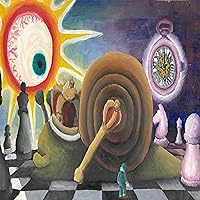
Mr. Richards seems to capture the personalities and mannerisms of the Fifth Doctor and his crew quite well. This is probably not surprising as he has a impressive amount of experience writing Doctor Who related material. I was impressed with the quality of this novel, as well as the story itself. It’s an ideal Missing Adventure, and a worthy sequel to the “Pyramids of Mars.” The cover art even faithfully depicted a scene from the story. It seems the BBC released this at some point as a free e-book, because it can be found as a free download on sites such as Feedbooks.
An enjoyable and entertaining, example of how to do a Dr Who story. It features an engaging story, good use of time travel, credible monsters and subplots, such as a touching love story.
The reasons this doesn't score higher is primarily that it has rather too much time travel in it. Partly this makes it a bit difficult to follow (e.g. are we in 4000 BC or 5000 BC, the late C19th, 1971, or the early 90s and there were probably others too) but mostly it strains credulity. With the exception of the initial arrival, the Tardis herein makes multiple journeys and arrives in the right place/time on each occassion. The Fifth Doctor's tardis was simply unable to do that.
The other reason is that the end is a bit convoluted. Nothing like as convoluted as many of Capaldi's outings as the Doctor but enough that you are left wondering if defeating the bad guys could really be that easy, when their plan was so long in the making and if any of a number of variables had gone otherwise, the doctor's complicated scheme would have failed.
The Fifth Doctor, Nyssa and Tegan have landed in the British Museum where an Egyptian display awaits them. No sooner have they arrived, Nyssa is kidnapped and so begins a tale that spans many thousands of years...
The Doctor and Tegan are characterised excellently here with the Doctor's breathless explanations reminding of Peter Davison's portrayal whilst Tegan's independent spirited but occasional whingeing is very much of the Janet Fielding performance from the original 1980s series.
Lots of egyptian lore is explained away as the interventions of an alien species (the Osirians) which is no real surprise as this novel is essentially a sequel to the Tom Baker classic "Pyramids Of Mars". Whilst not quite as effective and at times utterly baffling, the author has done a fine job in creating an enjoyable romp through time for the Doctor and his companions.
A fine effort and faithful recreation of the 1982-1983 era of Classic Doctor Who.
I was recommended this by a friend, and I was pleasantly surprised by it. The Fifth Doctor's era is one of my favourites for Classic Who, and this definitely got the characterisations right. The novel's mystery and tension is pretty gripping, and it's all based on the emotions of the characters (especially between Tegan Jovanka and Nyssa of Traken).
Speaking of Tegan and Nyssa, I do wonder whether the author intentionally wrote their friendship as having a romantic subtext. I won't spoil anything, but there are certain scenes where I genuinely wondered, due to the intensity of the two characters' feelings for each other, whether the novel would end with the two of them kissing. Either way, it was very sweet and in-keeping with their characterisation from the television series.
Great novel; no complaints. It has some dark moments, but nothing too extreme. A great novel for those who enjoy the Fifth Doctor's era of 'Doctor Who'.
I took a two-month long brake right in the middle of reading this and during those two months, the author Justin Richards, died in June 2026. So, it’s just a shame that I’m going to have to spend this entire review shitting on his work, so soon after his passing. So, I would personally like to say sorry to his family that I have to do this, but I have no choice.
This book, as of writing this review, is the worst Doctor Who novel I’ve read thus far. This is only the third Doctor Who novel I’ve read and I was so looking forward to reading this one as it was a sequel to one of the greatest Classic Doctor Who stories of all time, the Pyramids of Mars. I thought we were going to get a great love letter to both the original, as well as Mummy movies form the 40s and 50s, as would suit the Philip Hitchcliff era, while also playing in the 5th Doctor era sandbox. But this entire book was just 325 pages of strait up padding. It doesn’t even felt like a first draft, it feels like what you’d get if you told an AI generator to wright a 300-page, 5th Doctor novel starting the Osirian Mummies. I’ve never seen a book so disinterested in its own plot than “this”, I’ve seen hostage video’s where the hostages wanted to be there more than the writer did when he wrote this book. And yes, it’s just the Osirian Mummies that show up in this, if you were hoping that Sutekh would show up, seeing as how this is “supposed” to be a sequel to Pyramids of Mars, then prepper to be disappointed.
But I “will” say this, I don’t think the precise to this one was a total lost cause. You have a cult of Ancient Egyptian priests who kidnap Nyssa, send her bad to Ancient Egypt, put her in suspended animation, to be woken up in the present day so that she can be the host for another Osirian Despot. But me describing what’s “suppose” to be happening is a Trillian times more interesting than what’s “actually” on the page, because other than that, nothing happens though out the duration of this book. It’s almost impossible to put into words how broken the structuring of the plot is, it almost transness bad writing all together and becomes a new form of mediocrity. The plot has almost no focused, the character just teleport from one location to another for seemingly no reason and with no direction. One minuet, we’re in 1926 London, then we’re in Ancient Egypt, then back to 1926, then back to Ancient Egypt and then Present Day (I think). There’s no reason for any of what’s happening to be happening, and the characters don’t even act like they want to be there.
And speaking of the characters, all of them, no matter how important they are to the plot, feel like background characters. The Doctor himself doesn’t even act like anything that happens in this story, is even remotely important. There’s a bit where he sees a sarcophagus and they just goes “ow, that must be a piece of Osirian technology, interesting”. And then when Nyssa shows up inside a Egyptian sarcophagus that’s been lost for over a thousand years, he’s seemingly forgot about the piece of alien technology that can send people through time, he found and start wondering how his friend could’ve been sent back in time. It’s not a good sign if the plot is so boring that even the characters start forgetting what story there supposed to be in. And as for the Osirian Mummies, the things that are on the cover of every copy of this book, the reason this was included in the Monster Collection book series and the whole selling point of this book, yeah, there barely in this thing. They don’t show up until halfway through the fricking thing and even then, they don’t do much. Admittedly, once they did show up, it was fun to read, especially when they started attacking the camp and one of them coat fire. But other than that, they were just nothing.
As for the villains, I think having a different Osirian from Sutekh, as the villain was a brave move as if they just had Sutekh again, then it might have just felt like a carbon copy of Pyramids of Mars. And making them a female Osirian (on paper) sound like a neat way to go about it. I would have loved to have seen a female version of Sutekh menacing the 5th Doctor and his friends, like Eris from Sinbad: Legend of the Seven Seas. But as the 2019 Mummy movie has tort us, making your main Mummy character a woman, doesn’t guarantee a good story. And even then, you’ll forget that she even showed-up as she had so little presence in this story. She does so little that you’ll wonder if she actually showed up at all as I don’t even remember her entering the story and the plot just started referring to her by name out of nowhere. The main priest character was more of a present but in the end, he was just another bland, bad guy who had to be stopped.
Overall, this book just isn’t worth it. I didn’t pay much attention while reading it and I was so bord with it that I took a two-month long brake right in the middle and didn’t miss it one little bit. I have no idea why Justine Richard’s even decided to write this one as it feel like he wants to be here even less that his readers do. This was only his “third” Doctor Who book, so maybe he hadn’t really mastered his skills at this point, but if he’s this bord by point in his career, then I shudder to think what his first two book must be like. I haven’t read any of his books for the New Series range yet, so maybe they’re a lot better, but if I we just to judge him by “this” book alone, then I would say he must be one of the worst writers in Doctor Who Spin-Off media. If you really “need” more Pyramids of Mars in your life, then you might like this just fine, especially after Empire of Death on TV, but if you want an actually plot, intend of just a random collection of word and letters on a page like a book out of the Library of Babel, then avoid this a all costs.
Justin Richards is one of the better ones. Doctor Who books are all decent, and the house editing style as imposed currently ensures a certain level of quality, but Richards is steeped in lore, and as he points out here, this was a Fifth Doctor adventure written before the timey-wimeyness of the more recent stuff - think of the intricacies of the Eleventh Doctor era with Clara and the Ponds and how what happened/will have happened in the future or a possible future will affect what happens in the past from that state which is, as we observe it, the present. Richards does that here, complete with having people told about things that they have done earlier that day before they experience it. Fun stuff. Not so great for fans of Fifth Doctor companion Nyssa, though.
Richards is a dependable Who author and he can be relied upon to capture the essence of Doctor Who whilst injecting some clever ideas and scenarios. 'The Sands of Time' didn't disappoint in this regard.
With 'Pyramids of Mars' being a particular favourite of mine (and for most fans) there's some delightful evocation of that classic's gothic tone and style, with ingenious time travel shenanigans thrown into the mix.
You don't need to have seen 'Pyramids' to enjoy the tale, but it is certainly enhanced if you have. Throw in the two-parter 'Black Orchid' for some extra context and the ending is most satisfying.
Während der Anfang noch etwas verwirrend wirkt und reichlich zwischen den Perspektiven und vielen neuen Namen gesprungen wird, zieht die Geschichte einen schnell in ihren Sog und die Puzzelteile werden sichtbar. Doch das bedeutet noch lange nicht, dass die Geschichte vorhersehbar wäre! Es ist beeindruckend, wie Justin Richards es schafft eine mittreißende Story mit so vielen liebevollen Details und lebendigen Charakteren zu schaffen. Nebenbei bietet sie dem Leser die Möglichkeit mitzurätseln und zu verfolgen, wie sich die verworrenen Zeitstränge in einer wunderbaren, für DW typischen Weise, zusammenfügen.
I reviewed this more thoroughly on my Doctor Who podcast - but I largely enjoyed this story. There is a significant amount of time jumping, sometimes forward and backwards. If you are a fan on strict linear storytelling, you're going to get confused by this book. I also felt like I should have watched "Pyramid of Mars" before reading this, as well as one or two Fifth Doctor serials, just to be familiar with the continued references. But overall, it's a good Fifth Doctor adventure -- I tend to like the Doctor and Nyssa more than the Doctor and Tegan, but it worked out.
*warning some spoilers in this review* A great adventure to fit between episodes. I liked the little between chapter pages which often gave insight and clues as to who people where or what was happening. I just have one question… WHY DO THESE PEOPLE HATE NYSSA?! Not only is she kidnapped real quick but she then just lies there doing practically nothing for the whole adventure. The girl has brains and ability, who hated her so much to reduce that down to a mummy lying there? Otherwise a great story which immediately reconnected me to the characters I haven’t interacted with in a while.
I really enjoyed this Doctor Who story. The timey-wimey nature of the story was pulled off fairly well. I usually always enjoy Tegan and the 5th Doctor in stories; they were particularly well done here. I liked the inclusion of the various easter eggs for the Pyramid of Mars episode. All in all, a really good book.
4* even when I was sometimes a bit lost in so many timelines and some characters (which I discovered afterwards, when I skimmed through the book again and didn't find him, that this character appeared in another story, not this one....)
Well written sequel to the 4th doctor TV story Pyramids of Mars. Features the 5th Doctor, Tegan, and Nyssa, as they seek to prevent another powerful Osirian fromescaping captivitybto wreak vengeancebon the universe
While it's easy to see the twist coming from a mile away, The Sands of Time is further evidence of Richards' talents as a writer of fun, accessible yarns. One of the Wilderness Era's most consistent and underrated voices.