In the second book of the Bridge to Tomorrow Series, the story continues where "Cold Peace" left off.
Berlin is under siege. More than two million civilians in Hitler's former capital will starve unless they receive food, medicine and more by air.
USAF Captain J.B. Baronowsky and RAF Flight Lieutenant Kit Moran once risked their lives to drop high explosives on Berlin. They are about to deliver milk, flour and children's shoes instead. Meanwhile, two women pilots are flying an air ambulance that carries malnourished and abandoned children to freedom in the West. Until General Winter deploys on the side of Russia....
Based on historical events, award-winning novelist Helena P. Schrader delivers an insightful, exciting and moving tale about how former enemies became friends in the face of Russian aggression -- and how close the Berlin Airlift came to failing under the assault of 'General Winter.'
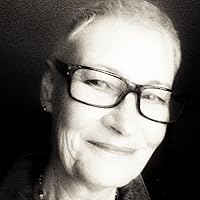
Dr. Helena P. Schrader is a highly acclaimed author with a remarkable portfolio of six critically acclaimed non-fiction history books and twenty-one historical novels.
A testament to her storytelling prowess, twelve of her novels have earned one or more prestigious literary awards, with three titles achieving Amazon best-selling status. Most recently, one of her novels earned the 2026 IndieReader Discovery Award for Fiction.
Helena's deep historical insight stems from her PhD in history from the University of Hamburg, where her ground-breaking biography of a leader of the German Resistance to Hitler earned her doctorate. Her rich experiences also include a distinguished career as an American diplomat in Europe and Africa.
Her expertise spans critical historical periods and subjects, including:
Aviation
The Second World War
Ancient Sparta
The Crusader States
Award Highlights:
Helena's dedication to historical accuracy and compelling narratives has been recognized with numerous accolades:
2026 Indie Discovery Award for Fiction: "The Tale of the English Templar."
Chaucer First Place 2025: "The Tale of the English Templar"
Global Book Awards 2025: Political Thriller First Place: "Cold Victory."
Independent Press Award for Political Thrillers 2024: "Cold Peace." "Runner-Up for BOOK OF THE YEAR 2023" from the Historical Fiction Company: "Cold Peace."
GOLD in the Global Book Awards for 20th Century Historical Fiction 2024: "Moral Fibre"
The Hemingway Award for 20th Century Wartime Fiction from Chanticleer International Book Awards 2021: "Where Eagles Never Flew"
Book Excellence Award for Best Biography 2017: "Envoy of Jerusalem."
Feathered Quill Reviews noted: "Helena Schrader’s in-depth stories, fantastic characters, and ability to write an unforgettable tale make her one of the best authors out there!”
For a comprehensive list of awards and more information, please visit her author website.
I was wondering how I was able to finish this book of 500 pages in such a short time, as I can easily get distracted while reading any book. Only towards the end of the book did it dawn on me that this story of the Berlin Airlift is filled with multiple characters that showcase morality, empathy, fairness, love, hate, romance, drama, action and a multitude of other emotions that keep the reader glued to the book. In reality, it is a collection of stories of people in Berlin after the end of WWII and how their lives were affected by the partition of Germany into east and west. The reader is only eager to know what happened next. Very well done. And, I got to learn a lot about the Berlin Airlift and the cold war. Can't wait to read the third and final book in this series.
Cold War: A Novel of the Berlin Airlift is the second book of a three-part series (Bridge to Tomorrow) written by Dr. Helena P. Schrader and devoted to a largely forgotten part of World War II history: the Russian blockade or Berlin Crisis of 1948-1949 when Berliners were unable to get the basic supplies they needed to survive because of Russian interference. Most historical novels and works of nonfiction about this time period are about what happened prior to and during the War, mainly focusing on the Holocaust; however, what Schrader expertly does is speak to the aftermath of the War, when innocent lives were (literally and figuratively) picking up the pieces and starving for the essentials. The Berlin Airlift in Gatow was a lifeline to those who needed assistance, and Cold War (the sequel to Cold Peace) is a dramatic attempt to show how significant this innovative and creative initiative was to a devastated nation on the brink of being ripped into two distinct worlds.
There is no doubt Dr. Schrader knows the subject matter; she earned her PhD in history from the University of Hamburg, and her areas of expertise include aviation and World War II, so it is obvious she is familiar with what happened between 1948 and 1949. This fact is apparent in her discussions about how the Berlin Airlift was built and used, from its paltry beginnings to becoming the juggernaut it was, eventually dropping almost 13,000 tons of necessities to the German people. Most of the novel, which is also a multi-character melodrama indicative of 1940s and 1950s war pictures, is devoted to providing readers with a complete understanding of the difficulties surrounding the Herculean task of ensuring an entire population of people are fed and living comfortably in a war-torn nation. She does this with an unparalleled audience-centered confidence; the book is simple, focused, and straight-forward, even if over 500 pages long. Dr. Schrader goes day by day, in a linear fashion, which makes Cold War flow and makes the building of the Airlift into something most readers can understand without googling different mechanical terminologies or looking up convoluted airplane schematics. The work is accessible and keeps readers engaged in both how the Airlift was built and how individuals, who had their own personal baggage to deal with, sacrificed it all to guarantee the safety of those in need.
Much of this has to do with Dr. Schrader’s “Forward,” which provides audience members a full synopsis of Cold Peace, plot points about the first book, character biographies, maps, and list of side characters who are not and who are historical figures. Similar to the expositions given day-after-day in daytime soap operas, having this “Forward” brings those who did not read the first novel in the series, up-to-date on what is currently taking place in the story; and, it orients readers in the hopes they will be able to stay focused on what is happening throughout. Although the number of characters admittedly can be quite dizzying (10 protagonists, and a slew of bit players, come and go throughout the work), Cold War is relatively easy to follow and is rife with a great deal to keep the audience on the hook: danger, suspense, intrigue, passion, good versus evil, and battles. In other words, Cold War possesses all the components needed for a successful historical novel very much like that of Casablanca, The Best Years of Our Lives, The Life and Death of Colonel Blimp, and a slew of other films coming out of America and the United Kingdom during that timeframe. The narrative is indeed important, but so is readers knowing about the tenacity of those willing to lose it all to save their fellow humans.
This tenacity comes from both men and women. Very different from the films discussed above, and many other war films, Cold War places women at the forefront of the narrative. Oftentimes, writing and visual authors of history whitewash groups of people out of said histories. Systemic misogyny and racism are a sad but true part of world history. Dr. Schrader, instead, recognizes women were just as important to the war effort. They were: pilots; translators; air traffic controllers; journalists; and, blue-collar workers. They contributed their time, blood and love of country to their countries of origin just as much as the men did, and Dr. Schrader does an excellent job in showing this fact of history in Cold War. Thus, the women get equal “screentime” and readers can get a good taste of what it meant to be a woman during this most difficult time in world history. And, ultimately, what makes Dr. Schrader’s timely work so valuable is how accurately Cold War shows the trials and tribulations all human beings went through during World War II and soon thereafter, as well as what they may be going through now in several countries around the globe. Just as much as it is historical, Dr. Schrader’s novel is a covert commentary of what is happening today and our need to be better humanitarians.
Quill says: Cold War is a sprawling but absorbing narrative that gives readers a full and accurate understanding to what happened during the Berlin Airlift of 1948-1949.
Helena P. Schrader’s Cold War pulled me in right from the start. I loved how it balances the tension of real historical events with the very human side of the Berlin Airlift. The idea of pilots who once dropped bombs on Berlin now flying in milk, flour, and even children’s shoes is powerful and really stuck with me.
The characters feel real and relatable. J.B. Baronowsky and Kit Moran are portrayed with depth, and I especially enjoyed the perspective of the women pilots flying air ambulances it added something fresh and inspiring to the story.
What makes this book stand out is how well the history is woven into the drama. You learn about the challenges of the Airlift, but you’re never bogged down in details. Instead, you come away caring about the people and rooting for them against the odds, even as “General Winter” becomes its own kind of enemy.
If you enjoy historical fiction that teaches you something while keeping you hooked with emotion and suspense, this book is a must-read.
I just finished the book "Bridge to Tomorrow: Cold Peace" by Helena P. Schrader is a captivating historical fiction novel set in the backdrop of the Berlin Airlift in 1948. The story follows a brilliant German scientist, as she navigates the tensions between East and West Germany during the Cold War. Schrader's vivid descriptions and well-developed characters bring the era to life. The reader is immersed in the challenges faced by Anna, who must balance her scientific ambitions with her moral convictions and her growing attraction to an American pilot. The novel explores themes of betrayal and the power of human resilience in the face of adversity. It is a thought-provoking and engaging read that sheds light on a crucial period in history. Overall, "Bridge to Tomorrow: Cold Peace" is a highly recommended book for fans of historical fiction and anyone interested in learning more about the Berlin Airlift.
Helena Schrader continues in the excellence of all her works, but she most particularly excels as an historical novelist in this second work of her trilogy "Bridge to Tomorrow." Marx has said"History repeats itself, first as tragedy, second as farce." He could have added that repeated history might also offer analogies: it will escape no one that the assistance and support the British and the Americans offered the Germans then is much similar to the support required by Ukraine today. Then as now that support was (and is) not without controversy; then as now the American contribution was (and is) indispensable. As this second volume closes, the end is not in sight, but the signs are not altogether favourable. We must patiently await the third volume of the trilogy.
We proudly announce that COLD WAR: a Novel of the Berlin Airlift (Bridge to Tomorrow Book 2) by Helena P. Schrader has been honored with the B.R.A.G. Medallion (Book Readers Appreciation Group). It now joins the very select award-winning, reader-recommended books at indieBRAG. This award is a testament to this book's quality and the impact it has had on readers.
Cold War is a great novel. It covers the beginning of the Berlin Airlift based on an English Officer's perspective. I enjoyed the book because I spent four years working and living in Berlin. Even though my time in Berlin was much later, she captured the Berlin I knew so well.