On a freezing winter's night, astronomer Nancy Lockaby arrives at Blackthistle House, home to renowned, enigmatic Shakespeare scholar Caleb Malles.
When, a month before, Nancy received an invitation from Caleb to leave her position at the Royal Observatory and join him as a research fellow, she saw the opportunity to leave behind a past riddled with tragedy - and to find adventure and freedom in Scotland.
In her new home, Nancy initially finds herself captivated by Caleb's eccentric mind and deep passion for Macbeth. So, when she crosses paths with three old crones who reveal that Caleb is keeping secrets from her, she is dismissive - after all, the women also claim to have lived many centuries and possess powers that defy any logical reasoning.
Yet as Caleb's behaviour becomes more erratic, she begins to suspect that the mysterious scholar might have had hidden motives to lure her into his home. But can Nancy trust these three strange women when they warn her that if she doesn't uncover Caleb's true intentions, great danger awaits them all?
Offering a fresh, feminist perspective on literature's most infamous trio, The Wayward Sisters is an enthralling, intricately woven story of friendship, intrigue and magic.
Kate Hodges has written nine books that have been translated into nine languages. Her titles include biography collections Warriors, Witches, Women and I Know A Woman. She has also written guides to London, among them Little London, Rural London, Welcome to the Dark Side: Occult London and London in an Hour, and family activity book On a Starry Night.
She has over 25 years writing experience on magazines, having been a staffer on publications including The Face, Bizarre, Just Seventeen and Sky, and written for many more. She currently writes regularly for The Green Parent and Shindig! magazines. She has twins and lives in Hastings. In her spare time, she plays in bands Ye Nuns and The Hare and Hoofe.
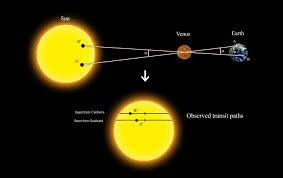
The Wayward Sisters is the first novel by British author, Kate Hodges. When, after years of not being taken seriously at the Greenwich Observatory, thirty-year-old astronomer Nancy Lockaby is offered a post as Astronomical Research Fellow with Caleb Malles at Blackthistle House in Inverness, she decides to ignore gossip about propriety and take it. It’s early 1769, and she hopes to be able to continue working on her project before the Transit of Venus in June.
Daughter of (now-deceased) astronomers and instrument maker, Elizabeth and Benjamin Lockaby, and great-niece of the late Astronomer Royal, James Bradley, Nancy’s passion for astronomy was only heightened when she discovered notebooks detailing her mother’s teenaged discovery of an anomaly in the northern skies immediately prior to the Transit. Nancy witnessed and documented it, but was dismissed by the current Astronomer Royal, Dr Maskliss.
Before she encounters Blackthistle’s dour housekeeper and sees the austere interior, Nancy’s carriage is greeted at the gate by an unsettling trio of women. And before she meets her employer, a walk into town is marred by an attack by three crows.
When she does meet Caleb, she learns that the work required of her is neither onerous, not time-consuming: she will have plenty of time to devote to her own research. Caleb’s passion is Shakespeare and its connection to astronomy, so eventually, Nancy is teaching him basic astronomy.
Further encounters with the women, who refer to themselves as witches, and are warily visited by townspeople for cures, have Nancy fascinated if sceptical: evidence is what she relies on. Caleb disapproves of her contact with the women, and when she learns about Cassandra, his absent wife, then discovers the woman’s journal, she begins to understand why. Is it safe to stay at Blackthistle House until the Transit?
While it’s probably not necessary to know Macbeth, familiarity with the play would likely enhance enjoyment of this novel. Whether there are paranormal aspects to the story, whether there really is magic, or the characters are simply under the influence of hallucinogens, is never entirely clear. And what of Cassandra’s and her son’s fate? Dark and gothic, this is a tale with lots of rich descriptive prose and quite a bit of melodrama leading up to a rather fantastical climax. May appeal to fans of the mystical. This is unbiased review is from an uncorrected proof copy provided by NetGalley and Hodder & Stoughton.
I thought this sounded so intriguing the witches from Macbeth telling their story and it definitely drew me in, dark and gothic , such an interesting read, one that will definitely do well over Autumn nights, especially Halloween , really interesting and I’ll be following Kate Hodges eagerly for more
I received an advance review copy for free, and I am leaving this review voluntarily.
It’s 1769 and Nancy Lockaby is on her way to Inverness where she has been invited to stay with the renowned Shakespearean scholar, Caleb Malles, to help him with his research. Nancy is a keen astronomer who has been developing a theory of her late mother’s involving an astronomical phenomenon known as ‘the Fold’ – a theory that has provoked the scorn and derision of her male colleagues at the Greenwich Observatory. Nancy isn’t sure what her role will be in Caleb’s work as she has little interest in literature, but she welcomes the opportunity to get away from the hostile atmosphere of the Observatory for a while and start a new life in Scotland.
Arriving at the large, crumbling Blackthistle House with her maid, Cora, on a cold, snowy night, Nancy is immediately unsettled by the atmosphere. Why are there lights flashing in the window of a turret? Who are the three strange women she sees in the darkness as her carriage approaches the house? Once she settles in, however, she becomes fascinated by Caleb Malles and his passion for Shakespeare’s Macbeth. She also gets to know the three women she glimpsed in the dark and finds them less threatening as she learns more of their backgrounds. But is it true that they have lived for many centuries and possess special powers? And what is Caleb’s real reason for bringing Nancy to Blackthistle House?
The Wayward Sisters is Kate Hodges’ first novel, having previously written several non-fiction books. You never really know what to expect when trying a new author and I had mixed feelings about this book, but generally more positive than negative. The first half is slow, but has a wonderfully eerie, Gothic atmosphere as Hodges sets the scene and introduces the characters. There’s a particularly memorable scene where Nancy encounters some sinister crows during a snowstorm! I had expected elements of Macbeth to be more deeply woven into the plot, but they really aren’t, apart from the presence of the three women, who clearly represent Shakespeare’s three witches, the Weird (or Wayward) Sisters. The witches have more nuance here than in the play, with each being given a detailed backstory of her own.
Kate Hodges writes very well and there are some nice descriptions to bring the Scottish setting to life, although I was surprised that the recent Jacobite Rebellions were barely mentioned as they must surely have still been having an impact on the lives of the Highlanders in the 1760s. Nancy is an interesting heroine; astronomy is an area of science where women could and did make an impact in the 18th century (the most famous female astronomer of that period was probably Caroline Herschel, the first woman to discover a comet) although it was obviously still a male-dominated field and difficult for women to be taken seriously. However, Nancy’s theories regarding the Fold begin to take the story into the realms of science fiction, particularly when the witches get involved and we discover Caleb’s motives for enlisting the services of an astronomer.
I think I would have enjoyed this book more if it had continued as the atmospheric historical fiction novel it seemed to be at first, rather than the more fantastical story it became. There’s a lot to like about The Wayward Sisters, but it wasn’t really the right book for me.
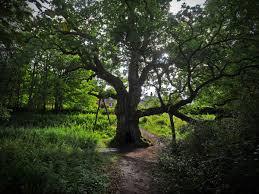
Chose this book because: (a) stunning Cover (b) intriguing Title (I have a thing for witches), (c) Birnam: recently visited it and saw the oak tree where Macbeth encountered the witches; and lastly (d) Macbeth: read it at school and enjoyed the gothic play.
Writing style: 2* wasn't terrible but sounded far too modern at times. Additionally the constant "woe is me being a rich white woman is sooooo hard" did become too much. And I say that as a feminist.
Mystery: 1.5* was fairly obvious. And silly. These 3 witches were called for the silliest of reasons.
Characters: 2.5* the protagonist was a Karen. And I much preferred Shakespeare's witches
In the eighteen century astronomer Nancy Cartwright is increasingly frustrated by her theories and unique observations being dismissed by the male-dominated science establishment so when she is offered a position in Inverness by Caleb Miles she accepts and travels north, relieved that perhaps she might at last find an environment in which she is taken seriously.
However it becomes clear that Caleb's motives are more than just academic. Furthermore the intrigue seems to be linked to three mysterious women in the town who seem to have stepped straight from the pages of Caleb's specialist field of study: Shakespeare's Macbeth.
Nancy finds her scientific beliefs challenged as she is embroiled in the clash between Caleb and the witches, while all the time trying to work out what each faction really wants…
The Wayward Sisters is an engrossing novel which manages combine the struggles of a woman to be heard in a male-dominated scientific field with an exploration of the archetypes of the triple goddess as embodied in the three witches.
The historical settings of eighteenth century London and Inverness feel authentic and yet at no point alienating to the modern reader. Nancy is an engaging and sympathetic protagonist and her journey from a position of scepticism as the witches demonstrate their power is well drawn and believable.
The fantasy elements such as the witches’ magic and "the Fold" are original and the way they're tied in with the real universe events of the transits of Venus is original and clever, leaving the reader guessing right up until the end.
3.5⭐️ rounded up to 4 An intriguing historical fantasty, a mix of magic and science. I really enjoyed this book although my one niggle is the character of Caleb Malles. Whilst the women in the book were well drawn, there was something just a bit off about the representation of Caleb and what happens to him, hence the 3.5⭐️ part of my rating. However, for pure enjoyment, 4.
An excellent story that kept me reading, a well plottest historical fantasy featuring a sassy heroine and three witches plus a Shakespeare scholar. Loved the storytelling, the characters and the story Highly recommended. Many thanks to the publisher for this ARC, all opinions are mine
4.5 stars rounded down to 4. Based on Macbeth's witches coupled with a female astronomer in 1769- I really enjoyed this! Perfect Halloween reading. I thought the references to the play throughout were perfect. The overlap of science and astronomy with magic worked really well.
"The Wayward Sisters" is a historical novel, with paranormal elements, written by Kate Hodges.
The story takes place in 1769 and follows Nancy Lockaby, a brilliant and talented astronomer, who on a cold winter night arrives at the desolate and bleak Blackthistle House, in Inverness, home of the renowned and enigmatic Shakespeare scholar, Caleb Malles. When a month earlier, Nancy received an invitation from Caleb to leave her position at the Royal Observatory and join him as a research partner, she decided to seize the opportunity to leave behind a hostile environment toward her status as a woman, a limiting and oppressive place for her research, a place marked by memories of a past tragedy, in favor of adventure and freedom in Scotland. In her new home, Nancy initially finds herself unsettled by the bare hallways and cold rooms, by the somber and sometimes eerie atmosphere, by visions of mysterious lights and unknown women, and by the landscape so different from London. However, Nancy soon gets used to the new arrangement and finds herself fascinated by Caleb's eccentric mind and his deep passion for Macbeth. So when she encounters three old crones who reveal that Caleb is keeping secrets from her, she dismisses the matter. After all, the women claim to have lived many centuries and possess powers that defy all logic. Yet as Caleb's behavior becomes more frantic, she begins to suspect that the mysterious scholar might be hiding more motives to lure her to his home. But can Nancy trust these three strange women when they warn her that if she does not discover Caleb's true intentions, great danger awaits them all?
I loved the premise of the book, but unfortunately the development did not fully convince me. I started out with high expectations, only to find myself partly disappointed. In the end it was a quick read, very pleasant for some things, less so for others.
The writing is one of the elements I appreciated most about the book. Evocative, suggestive, and at times lyrical, it captivated me with its beauty and sophistication. I thought the descriptions were really wonderful, particularly vivid and effective in rendering the various settings. I really felt the splendor of the various places, with a hint of melancholy and loneliness in the background. The darker and more mysterious nuances in my opinion are wonderful and well realized. The pace is placid, almost sleepy, made more tense by the shadow of unease that envelops everything.
The setting is another element that I loved! I have a very strong soft spot for large, gloomy gothic mansions, with their bare hallways, cold rooms, creaking and sneaking drafts. Add to that the appearance of mysterious objects, the apparition of sinister lights, the presence of lurking figures, and you've really captured me! The presence of a picturesque landscape, accompanied by sinister birds and sudden weather changes, make it all the more atmospheric. I also enjoyed the descriptions of Inverness and all the folklore aspects.
I really enjoyed the aspects related to astronomy and Shakespeare's works (especially "Macbeth"). I sensed so much passion in the way they were illustrated and they intrigued me a lot. I especially liked the portrayal of the infamous Wayward Sisters in this book, as well as the analysis of the academic world of the time, which was often hostile and denigrating toward women scholars.
Nancy, the protagonist and only pov in the third person, convinced me a lot. She is an astronomer deeply in love with the stars and the heavens, completely dedicated to her studies and research. An intelligent woman, with a brilliant and logical mind, trying to make her way in an unfavorable environment. Determined and independent, Nancy is a person who knows herself and thinks with her head. Despite her doubts, despite her hard moments, despite her losses, she does not let difficulties get her down.
The big problem with the book for me is the plot! The whole first part, let's say up to 50/60%, I really liked it. It's basically the more gothic and gloomy side of the story, dominated by the various strange phenomena, ambiguous behavior, and sinister climate. Seriously, if it had been all in these tones, I would have loved the whole volume. Too bad it wasn't. The remaining 40%, where the fog clears and the real development begins, brings everything down. The story speeds up too much, the gothic timbre is abandoned, and the narrative loses its bite. Important revelations are thrown around randomly and without proper focus, actions become chaotic, and the ending is resolved too hastily. Even the most magical aspect, which had enchanted me, crumbles in the general chaos.
All in all, I found it a book with a beautiful premises, fascinating gothic atmosphere, and a splendid evocative style, which unfortunately did not convince me in its development.
Thank you to the Publisher and NetGalley for giving me an ARC of this book in exchange of an honest review.
It is 1769, the year of Venus’s second transit, and as a woman in a man’s world, astronomy scholar Nancy Lockaby is reeling from the ridicule that her theories on the transit have earned from colleagues at the Greenwich Observatory, so when a mysterious invitation arrives from Shakespeare scholar Caleb Malles, to join him as a research fellow in Inverness, she jumps at the chance.
Initially, Nancy is drawn in by Caleb’s eccentric, brilliant mind, and his obsession with Macbeth, but when she crosses paths with three crones who warn her that he is hiding dark intentions, she finds herself wondering who to trust. Especially when the women claim that they have their own relationship with the play…
This is a novel about ambition, obsession, power and betrayal, and blends historical fiction, with witch lit, and magic, aiming to present a fresh, feminist perspective on the witches from Macbeth. As a bit of a Shakespeare nut, it was this aspect which first drew me to it, and I can say that Kate Hodges has succeeded in her ambition to present the reader with a different view of the three weird sisters from Macbeth.
Here we have a much more nuanced portrait. As in the play, they exercise incredible magic powers in the service of Hecate, but rather than being one dimensional instigators of evil and tragedy, these women are survivors of trauma and brutal persecution. Instead of being the catalyst for malevolence and destruction they are using their powers to prevent it.
The theme of power and the patriarchal view of women is further explored in the character of Nancy. Not for her the stay-at-home life of a lady, engaged in domesticity. She has a very active brain, an enquiring mind, and an interest in astronomy. Brave at heart, independent of spirit, she is a positive, feminist role model, and the antipathy of the 18th century feminine ideal.
The prose is well written, and whilst the pacing is a little uneven, on the whole this supernatural, gothic, feminist, historical fiction is a fairly entertaining read, with appeal to readers of Bridget Collins and Jennifer Saint.
Thank you to Netgalley and Hodder & Stoughton for the eARC in exchange for an honest review.
#TheWaywardSisters – Kate Hodges #HodderAndStoughton #JonathanBall
1769 had no faith in female academics. Astronomer, Nancy Lockeby, has experienced that first hand at the Royal Observatory. An invitation from a scholar, Caleb Malles, to join him as a research fellow at Blackthistle House, near Iverness, is thus viewed as a godsend.
“By the pricking of my thumbs Something wicked this way comes.”
Caleb is dedicated to the works of Shakespeare, “Within his plays, harboured in his verse, I believe lies the universe.” (44); with a particular interest in “Macbeth”. No wonder, the streets of Iverness once echoed the screams of Duncan and bore witness to the treachery of Macbeth.
“Double, double toil and trouble, Fire burn and cauldron bubble.”
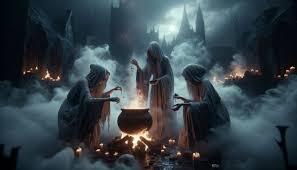
Shortly after her arrival, Nancy meets a trio of women claiming to have lived for centuries and possessing unearthly powers. Even their appearances are somewhat unusual: the youngest is of pale complexion with fair, tangled hair, and a missing tooth, the second is older, dark skinned, wearing large, gold earrings and the third is elderly, with a wrinkled face and thin grey hair. They claim to have been summonsed by one Heggity, like the witches who met Macbeth after being summonsed by Hecate.
“Full of sound and fury.”
Shakespeare’s Weird Sisters, the Greek fates, weaving the threads of destiny, the Irish Morrigan, the French Matres, the Northern European Norns, or something else? And why were they summonsed?
“Fair is foul and foul is fair.”
The author combines a strong feminist voice, lamenting the plight of women daring to be educated in a world ruled by men, with the secrets of the universe as concealed by astronomy and, in the words of Voltaire, its crazed offspring, namely astrology. The result is a historic thriller with hints of the supernatural, centred around the human desperation that originates from intense loss and continued disappointment.
Many thanks to Hachette for sending me a copy for review!
Nancy Lockaby has spent her life dreaming of the galaxy. When she witnesses an event that could change the face of astronomy forever, she dedicates the next eight years of her life to pushing against the eighteenth-century boundaries for women that threaten to keep her from sharing her knowledge with the world. A research opportunity in Scotland, a partnership with a charming yet elusive Shakespeare scholar, and an encounter with three women who bare remarking similarities to the witches from Macbeth open Nancy's eyes to all the world has to offer. And all she could just as easily lose.
The Wayward Sisters is marketed as a fresh, feminist exploration of the Macbeth witches. I don't necessarily disagree. Kate Hodges shows a high level of research through both the scientific and literary aspects of this story, positing everything through an eighteenth-century lens that allows characters to nevertheless have their own feelings and desires. I would call it a good entryway to feminist explorations that perhaps at times tries to be a bit more than it needs to be (I'm thinking specifically of an exploration of the slave trade and slavery that, in my opinion, felt like it was thrown in rather than really woven in to the story). Though Nancy's story is one of white female empowerment I feel I've heard many times, I did enjoy it. It made me want to learn more about historical astronomy, and I imagine if young girls read this book, they'll walk away wanting to know more, too. And that is always a positive.
(I will also say that it made me deeply curious about what a book like this told from the perspective of the witches would be like ... I think that's a story I'd enjoy just a bit more.)
It’s 1769 and Nancy an astronomer is waiting for her big break which seems very far way. So when she is given the opportunity to help Caleb, a Shakespearean scholar with his research she knows it’s an opportunity she can’t refuse. She arrives at Blackthistle House and all seems well until she encounters three mysterious women and Caleb’s behaviour starts to change. What secrets is Caleb hiding?
I remember the first time that I read Macbeth and being fascinated by the introduction of the three witches also known as The Wayward Sisters and this is what drew me to this book. The storyline was filled with intrigue, mystery and magic. I really enjoyed reading this book and discovering a new take and a new version of the Sisters. As soon as Nancy had her first glance even before she interacted with them there was this ominous feeling in the air that something was going to happen.
Nancy is a very accomplished astronomer and she’s clearly learned a lot from her parents which has shaped her interest in astronomy. She is also very advanced for the time that she is born in to. Despite Nancy being smart, knowledgeable and hardworking the one thing that goes against her is the fact that she is female. She isn’t taken seriously by her colleagues or by society so I can understand why she takes Caleb up on his invitation.
Caleb and Nancy initially get on really well. Nancy finds that she has met someone who understands her, takes an interest in and appreciates her work. He is the first person to take her seriously as an astronomer. But then things change and she starts to view Caleb with suspicion believing that there is another reason that Caleb is showing so much of an interest. Like in Macbeth she too is given a warning by The Wayward Sisters which she doesn’t quite understand and slowly but surely things start to make sense. It was interesting to see Nancy's interaction with The Wayward Sisters especially because she is a woman of science and anything involving magic or mysticism isn’t something that she understands. However, when she first meets them it’s like she is drawn to them and by stepping out of her comfort zone she starts to spend more time with them learning about their pasts, history and who they are which changes who she is and her beliefs.
If you’re a fan of historical fiction this is one book not to be missed.
I'll start with a confession. I love books about witches, I love gothic historical fiction and I love a good mystery. But... I do not have a huge knowledge of Shakespeare, so even though I loved the sound of The Wayward Sisters, I was worried that story might be lost on me. However, this was not an issue at all. The writing is beautiful and the story is full of magic, intrigue and mystery. It's the perfect book to pick up during these colder autumn nights and be completely transported to another time. I really did get swept away by this enchanting tale.
I was able to pick up on the link to the three witches from Macbeth and the Wayward sisters in the story, three women who were granted supernatural powers and immortality, are a really interesting set of characters. I really enjoyed reading about them but would love to look into Macbeth a bit more to try and improve my understanding of some of the finer details. As far as the protagonist is concerned, I loved the fact that Nancy Lockaby was ahead of her time and held her own in a male orientated world, refusing to give up after she is ridiculed for her belief in something unexplained.
I thought that The Wayward Sisters worked really well with its unusual mix of topics that blended astronomy, witchcraft, Shakespeare, feminism and elements of the supernatural perfectly together. This, together with the rural Scottish setting, created the ideal atmosphere for this type of story.
I really enjoyed reading this leading up to the spooky season. The book is beautifully written with atmospheric and gothic descriptions as our protagonist Nancy moves from London to the dark Blackthistle House in Inverness back in 1782.
I warmed to Nancy as the protagonist - a female scientist/astronomer who passionate and strong despite being constantly being ignored by her male peers in her field. Despite being on the brink of an astronomical discovery her talents are discounted, prompting her move to Inverness.
Here we meet the eccentric Caleb who has a fascination with all things Shakespeare and wants to learn about astronomy, taking a keen interest in Nancy’s work. I loved the infusion of Shakespeare particularly Macbeth - it really added drama to the story. And of course, The Wayward Sisters. Alongside the powerful descriptions of the scenery, I enjoyed the portrayal of the infamous sisters. They continue to capture people’s imaginations.
The main issue I had was the latter part of the book appeared to lose its gloominess and it’s initial atmospheric tone. The development appears to speed up rather too fast and the end is hastily concluded.
Overall, I enjoyed the fantasy and atmospheric descriptions with the infusion of Shakespeare despite the hasty ending.
Thank you to @hodderscape for including me on the Book Tour
In 1761, after her parent’s death. Nancy Lockaby takes up her mothers astrological research. By following her mother’s research and calculations, Nancy is witness to a unique astronomical event while gazing through her telescope. Once she explains her findings to her superiors at the observatory, she is not taken seriously because she is a woman. Eight years later, according to her calculations, the astrological anomaly is set to take place once again. Nancy is invited to Inverness Scotland to be a Astronomy Research Fellow, by a mysterious benefactor. After a strange reception by three local women while arriving in Inverness and an attack by crows. Nancy begins to cover more than her analytical mind once thought possible. All the while, her benefactor seems to have many secrets of her own. The Wayward Sisters is an interpretation of the Weird sister found in Macbeth. I recommend it to anyone who loves a good mix of magic and the science behind it.
Set in 1769 Nancy is an astronomer who is struggling to have her discoveries acknowledged in her male dominated field. Receiving an invitation to join literature scholar Caleb, with a passion for McBeth, she travels to Inverness. In doing so she crosses paths with 3 crones who reveal Caleb is keeping secrets. This was an interesting read and at times bridges between fantasy and science fiction. Nancy was a well written character and the it's pretty gothic and eerie atmosphere. I did feel the first half was a bit slow in pace an did take me a while to get properly into it. The second half of the book does ramp up and flies along however. As aluded to in the title, there are many connections to McBeth, however not knowing the play is not going to impact your enjoyment here. A decent enough book with some really nice descriptions of life in Scotland off the 1760s, it just might not have been the right book for me. Would probably be enjoyed by fans of witchcraft and historical fiction
I randomly picked up this novel in a bookstore intrigued by the premise of Nancy being a research fellow in astronomy and an element of Shakespeare - odd topics to combine but an interesting concept to explore.
I really enjoyed how Hodges wove together the mathematical, analytical mind of a researcher and the mystical. Being a researcher myself, I saw myself in Nancy and felt her disbelief when she saw things that could not be explained by numbers. I loved the buildup to the crux of the story, the puzzle pieces that fit together, the diary entries that revealed all that was unsaid by the main characters.
I rated this a little lower than I expected due to pacing issues. The first 50% was far too low compared to the last 50% which flew by. If this book was shortened by even 30-40 pages in the first half, it would have been a punchier story.
Book Review 📚 The Wayward Sisters by Kate Hodges - 3/5 ⭐
I was definitely intrigued by the title of the book but I feel a little let down. It wasn't awful but it isn't up there with scoring.
There were some good mixes of witchcraft happening throughout the book but I felt some was completely overdone or drawn out. It was dark, mysterious and gothic all in one which was an amazing concept.
Hodges definitely done well in her descriptive writing and bringing all aspects of the book to life but it just lacked a promising story. I think 50-100 pages less and it would of bewn much easier to read.
Thank you to NetGalley and Hodder and Stoughton for allowing me to read this ARC - this is an HONEST review from my own personal opinion
Love this cover so much. So detailed and with the gold too, looks beautiful.
I was really intrigued by The Wayward Sisters when I read the synopsis but I feel it didn’t fully live up to my expectations.
It is an interesting read with some great gothic vibes. Some elements of witchcraft and had a great setting. This kind of book is perfect for this time of year. Some great descriptions that were authentic.
I think for me the witchcraft and the setting/gothic atmosphere was what I liked most but I wasn’t so much interested in the astronomy side of things so I suppose that steered my focus.
Overall it’s an interesting read and a fresh perspective on the wayward sisters. One to read all cosy on these autumn nights 🍂
So many questions.... why did the red ball appear on Nancy's desk? Why did the silver hairbrush appear in her drawer in the guest bedroom? answer, apparently, no reason at all. Why is the maid called Cora and the mistress Nancy? Why does she let a single man call her by her first name? ( it's supposed to be 1769). Why does she have NO friends or relatives and is therefore forced to write letters to her maid to explain the plot... why does she head off to Scotland with no clue about her employer and the role she is to play, when her whole persona is supposed to be based around meticulous research...I could go on but I'll chalk this down to a lesson not to chose books based on their covers. 1.5 rounded up, because it really is a pretty cover.
This had done interesting elements of magic and witchcraft mixed in with the historical backdrop. The gothic mystery aspect was well written and kept me hooked.
However, the characters could have been developed more, I loved Nancy but was intrigued to explore more about witches which didn't become fully integrated into the story until 70% in.
Overall, a fresh perspective on the Wayward Sisters navigating their friendship and magic in a thrilling Shakespearean atmosphere.
Thank you to Netgalley and Hodder Stoughton for a arc in exchange for an honest review.
This book did not contain the witchy magic that I was hoping for. I had difficulty concentrating on the book, picking it up and putting it down often. There was nothing specific about the writing itself that I had problems with--it just wasn't what I expected. Thinking back, I am not sure why I thought I would be interested in a book that contained Macbeth and astronomy. It was the witches that made me think it would be the book for me. Thank you to NetGalley and the publishers for the digital ARC. This opinion is my own.
Thank you to Netgalley, the publishers and of course the author for gifting me this advanced reader copy in exchange for an honest review.
I was really excited to have the opportunity to read this early and the book was really good. I loved the interweaving of magic and I love astronomy so the fact Nancy works at the Royal Observatory was brilliant (even though she had to leave). I love how captivated Nancy is with Caleb even though he's so eccentric and full of secrets!
This was an interesting read and an original idea. I really enjoyed certain aspects of this book- the setting, witchcraft and the diary entries but not so much the astronomy details and some parts were very drawn out. I struggled to engage with this one until about 60% when the witches became more important to the story but that is personal preference. Thank you to NetGalley, the author and the publisher for the advance review copy.
I really loved this book the title really grabbed my attention. Nancy was such a great female character who I really got behind and wanted nothing more than for her to succeed in her studies. There was one part of the book that seemed a bit dragged out but it didn't effect how I felt about the book. As someone who has never read any Shakespeare I am now really intrigued. It was truly a mesmerising read!
This book demands patience, but I felt that it failed to reward it, for me. The narrative takes an exceptionally long time to find its footing, with the first half feeling like an extended prologue. Just as you hope the story is finally gaining momentum, it veers into bizarre and confusing territory, leaving the reader disoriented, as well as intrigued. It made for a strange reading experience for me.
So wonderful to read a novel featuring the Weird Sisters, from MacBeth, as positive beings. A book with its head in the stars, and its feet in the haunted Inverness of MacBeth. A mystical adventure for fans of the Fates, Wayward Sisters, and Shakespeare.
This book is the perfect Halloween read. Is a historical novel that was very interesting and got me hocked since the beginning. The way this book is write is one of the elements I enjoyed most. By the end of the book I didn’t enjoy much the way the author develop the whole story but that didn’t means I hated the book. For me is a solid read that worth the hype and I gonna recommend to people