Franc Sousa's life is virtually perfect. In a future San Francisco, where the most important determination of success is the quality of the computer chip inserted in your nervous system, Franc has the best. His chip provides him instant access to all the information and entertainment the world has ever produced, and to a virtual game environment that feels more real than his actual life. It has also helped him develop his coding skills to a level where his future employment for the V.T.B., the company that runs everything, is assured. Even more important, chippers like him, less than 1% of the population, never experience pain, or sadness, or rage for longer than a few seconds at a time. And they never get Franc expects to live hundreds of years, perhaps forever.
But when an accident dislodges his chip, he begins to question everything he's ever known. He can't accept the doctor's explanation that the beautiful girl he saw after his accident was only a hallucination. When his longing for the girl of his vision spirals into a depression that lasts for weeks, Franc refuses to tell anyone that his chip is malfunctioning. He does not want to be fixed.
Instead, he embarks on a grand experiment to discover what is really he takes an old razor and gouges out his chip. What he discovers, the dystopian world of brutality and oppression experienced by the vast majority, sickens him. He ends up abandoning his life of privilege and joins a band of hackers intent on destroying the matrix of computer systems upon which the tyranny depends.
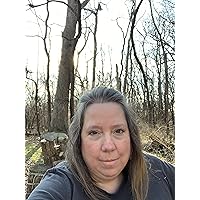
I am a boring guy, a retired high school English teacher. I live in Santa Cruz, California, a beautiful, quirky beach town, but don’t picture me watching the surfers from my front lawn. My house, an old (1880s) redwood Victorian, backs up to the San Lorenzo River, a slow-moving stream most of the year where herons and egrets fish next to garbage floating down from the homeless encampment.
I’m old enough that when I started writing a few things and attempting to get them published, you had to type a copy of the story, place it in a big envelope (along with a smaller, self-addressed envelope so that they could more conveniently send a response) and then wait months for the rejection to arrive. It felt like shouting into the void, and I soon became discouraged and quit.
In the 2000s, I tried again with a piece about teaching entitled, “Why I Force my Students to Memorize Poetry (Despite the Fact that it Won’t Be on the Standardized Test)” It was published in American Educator (circ. 700,000) and later excerpted in a college writing textbook. That was fun, and it was very important to me to be paid for my writing. A shocking number of publications (even those for unions that you would think would value labor) do not pay. Anyway, the same magazine later published two more pieces of mine, which was great.
When I retired a couple of years ago, I tried to write in earnest and tackle a novel. I write slowly and labor over each sentence, and I am one of the most distractible (Squirrel!?) people you’ll ever meet so it wasn’t easy. Then came the process or rejection again, 20 different agencies passing, and I put it aside for over a year. Then I went back for a rewrite and tried again. 25 rejections this time and I decided to self-publish.
The book (Hard Rain) is out now in ebook and paperback on Amazon and the response, so far, has been good.
The theme of this story immediately brought to mind all the complaints I've heard about how everyone is glued to their phones nowadays and that no one is 'present' anymore. Although I agree that is true to some extent, I also think it's just a grievance over this particular generation like the internet was when I was young. Nevertheless, I found the story entertaining and the characters loveable. It's an interesting take on the conceivable dangers of technological advancements.
Really impressed by this book. Such an interesting story of a dystopian society in the not so distant future. Great characters and details. The ending felt a little rushed like he just wanted the story to end but overall very enjoyable read. Hopefully he will write more!
Dystopian fiction is not usually my thing. I generally either find it horribly depressing, or unrealistically redemptive. Hard rain is an exception. Andy Waddell avoids the first by emphasizing human friendship and resilience and the second by ending in the middle of the first battle for freedom. Waddell’s worldbuilding, set in my home territory of San Francisco, convinces by expanding known places and adding intense details. The story, the dystopian element, focuses on one of the many disturbing things about the way the world is now. There is horror and hardship, but not too much, and no sense that the author is reveling in it, or inviting the reader to do so. In many ways this is a coming of age story, for not just one but several characters, but there is nothing saccharine about it, rather a genuine feeling for young people and the way they struggle through those teenage years. I’m happy to have discovered this book.