'IF YOU LIKE SCIENCE FICTION YOU WILL LOVE THIS. . . A ROLLICKING GOOD READ' Scotsman on Beyond the Hallowed Sky
'MACLEOD'S BEST BOOK TO DATE' SFX on Beyond the Hallowed Sky
Humanity has taken to the stars, using faster-than-light travel to reach distant planets and new worlds. But in the far reaches of the galaxy, John Grant will discover a planet of humans who believe he has travelled not only through space to find them, but time.
On Apis, the mysterious Fermi appear to have vanished, taking with them knowledge of the universe that humanity desires. But Marcus Owen, the robot AI now plagued with sentience, knows that the Fermi would not easily abandon the native life of Apis, and that they won't take kindly to mankind asserting dominance on a world that does not belong to them.
Beyond the Light Horizon is the jaw-dropping conclusion to the Lightspeed trilogy from science fiction legend Ken MacLeod, a thrilling tale of politics, AI and the far reaches of space.
Praise for Ken
'An exceptional blend of international politics, hard science, and first contact' Michael Mammay, author of the Planetside series on Beyond the Hallowed Sky
'MacLeod is up there with Banks and Hamilton as one of the British sci-fi authors you absolutely have to read'SFX
'Prose as sleek and fast as the technology it describes. . . watch this man go global' Peter F. Hamilton on Star Fraction
'Ken MacLeod has an enviable track record of extrapolating from current trends to produce mind-bending novels of ideas' Guardian
Also by Ken
Lightspeed Beyond the Hallowed Sky
Fall Revolution The Star Fraction The Stone Canal The Cassini Division The Sky Road
Engines of Light Cosmonaut Keep Dark Light Engine City
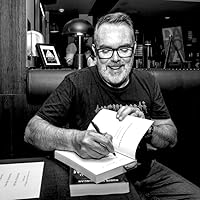
Ken MacLeod is an award-winning Scottish science fiction writer.
His novels have won the Prometheus Award and the BSFA award, and been nominated for the Hugo and Nebula Awards. He lives near Edinburgh, Scotland.
MacLeod graduated from Glasgow University with a degree in zoology and has worked as a computer programmer and written a masters thesis on biomechanics.
His novels often explore socialist, communist and anarchist political ideas, most particularly the variants of Trotskyism and anarcho-capitalism or extreme economic libertarianism.
Technical themes encompass singularities, divergent human cultural evolution and post-human cyborg-resurrection.
Final book of the Lightspeed hard-ish, science fiction interstellar colonization trilogy with: Time Travel, a Higher-Tech Species, Artificial Humans, omnipresent AI, Faster-Than-Light (FTL) Travel, and old-fashioned competition between nation states creating a near future geo-political thriller.
My dead tree paperback was a moderate 340 pages. It had a 2024 UK copyright.
Ken MacLeod is a Scottish author of science fiction. He has published about twenty (20) novels in several series and standalone. In addition, he’s published several short stories. I've read almost all of the author’s novels. The last book being Beyond the Reach of Earth (Lightspeed #2) (my review).
MacLeod is one of my goto science fiction authors. His stories are grounded in hardish science and credible tech. They also include a lot of expositional politics and philosophy. That keeps him out of my first tier of authors.
Its strongly recommended reading Beyond the Hallowed Sky (Lightspeed #1) and Beyond the Reach of Earth (Lightspeed #2)before starting this book. Without them, you will be lost.
This final book, ties up all the dangling plot lines of the trilogy. However, its a rather messy book taken to a too pat ending. It does this after introducing a huge unexpected plotline in the beginning. I’d almost call the trilogy's ending, an HFN ending. Thankfully, MacLeod doesn’t write Serial Fiction, just trilogies. With his surviving characters and world building, a lessor, intellectually lazy, author would create a additional story arc.
The three main plot lines from the previous book, and a new one taking place in a somewhat near future (2067) apply, but with some modification to the legacy plotlines:
• Omnificent FERMI aliens • Time Loops within the inadvertent time travel of FTL • International Power Blocks suck •
The FERMI decamp from Apis and all the rocky, terraformed planets they’ve seeded are open to colonization. With all the international power blocks and some commercial organizations getting the FTL drive there’s a mad rush off the planet.
The book’s POV characters close all their Time Loops. Meanwhile, they discover some Dark Horizon time travel hinkyness.
The Alliance, Co-Ord, Union, and the non-aligned countries continue to conspire against each other. In a circumstance, where each could have their own planet(s), why do they still need to screw each other over?
The four (4) of the five (5) POVs from the previous book continued the narration: Nayak, Grant père, Myles Grant, and Owen. The android Owen character is more likable, since the FERMI had made him conscious, and no longer pretending to be or taking orders from his Alliance spymaster. An unexpected LGBTQ+ element was introduced with Nayak. Although, she’s still brilliant now that she's in love. Grant père gets about as many pages as in the first book and his son fewer than the second. The POV interleaving was technically well-handled. However, as with most books with modest page counts, the pacing suffers with the per chapter character switching. There were too many separate narratives, and not enough pages.
The writing was minimally Scottish. Descriptive prose continues to be better than the dialog. I could find no mistakes in the text. This was the least humorous of all the books.
There was: some sex of the fade to black type and it was not all heteronormative either, only a small amount of legalized drug usage and some heavy drinking (a Scottish vice), and no music in this book of the story. A pity, because music was well handled in the first book.
Violence was physical, firearms, and military-grade weaponry including FTL, non-nuke, torpedeos. Human characters, had perfectly ‘normal’ mortality. The previous book was very hard on the synthetic beings and robots, but they took a lick’n and kept on tick’n. (It was almost magical.) Lots of drones were destroyed. There was a noticeable lack of gore. Body count was heavy, but abstracted (there was a war on).
Plotting was good, but rushed. The switching between the too many POVs retarded the pacing. The addition of a new major plotline in this last book suffered. The convergence of the legacy plotlines also was compressed. Some room could have been made for the “rush to the door”, with better editing. For example, the discovery of a second, intelligent, aquatic species on Apis could have been pruned.
World building was a logical progression of the previous books, which have very good. The planet Apis' fauna, flora ecology and geography were exposed in an interesting ways. This continued with the other FERMI terraformed planets discovered in quick succession. The galaxy spanning FERMI aliens, no longer a menacing mystery in the second book, come back with menace in this last one. The solution to the Fermi Alien Problem for Apis was worked-out. However, this was not the case for the other FERMI planets.
This book ended the trilogy satisfactorily, but not in a praiseworthy fashion. This wasn’t a great work. It had elements of a great work. All the books had too many plot lines moving in parallel and too few pages per POV-based chapter. The trilogy also had a cliffhanger ending to the first book, which I find unforgivable. This trilogy should have been a duology with the 1st and 2nd books combined and the third book stretched to 500-pages. Nowadays, with rookie SF authors writing 1000-page books, can’t an experienced author like MacLeod with a following, follow same? Still, in most places, the author’s abilities shown through. In particular, with his vaguely utopian world building, his riffs on contemporary tech, the geopolitics of the Alliance, Co-Ord and Union, and his humor. However, I was a bit disappointed at the addition of the multiverse trope to the time travel. That trope is very tired by now.
This was a good book, part of a trilogy that started off better, but only ended-up as “Satisfactory”. Anyone picking-up this series needs to buy the three books of the trilogy together to have a satisfying experience, or wait for the Omnibus edition.
The biggest question about the final book in a trilogy is, will it stick the landing? So when you get three quarters of the way through the book and have to double check if it actually is a trilogy, well that could be problem. Luckily MacLeod does a magic trick in his last fifty pages and allows his audience to be content with a kind of ending to certain narrative plot points, whilst suggesting that the characters will go on to live long, complex lives - which is a real-life ending. And certainly one I didn't expect when I read the "Story So Far" recap at the beginning of the book, which horrified me with how much I had forgotten. My review of Beyond The Reach Of Earth (Book 2) mentioned how many balls had been tossed in the air by the first book, and that it didn't necessarily follow through with those whilst throwing a whole bunch more in the air. Beyond The Light Horizon is interesting in that we start with a whole new complex planetary system being discovered, more balls perhaps?
Despite this, and obviously with a nod to the previous world-building and character work, Feyond The Light Horizon is remarkably self-contained. We have a chapter to sort out the previous cliffhanger (two time loops are closed and then we don't worry so much about time travel again), and then the new system is discovered. One with three distinct forms of sentient species, a big marsupial race, some dinosaurs (and yes, this just calls them dinosaurs), and some humans stranded there in the past. Light touch world-building sets this up as appropriate to the universe (how they have interacted themselves with the Fermi), and then we get on with the usual political shenanigans that come with MacLeod's three-faction future Earth. He even gets to do a proper mystery reveal. and time his hints such that I think I got the solution about three pages before it actually unfolded.
I would be interested to revisit this as a trilogy to be read in one piece, where I think the lows of book two (how much the narrative sprawls) would not be a problem. That might also show a weakness however in how focussed book three is on a new location, Apis does get a bit of a look in, but not much. The solution to the "ancient intelligence that is meddling in all intelligent life" may seem a little underwhelming to start off with, but actual works better than a lot of similar antagonists, and has never had the sense that humanity faces destruction. Instead MacLeod gets to be a Utopianist here, even without solving factions and war on Earth, and bringing in a really rather sweetly banal first contact scenario. A win for socialist economics!
’The universe was not out to get you. It did not notice’
Beyond the Light Horizon was a fantastic end to a fantastic series. The Lightspeed trilogy is a one-of-kind look at FTL, time-travel and AI’s, partnered with intricate politics and the question of sentience and humanity, with just brilliant writing and pacing. And some pretty fun characters to boot.
I think that this book is probably my favourite out of the trilogy, and yes, this is in part due to the random but much needed inclusion of sentient, talking dinosaurs. Because more books should include sentient, talking dinosaurs, okay? However, it also included some of the most interesting politics, which covered an actual planet-wide spectrum and made for such unique questions of conservationism and the human desire for colonialism at every level. I loved that this series made me think, as well as laugh and enjoy some of that sci-fi goodness.
I think Ken Macleod is such a great author, and I can’t wait to check out more of his stuff! I think the way he paces his stories is incredibly engaging, and I loved how he mixed hard-science with humour. He’s not quite Andy Weir, but the resemblance is there! I’m also a massive fan of how every sequel book in a series begins with a recap of the previous instalments. It’s such a simple quality of life thing that I WISH all authors would include in their series!
Overall, Beyond the Light Horizon gets 4/5 stars, and the Lightspeed trilogy as a whole also gets 4/5 stars :)
Three books in, I think I’ve settled into a slightly peculiar relationship with Ken MacLeod’s Lightspeed trilogy of often being more fascinated by what he’s thinking about than emotionally caught up in the story he’s telling.
Beyond the Light Horizon didn’t really change that, though by now I don’t necessarily mean it as a criticism. MacLeod has spent the trilogy throwing politics, first contact, competing social systems, artificial intelligence and increasingly strange questions about humanity’s place in the universe at one another, and watching those ideas collide has consistently been the part I enjoyed most.
He also never allows technological progress to magically improve human behaviour. Give people access to something astonishing and somebody will want to regulate it, somebody else will want to own it, another group will regard it as an existential threat, and at least three people will have incompatible political theories about what should be done with it. After three books, that may be the most convincing thing about this future.
There’s quite a lot for this final volume to bring together, and at times you can feel the weight of it. MacLeod has travelled a long way from the comparatively recognisable political and technological landscape of the first book. The questions are bigger now, the possibilities stranger, and the implications of earlier discoveries have spread far beyond what they initially appeared to promise.
Some of that I really enjoyed. Some of it left me wishing I cared about the characters quite as much as I cared about the implications of what was happening to them. That has probably been the one constant across all three books for me. I never disliked these people; I simply never became especially attached to them. MacLeod would introduce some enormous new possibility and I'd immediately start wondering what it meant for humanity, politics or the nature of the universe when I probably should have been worrying about the person standing in front of it.
Perhaps that says as much about the sort of trilogy this is as it does about my reaction to it. Because MacLeod really is at his best when following an idea farther than expected. He rarely stops at what if this existed? He wants to know who would control it, who would oppose it, which existing institutions it would destabilise, what new political arguments it would create and whether humanity would even understand what it had stumbled across in the first place. That curiosity runs through all three novels and gives them a character of their own.
The final book therefore worked for me in much the same way the previous two did. I was interested. Sometimes very interested. I enjoyed seeing the larger design become clearer and watching ideas introduced much earlier acquire new significance. But that final bit of emotional investment never quite arrived. And I think I’m fine with that.
Not every trilogy I enjoy has to become one I love, and three stars across these books feels less like three identical judgements than a fairly accurate description of my experience with the whole thing. There was always enough here to make me pick up the next volume, always another idea I wanted MacLeod to pursue, another question whose answer I was curious to see.
I finished Ken Macleod's Beyond the Light Horizon, the concluding book in his Lightspeed space opera trilogy. I thought that it was a good conclusion to the series. One characteristic of Macleod's books is that they tend to be relatively short, at least compared to many of his contemporaries. I think that has advantages and disadvantages. It does mean that the story moves forward at a good pace and there aren't any major lulls in the story. On the other hand, there are so many ideas and concepts and locations and characters that it sometimes feels too much for a short book and some things perhaps deserve more thorough exploration. The characters are interesting and varied but I'm not sure that any of them have a huge amount of depth, perhaps because of the relatively short time we spend with each of them. The mysteries brought up in previous books do mostly get satisfying explanations and there are several new plot elements introduced, the highlight of the book is the discovery of a new star system with several habitable planets with some interesting inhabitants. It's also perhaps more topical than Macleod expected it to be with each of the human societies in this having their own form of AI, which might have its own agenda. There are some familiar elements here from older books (there's a big Le Guin influence including some homages to The Dispossessed) but I think it does also have some fresh ideas.
2.7 stars. Again, plenty of ideas and some semblance of a story, but I can't recall a single character - they're all so bland. I think Ken MacLeod's writing just isn't for me.
I'm grateful to the publisher for giving me access to an advance e-copy of Beyond the Light Horizon to consider for review.
In a complex and satisfying conclusion to Macleod's Lightspeed trilogy, we see the consequences for Earth politics and development of the discovery of faster-than-light travel, and of planets inhabited by other species, become clear.
On a near future Earth, there are three main powers: the Union, a post-revolutionary society run as an "economic democracy" which has originated from the European Union, the Alliance, comprising much of the anglo world, and the Co-ord, bringing together authoritarian Russia and China. The focus is on the Union, which has just caught up with the (secret) FTL capability of the other two powers, and especially on John Grant, a somewhat restless and buccaneering member of the Revolutionary class known as the responsables. It was Grant who sponsored the creation of the Union's first FTL craft, opening a bewildering array of opportunities which he's determined to exploit.
Many of the possibilities flowing from that raise challenging ethical questions - I nearly typed "new" before that, but actually they're not - about the impact of settlement and colonisation on indigenous populations. The flora and fauna in the new planets being explored are so different that the humans are slow - perhaps deliberately slow - in identifying sentient life. They need a lot of help from Iskander, the AI that enables society in the Union, to do this and Iskander's role is, to my mind, somewhat ambiguous here. At least one player, Marcus Owen, the English robot agent, regards it as dangerous to humanity. Equally ambiguous is the alien race known as the Fermi. It may be planning to defend life on, for example, Apis but in the meantime a great deal of damage is being done.
I found it - what's the work - bracing? salutary? - how deftly Macleod portrays realistic outcomes from this situation. The Union is not, for example, a society of self-denying socialist co-operators, at least not until Iskander channels and directs their activity, so there is a very enthusiastic response to the call for colonisers and pioneers without a great deal of thought as to the consequences. Grant and his circle react in a similar way, at one stage proposing a somewhat hare-brained plan to introduce a sort of whaling industry on an untouched world.
Equally impressive is the sheer breadth of imagination shown here in the range of life and of planets supporting it, which all have complex and vibrant histories. Wise societies, some of them, which have accepted natural limits to expansion: restless ones, others, which want to press on and outwards. There is perhaps a bit of s sense of a whistlestop tour at times, because with so much in the background to this trilogy there isn't time to visit most of it. Characters and vessels come and go, trading patterns emerge rapidly and some of the individuals we have been following through the three books are perhaps slightly overshadowed by the pace and scale of events. That is, I think, inevitable and Macleod still manages to give everyone a satisfying resolution, aided in one or two cases by the judicious use of temporal paradoxes (although I lost sight of Owen in the end and couldn't help thinking he was off somewhere engaged in mischief).
Macleod's writing is always engaging, whether it's dropping references to other classic SF with similar themes, such as to 'intellects vast and cool and unsympathetic', to wider SF (a 'hero of the Revolution' who rather decries her public image as 'Red Sonia of [the] Rising', a mention of 'Union Space Marines') or nodding to the agenda of a left-wing meeting with its essential 'any other competent business'. The latter illustrates a distinct point about these books - their mental furniture steers clear of assumptions of a wholly capitalist future (without though adopting the Utopianism of Star Trek). The Lightspeed trilogy is rooted in a very different and distinct conception of future history, making the outworking of the story especially interesting and valuable to me.
All in all, a fitting end to this trilogy which has challenged, intrigued and instructed. Great fun, and never less than though provoking.
This has all the things I look forward to in a Ken Macleod novel: complex and energetic plots, imaginative and refreshing deployment of sci-fi tropes (FtL travel, alien contact, space colonisation) and a smattering of leftist in jokes. This might be my favourite of his series, although the standalone novel Learning the World will keep it's special place in my heart as *the* alien contact novel above all others.
I am not going to say Ken is losing his touch. I think he may be maturing more as a novelist. I also suspect that commercial pressures have come into play here. His previous trilogy, the Corporation Wars, and this one, could both have been one big book, and in _Lightspeed_ I think the pacing suffered more than last time around -- but three books make more money than one long one.
I spent most of book 1 _and_ book 2 lost. For once in a MacLeod, I did not know where he was going and couldn't even point in its general direction, even with a big big hint in one of the names. The overall direction here only became clearer two-thirds of the way through book 3, and the ending felt very slightly hurried then.
But come together it did, and in a way I found satisfying. What I thought was a big Plot Device™ was not at all what I thought it would be, and was perhaps a spot of social awareness I'd missed. I also liked that things that were clear to me about some of the characters were not clear to them, but that was spelled out pretty loudly.
It's very readable, and a lot more accessible than the trilogy I interrupted to read this one. But you do have to just relax and go with the bumpy flow over some white-water rapids as well as slow calm meanders.
This series reads well. But once you get through it, you feel like you’ve read 3 books of subplot and world building with little main storyline. It’s good subplot and good world building. But it feels like a great meal of sides and no main course.
This is the final book in the book in the Lightspeed trilogy. The first two are Beyond the Hallowed Sky and Beyond the Raach of Earth.
The first 14 pages are helpfully titled – The story so far. And it is EXACTLY what it says on the tin. It’s a synopsis of the first 2 books, the main events and the main characters. So in theory you could start with this book and understand what’s going on. But I wouldn’t recommend that. The characters and world-building has a complexity you can really only get from reading the full books. This bit is really for people like me who read each book as it was released and need a quick re-cap. If you were to read the trilogy back-to-back you’d just skip this bit.
This book I found a lot more politically based than the first two. By politically based I don’t mean preaching a particular ideology, but how differing ideologies interact. This is a consistent theme in all Ken’s work right from his first series ‘The Fall Revolution’. It’s one of the best things about his books he examines different systems without being dogmatic, while also telling a good story and including some extreme science ideas.
The super aliens, the Fermi (yes, named after Enrico for reasons), which dominated the action in the first 2 books take a bit of a back seat in this. They are still there and crucial to the conclusion, but are less active.
Apis was the key world in book 1 and 2. Book 3 sees the introduction of a new world, Terra Nouveau. This world is the focus of the story in this book, but Apis is not forgotten. The worlds and Earth are all linked by the Fermi.
This bit set on another planet in the same system as Terra Nouveau made me laugh: She went around the circle of dwellings, showing him off to the neighbours, who marvelled first at an apparent human able to withstand 40 degrees Celsius and 100 per cent humidity… Pfft. Ken is clearly showing his origins here. Down here in Australia we call that summer. We don’t even declare a heat wave until we’ve had 3 consecutive days over 40 degrees Celsius.
It’s difficult to say more without spoilers of either this book, or earlier ones. This book has it all. Politics, AI, time-travel, FTL, inter-stellar colonisation, and aliens of various levels of sentience and intelligence. I can highly recommend this book, and all Ken’s books as a thoroughly good read.
Ken Macleod’s been an author to watch ever since the brilliant Fall Revolution, and I enjoyed the first in the trilogy enough to read the rest, but the story gradually petered out until I found myself skimming the messy third book with an almost complete lack of interest.
Some interesting ideas that don’t gel. The time travel seemed intriguing when the characters first noticed it, and it’s an almost inevitable consequence of FTL… but it turns out to just happen at random, not due to any accidental or deliberate construction. Devoid of any rules, things happen just to propel the plot. As for the Dinosaurs ultimate escape, why the Fermi/Iskander can’t do the same thing is quietly forgotten.
This entire review has been hidden because of spoilers.
Ken MacLeod’s Beyond the Light Horizon hits all the big issues in space opera. Are there aliens? Yes. Why haven’t we met them? Well, there is a powerful spacefaring species we call Fermis. That’s a big hint. These guys really enforce the prime directive. How about uploaded consciousness? Talk to Owen. Other AI? Talk to Iskander. Intelligent saurians? Sure. Are they communists? Only MacLeod would ask. Would they send their kids out to play in traffic? Yes, it would be educational. Will star travel make human politics more complicated? Oh, come on, now.
The end was ... Very anticlimactic. The whole third book felt very shaky and I really expected more as I did really enjoy the first two books. It went all over the place for me with no solid conclusion. Perhaps that was the goal and it's list on me, even though I don't mind a somewhat open ending to a series to feed imagination. It wasn't for me unfortunately.
Reviewing the last volume of a trilogy is a rather thankless task. The fact there’s a twenty-page summary of volumes one and two rather suggests this is not a place to start. And here’s another reason why you shouldn’t skip to here: Mcleod’s gob-smacking central idea - that nuclear submarines could be spaceships, and Scotland’s fleet of Trident subs at Faslane could thus be a starport, is so brilliantly developed in Beyond The Hallowed Sky that this can’t help but feel a little more conventional by comparison.
Macleod is an adept writer and he largely sticks the third volume landing here: the shipping container exodus to the stars and attendant political tensions between newly settled planets and earth; the hidden ‘elder race’ Fermi and their attitudes towards upstart civilizations; and the power struggles between the political blocs on earth and their AI operatives. Protagonist John Grant, with his heart always in the right place but with a sharp eye for a profit, is our way into an entertaining first contact scenario that is the major new plot element introduced at this stage.
All these threads are brought together in a satisfying way at the conclusion, which maintains Macleod’s pragmatic and rational approach to space opera. Volume Two I found, despite reading One, at times confusing, this final chapter is much more clearly written. Three stars if you insist on starting here, four to encourage those already started on Macleod’s quirky road to the stars to finish the story.
Free copy provided by Net Galley in return for an honest review.
Ken MacLeod slams it right through the big sticks with the finale to the 'Lightspeed' trilogy. The narrative takes up right after the conclusion of 'Beyond the Reach of Earth' and succeeds in asking new questions and posing fresh conundrums for humanity as it grapples with competing urges. Those to expand and explore and colonise, against the need respect the rights of future intelligences on the rocky worlds which seem to be available to them. Marcus Owen, devious former robot spy for the British Council, and the lucky new owner of a conscience becomes the unlikely champion of the spider monkeys on Apis. His discovery of their language and communication and ability to learn is a major spanner in the works of the prospective human colonists.
But is the discovery by John Grant of the lost Union colony of Terra Nouveau that sets the cat among the pigeons. In a system eerily reminiscent of a Golden Age Science Fiction writer's solar system (steamy jungle Venus, dry and chilly Mars) a pesky time loop seems to have dropped a future African Union Colony into this system. But 300 years ago. And they share the system with two other much more ancient native races. Two races who have it seems, curbed their 'outward urges' for a quiet, pastoral existence.
Will this delicate equilibrium survive the desire for profit and control by the three competing political blocs of humanity? And are the Fermi really departed for good?
Thank you to the author, publisher, and NetGalley for the eARC!
A great conclusion to the trilogy. Lots of plot points, with the overarching theme of humanity: how will we treat other intelligent species, can we even understand and recognize what intelligent life is, do we have humanity, and of course what do the scary Fermi aliens want.
Vast character development, multiple POVs, lots of twist and turns that keep the pace fast and the reading experience smooth. Political maneuvering that affects lives and researches, with the future of homo sapiens hanging on a balance since the aliens hold all the power and knowledge.
Our main characters trying to play the game of time travel, immigration, and settling on planets, with the people in charge of the three political entities controlling the power, influencing each other, and limiting the competition; not fulling comprehending the bigger plan designed but the omniscient aliens and the consequence of erroneous actions.
Cute dinosaur aliens with millions of years of civilization that go beyond simple philosophy and capitalism, humanoid aliens that communicate on a different register, and of course our favorite AI Iskander, and a robot that is given self-consciousness and tasked with inadvertently saving humanity.
The quick changes in POVs, and by extension different planets/universes, make for a fast pace and a smooth reading experience. Twist and turns in every chapter, that keep you engaged until the very last page.
Favorite aspect of the book: a mini summary of what happened in the previous 2 books. Step by step guide for those who read the first books long time ago and forgot some of the details, and an amazing intro for those who just put their hands on the third book. Allows for a smooth injection into the story and I wish more books took example.
Ken MacLeod brings the Lightspeed Trilogy to a mostly satisfying conclusion -- mostly because I'd have liked a little more at the end. But overall this is a solid ending to a very good SF series. It deals with everything ranging from physics to AI to social structures to biology and evolution. This volume features the interaction between several different and well developed alien species. It also comes up with a possible answer to the nature of the Fermi, the vast AI that has populated numerous planets with varieties of earth life and seems to be protecting and fostering them.
This will be on my Hugo nomiations ballot next year, both as Best Novel and with the series for Best Series.
well now it starts to drag somewhat. And get a bit OTT
Other human planets are found. Dinosaur planets are found. African pre-industrial humans are found. And to make it more involved another one where all 3 live together.
Anyway the aliens tell the humans to get lost, the planet is for the spider monkeys but at the end the humans are plotting to entice/trade with/sneakily get invited back.
Some of the other species plan to expand inter-galactically to escape the aliens control, humans ....the end.
Not an ideal ending or last book, but I get he intends readers to think about it all rather than be presented with his idea of one instead.
I don't know how to feel about this book and the trilogy as a whole. I found the characters to be enjoyable enough but lacking depth with jarring motivations. There is such an interesting world here but so little is explored. Lastly the introduction of new worlds and trying to piece together something of a story through everything... I don't know. I didn't love it. But really interesting book! Overall enjoyed.
This entire review has been hidden because of spoilers.
This is a masterful SF trilogy, crowned by another intelligently considered, thought-provoking and highly satisfying novel. One of the many things I have enjoyed about the trilogy is how the author has so deftly constructed a future for humanity that is innovative and surprising, while remaining thoroughly convince. This is no shoot 'em up laser-fest, but an engaging epic of alien contact, tight-woven politicking and shifting loyalties. A must-read for any Science Fiction fan.
A meditation on the political economy of a space opera universe
Space opera world-building has been crippled by Dune/Star Wars/etc romanticism for monarchies and feudalism. Ken imagines not only easy FTL, but trying to get Earth's politics, and an early Iain Banks-like socialism-with-AI, to deal with exobiology rights and galactic trade policy. Very fun.
This is the final book in the Lightspeed series. It is a science fiction series by Ken MacLeod. The politics in this story were intriguing. After an absolute epic fast-paced first two installments, I was a little disappointed by this story. It felt like parts of it dragged on. However, the ending was awesome.
A bit of a lacklustre ending to the trilogy, leaving me a little surprised that it ended where it did - it felt like the author had somewhere to be, so rushed it. There didn't feel like there was much tension at all either.
As with the other books, the prose is quite flat and matter of fact throughout, so it's quite an easy read.
I enjoyed the first two books but this last one dragged on. The alien life got silly. The enemy got dumb. The mystery got weird. And it devolved into economics? Like the Star Wars reboot by Lucas. Not good.
Time travel and phones; Multiverse and talking dinosaurs(!);Geo-Politics and AI; First contact and something else… and so on.. A mishmash of ideas and tropes that doesn’t really gel.
Somewhere around the 2.5 star mark
This entire review has been hidden because of spoilers.