

What do you think?
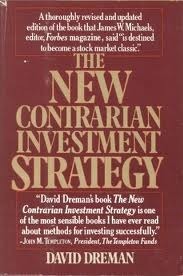
The New Contrarian Investment Strategy
Includes an up-to-date analysis of today's investment environment, the collapse of the bond market, the plummeting prices of precious metals, and new material on the contrarian investment strategy
343 pages, Hardcover
First published December 12, 1982
About the author
David Dreman
6 books20 followersDavid Dreman is a noted investor, who founded and is the Chairman of Dreman Value Management, an investment company. His father, Joseph Dreman, was a prominent trader on the Winnipeg Commodity Exchange for many years. David Dreman graduated from the University of Manitoba in 1958. After graduating, he worked as director of research for Rauscher Pierce, senior investment officer with Seligman, and senior editor of the Value Line Investment Service.
Dreman was awarded a Doctor of Laws Degree from the University of Manitoba in 1999 and is a member of the Board of Trustees of the university.
Dreman has published many scholarly articles and he has written four books. Dreman also writes a column for Forbes Magazine. Dreman is on the board of directors of the Institute of Behavioral Finance, publisher of the Journal of Behavioral Finance.
Dreman was awarded a Doctor of Laws Degree from the University of Manitoba in 1999 and is a member of the Board of Trustees of the university.
Dreman has published many scholarly articles and he has written four books. Dreman also writes a column for Forbes Magazine. Dreman is on the board of directors of the Institute of Behavioral Finance, publisher of the Journal of Behavioral Finance.
Ratings & Reviews
Friends & Following
Create a free account to discover what your friends think of this book!
Community Reviews
Displaying 1 - 1 of 1 review

February 12, 2008
The crux of this books message can be distilled to "Mean reversion, mean reversion, mean reversion." By way of copious documentation and study, Dreman shows investors that the nature of markets is that:
1. current outperformers are likely to "fall" to be average performers over time.
2. current underperformers are likely to rise to be average performs over time.
People's expectations are too low for underperformers and so their stock prices drop too low.
People's expectations are too high for outperformers and so their stock prices rise too high.
Companies fluctuate around an average sort of performance. The only time you get a great deal to buy is when they're "underaverage" or have low expectations. This is usually reflected in a low price-earnings, price-book, price-cash flow, or price-sales ratio. It takes faith to buy underperforming companies, but you usually get them at a good price.
Dreman has outperformed the markets over several decades following these "contrarian" principles, buying out of favor companies that have low expectation and, therefore, low prices.
When you're low, you can always go lower, but often not by much. A little improvement will go a long way to improving stock prices.
On the other hand, when you're high, you can always go higher, but often not by much. A little underperformance can kill your share price.
1. current outperformers are likely to "fall" to be average performers over time.
2. current underperformers are likely to rise to be average performs over time.
People's expectations are too low for underperformers and so their stock prices drop too low.
People's expectations are too high for outperformers and so their stock prices rise too high.
Companies fluctuate around an average sort of performance. The only time you get a great deal to buy is when they're "underaverage" or have low expectations. This is usually reflected in a low price-earnings, price-book, price-cash flow, or price-sales ratio. It takes faith to buy underperforming companies, but you usually get them at a good price.
Dreman has outperformed the markets over several decades following these "contrarian" principles, buying out of favor companies that have low expectation and, therefore, low prices.
When you're low, you can always go lower, but often not by much. A little improvement will go a long way to improving stock prices.
On the other hand, when you're high, you can always go higher, but often not by much. A little underperformance can kill your share price.
Displaying 1 - 1 of 1 review