

What do you think?

Black Flame
A cursed film. A haunted past. A deadly secret.
The Baroness, an infamous exploitation film long thought destroyed by Nazi fire, is discovered fifty years later. When lonely archivist Ellen Kramer—deeply closeted and pathologically repressed—begins restoring the hedonistic movie, it unspools dark desires from deep within her.
As Ellen is consumed by visions and voices, she becomes convinced the movie is real, and is happening to her—and that frame by frame, she is unleashing its occult horrors on the world. Her life quickly begins to spiral out of control.
Until it all fades to black, and all that remains is a voice asking a question Ellen can’t answer but can’t get out of her mind.
Do you want it? More than anything?
The Baroness, an infamous exploitation film long thought destroyed by Nazi fire, is discovered fifty years later. When lonely archivist Ellen Kramer—deeply closeted and pathologically repressed—begins restoring the hedonistic movie, it unspools dark desires from deep within her.
As Ellen is consumed by visions and voices, she becomes convinced the movie is real, and is happening to her—and that frame by frame, she is unleashing its occult horrors on the world. Her life quickly begins to spiral out of control.
Until it all fades to black, and all that remains is a voice asking a question Ellen can’t answer but can’t get out of her mind.
Do you want it? More than anything?
196 pages, Paperback
First published August 5, 2025
About the author
Gretchen Felker-Martin
20 books1,755 followersGRETCHEN FELKER-MARTIN is a Massachusetts-based horror author and film critic. Her debut novel, Manhunt, was named the #1 Best Book of 2022 by Vulture, and one of the Best Horror Novels of 2022 by Esquire, Library Journal, and Paste. You can follow her work on Twitter and read her fiction and film criticism on Patreon and in TIME, The Outline, Nylon, Polygon, and more.
Ratings & Reviews
Friends & Following
Create a free account to discover what your friends think of this book!
Community Reviews
Displaying 1 - 30 of 1,037 reviews

August 12, 2025
Black Flame is this genre at it's best, forcing us to confront the horrors of humanity through an elegantly written, deeply visceral and haunting story. That it takes a horror-filled exploitation film for Ellen Kramer, the protagonist, to confront all the ways in which she represses her desires and the essence of who she is, speaks to how tightly wound she is. The writing is atmospheric and claustrophobic. Every cold gust, every damp woolen moment, every pus-oozing wound, bring incredible dimension to the story. Despite the horrors conveyed in the story, it never lets us forget what the real horrors are—genocide, oppression, compulsory heterosexuality. Felker-Martin is all hits no skips, yet again.

August 14, 2025
disgusting, loved it

Read
April 16, 2025I got to blurb this one!
"Nasty, erotic, kinky, vicious, suspenseful: these are just a few words that come to mind when reading BLACK FLAME. Gretchen Felker-Martin uses the trope of the cursed movie and creates something utterly unique that manages to horrify, beguile, and empower in equal measure. If you are going to read one horror novella this year, make it this one."
"Nasty, erotic, kinky, vicious, suspenseful: these are just a few words that come to mind when reading BLACK FLAME. Gretchen Felker-Martin uses the trope of the cursed movie and creates something utterly unique that manages to horrify, beguile, and empower in equal measure. If you are going to read one horror novella this year, make it this one."

November 19, 2025
Incredibly unique, what-am-I-even-reading historical queer horror, partly about a haunted film reel and partly about confronting one’s sexual identity. In the end, it’s also maybe a bit of a revenge and retribution story.
I have to admit to either being too stupid to understand and appreciate everything I’ve just read, or trying too hard to find deeper meaning where none can be found. In any case, I find it a little bit ironic that this story would’ve been even more effective as a classic B-horror movie.
It’s the ‘80s, and Ellen Kramer is a Jewish film restorer who has to work on a badly damaged reel filmed by a Jewish director forty years ago, newly found after being thought of as destroyed by the Nazis because of its queer and generally disturbing content. Ellen is also a deeply closeted lesbian, having gone through some sort of conversion therapy in the past, and it’s safe to say the movie makes her uncomfortable to the point of fear - she’s described as “pathologically repressed” and that’s very accurate. Soon, though, the reel digs under her skin (quite literally 😬), forcing her to confront herself and her desires when her imagination gets more and more decadent.
For the most part, Ellen was a deeply unlikable character, wallowing in her pathos and misery. I pitied her, but didn’t really care about her. Nevertheless, by the end, I was pleased with her journey, and the last page made me gasp a bit for how actually satisfying it was.
The writing was excellent for this kind of story, very cinematic and almost naturalistic in its descriptions. I’ve read most of it wearing a slightly disgusted grimace (😬), and not always the fascinated kind - I wasn’t sure some scenes weren’t there just for the shock factor. The storyline is full of either dream or hallucination sequences, giving it an untethered quality and making you question everyone’s sanity, including yours.
In summary, it’s very sexually charged in an uncomfortable way, nausea-inducing, and a bit confusing. Possibly for the fans of Eric LaRocca. Too much touching yourself in weird situations, too many descriptions of peeing for my tastes. If the cover makes you discomfited and you like that, Black Flame could be for you.
CWs weren’t included, but expect general gore, body horror, SA, and raging antisemitism.
Thank you to Titan Books and NetGalley for the e-ARC!
I have to admit to either being too stupid to understand and appreciate everything I’ve just read, or trying too hard to find deeper meaning where none can be found. In any case, I find it a little bit ironic that this story would’ve been even more effective as a classic B-horror movie.
It’s the ‘80s, and Ellen Kramer is a Jewish film restorer who has to work on a badly damaged reel filmed by a Jewish director forty years ago, newly found after being thought of as destroyed by the Nazis because of its queer and generally disturbing content. Ellen is also a deeply closeted lesbian, having gone through some sort of conversion therapy in the past, and it’s safe to say the movie makes her uncomfortable to the point of fear - she’s described as “pathologically repressed” and that’s very accurate. Soon, though, the reel digs under her skin (quite literally 😬), forcing her to confront herself and her desires when her imagination gets more and more decadent.
For the most part, Ellen was a deeply unlikable character, wallowing in her pathos and misery. I pitied her, but didn’t really care about her. Nevertheless, by the end, I was pleased with her journey, and the last page made me gasp a bit for how actually satisfying it was.
The writing was excellent for this kind of story, very cinematic and almost naturalistic in its descriptions. I’ve read most of it wearing a slightly disgusted grimace (😬), and not always the fascinated kind - I wasn’t sure some scenes weren’t there just for the shock factor. The storyline is full of either dream or hallucination sequences, giving it an untethered quality and making you question everyone’s sanity, including yours.
In summary, it’s very sexually charged in an uncomfortable way, nausea-inducing, and a bit confusing. Possibly for the fans of Eric LaRocca. Too much touching yourself in weird situations, too many descriptions of peeing for my tastes. If the cover makes you discomfited and you like that, Black Flame could be for you.
CWs weren’t included, but expect general gore, body horror, SA, and raging antisemitism.
Thank you to Titan Books and NetGalley for the e-ARC!

May 23, 2025
**2.5-stars rounded up**
Black Flame is a Horror novella from Gretchen Felker-Martin. I've read two full length novels from GFM, Manhunt and Cuckoo, both of which I really enjoyed.
Unfortunately, this is my least favorite work from her and I can't even really express why. It just didn't quite hit the mark for me. I never felt like I connected with the story enough to know what the hell was going on.
In fact, in the synopsis it's described as being a historical horror novel, and I don't even remember it being so. The story does follow a woman named Ellen, who works, I believe restoring, or archiving old films.
Ellen starts working on an infamous exploitation film called The Baroness, which was long thought destroyed in a fire by Nazis. As Ellen works on the film, the scenes, the essence of the film, begin to poison her mind.
She becomes convinced the film is real, and that it's happening to her. She's having visions, hearing voices, and unsurprisingly, her life begins to spiral out of control.

That's a great concept. I love the sound of it. As I was reading this though, it was very hard to follow. I did get snippets of what's described above, but it was a challenge to track what was going on, and difficult to visualize what Ellen was seeing, feeling and going through.
As always, Gretchen Felker-Martin includes very heavy and important examinations of gender and identity, and those were certainly an important piece of this story. Ellen's character arc feels like a real transformation over the course of the action, and I did appreciate that as well.
In fact, I buddy read this one with a friend, and commented when we were done, how I wished this had been longer, because the final bits were where it really started to come together for me. I wanted more of that clarity, not just for me, but for Ellen as well.
I guess the best way I can describe my experience with this would be uneven. I'm used to feeling more drawn in, and connected throughout GFM's works, so I think that's why I walked away a little unsatisfied.
Nevertheless, Gretchen Felker-Martin will always get extra points from me for her insane-levels of creativity and the fact that she always brings something new to the table. While not my favorite from her, I am glad I read it, and look forward to Felker-Martin's next release.

Thank you to the publisher, Tor Nightfire and Macmillan Audio, for providing me with a copy to read and review. The audiobook was very well narrated by Dana Aronowitz. They definitely brought it to life!
Black Flame is a Horror novella from Gretchen Felker-Martin. I've read two full length novels from GFM, Manhunt and Cuckoo, both of which I really enjoyed.
Unfortunately, this is my least favorite work from her and I can't even really express why. It just didn't quite hit the mark for me. I never felt like I connected with the story enough to know what the hell was going on.
In fact, in the synopsis it's described as being a historical horror novel, and I don't even remember it being so. The story does follow a woman named Ellen, who works, I believe restoring, or archiving old films.
Ellen starts working on an infamous exploitation film called The Baroness, which was long thought destroyed in a fire by Nazis. As Ellen works on the film, the scenes, the essence of the film, begin to poison her mind.
She becomes convinced the film is real, and that it's happening to her. She's having visions, hearing voices, and unsurprisingly, her life begins to spiral out of control.
That's a great concept. I love the sound of it. As I was reading this though, it was very hard to follow. I did get snippets of what's described above, but it was a challenge to track what was going on, and difficult to visualize what Ellen was seeing, feeling and going through.
As always, Gretchen Felker-Martin includes very heavy and important examinations of gender and identity, and those were certainly an important piece of this story. Ellen's character arc feels like a real transformation over the course of the action, and I did appreciate that as well.
In fact, I buddy read this one with a friend, and commented when we were done, how I wished this had been longer, because the final bits were where it really started to come together for me. I wanted more of that clarity, not just for me, but for Ellen as well.
I guess the best way I can describe my experience with this would be uneven. I'm used to feeling more drawn in, and connected throughout GFM's works, so I think that's why I walked away a little unsatisfied.
Nevertheless, Gretchen Felker-Martin will always get extra points from me for her insane-levels of creativity and the fact that she always brings something new to the table. While not my favorite from her, I am glad I read it, and look forward to Felker-Martin's next release.
Thank you to the publisher, Tor Nightfire and Macmillan Audio, for providing me with a copy to read and review. The audiobook was very well narrated by Dana Aronowitz. They definitely brought it to life!

August 11, 2025
ARC for review. Book published August 5, 2025.
3 stars
I thought the author had written this book just for me when I read the synopsis. I am an absolute sucker for books about haunted movies and this sounded perfect: a film archivist working at a newly disgraced studio is forced to work on a thought-lost German film filled with cult-like, obscene behavior. Is Ellen losing herself to the film or is it opening her up to becoming her real self?
I thought the book had real promise but, ultimately, there were too many gaps in the story for me. Felker-Martin does a good job describing the film itself, but I was never clear on the reason the second version (not a spoiler) was significant, nor what infected it. So, some good stuff, but it just didn’t get there for me. And Ellen was so very weak. I had a hard time relating to her. I would read the author again, though, as I liked her style.
Oh, and I HATED this cover.
3 stars
I thought the author had written this book just for me when I read the synopsis. I am an absolute sucker for books about haunted movies and this sounded perfect: a film archivist working at a newly disgraced studio is forced to work on a thought-lost German film filled with cult-like, obscene behavior. Is Ellen losing herself to the film or is it opening her up to becoming her real self?
I thought the book had real promise but, ultimately, there were too many gaps in the story for me. Felker-Martin does a good job describing the film itself, but I was never clear on the reason the second version (not a spoiler) was significant, nor what infected it. So, some good stuff, but it just didn’t get there for me. And Ellen was so very weak. I had a hard time relating to her. I would read the author again, though, as I liked her style.
Oh, and I HATED this cover.

June 13, 2025
i love when horror is weird and gross and queer and perverted and this was all of those things. definitely would recommend

July 24, 2025
Oof. Okay. Well, I got an ARC from my bookstore, they give out free ARCs on indie bookstore day in a blind date with a book style. This was mine this year! I was excited about it, it sounded neat! I was less excited when I noted the author, because Manhunt was not intriguing to me at all, but I kept an open mind. I do, however, think me and this author are not a good match.
I am fine with horror, I am fine with being uncomfortable, I am fine with most sensitive topics. This book just didn't really DO anything with any of that. These things were just there. A set dressing. For what? I love a good unrelatable narrator, an absolute mess of a main character, but Ellen was NOT it. The plot was all over the place. There were two hundred pages, so how many scenes of people touching themselves while watching a movie did we really need? Couldn't we have used some of those two hundred pages to leave more breadcrumbs about Ellens decision in the end, other than one line of "I've been thinking about this a lot" that has NO textual evidence to back it up? Appears not.
And Ellen's dad? Hello? What was the point there? "I'm sorry I couldn't do this alone" and he just LIGHTS HIMSELF ON FIRE? FOR WHAT?? We're supposed to believe the film made him do it?? Makes no sense.
This read like Stephen King, and I know a lot of people will take that as a compliment, but I assure you It Is Not. Stephen King is baby horror. The horror you pick up because it's what everyone says to try. It's your toe dipping int the genre, and you think wow! This is neat! So you branch out. Find ore horror. Discover SK is actually mediocre at best. The one good thing here is we only have two hundred pages to get through and not one thousand.
I will say, there was a line that I loved a lot at the very end That hit good. But it wasn't enough to save this book for me. I will not be returning to GFM's works unfortunately, and I'll pass this on to someone who will appreciate it better.
I am fine with horror, I am fine with being uncomfortable, I am fine with most sensitive topics. This book just didn't really DO anything with any of that. These things were just there. A set dressing. For what? I love a good unrelatable narrator, an absolute mess of a main character, but Ellen was NOT it. The plot was all over the place. There were two hundred pages, so how many scenes of people touching themselves while watching a movie did we really need? Couldn't we have used some of those two hundred pages to leave more breadcrumbs about Ellens decision in the end, other than one line of "I've been thinking about this a lot" that has NO textual evidence to back it up? Appears not.
And Ellen's dad? Hello? What was the point there? "I'm sorry I couldn't do this alone" and he just LIGHTS HIMSELF ON FIRE? FOR WHAT?? We're supposed to believe the film made him do it?? Makes no sense.
This read like Stephen King, and I know a lot of people will take that as a compliment, but I assure you It Is Not. Stephen King is baby horror. The horror you pick up because it's what everyone says to try. It's your toe dipping int the genre, and you think wow! This is neat! So you branch out. Find ore horror. Discover SK is actually mediocre at best. The one good thing here is we only have two hundred pages to get through and not one thousand.
I will say, there was a line that I loved a lot at the very end That hit good. But it wasn't enough to save this book for me. I will not be returning to GFM's works unfortunately, and I'll pass this on to someone who will appreciate it better.
This entire review has been hidden because of spoilers.

September 10, 2025
this was quite the read, and i mean that in the best possible way. follows ellen, jewish and queer, and their struggles with while they work on restoring a lost film discovered in the house of a queer nazi. i understand that’s a bit of a mouthful but tbh it was a great book. lots of political commentary mixed with horror, and im always a fan of gore and some scenes were just disgusting. i really felt the ending was perfect for the story that was told. check the triggers for sure before reading :)

November 6, 2025
Perfect queer/trans horror featuring a haunted film!!

August 9, 2025
What a festering triumph! This novella shows a continued growth in Gretchen Felker-Martin’s writing, with a profoundly sympathetic main character, tense and genuine world-building, and a feverish atmosphere that is punctuated by moments of unflinching violence. It feels like a combination of Gemma File’s Experimental Film and Silvia Moreno-Garcia’s Silver Nitrate, only combined with Felker-Martin’s sensibilities of graphic rage and justice. The writing really does shine, leading us into an uncontrolled nightmare that keeps you looking over your shoulder. The graphic sex and violence of both Manhunt and Cuckoo are here in this book, but here the rage feels like it is simmering under the surface, and Felker-Martin hasn’t reined it in as much as she has been more deliberate with where and how it explodes onto the page.
The story pulls you in right away, and once you’re lost in its grasping claws it doesn’t let you go. The writing only follows a single character, which makes the story feel more narratively restrained than her previous two novels, and it is better for it. We are able to really get lost in (and with) that character, grow with them, feeling their pains and triumphs, and it makes the story a lot more impactful. This isn’t story just about finding yourself, it is about reclaiming yourself, reclaiming your history and your desires and your right to occupy space. The intersection of queer and Jewish identities, and the ways in which the violence of the Holocaust is continually experienced by those communities, even four decades after the end of the war, is the unsettled heart of this story, and the narrative crafted around it explores the many permutations of that violence, especially as it collides with classicism, misogyny, patriarchy, homophobia, and more. Maybe most importantly, this story is heartfelt, with a genuine emotional center that cradles its main character, as confused and acted upon as they are, with warmth and concern.
As usual Felker-Martin doesn’t feel like she is pulling any of her punches, she wants the reader to feel this story. Yet in some ways it is much more ephemeral than her previous novels, playing with ideas of the occult and the unknown in ways that force the characters (and readers) to question their sense of self as well as their sense of reality. It does lean heavily on fevered-nightmare aesthetics, that frenzied insomnia where it is hard to hold too tightly to anything that might offer explicit answers. This is done really well, with enough narrative momentum to always keep the reader interested and wanting more, with a resolution that is both satisfying and earned while also not afraid of some ambiguity. I really appreciate the length, it is more than enough to get lost in and every page matters, but it never feels like it gets lost or is wallowing in any scene or moment longer than necessary. This is especially important because of the general fugue-like atmosphere and the sense of unknowing that pervades the story, it would be easy to give in to that. Instead, she cuts through it with well-placed moments of bitingly graphic imagery, both violent and sexual in nature, never feeling tawdry or done for shock value but to add a feral tangibility to the text.
I really enjoyed this novella. It feels like an evolution in her writing that doesn’t sacrifice its edge but is able to grow and expand while also be more focused and intentional. It makes me even more excited to continue reading her than I was before, to see what heartfelt dark horrors she has in store.
(Rounded from 4.5)
The story pulls you in right away, and once you’re lost in its grasping claws it doesn’t let you go. The writing only follows a single character, which makes the story feel more narratively restrained than her previous two novels, and it is better for it. We are able to really get lost in (and with) that character, grow with them, feeling their pains and triumphs, and it makes the story a lot more impactful. This isn’t story just about finding yourself, it is about reclaiming yourself, reclaiming your history and your desires and your right to occupy space. The intersection of queer and Jewish identities, and the ways in which the violence of the Holocaust is continually experienced by those communities, even four decades after the end of the war, is the unsettled heart of this story, and the narrative crafted around it explores the many permutations of that violence, especially as it collides with classicism, misogyny, patriarchy, homophobia, and more. Maybe most importantly, this story is heartfelt, with a genuine emotional center that cradles its main character, as confused and acted upon as they are, with warmth and concern.
As usual Felker-Martin doesn’t feel like she is pulling any of her punches, she wants the reader to feel this story. Yet in some ways it is much more ephemeral than her previous novels, playing with ideas of the occult and the unknown in ways that force the characters (and readers) to question their sense of self as well as their sense of reality. It does lean heavily on fevered-nightmare aesthetics, that frenzied insomnia where it is hard to hold too tightly to anything that might offer explicit answers. This is done really well, with enough narrative momentum to always keep the reader interested and wanting more, with a resolution that is both satisfying and earned while also not afraid of some ambiguity. I really appreciate the length, it is more than enough to get lost in and every page matters, but it never feels like it gets lost or is wallowing in any scene or moment longer than necessary. This is especially important because of the general fugue-like atmosphere and the sense of unknowing that pervades the story, it would be easy to give in to that. Instead, she cuts through it with well-placed moments of bitingly graphic imagery, both violent and sexual in nature, never feeling tawdry or done for shock value but to add a feral tangibility to the text.
I really enjoyed this novella. It feels like an evolution in her writing that doesn’t sacrifice its edge but is able to grow and expand while also be more focused and intentional. It makes me even more excited to continue reading her than I was before, to see what heartfelt dark horrors she has in store.
(Rounded from 4.5)
July 17, 2026
• Historical • horror • queer fic •
It’s 1985 and 15 years on from a shameful college romantic-blip that resulted in a break up that Ellen still regrets.
Ellen, a Jewish woman, works in film restoration. A job that her dad helped her get after her college romance scandal. She works hard, is undervalued and is surrounded by peers who display misogynistic and anti-Semitic behaviours and brush it off with flippant ‘oh not you Ellen’ apologies.
Her mother is a vile woman who lives to keep up appearances and would rather live in misery than be the focus of town gossip. Ellen is basically living an unhappy lie of a life. She is queer but has chosen to live as a straight woman to keep in her mother’s good graces.
Ellen is assigned a project to restore an old lost 1930s film from before the war. It’s full of violent and pornographic content, the main character a drag queen Baroness. It’s not something they’d usually take on but the business is struggling and the money being offered for the job is too good to pass up.
Ellen starts losing time, having odd dreams and vivid hallucinations. But when other people are seeing brief images of The Baroness, are they really hallucinations?
This is a horror where the horror is really in the deep feelings of unease and discomfort rather than the gore (although there is still gore!). I’ve read one other book by this author (Manhunt) where sex is used in a way that aims to make you uncomfortable, it feels vulgar, desperate, lonely, exploitive… so I was not surprised to find that again in this book (actually you could say I was prepared for it).
Hard to rate. The writing is great. The story is written in a way that you really have to piece the why of things together yourself.
It is a horror story road to self acceptance.
3.5⭐️
Also this cover deserves a special mention - My 12yo wanted me to walk him to his room at night after seeing this book 🤭😆
It’s 1985 and 15 years on from a shameful college romantic-blip that resulted in a break up that Ellen still regrets.
Ellen, a Jewish woman, works in film restoration. A job that her dad helped her get after her college romance scandal. She works hard, is undervalued and is surrounded by peers who display misogynistic and anti-Semitic behaviours and brush it off with flippant ‘oh not you Ellen’ apologies.
Her mother is a vile woman who lives to keep up appearances and would rather live in misery than be the focus of town gossip. Ellen is basically living an unhappy lie of a life. She is queer but has chosen to live as a straight woman to keep in her mother’s good graces.
Ellen is assigned a project to restore an old lost 1930s film from before the war. It’s full of violent and pornographic content, the main character a drag queen Baroness. It’s not something they’d usually take on but the business is struggling and the money being offered for the job is too good to pass up.
Ellen starts losing time, having odd dreams and vivid hallucinations. But when other people are seeing brief images of The Baroness, are they really hallucinations?
This is a horror where the horror is really in the deep feelings of unease and discomfort rather than the gore (although there is still gore!). I’ve read one other book by this author (Manhunt) where sex is used in a way that aims to make you uncomfortable, it feels vulgar, desperate, lonely, exploitive… so I was not surprised to find that again in this book (actually you could say I was prepared for it).
Hard to rate. The writing is great. The story is written in a way that you really have to piece the why of things together yourself.
It is a horror story road to self acceptance.
3.5⭐️
Also this cover deserves a special mention - My 12yo wanted me to walk him to his room at night after seeing this book 🤭😆

August 16, 2025
gross, uncomfortable, disturbing.
September 17, 2025
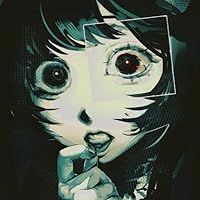
A closeted lesbian/trans man with a raging yeast infection who is in denial about her/his sexuality gets absolutely finger-banged by a phantom from the Nazi Germany era.
Now that I have your attention… I don’t even know where to begin…. I guess maybe at the beginning?
Hated the opening quote to this book: “Sometimes, watching a movie is a bit like being raped.”
– Luis Buñuel, My Last Sigh
Maybe if this book actually had a coherent story I’d let this slide, but oh my god, this book was terrible.
I have enough questions that if I sit down and ask them, it’ll be longer than the actual book.
Ellen was actually so insufferable that I don’t even think the author is aware of how much of a cunt she is. I guess we were supposed to be rooting for her at the end of the book and have an "and everyone clapped" moment....(god I wasted so much time on this.) At the end, she's now a trans man (I think), even though she was very, very, very, very vague about it so yeah. Goodbye yeasty Ellen, Hello yeasty Benjamin.
Now that I have your attention… I don’t even know where to begin…. I guess maybe at the beginning?
Hated the opening quote to this book: “Sometimes, watching a movie is a bit like being raped.”
– Luis Buñuel, My Last Sigh
Maybe if this book actually had a coherent story I’d let this slide, but oh my god, this book was terrible.
I have enough questions that if I sit down and ask them, it’ll be longer than the actual book.
Ellen was actually so insufferable that I don’t even think the author is aware of how much of a cunt she is. I guess we were supposed to be rooting for her at the end of the book and have an "and everyone clapped" moment....(god I wasted so much time on this.) At the end, she's now a trans man (I think), even though she was very, very, very, very vague about it so yeah. Goodbye yeasty Ellen, Hello yeasty Benjamin.

August 14, 2025
Bury Your Gays by Chuck Tingle and Horror Movie by Paul Tremblay did it better.
However, fingernail horror will ALWAYS get visceral reactions out of me
However, fingernail horror will ALWAYS get visceral reactions out of me

April 16, 2025
Oh but this one was a nasty delight!
A life lived in the closet truly is a horror.
A life lived in the closet truly is a horror.

March 16, 2026
a visceral reading experience of haunted media and profound queer repression.
cursed media narratives are excellent in general, and what has more cursed potential than persecuted german queer folks of the holocaust era, making a creepy sex and gore film that will be lost to the ages? seriously sinister on many levels.
ellen becomes intimately and uncomfortably acquainted with the film through her work in film restoration. she experiences unapologetic antisemitism and misogyny at work, virulent homophobia from her family, is assaulted by her would-be hetero love interest, and has no friends to speak of. she receives nothing but coldness from the world.
so many deeply chilling moments - the disoriented sensation of perhaps being haunted, perhaps losing your mind. the feverish sensation of being consumed by elements of another deadly world.
the whiny, pushy jesse
felker-martin's writing is dense and evocative and often disgusting. the slushy new york streets, the shadow in the corner of your eye, the acrid curdle of milk, the throb of an infected wound. it's all intense and visceral.
i love the candor with which ellen crumbles. there are so many pitiful moments wherein she seems to be hitting rock bottom, again and again, yet she keeps sinking.
also, the multilayered jewish rep is refreshing, and i appreciate the frank, unambiguous palestine shout!
cursed media narratives are excellent in general, and what has more cursed potential than persecuted german queer folks of the holocaust era, making a creepy sex and gore film that will be lost to the ages? seriously sinister on many levels.
ellen becomes intimately and uncomfortably acquainted with the film through her work in film restoration. she experiences unapologetic antisemitism and misogyny at work, virulent homophobia from her family, is assaulted by her would-be hetero love interest, and has no friends to speak of. she receives nothing but coldness from the world.
so many deeply chilling moments - the disoriented sensation of perhaps being haunted, perhaps losing your mind. the feverish sensation of being consumed by elements of another deadly world.
the whiny, pushy jesse
felker-martin's writing is dense and evocative and often disgusting. the slushy new york streets, the shadow in the corner of your eye, the acrid curdle of milk, the throb of an infected wound. it's all intense and visceral.
i love the candor with which ellen crumbles. there are so many pitiful moments wherein she seems to be hitting rock bottom, again and again, yet she keeps sinking.
also, the multilayered jewish rep is refreshing, and i appreciate the frank, unambiguous palestine shout!

April 22, 2025
Starred review in the July 2025 issue of Booklist and on the blog: https://raforall.blogspot.com/2025/07...
Three Words That Describe This Book: immersive, details of film preservation, disorienting
Other words: vicious, nasty, erotic, discomfort, engrossing, historical, Jewish immigrants, NYC setting
This book is 5 stars as a cursed film horror novel but it is also 5 stars in how it depicts what it would feel like to be deeply closeted and unable to escape-- unable both because she feels trapped by her family to be straight but also psychologically as she is unable to understand her own feelings.
I am a straight cis woman, but I FELT, literally felt, all of the emotions Ellen was struggling with-- fear, anger, desire, pain.... That is the sign of a great book, if the reader can feel the intense emotions.
This is one of the epigraphs for the novel and I may never have read a more perfect epigraph.
"Sometimes watching a movie is a bit like being raped. —Luis Buñuel, My Last Sigh"
To say more than that is to give spoilers but wow is that great.
Also, the film is called Black Flame as well.
Short on pages-- but honestly, it is the perfect length. I never thought it needed more. You can read it in 1 or 2 sittings. Fewer sittings the better, so you can get caught up in the psychological horror.
This is a nasty, viscious, and erotic story-- both are high praise. Not visceral in the traditional grey horror sense-- but in the literal sense of the world. I think nasty and vicious and erotic are better than visceral here. They are more accurately descriptive.
As cursed media film go-- this is also intense. An exploitative film filled with sex and murder and just over the top, made by a Jewish auteur just before he and most of the people in the film were sent to the camps by Nazi's.
The setting -- 1985 NYC with a family of wealthy Jews, who while not super religious are in America because the family matriarch-- Ellen's grandmother-- is a Holocaust survivor. I was about 15 years younger than Ellen is in the story in 1985, but boy did Felker-Martin capture my family. Thankfully, not the homophobia as we have out family members who are accepted, but the obsession with keeping up those the upper class NYC appearances and the obsession with being thin and the family dynamics.
This book will attack you-- the reader. And that is 100% NOT an exaggeration. Again- immersive-- be ready to be subsumed in the world of Black Flame-- the book and the movie.
Just read it and let Felker-Martin tell you this story. I promise you, if you like horror, especially cursed media stories, you will love the journey.
Readalikes-- Night Film by Pessl, Horror Movie by Tremblay, and Silver Nitrate by Moreno-Garcia but not just because all three are cursed film novels. There are things about each that will ring true but also The Drowning Girl by Kiernan-- a classic!
Three Words That Describe This Book: immersive, details of film preservation, disorienting
Other words: vicious, nasty, erotic, discomfort, engrossing, historical, Jewish immigrants, NYC setting
This book is 5 stars as a cursed film horror novel but it is also 5 stars in how it depicts what it would feel like to be deeply closeted and unable to escape-- unable both because she feels trapped by her family to be straight but also psychologically as she is unable to understand her own feelings.
I am a straight cis woman, but I FELT, literally felt, all of the emotions Ellen was struggling with-- fear, anger, desire, pain.... That is the sign of a great book, if the reader can feel the intense emotions.
This is one of the epigraphs for the novel and I may never have read a more perfect epigraph.
"Sometimes watching a movie is a bit like being raped. —Luis Buñuel, My Last Sigh"
To say more than that is to give spoilers but wow is that great.
Also, the film is called Black Flame as well.
Short on pages-- but honestly, it is the perfect length. I never thought it needed more. You can read it in 1 or 2 sittings. Fewer sittings the better, so you can get caught up in the psychological horror.
This is a nasty, viscious, and erotic story-- both are high praise. Not visceral in the traditional grey horror sense-- but in the literal sense of the world. I think nasty and vicious and erotic are better than visceral here. They are more accurately descriptive.
As cursed media film go-- this is also intense. An exploitative film filled with sex and murder and just over the top, made by a Jewish auteur just before he and most of the people in the film were sent to the camps by Nazi's.
The setting -- 1985 NYC with a family of wealthy Jews, who while not super religious are in America because the family matriarch-- Ellen's grandmother-- is a Holocaust survivor. I was about 15 years younger than Ellen is in the story in 1985, but boy did Felker-Martin capture my family. Thankfully, not the homophobia as we have out family members who are accepted, but the obsession with keeping up those the upper class NYC appearances and the obsession with being thin and the family dynamics.
This book will attack you-- the reader. And that is 100% NOT an exaggeration. Again- immersive-- be ready to be subsumed in the world of Black Flame-- the book and the movie.
Just read it and let Felker-Martin tell you this story. I promise you, if you like horror, especially cursed media stories, you will love the journey.
Readalikes-- Night Film by Pessl, Horror Movie by Tremblay, and Silver Nitrate by Moreno-Garcia but not just because all three are cursed film novels. There are things about each that will ring true but also The Drowning Girl by Kiernan-- a classic!

September 10, 2025
Do you have anxiety? Are you repressing your desires? Surrounded by people who wrong you? You might be a candidate for torment by an occult object!
Black Flame is a standard "deeply repressed woman starts to spiral living in a society that doesn't understand her" story. Her life falls apart on schedule like an Ira Levin novel and her transformative descent features no surprises.
In this case, the occult object causing the problems is a 1930s snuff film called The Baronness. It fascinates and tortures its emotionally vulnerable film-restorer Ellen Kramer. Well, I guess it doesn't torture her so much as uses the medium of violence to help Ellen reveal her true self. Recent movies on this topic include Stopmotion and Censor.
I mention movies rather than comparable books like Silver Nitrate, Night Film, Horror Movie or even Ring, as Black Flame is more of a movie pitch than a novel. The scares don't come from a terrifying scenario, or steadily mounting dread. Black Flame is in the vein of Virgina Feito's Victorian Psycho. Writing designed for the screen. I felt I was watching Gretchen Felker-Martin sketch out what she wanted FX artists to show us. You'll get every ooze, gush, and slice in detail. Here's an entertaining example:
Frankly I would want to see that in a movie, lol.
The Guardian wrote a recent piece about the explosion of "femgore" horror novels featuring cannibalism as a metaphor for female rage. The ladies, you know, we get emotional and we love to eat!
Personally, I’m enjoying the cannibalism wave because the flip-side, as we see in Black Flame is how often self-starvation is used as a writerly shortcut for sexual repression. Are women in horror scenarios even allowed to be portrayed with anxiety if they eat regularly? Must the size of a character's body serve as a metaphor for how much or how little they enjoy life?
Sticklers for mechanics in horror novels might be frustrated at the lack of "rules" here. How does this cult movie choose people to kill? Is it just selecting assholes Ellen knows? Do victims also need to be denying their desires? Instructions unclear.
I guess it doesn't matter. We should let people in the film industry go bonkers however they choose. Seems like a rough business for fragile personalities. Some people go full Pearl, others stare into the projector light until they cross dissolve into the final credits. It worked for Toby Jones in Berberian Sound Studio, but I can't say it's compelling in Black Flame.
Black Flame is a standard "deeply repressed woman starts to spiral living in a society that doesn't understand her" story. Her life falls apart on schedule like an Ira Levin novel and her transformative descent features no surprises.
In this case, the occult object causing the problems is a 1930s snuff film called The Baronness. It fascinates and tortures its emotionally vulnerable film-restorer Ellen Kramer. Well, I guess it doesn't torture her so much as uses the medium of violence to help Ellen reveal her true self. Recent movies on this topic include Stopmotion and Censor.
I mention movies rather than comparable books like Silver Nitrate, Night Film, Horror Movie or even Ring, as Black Flame is more of a movie pitch than a novel. The scares don't come from a terrifying scenario, or steadily mounting dread. Black Flame is in the vein of Virgina Feito's Victorian Psycho. Writing designed for the screen. I felt I was watching Gretchen Felker-Martin sketch out what she wanted FX artists to show us. You'll get every ooze, gush, and slice in detail. Here's an entertaining example:
As the horse wheeled around, she saw that there was a deformed man’s face nestled between its buttocks, an evil grin stretching its lips, its features twisted by cauliflower growths and hairy cysts.
Frankly I would want to see that in a movie, lol.
The Guardian wrote a recent piece about the explosion of "femgore" horror novels featuring cannibalism as a metaphor for female rage. The ladies, you know, we get emotional and we love to eat!
Personally, I’m enjoying the cannibalism wave because the flip-side, as we see in Black Flame is how often self-starvation is used as a writerly shortcut for sexual repression. Are women in horror scenarios even allowed to be portrayed with anxiety if they eat regularly? Must the size of a character's body serve as a metaphor for how much or how little they enjoy life?
Sticklers for mechanics in horror novels might be frustrated at the lack of "rules" here. How does this cult movie choose people to kill? Is it just selecting assholes Ellen knows? Do victims also need to be denying their desires? Instructions unclear.
I guess it doesn't matter. We should let people in the film industry go bonkers however they choose. Seems like a rough business for fragile personalities. Some people go full Pearl, others stare into the projector light until they cross dissolve into the final credits. It worked for Toby Jones in Berberian Sound Studio, but I can't say it's compelling in Black Flame.

February 15, 2026
The "haunted film" trope is used quite effectively in Gretchen Felker-Martin's novel "Black Flame" as a way to examine the protagonist's deeply repressed homosexuality during a very homophobic era, while also evoking the horrific aftermath of the Holocaust.
Set in 1985, the novel follows Ellen, a film archivist whose job is to preserve old films. It is a quiet, secluded job that she finds strangely satisfying, as it prevents her from examining her own messy life, a life of wealthy Jewish parents who have very little interest in her affairs and a boyfriend who she doesn't love but will probably end up marrying because that is what is expected. Her latest project is a recently-discovered silent film called "The Baroness" that was thought to be destroyed by Nazis during World War II. It is a disturbing psychosexual horror film that, even for '80s film audiences, would be highly controversial.
As the film restoration continues, Ellen begins to have weird visions and thoughts. They are thoughts she had kept buried since her college days, involving a relationship she had with another woman. Now, the film seems to be rekindling her latent lesbianism in ways that are exciting and terrifying for her. The film, she begins to realize, isn't so much a film as an organism with a life of its own. And it hungers for blood and other bodily fluids.
This is a very creepy, gooey book that drips with gore. Lots of gore. Not for the faint-hearted or weak of stomach, "Black Flame" builds to a delirious and insane denouement in which Ellen must confront her deepest darkest desires.
Set in 1985, the novel follows Ellen, a film archivist whose job is to preserve old films. It is a quiet, secluded job that she finds strangely satisfying, as it prevents her from examining her own messy life, a life of wealthy Jewish parents who have very little interest in her affairs and a boyfriend who she doesn't love but will probably end up marrying because that is what is expected. Her latest project is a recently-discovered silent film called "The Baroness" that was thought to be destroyed by Nazis during World War II. It is a disturbing psychosexual horror film that, even for '80s film audiences, would be highly controversial.
As the film restoration continues, Ellen begins to have weird visions and thoughts. They are thoughts she had kept buried since her college days, involving a relationship she had with another woman. Now, the film seems to be rekindling her latent lesbianism in ways that are exciting and terrifying for her. The film, she begins to realize, isn't so much a film as an organism with a life of its own. And it hungers for blood and other bodily fluids.
This is a very creepy, gooey book that drips with gore. Lots of gore. Not for the faint-hearted or weak of stomach, "Black Flame" builds to a delirious and insane denouement in which Ellen must confront her deepest darkest desires.

November 14, 2025
A troubled young lady has some severe demons to reckon with, both personal and professional. She has been tasked to restore and repair a thought-to-be-cursed film, and it is taking over her psyche. Images and characters from the film plague her nightmares and daily life. Are they real? Is it all in her head? The saying relax, it’s just a movie does not apply.
Yeah, I did not love this, although I did like it. The horror elements were well done, and that held my interest. I lost patience with the main character; her story contained a lot of repeated themes and images that made a relatively short novel seem much longer. It still had some extremely tense moments, which kept me going.
Yeah, I did not love this, although I did like it. The horror elements were well done, and that held my interest. I lost patience with the main character; her story contained a lot of repeated themes and images that made a relatively short novel seem much longer. It still had some extremely tense moments, which kept me going.

September 27, 2025
Never thought I would read a Bookclub extreme horror book. I read this on a recommendation and my God was this awful.
Everything from the writing, execution of the idea, character narration - pretty much everything about this sucked.
It seems like the author is trying hard to be fanciful with words and the prose but it just ends up feeling convoluted and abstract as hell and at times I felt like I didn't even know what the hell was going on. There's no coherent through-line in the story or narration, just an assortment of character interactions in between snippets of the fictional, banned, pornographic movie known as The Baroness.
All of the "horror" in this book is relegated to sexual deviance and it never came across as particularly disturbing to me. Just dumb. Like an edge-lord trying to shock the reader.
I will say, one somewhat positive thing I have to say about this - is that it does have a bit of an interesting concept, in which the The Baroness film is cursed and affects those who watch it - especially in the climax of the story.
Unfortunately, the execution of said idea is terrible.
I'll never understand how such rubbish as this becomes mainstream in the horror genre and (as you can see in the other reviews for this book) so widely praised.
I'm giving it a 1.5⭐
Everything from the writing, execution of the idea, character narration - pretty much everything about this sucked.
It seems like the author is trying hard to be fanciful with words and the prose but it just ends up feeling convoluted and abstract as hell and at times I felt like I didn't even know what the hell was going on. There's no coherent through-line in the story or narration, just an assortment of character interactions in between snippets of the fictional, banned, pornographic movie known as The Baroness.
All of the "horror" in this book is relegated to sexual deviance and it never came across as particularly disturbing to me. Just dumb. Like an edge-lord trying to shock the reader.
I will say, one somewhat positive thing I have to say about this - is that it does have a bit of an interesting concept, in which the The Baroness film is cursed and affects those who watch it - especially in the climax of the story.
Unfortunately, the execution of said idea is terrible.
I'll never understand how such rubbish as this becomes mainstream in the horror genre and (as you can see in the other reviews for this book) so widely praised.
I'm giving it a 1.5⭐

November 22, 2025
A cursed-film story that’s heavy on the body horror. In 1985, Ellen, a repressed and self-hating young woman from a conservative Jewish family, is reluctantly helping to restore The Baroness, a notoriously weird and subversive underground horror film made in 1930s Germany. The task brings with it a brutal and bloody kind of haunting, as well as resurrecting Ellen’s own personal demons. It’s a broadly good concept that unfortunately falls apart along the way. Too much is thrown at the wall here. At the end, few of the relationships are resolved; I didn’t understand the timeline with the piece(s) Rachel was supposed to have written; and the whole backstory to the film’s restoration gets forgotten in a way that renders the climax nonsensical. A shame it isn’t just a bit more finessed, as at times the atmosphere and historical detail are impeccable. The texture of 80s New York is conjured up beautifully, and the Clive Barker-esque visions connected to The Baroness are effective, even if they don’t ever fully gel with putting a character like Ellen at the centre of the story.

November 27, 2025
I really, really, really liked this. I have a few nitpicks (I think Felker-Martin could have trusted her readers a bit more w/r/t understanding the ending) but overall this is really solid, interesting, layered work.
Also the Rodney Dangerfield cameo was the first time I've ever laughed at something Rodney Dangerfield said.
Also the Rodney Dangerfield cameo was the first time I've ever laughed at something Rodney Dangerfield said.

August 8, 2025
our foremost provocateur gives us the ultimate in terror: a KILLER CLOSET. oh brother... goofy pastiche in flimsy period dress, i'm not going to cinemasins every headscratcher but the dense detail doesn't pass muster at all when you zoom out a little. it's like painting with jeweler's glasses on, a confused pile of namedrops and references and nods. it's phony! "modern conservatives didn't make movies. they didn't care about movies." — in sly stallone's 80s? john milius's 1980s? paul kersey's 1985? Even read as schlock this doesnt muster the raw sex terror of a really deranged ramsey campbell. One sequence, when the main character falls into the memories of a weimar era gay filmmaker, breaks unexpectedly into an agile, vivid montage of apocalyptic desire... and then back into the mire... the soup... the molasses. maybe shes better the further away she gets from the present day. i read gretchen's stuff because she has talent, if not taste… but if u wanna do pastiche they’re maybe equally important. she's settling for the level of her teammates at tor nightfire rather than towering above them. The league needs you to stop settling!!!
August 17, 2025
1.5 stars. I saw reviews of this on my goodreads homepage yesterday, and although I've never been a fan of horror, I thought I'd give this one a chance. The concept was so intriguing: the new york city setting, the recovered nazi film that should have burned at Auschwitz, and yet miraculously survived, as well as the lesbian representation.
As fun as the synopsis made the book seem, really all it gave me was a headache and a feeling of...psychosis, for lack of a better word. I felt like I was losing my mind. The writing is atrocious. Felker-Martin writes in incomplete sentences, does not introduce concepts or people or settings, and suddenly we're in a completely different situation than we thought we were. Suddenly the theatre has a dead horse in it, and that horse has a mans laughing face between it's buttocks. Like what? I'm not even kidding, that happened. This felt like a first draft out of ten. A child could write a more coherent story.
Or maybe I'm being too harsh on it, since I'm unfamiliar with horror. If this is the best of the genre though, you'll never catch me reading it again.
As fun as the synopsis made the book seem, really all it gave me was a headache and a feeling of...psychosis, for lack of a better word. I felt like I was losing my mind. The writing is atrocious. Felker-Martin writes in incomplete sentences, does not introduce concepts or people or settings, and suddenly we're in a completely different situation than we thought we were. Suddenly the theatre has a dead horse in it, and that horse has a mans laughing face between it's buttocks. Like what? I'm not even kidding, that happened. This felt like a first draft out of ten. A child could write a more coherent story.
Or maybe I'm being too harsh on it, since I'm unfamiliar with horror. If this is the best of the genre though, you'll never catch me reading it again.

September 14, 2026
Some horror wants to unsettle you. This one wants to get you dirty and then ask if you liked it.
Ellen Kramer spends the entire book falling in love with a piece of film history that should have stayed buried, a lost exploitation flick called The Baroness that apparently did something to everyone who ever screened it. Felker-Martin builds the obsession the way good addiction stories always do, slow at first, then all at once, until Ellen's entire personality is just a woman standing too close to a fire she helped light. Watching someone this repressed finally let the actual shape of her own desire out is somehow scarier than anything the cursed film itself does, which is saying something, because the cursed film does plenty.
And I do mean plenty. This is body horror with genuine follow through, not the polite kind that cuts away right before things get interesting. Felker-Martin writes rot and want in the same sentence so often you start to wonder if she thinks they're the same thing, and by the end I'm not convinced she's wrong. Reading this in public is a mistake I made exactly once.
Where it costs itself a full star is ambition outrunning control in a couple of stretches. The past and present timelines both want to be doing heavy metaphorical lifting about repression and identity at the same time the plot is trying to move, and once or twice the book seems more interested in what it's arguing than in what's actually happening on the page. Not a dealbreaker. Just a few paragraphs where the thesis statement elbows the story out of the way.
Four stars, and genuinely one of the nastier, hornier things I've read this year in the best possible sense. Filthy, smart, deeply uncomfortable, and completely unbothered about which one of those you came for.
Ellen Kramer spends the entire book falling in love with a piece of film history that should have stayed buried, a lost exploitation flick called The Baroness that apparently did something to everyone who ever screened it. Felker-Martin builds the obsession the way good addiction stories always do, slow at first, then all at once, until Ellen's entire personality is just a woman standing too close to a fire she helped light. Watching someone this repressed finally let the actual shape of her own desire out is somehow scarier than anything the cursed film itself does, which is saying something, because the cursed film does plenty.
And I do mean plenty. This is body horror with genuine follow through, not the polite kind that cuts away right before things get interesting. Felker-Martin writes rot and want in the same sentence so often you start to wonder if she thinks they're the same thing, and by the end I'm not convinced she's wrong. Reading this in public is a mistake I made exactly once.
Where it costs itself a full star is ambition outrunning control in a couple of stretches. The past and present timelines both want to be doing heavy metaphorical lifting about repression and identity at the same time the plot is trying to move, and once or twice the book seems more interested in what it's arguing than in what's actually happening on the page. Not a dealbreaker. Just a few paragraphs where the thesis statement elbows the story out of the way.
Four stars, and genuinely one of the nastier, hornier things I've read this year in the best possible sense. Filthy, smart, deeply uncomfortable, and completely unbothered about which one of those you came for.
June 23, 2026
I was drawn in by a cool cover, an intriguing synopsis and, if I’m honest, my final spring reading achievement. It happens. Unfortunately, I didn’t click with this one. I didn’t have any issues with the content... I just don’t think the author’s style was for me. Black Flame and I gave it an honest shot. No sparks, but I wish it nothing but success in all its future endeavors. 😅

April 16, 2026
This is one of those I admire more than enjoy, which is true of most horror stories where we devolve into fever dream. I admit this is really a me problem, because I keep finding myself thinking, "Okay but if all this stuff is happening, why are you acting like this?" To this book's credit there were many times where I didn't think that and really enjoyed the way the real and the fantastic blurred together. The climax is great. And the internal struggle of the protagonist is well-written.
This is a book with some bodies in it, and it is not afraid to talk all about them and what is inside them and how they can look and feel and be broken. Not for the queasy!
This is a book with some bodies in it, and it is not afraid to talk all about them and what is inside them and how they can look and feel and be broken. Not for the queasy!

August 13, 2025
The cover of this book is SICK.
That's the only good thing I can say about this book. I really tried, but this author and I are not meshing.
That's the only good thing I can say about this book. I really tried, but this author and I are not meshing.
Displaying 1 - 30 of 1,037 reviews