Jump to ratings and reviews
Rate this book

Trilogie de la Terre #3

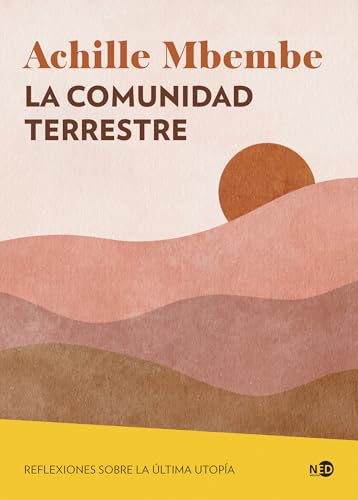
La comunidad terrestre: Reflexiones sobre la última utopía

Rate this book
Hablar de la Tierra es tener siempre presente la interdependencia que la habita y que define lo vivo en todas y cada una de sus manifestaciones. Los seres humanos y los animales, los vegetales y los microbios, los virus y las sustancias minerales, así como las bacterias e, incluso, los dispositivos tecnológicos, forman parte del gran mosaico que es la vida en común en el planeta. Sin embargo, Mbembe va más allá y acude al ancestral pensamiento animista africano para incluir todas las fuerzas invisibles que nos rodean y con las que también convivimos. La insondable riqueza de estas tradiciones le sirve como pie de apoyo para aventurar lo que, en vistas a un desastre ecológico inminente, parece más una nueva forma de relacionarnos con lo que nos rodea.
La comunidad terrestre representa la culminación de la trilogía empezada por Políticas de la enemistad, también publicada en Ned, en la que el autor arriesga una comprensión de las principales fuerzas de transformación de la Tierra y sus habitantes. A la luz de lo que parecería desafiar la experiencia misma del pensar, Mbembe se hace cargo de la realidad de la urgencia que es la realidad de la vulnerabilidad, para afirmar que esta Tierra es la siguiente utopía con la que soñar.

246 pages, Kindle Edition

First published January 1, 2023

24 people are currently reading
251 people want to read

About the author

Achille Mbembe

60 books430 followers
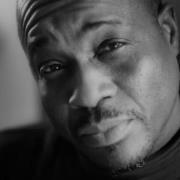
Joseph-Achille Mbembe, known as Achille Mbembe (born 1957), is a Cameroonian philosopher, political theorist, and public intellectual.

He has written extensively in African history and politics, including La naissance du maquis dans le Sud-Cameroun (Paris, Karthala, 1996). On the Postcolony was published in Paris in 2000 in French and the English translation was published by the University of California Press, Berkeley, in 2001. In 2015, Wits University Press published a new, African edition. He has an A1 rating from the National Research Foundation.

Ratings & Reviews

What do you think?
Rate this book

Friends & Following

Create a free account to discover what your friends think of this book!

Community Reviews

5 stars
17 (44%)
4 stars
13 (34%)
3 stars
6 (15%)
2 stars
2 (5%)
1 star
0 (0%)
Displaying 1 - 10 of 10 reviews
Profile Image for Daniel.
78 reviews68 followers
June 11, 2024
“La cuestión decisiva es saber cómo articular una democracia de lo viviente que tome la multiplicidad como punto de partida de un nuevo proyecto de liberación, ya no del sujeto humano solo, sino del sujeto viviente en toda su extensión”.
Profile Image for حكيم.
9 reviews2 followers
August 21, 2025
ثرثرة في ترف ما بعد الاستعمار..
الكاتب وكأنَّه داخلٌ بنفسيَّة (أنا ضد الغرب، أنا إفريقي، إفريقي، إفريقي... اسمعوا) لذلك تراه يجمع الكونَ كلَّه في تراب إفريقيا، مستعدٌّ للإيمان بالخرافات القبلية الموغلة في الخيالات الأسطورية، فقط ليثبت أنه إفريقي مناهض للاستعمار! يذكِّرني بالمسلمين الذين بنفس نفسيَّتِه؛ فبحجة العودة للتراث عادوا للإيمان بأساطير الأقطاب الصوفية وعبادة الجثث!
الكاتب ينطلق من خيالات إفريقية قديمة عن الكون والطبيعة والحياة، أنا على ثقة أن لا عاقل يؤمن بها ولا حتى هو، لكن وجودها والاستمداد منها لنقد الاستعمار لازم. مع قليل من خرافات الإحيائيين التي هي شبيهة (ولعلها مسلوبة منها) بثقافات التصوف الشرقية، الإيمان بأن كل شيء فيه حياة ويندمج مع الطبيعة و... مع شيء من سب الاستعمار وتوسيع مفهومه إلى استعمار الطبيعة لا مجتمعات البشر، وكثير من مؤامرات التكنولوجيا والذكاء الصناعي، وخوف من طبقة الأوزون والاحتباس الحراري، وموت الأرض!
وفي النهاية: كلنا لإفريقيا...
النجمتان لبعض التحليلات الجيدة في نقد الاستعمار التي تجدها بين ثنايا الثرثرة.
ملاحظة: الترجمة سيئة.
Profile Image for João Cruz.
364 reviews23 followers
March 30, 2025
O eurocentrismo do cidadão europeu limita a compreensão do que se passa em territórios exógenos, em particular, África. Achille Mbembe tenta elevar-nos desta conceção centenária, não raramente injusta e até incompreensível, para uma visão mais humanista.
Profile Image for Faisal Jamal.
396 reviews18 followers
January 13, 2026
يتناول الصراع والتشابك بين الانسان والتكنولوجيا في العالم المتسارع حاليًا
Profile Image for Juan Manuel.
20 reviews
September 20, 2023
As expected, this short book is dense with critiques about where the path the colonial project - and its current techno-fascist permutation - has taken us. My most treasured takeaway of this generous and important text is that, as humanity advances towards artificialization, deploying computational thinking upon the earth, abstracting it into numbers in service of market, a return to a mystical relationship with the earth is a step towards utopia, one where the current synthetic fetish is neutralised by listening and opening space for all histories and ways of being in the planet.
1 review
January 15, 2026
The best thing I can say about this book is that it moves along an axis of meaning I don't seem to have access to. The worst thing I can say is that perhaps this is because of a lack of actual meaning.

This is like the literary equivalent of a band of jazz musicians who are so deep in theory - who are so relentlessly freaking on their instruments - that they've forgotten that music is supposed to make one feel things.
It's philosophy as 90% a language game where terms and theories are endlessly strung together without ever properly defining or explaining what's going on. It's writing as pure association, constantly making connections that - although in the pure abstract can be made - don't make much sense in the practical world.

I read the book in Dutch, so forgive me, I've had to translate this to English, but here's the passage that finally broke my resolve:
"Beyond soil and wood, stone, clay and dust, iron and other metals, air, fire and water, there is a metamorphic force that animates earthly matter, a force that gives it a certain consistency, solidity and stability. The same life force, which is both strength and energy, is at the origin of its substances. These substances, hard, soft, fluid, volcanic, or airy, mobile or immobile, sometimes volatile, often scorching hot or icy cold, and always elusive, have awakened in humans what Gaston Bachelard called "muscular joys," and that is also the other name we can give to technological action, which, at least in ancient Africa, was never separate from that other organ, namely the word. Therefore, if we speak of the evolution of the earth, we must also consider the evolution of technology, and thus the connections between the human species and the totality of living things."


I just have so many questions:
- why name all these aspects? Why not just say: "Beyond the material of the earth, there is a"
- What does Mbembe mean with this life force? It's never defined.
- What does it mean for a life force to be both strength and energy? Again, I don't know because it's never defined
- Why are all these substances named? What does that add?
- Why are these substances "always elusive"? What does he mean by that? It stands in contrast with the aspects of these substances he just named, which don't sound elusive.
- I wasn't familiar with Bachelards term here, but looking up the term doesn't clarify much as it defines as "dynamic and vital pleasure one feels in engaging with the world through the poetic imagination" - I'm just not sure what the role of poetic imagination is.
- "Muscular joys" is the "other name we can give to technological action"? Why? I suppose I can see a role for poetic imagination in technological development, but I'm not sure what the term is supposed to add here.
- I suppose we can't see "poetic action" as separate from "the word" but why is "the word" an organ? And why does that connection matter here? What does it add?
- And here's the real kicker: "if we speak of the evolution of the earth, we must also consider the evolution of technology, and thus the connections between the human species and the totality of living things" I mean obviously, this is just a true-ism, but how does this follow from the vague things he just said? What is he actually trying to say here that actually means anything?

The last part is my main gripe with the book beyond the words: it feels like what Mbembe is trying to say can be said rather more simply. So why doesn't he? Why all this prose? Why the scarcely relevant associations? Why not just say what you want to say?

Overall, to me this is like the modern art equivalent of philosophy. There are times in modern art museums where I'll stand in front of a piece - like an ordinary surfboard that has been hacked into seven equal pieces - and just be puzzled by the meaning of it. In fact, I wonder if it has any meaning at all. I mostly just feel annoyed. But then, as I go back into the world, I notice that I feel a little more happy. Entertained somehow.
Profile Image for Karla Ballesteros.
21 reviews
August 30, 2025
¿Cómo transformar el orden del mundo que hemos heredado?
¿Como tomar conciencia de la finitud de la vida cómo la conocemos?
Estas y otras preguntas pone sobre la mesa Achille Mbembe en este libro, así, nos adentra a una serie de reflexiones y análisis sobre todo lo que habita la tierra y nuestra relación con ella, desde los seres vivos, los ecosistemas y la tecnología, así como la colonialidad y sus terribles consecuencias en el mundo. Este texto nos propone reconocernos dentro de una comunidad terrestre como una realidad que tenemos que tener en cuenta para nuestra propia subsistencia, no es buscar otros planetas, es poner los pies sobre lo único certero que tenemos y volverlo habitable para todos los seres.
Profile Image for adeline Bronner.
576 reviews8 followers
Read
August 23, 2023
Cet essai est un catalogue des idées convenues des sciences sociales autour des thèmes du climat, des technosciences et des fatigues des démocraties libérales, vaguement unies par des considérations assez lunaires sur l’idéal de vie d’une Afrique primordial mythique et par le laïus habituel autour de la racisation par une Europe uniment barbare. Des idées pour changer la marche du monde? 3 pages autour des idées d’Edouard Glissant. Convenu donc.
Bref, si vous avez envie de faire une thèse vous aurez au moins une première bibliographie 🤷🏻‍♀️.
Profile Image for ACB.
3 reviews
January 29, 2026
this was an assigned socsc reading! kinda hard to read because it was translated from french, nonetheless very substantial and insightful.
3.5 ⭐️
Displaying 1 - 10 of 10 reviews

Can't find what you're looking for?

Get help and learn more about the design.