

What do you think?

The Callahans #3
Addicted To Him
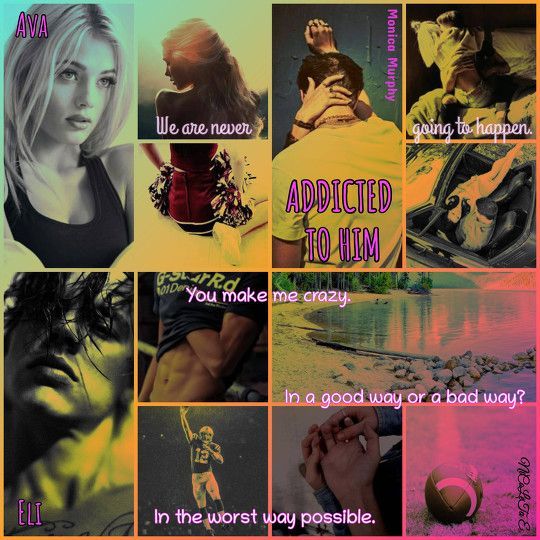
A brother’s rival to lovers, angsty sports romance by New York Times bestselling author, Monica Murphy
I’m supposed to stay far away from Eli Bennett.
The quarterback of our biggest rival high school.
My brother’s sworn enemy.
Gorgeously infuriating.
He’s way too good at getting under my skin, and not just in the way that drives my brother crazy either. From the moment Eli set his sights on me, I should’ve walked away.
But Eli doesn’t play by the rules, especially when it comes to me. What started as harmless banter and nonstop flirting soon turned into secret meetings. Stolen moments. And now I can’t stop thinking about him.
Beneath the swagger and the smirks, he’s thoughtful. Painfully honest—and hurting. He’s not the villain my brother thinks he is. Eli is just a boy who’s been through too much, and somehow, he trusts me with the pieces he hides from everyone else.
Our love was never part of the plan. It’s messy. Forbidden. Addictive. We’re sneaking around behind everyone’s backs, knowing that one wrong move could blow everything up. Our forbidden romance is bound to cause heartbreak.
Eli Bennett might break every rule I was raised with, but he could be the one person who sees me for who I really am.
And I’m not sure I can let him go.
Addicted To Him is book three in the standalone Callahans series and ends in a cliffhanger. Eli and Ava’s story concludes in the next book in the series, Meant to Be.
I’m supposed to stay far away from Eli Bennett.
The quarterback of our biggest rival high school.
My brother’s sworn enemy.
Gorgeously infuriating.
He’s way too good at getting under my skin, and not just in the way that drives my brother crazy either. From the moment Eli set his sights on me, I should’ve walked away.
But Eli doesn’t play by the rules, especially when it comes to me. What started as harmless banter and nonstop flirting soon turned into secret meetings. Stolen moments. And now I can’t stop thinking about him.
Beneath the swagger and the smirks, he’s thoughtful. Painfully honest—and hurting. He’s not the villain my brother thinks he is. Eli is just a boy who’s been through too much, and somehow, he trusts me with the pieces he hides from everyone else.
Our love was never part of the plan. It’s messy. Forbidden. Addictive. We’re sneaking around behind everyone’s backs, knowing that one wrong move could blow everything up. Our forbidden romance is bound to cause heartbreak.
Eli Bennett might break every rule I was raised with, but he could be the one person who sees me for who I really am.
And I’m not sure I can let him go.
Addicted To Him is book three in the standalone Callahans series and ends in a cliffhanger. Eli and Ava’s story concludes in the next book in the series, Meant to Be.
452 pages, Paperback
First published September 4, 2020
About the author
Monica Murphy
110 books19.2k followersNew York Times, USA Today and international bestselling author. A believer in kissing. A believer of love.
Sign up for my newsletter: https://monicamurphyauthor.com/subscribe
Hang out with me on Instagram:
https://instagram.com/monicamurphyauthor
I'm on TikTok: https://www.tiktok.com/@monicamurphya...
Sign up for my newsletter: https://monicamurphyauthor.com/subscribe
Hang out with me on Instagram:
https://instagram.com/monicamurphyauthor
I'm on TikTok: https://www.tiktok.com/@monicamurphya...
Ratings & Reviews
Friends & Following
Create a free account to discover what your friends think of this book!
Community Reviews
Displaying 1 - 30 of 410 reviews

August 19, 2022
Negative stars
Before reading this I had to go to tiktok and see if anybody even likes this series. Turns out some people do and guess what else I found out?
The author promotes this series as an adult high school romance series… How can a high school series be adult???
One the girl in this book is 16 and the guy is 17. Ava and Eli start off with a forbidden romance but as soon as the explicit scenes begin I had to skip. It is weird.
And let’s not even discuss how weird I think ppl are that are saying “omg this series is soooo hot” are you, a grown adult trying to tell me that you found it hot to read explicit scenes about a 16yo girl????? Nope absolutely not.
Let’s not forget that on top of all this, the plot was also horrible. Ash is a 17yo guy and pretends to be this big bad guy but then posts weird stuff on his Snapchat story calling out a guy from another school???
I get you’re 17 but that’s stuff you do at 12 years old which makes this entire series even weirder.
Let’s not even forget how the adults acted in this series, especially their dad. How are you going to treat your daughter like that but let her older brother Jake (who I don’t like remember the last book is about him) talk about his sister like that???
To top it all off, there are a lot of scenes where We get lots of women shaming as well as weird testosterone scenes that are just so immature.
AND THEN ELI LITERALLY FORCES HIMSELF ON AVA IN THE FIRST SCENE???? I’m sorry but what? He breaks into her cabin and sits on top of her, holds her mouth closed with his hand and then kisses her while she tries to get him of her.
And then they “fall in love”???
Nope absolutely not. The other books were already problematic but this one is just the cherry on top and since I got the entire series as well as the college years send to me, I had to obviously check who these other couples are and Wow. Eli gets 3 books….
Before reading this I had to go to tiktok and see if anybody even likes this series. Turns out some people do and guess what else I found out?
The author promotes this series as an adult high school romance series… How can a high school series be adult???
One the girl in this book is 16 and the guy is 17. Ava and Eli start off with a forbidden romance but as soon as the explicit scenes begin I had to skip. It is weird.
And let’s not even discuss how weird I think ppl are that are saying “omg this series is soooo hot” are you, a grown adult trying to tell me that you found it hot to read explicit scenes about a 16yo girl????? Nope absolutely not.
Let’s not forget that on top of all this, the plot was also horrible. Ash is a 17yo guy and pretends to be this big bad guy but then posts weird stuff on his Snapchat story calling out a guy from another school???
I get you’re 17 but that’s stuff you do at 12 years old which makes this entire series even weirder.
Let’s not even forget how the adults acted in this series, especially their dad. How are you going to treat your daughter like that but let her older brother Jake (who I don’t like remember the last book is about him) talk about his sister like that???
To top it all off, there are a lot of scenes where We get lots of women shaming as well as weird testosterone scenes that are just so immature.
AND THEN ELI LITERALLY FORCES HIMSELF ON AVA IN THE FIRST SCENE???? I’m sorry but what? He breaks into her cabin and sits on top of her, holds her mouth closed with his hand and then kisses her while she tries to get him of her.
And then they “fall in love”???
Nope absolutely not. The other books were already problematic but this one is just the cherry on top and since I got the entire series as well as the college years send to me, I had to obviously check who these other couples are and Wow. Eli gets 3 books….

Read
August 4, 2020This book is LIVE and FREE for KU subscribers!
https://geni.us/ATMAmz
Available now in audio! https://geni.us/ATHAudible
I am SO EXCITED to share this story with you all. Eli is one of my new favorite heroes. 🖤 He's arrogant, he does and says the craziest stuff, he's damaged, and when he falls, he falls HARD.
Check out the Addicted to Him Pinterest Inspiration board! http://bit.ly/ATHPinterest
The Addicted to Him playlist on Spotify: https://bit.ly/ATHplaylist
💥 Vote as September's most anticipated romance!
https://bit.ly/3hrXRt4



https://geni.us/ATMAmz
Available now in audio! https://geni.us/ATHAudible
I am SO EXCITED to share this story with you all. Eli is one of my new favorite heroes. 🖤 He's arrogant, he does and says the craziest stuff, he's damaged, and when he falls, he falls HARD.
Check out the Addicted to Him Pinterest Inspiration board! http://bit.ly/ATHPinterest
The Addicted to Him playlist on Spotify: https://bit.ly/ATHplaylist
💥 Vote as September's most anticipated romance!
https://bit.ly/3hrXRt4

September 7, 2020
4.5 Stars!
(ARC provided by Valentine PR)
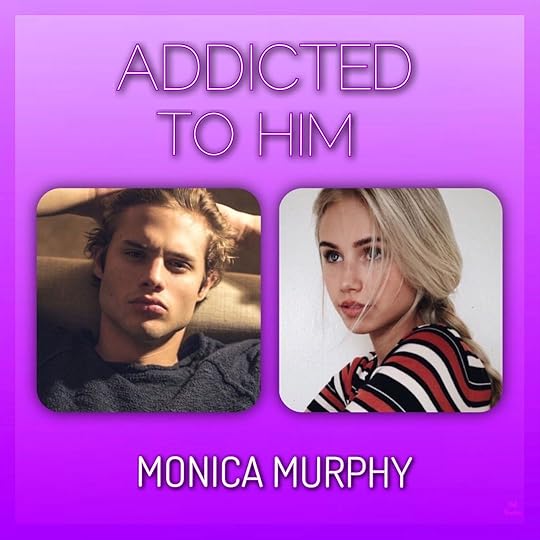
Ava Callahan is the youngest daughter of NFL supertar Drew Callahan. When her father moved the family to a small town up in the mountains initially she wasn't thrilled. Now she's made the cheer team and is starting to make friends. With an older brother at the same school guys tend to steer clear of her and are intimidated. That is until she meets Eli Bennett. He's an overly confident, arrogant, extremely attractive guy who loves to talk a bunch of smack. He's the quarterback for their high school's biggest rival. A year older, and her brother's enemy, she knows he's absolutely off limits. In her mind he's a no-go zone and trouble she doesn't need. Annoying with no impulse control, he's spontaneous and an outrageous flirt. Thinking about him is a mistake, and she keeps telling herself they can never happen. Then she see's another side of him she can't resist. If they are together it has to stay a secret.
From the moment Eli Bennett lays eyes on Ava Callahan he sets his sights on her. The outspoken, feisty beauty looks like she stepped straight out of a fairytale. She goes to a different school, but he's greedy for whatever she's willing to give him. She's supposed to be untouchable, but he can't get her out of his head. She's a challenge, but worth the risk. He just wants a chance with her. He's a big believer in going after what you want and having no regrets, and he wants Ava to be his.

-"The connection. Between us. We just- fit."
-We're meant to be. She just doesn't know it yet.

Addicted To Him (The Callahans, #3) by Monica Murphy is a forbidden, high school rivals sports romance full of angst and all the feels. I adored Eli Bennett! He's a bad boy that will steal your heart. He's unpredictable, and you never know what he's going to say or do next. He's hilarious, charming, and swoony. It ends on a cliffy, and I need more! I can't wait for the conclusion to their love story in Meant To Be!

***NOW AVAILABLE***
https://amzn.to/338QIbt
(ARC provided by Valentine PR)
Ava Callahan is the youngest daughter of NFL supertar Drew Callahan. When her father moved the family to a small town up in the mountains initially she wasn't thrilled. Now she's made the cheer team and is starting to make friends. With an older brother at the same school guys tend to steer clear of her and are intimidated. That is until she meets Eli Bennett. He's an overly confident, arrogant, extremely attractive guy who loves to talk a bunch of smack. He's the quarterback for their high school's biggest rival. A year older, and her brother's enemy, she knows he's absolutely off limits. In her mind he's a no-go zone and trouble she doesn't need. Annoying with no impulse control, he's spontaneous and an outrageous flirt. Thinking about him is a mistake, and she keeps telling herself they can never happen. Then she see's another side of him she can't resist. If they are together it has to stay a secret.
From the moment Eli Bennett lays eyes on Ava Callahan he sets his sights on her. The outspoken, feisty beauty looks like she stepped straight out of a fairytale. She goes to a different school, but he's greedy for whatever she's willing to give him. She's supposed to be untouchable, but he can't get her out of his head. She's a challenge, but worth the risk. He just wants a chance with her. He's a big believer in going after what you want and having no regrets, and he wants Ava to be his.
-"The connection. Between us. We just- fit."
-We're meant to be. She just doesn't know it yet.
Addicted To Him (The Callahans, #3) by Monica Murphy is a forbidden, high school rivals sports romance full of angst and all the feels. I adored Eli Bennett! He's a bad boy that will steal your heart. He's unpredictable, and you never know what he's going to say or do next. He's hilarious, charming, and swoony. It ends on a cliffy, and I need more! I can't wait for the conclusion to their love story in Meant To Be!

***NOW AVAILABLE***
https://amzn.to/338QIbt

September 7, 2020
I’m sorry but this book is fucking problematic. What are we teaching readers with this book when Eli breaks in to Ava’s house and pins her to the bed and kisses her even when she tries to buck him off. But then proceeds to fall head over heels in love with him even though he treats her like utter crap but it’s all explained away because his home life is tragic. And it’s okay because he likes her I mean what the hell are we not past this by now.
Also this is just one instance where Eli is forceful with Ava I just don’t approve of this book and how anyone can rate this book more than one stars or not DNF it is just totally beyond me. I love this series and was looking forward to this book but the author has just absolutely crossed a line that I cant get behind.
Also this is just one instance where Eli is forceful with Ava I just don’t approve of this book and how anyone can rate this book more than one stars or not DNF it is just totally beyond me. I love this series and was looking forward to this book but the author has just absolutely crossed a line that I cant get behind.

January 23, 2021
Phew! 12 hours plus of audiobook. And I am bit disappointed. I was expecting major drama/ twist/ plot. Instead I got a boring, recyle cliche a hot bad boy chasing after virgin heroine.
Their push and pull is mediocre at best. Even the writing from Miss Murphy is still addidcting, I feel she needs more original plot into her work.
Overall this is a long lengthy read on my weekend.
3 stars
Their push and pull is mediocre at best. Even the writing from Miss Murphy is still addidcting, I feel she needs more original plot into her work.
Overall this is a long lengthy read on my weekend.
3 stars

October 13, 2020
Love love loved it.
This book is hands down one of my favorite YA reads ever!!!
It's been awhile since I've been this excited while reading... I couldn’t put it down and I never wanted this story to end... I need more of Eli and Ava now!! I can't wait for the next book...
Be warned- this one ends on a giant, and heart breaking cliffy:(
The conclusion cannot come fast enough!. I’m dying to get my hands on Meant to Be..
This book is hands down one of my favorite YA reads ever!!!
It's been awhile since I've been this excited while reading... I couldn’t put it down and I never wanted this story to end... I need more of Eli and Ava now!! I can't wait for the next book...
Be warned- this one ends on a giant, and heart breaking cliffy:(
The conclusion cannot come fast enough!. I’m dying to get my hands on Meant to Be..

September 6, 2020
”I’ll gladly go to war over you, Ava. And I’ll win every fuckin’ battle. Watch me,”
Addicted To Him provides the mature YA star-crossed lovers trope in spades. Ava wants Eli and Eli wants Ava. But Eli is Ava’s brother’s biggest enemy when it comes to high school football. Oh and he’s the QB on her school’s biggest rival’s team. Their relationship is a rollercoaster ride to say the least. At first Ava knows Eli is bad news. Nice to look at, but bad bad news. Eli is pushy and stressed about so many things, but he also has these tender moments that he shares with Ava. These two have a connection, but they just can’t seem to make things work. Angsty to say the very least. Ava is sort of lost in the shadows of her older siblings and her retired professional football playing father. With Eli though she feels like she’s not just known because of them, she’s just Ava, and Eli thinks Ava is special all on her own. Eli’s life is sort of a mess, Which in turn makes him sort of a hot mess. Although he starts things with Ava as a bit of fun, he soon realizes there’s just something about her that he is drawn to.
I love the angst of young love, and the over the top happenings of high school. If you’re looking for a book like that, with romance and drama, then you will LOVE Addicted to Him. Just gird your loins for the ending people, there’s more to come.
AVAILABLE NOW AMAZON & KU!
*ARC
Addicted To Him provides the mature YA star-crossed lovers trope in spades. Ava wants Eli and Eli wants Ava. But Eli is Ava’s brother’s biggest enemy when it comes to high school football. Oh and he’s the QB on her school’s biggest rival’s team. Their relationship is a rollercoaster ride to say the least. At first Ava knows Eli is bad news. Nice to look at, but bad bad news. Eli is pushy and stressed about so many things, but he also has these tender moments that he shares with Ava. These two have a connection, but they just can’t seem to make things work. Angsty to say the very least. Ava is sort of lost in the shadows of her older siblings and her retired professional football playing father. With Eli though she feels like she’s not just known because of them, she’s just Ava, and Eli thinks Ava is special all on her own. Eli’s life is sort of a mess, Which in turn makes him sort of a hot mess. Although he starts things with Ava as a bit of fun, he soon realizes there’s just something about her that he is drawn to.
I love the angst of young love, and the over the top happenings of high school. If you’re looking for a book like that, with romance and drama, then you will LOVE Addicted to Him. Just gird your loins for the ending people, there’s more to come.
AVAILABLE NOW AMAZON & KU!
*ARC

August 11, 2021
Overall, I enjoyed this 2-Book, Ava/Eli saga. I loved Eli’s crazy messy life and how unfiltered he was. And I just loved Ava, she’s by far my favorite Callahan. So while I loved both books, I don’t think it was necessary to have two books. The pacing was a little slow and I feel like some scenes could’ve been cut and this could’ve been just one book. Anyway, Book 1 ends in a cliffhanger so you’ll need to read Book 2. Book 2 is less angsty and super cute and hot. The audiobooks are great, I could listen to Teddy Hamilton every day! I’m super intrigued by Jackson Rivers and Ellie, so that’s probably going to be my next read by this author.

August 22, 2020
“If we keep this up, we’re never going back. Those lips of yours touch my cock? I’m yours. My fingers slip between your legs and make you come? You’re mine.”
ASSHOLE ALERT!
Oh my God! I knew Eli was going to be a mega asshole, but I didn't realize how hard I was going to fall for this cocky, gorgeous, broken jock! The things that came out of his mouth had my jaw hitting the floor! But the next minute, I'd be swooning! He says whatever the hell is on his mind, and he's met his match with Ava! I didn't realize how much this forbidden romance was going to hit me in all the right feels!
Eli Bennett is coming, and he's got no fucks to give...well...maybe a few...

Available at the following retailers 9/6 for approximately 48 hours:
Apple: https://geni.us/ATHApple
Nook: https://geni.us/ATHNook
Kobo: https://geni.us/ATHKobo
COMING to Kindle Unlimited on September 8th!

Graphic by @Janbookshelf

September 17, 2020
***4 "The no-gone zone!" stars***
AVAILABLE NOW!
"Why do we always want what we can't have?"
I was craving like crazy this certain story, especially of how the things seemed to be in the previous book.
I was way too curious and intrigued about this crazy pairing and i had a ton of questions that they needed an answer and yes, I finally got them and i can not wait for more...
Because yes, there is more of Ava and Eli and I couldn't be more excited about this fact!!!
"Girl, you are going to get me in so much fucking trouble."
Well, Ava Callahan was a very beautiful and special girl and she was nothing like her older siblings, Autumn and Jake...
She was quiet and peaceful... She was the good girl...
So how she had found herself in this crazy situation with her brother's number one enemy is beyond imagination... Especially, when Eli Bennett is slowly and steadily winning her heart over while he is getting under her skin.
"He's the last boy I should fall in love with.
He'll take my heart and smash it to pieces."
Eli Bennett is going on the Callahans's rival school and he is the quarterback in there.
His favorite passtime is messing with his biggest opponent's mind through trash talking and weird provoking stories on instagram... But since the first moment that his eyes met Ava Callahan, he was a goner and he is determined to show her that they are meant to be...
"She is a good girl who's secretly desperate to be bad. I am more than willing to be her own personal bad boy."
The truth is that Eli was getting on my nerves on "Falling for her" with all this unbelievable attitude of his, but he intrigued me as well and I'm happy that we learnt more about him...
Eli's life is not a freakin' fairytale... He has his own share on heartache and unfairness and in a way his bad attitude and trash wording is a defense mechanism...
Ava is the only girl that managed to catch his attention and he wants to make her his even though she is the only girl that he shouldn't want...
"I’ll gladly go to war over you, Ava. And I’ll win every fuckin’ battle. Watch me..."
Ava was sweet and good... She was almost... boring, but in the presence of Eli, she was becoming another girl and i loved what i was seeing...
She had fire inside of her after all and only Eli Bennett could pull it out of her...
Unfortunately, he is the last person that she should want, but the heart has its own mind...
So what will happen after all???
"When it comes to Eli, I'm a weak, wimpy mess and I don't get it. I don't get him. I don't get us."
Well, i loved this mismatched pairing very much...
I liked that i finally could understand how these two ended up to catch each other's attention...
I loved their intense and a little bit dramatic journey...
But if i want to be totally honest with you, i could live with less details and a little bit more fast pace...
I would preffered to fully have their story in only one book and to avoid it to drag so much with only the past...
I need the present and i freakin' need it NOW!!!
"Things can't always be easy. Sometimes you have to fight for what you want."
**ARC kindly provided for the exchange of an honest review**
AVAILABLE NOW!
"Why do we always want what we can't have?"
I was craving like crazy this certain story, especially of how the things seemed to be in the previous book.
I was way too curious and intrigued about this crazy pairing and i had a ton of questions that they needed an answer and yes, I finally got them and i can not wait for more...
Because yes, there is more of Ava and Eli and I couldn't be more excited about this fact!!!
"Girl, you are going to get me in so much fucking trouble."
Well, Ava Callahan was a very beautiful and special girl and she was nothing like her older siblings, Autumn and Jake...
She was quiet and peaceful... She was the good girl...
So how she had found herself in this crazy situation with her brother's number one enemy is beyond imagination... Especially, when Eli Bennett is slowly and steadily winning her heart over while he is getting under her skin.
"He's the last boy I should fall in love with.
He'll take my heart and smash it to pieces."
Eli Bennett is going on the Callahans's rival school and he is the quarterback in there.
His favorite passtime is messing with his biggest opponent's mind through trash talking and weird provoking stories on instagram... But since the first moment that his eyes met Ava Callahan, he was a goner and he is determined to show her that they are meant to be...
"She is a good girl who's secretly desperate to be bad. I am more than willing to be her own personal bad boy."
The truth is that Eli was getting on my nerves on "Falling for her" with all this unbelievable attitude of his, but he intrigued me as well and I'm happy that we learnt more about him...
Eli's life is not a freakin' fairytale... He has his own share on heartache and unfairness and in a way his bad attitude and trash wording is a defense mechanism...
Ava is the only girl that managed to catch his attention and he wants to make her his even though she is the only girl that he shouldn't want...
"I’ll gladly go to war over you, Ava. And I’ll win every fuckin’ battle. Watch me..."
Ava was sweet and good... She was almost... boring, but in the presence of Eli, she was becoming another girl and i loved what i was seeing...
She had fire inside of her after all and only Eli Bennett could pull it out of her...
Unfortunately, he is the last person that she should want, but the heart has its own mind...
So what will happen after all???
"When it comes to Eli, I'm a weak, wimpy mess and I don't get it. I don't get him. I don't get us."
Well, i loved this mismatched pairing very much...
I liked that i finally could understand how these two ended up to catch each other's attention...
I loved their intense and a little bit dramatic journey...
But if i want to be totally honest with you, i could live with less details and a little bit more fast pace...
I would preffered to fully have their story in only one book and to avoid it to drag so much with only the past...
I need the present and i freakin' need it NOW!!!
"Things can't always be easy. Sometimes you have to fight for what you want."
**ARC kindly provided for the exchange of an honest review**

September 12, 2020
THE CLIFFHANGER UGH. GIVE ME THE SECOND BOOK NOW
i really like this series because of the major high school vibes it radiates and gah the angst of teenage love. i’d say by far, i like Ava the most... but it’s hard to choose between her and Jake.
i really like this series because of the major high school vibes it radiates and gah the angst of teenage love. i’d say by far, i like Ava the most... but it’s hard to choose between her and Jake.

September 14, 2020
I adore Monica Murphy and am such a fan of so many of her novels, but at a quarter of the way through “Addicted to Him,” I’m left wondering whether she actually wrote this book. It just seems to have none of the hallmarks of her previous works. The characters lack the warmth, charm, and spirit shared by so many of her other characters in previous books. I realize this book is YA lit, a genre with which I’m well-acquainted, and this means a good deal of angst and melodrama are to be expected. I also accept that maybe, at 34 years old, I’m not the intended audience for this book, because if this is teen love, then YIKES.
Early on, through Ava’s internal monologue, Murphy characterizes her female lead as a feminista of sorts, which is incongruous to Ava’s actual actions. Ava at no point in the first quarter of this novel consents to any of Eli’s physical advances without badgering or coercion. She waffles between being unsure about the contradictory nature of her feelings and rebuffing his advances; ultimately, it doesn’t matter, because whatever the heck she is feeling is just flat-out ignored. Despite her mixed emotions and half-hearted dissent, male-lead Eli continues to press forward with threats of blackmail and somewhat unwanted physical advances, and Ava just decides to accept it because she apparently likes being the center of his attention? Because she wants a boyfriend like her older sister? Because... honestly, at this point, who the hell knows? The author’s justifications for allowing Ava’s protestations to be ignored just get more convoluted and muddled with each turn of the page. Yes, despite her earlier censure of Eli’s behavior, she later kisses him back, then, a short time after that, she initiates kissing him, but by that point, I was so dismayed by all the non-consensual physical engagement that I was completely closed off and no longer receptive to the paltry-and-plodding development of the relationship.
Furthermore, Eli is repulsive in the way he thinks and speaks about women. This is beyond the stereotypical language of teenage boys. Eli oozes toxic masculinity. He’s gross and unappealing, and if the author is going to have Ava take issue with what she perceives as misogyny from her father, Drew, then you can’t convince me she would tolerate Eli’s shitty behavior for even 10 seconds or that she would mistake his blatant sexism for “charm.” At 25% read, there are no less than five references to the female anatomy of Ava, her sister, and her mother that make me cringe. Eli is, and I don’t think I’m exaggerating when I say this, the high school version of Brock Turner—an overprivileged, white boy who has never believed that the word “no” applies to him. How Monica Murphy crafted a character so irredeemable is both impressive and a mystery to me. She literally has the character describe himself as “the lovable goof who says inappropriate things,” which is a pretty lofty description of a person that spends the better part of the same chapter mentally berating 16-year-old Ava for not wanting to have sex with him in his swimming pool, while crassly objectifying sexually graphic snaps from another girl and pontificating how this girl is an easier target to sleep with because she has more experience and wouldn’t be a “tease.” I cannot express just how tone deaf the characters—and apparently the author—are.
There is nothing romantic about a 17-year-old breaking into a 16-year-old’s room and climbing on top of her sleeping form. There is nothing sweet or amorous about routinely objectifying a young woman to the point it causes her extreme discomfort. This is not about your male lead “lacking impulse control.” This is NON-CONSENSUAL SEXUAL ADVANCES TOWARDS A MINOR BEING ROMANTICIZED AND NORMALIZED. Again, maybe I’m old and out of touch with the Snapchat, “I do streaks,” swipe-up-and-rate-me-if-you-like-me crowd, but I honestly don’t think it’s all me and my interpretation, as in the previous two novels in this series, I never felt disgusted by the characters or content, nor did I feel compelled to quit reading, regardless of the age or maturity levels of the lead characters and the juvenile subject matter.
Murphy has previously incorporated mature and taboo topics into her writings, but, despite this, and in spite of her characters’ backgrounds or trauma, never have her main characters been this unlikable, unbelievable, or irredeemable. I don’t think it’s unreasonable to say that Fable NEVER would have tolerated this crap from anyone, and given her history, it’s certainly realistic to believe she never would have raised any of her children to be tolerant of abusive behavior. I don’t get how the author keeps comparing Ava, this wishy-washy doormat that is her female lead, to the vibrant, resilient, spirited character who is her mother. There is ABSOLUTELY no comparison between the two, and there is no way that Murphy, the same woman who had Fable convince Drew that he was molested, wrote a book with a female lead who is literally convincing herself that her sexual assailant is her future soul mate.
I keep asking myself: how is “Addicted to Him” written by the same author as “One Week Girlfriend,” and what the hell is wrong with this book? Don’t answer that. It’s rhetorical — EVERYTHING is wrong with it, starting with the title, which becomes infinitely more cringy once you start reading the story. I can list on one hand the number of books I’ve chosen not to finish reading, but after 14 chapters, I’m throwing in the towel on this one. It can’t be possible for each sentence to be worse than the previous one. It just cannot. And yet, each sentence is unequivocally more awful than its predecessor. HOW IS THIS BOOK SO BAD? I honestly fear for my Kindle. The Eli chapters make me want to throw my device across the room at the wall. It’s unreal how much I despise this book, the characters, the plot (I’m not sure you can actually call the contents of this story a plot, but *shrug emoji*). And unless this book ends with 1.) Ava’s parents confronting her about and supporting her through her assault and 2.) Eli ending up receiving some really significant punishment for his repugnant—and criminal—behavior, then I won’t possibly be satisfied. And from what I’ve gathered from many negative reviews, this novel ends on a cliffhanger, which seriously makes me wonder who thought a couple hundred pages of this dreck wasn’t enough, let’s write a couple hundred more? This book is an unmitigated disaster.
I’m no prude, honestly. I read tons of YA lit and I rarely ever experience an “ick factor,” but this book raises far too many red flags and I am baffled that no one who read this book prior to its publishing had an issue with its content. How did not a single person who beta read this not find this plot and content problematic for young and new adults, especially in the “Me too”-era? I definitely don’t get the glowing reviews and the peer praise this book is receiving, and I’m certainly not going to be recommending it any time soon.
Early on, through Ava’s internal monologue, Murphy characterizes her female lead as a feminista of sorts, which is incongruous to Ava’s actual actions. Ava at no point in the first quarter of this novel consents to any of Eli’s physical advances without badgering or coercion. She waffles between being unsure about the contradictory nature of her feelings and rebuffing his advances; ultimately, it doesn’t matter, because whatever the heck she is feeling is just flat-out ignored. Despite her mixed emotions and half-hearted dissent, male-lead Eli continues to press forward with threats of blackmail and somewhat unwanted physical advances, and Ava just decides to accept it because she apparently likes being the center of his attention? Because she wants a boyfriend like her older sister? Because... honestly, at this point, who the hell knows? The author’s justifications for allowing Ava’s protestations to be ignored just get more convoluted and muddled with each turn of the page. Yes, despite her earlier censure of Eli’s behavior, she later kisses him back, then, a short time after that, she initiates kissing him, but by that point, I was so dismayed by all the non-consensual physical engagement that I was completely closed off and no longer receptive to the paltry-and-plodding development of the relationship.
Furthermore, Eli is repulsive in the way he thinks and speaks about women. This is beyond the stereotypical language of teenage boys. Eli oozes toxic masculinity. He’s gross and unappealing, and if the author is going to have Ava take issue with what she perceives as misogyny from her father, Drew, then you can’t convince me she would tolerate Eli’s shitty behavior for even 10 seconds or that she would mistake his blatant sexism for “charm.” At 25% read, there are no less than five references to the female anatomy of Ava, her sister, and her mother that make me cringe. Eli is, and I don’t think I’m exaggerating when I say this, the high school version of Brock Turner—an overprivileged, white boy who has never believed that the word “no” applies to him. How Monica Murphy crafted a character so irredeemable is both impressive and a mystery to me. She literally has the character describe himself as “the lovable goof who says inappropriate things,” which is a pretty lofty description of a person that spends the better part of the same chapter mentally berating 16-year-old Ava for not wanting to have sex with him in his swimming pool, while crassly objectifying sexually graphic snaps from another girl and pontificating how this girl is an easier target to sleep with because she has more experience and wouldn’t be a “tease.” I cannot express just how tone deaf the characters—and apparently the author—are.
There is nothing romantic about a 17-year-old breaking into a 16-year-old’s room and climbing on top of her sleeping form. There is nothing sweet or amorous about routinely objectifying a young woman to the point it causes her extreme discomfort. This is not about your male lead “lacking impulse control.” This is NON-CONSENSUAL SEXUAL ADVANCES TOWARDS A MINOR BEING ROMANTICIZED AND NORMALIZED. Again, maybe I’m old and out of touch with the Snapchat, “I do streaks,” swipe-up-and-rate-me-if-you-like-me crowd, but I honestly don’t think it’s all me and my interpretation, as in the previous two novels in this series, I never felt disgusted by the characters or content, nor did I feel compelled to quit reading, regardless of the age or maturity levels of the lead characters and the juvenile subject matter.
Murphy has previously incorporated mature and taboo topics into her writings, but, despite this, and in spite of her characters’ backgrounds or trauma, never have her main characters been this unlikable, unbelievable, or irredeemable. I don’t think it’s unreasonable to say that Fable NEVER would have tolerated this crap from anyone, and given her history, it’s certainly realistic to believe she never would have raised any of her children to be tolerant of abusive behavior. I don’t get how the author keeps comparing Ava, this wishy-washy doormat that is her female lead, to the vibrant, resilient, spirited character who is her mother. There is ABSOLUTELY no comparison between the two, and there is no way that Murphy, the same woman who had Fable convince Drew that he was molested, wrote a book with a female lead who is literally convincing herself that her sexual assailant is her future soul mate.
I keep asking myself: how is “Addicted to Him” written by the same author as “One Week Girlfriend,” and what the hell is wrong with this book? Don’t answer that. It’s rhetorical — EVERYTHING is wrong with it, starting with the title, which becomes infinitely more cringy once you start reading the story. I can list on one hand the number of books I’ve chosen not to finish reading, but after 14 chapters, I’m throwing in the towel on this one. It can’t be possible for each sentence to be worse than the previous one. It just cannot. And yet, each sentence is unequivocally more awful than its predecessor. HOW IS THIS BOOK SO BAD? I honestly fear for my Kindle. The Eli chapters make me want to throw my device across the room at the wall. It’s unreal how much I despise this book, the characters, the plot (I’m not sure you can actually call the contents of this story a plot, but *shrug emoji*). And unless this book ends with 1.) Ava’s parents confronting her about and supporting her through her assault and 2.) Eli ending up receiving some really significant punishment for his repugnant—and criminal—behavior, then I won’t possibly be satisfied. And from what I’ve gathered from many negative reviews, this novel ends on a cliffhanger, which seriously makes me wonder who thought a couple hundred pages of this dreck wasn’t enough, let’s write a couple hundred more? This book is an unmitigated disaster.
I’m no prude, honestly. I read tons of YA lit and I rarely ever experience an “ick factor,” but this book raises far too many red flags and I am baffled that no one who read this book prior to its publishing had an issue with its content. How did not a single person who beta read this not find this plot and content problematic for young and new adults, especially in the “Me too”-era? I definitely don’t get the glowing reviews and the peer praise this book is receiving, and I’m certainly not going to be recommending it any time soon.
This entire review has been hidden because of spoilers.

September 11, 2020
2.5 Stars
Too much high school repetitive drama and really I got bored out of the starting gate. I have loved the other Callahan family-related books. However, I just couldn't cozy up to Eli -- he was too much of a lot of different categories that weren't favorable. And Ava, although I didn't dislike her, was just too agreeable too fast and quick with anything Eli suggested.
Yes, the book ends on a cliffy -- not so good -- because there was so much that could have gone unsaid and moved on to the next chapter in the ongoing saga of Eli and Ava eliminating a cliffhanger and a second book. Yes, I'll read the next book because I've read all the others. But I'm going to be seriously rethinking my YA choices in the future. I think it's about time for me to say good-bye to high schoolers and move on. These type of books just aren't hitting the right emotions with me these days.
Too much high school repetitive drama and really I got bored out of the starting gate. I have loved the other Callahan family-related books. However, I just couldn't cozy up to Eli -- he was too much of a lot of different categories that weren't favorable. And Ava, although I didn't dislike her, was just too agreeable too fast and quick with anything Eli suggested.
Yes, the book ends on a cliffy -- not so good -- because there was so much that could have gone unsaid and moved on to the next chapter in the ongoing saga of Eli and Ava eliminating a cliffhanger and a second book. Yes, I'll read the next book because I've read all the others. But I'm going to be seriously rethinking my YA choices in the future. I think it's about time for me to say good-bye to high schoolers and move on. These type of books just aren't hitting the right emotions with me these days.

July 16, 2020
This book is one of my TOP FAV YA reads this year!!! M Murphy knocked it out of the park with HS angst, drama, a charming alpha hero, and a feisty heroine. From the Prologue until the last page I was hooked. It took me right back to HS where you just can't wait to hear all the gossip, crush on the hot guys and live all the drama! This hero will steal.your.heart.
5 ADDICTIVE STARS!!!
* Beta Read * LRTC
5 ADDICTIVE STARS!!!
* Beta Read * LRTC

September 8, 2020
I was super excited for this to come out, but I’m just not a fan of authors who manifest new drama at the end of a novel (when it makes absolutely no sense to the plot) to have an excuse to charge an extra $4 to unsuspecting fans. AKA, there is a completely out of the blue cliffhanger, without the plot to carry it. There were so many other ways that she could have handled this story. Greedy author syndrome strikes again.

February 22, 2021
“I’ll gladly go to war over you, Ava. And I’ll win every fuckin’ battle. Watch me.”
Eli annoyed me so much in the previous book, but I LOVE HIM now. Stop hurting him!!! Ava is my favorite heroine so far, she is the best. Their relationship was quite similar to the other couples and same for the drama, but I still enjoyed it a lot!!


Read
May 8, 2021Edited Manuscript

September 5, 2020
2.5 stars
This book was not for me. I love the Callahan's, their family unit and their stories! I first met Eli and Ava in the previous book "falling for her" and I was intrigued. How does Eli win over Ava? Would he always be Jakes rival?
If you haven't read this series I will give you a little backstory. So Ava Callahan comes from a family of athletes, yes, her father is a coach and a walking legend. Ava's sisters boyfriend was a quarterback, now Jake (Ava's brother) is a quarterback. Jake rival and arch-nemesis is Eli, another quarterback from their rival school. Ava comes from a very tight family, I mean really, the sweetest family. So dating her brothers enemy should be a massive no-no, however, Eli wins her over and they start their "affair".
As I previously stated, I was interested to see how Eli won Ava over and I was disappointed. Eli basically forces himself on her, for example in the first few chapters while Ava is running away from him, he grabs her and starts whispering in her ear and is being quiet forceful, he then "blackmails" her into meeting up with him the next day, however, when she doesn't show up he sneaks into her family cabin and is on top of her when she wakes up. She finds this hot and they make out. I'm sorry but WHAT! I just don't get it! I don't care if Johnny Depp did that to me I'd still think "what the hell, creepy"! I am no way a prude, I enjoy contemporary romance, even some dark romance but this just didn't sit well with me. She is 16years old. I thought ok I'll give him the benefit of the doubt and I continued reading, only to find in his POV, he was comparing Ava's sister and her mothers t*ts and how hot they both were. After that, there was no going back, Eli's character had lost all appeal to me. Even when I saw into his past and his softer side, I couldn't change my opinion of him.
This book lost another star in my opinion because it ended with a cliffhanger.
What I loved and why it received the 2.5stars:
I loved Ava and her passion and determination. She was such a sweet and strong character which I admired (despite her choice in men/boys). She was fierce and was not afraid to stand up for herself.
I love the Callahan's and it was amazing to see their family unit again.
Monica Murphy's writing technique, as much as this book didn't sit well with me, I will continue to read her books. Monica has a writing technique that will completely captivate you and bring you into her world, the flow and the pace was perfect.
This book is filled with angst, drama and romance.
Overall, I enjoyed the storyline, however, my dislike for the main character brought my rating down. I just don't understand how someone so strong could fall for his behaviour. In saying that, that is 100% my opinion and you may really enjoy this book!
Thank you to valentine pr for providing me with this e-arc in exchange for an honest review.
This book was not for me. I love the Callahan's, their family unit and their stories! I first met Eli and Ava in the previous book "falling for her" and I was intrigued. How does Eli win over Ava? Would he always be Jakes rival?
If you haven't read this series I will give you a little backstory. So Ava Callahan comes from a family of athletes, yes, her father is a coach and a walking legend. Ava's sisters boyfriend was a quarterback, now Jake (Ava's brother) is a quarterback. Jake rival and arch-nemesis is Eli, another quarterback from their rival school. Ava comes from a very tight family, I mean really, the sweetest family. So dating her brothers enemy should be a massive no-no, however, Eli wins her over and they start their "affair".
As I previously stated, I was interested to see how Eli won Ava over and I was disappointed. Eli basically forces himself on her, for example in the first few chapters while Ava is running away from him, he grabs her and starts whispering in her ear and is being quiet forceful, he then "blackmails" her into meeting up with him the next day, however, when she doesn't show up he sneaks into her family cabin and is on top of her when she wakes up. She finds this hot and they make out. I'm sorry but WHAT! I just don't get it! I don't care if Johnny Depp did that to me I'd still think "what the hell, creepy"! I am no way a prude, I enjoy contemporary romance, even some dark romance but this just didn't sit well with me. She is 16years old. I thought ok I'll give him the benefit of the doubt and I continued reading, only to find in his POV, he was comparing Ava's sister and her mothers t*ts and how hot they both were. After that, there was no going back, Eli's character had lost all appeal to me. Even when I saw into his past and his softer side, I couldn't change my opinion of him.
This book lost another star in my opinion because it ended with a cliffhanger.
What I loved and why it received the 2.5stars:
I loved Ava and her passion and determination. She was such a sweet and strong character which I admired (despite her choice in men/boys). She was fierce and was not afraid to stand up for herself.
I love the Callahan's and it was amazing to see their family unit again.
Monica Murphy's writing technique, as much as this book didn't sit well with me, I will continue to read her books. Monica has a writing technique that will completely captivate you and bring you into her world, the flow and the pace was perfect.
This book is filled with angst, drama and romance.
Overall, I enjoyed the storyline, however, my dislike for the main character brought my rating down. I just don't understand how someone so strong could fall for his behaviour. In saying that, that is 100% my opinion and you may really enjoy this book!
Thank you to valentine pr for providing me with this e-arc in exchange for an honest review.
This entire review has been hidden because of spoilers.
November 6, 2020
Yes I love Eli so much, but Ava? She is the best heroine ever. I adore her so much and everything about her. Her opinions, how badass she is and uh just everything. Anyway, the end? I need to know what's gonna happen next so yeah keeping it short so I can start Meant To Be.
***
Follow me on Instagram for book edits.
***
Follow me on Instagram for book edits.

September 4, 2021
Holy smokes, Batman! I am so floored right now. That cliffhanger left me reeling and I still haven't caught my balance. This book is a breathtaking masterpiece!
This story SUCKED ME IN! I have always admired Murphy's storytelling because I am effortlessly pulled into her stories every. single. time. She has a talent for catching the reader's attention and never letting it go. She knows how to keep us on the edge of our seats. There's something to be said for an author that can do this with every single book that they release. It is the mark of a truly gifted artisan. Murphy is a brilliant weaver of words and I have always loved how her narration feels, for lack of a better word, perfect. The pacing is always spot on and the dialogue is never clunky. It's smooth sailing from cover to cover. The world that Murphy creates is so immersive. It's so easy to envision the world surrounding these characters and live in it with them.
Wow, having seen what Eli Bennett was like in some of Murphy's other books, I wasn't quite sure if I would like him. I was wrong. He completely won me over. His reckless bad boy behavior makes so much more sense once you go a little deeper. Once you see the real Eli Bennett and know what his life is really like. My heart ached for him. He was like an iceberg, where there is so much left under the surface that you can never see. Enter Ava Callahan. Ava was able to dive under the surface and discover all the things that Eli didn't want anyone else to see. They really complimented each other. I loved how authentic their characters were. They were just so real. They had all these amazing qualities but they also had flaws. Murphy made their characters come to life with a perfect balance of the two. Their character development was fantastic and I am so eager to see it blossom even more in the next book in this series. I love all of the side characters too. I love seeing and hearing about other characters from the rest of this series. This series has an incredible cast of characters and I love them all the pieces!
If there was one word that I would use to describe Eli and Ava's relationship, it would be passionate. Eli and Ava's relationship was so romantic and heartwarming. They really took the time to appreciate each other. They didn't let outside forces dictate how they should feel about each other. Their relationship wasn't without its problems, but what relationship isn't? Their relationship was very real, very organic. It was genuine in a way that leaped off the page. I loved Eli's sincerity when it came to Ava. He never denied the way that she made him feel and he was always honest with her about it. He was also so respectful and patient with her. I liked how Ava opened up to Eli just as much as he opened up to her. Both of them felt fairly alone in their own worlds but were able to vent to each other and have someone in their corner that really made them feel seen.
Overall, This is one of the absolute best books that I have read this year. The story will suck you in, the characters will win your heart, and the storytelling will blow your mind. If you haven't picked up the Callahans series by Monica Murphy then you are missing out on an epic series! This is one of those books that will claim a little piece of your heart.
BLOG FACEBOOK INSTAGRAM TWITTER BOOKBUB AMAZON PINTEREST
This story SUCKED ME IN! I have always admired Murphy's storytelling because I am effortlessly pulled into her stories every. single. time. She has a talent for catching the reader's attention and never letting it go. She knows how to keep us on the edge of our seats. There's something to be said for an author that can do this with every single book that they release. It is the mark of a truly gifted artisan. Murphy is a brilliant weaver of words and I have always loved how her narration feels, for lack of a better word, perfect. The pacing is always spot on and the dialogue is never clunky. It's smooth sailing from cover to cover. The world that Murphy creates is so immersive. It's so easy to envision the world surrounding these characters and live in it with them.
Wow, having seen what Eli Bennett was like in some of Murphy's other books, I wasn't quite sure if I would like him. I was wrong. He completely won me over. His reckless bad boy behavior makes so much more sense once you go a little deeper. Once you see the real Eli Bennett and know what his life is really like. My heart ached for him. He was like an iceberg, where there is so much left under the surface that you can never see. Enter Ava Callahan. Ava was able to dive under the surface and discover all the things that Eli didn't want anyone else to see. They really complimented each other. I loved how authentic their characters were. They were just so real. They had all these amazing qualities but they also had flaws. Murphy made their characters come to life with a perfect balance of the two. Their character development was fantastic and I am so eager to see it blossom even more in the next book in this series. I love all of the side characters too. I love seeing and hearing about other characters from the rest of this series. This series has an incredible cast of characters and I love them all the pieces!
If there was one word that I would use to describe Eli and Ava's relationship, it would be passionate. Eli and Ava's relationship was so romantic and heartwarming. They really took the time to appreciate each other. They didn't let outside forces dictate how they should feel about each other. Their relationship wasn't without its problems, but what relationship isn't? Their relationship was very real, very organic. It was genuine in a way that leaped off the page. I loved Eli's sincerity when it came to Ava. He never denied the way that she made him feel and he was always honest with her about it. He was also so respectful and patient with her. I liked how Ava opened up to Eli just as much as he opened up to her. Both of them felt fairly alone in their own worlds but were able to vent to each other and have someone in their corner that really made them feel seen.
Overall, This is one of the absolute best books that I have read this year. The story will suck you in, the characters will win your heart, and the storytelling will blow your mind. If you haven't picked up the Callahans series by Monica Murphy then you are missing out on an epic series! This is one of those books that will claim a little piece of your heart.
BLOG FACEBOOK INSTAGRAM TWITTER BOOKBUB AMAZON PINTEREST

September 6, 2020
If I could give this more stars, I would.
It's been awhile since I've been this excited while reading. I COULDN'T PUT THIS DOWN.
If you are a fan of MM, this story has Amanda and Tuttle vibes.
It has all of the excitement from crushing on someone, first kisses, making out, Friday night football, and typical high school drama.
Ohhhh Eli. I wasn't sure there was a good guy in there, but I changed my mind completely. He has real struggles and needed someone like Ava. My heart broke for him during this story and he did redeem himself from Falling for Her. And I love how Ava handles him through this story. She is a smart chick that really values herself and knows when she deserves better. And while their relationship is challenging, it's like watching a Fireworks display. They are the perfect pairing.
I NEED MOOOOOOOORRREEEEE. I don't know what to do with myself now.
It's been awhile since I've been this excited while reading. I COULDN'T PUT THIS DOWN.
If you are a fan of MM, this story has Amanda and Tuttle vibes.
It has all of the excitement from crushing on someone, first kisses, making out, Friday night football, and typical high school drama.
Ohhhh Eli. I wasn't sure there was a good guy in there, but I changed my mind completely. He has real struggles and needed someone like Ava. My heart broke for him during this story and he did redeem himself from Falling for Her. And I love how Ava handles him through this story. She is a smart chick that really values herself and knows when she deserves better. And while their relationship is challenging, it's like watching a Fireworks display. They are the perfect pairing.
I NEED MOOOOOOOORRREEEEE. I don't know what to do with myself now.

September 11, 2020
Ok, I may have mentioned this before, but I am not a young adult/new adult reader. But I cannot express how much I absolutely love these stories from Monica Murphy. Her characters are so real that you can’t help falling in love with them. Ava Callahan has been living in her parents and siblings shadows for so long, she just wants something of her own. Enter cocky, gorgeous Eli Bennett. He is her brothers nemesis, but all he sees is her beauty inside and out. This book has every emotion and then some. Eli is a jerk, but a redeemable jerk. He makes you furious, but he is hurting and lashing out in the only way he knows how. By the end of the book, you will be on Team Eli and cheering for him to find what he is looking for. Such a wonderful tale about young love and all the mixed up feelings that go with it. Loved everything about this book!
Review copy provided for a voluntary review.
Review copy provided for a voluntary review.

September 7, 2020
Monica Murphy has done it again! I love her young adult books and all the angst and feels that come along with it. And in Addicted To Him, she perfectly captures the push and pull, the angst and the all consuming rush of that unforgettable first love.
From start to finish I was hooked on this story. I devoured this book in one sitting...I couldn’t put it down. Ava and Eli were more than I could have imagined. The push and pull of their initial and eventual blossoming relationship, and the back and forth was heart wrenching but also beautiful to read.
This is such a fantastic book and a must read. Monica Murphy has written another knockout of a book. Although it ends in a pesky cliffhanger, I am here for it! I thoroughly enjoyed this book and can’t wait to see how the rest of it plays out. The conclusion cannot come fast enough!
From start to finish I was hooked on this story. I devoured this book in one sitting...I couldn’t put it down. Ava and Eli were more than I could have imagined. The push and pull of their initial and eventual blossoming relationship, and the back and forth was heart wrenching but also beautiful to read.
This is such a fantastic book and a must read. Monica Murphy has written another knockout of a book. Although it ends in a pesky cliffhanger, I am here for it! I thoroughly enjoyed this book and can’t wait to see how the rest of it plays out. The conclusion cannot come fast enough!

September 4, 2020
Oh my goodness! Dang it, Eli. I KNEW you were an asshole. I knew it. You were a cocky and arrogant prick in the previous book, Falling For Her (which you DO NOT have to read before reading this one, as this book is a complete standalone) and I knew you were going to be trouble. How was Monica Murphy going to redeem you and how could I even fathom Ava Callahan falling for you? It couldn't be possible.
But where you have a no filter and arrogant high school QB1, you have a misunderstood guy that is a typical teenage boy that can totally and 100% be redeemed.
"I'll gladly go to war over you, Ava. And I'll win every fuckin battle. Watch me."
Ok, how can you not like this arrogant guy just a little bit? He says what he wants and has no filter much to the detriment of his friendships and relationships, but Ava sees behind the front he puts on and she is one feisty young lady that'll make him work for what he wants.
These are two characters that shouldn't work. They go to rival high schools. He's a bad boy known for going through the girls and being a hot head on and off the football field. Meanwhile, Ava is the good girl Callahan. Not the oldest, not the youngest, not very experienced. She doesn't really fit into the normal high school cliques, but she is still figuring out who she is. She probably just wants a little excitement in her life. So, when Eli pushes his way into her life, how will she react to the bad boy that is pushing all her buttons?
Nothing scares him. I don't. Jake doesn't. My father doesn't. He just-he wants me. Maybe I want him too.
Addicted to Him is a steady paced book that follows the development of feelings between these two oddly but perfectly matched characters. It is full of high school angst, drama and all the good and bad of high school wrapped up into one delicious book that ends on a dang cliffhanger. Eli and Ava's story just couldn't be wrapped up in one book! I'm going to need the next book stat! And if I didn't know better, Eli has wiggled himself into my heart and I can't wait to see where their story ends up.
If you're ready to dive into some high school drama with characters that make you feel a part of their lives (yes, even when you are the age of their parents 😉), you are going to love Eli and Ava. It's high school antics but oh so good.
4+stars.
But where you have a no filter and arrogant high school QB1, you have a misunderstood guy that is a typical teenage boy that can totally and 100% be redeemed.
"I'll gladly go to war over you, Ava. And I'll win every fuckin battle. Watch me."
Ok, how can you not like this arrogant guy just a little bit? He says what he wants and has no filter much to the detriment of his friendships and relationships, but Ava sees behind the front he puts on and she is one feisty young lady that'll make him work for what he wants.
These are two characters that shouldn't work. They go to rival high schools. He's a bad boy known for going through the girls and being a hot head on and off the football field. Meanwhile, Ava is the good girl Callahan. Not the oldest, not the youngest, not very experienced. She doesn't really fit into the normal high school cliques, but she is still figuring out who she is. She probably just wants a little excitement in her life. So, when Eli pushes his way into her life, how will she react to the bad boy that is pushing all her buttons?
Nothing scares him. I don't. Jake doesn't. My father doesn't. He just-he wants me. Maybe I want him too.
Addicted to Him is a steady paced book that follows the development of feelings between these two oddly but perfectly matched characters. It is full of high school angst, drama and all the good and bad of high school wrapped up into one delicious book that ends on a dang cliffhanger. Eli and Ava's story just couldn't be wrapped up in one book! I'm going to need the next book stat! And if I didn't know better, Eli has wiggled himself into my heart and I can't wait to see where their story ends up.
If you're ready to dive into some high school drama with characters that make you feel a part of their lives (yes, even when you are the age of their parents 😉), you are going to love Eli and Ava. It's high school antics but oh so good.
4+stars.

August 31, 2020
* A review copy was provided by the author *
~ 4 No Go Zone Stars ~
I was so looking forward to reading Ava and Eli’s story....probably the most out of all the Callahan kids.
It didn’t disappoint me at all. I truly enjoyed this story or at least the start of it.
I loved that this book went along the timeline of Falling For Her (Jake’s book). There were a lot of questions that arose in that book regarding Ava and seeing it now from her side and Eli’s side they got answered. No this isn’t a retelling of Jake’s book. It truly feels like a new story even though it follows the same timeframe.
I would say that you should read Falling For Her first before reading this one, but after reading this one all the way through, I’m not sure it’s necessary. I don’t feel that if I didn’t read Falling for Her first that I would’ve been lost. The only thing reading that book does is set up Ava and Eli’s story but Monica did an excellent job filling anything in in this book that I think you’d be fine reading it on its own if you choose to.
This book has truly left me speechless....I don’t know how to articulate my thoughts into words to express my feelings about this book, without spoiling things. Just know this book is full of high school angst and drama. There were times I was rolling my eyes and then I couldn’t help rooting for Ava and Eli’s to make it through.
I just know I can’t wait for the next book....I’m still rooting for them to get their HEA!!
I am also really hoping Jake’s behavior changes in this next book too because after reading his book and this one....I really don’t like him at all!!!!
So if you are a fan of YA romance novels that are filled with drama and angst but you also love rooting for the underdog to come out on top, then you should read this book.
~ 4 No Go Zone Stars ~
I was so looking forward to reading Ava and Eli’s story....probably the most out of all the Callahan kids.
It didn’t disappoint me at all. I truly enjoyed this story or at least the start of it.
I loved that this book went along the timeline of Falling For Her (Jake’s book). There were a lot of questions that arose in that book regarding Ava and seeing it now from her side and Eli’s side they got answered. No this isn’t a retelling of Jake’s book. It truly feels like a new story even though it follows the same timeframe.
I would say that you should read Falling For Her first before reading this one, but after reading this one all the way through, I’m not sure it’s necessary. I don’t feel that if I didn’t read Falling for Her first that I would’ve been lost. The only thing reading that book does is set up Ava and Eli’s story but Monica did an excellent job filling anything in in this book that I think you’d be fine reading it on its own if you choose to.
This book has truly left me speechless....I don’t know how to articulate my thoughts into words to express my feelings about this book, without spoiling things. Just know this book is full of high school angst and drama. There were times I was rolling my eyes and then I couldn’t help rooting for Ava and Eli’s to make it through.
I just know I can’t wait for the next book....I’m still rooting for them to get their HEA!!
I am also really hoping Jake’s behavior changes in this next book too because after reading his book and this one....I really don’t like him at all!!!!
So if you are a fan of YA romance novels that are filled with drama and angst but you also love rooting for the underdog to come out on top, then you should read this book.

September 9, 2020
Holy flippin roller coaster of teen angst and drama!! And I loved every twist, turn, drop and sharp edge to it. Ava and Eli were fire. They were combustible together...the banter, the family dynamics that led to keeping their relationship under wraps. Egos were running HIGH, family drama was turned up to 11. I couldn't put it down. And now...I wait. I really need to check into these reads before I get addicted. Because the title is accurate I am fully addicted to him and her. ALSO...it took me FAR too long to realize this is Drew and Fable from One Week Girlfriend's daughter. I LOVE THAT FN BOOK!! Re-read while I wait...xo

July 1, 2021
4 stars
In the beginning of the book I really disliked Eli! But as I got closer to the end he started to grow on me.
In the beginning of the book I really disliked Eli! But as I got closer to the end he started to grow on me.

September 2, 2020
My heart is aching so sweetly and the emotions just refuse to stop wrecking me long after finishing Addicted to Him by Monica Murphy. This new adult enemies-to-lovers sports romance gave me so much soul- shattering, heartbreaking and at the same time swoonworthy feels. Monica Murphy knows for sure how to play with my heart!
Ava Callahan is the princess of Callahan family. Daughter of legendary football player and now coach Drew Callahan. Sister of school's QB Jake Callahan. But she isn't popular or trying to be one. She is in her own world. Have a close circle of friends, quiet life and good grades. She had this kind of boring and kind of lonely existence till Eli Bennett crashed into it. The ahole, arrogant, loud mouthed, impulsive QB from her school's rival team. And Jake's number one enemy. They are impossible but seems inevitable.
I had such intensely contradictory feels for Eli. Initially he came across as a complete jerk. Unapologetically so. But as I go deeper inside his psyche, I can feel how he channels his anger and desperation into these mindless and taunting acts. And I wanted hug him, after I slap him for acting so rude and infuriating. Ava's character is equally complex one. From outside she has this perfect life to everyone. But inside she is lonely and ignored and just wants to feel. She is sweet and kind to everyone. Eli brings out the reckless and sassy side in her. But it's going to be so difficult as no one would like them getting involved. It's like modern day Romeo Juliet! Their chemistry is just amazing. I swear I had goosebumps and shiver all the time. The tension, the push and pull, the craving, the electrifying sensation- it all came together so beautifully. I couldn't get enough of the intensity and explosive moments. It gave me all the feels! They started as this sweet and steamy teasing way..that oh so slowly turned breathtaking and soul deep love. I just came undone by the process. And that ending broke me for good. I NEED HELP!
Addicted To Him by Monica Murphy was an exceptional romance every way. It was so raw, real and captivating. So much angst. So much heartbreak. So much passion. So much emotion that just took my breath away. I am under Monica Murphy's spell!
I reviewed an early copy voluntarily.
Ava Callahan is the princess of Callahan family. Daughter of legendary football player and now coach Drew Callahan. Sister of school's QB Jake Callahan. But she isn't popular or trying to be one. She is in her own world. Have a close circle of friends, quiet life and good grades. She had this kind of boring and kind of lonely existence till Eli Bennett crashed into it. The ahole, arrogant, loud mouthed, impulsive QB from her school's rival team. And Jake's number one enemy. They are impossible but seems inevitable.
I had such intensely contradictory feels for Eli. Initially he came across as a complete jerk. Unapologetically so. But as I go deeper inside his psyche, I can feel how he channels his anger and desperation into these mindless and taunting acts. And I wanted hug him, after I slap him for acting so rude and infuriating. Ava's character is equally complex one. From outside she has this perfect life to everyone. But inside she is lonely and ignored and just wants to feel. She is sweet and kind to everyone. Eli brings out the reckless and sassy side in her. But it's going to be so difficult as no one would like them getting involved. It's like modern day Romeo Juliet! Their chemistry is just amazing. I swear I had goosebumps and shiver all the time. The tension, the push and pull, the craving, the electrifying sensation- it all came together so beautifully. I couldn't get enough of the intensity and explosive moments. It gave me all the feels! They started as this sweet and steamy teasing way..that oh so slowly turned breathtaking and soul deep love. I just came undone by the process. And that ending broke me for good. I NEED HELP!
Addicted To Him by Monica Murphy was an exceptional romance every way. It was so raw, real and captivating. So much angst. So much heartbreak. So much passion. So much emotion that just took my breath away. I am under Monica Murphy's spell!
I reviewed an early copy voluntarily.

October 22, 2020
I really liked this teenage angst fest. It really makes me consider obsession vs. love. So many books are one or the other, but this one had me constantly questioning it. Eli has already or is in the process of losing all he holds dear except football when he meets Ava Callahan. Daughter of the famous ex-NFL superstar Drew, sister of revered Autumn and most importantly, sister to the the next great quarterback, Jake Callahan. The youngest member of the Callahan clan for a while until Beckett arrives on the scene, now she is the overlooked daughter who misses being seen by her family until her brother's biggest competition and tormentor sees her and wants nothing but Ava Callahan.
That's where this one ends and wow does it end on a cliffhanger. You think you know where this story goes? Think again.
The conclusion awaits!
That's where this one ends and wow does it end on a cliffhanger. You think you know where this story goes? Think again.
The conclusion awaits!
Displaying 1 - 30 of 410 reviews