Here, a woman is floored by the loss of her young child and struggles to disentangle her superstitious fears from her terrible sense of guilt. A recent college graduate living in New York City finds himself in a strangely complicated friendship with his Korean dry cleaner and her son. A daughter accompanies her father to Israel, where, seeing a new side of him away from her mother, she makes an unusual bargain. Through twelve finely crafted stories, some stand-alone, others woven with linked characters, Kane explores the tensions between friendship and acquaintance, between love and like, between duty and choice, and reveals the everyday patterns that can - with time and repetition - swerve a life off course.
Jessica Francis Kane’s new novel, FONSECA, will be published by Penguin Press on August 12, 2025. It is based on the mysterious trip to northern Mexico made by English writer Penelope Fitzgerald in 1952 and took Kane eight years to write. It has been named a most-anticipated book of 2025 by the Los Angeles Times, LitHub, Publisher's Weekly and others.
Her previous novel, RULES FOR VISITING, was a 2019 Indie Next Pick and became a national bestseller. It was named one of the best books of the year by Oprah Magazine, Good Housekeeping, Vulture, The Chicago Tribune, San Francisco Chronicle, Wall Street Journal, Southern Living, Real Simple, The Today Show, and Good Morning America. In the UK it was published by Granta Books and was a finalist for the Bollinger Everyman Wodehouse Prize.
Her first novel, THE REPORT, was published by Graywolf Press in the US (2010) and Granta Books in the UK (2011). It was a finalist for the First Novel Prize from the Center for Fiction and a Barnes & Noble Discover pick. In 2015 it was adapted and staged as a play in New York City.
Her story collection, THIS CLOSE, was published by Graywolf Press in 2013. It was long-listed for The Story Prize, the Frank O’Connor International Short Story Prize, and named a best book of the year by NPR.
Jessica’s stories and essays have appeared many places including, the New York Times, Slate, Virginia Quarterly Review, Zyzzyva, The Yale Review, A Public Space, and Granta. She is the recipient of fellowships from The MacDowell Colony and the Virginia Center for the Creative Arts.
I have hesitated to put down my thoughts on "This Close" as I found it very difficult express them properly. Simply this is a splendid book. In this respect, although the collection of short stories covers very different ground, it is identical to "The Report" by the same author.
The stories themselves are written with a tender realism deftly moving beyond the melodramatic or contrived to share moments of other peoples lives that could be your life. My favourite stories were the ones dealing with the struggle to be close to those you love and how fraught it can be. Or has the NPR review by Jane Ciabattari, put it so much more eloquently
".. Kane shows such tenderness toward these spiky, forlorn, uncertain people that she allows us to sympathize with their all-to human flaws. We know these people. They are our family, friends and neighbors. They are us, at our most vulnerable.
I loved this short story collection about people "this close" to meaningful relationships, but never quite connecting. Mothers and sons, fathers and daughters, husbands and wives, friends and neighbors, all longing for someone to understand them, but seeming to always fall a little short. There is a lot of grief and loss and sadness in this collection, but glimmers of hope do shine through. A beautiful and moving read.
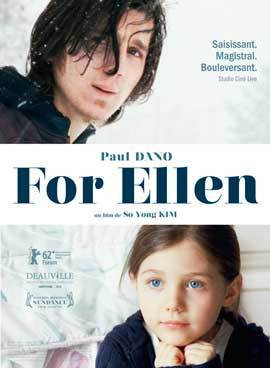
There’s a complete congruence of mood and sensibility between American independent movies and some American modern short stories. If Jessica Francis Kane was a movie director she could have made For Ellen
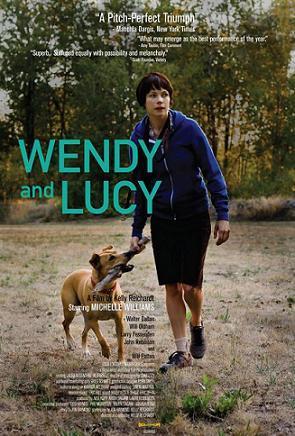
or Wendy and Lucy
or You Can Count on Me,
and if the directors Kenneth Lonergan, So Yong Kim or Kelly Reichardt were short story writers they would have written This Close. The tragic tranquillity of these movies and stories, the sense of actual lives being lived with no guns, no explosions, no car chases, no zombies, is a whole other America to the one we often unhappily get presented with, in, for instance, such wretched movies like Argo (Best Picture, 2012!) which I tried to watch recently. Perhaps it’s the relative absence of testosterone.
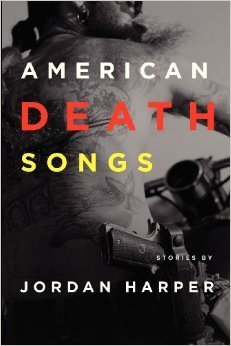
Some of you may remember that I’m also a fan of the ultraviolent American meth-head short stories of Jordan Harper,
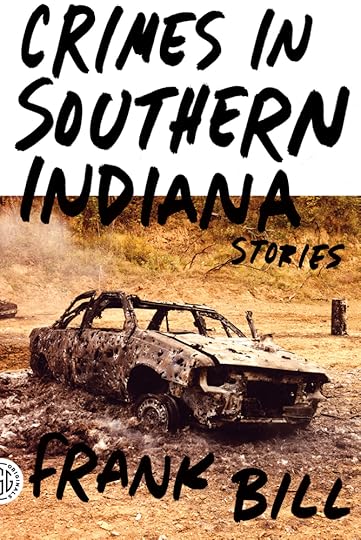
Frank Bill
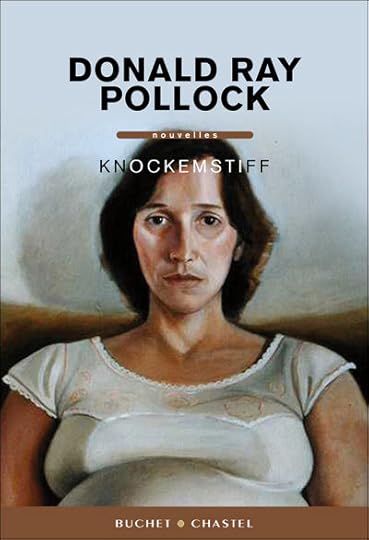
and Donald Ray Pollock.
Is that a contradiction? Oh well – I embrace contradictions, as does America.
In Jessica Francis Kane’s latest story collection, characters are *this close* to making a meaningful connection, but they veer too near or too wide. Virtually every one of these short stories are about ill-defined relationships that intrinsically contain a fatal flaw, which may be in the omission of an action, a connection, an ability to move forward or to evolve with the situation.
The 12 stories are written sparsely in deceptively simple prose, exhibiting the push-pull of relationships between mothers and daughters, mothers and families, husbands and wives, neighbors.
In perhaps the most heartbreaking story, Next in Line, a grieving young mother exists in a sort of twilight time, unable to communicate or share her tremendous burden of pain with her husband. Each day, she haunts the CVS store where a churlish old woman seemingly predicted her daughter’s death. “It’s all so vivid, for some reason, what it was like to be her mother that day. I don’t want to let it go,” she says.
In another story, Double Take, a young man reaches out to the mother of his drowned friend – too little, too late – “but she did not want to be around those boys who had gone into the sea and come safely out again.” And in yet another, American Lawn, a once-tortured Croatian gardener becomes the unwitting pawn as two neighbors – one older and set in her ways, the other brand new – compete for his attention and approval.
In two disparate stories – The Essentials of Acceleration and The Stand-In – daughters (one an adult, one a youngster) resent their fathers for surviving, even thriving, when their mothers are dead or damaged. The two stories before and after The Stand-In sketch the family dynamics that occurred before…and after.
For the most part, these are quiet people, inward and passive (sometimes passive aggressive) who simply don’t know how to forge more meaningful connections. While some stories are stronger than others, each speaks to the difficulty of getting close…but not close enough.
JFK is sort of a scary writer. Because she is so gentle with those sharp blades. Every one of her stories made me catch my breath. But This Close absolutely deserves all the breathless praise it is getting. The skill in this collection is undeniable, but so subtle you forget that that is what JFK is doing -- writing. These stories are not really read ... they are administered, sort of like from a drip. And after a few doses you understand addiction. That kind of scary.
I tried reading this collection with great expectations. Unfortunately, my expectations did not come to fruition. I found the collection bland and without much merit. The stories held no great truths, did not seem complete, and I finished many of them with a shake of my head. For instance, in American Lawn, there is an underlying competition between two neighbors and one of them gives some land to a Croatian immigrant so that he can farm it. To him, grass is just for goats so why even have a back yard? That's it, really, that's it. In the first story, Lucky, a man utilizes a dry cleaners and comes to coach the owner's son in baseball. He gets hooked into it but is never sure why. He is an innocent in the big city. Again, that's it.
I may be missing something but usually I'm pretty astute about short stories and there are two other reviewers, at least, who don't agree with me. However, I found Ms. Kane's stories without the kind of merit I attribute to Munro, Rash, Epstein, Melloy, and the like. It just didn't sing for me.
Goodness gracious. I love the way Jessica Francis Kane writes. She has such a subtle way of connecting you with a character, that even in a 5 page short story, I really felt for these people and their relationships. Some were so heartbreaking, like the death of a dear friend and son, and some so mundane, like the choosing of a dry cleaner when moving to New York, yet still relatable and enjoyable. And I definitely found May Attaway in one of them- falling in love all over again with the Rules For Visiting protagonist. I hope Kane turns all these stories into full-fledged novels. This book is very quick, very easy, and very touching. If you’ve ever moved to a new city, had a screaming toddler, felt disconnected from a parent, lost a loved one, or basically just lived on this earth, you’ll find something beautiful in this collection of short stories.
What Kane does with this collection contradicts so many expectations of the short genre. It's pretty genius. Likely specialists and critics will spend countless hours debating over the work's shortcomings and merits. I hope to be a spectator. Kane's characters occupy the tension-laden middle ground of characters just about to face their antagonists. But they never proceed deeper. Additionally, several of the of the stories only masquerade as short stories when, in fact, they're really interrupted stories that interrupt and resume at different stages of the characters' lives. This particular reader found the selection nothing less than brilliant.
Sharp, deceptively "normal" stories--by which I mean they're about ordinary people trying to navigate life in all its messy complexity, yet they pack an emotional punch. Several of the stories are linked, which gives the reader the joy of revisiting certain characters from different angles and at different times. This collection was longlisted for the Frank O'Connor prize, which--once you've dived into it--is not a surprise at all.
(As an unrelated note, it also has one of my favorite covers in quite a while.)
3.5 I read and loved her first novel, The Report, so when I saw this new book of stories by her I just had to pick it up and read. Her stories deal with women, ordinary everyday women, they could be your neighbors, they could be your friends and they all have the same problems we do. They death with infidelity, they deal with death and they are worn down by life. Some of these stories have interlocking chapters, some have a few of the same characters and Kane treats them all with compassion and respect. I enjoyed these stories and hope that she writes another historical in the future.
I'm not *really* a short story person though I always like the more once I'm in them than I think they will. I love collections where characters appear in more than one story and this fit the bill. Kane is a great writer and a great storyteller.
So satisfying, these stories. Dense and thoughtful. The stand-alones and the interlinked were equally strong. I could have read a dozen more. Come on, Jessica, write another novel.
"Rules for Visiting" by Jessica Francis Kane was one of my favorite books in 2019. It was for that reason, that I decided to dive into "This Close", which is a collection of short stories (one of which is the springboard for her protagonist in "Rules for visiting" so that was a little treat for me). This Close had a slow start and I was this close to setting it aside but about a third of the way in there was a shift (as if she was hitting her stride) and the stories began to grab me. Go read "Rules for Visiting". It's a gem of a book, then give This Close a chance.
These short stories permeated with sadness, though they were mostly simple tales of familial relationships. I liked how some of the stories’ characters linked. The story ‘Next in Line’ was especially moving in its portrayal of loss and grief - it punched me in the gut.
Some of these stories were 3 stars; some were 4 stars. None were life-changing, but I really like this author. One of the stories is a 10-page version of The Rules is Visiting—but the book version is significantly better than this short story version!
Kane's Rules for Visiting is one of the best books I read last year and this collection of short stories is excellent too. On the cover of the UK version she is compared to Alice Munro, my favorite writer, and I can see why. She writes sentences that somehow capture what it means to be human.
I felt the quality of the stories inconsistent, though most were good. I might have liked it better if it only dealt with the stories that were related - enjoyed the different perspectives and different timeframes the most.
Melancholy clings to Kane’s characters. She is a master at describing, not dramatic grief, but what is behind the barely visible momentary darkening of an expression, the confusing pain of unspoken loss.
Squeeze your thumb and forefinger together. Then move them apart half an inch. The first gesture of closeness indicates intimacy; the other, a close call, a near miss, a slight falling short.
This is the emotional half inch explored by the stories in Jessica Francis Kane's fine This Close.
Characters flirt with opportunities and disasters, understanding and misperception. Small nuances, crossed signals and blind spots nudge events one direction or the other.
In the opening story, a young man in New York City finds a job beyond his expectations and a relationship above his social standing. He realizes he needs dry cleaning, and his selection of a neighborhood shop run by two Korean women leads him down a path of perceived obligation.
Kane renders perfectly the tortured introspection of the newly privileged customer navigating his guilt and confusion in a city where so many routine needs are handled by others via transactions wrapped in superficially friendly symbiosis.
"I'd observed Christina's family and friends and the way they sometimes talked about their relationships with members of the service industry. I thought it was a way of seeming to have servants without admitting you wanted them."
He becomes more deeply involved with the cleaners, one of whom has a young boy, and can't extricate himself from his role as a mentor, father figure, babysitter or whatever role he's worked himself into. He and the women try and fail to communicate across layers of gender, race and culture, class and dependence, and the random proximity of city life——deftly communicated in small strokes.
The next story explores similar ground in a suburban setting, where an unspoken competition for the loyalty of a Croatian immigrant blossoms as he helps the women of two neighboring households garden.
A mother loses her small child to meningitis and rehearses versions that attribute the death to her own neglect, to fate or to an angel of death figure she encountered in CVS store——none of which are particularly comforting.
In two sets of three stories, Kane examines relationships among the characters by selecting small incidents at different stages of their lives. Sometimes the characters experience little epiphanies, and sometimes the revelations are ours.
In the past several months, I've started three other volumes of stories and set them aside. It's easy to do when each introduction leads quickly to an ending, and the writer has to win the reader anew. But This Close held me close with finely observed moments——touching, surprising and true.
Every Saturday I read a short story. I have spent the last few months reading a story a week out of This Close. There are twelve short stories, told with a bit of heartache and tenderness. Some of the stories are connected and others stand alone. Kane's stories are snapshots that bring you up close and personal as the reader looks into the windows of people's lives.
We come this close to happiness, love and death on a daily basis. The stories of This Close are the chance meetings, close calls, wrong turns, small choices made that change the course of your day and the vivid moments of a life lived. This Close is about the parts of the story you may not recall because you are too close to it. Time gives you perspective and so does Jessica Francis Kane in her collection of stories.
One of the more memorable stories for me is called American Lawn; of a lady who lets an immigrant make a garden out of her back yard. They forge an awkward friendship. Another storyline that touched me is the story of Maryanne and her son, Mike. These two characters stories intersect and collide and they are in more than one story. Double Take is about Mike's college roommate, Ben who takes a road trip when he can't shake his misery after Mike's death. Ben drives across the country to visit Maryanne.
I have a new found appreciation for short stories and short story writers. The art of the short story is hard to master and Kane is a master. This Close is a collection of short stories about family, connections, love, death and the day to day routines of a living a life. This Close definitely has a story you can connect to.
I received this book for free from Goodreads First Reads.
This collection of short stories showcases simple, every day experiences. It is not extravagant or complex, but beautiful in its simplicity and understanding of the every day.
My personal favorite story is about a first time mother dealing with the grief of losing her child. Through the grieving process she believes that somehow her toddler was cursed by a woman she had encountered in a CVS pharmacy, and spends many afternoons in the same store as a result. Not knowing if she and her husband will be able to overcome the grief and support each other, they finally come together again in the store. It is a touching, honest and lovely moment when the mother comes to terms with the fact that they lost their daughter through the fault of no one.
Contrasting this story of grief is a story over the pettiness and jealousy between neighbors. When a new family moves into the house next door, Pat becomes upset over the positive changes that are happening next door. Trying to one-up her neighbor, Pat allows a man to garden in her yard in exchange for some of the vegetables produced. The man befriends the neighbor instead, who views him as a human being and not some form of a hired hand. Pat becomes jealous of the closeness between the two and eventually tries to show the man that her neighbor is selfish and irresponsible because she waters her yard during a drought.
Overall a likeable collection of the hidden stories inside all of us.
To be honest I really did not like it. I thought the book in general was too close to home for me as it seemed to deal with suburban life in all its mundane life. When I read I want to be transported to somewhere different, even far off. Not to the house next door.
It advertises itself with dealing with relationships and to be fair the stories deal with relationships. However it is not romance or about troublesome relations with other human beings, but more about those that we encounter on a daily basis. For some that is a strength of the book. It makes the book more credible and grounded but personally I read literature as an escapist route from life not to read about my life.
The one stand alone story was The American Lawn. I enjoyed this, probably because of its horticultural undertones. While the relationship between the garden owner and her neighbour is a source of conflict and the gardener the man in the crossfire, it is the struggle with the garden that is a constant.
Other stories were not so good, including Lucky Boy. I just felt this story epitomises the weaknesses of the whole book. It did not inspire me and it was a struggle to read and understand.
I did re-read some of the book and it made better sense the second time, including story groupings. I found that did at least make sense as the same characters were looked at with different aspects to their lives.
I have passed this book on to another person as I think she might appreciate it more than I do.
How close can we come to love, success, happiness, forgiveness?
An older woman, irritated with her wealthy young neighbor���s yard ���improvements,��� offers a corner of her lawn to a Croatian immigrant who wants a vegetable garden. A recent college graduate living in New York City finds himself in a strangely entangled friendship with his dry cleaner and her son. A daughter accompanies her father to Israel, where, seeing a new side of him away from her mother, she makes an unusual bargain.
Through thirteen stories, some stand-alone, others woven with linked characters, Kane questions the tensions between friendship and neighborliness, home and travel, family and ambition. In writing filled with wit and humor and incredible poignancy, she deftly reveals the everyday patterns that, over time, can swerve a life off course.
Kane's This Close is a collection of short stories of humdrum people dealing with ordinary and not so ordinary subject matters. The "ordinariness"only adds to the entire collection's appeal. Her writing style is straight forward, again plain, but it has this unique allure - Kane succeeds without over trying. There is a story among the thirteen that is bound to hit home or touch a cord within the reader.
If you aren't a short story fan, or you're looking for a collection of short stories that offers a solid based theme you won't care for This Close.