Jump to ratings and reviews
Rate this book

Bibliophobia

Rate this book
Books can seduce you. They can, Sarah Chihaya believes, annihilate, reveal, and provoke you. And anyone incurably obsessed with books understands this kind of unsettling literary encounter. Sarah calls books that have this effect “Life Ruiners”.

Her Life Ruiner, Toni Morrison’s The Bluest Eye, became a talisman for her in high school when its electrifying treatment of race exposed Sarah’s deepest feelings about being Japanese American in a predominantly white suburb of Cleveland. But Sarah had always lived through her books, seeking escape, self-definition, and rules for living. She built her life around reading, wrote criticism, and taught literature at an Ivy League University. Then she was hospitalized for a nervous breakdown, and the world became an unreadable blank page. In the aftermath, she was faced with a question. Could we ever truly rewrite the stories that govern our lives?

Bibliophobia is an alternately searing and darkly humorous story of breakdown and survival told through books. Delving into texts such as Anne of Green Gables, Possession, A Tale for the Time Being, The Last Samurai, Chihaya interrogates her cultural identity, her relationship with depression, and the intoxicating, sometimes painful, ways books push back on those who love them.

221 pages, Kindle Edition

First published February 4, 2025

185 people are currently reading
19425 people want to read

About the author

Sarah Chihaya

2 books83 followers
Sarah Chihaya is a book critic, essayist, and editor. Her work has appeared in The New Yorker, The New York Review of Books, The Nation, New York Magazine, The Atlantic, and The Yale Review, among other places, and she is the co-author of The Ferrante Letters: An Experiment in Collective Criticism. She has taught at Princeton University, New York University, and UC Berkeley. She is currently a contributing editor at Los Angeles Review of Books and lives in Brooklyn.

Ratings & Reviews

What do you think?
Rate this book

Friends & Following

Create a free account to discover what your friends think of this book!

Community Reviews

5 stars
318 (18%)
4 stars
638 (37%)
3 stars
524 (30%)
2 stars
176 (10%)
1 star
38 (2%)
Displaying 1 - 30 of 419 reviews
Profile Image for Sunny Lu.
983 reviews6,400 followers
May 30, 2025
Reading about reading, being a reader who reads, and the attachments novels give us...! Chihaya explores how intimately these things are tied up with her own mental health struggles and neuroses. She deftly weaves her suicide attempts and her career as an English academic into different books she's read over the course of her life that have made a significant impact. I really liked when she spoke about her Japanese-Canadian-American identity and the weight of history on her shoulders in relation to Ruth Ozeki's A Tale for the Time Being. As a little girl who loved the whole Anne of Green Gables series for its structure, whimsy, and tiny yet expansive world, her chapter on Anne was fascinating to me. The way Chihaya delineates her relationship to self-identification and 'relatability' in reading, how it was and is not important to her as a reader, was also fascinating to me, as a bitch who finds everything relatable. Chihaya is clearly a very smart person, and a deliberate and intentional reader, which makes her writing about feeling like she was losing grasp on the one thing that defined her- being a "good reader"- was a devastation of her self. The way she discusses her depression and stint in the psych ward, her undergraduate experience at Oxford University, and the coming of age she experienced being a Japanese girl in Ohio, with minimal drama and a fair amount of self-deprecation, self-harm and childhood into adulthood suicidality, and the desperate push and pull search for the perfect book that would heal her and also hurt her deeply in its writing proving to her that nothing she could write would be worth anything at all- it's moving and thoughtful. I found the prose often moving between meandering/simplistic/readable and quite academic/dense/profound in a way that felt stylistically inconsistent at times. Within the first few chapters, I wasn't quite sold on the book, because like Chihaya herself, I'm not particularly interested in the genre of 'mental health memoir.' But each chapter prodded at my thinking a bit more, and I unexpectedly quite enjoyed my experience reading this book.
Profile Image for Melanie.
Author 8 books1,406 followers
August 7, 2025
“At times, especially when I was younger, reading felt to me pleasantly like dangling one foot in the grave; I would read all day and all night the way some other depressives I’ve known might sleep whole weeks away. In the most unbearable periods, it was a way to not live in my life, to not live in my body, to not live at all, but also not be entirely outside of it, not yet anyway. I don’t think this was simply escapism; I don’t remember ever feeling like I was really living in the alternate universe of the book. It felt—still often feels—so good to just be a ghost that haunts the world of the text, visible neither here nor there. To linger in the meeting of the living and the dead, in the very moment when warm, live lips touch clay-cold, dead ones, a moment without a future. I read to be on the cusp.”
~ Sarah Chihaya

A ghost in the throat.

I don’t know why but I kept thinking of Doireann Ní Ghríofa and her own wondrous, feverish account of an obsession with a literary text when I read “Bibliophobia”. Ghostly metaphors kept rising from both of these books. Two female writers engaged with literature for very different reasons. And yet.

If Sarah Chihaya’s untethered sense of self, her own unbearable lightness of being, her maddening, bewildering sadness, made her feel like a ghost in her own life; then writing this memoir feels like the alchemical process she needed to finally become embodied.

Academia’s biggest losses are often our greatest gains.

Had Chihaya actually penned the book that would have secured her tenure, we would not have had her luminous and thought-provoking thoughts on Toni Morrison’s “The Bluest Eye”, Helen DeWitt’s “The Last Samurai”, A. S. Byatt’s “Possession”, Anne Carson’s “The Glass Essay” or Ruth Ozeki’s “A Tale for the Time Being”.

All of them interwoven with an unflinching account of how it feels to live in disquiet, on wildly shaky grounds, in moments of mental breakdowns and suicidal anguish.

If reading is a creative act, then writing bewitchingly about reading is the ultimate high-wire act.

And there will be plenty of us ghosts inhabiting these pages.
Profile Image for Thomas.
1,863 reviews12k followers
April 27, 2025
I appreciate Sarah Chihaya’s vulnerability about her mental health concerns, her nuanced relationship with books, and her tenure denial. That said, I was disappointed in Bibliophobia. I found that the memoir lacked the level of self-insight I’ve observed in other memoirs about mental health (see What My Bones Know by Stephanie Foo) – it seemed to me that the writing about other books almost diluted space that could have been dedicated to more of Chihaya’s self-exploration. I wasn’t blown away by the prose either. An okay read but not one I’d necessarily recommend.
Profile Image for Meike.
Author 1 book4,943 followers
March 18, 2025
There are a ton of texts celebrating the beauty of literature, but according to Japanese-Canadian-American professor and literary critic Sarah Chihaya, books are dangerous: They almost ruined her. Like many book lovers, Chihaya has always relied on the emotional power of stories, a dependency intensified by her depression - between the ages of 10 and 18, she tries to kill herself three times. As an adult, she has to finish an academic monograph to get tenured, but she suffers a breakdown and questions her general relationship to books.

Like many bookish memoirs, Chihaya ties her life events and crucial moments to novels, in her case particularly Anne of Green Gables, Possession, The Bluest Eye, A Tale for the Time Being, and The Last Samurai. She brings those literary encounters in contact not only with her family history, but also with her mental illness, diving into questions of self-harm, sadness, and the urge to belong. She investigates why certain texts speak to her, she is suspended between the wish to escape and/or die, and the longing for meaning. When she's finally a professor and thus a professional reader, she becomes unable to deal with books.

BookTok and Instagram have long turned reading into an aesthetic, and books are mostly framed as a sort of comfort food, or a means of education. And sure, reading is a threat to stupidity, but it can also be dangerous, make readers angry or disgust them. These potential consequences of reading aren't investigated enough, the all-encompassing repercussions of novels as foils aren't often illuminated. Chihaya ponders the impact of her obsession and how to deal with it in a mixture of memoir and literary criticism, also showing how interpretation is driven by mystrious inner forces.

Smart and entertaining - no wonder it received the Whiting Grant for Creative Non-Fiction.
Profile Image for Yahaira.
577 reviews289 followers
January 22, 2025
A soul book

------------
From my dec 19th review
ARC received from publisher


The brain fizz book.

When I’m loving a book, my brain just starts to go off. Maybe it’s sparks, or synapses firing wildly, but “fizz” feels right. Once my brain starts to fizz, spark, meltdown, I know that I’m reading a new all time favorite book. Well here I am ending the year with my brain chemistry changed through a book that doesn’t come out until next year. Meet one of my new soul books. I love that I’m having a reaction to a book, thinking it’s directed at me or that I’m connecting to the author in some deep meaningful way, when Chihaya is literally saying, ‘stop girl, don’t. I did this and it’s not true.” Ironic!

Bibliophobia is a memoir through literary criticism, or literary criticism through memoir, that shows us Chihaya’s journey with depression, breakdowns, and suicide attempts while also tracking books that she’s connected with, some deemed life ruiners, and how timing and rereadings have changed the way she reacts to them. It’s also about looking for connection, being othered, isolation, learning how to be, and generational trauma. In trying to say what it’s about, I feel like I’m reducing it, flattening it. This isn’t a book with a simple timeline or a book that simply analyses a book per chapter. It’s trying to deal with the moment you see yourself in a book; I don’t mean just relating to a character, but reading a book that perfectly captures your thoughts, that contains sentences you wish you had written down. Not only are you facing your lack of uniqueness, but you are left to wonder where this leaves you as a writer (thankfully I’m ‘just’ a reader).

I’ll admit being hooked as soon as I saw Dewitt’s The Last Samurai discussed, one of my life ruiners - Sybilla forever, and seeing someone mention reading for escape/erasure and not necessarily plot (finally). But what really makes this soar for me is Chihaya’s writing. It’s astute, smart, funny, honest, and weirdly propulsive. It's simply beautiful. I loved witnessing her thinking things through, how texts change for her with each reading, how she catches herself (mis)reading people, and how she herself changes.
Profile Image for Hannah Greendale (Hello, Bookworm).
807 reviews4,205 followers
May 1, 2025
I nearly DNFd after the first chapter, but the more time I spent with this book—exploring Chihaya's musings on books that wake you, challenge you, or devastate and shape you—the more I liked it.

Sadly, the final chapters failed to satiate a need for resolution, as Chihaya proves unfailingly pessimistic to the end. (Extended thoughts below) 👇

CHP 01

Suicidal ideation is the lightest, easiest thing in the world. It's an invisible hobby, a fun little secret you can take anywhere, like doing Kegels at brunch or doodling in lecture.

^ Some context: Sarah Chihaya was hospitalized after a nervous breakdown and writes freely about her depression, self harm, and thoughts of suicide, with heavy reliance on humor as a coping mechanism. I enjoy dark humor, so I don't find this off-putting.

Some claims Chihaya makes about books (🚨a few of these don't sit right🚨):

(1) Reading fiction to better oneself (i.e., make oneself "good") is reductive and is both insulting to books and their readers.

(2) The very worst versions of reading as an act of service is to read fiction to learn empathy and sympathy.

(3) Reading should not be an act of productivity but a kind of produce—something that has grown unpredictably and is then eaten, proving sometimes "smooth and beautiful and delicious, sometimes bitter and gnarled and thorny".

(4) Books that refuse to be "easily digested" or "churn up anxieties and fears you never knew you had" are the ones that most strongly shaped Chihaya's experience of reading as an adult.

(5) Books, like people, should not be asked to save us.

(6) It's terrible to read for something, like comfort, pleasure, validation, comprehension, or even for research-related reasons like searching for symptoms, ideas, citation, or tenure. Or for salvation.

Way to suck ALL THE FUN out of reading. 😑

Chihaya writes that only after a period of non-reading did she abandon all these "terrible" ways of reading (listed above) and embrace a new way of reading closely and deeply without expectations.

If her relationship with books and reading has changed, that's great, but why does she feel the need to diminish and disparage the way others elect to engage with literature? It simultaneously reeks of superiority (my way is the only "right" way) and insecurity (the only way I can feel good about my way is to minimize/reduce your way).

I've only recently come to see that my relationship to books has become, or perhaps has always been, an uncomfortable but necessary vacillation between love and terror—between bibliophilia and bibliophobia.

The book that would kill me and the book that might save me, sadness and reading, self-harm and writing, are the violent lifelong habits that made me who I am.

^ Between the text and the footnotes, there's heavy emphasis on the concept of the tortured artist. While I recognize that some artists do lean into their trauma to create beautiful and lasting works of art and literature, I've always found the idea that you can only be an artist if you're tortured dated and melodramatic.

Art can be a joy-filled act of expression. Writing can be a passionate and enthusiasm-fueled dance with one's imagination. No one is forced to make art. If they find it torturous, they can stop any time. No need for the dramatized suffering.

...I'm starting to think this is a book about hating books. 😫

👉 I was going to set this book down and read something else for a bit, but I think I need to go right into chapter two to quickly discern if this is a book I want to keep reading. 😕

CHP 02

I was years away from understanding that there are certain books that modify your chemical composition so palpably you fear you might no longer breathe air or drink water.
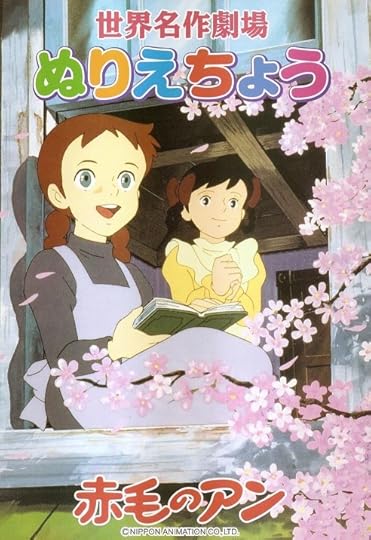
Chihaya dedicates this chapter to Anne of Green Gables (and the seven books that followed) and the role they played in her life by showing her another girl who didn't fit in. I loved this book growing up. 🥰 Also, I had no idea there was a 1979 anime of Anne of Green Gables.


In exploring her difficult family dynamics, Chihaya writes of her father's anger and the times in which he grew enraged and threw things. She offers a whimsical spin on this situation, imagining that the objects wanted to fly and her father merely helped them along. Later, she writes:

My dad was scary and always unpredictable, but so are lots of parents. And lots of them are so much worse; we lived in a nauseating atmosphere of possible violence or near violence or mild violence, but as far as I know, it hardly ever erupted into physical danger, for me at least

^ It breaks my heart to see her downplaying the situation and dismissing the pain and fear of her experience because others have had it worse. I feel it's important to never quantify trauma in that way. We would never tell a neighbor whose child drowned to buck up and dry their tears because a couple down the street had two children drown, so please don't ever dismiss your feelings because someone else could have it worse.

CHP 03

This time, it was not the kind of book I wanted to escape to, but rather, a book I couldn't escape from. It was unlike anything I'd read before—terrifying, unexpected, essential.

^ Chihaya is referring to The Bluest Eye by Tony Morrison. She calls this book a "Life Ruiner" and claims that all people who are obsessed with books have a Life Ruiner book. While this sounds like a bad thing, it's not:

To call it a Life Ruiner is not to say that a life of letters is necessarily ruination—but rather, to identify it as the book you can't ever recover from, that you never stop thinking about, and that makes you desperate to reach that frightening depth of experience with other books.
👉 I should probably mention that this no longer feels like a book about hating books. It's more like a book that examines Chihaya's tumultuous relationship with books, for good or ill (mostly for good).

CHP 04
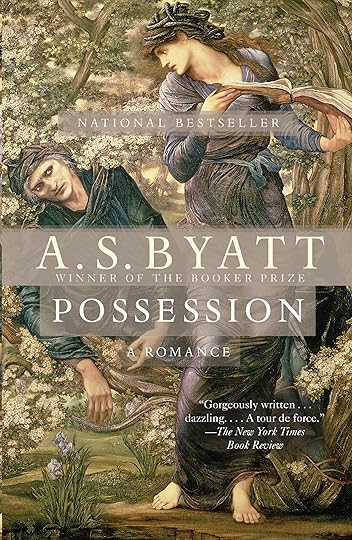
This chapter centers on Possession by A.S. Byatt, which Chihaya credits with making her believe that the bombastic love she felt for the book could also happen with a person.

📘 If Chihaya has taught me anything it's that I really need to get around to reading Possession. 📖


...a book also won't betray you. It is the only truly secret love affair you can have; the book will never tell what you show it, even as you reveal your truest self to the page.

CHP 05

I was going through a breakup, and "The Glass Essay" is indisputably the greatest breakup poem ever written. (Don't try to argue with me on this.)

^ A full chapter on Chihaya compulsively rereading Anne Carson's poem as an act of self-comprehension after a bad breakup. She draws parallels between her reliance on the poem and Carson's reliance on Emily Brontë's work. 👇

I peered into Carson to see myself, as she peered into Brontë in turn—a nested series of readings and rereadings in the search for newer, deeper meanings.

In the chapter on Anne of Green Gables, Chiyaha shared her desire as a young woman to dissolve into Avonlea or to fade away from being in this world. In this chapter she recognizes that aspiring to dissolve, to be and feel nothing, is not the ideal state she thought it was. At last, she recognizes it as a self-defense tactic that she deployed between depressive episodes.

CHP 06

Imagine the book that solves all your problems. It knows where you come from and where you hope you're going. It reads you as you read it.

Really interesting chapter in which Chihaya examines questions about identity in Ruth Ozeki's A Tale for the Time Being and questions about identity in her own life.

I have always carried a passive guilt about being Japanese in America rather than Japanese American. [...] I often have the nagging feeling that I don't have a right to belong to an Asian American community.

On depression: Chihaya writes that depression doesn't make for a good story because it doesn't have a clear beginning and end. This is so relatable. Depression is not something that gets cured; instead, it must be acknowledged, understood, and managed. No happy ending. Just a new way of being.

CHP 07

Some musings on "The Unquiet Grave", Artful by Ali Smith, and the DSM, as well as more glimpses of the tortured artist. 👇

The great cruelty of writing is this realization that the experience for which I long the most as a reader—an encounter with someone who makes me believe that they have articulated exactly my thoughts, exactly my feelings, in the most perfect and irreplaceable terms—is a kind of death.

CHP 08

Tbh, I've started skimming, as I'm ready to reach the end of this book.

EPILOGUE

Is this simply what I'm doing here, in this book, trying to burnish my writerly credentials with this proof that I've been through something real? Am I a fool to think that I'm far away enough from it to write about it—am I still not past it, but in it?

There is no guarantee that it will not happen; I cannot in good conscience tell you that I have totally let go of either the suicide plot or the reading-for-salvation plot—for what is this book if not a version of that?

^ Why open by saying that reading for salvation is terrible and close by admitting you're still reading for salvation?

There were some strong chapters in the middle of this book that I really enjoyed reading, but the chapters at the top and tail of the book nearly sent me running. Even so, I admire Chihaya's honesty and the way she writes candidly about struggling with mental illness. I hope she finds the help and support she needs to enjoy a full life.
Profile Image for Bonnie G..
1,819 reviews429 followers
April 24, 2025
While impressed with the craft, for the first half of this book, I had an overwhelming feeling of "yeah, yeah, yeah, it is clever, but what else?" I felt removed from the narrative. It felt overly familiar and obvious. It felt like an attempt to find a unifying reason for things without reason. And then Chihaya sees all that and cuts into her mental illness with the same ruthlessness she had cut into her flesh with kitchen knives. She seeks to annihilate her depression and suicidal ideation rather than letting the depression and ideation anhilate her, and then she recognizes the impossibility of seeking such clear answers and solutions. The final third of this book is brilliant and true and edifying in a way few things I have ever read, seen or heard have been.

I am lucky. I have had episodes of depression, anxiety, and disordered eating, but nothing beyond my ability to manage it on my own and without medication (so far.) I have also been unlucky. Unmanageable mental illness has made difficult the lives of many people I care about deeply, and two of those people died by suicide. I am always looking to better understand those living with sometimes precarious mental health so I can be a better support to them, and to understand what was happening within those who have died just for myself, because I can't not try to make sense of it though there is no real sense to be made. The last third of this book helped in that quest in a way very few other resources have done. Despite the read being a bit uneven, I am giving this 5 stars because making manifest something so inherently inchoate is a bloody miracle.

I realize I have said nothing about the books. Reading and literary criticism are central to everything here, but I am not sure it is helpful to discuss that, and I am not sure how I would do so without an analysis of her relationship to reading and to particular books that would render this review close to as long as the book itself. The connections are interesting, and a lot of the discussion in the book relates closely to the discussion of books and mental health set forth in My Good Bright Wolf which I coincidentally read just a few weeks ago and which I have yet to provide a full review for (and which I might not do) for some of the same reasons.
Profile Image for Celine.
347 reviews1,025 followers
January 27, 2025
a memoir which cuts to the bone. brilliant.
Profile Image for Eliza Pillsbury.
322 reviews
February 4, 2025
10 stars. trophy. sky-writing. it’s actually scary to me how good this book was. it’s like she read my journals! which adds a whole other level of meaning to an already meta text. more thoughts to come, but i’m feeling very grateful to random house (and sam ackerman bless up) for the advanced copy.

EDIT: RELEASE DAY HAS ARRIVED, EVERYONE GO GET YOUR COPY
Profile Image for nathan.
686 reviews1,322 followers
December 6, 2024
Major thanks to NetGalley and Random House for sending me an ARC of this book in exchange for my honest thoughts:

"𝘉𝘪𝘣𝘭𝘪𝘰𝘱𝘩𝘰𝘣𝘪𝘢 𝘪𝘴 𝘮𝘢𝘯𝘺 𝘵𝘩𝘪𝘯𝘨𝘴. 𝘐𝘵 𝘪𝘴 𝘢𝘣𝘰𝘶𝘵 𝘵𝘩𝘦 𝘧𝘦𝘢𝘳 𝘰𝘧 𝘵𝘩𝘦 𝘪𝘥𝘦𝘢 𝘰𝘧 𝘣𝘰𝘰𝘬𝘴 𝘵𝘩𝘦𝘮𝘴𝘦𝘭𝘷𝘦𝘴, 𝘰𝘧 𝘱𝘢𝘳𝘵𝘪𝘤𝘶𝘭𝘢𝘳 𝘣𝘰𝘰𝘬𝘴 𝘐 𝘩𝘢𝘷𝘦 𝘬𝘯𝘰𝘸𝘯, 𝘢𝘯𝘥 𝘰𝘧 𝘢 𝘴𝘱𝘦𝘤𝘪𝘧𝘪𝘤, 𝘶𝘯𝘬𝘯𝘰𝘸𝘯 𝘢𝘯𝘥 𝘶𝘯𝘸𝘳𝘪𝘵𝘵𝘦𝘯 𝘣𝘰𝘰𝘬: 𝘮𝘺 𝘰𝘸𝘯. 𝘈𝘵 𝘴𝘰𝘮𝘦 𝘱𝘰𝘪𝘯𝘵 𝘪𝘯 𝘮𝘺 𝘥𝘳𝘢𝘮𝘢𝘵𝘪𝘤 𝘢𝘥𝘰𝘭𝘦𝘴𝘤𝘦𝘯𝘤𝘦, 𝘐 𝘥𝘦𝘤𝘪𝘥𝘦𝘥 𝘵𝘩𝘢𝘵 𝘐 𝘸𝘢𝘴 𝘢𝘭𝘭𝘰𝘸𝘦𝘥 𝘵𝘰 𝘥𝘪𝘦 𝘢𝘧𝘵𝘦𝘳 𝘐 𝘸𝘳𝘰𝘵𝘦 𝘰𝘯𝘦 𝘨𝘰𝘰𝘥 𝘣𝘰𝘰𝘬."

A reader’s book and a writer’s book. What if you’re both? If you ever loved reading but were scared about certain aspects like the never-ending tbr or the gut punch emotions that sit in your stomach after a book hangover, this one is for you.

Brutally honest. In the shameless kind of way. With appreciation for DeWitt’s The Last Samurai, Morrison’s The Bluest Eye, and Yiyun Li’s frankness around unaliving yourself, a lot of this is about me: reading, writing, life, and death. I run through a vicious cycle of pages and thoughts and applications on a day to day basis. I’ve always thought, why do I do this? Is it enjoyable? What am I running away from? What am I trying to say better? What parts of myself, the stories, the simple ones, the hard ones, the ones I don’t even know how to talk about, how can I tell it to someone like you?

“𝘈𝘴 𝘢 𝘳𝘦𝘢𝘥𝘦𝘳, 𝘐 𝘢𝘮 𝘢𝘭𝘸𝘢𝘺𝘴 𝘥𝘪𝘧𝘧𝘶𝘴𝘪𝘯𝘨 𝘪𝘯𝘵𝘰 𝘵𝘩𝘦 𝘸𝘰𝘳𝘭𝘥 𝘰𝘧 𝘧𝘪𝘤𝘵𝘪𝘰𝘯. 𝘈𝘴 𝘢 𝘸𝘳𝘪𝘵𝘦𝘳, 𝘐 𝘤𝘢𝘯𝘯𝘰𝘵 𝘴𝘰𝘭𝘪𝘥𝘪𝘧𝘺 𝘪𝘯𝘵𝘰 𝘥𝘪𝘳𝘦𝘤𝘵 𝘴𝘵𝘢𝘵𝘦𝘮𝘦𝘯𝘵𝘴. 𝘈𝘴 𝘢 𝘱𝘦𝘳𝘴𝘰𝘯, 𝘐 𝘤𝘢𝘯𝘯𝘰𝘵 𝘴𝘰𝘭𝘪𝘥𝘪𝘧𝘺 𝘪𝘯𝘵𝘰 𝘴𝘰𝘮𝘦𝘰𝘯𝘦 𝘸𝘩𝘰 𝘮𝘢𝘬𝘦𝘴 𝘢𝘯𝘺𝘵𝘩𝘪𝘯𝘨 𝘩𝘢𝘱𝘱𝘦𝘯. 𝘐𝘯 𝘮𝘺 𝘮𝘰𝘴𝘵 𝘭𝘰𝘴𝘵 𝘮𝘰𝘮𝘦𝘯𝘵𝘴, 𝘐 𝘴𝘦𝘦 𝘮𝘺𝘴𝘦𝘭𝘧 𝘥𝘪𝘴𝘪𝘯𝘵𝘦𝘨𝘳𝘢𝘵𝘪𝘯𝘨 𝘢𝘯𝘥 𝘥𝘳𝘪𝘧𝘵𝘪𝘯𝘨 𝘪𝘯𝘵𝘰 𝘦𝘷𝘦𝘳𝘺𝘵𝘩𝘪𝘯𝘨 𝘢𝘯𝘥 𝘦𝘷𝘦𝘳𝘺𝘰𝘯𝘦 𝘦𝘭𝘴𝘦, 𝘧𝘭𝘰𝘢𝘵𝘪𝘯𝘨 𝘶𝘯𝘴𝘦𝘦𝘯 𝘢𝘯𝘥 𝘥𝘪𝘴𝘱𝘦𝘳𝘴𝘦𝘥 𝘵𝘩𝘳𝘰𝘶𝘨𝘩 𝘵𝘩𝘦 𝘸𝘰𝘳𝘭𝘥 𝘵𝘩𝘦 𝘸𝘢𝘺 𝘐 𝘸𝘢𝘯𝘵𝘦𝘥 𝘵𝘰 𝘧𝘭𝘰𝘢𝘵 𝘶𝘯𝘴𝘦𝘦𝘯 𝘵𝘩𝘳𝘰𝘶𝘨𝘩 𝘵𝘩𝘦 𝘸𝘰𝘳𝘭𝘥𝘴 𝘰𝘧 𝘣𝘰𝘰𝘬𝘴 𝘸𝘩𝘦𝘯 𝘐 𝘸𝘢𝘴 𝘺𝘰𝘶𝘯𝘨."

The collection of the essays are tidy, fan service for contemporary lithic heads, and wonderfully executed with beautiful progressions in revealing Chihaya not just as a writer or professor, but us as a reader.

The reader is universal. We come for the same thing: a good story. And Chihiya has a good one to tell.
Profile Image for Amber.
779 reviews164 followers
December 19, 2024
ARC gifted by the publisher

I don’t say this lightly, but I might’ve read the best book of 2025 already and the year hasn’t even started 🤣

One of the best literary criticism that goes deep into why we read. I love that Chihaya writes through the lenses of examining her depression (there’s lots of mentioning and descriptions of suicidal thoughts, please take care of yourselves x) and the books that accompanied her through the years of her mental illness

There’s so much to unpack and this is a book that requires to be read slowly, carefully, and repeatedly. I suggest reading this with your book besties because it really inspires so many conversations about how and why someone reads

I’ll list a couple of thoughts I have for now and I’ll add more coherent reviews as I reread and think through this book more:

- what does it mean to be a good reader? Can we read without expectations? Can we read with insatiable curiosity?

- what are some transformative books I’ve encountered that completely changes how I read. Are there books that separate my reading journey into a before and after (what I can think of for now: BIBLIOPHIBIA, HOW TO READ NOW)

- the intertwined relationship between a book and the reader. As the reader changes, the interpretation of the book also evolves. I love this thinking of reading as a way to guide and reflect one’s growth

- reading as a creative process. I’ve always thought that reading is more passive than writing. But in the chapter where Chihaya discusses the positive feedback between the reader and writer in A TALE FOR THE TIME BEING, it really made me reconsider how the act of reading can itself be an artistic experience

More to come. But all this to say, read this book. And read it again.
Profile Image for laurel [the suspected bibliophile].
2,041 reviews755 followers
February 27, 2025
The feeling when you read something by someone smarter than you could ever possibly hope to be.

Both a mirror and a wall, this sent me, a being slowly swirling around a drain of darkness, straight down into the depths, clawing myself back up through the decaying shampoo, the hair clumps, the skin flakes, the grime and soap scum.
Profile Image for Mizuki Giffin.
178 reviews117 followers
December 28, 2024
A book about the power of books and their capacity to change, destroy, and heal. The way Sarah Chihaya talks about the books featured in this makes me want to read (or re-read) them all! Reminded me of The Night Parade by Jami Nakamura Lin. I loved this so much
Profile Image for Steph | bookedinsaigon.
1,618 reviews432 followers
September 21, 2024
Thank you to Random House and NetGalley for the free e-ARC in exchange for an honest review

** TW: depression, suicidal thoughts, parental verbal abuse **

Did I just read one of the best books of 2025… in 2024? If Alexander Chee and Sylvia Plath had a Japanese Canadian/American bookworm baby, it would be Sarah Chihaya. Not-quite-a-memoir BIBLIOPHOBIA is a collection of Chihaya’s musings and analyses on her relationship with books, depression, family, and racial identity.

Chihaya’s prose is so satisfyingly clean and incisive. My favorite writers are those who know how to distill a fleeting thought, emotion, experience, or state of being into crystalline lines that rattle with sharpness. My e-ARC is littered with highlights. Some of these include:

“I was enraptured by the book itself but equally enraptured with the sense that it gave me someone to be.”

“I immediately, repeatedly reread certain passages at a word-by-word crawl, not to understand what happened, but to figure out how it was happening…”

“We indeed are all ‘by-products of the mid-twentieth century,’ as Ozeki writes, and I irrationally and grandiosely fear that like microplastics, like neo-imperial structures of power, like the internet, I too am circulating some insidious unknown poison as I move through the world.”


1. “Life Ruiners”

“To call it a Life Ruiner is not to say that a life of letters is necessarily ruination–but rather, to identify it as the book you can’t ever recover from, that you never stop thinking about, and that makes you desperate to reach that frightening depth of experience with other books.”


This book is a Life Ruiner. Chihaya feels like the kind of person I could be, want to be, don’t want to be, and/or will inevitably become. To be so astute about the experiences of reading, and yet to suffer as a result of acute astuteness… Will I get madder the closer I try to get to words?

“How important it is to read a book that so undoes you that it becomes a precious token of your own destruction to carry to the end of your days.”


This memoir/essay collection is titled BIBLIOPHOBIA because, as much as Chihaya’s identity and career revolve around reading and writing about books, she has a deep-seated fear of the power that books hold over her. Her fear of and attraction to “Life Ruiners” is due to that dreadful desire, that desired dread, that you are, in fact, not a unique individual, but a ghost, because all your thoughts have already been thought and said by someone else much more intelligent/reflective/successful/emotive than you.

When I first learned of this book, I joked that there was no more need for me to write a memoir, because Chihaya had unwittingly written mine for me: the story of an Asian diaspora girl with a tumultuous family, lifelong depression, and a too-complicated relationship with books. It’s true that I can no longer focus my memoir on my mental health and love of books, because Chihaya has written it much better than I ever could, and I am simultaneously impressed and aggrieved by that. This book is a Life Ruiner, indeed.

2. On depression

“That’s the annoying fact that challenges all writing about depression: It is just not a good story. It usually does not have a clearly defined beginning or ending; it’s mostly just terrible, boring middle after terrible, boring middle.”


As much as we (and, to some extent, she) know that her brain had these thoughts, and her hands wrote these words, for the longest time Chihaya couldn’t see through her depression that she was the author of her own life. I might’ve had a cry at this point. Depression really makes you feel like you are not in the driver’s seat. At the same time it is the most infuriatingly mundane thing to describe or experience ever. In Chihaya’s words:

“It is more than the dull throb–it is a dull dullness, a drained immobility that I would not have had words to explain then, as a child of seven or eight, except to say ‘I’m tired.’”


“I’m just tired.” “I’m okay.” How many times have we sufferers from depression uttered these same words as an inadequate attempt to encapsulate the neverending nothingness we feel?

3. Reading as erasure, reading as identity building

“...living as I have among books, I have been cultivating the feeling of being a ghost for a long time.”

“I alternated between being someone who was forever at the mercy of plots I had no control over, and being someone who believed they knew exactly how those plots worked: in other words, between being a character and being a critic.”


Depression as the pilot of her life meant that, for the longest time, Chihaya consumed books not just to escape–not just to try and make sense of her own identity–but to erase. Think about how much mental (depression), physical (family), and social (race) tumult one has to experience to read books not merely to escape, which implies temporariness, but to erase, which implies annihilation of the self. Devastating.

Even when she felt she was exerting control over her life–Chihaya-as-critic and not Chihaya-as-character–she still did not believe that she was Chihaya-as-author. This metaphor of depression’s hold on one’s thoughts means that when Chihaya discovers that there is a life beyond the finality of suicidality:

“When the time came, and I asked for help, nobody was more shocked than I. It was like I’d turned to the end of a book I’d read a hundred times and found that somehow the words had changed–or rather, that I myself had unwittingly rewritten them.”


When you’re depressed, life seems to have no beginning or end. Nothingness has no beginning or end; it was all that there was, is, and will be. Chihaya’s complicated relationship with books begins to make sense if you understand how a depressed person’s mind works.

4. On race, family, & trauma

“Nervous breakdown was not for the children of immigrants.”


One thing I love about this next generation of Asian (American) writers is that their race forms part, but not all, of their identity and struggles, which is a more honest and liberating perspective. In BIBLIOPHOBIA, Chihaya’s struggles with her depression were compounded by the fact that she came from a familial culture for which mental health isn’t really a thing. Many of us children of Asian immigrants can relate to this struggle between the American openness about therapy and mental health and the Asian silence on the topic. It can make the experience of being depressed even more isolating and out-of-body, if our families are one of those that don’t talk about mental health issues. In such a case, the silence feels like gaslighting: Am I really depressed if no one around me acknowledges it? Am I simply weak because I cannot convince my brain to stop feeling this way, when everyone around me is “fine”?

Casual childhood abuse is also something that Chihaya writes about with chilling insightfulness. “I grew up in a series of houses that were always about to slide off a cliff”, she says. On recalling her father’s temper:

“I still feel it involuntarily in my body now. My fingers, resting on the keyboard, are suddenly cold. A chill thread tugs upward through my spine, snagging and gathering nerves as it goes. There is a slight, irregular flutter somewhere deep inside my chest. The curved outer rims of my ears ache weirdly like someone is pulling up on them.”


Powerful, and accurate.

5. Not quite a memoir, and quite a bit more

BIBLIOPHOBIA is titled a memoir, but Chihaya would be the first one to tell you that it has only the loosest bearing on one. This is because Chihaya doesn’t recall or recount experiences in chronological order; her memory, she says, doesn’t work like that, instead storing things such as feelings and textures. There’s a fair amount of literary analysis that reads quite academic (she is a literature professor, after all). I’ll admit I enjoyed the vulnerable moments when she shared about herself more than the literary analysis parts, but can see why both parts are needed and build on one another.

-

The book that Chihaya didn’t (couldn’t?) write before this one, the one she needed to have written to earn her PhD, focuses on the academic concept she terms “denarrative desire.” This is the simultaneous feeling that all will be well if only you reach the end of the book, and the desire to erase what you have just read in order to read it again to experience it (differently?). Having finished BIBLIOPHOBIA, I certainly now have the denarrative desire to immediately experience it again. If we’re talking about books that alter my brain chemistry, then BIBLIOPHOBIA is certainly one, and I can’t thank Sarah Chihaya enough for being brave and vulnerable enough to share this with us.
Profile Image for Nelson Zagalo.
Author 15 books466 followers
July 10, 2025
A devastating and brilliant read. Bibliophobia is more than a memoir; it's an intimate and intellectual reflection on what it means to love books to the point of exhaustion. Sarah Chihaya writes with disarming precision about loss, breakdown, and the silent pain of failing to fulfil what was expected of her in academia.

I wrote her an open letter that I published on Medium: https://medium.com/@nzagalo/letter-to...
Profile Image for Jessica Dekker.
106 reviews303 followers
Read
February 4, 2025
REVIEW: Bibliophobia: a Memoir by Sarah Chihaya

Out today!
#gifted - thank you @atrandombooks

If you’re a reader, purchase this book
If you’re a lover of books, purchase this book

Sarah Chihaya bares it all, discussing her breakdown that landed her in a hospital, even calling her breakdown her “personal hobby” - with suicide attempts happening at a very young age. As a young child, she felt immense pressure and emotional abuse from her father, anxieties and insecurities emerged after becoming a naturalized American citizen, yet, books became her everything.

After her breakdown she starts to fear she’s developing Bibliophobia, which is many things, including the fear of the idea of books. She felt she didn’t deserve books anymore.

Chihaya introduces us to the term The Life Ruiner: a book that sets you on a path to a life built by and around reading. The book that won’t let you go, you carry these books like tokens.

Chihaya’s Life Ruiner: The Bluest Eye by Toni Morrison

My Life Ruiner: The Goldfinch by Donna Tartt - the only book that I credit to reigniting my love for reading, after an intense 18 weeks of morning sickness (or all day sickness) while pregnant with my first, this was my only solace, my Life Ruiner. This was in 2018 and I’ve been reading nonstop since.

This memoir did not only make me feel for Chihaya and her vulnerabilities she shared, but it made me realize why I love to read, how I don’t need to read for anyone but me, I should read with no expectations, that my annotations can feel like meditations, and sometimes it’s not about the ending or explanations, but instead, the in-betweens.

So many literary references. Get your pen and notebook ready. I marked up so much of this memoir, and took pages and pages of notes.

TW: eating disorder, cutting and suicide
Profile Image for Sam Cheng.
313 reviews55 followers
February 17, 2025
Okay, chapters 7 and 8 and the epilogue are absolutely gangsta and deserve 4.5 or 5 stars.

In chapter 7, Chihaya shows us her more scholarly side by finally letting her philosophical contemplation loose. The brief section on narrative theories makes my brain happy. She reaches the point in her journey with mental health to identify her relationship with reading books, writing books, and teaching about books. Her discussion on ghost-like existence in limbo, siding towards nothingness within her spectral presence intoxicated me. She elegantly describes her convoluted antithetical connection to other readers’ ability to practice “identification.” Generally, readers practice autonomy and self-knowledge when we identify with books’ characters. Conversely, for Chihaya, identification causes self-doubt, and she questions whether her thoughts and feelings were hers in the first place, resulting in her becoming invisible to herself.

Chapter 8 satisfied me. Throughout the chapters leading up to the seventh, I really hoped Chihaya would come to acknowledge that her worth as a person is not in her academic productivity. Finding one’s entire identity in one’s work is something I’m wildly sensitive to, but I also urgently hoped she’d address this mindset for the sake of the students she mentors. I was wary of this from chapter 1 onwards. The essays move linearly, and when we reach chapter 4, her young, searching-for-belonging-and-meaning self has an epiphany: her life’s purpose is to mentally excavate books, exegete literature, and write about books. Chihaya links her future in academia to this monumental moment. That’s a lot of pressure concentrated at one point, and it’s understandable that Chihaya’s breaking point eventually arrives. Yet, despite the hospitalization, Chihaya resolves this tension by chapter 8 and not in the way I expect. She never outright states that her time in therapy and eventually stepping away from academia is the best decision for her mental health after realizing she overidentifies with her work. I think one can assume its implication.

There are two factors I wasn’t crazy about, and the first is more significant. (1) Chihaya dissects literature as a foil to tell her story. She blends analysis with memoir, recounting her relationship with her Japanese parents, life as a second-generation Japanese American in her predominantly white area of Cleveland, friendships and romantic partners, and season as a scholar. When Chihaya leans into the specifics, I feel like she genuinely tells me about herself. At the same time, I didn’t love the more familiar “choose your top books to tell your story” aspect, except the unique choice, Ozeki’s A Tale for the Time Being. (2) I wanted Chihaya to explore her relationships with her friends and mother more.

Overall, I rate this 3.5 stars. I thought chapters 1-6 deserve 3 stars, the ending is spectacular, and after a fight to finish the book, it’s valuable that Chihaya published Bibliophobia. This is an accomplishment! I hope she will write more books and return to academia if that’s something she desires later. I look forward to reading more of Chihaya’s work.

TW: Self-harm and suicide (Chihaya prefers writing “suicide” and “killing herself”).
Profile Image for John Caleb Grenn.
297 reviews208 followers
January 15, 2025
BIBLIOPHOBIA
Sarah Chihaya
Thank you for the #gifted copy @atrandombooks—this ones out February 2025. Just plan your trip to the bookstore now.

“I am disturbed and irritated whenever I encounter the moralizing claim that the main point of reading fiction is relentlessly positive self-improvement: Reading is good because it makes you good. To think of reading in this reductive way is insulting, both to books and to their readers. Being good, or becoming better— how can anyone think this is the limit of the literary imagination?”

Sarah Chihaya carefully documents her life with books as she struggles with depression and suicide. She is profound, fresh, and funny. I closed the book sometimes to take a break and catch my breath. I googled often. I copied down many passages and quotes.

Realize this is coming from a reader who very rarely likes a memoir. I barely ever finish one. Only a handful have consistently rung true for me throughout the project. Often, I’ll get lost to overly specific details from childhood, or it edges into melodrama, or, even worse, you can still clearly see from the writing that the author has very little sense of themself.

Here, no. This memoir belongs alongside the best of them: The Yellow House, Sigh Gone, How to Stay Married, etc.

It shows an often somber, clear-eyed view of the self and, while it doesn’t hold back, it’s measured in its telling. It lets the stories speak for themselves.

“Perhaps I have only ever been my own ghost, my own spectral reader. If that’s true, by finally writing my own book, can I summon myself back to life?”

Refreshing at times, her life among books is immeasurably relatable to those of us who also make stacks, raid book stores, and haunt libraries. She lays bare her journey through depression and psychiatric admission after suicide attempts by craftily exposing the books that have spoken to her during her life of avid reading, explaining how books have been her salvation from madness as well as likely one of the main contributors to feeling like the world is full of all that “too-muchness” we all know too well.
Profile Image for Nathália.
167 reviews37 followers
July 28, 2025
“I identify myself in language, but only by losing myself in it like an object. What is realised in my history is not the past definite of what was, since it is no more, or even the present perfect of what has been in what I am, but the future anterior of what I shall have been for what I am in the process of becoming.“ - Jacques Lacan

Books mark time. And time, while finite, is all there is. If memories serve as interpretation of time, Bibliophobia makes for a Hopcotsch of memorabilia. Think of all the times you shifted into someone else, shedding an old self to let go of the weight of its dead skin. Think of what triggered such lightness. This process of painful enlightenment is precisely what Bibliophobia stands for. Not in an idealised, clean kind of way, but rather as a chaotic metamorphosis turning into multiple reincarnations throughout one’s existence. An imperfect repetition, sophisticated in its mystery, yet deliciously revealing. Don’t get me wrong, it is messy - an inherent quality of becoming. Language as an incomplete map containing unnamed streets, foreign neighbourhoods, cities and even countries waiting to be baptised. For you, fellow reader, words eventually self-proclaim as identity. As readers we call books by our names. Their resilience confirmed by ageing eyes, which once in a while, find an ephemeral shattering sight. The eroticism of self-recognition in its fever-dream quality gifts pocket-size orgastic catharsis follwong fading traces, insalubrious paths, but most of all - possibilities. Hope. At the same time, seeing yourself through an Other, much like an orgasm, triggers a sweet, yet sudden death. Each death drifting away purpose, effacing the creed of thoughts being private, personal, unsharable. Freedom is birthed from a death by choice and accountability. The fantastic prophecies written under our names turning illegible when looked at too closely. Death and life joined in a wonderful group hug of past, present and future selves.

“I wanted to wrap myself in it, to burrow inside it—not in the scholarly convolutions of the book’s plot but really inside the vibrant grain of its texture, the very fibers of its style.”
Profile Image for cass krug.
298 reviews697 followers
February 10, 2025
my most anticipated release of 2025 so far - out now! thank you so much to random house for providing me with a copy of the book.

this was a very engaging debut collection of memoir/connected essay/literary criticism - all things that i absolutely love. sarah chihaya explores the relationship that book-obsessed people have to literature through the lens of the “life ruiner.” in her case, toni morrison’s the bluest eye changed her life as a japanese american, making her aware of how she felt othered in the predominantly white suburbs of ohio. she also recounts her difficulties with mental health and her quest to find a book that would save her from herself.

really loved chihaya’s style, which made it easy to fly through the pages. her deep connection to reading and writing is palpable and you can tell she’s taken so much time to self-reflect on how that connection has impacted her life, both positively and negatively.

i thought she explored a really interesting group of books, as well. she did the impossible TWICE: made me reconsider my decision to take a break from reading ali smith, and made me think differently about the last samurai, which i did not enjoy when i read it. she discusses some books that have been on my TBR and i’m appreciative that a list of texts was included at the beginning of the book. also, super happy with my decision to read the bluest eye directly before picking up bibliophobia; i think it made me appreciate both books much more than i would have separately.

i had a bit of trouble following the timeline of events in chihaya’s life, which made it difficult to find my footing in some sections. there was also something in the tone that made her feel a bit distant as a narrator, despite the personal subject matter - i’m still trying to parse my feelings on what didn’t 100% click for me in that regard. overall, this was immensely enjoyable and thought provoking, and i’d love to reread it in the future! looking forward to sarah chihaya’s future work.
Profile Image for Judy.
1,959 reviews458 followers
September 18, 2025
77th book read in 2025

For reasons unknown to me or maybe by chance, my recent reading has led me into the murky world of mental illness. Anne Sexton’s poetry collection, Live or Die. Sorrow and Bliss by Meg Mason. There are two more which I have not reviewed yet.

I don’t feel harmed by reading these books. In fact, I feel a rise in empathy for those who suffer from such conditions.

Bibliophobia is a memoir about reading: reading as life changing, obsessive reading, reading as escape, reading as ruinous. Sarah Chihaya had a probably typical childhood as the daughter of immigrants to the United States. Her parents struggled to adapt, she felt strong expectations from them to succeed. She escaped from her father’s persistent unhappiness and her parents quarrels into reading.

The memoir is her story and musings into how she emerged from all of that and found her true vocation as a reader: becoming a writer. That is a simplification of all that she covers in her book. It resonated with me because I too have always been a voracious reader, have escaped into books, have had my eyes opened to what is true for me by reading certain books.

I often wonder why humans succumb to depression, anxiety, suicide, addiction and other life destroying conditions. Are our supposed higher awareness and intelligence a curse? Are our social or familial or religious practices harmful? Do animals and plants become deranged too?

I have no clear answers to those questions, but every time I read about mental illness, especially in fiction or memoir, I feel I come a bit closer to understanding.
Profile Image for Audrey.
2,110 reviews121 followers
September 9, 2024
This was a fascinating collection of essays. Blending both her love of books as well as her own struggles with depression, Chihaya writes in way that is both descriptive and immersive. I love books, but I found how Chihaya's interactions and love of books so completely different than the way I interact with books that I couldn't help but want to know more. She's a beautiful writer, and these essays are so deeply personal, that I felt like I understood her, and me a bit better. I look forward to reading more from her.

I received an arc from the publisher but all opinions are my own.
Profile Image for Shannon.
8,295 reviews426 followers
March 6, 2025
Part memoir, part critical theory of books and reading and how finding the right book at the right time can be life-changing. I enjoyed some parts of this more than others but thought the reflections on some of her favorite books was excellent (Anne of Green Gables, Toni Morrison's The bluest eyes, etc) and the insights into her depression and mental health challenges were the strongest parts. Good on audio and definitely a book I'd recommend.
Profile Image for Luke.
1,626 reviews1,192 followers
September 7, 2025
It is undeniably ludicrous that my suicide note was going to be a meticulous cat-care manual, but also so purely practical it scares me; it's so terribly matter-of-fact. It did not seem silly to me at all at the time.

Sarah Chihaya and myself: it's impossible to tell who's been walking over whose grave for the last 30 or so years. It's not just the matter of literature and suicide going as well together in my lexicon of metaphors as black does on coffee and leather does on books (and folks) sprawled all over my table. For there's Byatt, Ozeki, even DeWitt in a tit for tat of Chihaya getting her while I got Woolf, till all of a sudden I'm contemplating an alternative timeline of race rather than gender, a full submersion in the creative arts rather than a side swipe grasp out of a foundering career in engineering, and how this work has been casting me back far more dangerously than the last year of dealing with cancer (mostly) has. The average rating isn't doing too well, but you can't have it all.
The alarming sensation that I've been trying to describe, of haunting a text or letting it haunt me, is not about inhabiting a character. Instead, I experience these moments of getting pulled into a text as a frightening total convergence between my self—whatever immaterial thing that is—and the text as a whole.
In a typical reading, Chihaya's conversational approach, especially in the Ozeki portion, would've pissed me off something first. But by the time I was registering some of the worst exigencies of the tone and style, I was already in full thrall to the analytical rhythm, particularly potent when the read wasn't all that difficult and the length all the more reasonable. Even The Bluest Eye was another strike of the bowling pins, if from the refracted viewpoint that acknowledges one's self was and never will be the intended target of such incisive devastation. For all that, I am still grateful that I had developed sufficient critical reflexiveness to review the work in the way I did, if only to add my little toothpick to the tools chipping away at the death cult that is the white aesthetic.
It was only in the last few years that I have realized, largely after being reprimanded gently by friends and therapists, that these might be stressful stories to other people. They're still funny to me, though, because they have to be.
For all my praise, it's still unmooring to lack back on this reading experience and not feel the slightest bit of real equivocation insisting upon itself. Bias, of course, with habitus, breeding, plus the length that satisfied without sludging, a type face that mobilized without flitting, and a sense of a generation that may have tracked onto Anne with an E on one side of the globe and Sabriel on the other, but was a reckoning with books and the self-isolating, maladaptive day dreaming, life sustaining deal with the nearsighted devil in our time of late capitalism. I still find Chihaya's formal definition of 'bibliophbia' about as useful as Eco's 'antilibrary' when it comes to my own readerly relationships (smacks too much of the closest homophobe stereotype for my liking), but for all that, this book did more to clarify my own bibliosthetics of the last twenty years than a decade of degree obtaining + professional work in librarianship has so far won me. It's certainly not going to do it for most, but for those of us still stuck on the Plath and the Sexton and the Woolf, stop. Let go. Come a little closer, out of the rain and into the cabin. Live a little in the world of smartphones and Tiktok. It won't kill you: I promise.
INTERVIEWER: Isn't a writer meant to have a sliver of ice in their heart?

NUNEZ: Yes, but not for the reader.

-SIGRID NUNEZ, "The Art of Fiction no.254," The Paris Review
P.S. If I had to pick a Life Ruiner, it would have to be To the Lighthouse, the book that convinced me to drop out of college. And if for some freak reason I had to pick a backup, it would have to be Infinite Jest, the first to truly show me the water.

P.P.S. Academic libraries really are the perfect place for horror stories, folks. Chihaya backs me up here.
Profile Image for Kelly McElroy.
60 reviews7 followers
August 24, 2025
“The great cruelty of writing is this realization that the experience for which I long the most as a reader—an encounter with someone who makes me believe that they have articulated exactly my thoughts, exactly my feelings, in the most perfect and irreplaceable terms—is a kind of death. The sublimity of total recognition is the sublimity of inescapable failure; reading the text you have been searching for means that you can never write it. Discovering something like this is to experience at once a thrilling and a hopeless self-obliteration.”

🫠🫠🫠
Profile Image for nestle • whatnestleread.
193 reviews306 followers
June 23, 2025
This was most powerful when the author writes candidly about her mental health and the way reading shifts under the weight of depression, anxiety, and academic burnout. Framing her life through the books that shaped her is a compelling structure, and the early chapters, especially those grounded in personal experience really resonates.

But as the memoir leans more into literary theory, it felt less intimate and more like an academic exercise. The writing can get dense, and some sections feel more like private processing than shared reflection. Thought-provoking in parts, but uneven overall. That said, I absolutely loved the concept of a "life ruiner" book.
Profile Image for Brian Meyer.
436 reviews6 followers
May 20, 2025
[3.25] The theme and structure of Chihaya’s memoir resonated with me in a big way. It’s a brutally honest look at how books shaped her perspectives and life choices as she grappled with painful personal struggles.

For more than a decade, I’ve pondered the possibility of putting my thoughts on paper – if only for my eyes and those of close friends and relatives – about the profound impact books have had on my life and the valuable insights they've provided.

As a teen, books were my escorts down a rabbit hole as my older brother waged a grueling and unsuccessful seven-year battle with drug addiction. They were my income in high school as I labored at a store that hawked office supplies and books. And they taught life-lessons when I founded a tiny publishing enterprise that churned out 70 non-fiction books about Buffalo. Whether my notes, quotes and lists of titles will ever move beyond their faded folder remains to be seen.

But enough on my ponderings (Yes, I hate it when reviewers make their reviews about them. 😊) For the reasons explained above, I give Chihaya 5 stars for concept and candor as she explores the notion of “reading for salvation.” Sadly, it was difficult for me to connect with “Bibliophobia.” Part of the issue is that I was unfamiliar with many books and authors she showcases (Toni Morrison among the exceptions). The other issue is that her approach borders on being academic and philosophical.

Nevertheless, Chihaya raises numerous thought-provoking ideas. Do those of us who are obsessed with books each have a “Life Ruiner?” Do we have a tome that sets us “on the path to a life built by and around reading?” It’s a question I’ve been wrestling with since the author raised it in an early chapter.

A central theme is that there are ways to read such that books “stay with you and in you forever.” She also recounts the dream of the searching reader: “to find that impossible text that fully understands you, seems to know your mind better than you do, reads your soul and recites it back to you, challenging you to examine its flaws.” Chihaya notes she has been lucky to have encountered many of these books over the years.

Her examination of how an obsession with reading can have profound negative consequences is also enlightening.

Folks who love books will definitely find things to appreciate and contemplate in Chihaya’s creative debut memoir.
Profile Image for Angie.
678 reviews46 followers
March 24, 2025
In Bibiliophobia, Sarah Chihaya traces how her identity and depression are entwined with the books she reads, with the various stories she encounters either escape from, or articulation of, her life. Through books like Anne of Green Gables, The Bluest Eye, and A Tale for the Time Being, she examines her experience as the daughter of unhappily married Japanese Canadians who moved to America. A. S. Byatt's The Possession is the perfect book, and lens, to reveal her relationship to academia and how impossible it was to abandon a career and path wrapped up in her identity even as it was impacting her mental health. Texts like Helen Dewitt's The Last Samurai and Yiyun Li's Dear Friend, From My Life I Write to You in Your Life reveal how depression and suicide have always been a part of Chihaya's story.

She writes, "I alternated between being someone who was forever at the mercy of plots I had no control over, and being someone who believed they knew exactly how those plots worked: in other words, between being a character and being a critic. Nowhere did I take responsibility for being my own author." There were parts of this where the author's detachment (the critic showing through) were frustrating, and other parts of this that were my own "life ruiner", her designation for the books that excavated something in her. At one point, she describes the beauty and horror of finding a book that articulates exactly what you're feeling and thinking in words you've never been able to summon: the beauty of being recognized, and the horror that you will never be the person to write them, and you are a "ghost" of what is written on the page. I found myself on the page a lot in this memoir, whether it was trying to push through to a degree long after I should have taken a break, or how books were my last tether to humanity, my salvation, during the darkest periods of depression in my 20s.

“A clever terrible reader, sure, but a terrible reader nonetheless. I was always reading for something: first, for comfort, for pleasure, for validation, for comprehension; later, for symptoms, for ideas, for citation, for tenure. And always, secretly, for salvation.”

Like Chihaya, what I read for has changed throughout my life, and often moment to moment (which is why I always have so many in progress at any one time). And as a librarian, I see this all the time, too. Different readers need different things from reading and readers will get different things out of the same book. That book that scares you will help someone else feel seen. That extremely flawed book is someone else's fun escape. And sometimes, the book you read at the right stage of your life might not hit the same if you'd read it when you were younger or older. This is one I read at the right time for me. And like any good book about books, I now hope to finally get to A Tale for the Time Being and The Last Samurai, both books I've been meaning to read for a long time.
Displaying 1 - 30 of 419 reviews

Can't find what you're looking for?

Get help and learn more about the design.