Two boys are given the same name at the Foundling Hospital, with serious consequences in adulthood. Two associates are commissioned to find a missing heir. Ranging from fungous wine cellars in the City of London to the frozen peaks of the Swiss Alps, the tale is abundant in adventure, humour, and romance.
No Thoroughfare is a novel and a stageplay by Charles Dickens and Wilkie Collins, both released in December 1867. The play opened at the Adelphi Theatre on 26 December 1867. The novel was first published in the Christmas number of Dickens's periodical All the Year Round.
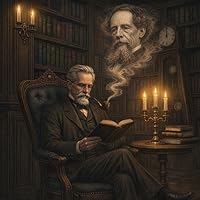
Charles John Huffam Dickens (1812-1870) was a writer and social critic who created some of the world's best-known fictional characters and is regarded as the greatest novelist of the Victorian era. His works enjoyed unprecedented popularity during his lifetime, and by the twentieth century critics and scholars had recognised him as a literary genius. His novels and short stories enjoy lasting popularity.
Dickens left school to work in a factory when his father was incarcerated in a debtors' prison. Despite his lack of formal education, he edited a weekly journal for 20 years, wrote 15 novels, five novellas, hundreds of short stories and non-fiction articles, lectured and performed extensively, was an indefatigable letter writer, and campaigned vigorously for children's rights, education, and other social reforms.
Dickens was regarded as the literary colossus of his age. His 1843 novella, A Christmas Carol, remains popular and continues to inspire adaptations in every artistic genre. Oliver Twist and Great Expectations are also frequently adapted, and, like many of his novels, evoke images of early Victorian London. His 1859 novel, A Tale of Two Cities, set in London and Paris, is his best-known work of historical fiction. Dickens's creative genius has been praised by fellow writers—from Leo Tolstoy to George Orwell and G. K. Chesterton—for its realism, comedy, prose style, unique characterisations, and social criticism. On the other hand, Oscar Wilde, Henry James, and Virginia Woolf complained of a lack of psychological depth, loose writing, and a vein of saccharine sentimentalism. The term Dickensian is used to describe something that is reminiscent of Dickens and his writings, such as poor social conditions or comically repulsive characters.
On 8 June 1870, Dickens suffered another stroke at his home after a full day's work on Edwin Drood. He never regained consciousness, and the next day he died at Gad's Hill Place. Contrary to his wish to be buried at Rochester Cathedral "in an inexpensive, unostentatious, and strictly private manner," he was laid to rest in the Poets' Corner of Westminster Abbey. A printed epitaph circulated at the time of the funeral reads: "To the Memory of Charles Dickens (England's most popular author) who died at his residence, Higham, near Rochester, Kent, 9 June 1870, aged 58 years. He was a sympathiser with the poor, the suffering, and the oppressed; and by his death, one of England's greatest writers is lost to the world." His last words were: "On the ground", in response to his sister-in-law Georgina's request that he lie down.
No Thoroughfare is a play co-written by two literary giants: Charles Dickens and Wilkie Collins. Both of them were renowned Victorian authors who had different writing styles, and I was curious to read a production of their joint effort.
The story combines Collin's touch of mystery with Dickens’s satire. The overture sets a mysterious tone to the story that is to follow. This part I trust to have been Collins' doing because it brought back the first chapter of "The Woman in White" to my mind. Thereafter, the story takes off with a mistaken identity. And we meet a vivid set of characters including a villain and an unusual heroine for Victorian time.
The authenticity of both writers is displayed in this novel with Collins contributing to mystery and Dickens to satire. But I couldn't help feeling that somehow the dominant force had been that of Dickens. Except for unraveling the mystery and setting the identity right that was influenced by Collins, the story is owned by Dickens.
No Thoroughfare is an enjoyable read. It had both adventure and humour. It was also partly a love story that demonstrated a woman's steadfast devotion to her lover. Certain characters and scenes seemed a bit farfetched. Nevertheless, they all heightened the dramatic quality of the play.
I'm really glad to have the opportunity of reading this lesser-known work thanks to the Victorians group. Recommend it to anyone who likes to read Dickens and Collins, and like me, curious to experience what their joint venture produces.
“‘[…] So little is the world, that one cannot keep away from persons. There are so few persons in the world, that they continually cross and re-cross. So very little is the world, that one cannot get rid of a person.’”
Every Dickens or Collins enthusiast will probably stop, once in a while, over a passage in their cherished reading fare and exclaim, “What a remarkable coincidence – and, by the way, what an important one for the plot development!” It is true that both Dickens and Collins rely as heavily on chance encounters or seemingly forgotten relations of kinship between their characters as Dan Brown does on the good old main clause for telling their respective stories – but for me, this has long become part of the fun in exploring their novels. When the sinister Mr. Obenreizer, the villain in their collaborative short novel No Thoroughfare muses on how small the world is and how likely one finds himself to run into the same set of people all over again, however, I could not help thinking that the two authors became suspicious of their often-used plot device themselves and wanted to anticipate a reader’s potential criticism of it. And it’s hard to deny that No Thoroughfare stands and falls with the coincidences out of which its plot is made because it is a story revolving around two boys brought up in the same orphanage and being given the name of Walter Wilding. When one of them is later taken into the care of his mother and established as a prosperous wine merchant, it is by mere coincidence that he finds out that he is not the real son of the woman he took to be his mother, now deceased, and in his search for the other Walter Wilding he actually breaks his heart and breathes his last.
But despair not! The world being so small, and this being a Victorian sensation novel, the real Walter Wilding is not far off, and truth will out. Before this happens, however, there are still some adventures waiting for Mr. Wilding’s partner Vendale, a man roughly the same age – nudge, nudge –, including a love story and a tale of two men – one of them a villain, and one a man so unsuspecting that it becomes hurtful to witness him grope in the dark with the sword of Damocles hanging above his neck – travelling through the Alps in mid-February and trying to force their way through a snowy pass. These latter chapters, which bear Dickens’s handwriting to a T, are clearly the main attraction of the entire work in that one can really feel the hardships and dangers of mountain travel in those days and the overall situation is spiced up through the reader’s knowledge of Obenreizer’s – who is the more experienced of the two men – being out to kill Vendale. Had there been a bear involved in the plot, I would have put the two chapters on the same suspense level as the 1997 thriller The Edge starring Anthony Hopkins and Alec Baldwin. Apart from that, with Obenreizer Dickens throws in a fascinating villain, a deep and dissimulating schemer, who keeps his niece Marguerite in a state of awe and who clearly hates Vendale not only because the latter holds some documents that might take him to the gallows but also because Vendale’s social privileges remind the ambitious Obenreizer of his own obscure origins. It is a pity that the two authors did not grant Obenreizer a more spectacular exit.
On the other hand, the novel also has its shortcomings: No Thoroughfare was based on a rather successful play by the same name the two writers composed, and unfortunately, not little of the stagey and long-winded dialogue made its way into the novel, giving it a rather stilted touch. Besides, the overall composition of the work lacks balance: Characters are introduced with lots of words and later hardly play any role at all, and the two plot devices of the quest for the original Walter Wilding and the crossing of the Alps are more jumbled than felicitously interlinked. And then there is Marguerite, the female love interest, who for most of the time remains speechless and passive, only to suddenly appear in the mountains and rush to the rescue of her lover, not without her fair share of purple prose.
All in all, No Thoroughfare is a curate’s egg – it has a master-villain who manages to put a spell on the reader and the mountain scenes are breath-taking, but it definitely lacks balance and suffers from too much stage talk.
Scritto a quattro mani da Charles Dickens e Wilkie Collins nel 1867, questo “Senza Uscita” è l’ultimo lavoro letterario che i due noti scrittori inglesi, amici personali, hanno scritto insieme e ne risulta un bel racconto condito da una giusta carica di suspense, di buoni sentimenti e una trama appetibile che tiene il lettore avvinto all’andamento del racconto e incuriosendolo e coinvolgendolo quanto basta per apprezzarlo e chiedersi ben presto quale potrà essere il finale che sicuramente non è deludente: chi conosce un po’ le opere dei due scrittori può intravedere nell’incedere della trama l’intervento dell’uno e dell’altro ma nell’insieme del racconto le due menti narrative di fondono con abilità e comunione di idee senza prevalenza dell’uno o dell’altro per la gioia di chi legge.
Los trabajos a cuatro manos normalmente producen cierta sensación de grandeza y maestría, como si los artistas pudieran mezclar sus mejores cualidades y combinarlas de manera que el resultado pasase a considerarse automáticamente una obra maestra. En estos casos, siempre me viene a la cabeza una de las grandes joyas de la música, Under pressure, creada en los años 80 por Queen y David Bowie. Con este ejemplo en mente, uno puede pensar que cuando se juntan dos grandes artistas, el producto resultante siempre va a superar la genialidad de cada uno de los individuos por separado, pero la realidad no suele producir lo que la lógica imagina.
Callejón sin salida tiene todos los ingredientes para ser una de las novelas inglesas más relevantes del siglo XIX. La historia, como si fuese una muñeca rusa con las piezas esparcidas temporal y geográficamente, se inicia en un orfanato en el que una mujer exige saber el nuevo nombre que le han dado al bebé que dejó. Esta situación provocará una avalancha de problemas de identidad y de herencia que traerá graves consecuencias años después.
A lo largo de la novela se puede apreciar el toque que aporta cada uno de los escritores. Especialmente en sus primeras páginas, destaca un planteamiento que recuerda a las intrigas de Wilkie Collins, mientras que el estilo y el desarrollo de los personajes se asemeja a otras obras firmadas por Charles Dickens.
Esta situación se va diluyendo a medida que avanza la trama. Parece que, a mitad de la novela, las ganas de continuar con el proyecto y de presentar un trabajo conjunto se hubieran deteriorado estrepitosamente, por lo que el resultado final acaba mostrándose algo simple y sin la calidad que solían ofrecer. Tal vez el formato teatral (el texto se divide en una obertura y cuatro actos) no ayude, pues únicamente se utiliza para hacer cambios de escenario, pero no ofrece ningún incentivo por el que no haber optado por una estructura dividida en capítulos.
Sigue siendo una historia curiosa, bien desarrollada y con una resolución aceptable, pero en su último tramo deja una sensación de oportunidad desaprovechada. Después de haber creado personajes que han pasado a la historia de la literatura y tramas que se pueden considerar como precursoras de las novelas de misterio modernas, Callejón sin salida se convierte en un simple entretenimiento que interesará especialmente a aquellos lectores que quieran completar la bibliografía de los autores.
A joint effort between Charles Dickens and Wilkie Collins that leans a bit toward the melodramatic, but has all the marvelous character development and edge-of-the-seat suspense that characterizes the both of them. A fun read and one that was greatly enhanced (as such reads always are) by the marvelous contributions of the Dickensians group. This time it was Lee who provided the guidance, along with Jean, and I learned so much that would have otherwise been sadly lost on me.
A fun buddy read with Penny and Rainey! Full of action, mistaken/hidden identities, legal issues, romance, and even murder, this novelization of the play co-written by Dickens and Collins is a total hoot!
Charles Dickens and Wilkie Collins collaborated in writing "No Thoroughfare" for the 1867 Christmas edition of "All the Year Round." While it does not have a Christmas theme, family and love are important elements in the story. Starting in London, it involves orphans, motherly love, mistaken identities, a romance, and forgery. Then the story moves to the Swiss Alps for some exciting intrigue and danger along the treacherous mountain passages. A sinister villain, a brave heroine, and some comic Dickens characters keep the story moving in this melodramatic novella.
The novella was adapted into a stage play which enjoyed a successful run. I read both the novella and the play. While the novella gives more detail, I can imagine the sometimes "over the top" melodrama working especially well on the stage. While it is not Dickens' or Collins' best work, "No Thoroughfare" is fun and entertaining. I read this with the Dickensian group.
A charming little find for a reader working her way through the works of Mr. Dickens. A bit of research would suggest that No Thoughfare was both the title of a play and its novelization. (Pre-Hollywood cleverness, apparently, since interest in one was likely to increase box office sales and visa versa.) Plus, it represents a collaboration between Charles Dickens and Wilkie Collins in the last years of the former's life. It is a "must read" simply for the sake of trivia, but also as sheer entertainment.
It is a novel of high melodrama, mistaken identity (two adopted orphans of the same name, forged documents, frozen Alpine skirmishes, wills and fortunes, a cool clock-lock, and a spunky heroine. Fun stuff! You can see touches of both Collins and Dickens in the tale. Overall, a very delightful read.
One of Charles Dickens’ lesser known works, written in cohesion with Wilkie Collins is a novella written in the form of a play, No Thoroughfare. Instantly the reader experiences the Dickens’ touch as the tale unfolds in The Overture. One of the main characters Walter Wilding mourns his mother’s death and makes plans to hire a housekeeper and treat his company employees as the family he always wanted but never quite had. He had been rescued from an orphanage by his mother after she had given him up for adoption years before. This forms the basis for an intricate plot that could only be conceived and executed in 19th Century English literature. Although I found Walter Wilding innocent, naïve, immature and occasionally out right foolish and even stupid, he serves as a catalyst in launching the bulk of the story. I enjoyed this book that contained sin, lies and intrigue that is seldom so masterly presented by 19th Century authors. I am surprised that the work is not better known as it is well worth both the time and effort to read it. I recommend it to both classical and modern prose lovers.
The Old Curiosity Club group read for Sept-Oct 2021 I did enjoy this novella by Dickens and Collins, it having several very predictable plot lines but also some plot twists which I could not anticipate. I always am amazed at how two authors can blend their talents to compose one piece.
The last play Dickens wrote with his friend, Wilkie Collins. Even tho there are 5 acts, and it has a play feel, they added narrative to tell a story of a baby given to the Foundling Hospital for Children and what became of him when it's found out that there is now another man with the same name.
It was a good read but like The Frozen Deep that I read by Collins, it still needed more in order for it to not feel so much like a play and more like a novella.
I read the novel version of this stage play collaboration between Charles Dickens and Wilkie Collins. It was much like reading a modern “novelization” of a motion picture. An especially curious feature was finding the novel divided into theatrical Acts, exactly the same as a stage play. While I would have enjoyed reading the play, the novel provided so many more details than would have been available to the viewing public.
Having read so much of Dickens’ work previously, this “hybrid” added a “guess who wrote which part” challenge. The opening seemed like the Dickens style. Most of the remainder avoided the descriptions and discourses that I found in many Dickens novels, causing me to think that Collins had a stronger influence.
There are three distinct plots. There is a changeling story, a romance, and a crime story. By the time the end is reached, all three come together to form a satisfying whole. I must admit that the changes in focus were initially jarring.
NO THOROUGHFARE is a tale that must have been a great deal of fun to see dramatized. There is strong empathy for the favored characters throughout which leads to a lot of tension during the twists and confrontations. The villain through visible description alone must have been instantly identifiable and is appropriately nasty. And there were plenty of eccentric characters that had to have been a treat for the actors to portray.
Despite some over-the-top events, NO THOROUGHFARE was an enjoyable read. Dickens and Collins collaborate well together.
Hastily written by Dickens and Wilkie Collins while vacationing at a loaned Swiss Chalet, I read the Overture, the first “chapter”, with high expectations. However, I have since spent some months working with this short novel, and my esteem has dropped significantly. Plot is designed to hook readers with tropes such as poor, homeless orphans and mistaken parentage and identities.
Overall, it is a Victorian melodrama conceived in a rush between two famous writers who promoted it eagerly for profit. Notably, Charles Dickens died of exhaustion and heart failure less than three years after he published No Thoroughfare in “ All the Year Round”.
This entire review has been hidden because of spoilers.
Publicado em 1867 e escrito a 4 mãos com seu amigo Wilkie Collins.
O plot é bem interessante: Walter Wilding, um próspero comerciante de vinhos descobre que havia sido adotado por uma mulher que acreditava ser ele seu verdadeiro filho.
A partir daí, Walter não tem mais paz de espírito por acreditar ter tomado o lugar de um órfão, parte em busca dele a fim de fazer justiça. Morre atormentado com isso e passa essa missão a seu sócio, Jorge Vendale.
Um livro bem diferente dos outros que li do autor, talvez por ter sido escrito em conjunto, não encontrei aqui os elementos usuais da obra de Dickens: seu senso de humor tão peculiar, seus múltiplos personagens, tão únicos e deliciosamente caricatos. As tramas mirabolantes estão aqui, com algumas coincidências facilitadoras e que não chegam a me incomodar. Um livro que fala sobre culpa, ganância, amor e sacrifício. Detalhe para a capa, desnecessária por trazer um spoiler e a gente passa quase a leitura toda esperando essa cena acontecer.
Histórico de leitura "Estamos em 13 de novembro de 1835. Soam dez horas da noite no relógio grande da Igreja de São Paulo."
This entire review has been hidden because of spoilers.
Es esta una novela corta escrita mano a mano por dos grandes de la literatura, Wilkie Collins y Charles Dickens. Lo que empezó siendo para mí un culebrón muy interesante (con niño perdido del orfanato incluido), con una muy buena ambientación, acabó poco a poco perdiendo fuelle al pasar al relato de suspense y misterio, enredándose en la trama.
Me quedo con la descripción de ciudades y paisajes: me gustan mucho las novelas que hablan de esos viajes en épocas pasadas y con esta obra he podido teletransportarme a uno de mis países favoritos, el país de mi infancia.
En resumen una obra agradable, sin más, con la que he podido compartir unos cuantos ratos con mis amigas lectoras.
This is my second outing with Mr. Dickens and Mr. Collins, and, alas, may be my last. A collaboration between two of the most renowned authors of their age brings great expectations from their readers, but "No Thoroughfare" and the other joint project I've read, "The Lazy Tour Of Two Idle Apprentices" were, sadly, both disappointments.
This novel started off with a bang: very atmospheric, with an interesting mystery that quickly faded into the background and was all but lost until the story's climax, which was unrealistic but predictable (even for me, which is saying something). Originally a play, the theatrical nature of the writing is evident, but not always effective in novel form. While I couldn't swear to who wrote what, having two authors seemed to make the narrative uneven. The fatuous hero is hard to champion, and, as another reviewer notes, the ultimate demise of the antagonist is unsatisfying and anticlimactic. The love story is poorly written as more of a business transaction than a great passion, and therefore the reader has no real investment in the couple.
As an outline, "No Thoroughfare" holds some promise. As executed, it falls flat.
No Thoroughfare is a stage play and novel by Charles Dickens and Wilkie Collins. In the book Collins assisted in Act 1 and Act 4 and writing the whole of Act 2. Dickens wrote the Overture and Act 3. The chapters of the book are referred to as acts and match the acts of the play.
In 1835 a woman who has left her baby at the London Foundling Hospital begs a nurse to know the new name he has been given and is told it is Walter Wilding. In 1847 she returns to adopt the boy called Walter Wilding, whom she believes to be her son. However, two boys from the Foundling Hospital were given the same name of Walter Wilding which leads unforeseen consequences in adulthood when the former nurse of the Foundling Hospital, Sarah is hired as Wilding's housekeeper. She informs him that he was not the true son of this woman.
After the death of Wilding who became a proprietor of a wine merchant's company, the executors of his will in order to right this wrong of mis inheritance, are commissioned to find the true missing heir. This quest takes them from wine cellars in the City of London to the sunshine of the Mediterranean and across the Alps in winter. Danger and treachery would prevail were it not for the courage of the heroine Marguerite and the faithful cellarman, Joey Ladle.
Act 0, Scene 1 - The Overture Act 1, Scene 1 - The Curtain Rises Act 1, Scene 2 - Enter the Housekeeper Act 1, Scene 3 - The Housekeeper Speaks Act 1, Scene 4 - New Characters on the Scene Act 1, Scene 5 - Exit Wilding
Act 2, Scene 1 - Vendale Makes Love Act 2, Scene 2 - Vendale Makes Mischief
Act 3, Scene 1 - In the Valley Act 3, Scene 2 - On the Mountain
Act 4, Scene 1 - The Clock-Lock Act 4, Scene 2 - Obenreiser’s Victory Act 4, Scene 3 - The Curtain Falls
This was wonderful! I don't know if it was wonderful because it really is wonderful or because it was such a breath of fresh air after dealing with so many disappointments in the aforementioned compilation. It was a complete story, and it was a good story. I swear I'm trying to be objective and not compare it to the other tales in the collection. (If I did that I'd feel compelled to give this at least 11 stars.) However, I think this deserves all four stars I'm assigning it.
This was a collaboration between Dickens and Wilkie Collins. It started out as a play which I believe was shown a total of two times: the premiere in 1867, and once in 1904. This information comes from Wikipedia, so we should take it with a grain of salt, especially since it also claims that Wilkie assisted in acts one and four in the novel, and I don't think that's true. I'm hardly a Dickens scholar, but I've read about half of his stuff, and I really enjoy his style which isn't like any other I've come across. I wasn't studying it as I went along, but I think Dickens wrote "The Overture" and acts one and two, and Collins took acts three and four and "The Curtain Falls." I say this only because the transition in writing style between acts two and three is so jarring that one can't help but notice it. The stuff before is Dickensian to the hilt, and what follows is completely different, so I assume it came from Collins. All I've read of his so far is Woman in White, and that was almost seven years ago, so I could be wrong. It's possible they co-wrote all the sections; I don't know.
In the first half Dickens (I assume) sets up a few plot twists Helen Keller could notice from 30 leagues off...
...Sorry. Sometimes I can't help myself with the Helen Keller jokes. Anyway, Dickens still tries to leave certain parts ambiguous, but in act three, Collins (I assume) decides to quit insulting our intelligence, and flat out states "Yeah, this cat's a rat bastard just like you thought he was. Here's what's going on, not that you haven't figured it out already." Then he moves on with the story, and we get some events I wasn't anticipating as well as an ending I didn't see coming, though it wasn't a total blindside.
I won't bother with the plot since so many others on here have taken care of that for me. Let's just say I really enjoyed this from start to finish. There's a bit of mystery which was fun to read about, the anticipated coincidence is present and accounted for, and there's a love interest subplot. The convoluted, gentlemanly conversations are there, as are the usual nonsensical elements that make people in the 21st century smack their heads and cry "Why didn't you just (insert simple, albeit somewhat ruder, solution here)?" I don't recall any super-silly names, though. I guess Collins took care of the nomenclature. As usual, this is considered one of Dickens' Christmas stories because it came out at Christmastime, not because it has a Christmas theme, though part of it takes place at New Year's, and a lot of it involves the winter months.
If you like Dickens and Collins, then this is sure to please.
Oh, and one last thing. There is one scene where a dude falls off a cliff. When Helen Keller did that, she screamed her hands off.
I wanted so much to like this book. What could go wrong? With Charles Dickens and Wilkie Collins as co-authors one would think there would be no question of its success. Perhaps both Collins and Dickens stand so tall in my mind they somehow overshadowed each other. This book is one of shade.
I found the characters uninspiring, the plot quirky and muddled, the writing uninspired, and the plot weak. That’s quite a list of negatives and I shutter that I wrote them. Nonetheless, they reflect my opinion.
No Thoroughfare is also a play, written primarily by Wilkie Collins. Here, I think, rests the problem with the prose version of the story. As a nineteenth-century theatrical melodrama, No Thoroughfare makes sense. One can envision the characters as stock players on a stage. The plot becomes more lively and suited for enjoyment. The dialogue works better and is suited for a stage rather than a page.
Perhaps I look too far into the past or too close to the edges of the present. No Thoroughfare appeared in 1867. If one looks back, this book was written after Great Expectations and is contemporary with Our Mutual Friend. Nestled within the decade of the 1860’s those two great novels do not cast a shadow over No Thoroughfare they plunge it into total darkness.
'No Thoroughfare' begins with one Walter Wilding mourning his mother's death and re-organising his household. However during these proceedings he finds out some rather startling news about his past and this leads to a rather complicated chain of events...
This was a short but very satisfying novel of people trying to do the right thing despite great obstacles and being rewarded for their virtue. You will not leave this story upset or disappointed that you stated it.
A little known collaborative work from renowned Victorian authors, Charles Dickens and Wilkie Collins, "No Thoroughfare" was first produced as a play and then released as a novel. These guys certainly knew how to market their brand.
The plot is one of mystery and romance and involves mistaken identities, a nasty villain, a surprising heroine and, in the end, a satisfying reveal. As is usually the case in a Dickens' tale there are a number of interesting, well-crafted characters encountered some of whom are delightfully comical. The action begins in London and eventually shifts to the Swiss Alps and, throughout, there is some commentary on issues of class, blood and what constitutes an appropriate family history.
All in all, an enjoyable read and I have to thank the members of the wonderful Victorians! reading group for calling this one to my attention. Cheers!
Una historia corta firmada por dos grandes autores clásicos fundamentada en dos tramas protagonizadas por los socios de una empresa: la confusión de identidad en una casa de niños expósitos en el caso de Wilding y el enamoramiento en el caso de Vendale. Romance y misterio (más misterio que romance, de hecho) con un poquito de crítica y con una ambientación buenísima que me ha tenido en suspense buena parte del libro.
Es bastante breve, pero aun así ha habido partes que me han gustado más que otras, ya que en el momento de más tensión de la novela me dio la impresión de que se alargaba un pelín (lo de los malos que tienen necesidad de explicar sus planes siempre lo he llevado regular...).
Aun así, me parece una historia recomendable para leer una colaboración entre Dickens y Collins, es muy curioso. Se nota que tiene cosas de ambos.
One would think that a work co-written by two great British writers -- Charles Dickens and Wilkie Collins -- would be far better than, in fact, No Thoroughfare turned out to be. Halfway through, Walter Wilding, dies suddenly, and his partner, George Vendale, takes over Wilding's wine merchant firm. From this point on, the story becomes far-fetched, ending up in Switzerland. At the same time, it becomes obscure and badly written -- worse than if either Dickens or Collins had written it by themselves instead of in partnership.
Part of the problem is that No Thoroughfare was originally a play, and neither author penned any plays worth reading.
Non avevo mai letto un thriller scritto da Dickens, ma non ne sono rimasta delusa. Ho riconosciuto la sua mirabile penna nelle descrizioni, nel modo di caratterizzare alcuni personaggi… e ho fatto, finalmente, la conoscenza con Collins. Sebbene io non ami i thriller, questo romanzo è stato piacevole e avvincente. Lo consiglio!
I liked this, and there isn't really anything wrong with it. However, there wasn't much to distinguish it from other similar books of the era. There are a few nice twists, but nothing to transcend the genre or otherwise worthy of special note. It's enjoyable, though.
Esse é um livro diferente dos outros de Dickens. O livro foca em uma investigação e em algumas reviravoltas dos dois protagonistas da história. O livro é ágil, cheio de mistérios e com a escrita envolvente do autor. Uma história curta e empolgante.
2.5/5 Na tradição da literatura inglesa, o tema é luta de classes; e mais caro ao autor, uma história de órfãos. Um tanto rocambolesca, com um excesso de coincidências justificado pela "teoria sobre a pequenez do mundo", que nem sempre convence.
Blurb - Two boys from the Foundling Hospital are given the same name, with disastrous consequences in adulthood. Two associates, wishing to right the wrong, are commissioned to find a missing heir. Their quest takes them from fungous wine cellars in the City of London to the sunshine of the Mediterranean — across the Alps in winter. Danger and treachery would prevail were it not for the courage of the heroine and the faithful company servant.
The story contains crafted descriptions, well-drawn and diverse characters, eerie and exotic backgrounds, mystery, semi-concealed identities, brinkmanship with death, romance, the eventual triumph of Good over Evil, and many other elements expected in classic Dickens.
First published in 1867 there are thematic parallels with other books from Dickens’ mature writings, including Little Dorrit (1857) and especially Our Mutual Friend (1865). The Listener will decide if this story yields insights into The Mystery of Edwin Drood (unfinished 1870).
Wilkie Collings collaborated with Charles Dickens to produce this ‘Christmas’ book and the stage play of the same name. In the book Collins assisted in Act 1 and Act 4; Collins scripted most of the stage play with Dickens’ assistance. If this book were released today it would be splashed “THE BOOK OF THE FILM”.
Summary by Alan Chant.
This entire review has been hidden because of spoilers.