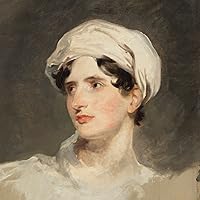
An illuminating exploration of the tensions between self and society in the age of revolutions.
The eighteenth century was a time of cultural individuals began to assert greater independence and there was a new emphasis on social equality. In this surprising history, Lynn Hunt examines women’s expanding societal roles, such as using tea to facilitate conversation between the sexes in Britain. In France, women also pushed boundaries by becoming artists, and printmakers’ satiric takes on the elite gave the lower classes a chance to laugh at the upper classes and imagine the potential of political upheaval. Hunt also explores how promotion in French revolutionary armies was based on men’s singular capabilities, rather than noble blood, and how the invention of financial instruments such as life insurance and national debt related to a changing idea of national identity. Wide-ranging and thought-provoking, The Revolutionary Self is a fascinating exploration of the conflict between individualism and the group ties that continues to shape our lives today.
Lynn Avery Hunt is the Eugen Weber Professor of Modern European History at the University of California, Los Angeles. Her area of expertise is the French Revolution, but she is also well known for her work in European cultural history on such topics as gender. Her 2007 work, Inventing Human Rights, has been heralded as the most comprehensive analysis of the history of human rights. She served as president of the American Historical Association in 2002.
fairly interesting but it felt a bit dry at times, at least from my perspective an outsider of this field and topic listening to the audiobook for fun. the economic and military perspectives weren’t that interesting to me but the other chapters were fascinating.
funnily enough i finally beat the survival mode of catchin waves after i stopped listening to this while playing and i put on my regular playlist instead, which i suppose was a sign this isn’t meant to be background noise for grinding club penguin stamps (which is completely fair).
Oof. Deceptively intriguing title. Very academically dry, and gets so bogged down in tedious details that it forgets to deliver on its promise to tie any of this meaningfully to the self or individualism.
3.5 stars (rounded up) As an early modernist who's especially interested in the second half of the eighteenth century, this book is right up my alley. I see how other reviewers found Hunt's writing style dry—it's definitely more academic—but I found it engaging enough.
Hunt's decision to focus on one element or person for each chapter made it more accessible to most readers, but her central argument probably would've been clearer and stronger had she incorporated other relevant examples. For example, the chapter on French military reform during the French Revolutionary and Napoleonic Wars made the most compelling argument for the effects of societal change because it explains the evolution of the military situation across the period and highlights the experiences of multiple figures, instead of just focusing on one general. Then again, maybe my background knowledge of that particular subject helped me understand that chapter best.
Hunt discusses the idea of “self” meaning being autonomous in its place and part of society. To do that she has to search where “society” comes from. This is an interesting discussion. Rather long and slow but good information. She does imply that the “duality” of self versus society is still ongoing. I would think we mostly recognize it but might not name it. And threats to either by the other make some decisions a bit difficult.
Perhaps this is the crux of the book and its important message. ###
Interesting history of a key part of the tale end of what some designate the late early modern period, namely, the Enlightenment project's detachment of the 'self' from earlier religious and social categories along for a fashioning of the 'self' along new horizons. While it is a good starting the reader will need something more to fully understand the arrival of the modern 'self.'
Argument: The simultaneous but paradoxical emergence of the autonomous "self" and the concept of a deterministic "society" in late 18th-century France & Britain. The use of materials is so random though
Nice quick read. There is some interesting history in here. I especially liked the discussion of the French painters. But overall it doesn’t really deliver on its thesis.
This book was shockingly boring... it surprised me. I thought it was going to be about women and the finding the self, but it ended up being French history--which is fine, but it was not marketed that way.